


airBaltic Reports Record Passenger Numbers and Fleet Growth in First Half of 2026
Latvia's airBaltic carried 509,700 passengers in June 2026 and reached a six-month record of 2.45 million travelers, expanding its Airbus A220 fleet to 55 jets.
The gist
airBaltic achieved record traffic and fleet growth in early 2026, flying 2.45 million passengers and deploying 55 Airbus A220-300 aircraft.
Continuing coverage
All Route Network →- Air Canada operates 440-seat Boeing 777-300ER on eight key routes from Montréal hub
- Air Canada Plans Expanded Airbus A321XLR Routes for Winter 2026/27
- Turkish Airlines Operates 11-Hour One-Stop Flights Using Boeing 737 MAX on African Routes
- American Airlines Ends Philadelphia-Doha 14.5-Hour Nonstop Route
AirBaltic, the national airline of Latvia, has reported significant operational growth in June 2026, transporting a total of 509,700 passengers across its network. This passenger volume represents a 2% increase year-over-year compared to June 2025, marking a steady rise in demand. The carrier operated 4,535 flights during the same period, reflecting a 6.2% expansion in its flight schedule year-over-year, indicating a strategic push to increase connectivity and capacity.
Despite the increased traffic, airBaltic's load factor in June was 81.9%, a decrease of 2.2 percentage points from the previous year. This dip is attributed largely to the airline's decision to expand flight frequency and seat availability, anticipating higher demand and aiming to strengthen its route network. The airline's capacity growth appears deliberate, investing in new flights to meet emerging travel needs despite a softer seat utilization rate.
The airline's strong trajectory continued into the first half of 2026, during which airBaltic carried 2,454,900 passengers—a 3.9% increase compared to the same timeframe in 2025. This achievement marks the highest passenger total airBaltic has ever recorded in a January-to-June period. Correspondingly, the carrier operated 23,634 flights in these six months, a 5% increase year-over-year, reflecting sustained expansion across its schedule and destinations.
A key enabler of this growth has been the improved availability of airBaltic's fleet, particularly its Airbus A220-300 aircraft. The operator overcame earlier operational challenges related to Pratt & Whitney engine issues, which had caused aircraft groundings in previous periods. As of mid-2026, airBaltic’s entire fleet of around 55 A220-300s is fully operational, allowing for enhanced schedule reliability and greater available seat kilometers.
The Airbus A220-300, known for its fuel efficiency and passenger comfort with features such as a quiet cabin and large windows, forms the backbone of airBaltic’s operations. This modern fleet supports both scheduled services and ACMI contracts, boosting both revenue streams and operational flexibility. The enlarged and more reliable fleet underpins the airline's expanded route offerings and provides a competitive advantage in cost and service quality.
airBaltic plays a crucial role in connecting the Baltic states—Latvia, Estonia, and Lithuania—to over 80 destinations spanning Europe, the Middle East, North Africa, and the Caucasus. Recent route expansions include turning seasonal services into year-round flights, such as Tallinn to Vienna and Vilnius to Berlin. Additionally, for the 2026/2027 winter season, the airline is launching new routes from holiday locales like Gran Canaria and Tenerife to multiple European cities to capture leisure market growth.
Customer satisfaction metrics further highlight airBaltic’s operational strength, with a recent survey yielding a 97% overall satisfaction rate. The airline's Net Promoter Score increased to +36, reflecting high approval of crew professionalism, onboard comfort, and service quality. Such strong customer feedback underlines airBaltic's commitment to a premium flying experience amid competitive conditions.
The airline’s growth contributes significantly to the Baltic region's economy by promoting tourism, business travel, and regional connectivity. airBaltic’s operation supports jobs and facilitates trade links vital to the socio-economic development of Latvia and its neighbors. This impact positions the airline as an essential component of the region's transport infrastructure.
Facing broader industry headwinds like variable fuel costs and economic uncertainties, airBaltic’s latest performance figures demonstrate resilience. The combination of a modern, fully available fleet, strategic network expansion, and strong customer focus equip the airline to sustain growth through the remainder of 2026.
Frequently asked questions
- How many passengers did airBaltic carry in the first half of 2026?
- airBaltic transported 2,454,900 passengers in the first six months of 2026, a 3.9% increase compared to the same period in 2025.
- What aircraft does airBaltic primarily operate in its fleet?
- airBaltic operates a fleet of around 55 Airbus A220-300 aircraft, which are fully operational as of mid-2026.
- What contributed to airBaltic's improved operational stability in 2026?
- The resolution of Pratt & Whitney engine-related issues allowed airBaltic to operate its full Airbus A220-300 fleet without major limitations, enhancing schedule reliability and capacity.
Read more
All MRO/Maintenance →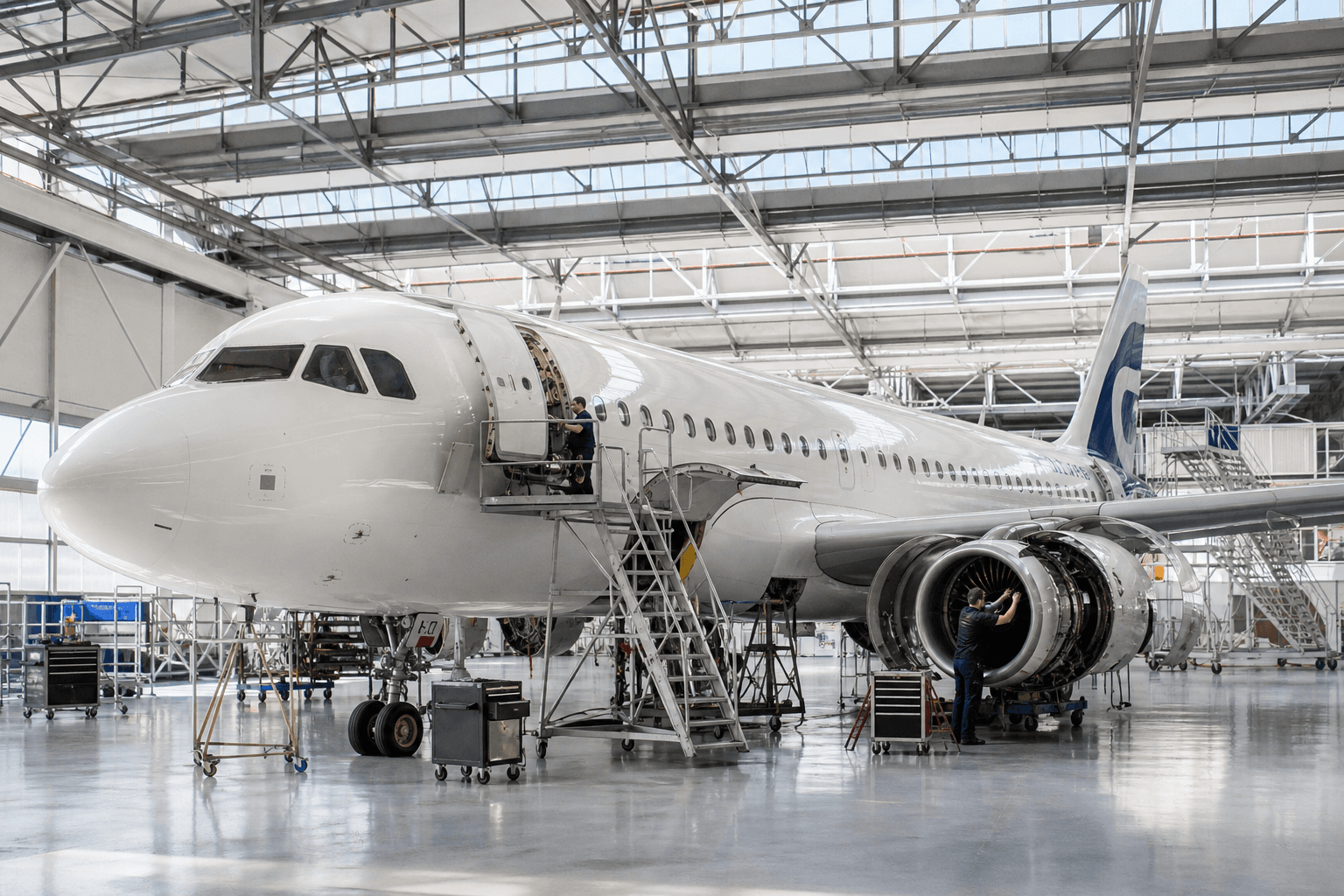
Avia Solutions Group appoints FL Technics chief as new CEO amid reshuffling
Former leader steps down and transfers to new position as head of finance. Wet-lease specialist Avia Solutions Group has named the head of its maintenance operation as its new chief executive. Zilvinas Lapinskas has been leading the group's FL Technics division. Avia Solutions says he has been appointed chief executive from 7 July. He succeeds Jonas Janukenas who will step down from the top post and transfer to the position of chief financial officer. Avia Solutions oversees multiple wet-lease providers around the world — with a total fleet of 136 aircraft — but has been undergoing an extensive restructuring , with some of its carriers ceasing operations . "Over the past several years, the group has built a strong foundation for sustainable growth," says Lapinskas. "I look forward to accelerating that momentum." He says his priority is to "strengthen our operational footprint" and reinforce long-term partnerships. Avia Solutions credits him with having "transformed" the FL Technics division, and says he has a "proven record of scaling operations in complex, highly-regulated markets". Janukenas says that, as head of finance, he will concentrate on ensuring the company maintains "financial discipline and strategic agility".
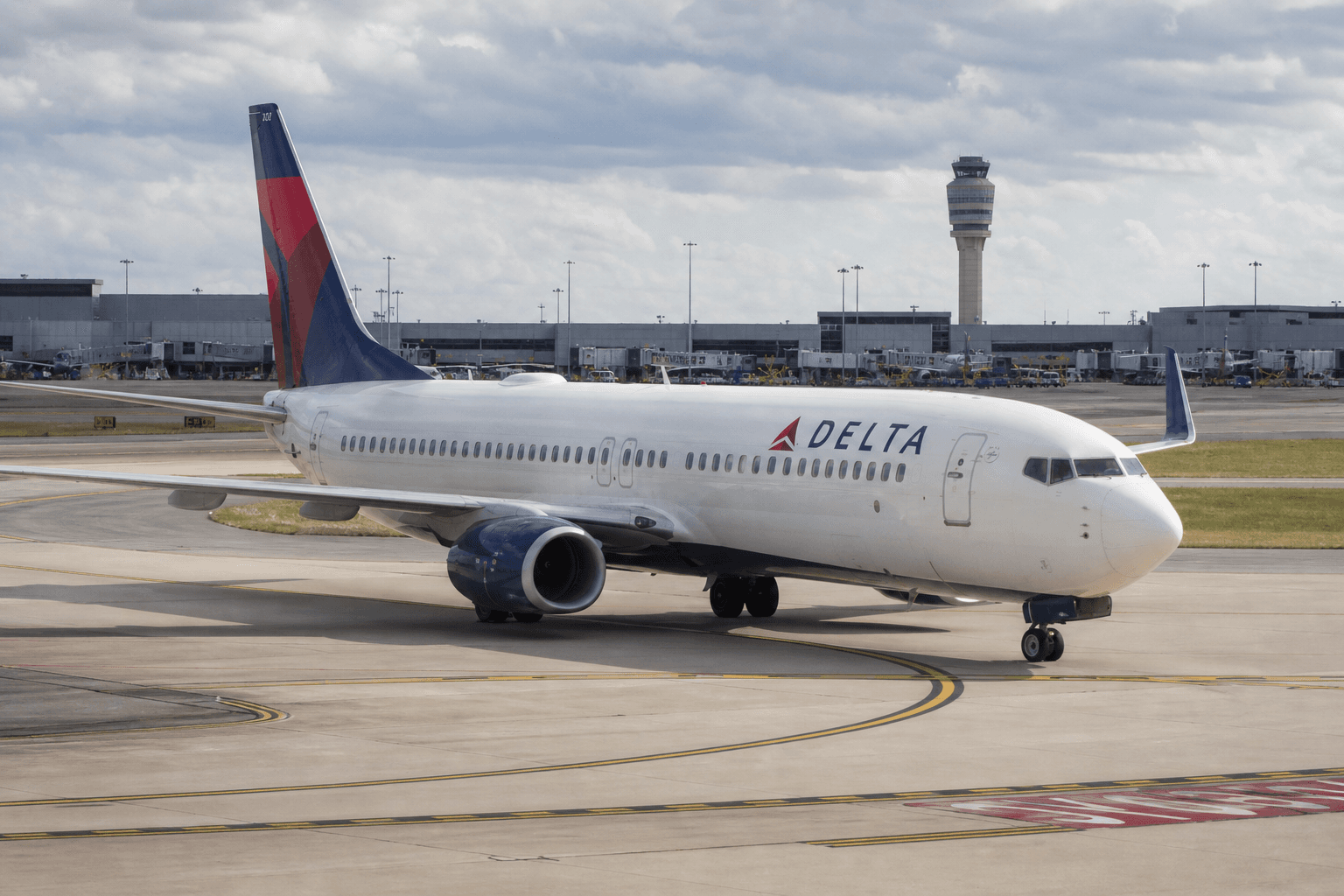
Delta's once-stellar operational performance shows visible declines amid pilot staffing woes
We’ve already talked about American’s operational issues , but today I’m looking at you, Delta. American hasn’t been a star performer for ages, but Delta? Delta has been the king for years. That crown appears to have some tarnish on it these days. You may have heard about the Delta pilots setting up a website to help travelers deal with disruption. This is nothing but a negotiating ploy. The contract becomes amendable later this year, and they are just starting to chirp about it. This won’t help negotiations, but it does attract a lot of media coverage which Delta management certainly doesn’t like. The hope is presumably that this will put pressure on Delta to make concessions to get a deal done. It won’t, and the reality is… I don’t care about this at all. What I do care about is that this effort is coming from somewhere — the union isn’t making this issue up. Delta does have an operational problem. So today I’ll focus on what has been going on. In a note from COO Dan Janki in May, the airline indicated it was happy with its on-time performance, but “we need to improve controllable cancels and IROP recovery.” I’m not sure I agree. Oh sure, it does have a problem with cancellations and irregular operations, but on-time performance has suffered as well. While there are several issues that have led to this decline, one of the hot button topics is centered around pilot availability. A letter from Ryan Gumm, SVP Flight Operations from April, explained that trips that needed coverage saw acceptance rates plummet from 37 percent to two percent. To me, this sounds like an effort to blame labor, so I spoke with Delta’s pilots union chair Eric Criswell to get his side. Eric said they don’t have access to the dataset that Delta referred to in that latter, but he wanted to point out that the number of trips made available has jumped significantly in the last year. You would expect acceptance rates to drop in a bigger pool. From the union’s perspective, staffing is a primary concern in this whole mess. In 2025, they say pilot demand hours increased 4.2 percent versus last year, but the actual number of pilots employed at the airline fell. Thanks to that, they also said that pilots are working on their days off at a higher rate than in the past. In a recent Chairman’s Letter from the union, it said “the Company is now hiring aggressively to address their self-imposed staffing shortfall.” The airline certainly doesn’t dispute that. It is hiring as we speak, so clearly some pilot modeling went wrong last year. Regardless of the reason for these issues, Delta is not living up to the carefully-constructed brand image as an operational rock star over the last couple decades. Though as mentioned this isn’t just about cancellations and IROPS, let’s start with those cancellations first. As usual, I turned to Anuvu for the data. This is where Delta used to excel the most. It almost never canceled flights back in its heyday, but now it is doing that far more often. Instead of looking at aggregate numbers, I thought it more help to compare to the industry. Delta Completion Factor vs Industry By Month Data via Anuvu , Industry includes AA/AS/B6/DL/HA/UA/WN Remember, a good standard is to try to complete 99 percent of flights or better, so if Delta is consistently up by 1 to 2 points on the industry as it was for years? That’s a huge difference. But it has slipped, and this year it has been downright worse than the industry overall in more than one month. Outside of April, it has not been above 99 percent in any single this year. We’ve talked about why that might be happening, but what about on-time percentage? I don’t like what I see there either. Delta doesn’t seem concerned in its communications, but maybe it shouldn’t be… Delta A14 % By Month Data via Anuvu , Industry includes AA/AS/B6/DL/HA/UA/WN Delta was performing better than industry even until the end of 2024 with just a little hiccup thanks to the Crowdstrike failure at the end of July that year. But then, A14 has continued to trail off. It has rebounded after a pretty bad winter, but it is still below where it has been historically. One of the big issues here seems to be block time. Delta was known for padding block times to improve performance, and there’s nothing wrong with that as a strategy. It certainly bought the airline massive goodwill. But that seems to have changed, and it just hasn’t given itself the block time it needs to run an on-time airline. Let’s take a look. Delta B0 % By Month Data via Anuvu , Industry includes AA/AS/B6/DL/HA/UA/WN As a reminder, B0 is the percentage of time that a flight operates within the allotted block time. It can run 5 hours late, but if the airline files a schedule that shows gate pushback to gate arrival is 74 minutes and the flight operates in 74 minutes or less? That counts as meeting block time. In the chart above, you can see a marked fall-off in 2024. Delta must have lowered its block times to try to improve utilization and lower costs, and the result has been performance degradation. It has in some recent months performed worse than the industry overall. So what is Delta doing? We’ve already talked about pilot hiring which will help bolster the reserves that are needed to cover trips, but the airline is also bulking up in crew scheduling and customer-facing agents so it can better help when things go wrong. It has also been having issues with what it calls “fleet health, so it is working with the maintenance organization to try to fix some of those gaps. There are other moves it can make around the edges as well. What isn’t clear to me is where Delta wants to be. Is it hoping to get back to the more expensive but more reliable operation it had? Or is it ok being a little lower down the list if it saves the airline some money? Now that Delta has built a brand on operational excellence, it probably has a more complicated decision than others might.

1976 Piper PA-32R-300 Lance offers six-seat capacity and performance upgrades
Each day, the team at Aircraft For Sale picks an airplane that catches our attention because it is unique, represents a good deal, or has other interesting qualities. You can read Aircraft For Sale: Today's Top Pick at FLYINGMag.com daily. Today's Top Pick is a 1976 Piper PA-32R-300 Lance. Aircraft manufacturers are known for developing existing models into new ones. Often this method makes more economic sense than embarking on a clean- sheet project. Piper is especially famous for squeezing, pulling, and stretching its original PA-28 Cherokee in ways that resulted in a whole fleet of airplanes, from trainers to twins. Enlarging the PA-28 to become the PA-32 Cherokee Six was one of Piper's greatest moves because it gave pilots the flying equivalent of the family station wagon—at a time when station wagons were very much in vogue and economical six-place airplanes were rare. If you ask me, though, it was the decision to retract the gear and further modify the Six to produce the Lance that truly moved Piper into the mainstream of high-performance personal transport. The Lance's cabin has plenty of room for six seats. [Credit: Bradford Fuller] The aircraft for sale today has plenty of space for growing families traveling on vacation or colleagues making business trips to cities without airline service. A wide cabin means occupants are not constantly rubbing shoulders and passengers have space to get comfortable on long flights. This heavy hauler has the bonus of LoPresti aerodynamic modifications to improve speed. It also received new paint and interior in 1998. This 1976 Piper Lance has 4,417 hours on the airframe and 512 hours since overhaul on its Lycoming IO-540K1G5D engine, which also underwent a top overhaul 240 hours ago. The aircraft's Hartzell Scimitar propeller has logged 250 hours since new. The Lance has a gross weight of 3,600 pounds, useful load of 1,508 pounds, and fuel capacity of 98 gallons. This Lance's panel includes Garmin GPS and other updated equipment. [Credit: Bradford Fuller] The panel includes a Garmin GNS 430W GPS/nav/com, King KX170B nav/com, AutoControl IIIB autopilot, Garmin 495, GTX 345 transponder, KMA 20 TSO audio panel, FS 1000II intercom, Narco DME, and JPI EDM 700 engine monitor. Pilots looking for the carrying capacity of a large SUV with cross-country performance that feels more like that of a super sports car should consider this 1976 Piper PA-34R-300, which is available on AiircraftForSale . If you're interested in financing, you can do so with FLYING Finance. Use our airplane loan calculator to calculate your estimated monthly payments. Or, to speak with an aviation finance specialist, visit flyingfinance.com . FLYING Magazine: Air Compare: Piper Lance vs. Saratoga FLYING Magazine: Piper Saratoga Avionics Install: Part 1 Plane + Pilot : Piper Cherokee Six/Lance/Saratoga Plane + Pilot : Piper Lance/Turbo Lance Plane + Pilot : Piper Saratoga The Aviation Consumer: Used Aircraft Guide: Piper Saratoga and Lance

AOPA Foundation to launch high school aviation maintenance curriculum by 2028
The AOPA Foundation will add a maintenance and manufacturing pathway to its High School Aviation STEM Curriculum as early as 2028.
The Daily Touch & Go
The day's best aviation news in your inbox. Free, no spam.