

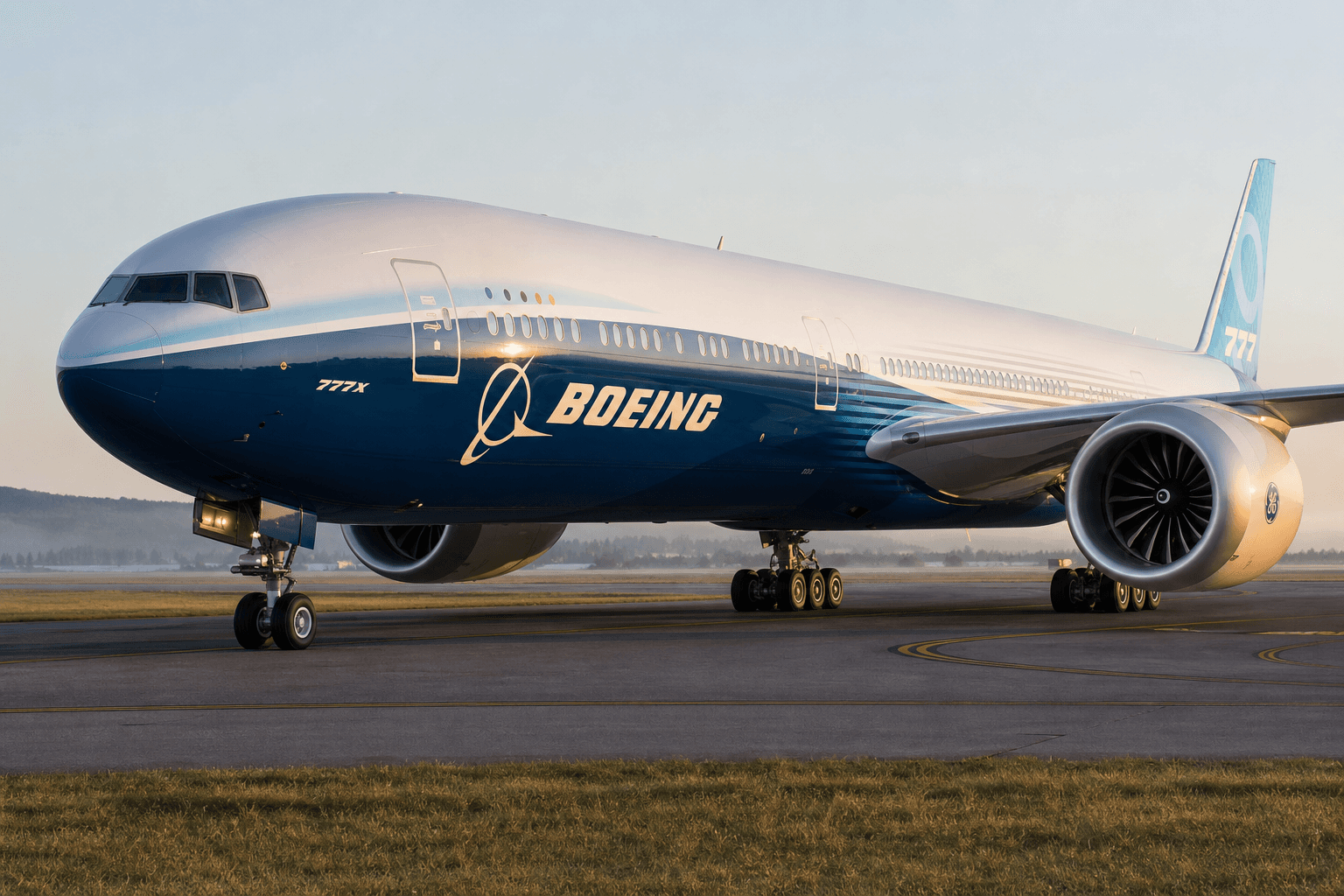
Illustration: The Touch & Go
Limited Facilities Worldwide Certified to Service Boeing 777X GE9X Engines at Launch
Only a few maintenance sites, including GE's Nantgarw and new facilities in Xiamen, Dubai, Singapore, and Poland, are ready to support the complex GE9X engines initially.
The gist
The Boeing 777X's advanced GE9X engines will rely on a small, highly specialized global maintenance network at launch.
Continuing coverage
All Boeing 777x →- GE9X Engine's Mid-Seal Crack Identified, Fix Underway as 777X Nears Certification
- Sydney Airport's Tight Space Requires Boeing 777X to Fold Wings at Gates
- Thai Airways to finalize new long-haul widebody choice within two years
- Five Airlines Unveil Next-Gen First Class Suites for 2026-27 Long-Haul Flights
The Boeing 777X program introduces the General Electric GE9X engine, heralded for its groundbreaking fuel efficiency and durability features. However, aircraft operators will initially face limited options for engine maintenance, as only a handful of globally scattered facilities have been certified to provide overhaul and repair services for this advanced powerplant. General Electric’s flagship Nantgarw plant in Wales will serve as the primary overhaul center, spearheading the GE9X’s entry into service and ongoing maintenance.
To support the 777X fleet, General Electric has also formed strategic partnerships and is establishing new maintenance, repair, and overhaul (MRO) sites worldwide. Key collaborations include a future GE9X service plant with HAECO in Xiamen, China, an on-wing support center in Dubai to facilitate rapid field repairs, ongoing repair and support activities in Singapore, and a joint MRO facility with Lufthansa Technik based in Poland. These locations collectively aim to cover major geographic regions and serve the 777X’s largest customers.
Nonetheless, the current network remains notably small compared to older, more widely adopted engines such as the CFM56. This is common with newly introduced engines, especially those incorporating advanced materials and novel manufacturing techniques that demand specialized tooling, extensive technician training, and tightly controlled maintenance procedures compliant with GE’s standards. The GE9X’s extensive use of ceramic matrix composites (CMCs), carbon fiber reinforced polymer (CFRP) fan blades, and 3D-printed parts requires highly specialized care that cannot be readily provided by traditional MRO centers lacking proper approvals and equipment.
The GE9X engine pushes the boundaries of turbofan technology, featuring a bypass ratio of 10:1 and an overall pressure ratio of 60:1 — the highest in commercial aviation. Its fan diameter measures 134 inches with only 16 blades made from fourth-generation CFRP, making it distinct from previous GE engines. These innovations are designed to enhance fuel burn by up to 10% compared to the GE90 engines it replaces on the 777-200LR, 777F, and 777-300ER models, while also promising improved longevity and reliability under sustained high-temperature operation afforded by the extensive CMC components.
Achieving durability has been a crucial focus, especially given the challenges faced by competing engines such as Rolls-Royce’s Trent XWB-97, which powers the Airbus A350-1000 and has experienced durability issues in harsh environments. General Electric is emphasizing the GE9X’s ability to maintain performance over extended intervals, which is critical for the 777X’s competitiveness in the ultra-long-haul market segment where maintenance costs and aircraft availability directly impact airline economics.
The process of expanding the GE9X maintenance footprint beyond initial facilities will involve overcoming hurdles associated with the engine’s complexity. Independent MROs and airline-operated maintenance units typically enter a new engine’s support network only after the engine proves itself operationally and gains wider market penetration. Currently, operators must rely on the GE-owned and partner facilities. This constrained network heightens the need for logistical coordination in parts supply and technician expertise during the 777X’s early operational period.
Historically, the introduction of advanced engines has been marked by adjustments in maintenance strategies due to unexpected reliability issues, as was the case with the Rolls-Royce Trent 1000 and Pratt & Whitney PW1000G series that saw early fleet groundings and increased inspections. While the GE9X benefits from GE’s prior experience with the GE90 and GEnx engines, the cutting-edge technology embedded in the GE9X still poses risks and may require continuous refinement in MRO processes as real-world service data accumulates.
General Electric’s proactive establishment of diverse MRO locations and on-wing support facilities aims to mitigate early network limitations and ensure operators can maintain their aircraft with minimum downtime. Expansion plans and ongoing investments in technician training programs will be crucial for scaling support capacity as the 777X fleet grows beyond its initial deliveries. The evolution of the GE9X maintenance network will be a key factor influencing the 777X’s operational reliability and customer satisfaction in coming years.
Frequently asked questions
- Which facilities are initially certified to service the GE9X engines?
- Key initial service centers include GE's Nantgarw plant in Wales, a future HAECO facility in Xiamen, an on-wing support center in Dubai, repair services in Singapore, and a new Lufthansa Technik joint venture in Poland.
- What makes the GE9X engine maintenance challenging compared to older engines?
- The GE9X uses advanced materials like abundant ceramic matrix composites and carbon fiber fan blades, plus 3D-printed parts, requiring specialized tooling, new procedures, and extensive technician training for maintenance.
- How does the GE9X's complexity affect the growth of its MRO support network?
- Due to its technological novelty and specialized needs, independent MRO companies and airline maintenance groups typically join the support network only after the engine gains operational experience and user demand increases, slowing early expansion of maintenance options.
Read more
All MRO/Maintenance →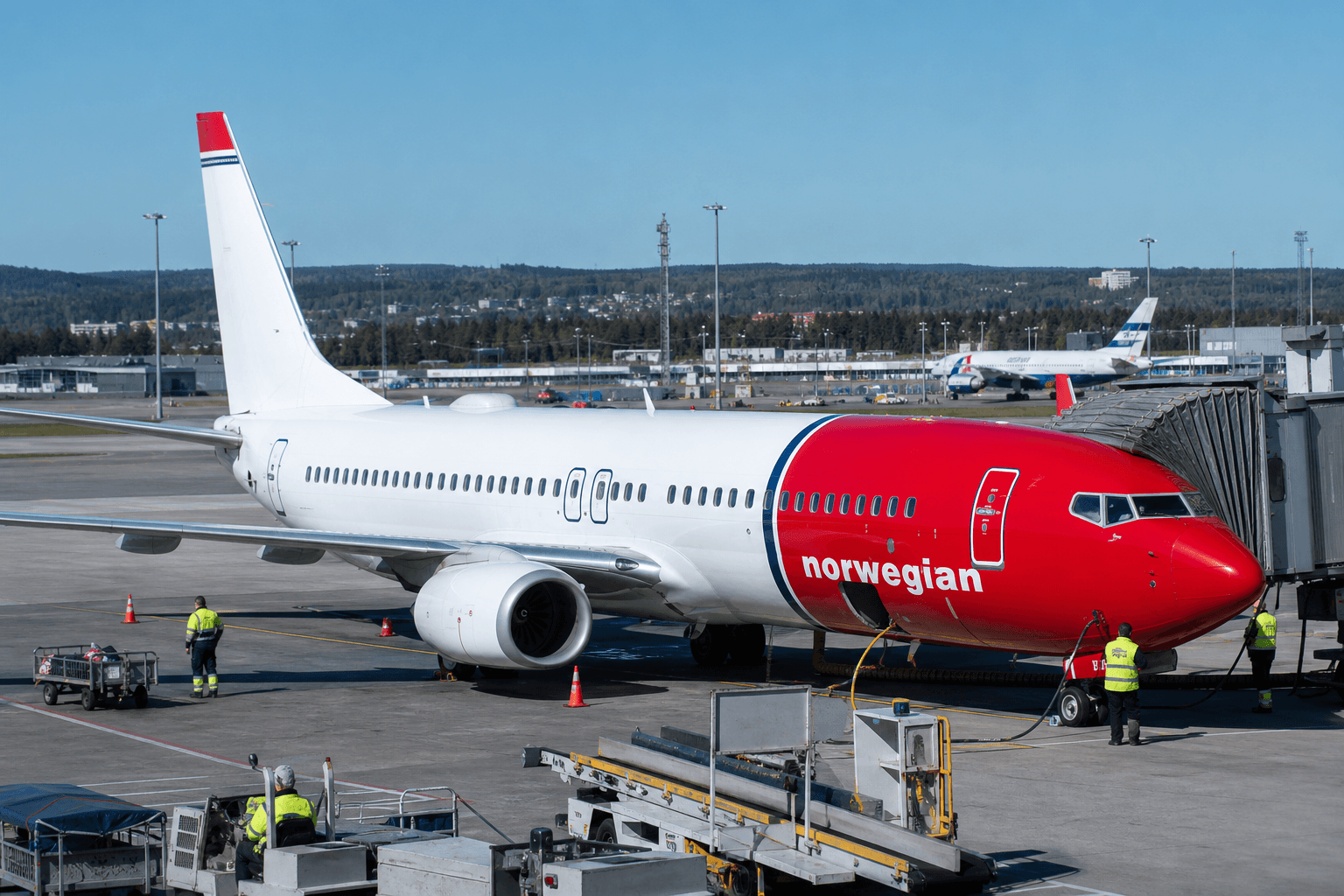
Norwegian Air Swaps Its Logo for British Airways' After England Beats Norway in World Cup Bet
Oslo-based Norwegian Air has replaced its own logo on its official Instagram page with that of British Airways after losing a bet with the rival carrier over who would prevail in the hotly contested quarterfinal match between England and Norway in the FIFA World Cup on Saturday. In the days leading up to the match, Norwegian trolled British Airways on social media and challenged the Heathrow-based flag carrier of the United Kingdom to a bet: The side that loses must replace their logo with that of their rivals for 24 hours. View this post on Instagram A post shared by Norwegian (@flynorwegian) Surprisingly, the lawyers at British Airways actually gave the go-ahead for the airline’s social media team to engage in this heated rivalry, and before long, a Norwegian Air intern was on a plane to London with a USB stick containing the airline’s logos. A day before the match, USB sticks containing logo files were exchanged at BA’s headquarters close to London Heathrow Airport. The match ended in a stunning victory for England, with Jude Bellingham, the Real Madrid midfielder, scoring both goals in the 2-1 victory for the English team in Miami. As the celebrations in England continued through the night, Norwegian Air followed through with its promise, changing its own logo to that of British Airways logo on its Instagram page. In a seperate post, Norwegian Air wrote: “While the tournament is over for us, this friendly bet will forever live in all our hearts We wish England and British Airways all the best in the semi-final, and we sincerely hope you'll get to bring football home!” British Airways then cheekily replied: “We love this new look on you,” while its fellow oneworld airline Qantas also got in on the fun, saying: “felt cute might delete later xx” Malaysia Airlines also called out how unique this whole situation is, saying: “Respect to Norwegian! Most airlines need six months and 14 approvals to change a logo.” Norwegian Air had thrown its full support behind its national soccer team in the lead-up to the match, adorning its cabins with Norwegian flags and encouraging passengers and crew to take part in the iconic ‘Viking Row’ that has come to symbolise Norway’s national soccer team. With all this newfound interest in Norwegian Air’s social media presence, the airline certainly wasn’t going to miss this great marketing opportunity. Hours after the match, the airline offered a discount code for passengers flying between England and the airline’s destinations in Norway and beyond. At one point in Norwegian Air’s not-too-distant past, the airline directly challenged British Airways on routes to North America from London Gatwick Airport, as it attempted to break into the low-cost, long-haul market. Unfortunately, maintenance issues with the Rolls-Royce engines on its fleet of Boeing 787 Dreamliners further compounded Norwegian’s financial performance on these routes, and there were real concerns that the carrier might fall into liquidation. In the end, Norwegian abandoned its long-haul ambitions and retreated to its core market in Norway. As it turned out, however, that was the best decision it could have made. After undergoing a painful transformation, the airline is once again profitable, albeit much smaller than it was before the COVID-19 pandemic.

airBaltic Reports Record Passenger Numbers and Fleet Growth in First Half of 2026
Latvian national carrier airBaltic continues to demonstrate solid operational momentum, carrying 509,700 passengers across its network in June 2026. This figure marks a 2% increase compared to the same month in 2025. ezstandalone.cmd.push(function () { ezstandalone.showAds(119); }); The airline also operated 4,535 flights during the period, reflecting a healthy 6.2% year-on-year rise. Despite the passenger growth, the load factor for June stood at 81.9%, a 2.2 percentage point decline from the previous year. ezstandalone.cmd.push(function () { ezstandalone.showAds(127); }); This dip primarily resulted from expanded capacity, as the airline deployed more flights and seats to meet anticipated demand and strengthen its network. Record First-Half Performance The positive trend extended across the first six months of 2026. airBaltic transported a total of 2,454,900 passengers, achieving a 3.9% increase over the same period in 2025. ezstandalone.cmd.push(function () { ezstandalone.showAds(128); }); This represents the highest passenger volume ever recorded for the January-to-June timeframe. In parallel, the airline conducted 23,634 flights, up 5% year-on-year. These results highlight airBaltic’s successful recovery and expansion efforts. The airline has benefited significantly from improved fleet availability. ezstandalone.cmd.push(function () { ezstandalone.showAds(129); }); After resolving previous Pratt & Whitney engine-related challenges that grounded aircraft in prior periods, airBaltic now operates its full fleet of Airbus A220-300 jets without major limitations. This has enabled greater operational stability, higher capacity (measured in available seat kilometres), and the ability to run more reliable schedules. By mid-2026, the fleet has grown to around 55 A220-300 aircraft, supporting both scheduled network operations and ACMI (Aircraft, Crew, Maintenance, and Insurance) activities. The modern, fuel-efficient A220 fleet contributes to better cost management and an enhanced passenger experience, known for its comfort, quiet cabin, and large windows. ezstandalone.cmd.push(function () { ezstandalone.showAds(130); }); Photo Credit: airBaltic Expanding Connectivity and Customer Focus airBaltic plays a vital role in connecting the Baltic States (Latvia, Estonia, and Lithuania) to more than 80 destinations across Europe, the Middle East, North Africa, and the Caucasus region. Its extensive network makes travel more accessible and convenient for leisure and business passengers alike. Recent initiatives underscore this commitment. The airline has extended several routes into the winter season, such as Tallinn–Vienna and Vilnius–Berlin, turning them into year-round connections. It is also adding new routes for the 2026/2027 winter period, including services from holiday destinations like Gran Canaria and Tenerife to various European cities. ezstandalone.cmd.push(function () { ezstandalone.showAds(131); }); Customer satisfaction remains high. In its latest survey, airBaltic achieved a 97% overall satisfaction rate and saw its Net Promoter Score rise to +36. Strong scores for crew professionalism, onboard comfort, and service quality reflect the airline’s focus on delivering a premium experience even in a competitive market. Supporting Regional Growth As a key economic driver, airBaltic facilitates tourism, business travel, and trade links that boost the broader Baltic economy. Its operations create jobs, stimulate inbound tourism, and provide essential connectivity for the region’s residents and visitors. ezstandalone.cmd.push(function () { ezstandalone.showAds(132); }); While the aviation industry faces challenges such as fluctuating fuel prices and economic pressures, airBaltic’s traffic figures for mid-2026 signal resilience. With full fleet utilization, network expansion, and a customer-centric approach, the airline is well-positioned to build on this momentum in the coming months.

Avia Solutions Group appoints FL Technics chief as new CEO amid reshuffling
Former leader steps down and transfers to new position as head of finance. Wet-lease specialist Avia Solutions Group has named the head of its maintenance operation as its new chief executive. Zilvinas Lapinskas has been leading the group's FL Technics division. Avia Solutions says he has been appointed chief executive from 7 July. He succeeds Jonas Janukenas who will step down from the top post and transfer to the position of chief financial officer. Avia Solutions oversees multiple wet-lease providers around the world — with a total fleet of 136 aircraft — but has been undergoing an extensive restructuring , with some of its carriers ceasing operations . "Over the past several years, the group has built a strong foundation for sustainable growth," says Lapinskas. "I look forward to accelerating that momentum." He says his priority is to "strengthen our operational footprint" and reinforce long-term partnerships. Avia Solutions credits him with having "transformed" the FL Technics division, and says he has a "proven record of scaling operations in complex, highly-regulated markets". Janukenas says that, as head of finance, he will concentrate on ensuring the company maintains "financial discipline and strategic agility".
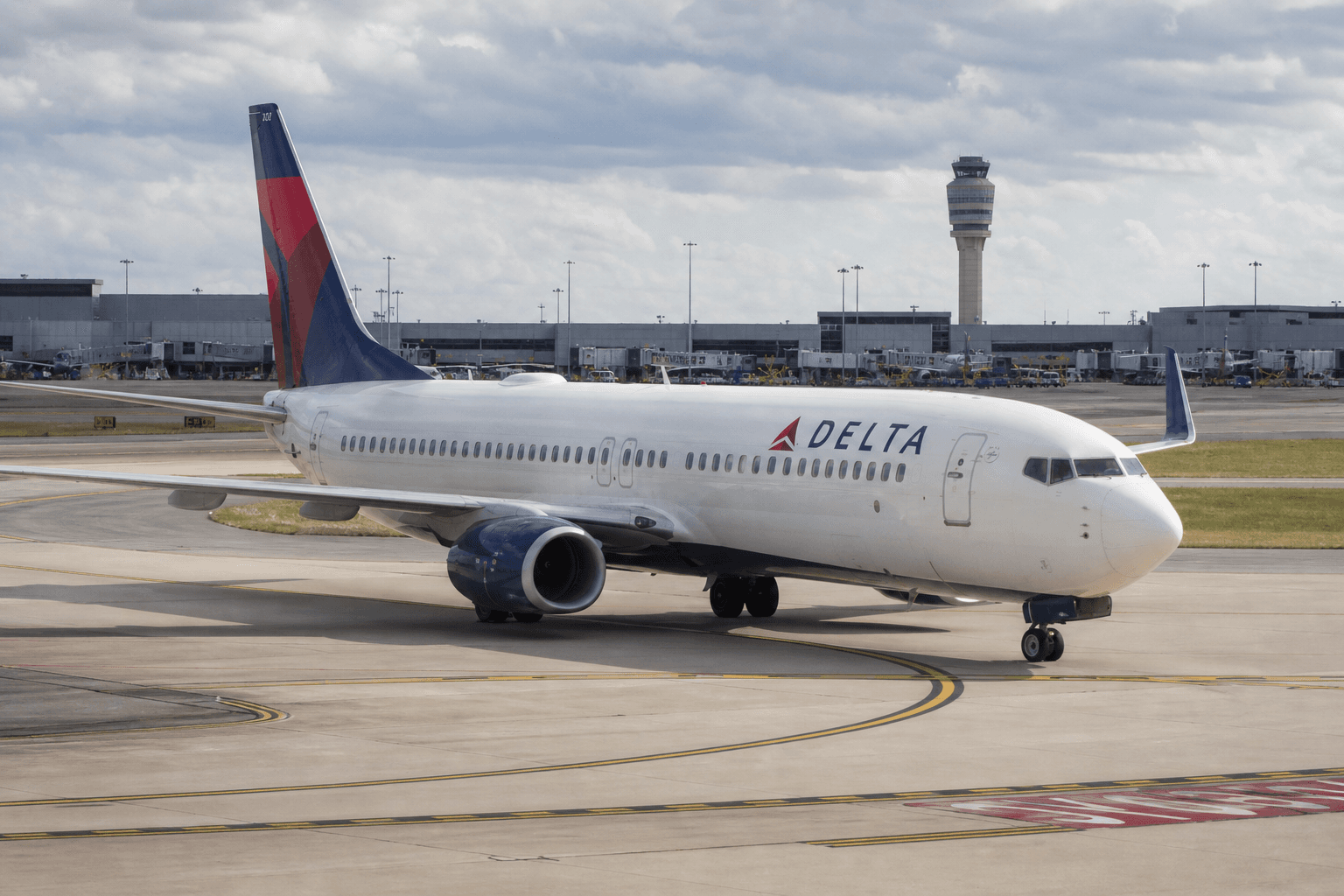
Delta's once-stellar operational performance shows visible declines amid pilot staffing woes
We’ve already talked about American’s operational issues , but today I’m looking at you, Delta. American hasn’t been a star performer for ages, but Delta? Delta has been the king for years. That crown appears to have some tarnish on it these days. You may have heard about the Delta pilots setting up a website to help travelers deal with disruption. This is nothing but a negotiating ploy. The contract becomes amendable later this year, and they are just starting to chirp about it. This won’t help negotiations, but it does attract a lot of media coverage which Delta management certainly doesn’t like. The hope is presumably that this will put pressure on Delta to make concessions to get a deal done. It won’t, and the reality is… I don’t care about this at all. What I do care about is that this effort is coming from somewhere — the union isn’t making this issue up. Delta does have an operational problem. So today I’ll focus on what has been going on. In a note from COO Dan Janki in May, the airline indicated it was happy with its on-time performance, but “we need to improve controllable cancels and IROP recovery.” I’m not sure I agree. Oh sure, it does have a problem with cancellations and irregular operations, but on-time performance has suffered as well. While there are several issues that have led to this decline, one of the hot button topics is centered around pilot availability. A letter from Ryan Gumm, SVP Flight Operations from April, explained that trips that needed coverage saw acceptance rates plummet from 37 percent to two percent. To me, this sounds like an effort to blame labor, so I spoke with Delta’s pilots union chair Eric Criswell to get his side. Eric said they don’t have access to the dataset that Delta referred to in that latter, but he wanted to point out that the number of trips made available has jumped significantly in the last year. You would expect acceptance rates to drop in a bigger pool. From the union’s perspective, staffing is a primary concern in this whole mess. In 2025, they say pilot demand hours increased 4.2 percent versus last year, but the actual number of pilots employed at the airline fell. Thanks to that, they also said that pilots are working on their days off at a higher rate than in the past. In a recent Chairman’s Letter from the union, it said “the Company is now hiring aggressively to address their self-imposed staffing shortfall.” The airline certainly doesn’t dispute that. It is hiring as we speak, so clearly some pilot modeling went wrong last year. Regardless of the reason for these issues, Delta is not living up to the carefully-constructed brand image as an operational rock star over the last couple decades. Though as mentioned this isn’t just about cancellations and IROPS, let’s start with those cancellations first. As usual, I turned to Anuvu for the data. This is where Delta used to excel the most. It almost never canceled flights back in its heyday, but now it is doing that far more often. Instead of looking at aggregate numbers, I thought it more help to compare to the industry. Delta Completion Factor vs Industry By Month Data via Anuvu , Industry includes AA/AS/B6/DL/HA/UA/WN Remember, a good standard is to try to complete 99 percent of flights or better, so if Delta is consistently up by 1 to 2 points on the industry as it was for years? That’s a huge difference. But it has slipped, and this year it has been downright worse than the industry overall in more than one month. Outside of April, it has not been above 99 percent in any single this year. We’ve talked about why that might be happening, but what about on-time percentage? I don’t like what I see there either. Delta doesn’t seem concerned in its communications, but maybe it shouldn’t be… Delta A14 % By Month Data via Anuvu , Industry includes AA/AS/B6/DL/HA/UA/WN Delta was performing better than industry even until the end of 2024 with just a little hiccup thanks to the Crowdstrike failure at the end of July that year. But then, A14 has continued to trail off. It has rebounded after a pretty bad winter, but it is still below where it has been historically. One of the big issues here seems to be block time. Delta was known for padding block times to improve performance, and there’s nothing wrong with that as a strategy. It certainly bought the airline massive goodwill. But that seems to have changed, and it just hasn’t given itself the block time it needs to run an on-time airline. Let’s take a look. Delta B0 % By Month Data via Anuvu , Industry includes AA/AS/B6/DL/HA/UA/WN As a reminder, B0 is the percentage of time that a flight operates within the allotted block time. It can run 5 hours late, but if the airline files a schedule that shows gate pushback to gate arrival is 74 minutes and the flight operates in 74 minutes or less? That counts as meeting block time. In the chart above, you can see a marked fall-off in 2024. Delta must have lowered its block times to try to improve utilization and lower costs, and the result has been performance degradation. It has in some recent months performed worse than the industry overall. So what is Delta doing? We’ve already talked about pilot hiring which will help bolster the reserves that are needed to cover trips, but the airline is also bulking up in crew scheduling and customer-facing agents so it can better help when things go wrong. It has also been having issues with what it calls “fleet health, so it is working with the maintenance organization to try to fix some of those gaps. There are other moves it can make around the edges as well. What isn’t clear to me is where Delta wants to be. Is it hoping to get back to the more expensive but more reliable operation it had? Or is it ok being a little lower down the list if it saves the airline some money? Now that Delta has built a brand on operational excellence, it probably has a more complicated decision than others might.
The Daily Touch & Go
The day's best aviation news in your inbox. Free, no spam.