

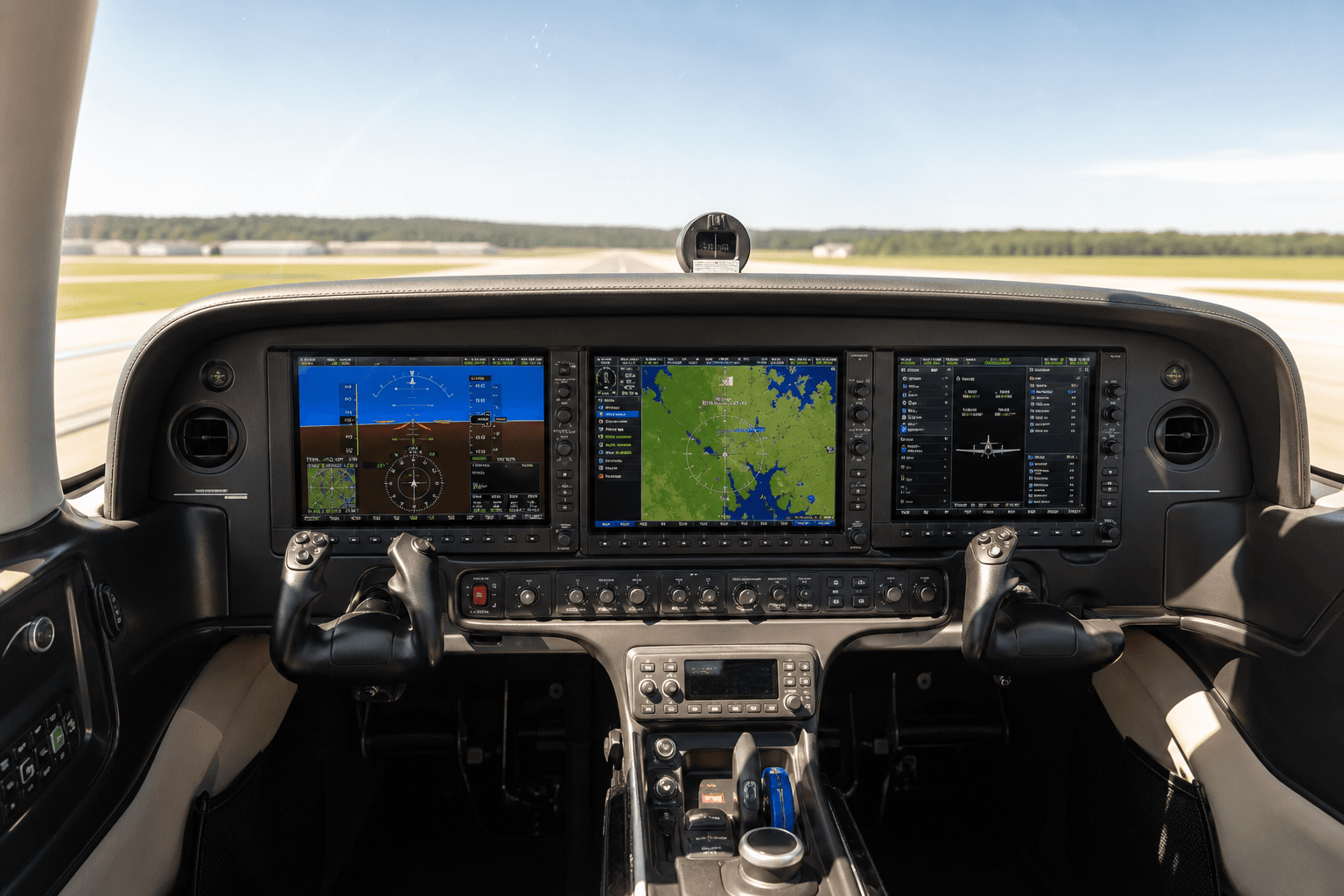
Illustration: The Touch & Go
Airhart Avionics Updates Flight Controls to Enhance Safety and Accessibility
Airhart Avionics is revolutionizing flight control systems by replacing outdated DOS-era technology, aiming to improve safety and make flying more accessible.
The gist
Airhart Avionics modernizes flight controls, boosting safety and accessibility by retiring old DOS-based systems.
Airhart Avionics is spearheading an upgrade in flight control technology by moving away from reliance on legacy DOS-era systems. The company is focused on replacing these outdated platforms with modern avionics solutions designed to improve safety and operational efficiency. This initiative reflects ongoing efforts within the aviation industry to bring critical flight controls into alignment with current technological standards.
The transition away from DOS-based flight controls signifies a major step toward reducing risks related to hardware and software obsolescence that have long challenged pilots and maintenance crews. By introducing updated avionics systems, Airhart aims to enhance reliability, reduce system failures, and simplify pilot interaction with flight controls. Their approach also emphasizes usability, making flying more accessible for a wider range of operators.
Legacy avionics systems, especially those anchored in DOS-era software, impose limitations on both safety and functionality. Airhart's initiative addresses these barriers by deploying modern hardware capable of supporting advanced software frameworks, enhanced diagnostics, and integration with contemporary navigation aids. This update improves situational awareness and allows for smoother pilot workflows, which collectively contribute to safer flights.
The modernization of flight controls by Airhart Avionics fits within a larger context of aviation technology updates necessary to keep pace with evolving safety regulations and pilot expectations. As the industry grapples with the costs and complexities of maintaining older avionics, initiatives like Airhart’s provide a practical pathway for operators to transition without compromising operational continuity.
Looking forward, the shift toward modern avionics led by companies like Airhart is expected to accelerate as regulators and operators recognize the benefits of abandoning obsolete systems. This could prompt wider industry adoption of updated flight control technology, ultimately leading to safer skies and expanded access to aviation for general and business pilots alike.
Read more
All Aviation Safety →
Light aircraft crashes into upper floors of Beijing's China Zun tower
Social medai video and photos show debris and wreckage at base of 109-storey China Zun tower. Images circulating on social media are indicating that a light aircraft has collided with one of the upper floors of the China Zun skyscraper in Beijing. Video images show debris falling to the ground adjacent to the building —…

FedEx Returns Four MD-11Fs to Service as Fleet Reintegration Targets Peak Season
Carrier returning trijets from grounding after fix developed in wake of UPS accident at Louisville. US freight specialist FedEx is expecting to have its full Boeing MD-11F fleet back in service before this year's peak period. The MD-11F fleet was grounded last November following the fatal UPS accident at Louisville. National Transportation Safety Board investigators…

Seven Key Airports Serve as Vital Flight Diversion Hubs Worldwide
From Gander to Shannon, these airports serve as aviation's ultimate safety nets, handling emergency diversions and ETOPS operations across the world
US Congress Faces Roadblocks Passing ADS-B In Mandate Amid Stakeholder Disputes
Private pilots do not want ADS-B data used to help airports levy landing fees; airports say, why not? US lawmakers are still tussling over legislation to require aircraft carry ADS-B In collision avoidance technology, nearly one-and-a-half years after a deadly midair collision sparked cross-industry support for better collision-prevention systems. The Senate and House of Representatives…
The Daily Touch & Go
The day's best aviation news in your inbox. Free, no spam.