

Image: ShinePhantom · CC BY-SA 3.0 · via Wikimedia Commons
Turkish Aerospace to Restart T-70 Helicopter Production After US Sanctions Lifted
Following US sanctions relief amid warming Ankara-Washington ties, Turkish Aerospace has resumed production of the T-70 helicopter with plans to fulfill original order targets and expand exports.
The gist
Turkish Aerospace restarts T-70 helicopter production after US sanctions lifted, aiming for full delivery and strong export demand.
Continuing coverage
All Farnborough Airshow →- Air Cambodia places landmark order for 20 COMAC C909 jets at Farnborough
- Boeing returns to Farnborough Airshow with emphasis on rebuilding trust and safety
- Boeing to Introduce MQ-28 Ghost Bat for UK Collaborative Combat Aircraft Program
- Vertical Aerospace to Perform First Public eVTOL Flights at Farnborough Airshow 2026
- Philippine Airlines Set to Order Boeing 787-10 and Airbus A350-1000 at Farnborough Airshow
Turkish Aerospace Industries (TAI) is moving ahead with the production of its T-70 utility helicopter following recent relief from US-imposed sanctions. The T-70, a Turkish variant of the Sikorsky S-70 Black Hawk, had seen production delayed after Washington imposed sanctions triggered by Turkey's acquisition of Russia’s S-400 missile system. TAI's CEO Mehmet Demiroglu confirmed at the Farnborough air show that production resumed earlier this year, backed by a fresh export license and a new order agreement with Sikorsky for 39 additional units.
TAI had previously completed 38 T-70 units before the sanctions caused interruptions. The new agreement restores momentum to the program, which originally planned for 109 T-70 helicopters to be built. Demiroglu stated that after fulfilling the current batch of 39 aircraft, TAI could produce another 32 units to reach the intended total. The T-70 serves as a key platform for the Turkish Air Force, Army, and various parapublic agencies.
The decision by the Trump administration to improve relations with Turkey, including steps to ease sanctions, helped pave the way for this production revival. Sanctions had strained Ankara-Washington ties, primarily over Turkey's purchase of the S-400 system from Russia, which prompted sanctions affecting defense collaborations. The new diplomatic approach also holds the prospect of Turkey rejoining the Lockheed Martin F-35 program, demonstrating a broader thaw in military cooperation.
The T-70 helicopter is a heavily localized variant of the Sikorsky S-70, featuring indigenous Turkish designs in its structures and avionics systems, as well as domestically produced Tusas Engineering Industries T700 engines. This local content exemplifies Turkey’s ongoing efforts to increase its defense technology sovereignty, cutting dependency on foreign suppliers amid geopolitical tensions.
Demiroglu highlighted that the T-70 will remain an essential asset as the Turkish military prepares to replace more than 200 helicopters expected to retire by 2040. This long-term fleet renewal process makes the full allotment of T-70 units critical to maintain operational capabilities. The T-70’s role spans utility and transport missions, aligning with Turkey's strategic military requirements for versatile rotorcraft.
Beyond domestic needs, TAI has ambitious export plans, particularly for its next-generation helicopter development, the 11-ton T925. The T925, which targets both civilian and military applications, is set to fly in 2027. Demiroglu projected a total demand for the platform reaching 400-500 units globally. This forecast underscores Turkey’s aim to capture a niche in the competitive helicopter market with indigenous design and manufacturing.
This renewed production and future helicopter development reflect a broader Turkish strategy to bolster its aerospace industry and secure technological independence. The move reinforces Ankara’s trajectory toward expanding its defense exports and sustaining its military modernization through locally produced platforms in partnership with key US firms like Sikorsky.
Frequently asked questions
- What caused production of the T-70 helicopter to halt previously?
- US sanctions imposed due to Turkey's purchase of the Russian S-400 missile system led to delays in T-70 production.
- How many T-70 helicopters does Turkish Aerospace plan to produce in total?
- TAI plans to complete 109 T-70 units, combining previously built 38 helicopters with upcoming batches of 39 and potentially 32 units.
- What are Turkey's prospects for the T-70 and future helicopter demand?
- Turkey expects strong domestic demand to replace over 200 military helicopters by 2040 and projects 400-500 units demand for the future T925 platform globally.
Read more
All Military/Defense →
Boeing to Introduce MQ-28 Ghost Bat for UK Collaborative Combat Aircraft Program
Australian-developed CCA aimed at future operational requirement. Boeing will be promoting its MQ-28 Ghost Bat at the Farnborough air show, in anticipation of a future UK requirement for an operational collaborative combat aircraft (CCA). "We definitely see some applicability in terms of its capability, and certainly in terms of its maturity to the UK armed forces," says Thom Breckenridge, managing director of Boeing Defence UK. "BD UK could be an important partner in sustainment and potentially other pieces, when we think payload or otherwise," he said during a pre-show briefing on 13 July. The UK's recently published Defence Investment Plan (DIP) details a CCA demonstration activity which will see a UK system flown before 2030, describing such a platform as an " autonomous fighter jet ". It did not, however, provide any firm detail about a possible future acquisition. "We are very enthusiastic about the platform and the capability, and certainly see applicability for MQ-28 in the UK," Breckenridge says of the Australian-developed Ghost Bat. "The maturity of the platform relative to competitors sets it apart, in addition to the unique capability and the way it was developed," he claims. Boeing also will use the 20-24 July event to promote its T-7A Red Hawk, which is among several likely competitors for the Royal Air Force's (RAF's) future jet trainer requirement. "We think it's the best answer for the UK's JTS [jet training system] competition," says Boeing Defence UK fixed-wing director Ben Kelsey. "It brings not just an aircraft but a ground-based training system, and synthetic alongside live training, in a way that we think answers the UK's needs better than any other solution." The process of selecting a replacement for BAE Systems' Hawk T2 remains at an early stage, with the DIP outlining an initial £360 million ($482 million) through the rest of this decade towards a fleet recapitalisation that also will provide new aircraft for the RAF's Red Arrows aerobatic display team. "We are thinking about how we position that [proposal] best for the UK," Kelsey says, referring to a letter of intent signed last November under which BAE would perform final assembly of the T-7 if it is selected for RAF service. "We will be looking with interest at the RFP [request for proposals] as that evolves over the next few months," he says, with Boeing committed to "bringing as much [work] as possible into UK suppliers". Boeing Defence UK will in December mark the 30th anniversary of its formation, with the company having grown from an initial six employees to a current total of 2,000. Its personnel are located at multiple military sites, among them Lossiemouth, Waddington, Wattisham, along with Bristol and Gosport. Its main activities include delivering comprehensive support for the RAF CH-47 Chinook and British Army AH-64E Apache helicopters, and for the RAF's P-8A Poseidon maritime patrol aircraft. It also delivers pilot and maintainer training for the air force's fleet of C-17 strategic transports, using a facility in Farnborough. "We are in places where the RAF or the army are, and we are working alongside them every day," Breckenridge notes. The company is also supporting the ongoing introduction of the E-7A Wedgetail airborne early warning and control system, with the first of three 737NG-based examples having been undergoing testing since May at RAF Lossiemouth in Scotland. The RAF’s first of three E-7A Wedgetails arrived at its Lossiemouth base in May. Source: Crown Copyright "We are looking forward to seeing E-7 go through flight trials over the coming months and then get into service in due course, as well as seeing the next couple of aircraft get finished," Kelsey says. "We have got some work ahead of us with the RAF as we go through that final testing stage, but we have got a dedicated, focused team who certainly see the need to get that capability completed and handed over. "The need to get E-7 into service is clear, and we are very focussed on that. But we are very focussed also on making sure that the product is safe and to the quality level that we'd expect, so that it delivers as we know it can, as a world-beating capability."
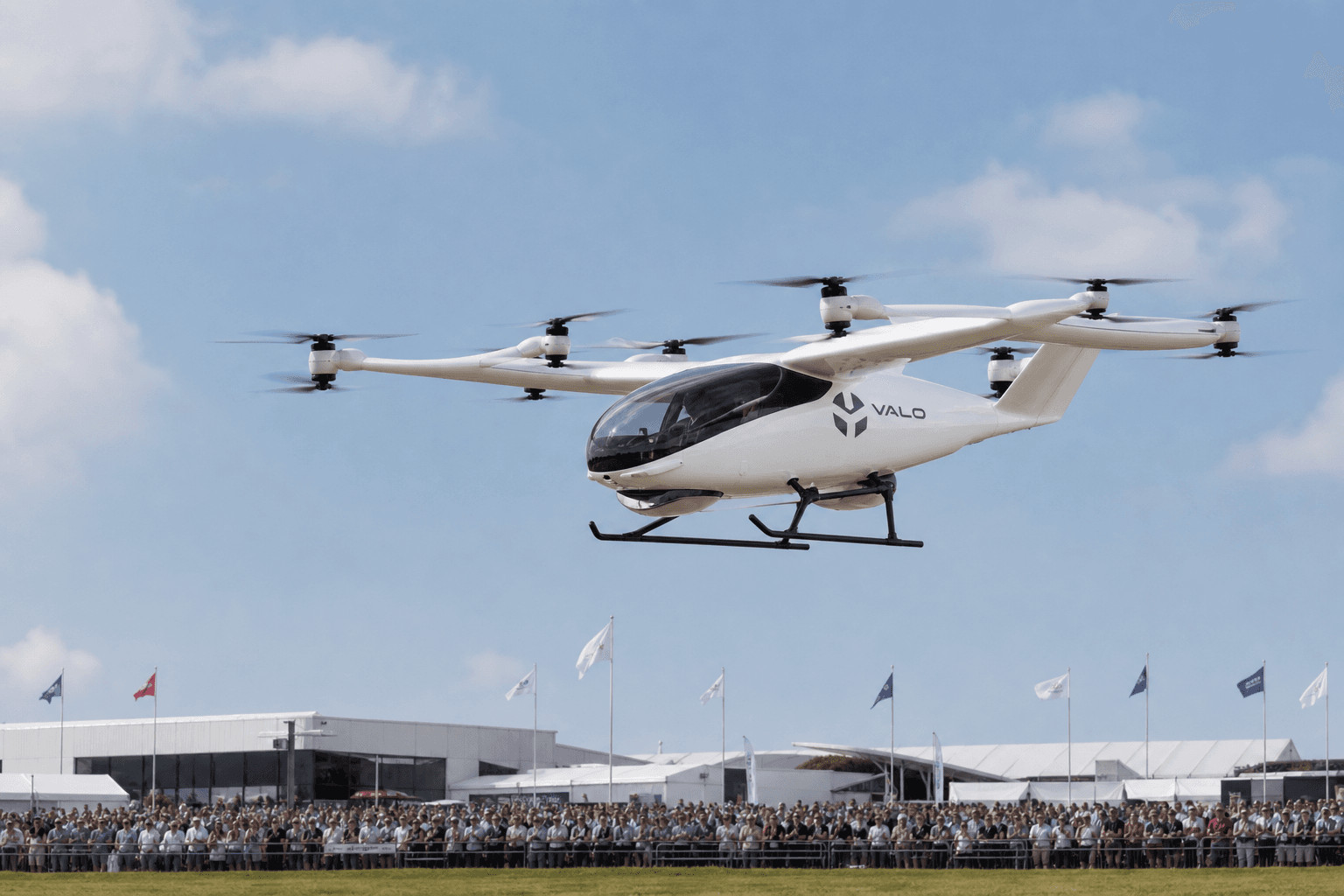
Vertical Aerospace to Perform First Public eVTOL Flights at Farnborough Airshow 2026
Vertical Aerospace (NYSE: EVTL), a pioneering company in UK electric aviation, is set to make history at the Farnborough International Airshow (20-24 July 2026). ezstandalone.cmd.push(function () { ezstandalone.showAds(119); }); The firm plans to conduct the first-ever public electric vertical take-off and landing (eVTOL) demonstration flights at the prestigious event. This milestone highlights Vertical’s rapid progress toward certification and eventual commercial operations. The demonstrations arrive at a pivotal moment for the company. In the past year, Vertical has achieved several major advancements. ezstandalone.cmd.push(function () { ezstandalone.showAds(127); }); It launched its commercial aircraft, named Valo, completed successful piloted transition flights, strengthened its financial position, and expanded its global network of technology partners. The company has also advanced its hybrid-electric defence initiatives while making steady headway in its certification programme. ezstandalone.cmd.push(function () { ezstandalone.showAds(128); }); Having proven the aircraft’s core capabilities, Vertical now shifts focus to the next critical stages: certification, industrialisation, and commercialisation. These efforts position the company to deliver sustainable, efficient air mobility solutions in the near future. Photo Credit: Vertical Aerospace Public Flights and Full-Scale Display At Farnborough, Vertical will showcase its progress in two key ways. Visitors will witness public piloted flights of the full-scale prototype, and they can explore a full-scale commercial model of Valo on the exhibition floor. ezstandalone.cmd.push(function () { ezstandalone.showAds(129); }); Stuart Simpson, CEO of Vertical Aerospace , expressed confidence in the company’s trajectory. “Vertical arrives at Farnborough with the key building blocks now in place,” he said. “Over the past year we’ve transformed the business – from launching Valo and achieving piloted transition to strengthening our financial position and expanding our industrial ecosystem. We’ve proven the technology.” “Our focus now is executing the roadmap to certification, industrialisation and commercial service. Every milestone we deliver reduces risk, strengthens our competitive position and brings us closer to building one of the world’s leading electric aerospace companies.” ezstandalone.cmd.push(function () { ezstandalone.showAds(130); }); Flight Demonstrations Open to the Public Vertical intends to perform public demonstration flights throughout the airshow week, marking the first time an eVTOL aircraft flies publicly at Farnborough. These flights remain subject to weather and regulatory approval. The planned demonstrations follow a recent decision by the UK Civil Aviation Authority (CAA) to expand Vertical’s Permit to Fly. This approval allows the company to operate public flights beyond its base at Cotswold Airport. Since receiving this authorisation, Vertical’s test pilots have successfully flown to multiple locations, including RAF Brize Norton, RAF Benson, Blackbushe Airport, and Farnborough Airport itself. ezstandalone.cmd.push(function () { ezstandalone.showAds(131); }); These operations have broadened the flight test programme and provided valuable experience across different operating environments. Such real-world testing is essential as the company moves closer to full certification and commercial service. Attendees interested in the latest flight schedules can join the Vertical Aerospace Farnborough International Airshow 2026 WhatsApp channel for real-time updates. Photo Credit: Gareth Iwan Jones Exploring the Valo Aircraft In Hall 4, visitors will have the opportunity to examine the full-scale commercial model of Valo up close and meet members of the team developing this advanced electric aircraft. The displayed model builds directly on the success of the flying prototype currently performing at the show. ezstandalone.cmd.push(function () { ezstandalone.showAds(132); }); Vertical brings one of the industry’s most robust technology ecosystems to Farnborough. The company collaborates with leading global partners, including Honeywell Aerospace, Aciturri, Evolito, Hyundai WIA, Syensqo, Sonaca, and Isoclima. It also holds approximately 1,500 conditional pre-orders from customers across four continents, such as American Airlines, Avolon, Bristow, GOL, and Japan Airlines. This week, Vertical announced a strategic partnership with Near Earth Autonomy. The collaboration aims to integrate advanced autonomous flight capabilities into Valo, supporting both future defence and commercial applications. ezstandalone.cmd.push(function () { ezstandalone.showAds(133); }); Leadership Voices on the Future of Air Mobility Throughout the week, Vertical’s executives will participate in high-level discussions about Advanced Air Mobility (AAM) and the path to commercial electric aviation. On Monday, 20 July (11:15–12:00) in Hall 3 – AGN Theatre 1L, Stuart Simpson will join a panel on “UK Leadership in Advanced Air Mobility.” Moderated by Sir Stephen Hillier, Chair of the UK Civil Aviation Authority, the session will explore how the UK can convert its early advantages in aircraft development, regulation, and operations into long-term commercial success. ezstandalone.cmd.push(function () { ezstandalone.showAds(134); }); Other confirmed speakers include representatives from Bristow Group, the CAA, NATS, and the Department for Transport. On Tuesday, 21 July (15:00–16:00), Simpson will take part in the “Inside the eVTOL Market” panel at the show’s inaugural Finance Summit in Hall 4. Hosted by Cantor Fitzgerald, the discussion will feature several prominent CEOs. This will include Kyle Clark of BETA, JoeBen Bevirt of JOBY, and Adam Goldstein of Archer Aviation. ezstandalone.cmd.push(function () { ezstandalone.showAds(135); }); The panel will examine the sector’s current progress and future vision. Image Credit: Vertical Aerospace Milestones on the Horizon As Vertical advances toward certification and entry into service, the company has outlined several important upcoming targets: Critical Design Review (CDR): Expected completion by the end of 2026. This review will establish the certifiable design baseline and pave the way for building and testing certification-conforming aircraft. Industrialisation: Opening the early production aircraft assembly facility in Q3 2026, followed by expansion of the Vertical Energy Centre in Q4 2026. Hybrid-electric Programme: Selection of a long-term turbogenerator supplier during 2026, ahead of hybrid-electric flight testing in the first half of 2027. ezstandalone.cmd.push(function () { ezstandalone.showAds(136); }); These planned achievements demonstrate Vertical’s clear and structured approach to bringing safe, sustainable electric flight to market. With strong partnerships, growing customer interest, and tangible technical progress, the company is well-positioned to play a leading role in the emerging advanced air mobility sector. Farnborough 2026 offers the public and industry stakeholders a unique opportunity to witness the future of aviation taking shape in real time. ezstandalone.cmd.push(function () { ezstandalone.showAds(137); });
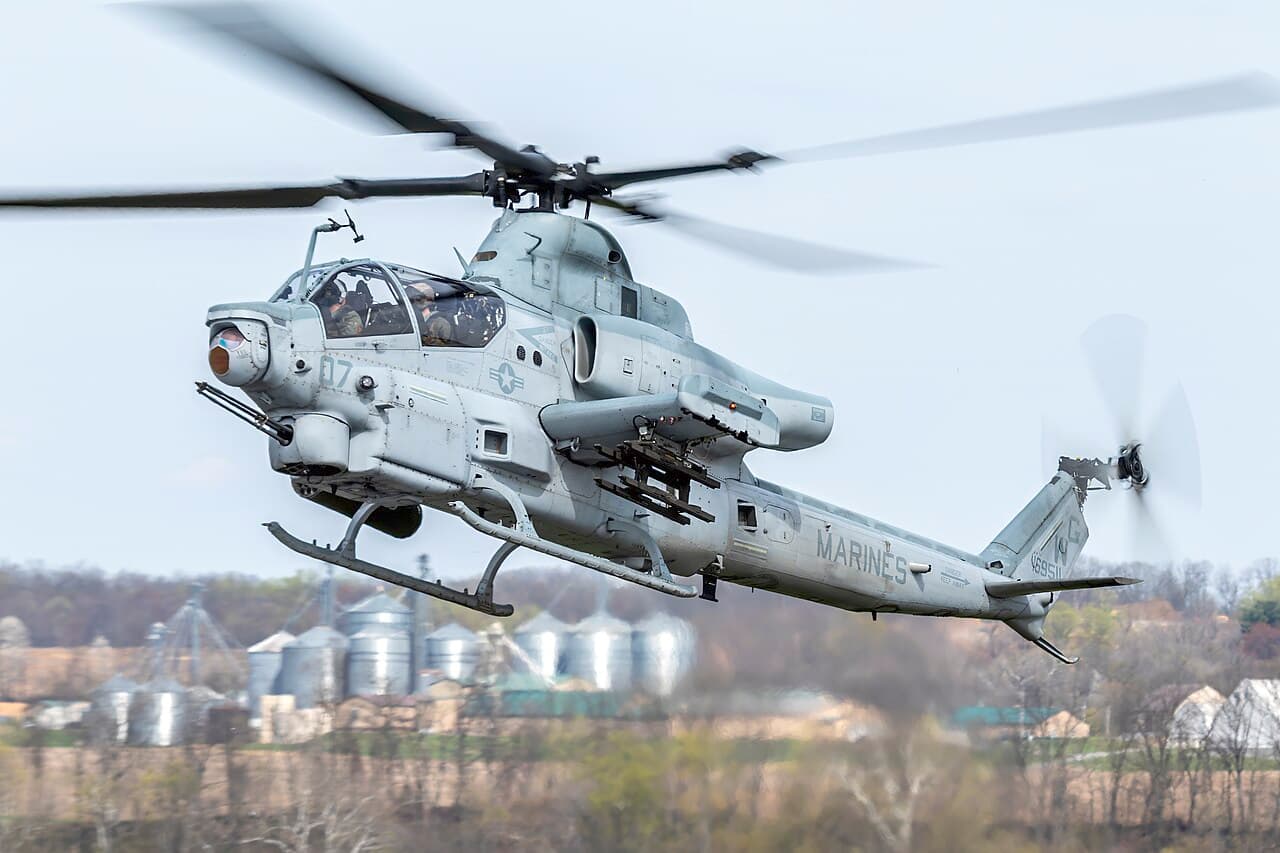
Bell to Upgrade 49 Marine Corps AH-1Z and UH-1Y Helicopters in $300M Contract
Bell has landed an estimated $300 million US Navy contract to upgrade as many as 49 US Marine Corps AH-1Z Viper and UH-1Y Venom helicopters. The contract covers 28 AH-1Z attack helicopters and 21 UH-1Y utility helicopters under the Structural and Power Improvements for NextGen Effects program, known as SPINE. Bell said it will begin the modification work at its Amarillo Assembly Center in Texas in mid-2027. The company expects to deliver the first upgraded helicopters in 2028. The contract covers an initial period and includes options that could extend the work for another three years. It uses several payment structures depending on the type of work involved. Bell described the total value as an estimate, meaning the Navy has not necessarily committed the full $300 million. SPINE will give the helicopters more electrical power and a new digital architecture designed to accommodate additional weapons, sensors and defensive equipment. The upgrade also supports Link 16, an advanced databus and long-range network-enabled weapons. Those capabilities will allow H-1 crews to receive targeting information from other aircraft and operate as part of a larger network of US and allied forces. Bell said the changes will allow the Marine Corps to add new technology more quickly as threats and mission requirements change. "SPINE will enable H-1 operators and maintainers to implement the equipment and technology needed to keep the aircraft as a fully interoperable member of the modern joint force throughout the lifetime of the H-1 fleet," Bell Program Manager Danielle Markham said. The UH-1Y will also receive improvements to its fast-rope, hoist and litter equipment, supporting personnel recovery missions in remote or austere locations. The Marine Corps refers to the new configuration as Series A. In addition to greater electrical capacity, it includes improved defensive systems and digital connectivity. Marine Corps officials expect the upgrades to help keep the Viper and Venom relevant into the 2040s. "The SPINE program will provide a significant increase to overall H-1 electrical capability to optimize advanced battlefield technology and ensure the H-1 fleet will continue to be relevant into the 2040s," said Col. Jason Duke, Program Manager for the Navy's H-1 program office. Bell completed SPINE modifications on the first AH-1Z and UH-1Y aircraft in the fall of 2025. The company sent both helicopters to Naval Air Station Patuxent River in Maryland for flight testing. The new contract, known as Phase 3.0, moves the program from the initial aircraft into fleet modifications. The AH-1Z and UH-1Y share about 85% of their components, including engines, rotor systems, transmissions and avionics. The common design allows Marine Corps units to operate the attack and utility helicopters together while reducing maintenance and logistics requirements. Bell completed deliveries of the Marine Corps' 189-aircraft AH-1Z program of record in 2022. The company delivered the last of 160 UH-1Ys included in the original program in 2018. The combined US Marine Corps fleet includes 349 Viper and Venom helicopters. Slug: bell-300m-contract-upgrade-marine-corps-h-1-helicopters Meta title: Bell wins $300M Marine Corps helicopter upgrade deal Meta description: Bell will upgrade up to 49 US Marine Corps AH-1Z Viper and UH-1Y Venom helicopters under a contract valued at about $300 million. Social title: Bell wins $300M contract to upgrade 49 US Marine Corps helicopters Social description: The SPINE program will add electrical capacity, digital architecture and provisions for new weapons, sensors and defensive systems.
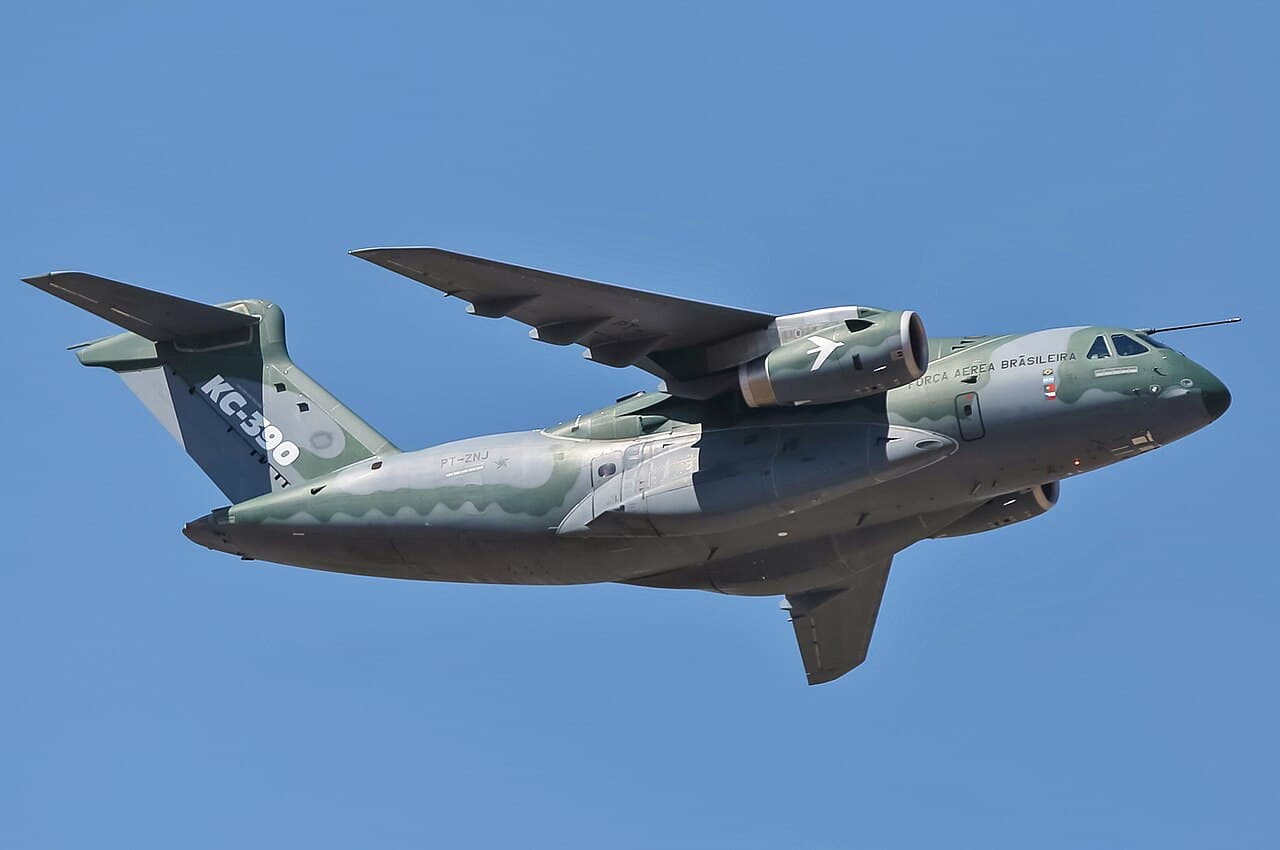
Embraer Reports Record $34.5 Billion Order Backlog in Q2 2026, Driven by Commercial and Defense Growth
Embraer, the Brazilian aerospace leader, has reported a firm order backlog of US$34.5 billion for the second quarter of 2026. This marks the company’s seventh straight record high, highlighting strong global demand across its business units. ezstandalone.cmd.push(function () { ezstandalone.showAds(119); }); The backlog grew 7% from the first quarter of 2026 and rose 16% compared to the same period in 2025. This steady growth reflects Embraer’s expanding presence in commercial aviation, executive jets, defence, and services. Strong Performance Across Key Segments Commercial Aviation led with a US$15.1 billion backlog, up 15% year-over-year. A major driver was Azorra’s firm order for 15 E195-E2 aircraft. This pushed the E2 family beyond 500 firm orders, with customers on every continent. ezstandalone.cmd.push(function () { ezstandalone.showAds(127); }); Additional momentum came from deals announced around the Farnborough Airshow, including orders from Binter Canarias, Luxair, Fuji Dream Airlines, and an agreement with Abra Group for up to 45 E195-E2 jets. Embraer also signed an MoU with Azorra for up to 30 E-Freighters. Image Credit: Embraer The commercial unit achieved a healthy 1.8x book-to-bill ratio over the last 12 months, showing robust order intake relative to revenue. ezstandalone.cmd.push(function () { ezstandalone.showAds(128); }); Executive Aviation recorded a US$7.8 billion backlog, a 5% increase from Q2 2025. New certifications for the Praetor 600E and Praetor 500E models by ANAC, FAA, and EASA strengthen future growth. The segment posted a solid 1.1x book-to-bill ratio. Defense & Security delivered impressive results with a US$6.1 billion backlog — up 42% year-over-year. A landmark agreement with the United Arab Emirates for the C-390 Millennium transport aircraft was a key highlight. ezstandalone.cmd.push(function () { ezstandalone.showAds(129); }); Services & Support also reached a record US$5.5 billion backlog, growing 12% from the prior year. New agreements, such as the long-term support deal with Jazz Aviation in Canada, underscore Embraer’s focus on aftermarket revenue. Image Credit: Embraer Solid Delivery Numbers and Operational Momentum Embraer delivered 65 aircraft in Q2 2026 (20 commercial and 45 executive jets). This represents a 48% increase quarter-over-quarter and the strongest second-quarter performance in 16 years. These deliveries support Embraer’s full-year 2026 guidance of 80-85 commercial aircraft and 160-170 executive jets. The company continues to benefit from production levelling initiatives and a healthy order pipeline. ezstandalone.cmd.push(function () { ezstandalone.showAds(130); }); Implications for the Industry Embraer’s consistent backlog growth occurs amid strong demand for efficient regional jets and versatile defence solutions. The E2 family offers lower operating costs and superior performance, appealing to airlines seeking to replace older fleets. Meanwhile, the C-390 Millennium gains international traction as a reliable multi-mission platform. The company’s diversified portfolio — spanning commercial, executive, defence, and services — provides resilience against sector-specific fluctuations. Record services backlog also signals growing recurring revenue, which enhances long-term stability. ezstandalone.cmd.push(function () { ezstandalone.showAds(131); }); Photo Credit: Embraer Looking Ahead With production slots still available before 2030 and a strong order book, Embraer is well-positioned for continued expansion. The company reaffirmed its 2026 delivery targets and remains focused on innovation, sustainability, and global partnerships. Embraer’s latest results demonstrate the strength of its product lineup and execution capabilities. As demand for modern, efficient aircraft rises worldwide, the Brazilian manufacturer continues to solidify its role as a key player in global aerospace.
The Daily Touch & Go
The day's best aviation news in your inbox. Free, no spam.