

Image: U.S. Air Force photo/Senior Airman Julius Delos Reyes · Public domain · via Wikimedia Commons
Japan's GCAP Fighter Offers Sovereign Control Beyond F-35's Limits
Japan partners with the UK and Italy on the GCAP sixth-generation stealth jet, aiming for independent command over fighter technology unlike its F-35 fleet.
The gist
Japan’s GCAP collaboration promises independent fighter tech control, overcoming limits of the F-35 program.
Continuing coverage
All F-35 →- Lockheed Martin Q2 2026 earnings surge on eased prior contract losses and strong missile sales
- At Least 15 F-35s Delivered Without Required Equipment Since May 2025
- USAF Plans 267 F-15EX Fighters to Complement Growing F-35 Fleet as 'Missile Trucks'
- Canada Quietly Advances F-35 Fighter Jet Payments Amid Public Debate on Purchase
- UK F-35s intercept Russian Tu-142 near Royal Navy carrier HMS Prince of Wales
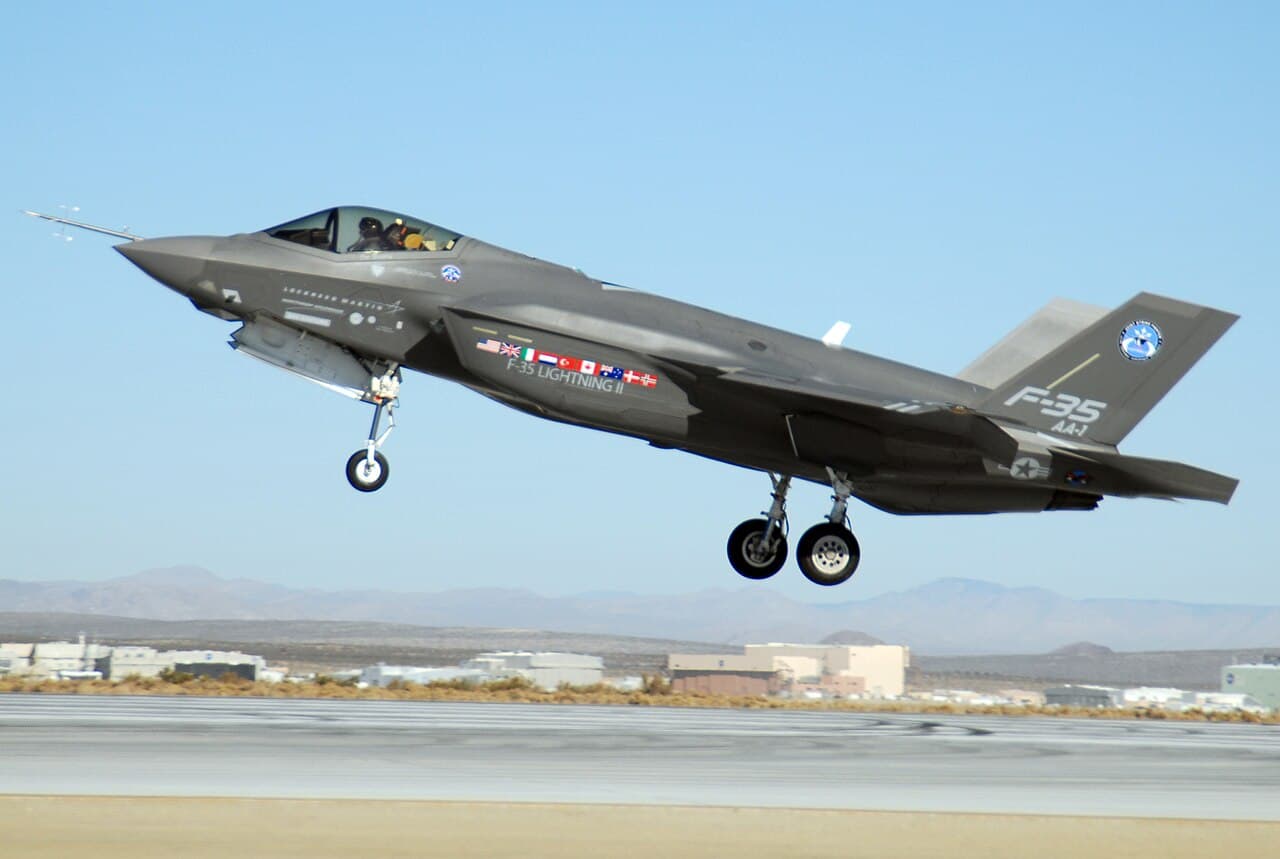
Japan is collaborating with the United Kingdom and Italy under the Global Combat Air Program (GCAP) to create a sixth-generation stealth fighter aircraft. This multilateral effort, managed by the EdgeWing Consortium, revolves around the BAE Systems-designed Tempest airframe. Unlike Japan’s current Lockheed Martin F-35 fleet, this will be Japan's first independently developed fighter jet airframe, signaling a major advancement in Japanese defense autonomy.
Japan currently operates the second-largest F-35 fleet after the United States, with a planned inventory of 147 airframes split between F-35A and F-35B variants. While vital to both the Japan Air Self-Defense Force (JASDF) and Japan Maritime Self-Defense Force (JMSDF), these jets are assembled domestically only as part of Lockheed Martin’s global supply chain. The U.S. retains primary production authority and strict control over the aircraft’s complex software and classified components.
Since World War II, Japan’s defense aviation industry has relied heavily on U.S. technology due to constitutional constraints that limit offensive military development. Japanese aerospace firms have built licensed or derivative platforms, such as the Mitsubishi F-2—a specialized adaptation of the F-16 designed for maritime operations. The F-35 program has been the most ambitious recent collaboration, with Mitsubishi Heavy Industries operating a final assembly plant in Nagoya, one of only three worldwide.
Despite this cooperation, the dependence on U.S. control over software updates and sensitive technologies has created operational challenges. The F-35 fleet has experienced persistent software glitches and capability limitations since its 2006 debut. U.S. Department of Defense evaluations noted significant readiness issues, with a reported fleet availability sometimes as low as 25%. Planned upgrades under Technology Refresh Three Block Four were drastically curtailed due to technical problems and delayed until solution of Pratt & Whitney’s F135 engine upgrade issues by 2031.
The U.S. Air Force has even halved its F-35 deliveries this year to mitigate capability gaps. Meanwhile, allied operators like Japan have faced escalating costs and extended delivery schedules. These limitations have raised concerns about the sustainability and tactical effectiveness of the F-35 fleet, catalyzing Japan’s pursuit of the GCAP as a path to sovereign control over fighter technology.
GCAP’s cooperative framework offers Japan not only an advanced sixth-generation fighter but full ownership over all created intellectual property. This promises autonomy in operating and modifying the platform, unlike the closed, classified systems inherent in the F-35. The Tempest will enable Japan to independently address technical issues and tailor capabilities to its strategic needs without U.S. restrictions.
The new GCAP fighter is designed to surpass the F-35 in combat radius, weapon capacity, electronic warfare, and network integration. It will serve as a command node within an interconnected ‘combat cloud’, managing ‘loyal wingman’ drones and facilitating seamless communication across allied assets. This integration enhances Japan’s operational reach and interoperability with coalition partners, preparing it for emerging challenges in the Indo-Pacific region.
Japan’s defense modernization is also advancing command and control systems that synergize air, maritime, and land forces under the Permanent Japan Joint Operations Command since 2025. The GCAP platform will significantly amplify these capabilities, providing real-time data exchange with JMSDF Aegis destroyers and Japan Ground Self-Defense Force missile units, establishing a sophisticated joint combat network.
The GCAP consortium leaders reaffirmed their commitment in 2022 to a rules-based international order amid growing geopolitical tensions. For Japan, the GCAP project represents a strategic leap toward defense self-reliance and cutting-edge airpower, addressing long-standing concerns about the limitations of foreign-dependent fighter fleets.
Frequently asked questions
- What is the Global Combat Air Program (GCAP)?
- GCAP is a trilateral initiative by Japan, the UK, and Italy to develop a sixth-generation stealth fighter jet based on the BAE Systems Tempest design, with shared ownership of intellectual property.
- How does the GCAP fighter differ from Japan's existing F-35 fleet?
- Unlike the F-35, which is produced and controlled primarily by the U.S. with restricted software access, GCAP gives Japan sovereign control over the aircraft's software and systems, enabling independent operation and modification.
- Why is Japan pursuing the GCAP fighter project?
- Japan seeks to overcome limitations of the F-35 program, such as software issues, limited upgrade rights, and reliance on U.S. control, aiming for greater defense autonomy and advanced capabilities for regional security challenges.
Read more
All Military/Defense →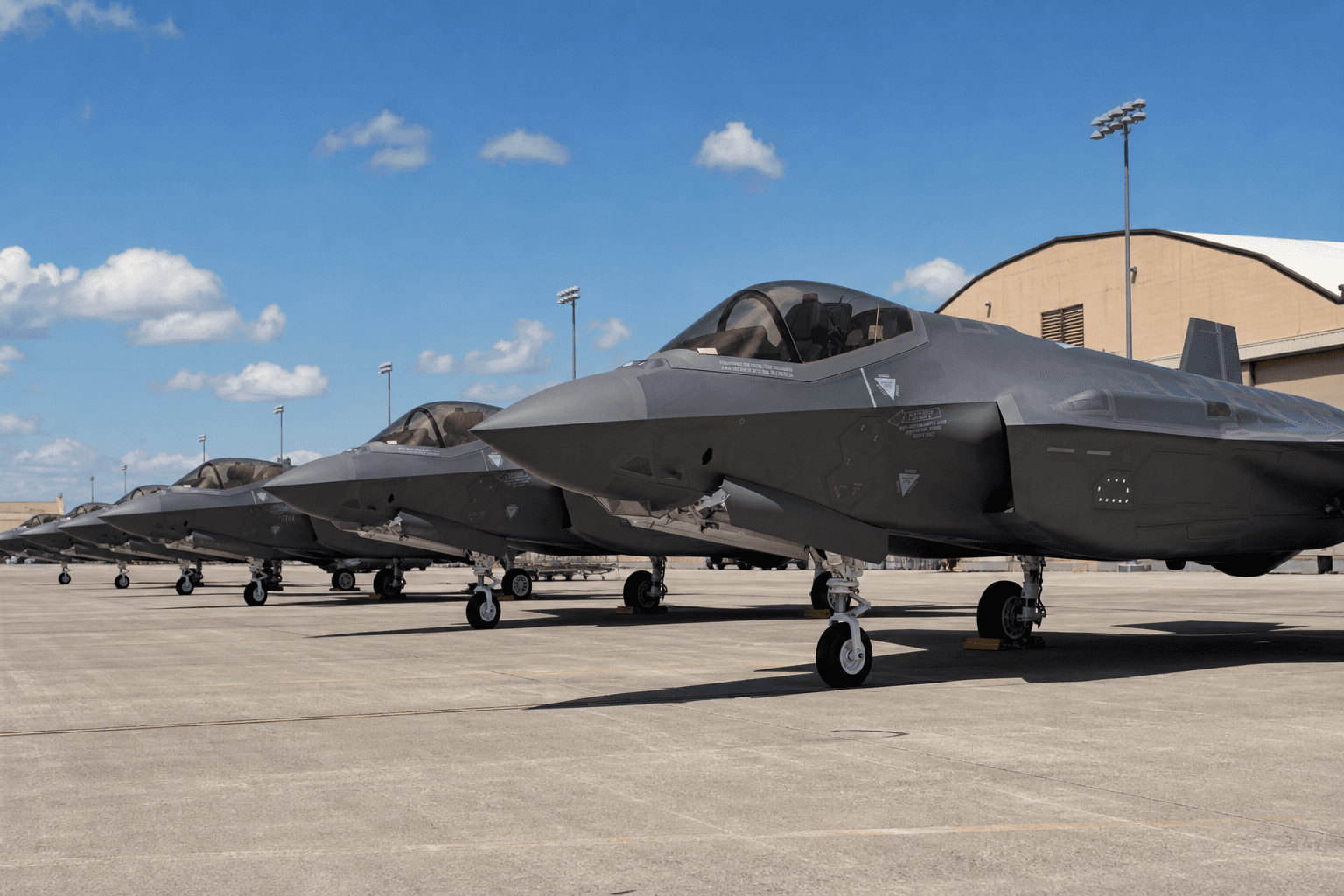
At Least 15 F-35s Delivered Without Required Equipment Since May 2025
Pictured is a U.S. Air Force photo of F-35A fighters at Jacksonville Air National Guard Base, Fla. on July 9, 2025. At least 15 F-35s built in the last year have lacked required equipment, according to a Defense Contract Management Agency (DCMA) list sent to sister publication Defense Daily after a Freedom of Information Act (FOIA) request. On Feb. 7, Defense Daily requested from DCMA a list of all Department of Defense Form DD-250s–Material Inspection and Receiving Reports–filed with the agency since May 2025, for all Lockheed Martin F-35 fighters delivered to the U.S. Air Force, U.S. Navy, and U.S. Marine Corps between May 1, 2025, and Feb. 6, 2026. When a military service accepts a system but does not mark it as delivered because of material shortfalls, that system is "DD-250ed" and is in a not operationally ready-supply (NORS) status until the gaps are filled. The signing of the "receipt"–the DD-250–marks a transfer in ownership from the contractor to the federal government. Nine "DD-250ed" F-35s are on the list provided by DCMA on July 13 in response to the FOIA request–one Marine F-35B to be delivered/ferried to VMFA-533 at Marine Corps Air Station Beaufort, S.C., three Navy F-35Cs to be delivered/ferried to VFA-125, a fleet replacement squadron at Naval Air Station Lemoore, Calif., one F-35A to be delivered/ferried to the 325 th Fighter Wing, a training wing at Tyndall AFB, Fla., and four F-35As to be delivered/ferried to the 125 th Fighter Wing, an Air National Guard domestic air defense wing. Asked why each of the above nine aircraft were "DD-250ed," the F-35 Joint Program Office (JPO) wrote in a July 14 email that "we cannot detail the specific equipment shortfalls, resolution timelines, or variant mix of these aircraft." "Due to program security reasons, we are protecting any additional information with enhanced security measures," according to the JPO. In addition to the above nine aircraft, six Marine Corps F-35s are in NORS status as "DD-250ed." Marine Lt. Gen. Gregory Masiello, the director of the F-35 Joint Program Office (JPO), testified last month that "we have accepted six aircraft for the Marine Corps that do not have a radar installed" because the Marine Corps is awaiting the installation of the Northrop Grumman [NOC] APG-85 radar, which the Pentagon expects to field in the first half of 2028. The APG-85 is critical to the 55 upgrades in the Block 4 program–22 of which have fielded so far, including seven last year, and six on target for this year, according to Masiello. For full functionality, the APG-85 and Block 4 require 62 kilowatts to 80 kilowatts (kW) of cooling versus the 32 kW on the plane now. The current mission capable rate of the F-35 is 56 percent, and the full mission capable rate is 25 percent. Radar mountings in the F-35's nose are different for the current APG-81, also by Northrop Grumman, and the APG-85–a difference which has helped complicate fielding of the new radar that was to deliver with F-35 Lot 17. The Air Force has been considering an APG-81/APG-85 dual-mount bulkhead, though the latter may take two years to field. The service's fiscal 2027 future years defense plan (FYDP) contains $133 million in fiscal 2031 for retrofitting 14 F-35As with APG-85s–a unit cost of $9.5 million per radar, and outside the FYDP the service said it plans to spend about $1.6 billion to retrofit another 167 jets with the APG-85. The first signed DD-250 for an F-35 in Lot 17 was on July 8, 2025, for an F-35A delivered/ferried the next day to the 125th Fighter Wing in Jacksonville, according to the list provided by DCMA in response to the FOIA request. Radar-less F-35s must fly with nose ballast to balance the fighter during flight. Temporarily radar-less fighters are not unprecedented. For example, in the late 1960s, McDonnell Douglas, now part of Boeing, put lead in the nose of the F-4J for the Navy/Marine Corps due to late deliveries of the fighter's government furnished equipment radar by Westinghouse, now part of Northrop Grumman, and in the 1980s, the Panavia Tornado F2 interceptor had so-called "Blue Circle" concrete in the nose due to delays in the development of the fighter's Foxhunter radar by GEC-Marconi, now part of BAE Systems. British Aerospace, Germany's MBB, and Aeritalia built the Panavia Tornado. Those companies are now part of BAE Systems, Airbus, and Leonardo, respectively. A version of this story originally appeared in sister publication Defense Daily .
USAF Plans 267 F-15EX Fighters to Complement Growing F-35 Fleet as 'Missile Trucks'
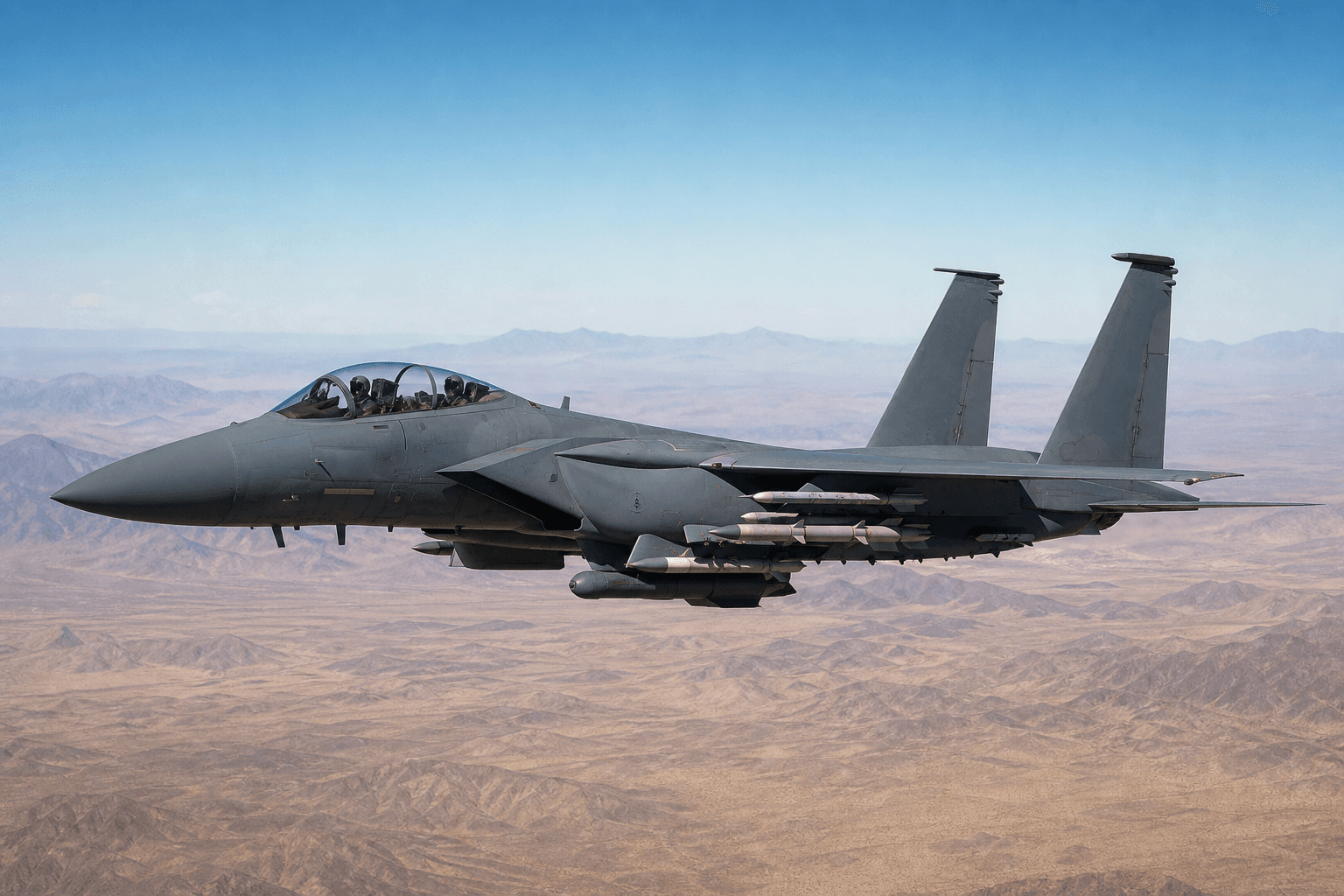
The Lockheed Martin Lightning II fighter jet is the world's most advanced fighter and is taking its place as the second-most in-service fighter jet in the world (depending on how the numbers are counted). At the same time, the Air Force is planning to double the number of F-15EXs it is procuring to 267. Importantly, this is not so much increasing its F-15 fleet as it is intended to recapitalize the aging F-15E fleet as they age out and retire .
AirVenture 2026 Friday Highlights Include RAF Red Arrows and Modern Military Demos
var gform;gform||(document.addEventListener("gform_main_scripts_loaded",function(){gform.scriptsLoaded=!0}),document.addEventListener("gform/theme/scripts_loaded",function(){gform.themeScriptsLoaded=!0}),window.addEventListener("DOMContentLoaded",function(){gform.domLoaded=!0}),gform={domLoaded:!1,scriptsLoaded:!1,themeScriptsLoaded:!1,isFormEditor:()=>"function"==typeof InitializeEditor,callIfLoaded:function(o){return!(!gform.domLoaded||!gform.scriptsLoaded||!gform.themeScriptsLoaded&&!gform.isFormEditor()||(gform.isFormEditor()&&console.warn("The use of gform.initializeOnLoaded() is deprecated in the form editor context and will be removed in Gravity Forms 3.1."),o(),0))},initializeOnLoaded:function(o){gform.callIfLoaded(o)||(document.addEventListener("gform_main_scripts_loaded",()=>{gform.scriptsLoaded=!0,gform.callIfLoaded(o)}),document.addEventListener("gform/theme/scripts_loaded",()=>{gform.themeScriptsLoaded=!0,gform.callIfLoaded(o)}),window.addEventListener("DOMContentLoaded",()=>{gform.domLoaded=!0,gform.callIfLoaded(o)}))},hooks:{action:{},filter:{}},addAction:function(o,r,e,t){gform.addHook("action",o,r,e,t)},addFilter:function(o,r,e,t){gform.addHook("filter",o,r,e,t)},doAction:function(o){gform.doHook("action",o,arguments)},applyFilters:function(o){return gform.doHook("filter",o,arguments)},removeAction:function(o,r){gform.removeHook("action",o,r)},removeFilter:function(o,r,e){gform.removeHook("filter",o,r,e)},addHook:function(o,r,e,t,n){null==gform.hooks[o][r]&&(gform.hooks[o][r]=[]);var d=gform.hooks[o][r];null==n&&(n=r+"_"+d.length),gform.hooks[o][r].push({tag:n,callable:e,priority:t=null==t?10:t})},doHook:function(r,o,e){var t;if(e=Array.prototype.slice.call(e,1),null!=gform.hooks[r][o]&&((o=gform.hooks[r][o]).sort(function(o,r){return o.priority-r.priority}),o.forEach(function(o){"function"!=typeof(t=o.callable)&&(t=window[t]),"action"==r?t.apply(null,e):e[0]=t.apply(null,e)})),"filter"==r)return e[0]},removeHook:function(o,r,t,n){var e;null!=gform.hooks[o][r]&&(e=(e=gform.hooks[o][r]).filter(function(o,r,e){return!!(null!=n&&n!=o.tag||null!=t&&t!=o.priority)}),gform.hooks[o][r]=e)}}); #gform_wrapper_1064[data-form-index="0"].gform-theme,[data-parent-form="1064_0"]{--gf-color-primary: #204ce5;--gf-color-primary-rgb: 32, 76, 229;--gf-color-primary-contrast: #fff;--gf-color-primary-contrast-rgb: 255, 255, 255;--gf-color-primary-darker: #001AB3;--gf-color-primary-lighter: #527EFF;--gf-color-secondary: #fff;--gf-color-secondary-rgb: 255, 255, 255;--gf-color-secondary-contrast: #112337;--gf-color-secondary-contrast-rgb: 17, 35, 55;--gf-color-secondary-darker: #F5F5F5;--gf-color-secondary-lighter: #FFFFFF;--gf-color-out-ctrl-light: rgba(17, 35, 55, 0.1);--gf-color-out-ctrl-light-rgb: 17, 35, 55;--gf-color-out-ctrl-light-darker: rgba(104, 110, 119, 0.35);--gf-color-out-ctrl-light-lighter: #F5F5F5;--gf-color-out-ctrl-dark: #585e6a;--gf-color-out-ctrl-dark-rgb: 88, 94, 106;--gf-color-out-ctrl-dark-darker: #112337;--gf-color-out-ctrl-dark-lighter: rgba(17, 35, 55, 0.65);--gf-color-in-ctrl: #fff;--gf-color-in-ctrl-rgb: 255, 255, 255;--gf-color-in-ctrl-contrast: #112337;--gf-color-in-ctrl-contrast-rgb: 17, 35, 55;--gf-color-in-ctrl-darker: #F5F5F5;--gf-color-in-ctrl-lighter: #FFFFFF;--gf-color-in-ctrl-primary: #204ce5;--gf-color-in-ctrl-primary-rgb: 32, 76, 229;--gf-color-in-ctrl-primary-contrast: #fff;--gf-color-in-ctrl-primary-contrast-rgb: 255, 255, 255;--gf-color-in-ctrl-primary-darker: #001AB3;--gf-color-in-ctrl-primary-lighter: #527EFF;--gf-color-in-ctrl-light: rgba(17, 35, 55, 0.1);--gf-color-in-ctrl-light-rgb: 17, 35, 55;--gf-color-in-ctrl-light-darker: rgba(104, 110, 119, 0.35);--gf-color-in-ctrl-light-lighter: #F5F5F5;--gf-color-in-ctrl-dark: #585e6a;--gf-color-in-ctrl-dark-rgb: 88, 94, 106;--gf-color-in-ctrl-dark-darker: #112337;--gf-color-in-ctrl-dark-lighter: rgba(17, 35, 55, 0.65);--gf-radius: 3px;--gf-font-size-secondary: 14px;--gf-font-size-tertiary: 13px;--gf-icon-ctrl-number: url("data:image/svg+xml,%3Csvg width='8' height='14' viewBox='0 0 8 14' fill='none' xmlns='http://www.w3.org/2000/svg'%3E%3Cpath fill-rule='evenodd' clip-rule='evenodd' d='M4 0C4.26522 5.96046e-08 4.51957 0.105357 4.70711 0.292893L7.70711 3.29289C8.09763 3.68342 8.09763 4.31658 7.70711 4.70711C7.31658 5.09763 6.68342 5.09763 6.29289 4.70711L4 2.41421L1.70711 4.70711C1.31658 5.09763 0.683417 5.09763 0.292893 4.70711C-0.0976311 4.31658 -0.097631 3.68342 0.292893 3.29289L3.29289 0.292893C3.48043 0.105357 3.73478 0 4 0ZM0.292893 9.29289C0.683417 8.90237 1.31658 8.90237 1.70711 9.29289L4 11.5858L6.29289 9.29289C6.68342 8.90237 7.31658 8.90237 7.70711 9.29289C8.09763 9.68342 8.09763 10.3166 7.70711 10.7071L4.70711 13.7071C4.31658 14.0976 3.68342 14.0976 3.29289 13.7071L0.292893 10.7071C-0.0976311 10.3166 -0.0976311 9.68342 0.292893 9.29289Z' fill='rgba(17, 35, 55, 0.65)'/%3E%3C/svg%3E");--gf-icon-ctrl-select: url("data:image/svg+xml,%3Csvg width='10' height='6' viewBox='0 0 10 6' fill='none' xmlns='http://www.w3.org/2000/svg'%3E%3Cpath fill-rule='evenodd' clip-rule='evenodd' d='M0.292893 0.292893C0.683417 -0.097631 1.31658 -0.097631 1.70711 0.292893L5 3.58579L8.29289 0.292893C8.68342 -0.0976311 9.31658 -0.0976311 9.70711 0.292893C10.0976 0.683417 10.0976 1.31658 9.70711 1.70711L5.70711 5.70711C5.31658 6.09763 4.68342 6.09763 4.29289 5.70711L0.292893 1.70711C-0.0976311 1.31658 -0.0976311 0.683418 0.292893 0.292893Z' fill='rgba(17, 35, 55, 0.65)'/%3E%3C/svg%3E");--gf-icon-ctrl-search: url("data:image/svg+xml,%3Csvg width='640' height='640' xmlns='http://www.w3.org/2000/svg'%3E%3Cpath d='M256 128c-70.692 0-128 57.308-128 128 0 70.691 57.308 128 128 128 70.691 0 128-57.309 128-128 0-70.692-57.309-128-128-128zM64 256c0-106.039 85.961-192 192-192s192 85.961 192 192c0 41.466-13.146 79.863-35.498 111.248l154.125 154.125c12.496 12.496 12.496 32.758 0 45.254s-32.758 12.496-45.254 0L367.248 412.502C335.862 434.854 297.467 448 256 448c-106.039 0-192-85.962-192-192z' fill='rgba(17, 35, 55, 0.65)'/%3E%3C/svg%3E");--gf-label-space-y-secondary: var(--gf-label-space-y-md-secondary);--gf-ctrl-border-color: #686e77;--gf-ctrl-size: var(--gf-ctrl-size-md);--gf-ctrl-label-color-primary: #112337;--gf-ctrl-label-color-secondary: #112337;--gf-ctrl-choice-size: var(--gf-ctrl-choice-size-md);--gf-ctrl-checkbox-check-size: var(--gf-ctrl-checkbox-check-size-md);--gf-ctrl-radio-check-size: var(--gf-ctrl-radio-check-size-md);--gf-ctrl-btn-font-size: var(--gf-ctrl-btn-font-size-md);--gf-ctrl-btn-padding-x: var(--gf-ctrl-btn-padding-x-md);--gf-ctrl-btn-size: var(--gf-ctrl-btn-size-md);--gf-ctrl-btn-border-color-secondary: #686e77;--gf-ctrl-file-btn-bg-color-hover: #EBEBEB;--gf-field-img-choice-size: var(--gf-field-img-choice-size-md);--gf-field-img-choice-card-space: var(--gf-field-img-choice-card-space-md);--gf-field-img-choice-check-ind-size: var(--gf-field-img-choice-check-ind-size-md);--gf-field-img-choice-check-ind-icon-size: var(--gf-field-img-choice-check-ind-icon-size-md);--gf-field-pg-steps-number-color: rgba(17, 35, 55, 0.8);} AirVenture 2026 – July 24 X/Twitter This field is for validation purposes and should be left unchanged. Which part of Friday's AirVenture airshow interests you most? The RAF Red Arrows Modern military demonstrations, including the F-35B and F-16 Warbirds, vintage aircraft, and the seaplane showcase I won't attend, but I'll follow the show remotely Δ document.getElementById( "ak_js_1" ).setAttribute( "value", ( new Date() ).getTime() ); gform.initializeOnLoaded( function() {gformInitSpinner( 1064, 'https://avweb.com/wp-content/plugins/gravityforms/images/spinner.svg', true );jQuery('#gform_ajax_frame_1064').on('load',function(){var contents = jQuery(this).contents().find('*').html();var is_postback = contents.indexOf('GF_AJAX_POSTBACK') >= 0;if(!is_postback){return;}var form_content = jQuery(this).contents().find('#gform_wrapper_1064');var is_confirmation = jQuery(this).contents().find('#gform_confirmation_wrapper_1064').length > 0;var is_redirect =
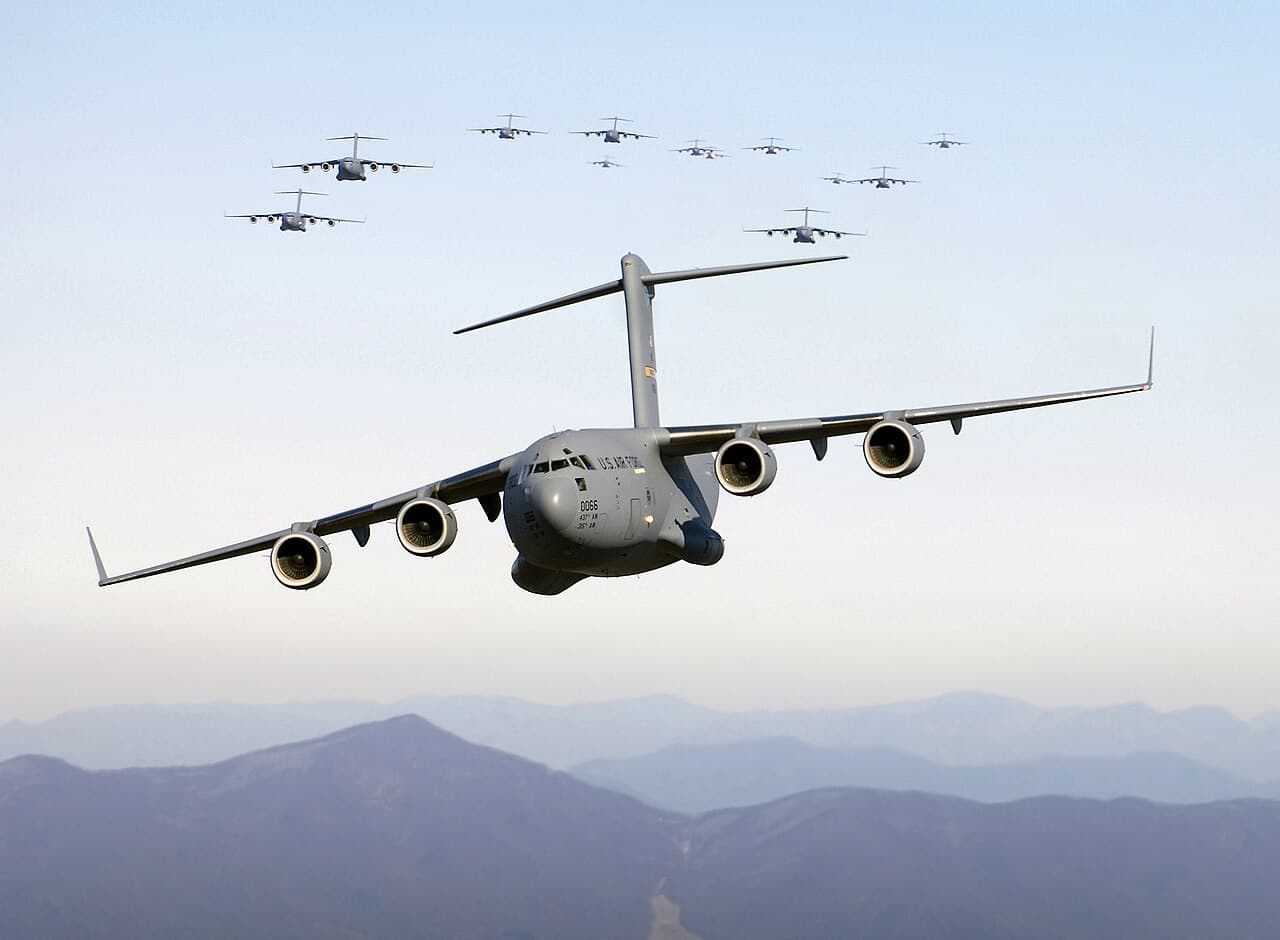
Boeing's Data-Driven Upgrade Set to Extend C-17 Globemaster Service Through 2075
The last McDonnell Douglas C-17 Globemaster III left the assembly line in 2015, and it is expected to remain a vital airlift platform of the US Air Force for decades to come. The last C-17 rolled out the doors just as Boeing absorbed the storied planemaker in one of the largest aerospace mergers in history. Now, as the caretaker of the Globemaster, Boeing is preparing to deliver a major upgrade through its new Aircraft Data Reasoner.
The Daily Touch & Go
The day's best aviation news in your inbox. Free, no spam.