Image: PJSC "UAC" · CC BY-SA 4.0 · via Wikimedia Commons
United Airlines Employee Threatens Customer with ICE at San Francisco Airport
A confrontation at San Francisco International Airport saw a United Airlines agent threaten to call Immigration and Customs Enforcement on a customer, citing his behavior as un-citizenlike.
The gist
A United Airlines agent at SFO threatened to call ICE on a customer, sparking controversy over workplace conduct and deescalation.
An incident at San Francisco International Airport involving a United Airlines customer service agent and a passenger has raised serious concerns regarding employee conduct and customer treatment. The dispute, captured in an 82-second video posted on Reddit, escalated when the United employee threatened the customer with calling ICE, stating he was not acting like a citizen. This interaction has provoked a broader discussion about the standards of behavior expected from airline staff and how conflicts should be managed in customer service roles within aviation.
The video depicts the employee pointing her phone at the customer while suggesting calling immigration enforcement, despite the passenger affirming his status as a U.S. citizen. The agent's justification for this threat rested on a vague assessment of his behavior rather than any legal basis. Accompanying the verbal confrontation were exchanges where both parties recorded each other, further heightening tensions. Another United employee intervened, offering to involve police, but the customer indicated a preference for ICE, amplifying the gravity of the threat made by the initial agent.
This episode highlights serious lapses in training and professionalism on the part of the United employee. Customer service agents are generally trained in conflict deescalation techniques, which aim to defuse rather than exacerbate confrontations. The employee’s decision to threaten ICE involvement and insist the passenger get out of her face, while not disengaging herself, demonstrates a failure to uphold these standards. The workplace's expectations for such interactions emphasize respect and restraint, qualities that were notably absent in this case.
The incident also brings attention to the sensitive nature of immigration enforcement references, especially when used as a tool to intimidate rather than relying on substantiated grounds. The employee’s comment about the passenger not acting like a citizen carries undertones that can be particularly hurtful and incendiary, especially given the diverse backgrounds of employees and customers alike. This careless use of a governmental enforcement threat in a customer service setting can have profound implications for trust and company reputation, as well as for the individuals involved.
United Airlines faces questions on how it will address this employee’s conduct and whether retraining or disciplinary measures will follow. While the passenger’s behavior preceding or during the altercation is not fully documented in the footage, no provocation justifies threatening a customer with ICE based on subjective behavior assessments. Holding employees accountable and ensuring they have adequate tools and skills to manage disputes without escalating tensions is crucial for maintaining professional standards.
As airlines continue to operate in highly stressful environments, especially in busy hub airports like San Francisco International, staff must be equipped to manage difficult situations calmly. This event underscores that failure to do so can lead to damaging conflicts broadcasted publicly, harming both the airline’s image and the well-being of individuals. More broadly, it prompts reflection on the potential consequences of invoking immigration enforcement as a means of asserting authority in non-legal contexts.
Frequently asked questions
- What triggered the United Airlines employee to threaten calling ICE on the customer?
- The employee threatened to call ICE on the customer during a confrontation, alleging the customer was not acting like a citizen, although the customer is a U.S. citizen.
- How did the situation escalate between the United Airlines employee and the customer?
- Both parties recorded each other on their phones, exchanged verbal insults, and an additional United employee offered to involve police, which the customer declined in favor of ICE involvement.
Read more
All Airports →
United Airlines Offers Free Flight Changes to Avoid Donald J. Trump International Airport in Palm Beach
The newly renamed Donald J. Trump International Airport in Palm Beach, Florida, is proving so unpopular with passengers that United Airlines has decided to give reservation agents carte blanche authority to rebook flyers with existing tickets onto flights to nearby airports at no extra cost. The name change from Palm Beach International Airport to Donald J. Trump Airport officially took effect on July 9, just a few months after Florida Governor Ron DeSantis signed a new law that allows the state to name major commercial airports. Before the airport could be renamed, however, Palm Beach County had to enter into a licensing agreement with the President because he has trademarked his name. The board of commissioners approved the licensing agreement 4-3 in a highly contested vote. Public backlash to the renaming has been fierce, and many people have openly vowed to boycott the airport. Given the prevailing mood then, it appears that United Airlines has decided that it will offer existing customers who have booked flights to Palm Beach “unusual flexibility” to avoid the airport, and instead fly to an alternative nearby airport like Fort Lauderdale or Miami. In an internal memo sent to reservation agents and obtained by Live and Let’s Fly , United tells workers: “If a customer does not want to fly to the airport, use your empowerment to offer acceptable alternatives such as Fort Lauderdale Airport (FLL) or Miami International Airport (MIA)." Should passengers call United’s reservations line to proactively ask about switching flights to an alternative airport, agents have been instructed to say: “I understand that you'd rather not fly to this airport anymore. We can look at nearby airports like Fort Lauderdale or Miami instead. Is that an acceptable alternative?” Flight changes will be processed for free, and agents don’t need to obtain permission from a supervisor before rebooking passengers. United Airlines chief executive Scott Kirby has been regarded as a Trump supporter, aligning himself with the administration, and courting the President in an attempt to win support for a now-abandoned merger with American Airlines. This rebooking policy is not advertised on United’s website, where the airline normally posts flexible rebooking policies, such as the current rules for passengers looking to avoid flights through the Middle East. How long this flexibility will remain in force remains to be seen. Presumably, the policy will apply to all existing customers but won’t be extended to customers who booked flights after the name change came into effect. That being said, United’s online booking tool still doesn’t accurately reflect the name and airport code change. At the time of publication, a dummy booking allowed us to search for flights from PBI, which is now officially known by the airport code DJT. When you click on any given flight for additional information, the flight is shown as operating from West Palm Beach, FL, US (PBI) and not from Donald J. Trump Airport (DJT). For those in the know, customers can search for flights to and from DJT via United’s website, with the online booking tool correctly recognizing the airport code, but it then directs users to a results page that shows PBI.
United Airlines Lets Passengers Switch Away from Trump-Named Palm Beach Airport Without Fees
United will let passengers who object to Palm Beach airport's new Trump name switch to Miami or Fort Lauderdale without repricing amidst passenger complaints.
United Airlines Lets Passengers Switch from Trump-Named Palm Beach Airport Without Fees
We recently saw Palm Beach International Airport (PBI) be renamed and get a new IATA code , as it's now officially known as President Donald J. Trump International Airport (DJT). As you'd expect, opinions on that are mixed — some people are overjoyed to be able to fly into an airport named after Trump, while others are horrified. Along those lines, United Airlines has quietly introduced an interesting policy internally, and it potentially creates an opportunity for passengers, which I find to be sort of hilarious. United offers free changes for customers who don't like Trump Live and Let's Fly reports on an internal memo that United Airlines reservations agents have been given, regarding the renaming of Palm Beach Airport. United is currently in the process of updating all of its systems to reflect the airport name and code change, and that also comes with some interesting guidance. United is telling reservations agents that "if a customer does not want to fly to the airport, use your empowerment to offer acceptable alternatives such as Fort Lauderdale Airport (FLL) or Miami International Airport (MIA)." The idea is that customers can change their flights to those airports without a fare difference, though there's an element of discretion to all of this. The memo even gives reservations agents a suggested response if someone expresses concern, telling them to say "I understand that you'd rather not fly to this airport anymore," and "we can look at nearby airports like Fort Lauderdale or Miami instead, is that an acceptable alternative?" United is allowing changes to President Trump airport tickets This policy strikes me as being… overly customer friendly? Airlines typically don't allow flight changes simply because a customer doesn't like the name of an airport. I have to say, even as someone who objects to naming airports after politicians, not wanting to fly into the airport because of the name strikes me as a bit much… but that's just me. We'll see how long this policy sticks around, but to state the obvious, there might even be some creative opportunities here, if you see a cheaper fare into Palm Beach, but actually want to fly to Fort Lauderdale or Miami. I imagine this policy will only stick around for so long, presumably covering the transition period. Also, I'm curious how long until we see the first confrontation on a plane regarding the airport's name. I'm envisioning something like the flight attendant still announcing the name as Palm Beach Airport, and then an angry passenger confronting them with their camera upon deplaning, asking them why they aren't referring to the airport by the proper name. Not to give anyone any ideas, but that's bound to happen soon… right? Not flying into an airport over a code seems extreme Bottom line We've just seen Palm Beach Airport renamed after President Trump, and the code has been updated from PBI to DJT. While people have mixed feelings about the name change, United is sure coddling customers, allowing changes with no fare difference to Fort Lauderdale or Miami. We'll see how long this policy sticks around, but that's quite something.
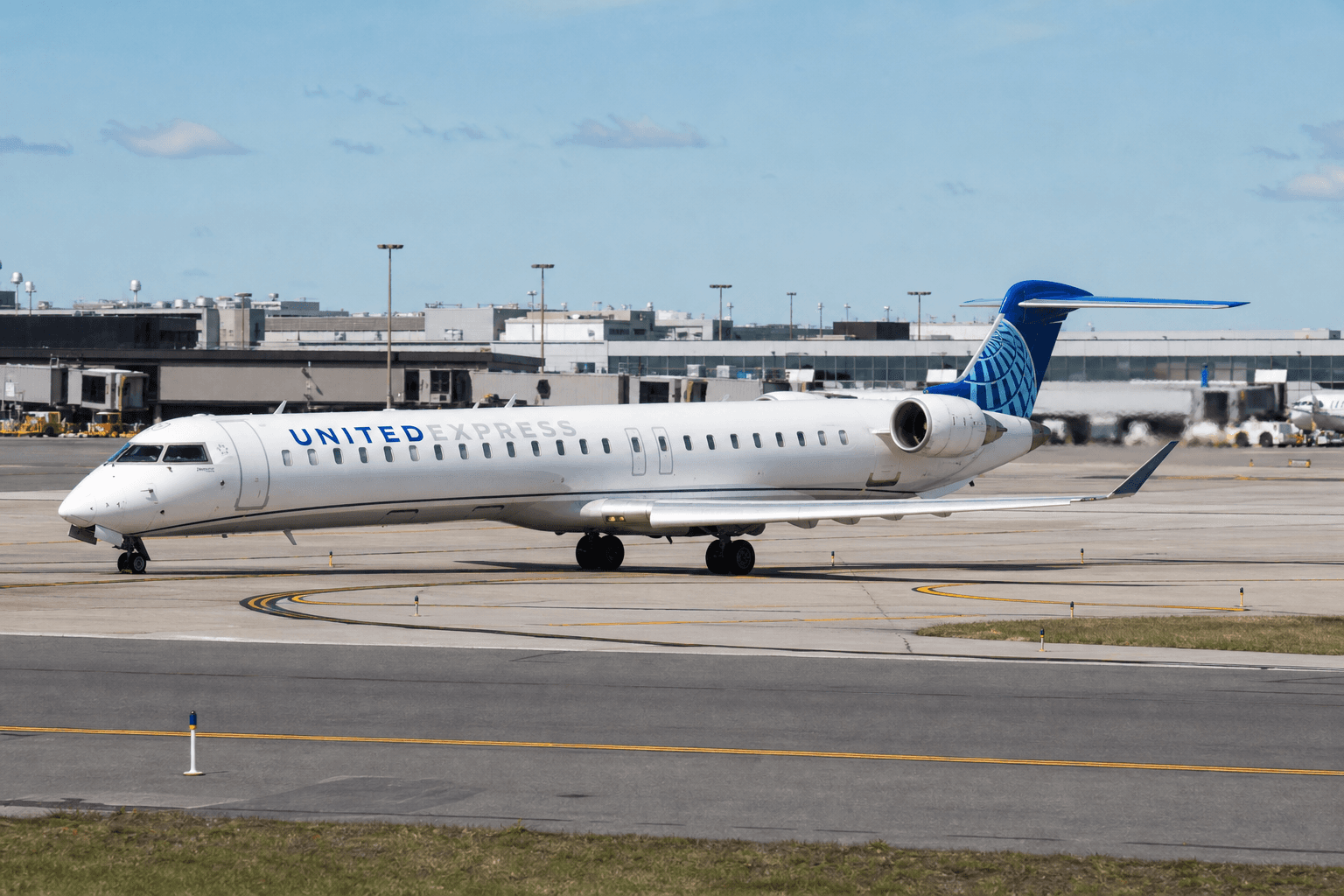
United Airlines Restarts Four Former Routes From Newark Hub Starting September
United Airlines has added four additional routes from its Newark Liberty International Airport (EWR) hub. Cirium Diio data shows that this is the Star Alliance member's fourth-busiest hub for flights, with 785 daily movements (takeoffs and landings) this month. The announcement came as Southwest Airlines adds 15 new and returning routes .
The Daily Touch & Go
The day's best aviation news in your inbox. Free, no spam.