

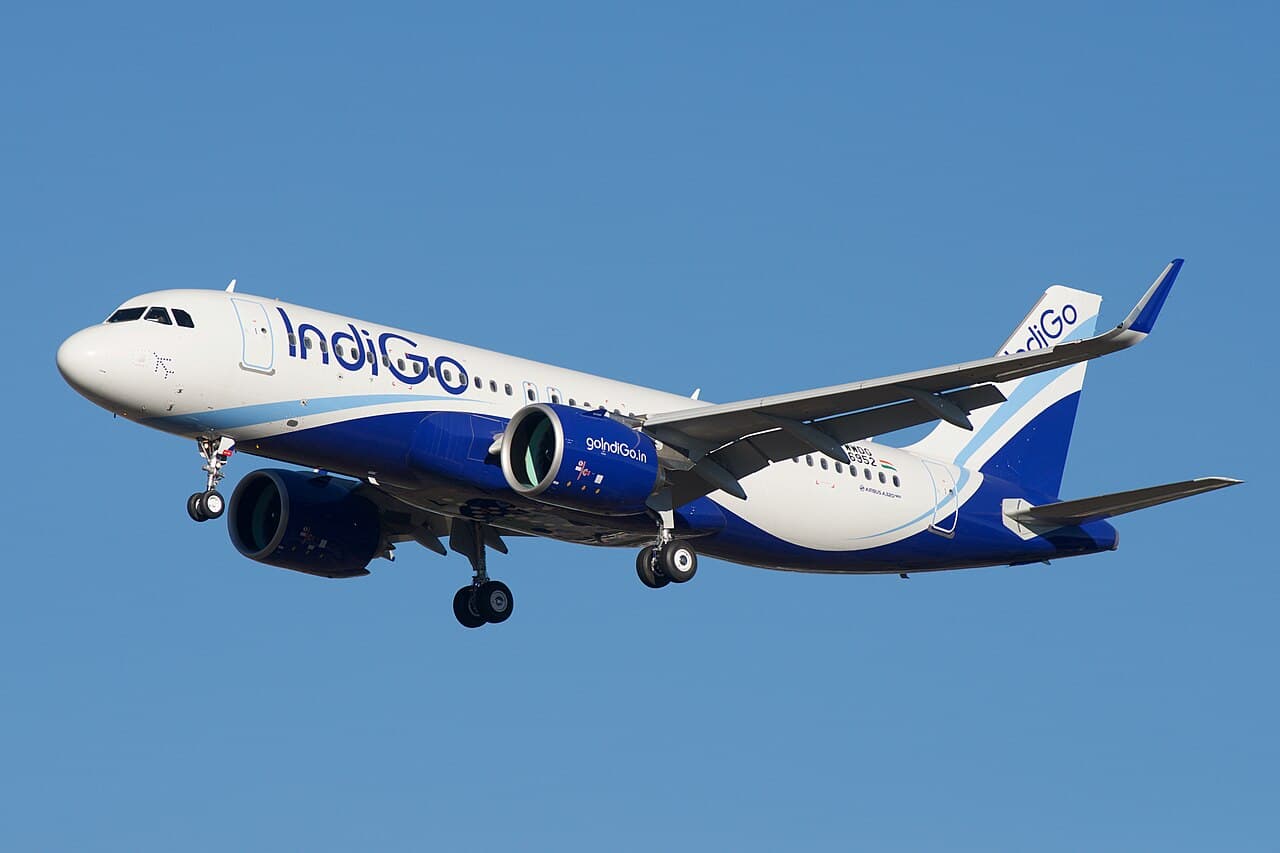
Image: BriYYZ from Toronto, Canada · CC BY-SA 2.0 · via Wikimedia Commons
TAP Air Portugal to Expand Fleet by 24 Airbus Jets After Restructuring Completion
After completing its restructuring and meeting European Commission conditions, TAP Air Portugal will add 24 new Airbus aircraft by 2028, boosting its fleet and route network.
The gist
TAP Air Portugal plans fleet growth with 24 new Airbus jets by 2028 after restructuring approval unlocks expansion.
Continuing coverage
All Airbus →- Lufthansa Readies First Airbus A350-1000 in Special 100th Anniversary Livery
- Airbus Veteran Jean-Brice Dumont Named New CEO of European Missile Maker MBDA
- Chinese Carriers Order 95 New Airbus Jets to Modernize Fleets and Expand
- Air China orders 15 Airbus A350-900s and 40 A320neos for Shenzhen Airlines
- Air China and Shenzhen Airlines Order 55 Airbus Jets Worth $12.4 Billion
TAP Air Portugal is preparing for significant fleet growth following the successful conclusion of its extensive restructuring effort. The national carrier announced that it will add 24 new Airbus aircraft between 2026 and 2028. This expansion will increase its operational fleet by roughly 25%, reflecting a major step in the airline's recovery and growth plans after the challenges of the COVID-19 pandemic.
The initial deliveries for 2026 include ten aircraft: six A320neos, two A321neos, and two A330neos. The remainder of the aircraft, bringing the total to 24, will be introduced through 2028. These jets were originally ordered prior to the pandemic, but deliveries were deferred as TAP navigated restructuring conditions imposed by the European Commission. The combination of narrowbody and widebody aircraft supports both short-haul European and long-haul transatlantic operations.
TAP's restructuring was precipitated by substantial state aid totaling between €2.55 billion and €3.2 billion approved in 2021. That aid was granted alongside strict terms mandating cost savings, asset sales, and capacity limitations to preserve fair competition. A key milestone was the completed divestment of stakes in ground handling and catering company SPdH, satisfying the European Commission's requirements and enabling the airline to restore fleet growth.
As of mid-2026, TAP operates a fleet of approximately 94 to 104 aircraft, predominately Airbus models. The new deliveries will modernize and diversify the fleet, introducing the latest-generation Airbus technologies. The A320neo family and A330neos are known for improved fuel efficiency, lower operating costs, and enhanced passenger comfort, supporting sustainability goals and competitive service offerings.
Fleet expansion aligns with TAP's strategy to strengthen its Lisbon hub as a vital transatlantic gateway connecting Europe and the Americas. The additional aircraft capacity will not only enable increased frequencies on existing popular routes but also allow for new destinations within Europe, North America, and South America. These enhancements aim to capitalize on TAP's geographic advantage and market position as Portugal’s flag carrier.
Concurrently, the Portuguese government is progressing with plans to privatize the airline by selling a 44.5% stake, reserving 5% for employees. The introduction of new strategic investors is expected to inject capital and expertise, bolstering TAP's long-term competitiveness. Completing the restructuring and fleet renewal removes operational restrictions, signaling improved financial health and operational readiness.
The arrival of modern Airbus jets represents a tangible commitment to environmental performance through lower emissions and fuel consumption. This move aligns with broader European aviation trends where carriers accelerate fleet modernization to meet climate targets and cost efficiencies. Passengers stand to benefit from increased flight options, potentially better fares, and newer aircraft featuring updated amenities on key transatlantic and regional routes.
TAP's recovery trajectory highlights the airline's response to pandemic disruptions via restructuring, asset divestment, and now fleet and network growth. The upcoming phased introduction of 24 Airbus aircraft will reshape operations by introducing greater capacity and more efficient technology. These developments place TAP at a strategic inflection point as it prepares to compete vigorously in Europe and across the Atlantic with a refreshed fleet and enhanced market access.
Frequently asked questions
- What aircraft types will TAP Air Portugal add to its fleet by 2028?
- TAP will add 22 A320neo family aircraft, including A320neos and A321neos, along with two A330neos by 2028.
- Why was TAP Air Portugal's fleet expansion delayed until now?
- Fleet growth was deferred due to COVID-19 impacts and restructuring conditions imposed by the European Commission which limited capacity until compliance milestones were met.
- How does TAP's fleet expansion relate to its privatization plans?
- The expansion coincides with Portugal's plan to sell a 44.5% stake in TAP, aiming to attract strategic investors who can support the airline's growth ambitions.
Read more
All Sustainability →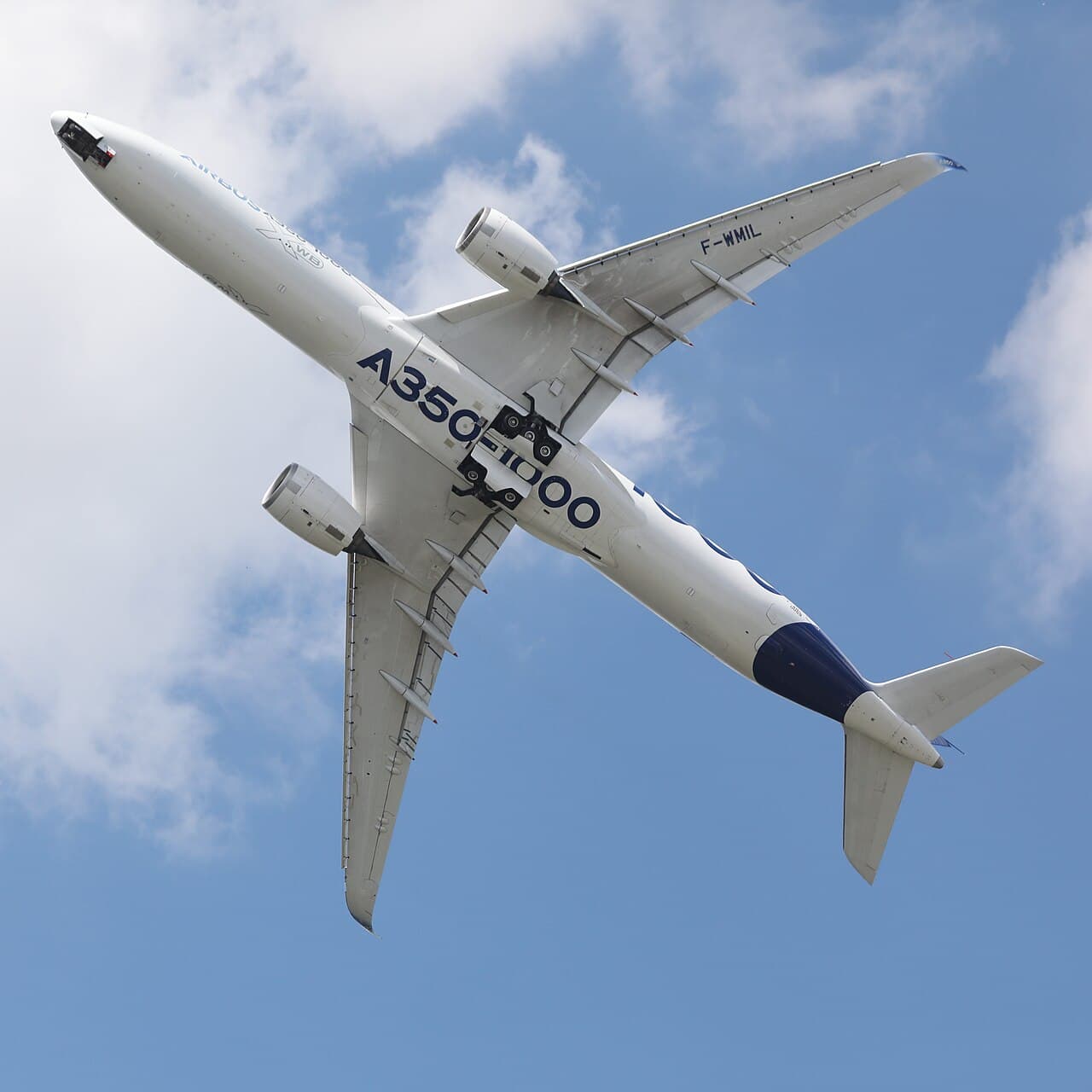
Lufthansa Readies First Airbus A350-1000 in Special 100th Anniversary Livery
Lufthansa continues to mark its 100th anniversary year in style. The airline is expecting delivery of its first Airbus A350-1000 in the coming weeks. This new jet has already been painted in a striking blue special livery that celebrates a century of aviation history. ezstandalone.cmd.push(function () { ezstandalone.showAds(119); }); The aircraft was painted at Airbus’s facility in Toulouse, France. It features a prominent white XXL crane motif along with the inscriptions “1926 | 2026” and “100”. Workers used 432 litres of blue paint and 246 litres of white paint to create this eye-catching design. This new jet will become the seventh aircraft in Lufthansa’s fleet to wear the special anniversary colours. ezstandalone.cmd.push(function () { ezstandalone.showAds(127); }); A Milestone Delivery for Lufthansa The A350-1000, registered as D-AIFA, carries the name “Deutschland.” An official naming ceremony will take place later. The aircraft is scheduled to fly from Toulouse to Munich this fall after completing necessary test flights, interior work, and final inspections. This delivery holds extra significance: it marks the 700th aircraft that Airbus has delivered to the entire Lufthansa Group. The long-haul jet will join Lufthansa’s growing fleet and help the airline modernize its operations while offering passengers enhanced comfort on international routes. ezstandalone.cmd.push(function () { ezstandalone.showAds(128); }); A350-1000: The Difference At 73.80 meters long, the A350-1000 is seven meters longer than the A350-900. This extra space allows the aircraft to seat up to 300 passengers across four classes: First Class, Business Class, Premium Economy, and Economy Class. Passengers can expect quieter cabins, better air quality, and improved lighting thanks to the A350 family’s advanced design. ezstandalone.cmd.push(function () { ezstandalone.showAds(129); }); Lufthansa has ordered a total of 15 A350-1000 aircraft. All are expected to arrive by 2030. These modern jets will replace older models and support the airline’s long-term growth strategy. Part of a Growing Anniversary Fleet The new A350-1000 joins an impressive lineup of aircraft already flying in the special blue livery. Long-haul routes currently feature an A350-900, an A380, a Boeing 787-9, and a Boeing 747-8. Two Airbus A320neo aircraft also wear the anniversary design on shorter routes. These special aircraft have drawn enthusiastic reactions from passengers and aviation enthusiasts worldwide. Plane spotters have gathered to photograph the distinctive blue jets, further marking the celebration of Lufthansa’s heritage. ezstandalone.cmd.push(function () { ezstandalone.showAds(130); }); Why the A350-1000 Matters for the Future The Airbus A350-1000 represents the latest in efficient wide-body technology. It offers lower fuel consumption and reduced emissions compared to older generation aircraft. This aligns perfectly with Lufthansa’s sustainability goals and its commitment to responsible growth. By introducing the larger A350 variant, Lufthansa can offer more seats on popular long-haul routes without increasing the number of flights. This approach helps balance capacity growth with environmental considerations. Looking Ahead As Lufthansa celebrates its centenary throughout 2026, the upcoming arrival of this specially liveried A350-1000 adds a powerful visual symbol to the festivities. The aircraft will not only connect passengers across continents but also represent the airline’s blend of tradition and innovation. ezstandalone.cmd.push(function () { ezstandalone.showAds(131); }); Travellers can look forward to experiencing the new jet on select routes once it enters service. With its advanced features and celebratory design, the A350-1000 is set to become a favourite among frequent flyers and aviation fans alike. Lufthansa’s investment in the A350 family demonstrates confidence in the future of premium air travel. As the airline continues to refresh its fleet, passengers will benefit from newer, more comfortable, and more efficient aircraft. This latest milestone reinforces Lufthansa’s position as a leading global carrier. The special livery serves as a flying tribute to 100 years of connecting people and cultures around the world. ezstandalone.cmd.push(function () { ezstandalone.showAds(132); });
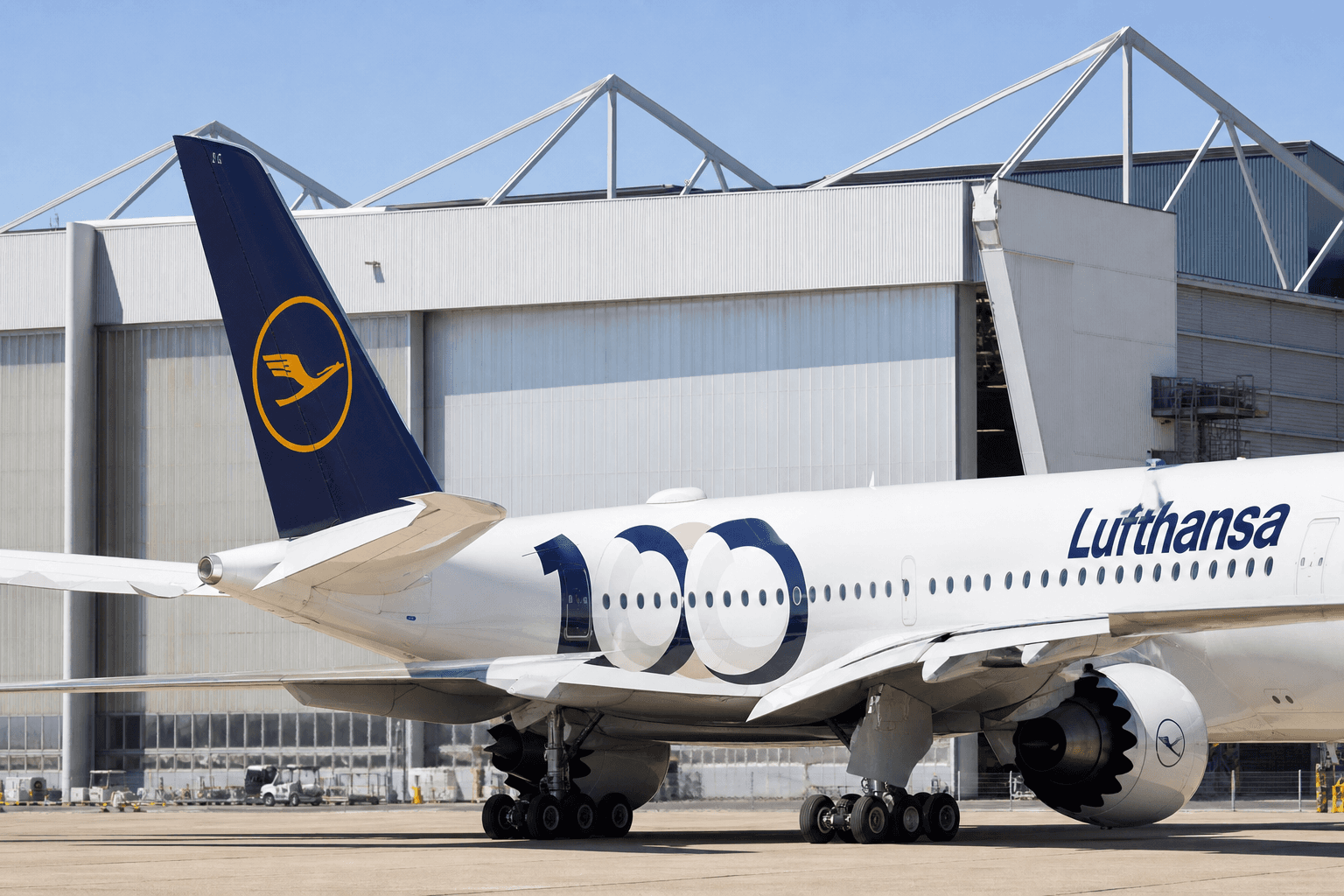
Lufthansa's First Airbus A350-1000 Debuts in Special 100th Anniversary Livery
Lufthansa’s first Airbus A350-1000 has emerged from the paint shop in Toulouse wearing the airline’s striking special 100th anniversary livery, marking another milestone as it prepares to enter service later this year. The aircraft, registered D-AIFA , is the first of 15 Airbus A350-1000s on firm order for the German flag carrier and forms part of Lufthansa’s centenary celebrations, which are taking place throughout 2026. The eye-catching design features an oversized version of Lufthansa’s iconic crane logo sweeping across the rear fuselage, matching the commemorative scheme already carried by several aircraft in the airline’s anniversary fleet. These include a Boeing 787-9, Airbus A350-900, Airbus A380, Boeing 747-8 and selected narrowbody aircraft. New Flagship For Munich Following delivery from Airbus, D-AIFA will be based at Munich Airport , where it will operate alongside much of Lufthansa’s existing Airbus A350-900 fleet. Munich has become Lufthansa’s primary Airbus A350 hub in recent years, with the efficient twinjet operating many of the airline’s long-haul services from southern Germany. The arrival of the larger A350-1000 will further strengthen the airline’s premium long-haul operation from the airport. The Airbus A350-1000 is around seven metres longer than the A350-900 and offers greater passenger capacity while maintaining the type’s reputation for excellent fuel efficiency and reduced emissions. Lufthansa’s A350-1000 Fleet Lufthansa has ordered 15 Airbus A350-1000s , with options for a further 25 aircraft. The type will become the airline’s new flagship on many long-haul routes and is expected to feature Lufthansa’s latest Allegris premium cabin products throughout. The aircraft are intended to replace older four-engined Airbus A340-600s and provide increased capacity on high-demand intercontinental services while offering lower operating costs and improved environmental performance. With D-AIFA now painted in its commemorative colours, the aircraft is entering the final stages of preparation before delivery, ensuring Lufthansa’s newest flagship will also become one of its most distinctive as the airline celebrates 100 years since its founding.
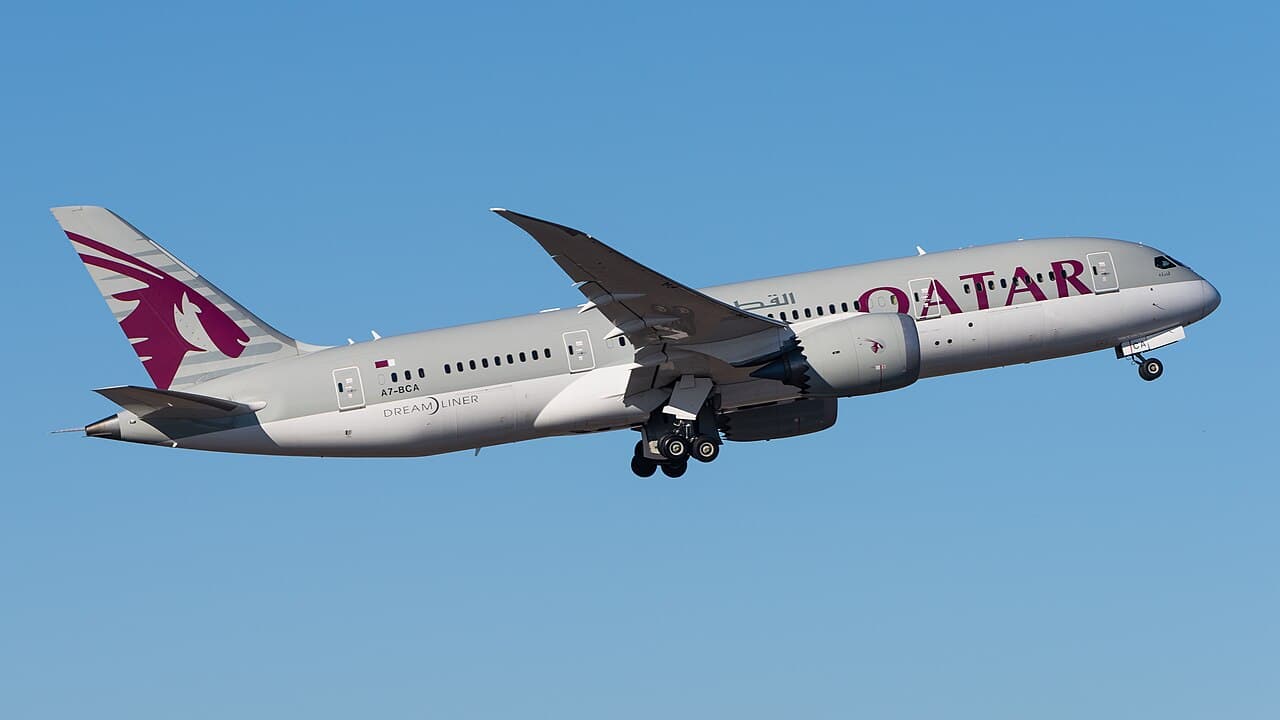
Boeing 787-9 ecoDemonstrator tests shorter engine inlet for reduced noise and fuel burn
Modified Rolls-Royce-powered Boeing 787-9 destined for Lufthansa will be used to evaluate acoustic performance of shorter nacelle structure. Boeing and partners Rolls-Royce and Lufthansa will later this month begin flight tests of a 787 equipped with a package of innovations – including a short engine inlet – designed to improve fuel efficiency and reduce noise emissions. To be performed from a Boeing site in Glasgow, Montana, the tests, running until mid-August, will use a 787-9 variant serving as the airframer's 2026 ecoDemonstrator Explorer aircraft. Powered by twin Rolls-Royce Trent 1000 TEN engines, the Dreamliner will later be delivered to the German carrier. The engines will be equipped with Next Generation Inlets – advanced composite structures that are around 30%, or 38cm (15in), shorter than the production versions. They also feature an expanded acoustic liner that treats much more of the inlet surface, enabling the overall shorter nacelle. Such a design is seen as key for the integration of next-generation fuel-efficient engines – such as Rolls-Royce's UltraFan concept – onto airframes, also contributing lower drag and reduced weight while maintaining noise-attenuation levels. Earlier this decade, Rolls-Royce and Boeing flight tested a short-inlet-equipped Trent 1000 engine aboard the propulsion specialist's since-retired 747-200 flying testbed. Those flights, which accumulated a total of around 7h 30min, suggested a fuel-burn saving of around 0.5% was possible. However, Boeing says the latest round of flights are specifically designed to test the inlet's acoustic performance. In addition, the 787-9 will test modified departure and arrival procedures, including 'Intelligent Operations' flightpaths, to reduce community noise around airports. Boeing says these trajectories are "algorithmically generated using multiple data sources" to identify opportunities for fuel-efficiency and noise benefits. "The more efficient inlet and Intelligent Operations flightpaths we're evaluating on this year's ecoDemonstrator Explorer are among the many promising concepts we're working on," says Boeing chief technology officer Lane Ballard. Tests of the innovations are being conducted through the third phase of the Federal Aviation Administration's CLEEN (Continuous Lower Energy, Emissions and Noise) programme.

Safran Commences Hybrid-Electric Testing on Modified Silvercrest Engine
Engine maker plans to accumulate around 300h of run time over six-month campaign using modified Silvercrest powerplant. Safran Aircraft Engines will shortly begin ground testing a hybrid-electric demonstrator based on its Silvercrest business jet engine as the French firm looks to mature technologies that could equip the next generation of narrowbody-size powerplants. Supported by the French DGAC civil aviation authority, the PHILEAS demonstrator is fitted with a pair of 250kW motor-generators on the high- and low-pressure spools. These are sized "for use on the next generation of short- and medium-range aircraft engines", Safran says. Tests are being carried out using Safran's open-air test stand at Istres air base in southern France. They will run for around six months, comprising around 300h of testing, the propulsion specialist says. Test runs will start in the coming days, it adds. Also incorporating onboard power electronics and an electrical power distribution system, the PHILEAS demonstrator will be used to validate the integration of the technology suite within the engine under conditions which Safran says are representative of real-world operations. Included within the test programme are "advanced power management scenarios" such as balancing the power extraction between the two shafts, transferring power from one shaft to another, and managing power exchanges between the engine and the aircraft. "We're proud to launch this ground-test campaign, which marks another milestone in the maturation of hybrid-electric technologies. It represents a key step toward their integration into our future aircraft engines," says Pierre Cottenceau, vice-president, engineering, research & technology for Safran Aircraft Engines. Safran sees the application of hybridisation as a critical contributor to achieving the 20% fuel-burn reduction needed for the next generation of narrowbody engines. For example, the RISE open-fan demonstrator being developed by the French firm through its CFM International joint venture with GE Aerospace features hybrid-electric systems to optimise its performance through all flight phases. GE is also maturing its own hybrid-electric engine technology through the NASA-backed Electrified Powertrain Flight Demonstration aircraft, a modified Saab 340B that will be showcased at next week’s Farnborough air show. Electrical equipment for the PHILEAS demonstrator was developed by sister company Safran Electrical & Power (SE&P), which also contributed to the earlier DOPEE project in 2023. This validated the operation of a SE&P 300kW electric motor-generator attatched to the high-pressure shaft of another Silvercrest engine, accumulating around 300h of run time. Additionally, since late 2025, system-level testing has also been under way at SE&P's facility in Niort, France on a test bench simulating an 800V aircraft electrical network. The Silvercrest is a 10,000lbf (44kN)-thrust business jet engine development programme axed by Safran last decade.
The Daily Touch & Go
The day's best aviation news in your inbox. Free, no spam.