


Redbird Boosts Flight Simulator Realism with New Garmin G1000 NXi Avionics Upgrade
Redbird Flight Simulations unveils upgraded software and a new instrument panel to enhance fidelity and flexibility in flight training devices featuring Garmin G1000 NXi avionics.
The gist
Redbird advances simulation realism with upgraded G1000 NXi systems and a new high-fidelity instrument panel for versatile pilot training.
Redbird Flight Simulations has announced a major enhancement to its flight training devices (FTDs), integrating advanced software and hardware upgrades for Garmin G1000 NXi avionics. This update, slated for release on August 17, aims to elevate the realism and training value of their simulators by closely mimicking the operational characteristics of actual aircraft cockpits. Complementing the software improvement is the introduction of the E001 instrument panel, expected to debut in early 2027, which features higher-fidelity hardware embedding two G1000 GDU 1054B displays along with upgraded audio and standby instrument knobs to provide a more immersive training experience.
The G1000 NXi software upgrade brings enhanced graphical fidelity, faster processing, and a suite of operational improvements tailored for technologically advanced aircraft training. Notable enhancements include Synthetic Vision Technology (SVT), integrated HSI mapping on the primary flight display, and enhanced airport environment tools such as SafeTaxi. These features support better spatial awareness and navigation training, thereby replicating conditions pilots would encounter in real-world flying scenarios.
Redbird’s modular approach allows flight schools and training programs to interchange aircraft configurations by simply changing hardware components like instrument panels and throttle quadrants. This flexibility enables a single simulator to replicate multiple aircraft models, accommodating diverse training fleets. The E001 panel's design is forward-looking, incorporating intelligent hardware capable of recognizing compatible aircraft configurations and adjusting simulation parameters accordingly to maintain authentic flight dynamics and avionics behavior.
Founded in 2006 and based in Kyle, Texas, Redbird has expanded its product line to include both desk-style simulators and full-motion, cockpit-like training devices such as the SDX and FMX. Its simulators are used globally across flight schools, universities, K-12 education programs, and private pilot homes. This broad adoption underscores the increasing reliance on simulation technology as a cost-effective, weather-independent alternative to live flight time for pilot training and proficiency.
Flight training providers ranging from local flight schools to large Part 141 academy programs have expressed a need for ultra-realistic training devices that accurately represent their real aircraft fleets. Redbird CEO Charlie Gregoire emphasized the company’s commitment to delivering not only authentic cockpit look and feel but also the capability to emulate multiple avionics stacks within a single device. This capability is designed to better align ground training with what pilots will encounter in actual flight operations.
The roadmap for Redbird’s Enhanced Aircraft panels extends beyond Garmin G1000 NXi to include a variety of configurations with popular Avidyne and Garmin avionics series such as IFD and GTN. Redbird ensures that all new hardware and software developments remain backward compatible with earlier simulators, including devices as old as the original FMX 1, allowing customers to selectively upgrade components. This modularity supports incremental investment and continuous improvement for existing users.
Exhibiting at EAA AirVenture Oshkosh from July 20-26, Redbird will showcase the G1000 NXi software along with a prototype of the E001 instrument panel at booth No. 301. Complementing these displays, the company will unveil an enhanced control yoke specifically designed for Cirrus SR20 and SR22 configurations and unveil plans for upgraded throttle quadrant systems. This exhibition highlights Redbird’s ongoing efforts to refine simulator hardware to match evolving pilot training demands.
By merging advanced avionics emulation with flexible hardware configurations, Redbird positions its simulators as a more directly transferable training tool that reduces the gap between simulation and actual flight experience. This integration assists pilots in mastering avionics operation and aircraft handling in a controlled, repeatable environment with the potential for more effective skill acquisition.
As simulation technology continues to advance, Redbird’s commitment to fidelity and adaptability represents a meaningful step toward comprehensive pilot training solutions. These developments reflect the ongoing industry trend to leverage simulation as a primary training resource that not only complements but sometimes substitutes costly and weather-dependent flight hours in real aircraft.
Frequently asked questions
- What new avionics software has Redbird introduced for its flight simulators?
- Redbird introduced an upgraded Garmin G1000 NXi software version with enhanced graphics, faster processing, Synthetic Vision Technology, HSI mapping, and airport environment tools.
- What is the E001 instrument panel in Redbird's simulator upgrade?
- The E001 is a new high-fidelity instrument panel featuring dual Garmin GDU 1054B displays, a GMA1347 audio panel, and analog standby instrument knobs, designed for more realistic simulation.
- How does Redbird's simulator upgrade benefit flight training providers?
- The upgrade allows flexible simulation of multiple aircraft configurations with realistic avionics, improving training consistency and allowing integration with various hardware compatible with existing simulators.
Read more
All Airports →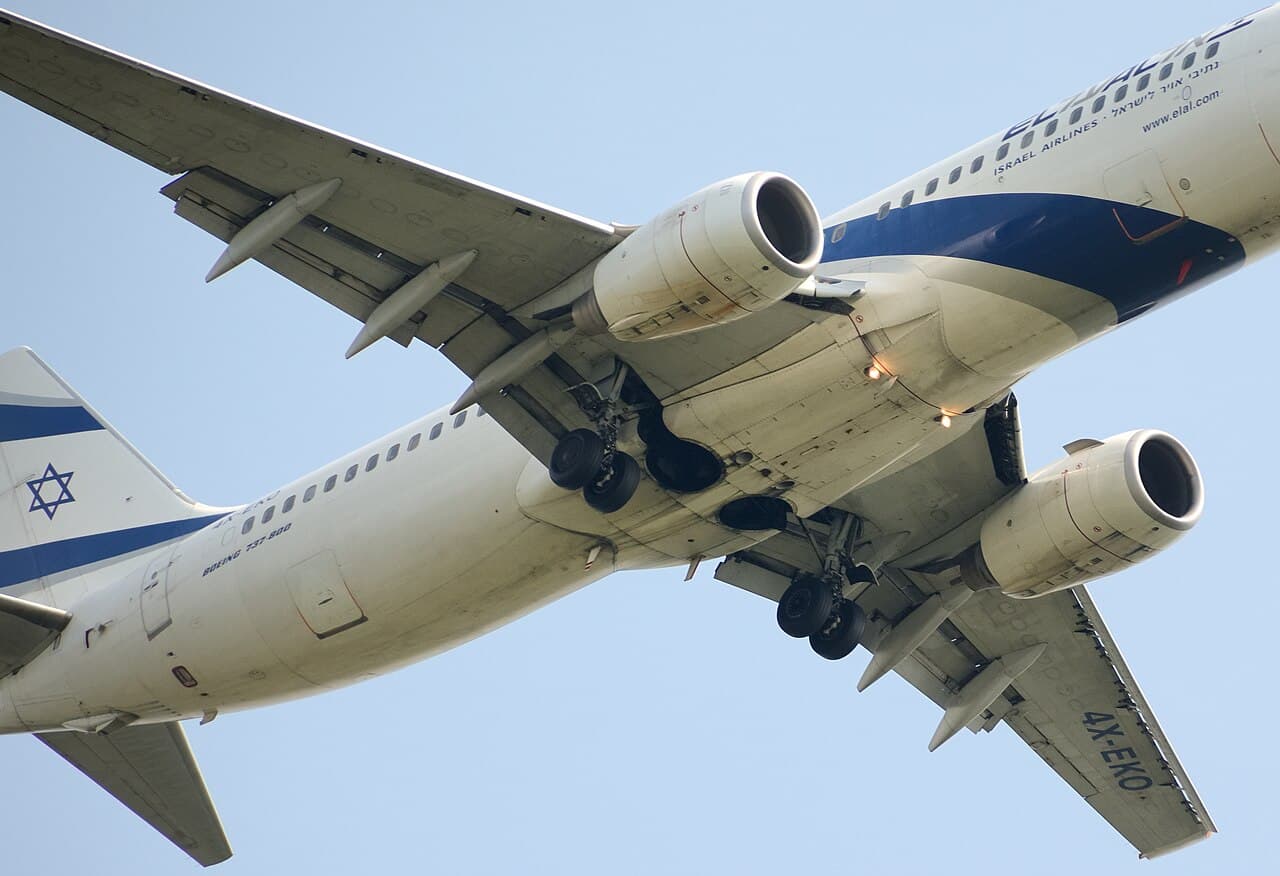
United Airlines Passenger Occupies Entire Boeing 737 Alone After British Airways Incident
A United Airlines passenger ended up as the sole occupant on board a Boeing 737 after he was reportedly abandoned by British Airways at Cincinnati Northern Kentucky Airport on the 4th of July.
STARLUX Airlines Unveils AIRSORAYAMA Airbus A350-1000 at Phoenix Sky Harbor
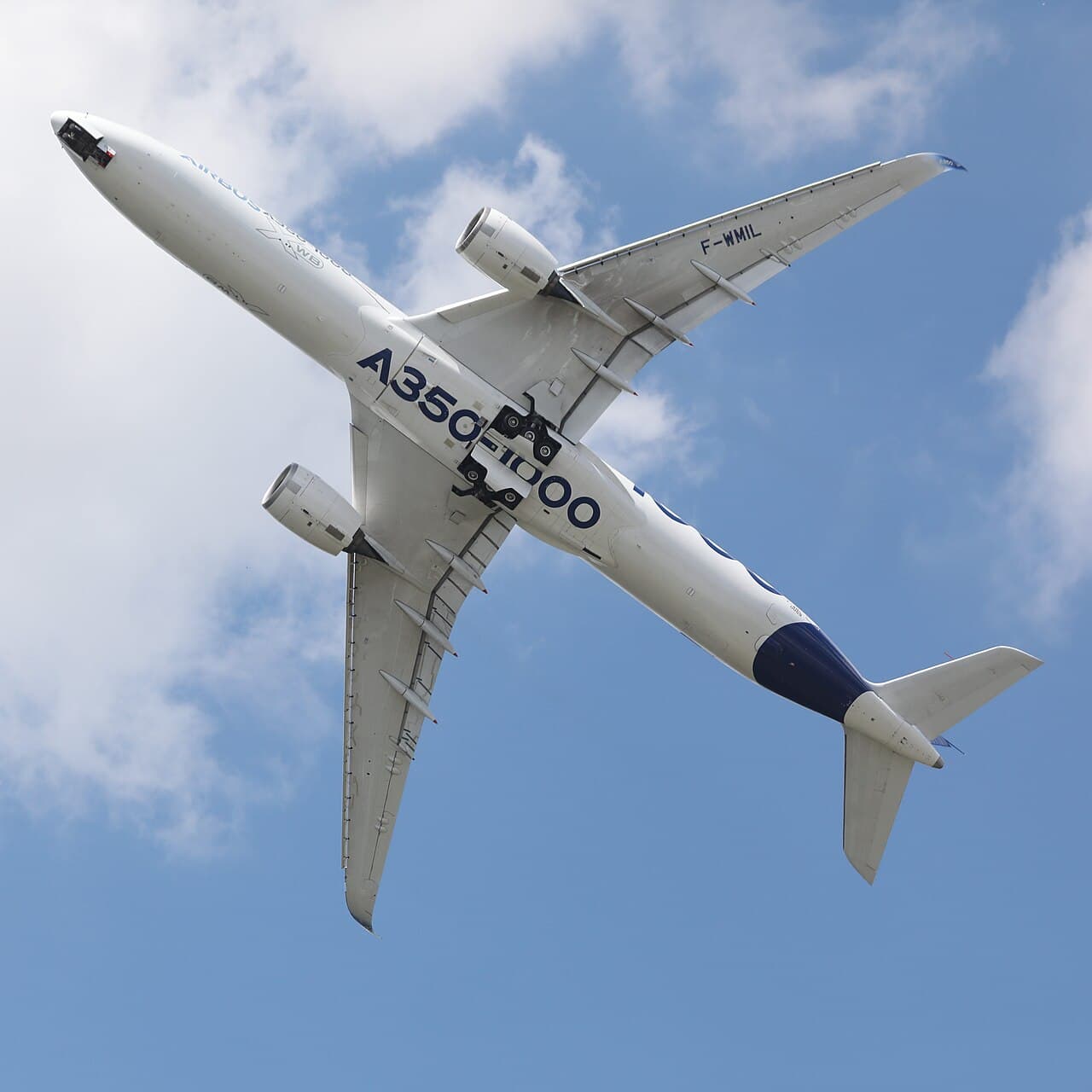
Starlux Airlines on July 15, 2026 marked a milestone as its STARLUX AIRSORAYAMA aircraft celebrated its inaugural long-haul commercial service, touching down at Phoenix Sky Harbor International Airport. Flight JX026 featured the new STARLUX AIRSORAYAMA SILVER (B-58553), an Airbus A350-1000 reimagined as a flying masterpiece through a partnership with legendary Japanese artist Hajime Sorayama — making Phoenix […]
France combats Fontainebleau fires with Securite Civile helicopters and Czech Black Hawks
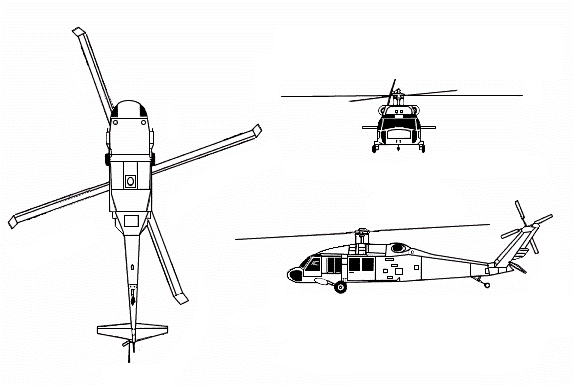
Authorities have deployed helicopters and CL-415 waterbombers to battle a Fontainebleau blaze, as assembly of the first European-built Firehawk begins. France's Securite Civile disaster relief agency continues to battle forest fires on multiple fronts, even halving its presence at the country's 14 July Bastille Day flypast to deploy airborne assets to a blaze currently raging to the south of Paris. Revealing the move in a post on X , the agency said a solitary helicopter joined the traditional display above the Champs-Elysees, while the "second was on duty over the Fontainebleau forest fire to support the rescue teams". Securite Civile operates a large fleet of Airbus Helicopters H145s – a mix of older variants and the newer five-bladed version – alongside 12 De Havilland Canada CL-415 water-bombers based at Nimes airport in southern France. Those fixed-wing assets have also been deployed to fight the Fontainebleau fire, scooping water from the river Seine near Chartrettes, a notable first. France is modernising its waterbomber fleet through the acquisition of new Canadair 515s. Paris recently doubled its commitment to the updated version of the legacy type, signing for two more examples in early June. 18h, les écopages continuent à Chartrettes en Seine-et-Marne #incendie #fontainebleau pic.twitter.com/oVbBMQjTEU — Antoine (@Ant01ne) July 13, 2026 Meanwhile, the Securite Civile has also leaned on firefighting assets from elsewhere in the EU. On 11 July, a Sikorsky UH-60 Black Hawk from the Czech Republic – deployed to France through the European Union's rescEU civil protection mechanism – carried out its first operation in the country, the Securite Civile says. Operating from Valence airport in southern France, two Black Hawks have been deployed on the operation, each equipped with a 3,540-litre (935USgal) Bambi Bucket and operated by Slovakia's Heli Company, a business in the Helicopter Alliance group . Both rotorcraft – OM-BHB and OM-BHK – are former US Army assets modified by Helicopter Alliance subsidiary Ace Aeronautics and owned by lessor SkyConnect Leasing . Prague has more firefighting helicopters on the way, having in November ordered three Sikorsky S-70 Firehawks through an agreement with Ceska letecka servisni (CLS) – another Helicopter Alliance company – and United Rotorcraft. Sikorsky’s Polish subsidiary PZL Mielec is currently assembling first Firehawk. Source: PZL Mielec An initial Firehawk from that order is now in final assembly at PZL Mielec – Sikorsky's Polish subsidiary – ahead of planned delivery in the fourth quarter of 2027. "The Czech Republic is not merely buying helicopters; it is pioneering Europe's first operational Firehawk capability," says Monika Kowalczykova, chief executive officer of CLS "Our partnership brings world‑class, multi‑mission aircraft to a region that faces increasingly severe wildfire threats, and it sets a benchmark that other European operators can follow." Each Firehawk is equipped with a 3,785 litre water tank, a retractable snorkel, twin engines and night‑vision capability.
Why the MD-11's Tail Engine Design Stands Apart Among Trijets
When you observe a trijet on the ramp at an airport, your eyes will be naturally drawn directly to the aircraft's tail. On the McDonnell Douglas MD-11, the center engine is not fed in the same way that most traditional trijets are. The Boeing 727 and the Lockheed L-1011 both use a pronounced S-duct, with an intake on top of the fuselage that curves down to an engine buried deeper in the jet's tail. The MD-11's tail engine, by contrast, is a much more direct and straight-through arrangement.
The Daily Touch & Go
The day's best aviation news in your inbox. Free, no spam.