


Safran to Power Electra's EL9 Hybrid Ultra-STOL Aircraft with New TG600 Turbogenerator
Safran confirmed its role supplying the TG600 hybrid-electric turbogenerator for Electra's nine-seat EL9, designed for ultra-short runways as short as 150 feet.
The gist
Safran’s new TG600 hybrid turbogenerator will power Electra’s EL9 ultra-STOL hybrid aircraft, marking a major step in hybrid-electric aviation.
Continuing coverage
All Hybrid-Electric →- Electra inks production deal with Safran for 250 TG600 turbogenerators powering EL9 hybrid aircraft
- Safran Commences Hybrid-Electric Testing on Modified Silvercrest Engine
- Safran's TG600 Turbogenerator Powering Electra EL9 Hybrid-Electric Aircraft
- FAA Sets Certification Basis for Electra EL9 Hybrid-Electric Aircraft
- Five Regional Aircraft Makers Drive Innovation In Sub-100-Seat Market In 2026
Safran, the French engine manufacturer, confirmed on July 15, 2026, that it will provide the propulsion system for Electra’s upcoming EL9 hybrid aircraft. The EL9 is a nine-seat, ultra-short takeoff and landing (ultra-STOL) aircraft designed to operate from runways as short as 150 feet (approximately 45 meters). This collaboration builds on an agreement first signed in 2023 between Electra and Safran Helicopters to co-develop a hybrid-electric turbogenerator tailored for the aircraft’s unique needs.
The centerpiece of this propulsion system is the TG600 turbogenerator, which Safran designed by integrating two 300 kW GENeUS electric generators with one of its proven helicopter engines, the Arrano. The Arrano engine currently powers the Airbus Helicopters H160 and is notable for its fuel efficiency, consuming 18% less fuel than comparable engines. This integration aims to leverage both the reliability of the Arrano thermal engine and the advantages of electric power to optimize the EL9’s performance.
Safran’s TG600 turbogenerator represents the company’s entry into hybrid-electric powertrain technology. The GENeUS generators used in the TG600 have been certified by the European Union Aviation Safety Agency (EASA) since February 2025, signaling significant regulatory progress in hybrid-electric propulsion. An important technical milestone was recently achieved when Safran Helicopter Engines conducted the first bench test of the flight-ready TG600 at their Bordes site in France, validating readiness for upcoming flight tests on the EL9 aircraft in the near future.
Electra has already placed an initial order for 250 units of the TG600 turbogenerator, underscoring confidence in Safran’s product to provide the required powertrain capability. Electra’s CEO, Marc Allen, emphasized the strategic importance of this contract, framing it as a defining step toward the future of advanced air mobility. He highlighted Safran’s technical leadership and innovative approach as critical factors in successfully bringing the EL9 ultra-STOL aircraft into commercial operation and establishing a new model for direct flight.
From Safran’s perspective, this contract marks a vital milestone coinciding with the company’s strategic expansion into turbogenerator manufacturing. Cédric Goubet, CEO of Safran Helicopter Engines, noted that this collaboration complements Safran’s established expertise in turboshaft engines and reinforces its leadership position. Goubet remarked that the TG600 stands as the most advanced and efficient hybrid-electric propulsion product available in its class, perfectly suited for the EL9’s revolutionary capabilities within new air mobility markets.
The EL9 aircraft represents a novel segment of ultra-STOL hybrid aircraft development, enabling operations from extremely short runways that traditional aircraft cannot access. This ability opens opportunities for regional connectivity, urban air mobility, and point-to-point direct flights that avoid congested hubs. The hybrid-electric propulsion system developed jointly by Safran and Electra aims to enhance operational efficiency while reducing environmental impact compared to conventional turboprop or pure electric aircraft at this scale.
The development timeline has seen New benchmarks in certification and testing since the memorandum of understanding in 2023. This year’s successful bench test of the TG600 is a significant validation step ahead of actual flight demonstrations. The industry will be watching closely as Electra prepares the EL9 for initial flight tests equipped with Safran’s hybrid turbogenerator, potentially setting new standards for aircraft capable of ultra-short takeoff and landing with hybrid-electric propulsion.
This partnership between Safran and Electra illustrates a growing trend in the aviation sector toward hybrid and electric propulsion systems that combine traditional turbine engines with electric generators to optimize fuel consumption and reduce emissions. As urban and regional air mobility concepts mature, aircraft such as the EL9 supported by advanced turbogenerators like the TG600 could play a pivotal role in expanding access to more airports and creating new routes with lower environmental footprints.
Frequently asked questions
- What engine technology will power Electra's EL9 hybrid aircraft?
- The EL9 will be powered by the Safran TG600 hybrid-electric turbogenerator, combining a Safran Arrano thermal engine with two 300 kW GENeUS electric generators.
- What performance capability defines the EL9 aircraft?
- The EL9 is designed for ultra-short takeoff and landing operations, able to use runways as short as 150 feet (45 meters).
- How many TG600 turbogenerators has Electra ordered from Safran?
- Electra has placed an order for 250 TG600 turbogenerator units as part of their agreement with Safran.
Read more
All Aviation Safety →Pilots Urged to Rely on Airmets and Sigmets for Weather Safety
Most pilots can tell at least one story about a flight that did not go as planned because of unpredicted weather along the route. We all know that weather forecasts aren’t perfect, but that can lead to concerns regarding the safety of the flight.
British Airways A320 Disabled on Gatwick Runway Triggers Fuel Emergencies and Diversions
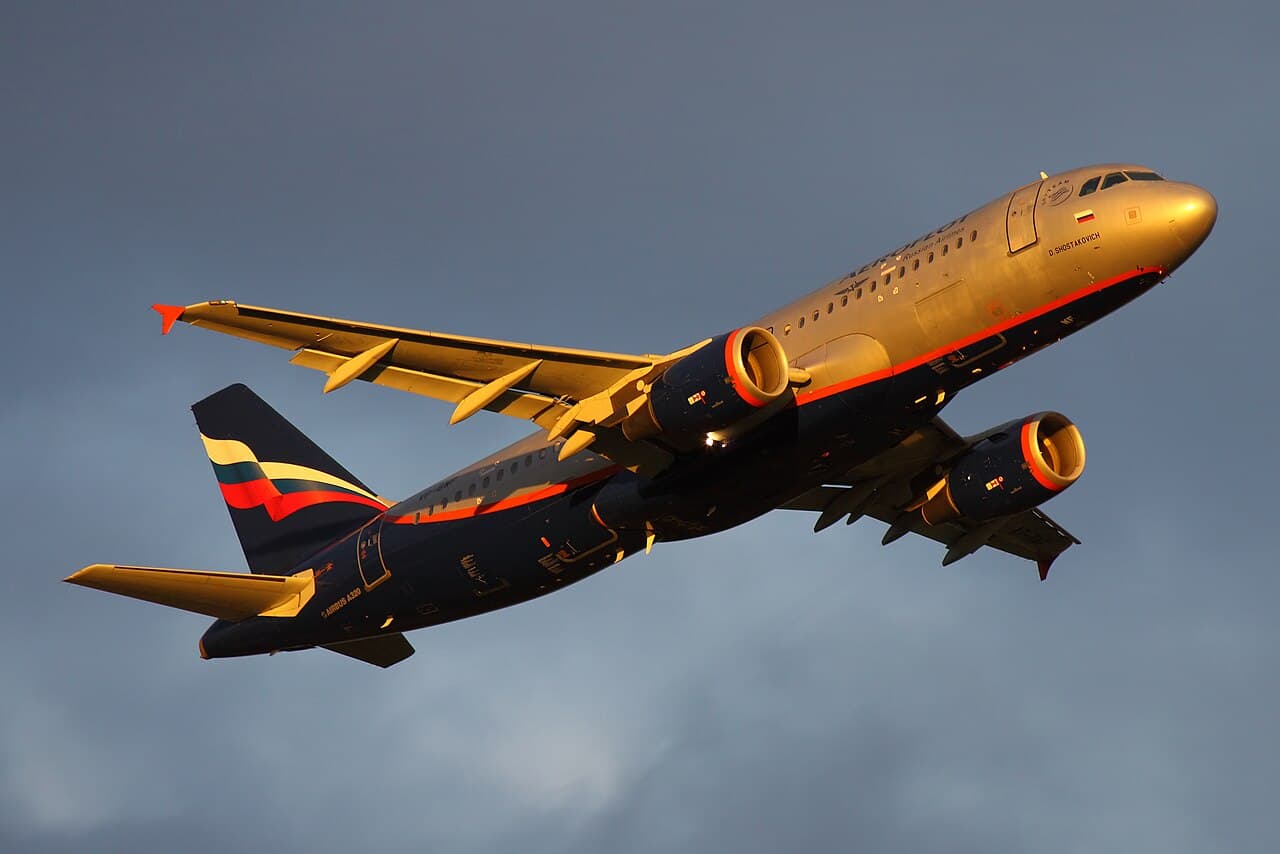
A total of 14 flights that were due to land at London Gatwick Airport in the early hours of Wednesday morning were forced to divert to other airports across England, with some declaring ‘fuel emergencies’ after a British Airways plane became ‘stranded’ on the only runway at Gatwick. British Airways flight BA-2673, which was operated by a 25-year-old Airbus A320 (registration: G-GATS), was returning to London Gatwick after an otherwise routine flight from Palma Mallorca (PMI) when the pilots informed Air Traffic Control of an issue with the nose wheel of the aircraft. An issue at Gatwick as nine (9) flights originally bound for the London airport are currently squawking 7700 (likely due to low fuel). We are working to learn more. https://t.co/HsHBhiVnxD pic.twitter.com/cHSUBcbZlv — Flightradar24 (@flightradar24) July 14, 2026 The aircraft was put into a holding pattern over South East England while the pilots attempted to troubleshoot the issue before being cleared to land on Gatwick’s Runway 8L. After coming to a stop on the runway, however, it became evident that the nose wheel steering wasn’t working, and the plane became disabled on the runway. London Gatwick is the world’s second busiest airport with just one operational runway, after Mumbai’s Chhatrapati Shivaji Maharaj International Airport. The airport was actually designed and built with two parallel runways: 8L and 26L, and 8R and 26R, but international design and safety standards mean that only one runway can be used at any one time. Normally, the southern runway (8R and 26R) is used for all departures and arrivals, with the northern runway (8L and 26L) used as the airport’s main taxiway. On Tuesday night, however, the southern runway was out of use, so operations were being conducted on 8L without a seperate taxiway. When British Airways flight 2673 became stranded on the northern runway, Air Traffic Control was forced to order a slew of aircraft due to land at London Gatwick to enter holding patterns while emergency services responded to the issue on the runway. The pilots of nine aircraft in quick succession then reported so-called ‘fuel emergencies’ as they flew in tight holding patterns over the South East. A fuel emergency doesn’t mean that a plane is at risk of suddenly falling out of the sky, but rather that the pilot is indicating to Air Traffic Control that the plane no longer has enough fuel to endlessly fly around in circles and that priority needs to be given to getting the aircraft on the ground as quickly as possible. With no indication of how long it might take for the disabled British Airways plane to be towed off the runway, Air Traffic Control then started to direct other aircraft to start diverting to different airports. In total, 14 flights had to divert, with five heading to London Luton, four to London Stansted, three to Birmingham, one to Bristol, and one being allowed to break London Heathrow’s nighttime curfew. The British Airways aircraft has now been taken out of service with a planned trip to Alicante, Spain, and back, cancelled on Wednesday. Last month, the High Court upheld a government decision to allow London Gatwick to bring its northern runway into routine use. In order to comply with international safety standards, the center line of the runway will be moved 12 meters north to allow enough seperation with the southern runway. While this might sound like a relatively simple job, London Gatwick doesn’t expect the runway to be in routine use until 2030 at the earliest.
New Marine One Helicopters Cause Lawn Damage, FAA Reviews DC Crash Safety
New Sikorsky Marine One helicopters damage the White House lawn, the airports renamed for U.S. presidents, airline consolidation, DCA crash safety recommendations, controversy over ADS-B In regulations, Air France and Airbus manslaughter verdict, passengers sue Delta over turbulence injuries, a Ryanair window ruptures, and a seaplane makes a hard landing in New York's East River. Also, interviews from the Spurwink Farm fly-in. Aviation News Lockheed Martin Is Covering the Cost of Trump's White House Helipad President Trump said that Sikorsky, part of Lockheed Martin, would cover the cost of building a new helipad at the White House. Lockheed Martin confirmed the report. Sikorsky helicopters have been used to transport the president since the 1970s. The new VH-92A Patriot helicopter has propulsion exhaust vents located toward the rear of the airframe and pointed downward, unlike the VH-3D’s configuration. Also, with much more powerful engines, the VH-92A generates significantly more downwash than the VH-3D. The hot exhaust gets combined with the intense rotor downwash at touchdown, and the combined heat-and-airflow effect scorches the turf and can physically rip sod loose. Airline consolidation now rules the skies. Has it been good for passengers? Continental Airlines, Northwest Airlines, and US Airways are gone. Spirit Airlines is gone as well. Now, the Big Four U.S. airlines control roughly three-quarters of the U.S. market. Has this been good for the flying public? It depends on who you ask. Former governor Chris Sununu, now the head of Airlines for America, said at a Capitol Hill hearing, “We have more competition per route than ever before. When I go to buy a ticket, I have four, five, or six carriers going from Wichita to Dallas. So now they’re all competing on that exact same route." There are six airlines serving Wichita Dwight D. Eisenhower National Airport, but there’s only one that flies nonstop to Dallas. Past guest Ganesh Sitaraman, a professor at Vanderbilt Law School and the author of the book Why Flying Is Miserable and How to Fix It said, “From the airlines’ perspective, it makes sense. Bigger is better, and it’ll be more efficient for them, even if there’s a lot of drawbacks for communities and passengers.” A Florida airport is officially renamed for Trump. What does he stand to gain? FAA Details First Official Response to DC Crash Safety Recommendations After the January 2025 midair collision near Washington, D.C., that killed 67 people, the NTSB issued nearly three dozen recommendations. As is always the case, the FAA is not obligated to implement the NTSB’s recommendations. Earlier this year, the FAA said it had fully addressed seven of the recommendations and that it would evaluate the others, with further updates to come by May 31, 2027. The Air Current reported that the FAA indicated it is evaluating whether the number of arrivals permitted per hour at DCA is appropriate. This is a key metric that the NTSB said contributed to the airport’s congestion at the time of the crash. Also, any adjustments will be determined after an official analysis in 2027. This $50,000 Safety Fix Is Dividing the Aviation Industry and Washington This could be characterized as a conference-committee fight over how strong an ADS-B In mandate should be, not whether there will be one. ALPA and NTSB are on one side (ROTOR Act), and industry groups like A4A/AOPA/NBAA on the other (ALERT) side. Senate: ROTOR Act (Rotorcraft Operations Transparency and Oversight Reform Act) Would require all aircraft to be equipped with ADS-B In and repeal certain military exemptions from the technology requirements. Passed the Senate by unanimous consent in December, with strong support, including from ALPA. The House rejected it on February 24, 2026, falling one vote short of the two-thirds majority needed after the Defense Department raised national security concerns House: ALERT Act (Airspace Location and Enhanced Risk Transparency Act) House lawmakers revised the bill to explicitly include an ADS-B In mandate after the earlier version was criticized for failing to clearly require it. The updated version requires that aircraft carry both ADS-B In and ACAS X (Airborne Collision Avoidance System X), integrated so ADS-B In data feeds the alerting function. Opposition: ALPA doesn’t endorse it, arguing that ACAS Xa (the large-commercial-aircraft variant) isn’t yet commercialized, that no integration standards exist, and that the system suppresses alerts below 1,000 feet when situational awareness matters most. The NTSB also declined to support it, saying it falls short of requiring ADS-B In for all aircraft operating in airspace where ADS-B Out is already required, even though it allows compliance via portable receivers with line-of-sight limitations. Air France and Airbus found guilty of manslaughter over 2009 plane crash A Paris Appeals Court found Air France and Airbus “solely and entirely responsible” for the 2009 AF447 accident, which killed 228 people when it crashed into the Atlantic Ocean. The companies were cleared in April 2023 but were found guilty after an eight-week trial. Both Air France and Airbus have denied the charges and say they will appeal. In 2012, French investigators found a combination of technical failure involving ice in the pitot tubes and pilot confusion over faulty air-speed readings. Pilot training has since been modified, and pitot tube sensors have been replaced. 20 Sue Delta Over 2.5 Minutes of Terror on Flight Out of Utah A lawsuit has been filed against Delta Air Lines on behalf of 20 passengers of Delta Flight 56, claiming that pilots “recklessly flew” too close to thunderstorms, where severe turbulence caused multiple injuries. The turbulence lasted 2 1/2 minutes over Wyoming, and the flight was diverted to Minnesota. Twenty-five people were transported to local hospitals. The NTSB said the pilots were caught by surprise. In the lawsuit, the plaintiffs allege that the National Weather Service issued an advisory warning that turbulent conditions were present in the mountains east of Salt Lake City and that thunderstorms were present along portions of the flight path. Apparent engine fan blade failure preceded rupture of Ryanair 737 window The Air Current reports that the rupture of a Ryanair Boeing 737-800 window resulted from a fan blade failure on the right CFM56-7B engine. Fan blade failures are serious but rare. Aircraft engines are designed to contain fan blade failures and are tested during the certification process. The FAA issued airworthiness directives to mitigate the risk of fan blade failure through inspections and an engine inlet redesign to ensure containment. The FAA set a July 31, 2028, deadline for compliance. Small plane makes hard landing into New York's East River, officials say A Kodiak 100 seaplane with eight people on board made a hard landing in the East River between Brooklyn and Manhattan. There was "substantial damage" to the plane, but there were no injuries. The plane bounced three times, and the pilot subsequently told the passengers that a pontoon had broken. A pattern of progressive porpoise leading to structural failure appears in NTSB seaplane accident reports across various types, including Cessna 206 and 208 Caravan floatplanes, de Havilland Beavers, and Twin Otters on floats. A few East River/urban seaplane-specific factors that might be in play: Wake and chop from harbor traffic (ferries, tour boats) create a much less predictable water surface than open lake/bay operations. Confined approach corridors near Skyport limit go-around and abort options if the pilot senses a bad touchdown developing. The area has had at least one other recent seaplane mishap (a two-seater damaged by a wave three weeks prior), suggesting water-surface conditions have been a recurring operational challenge
Qatar Airways Sued After Teen Dies from Allergic Reaction on Doha-New York Flight
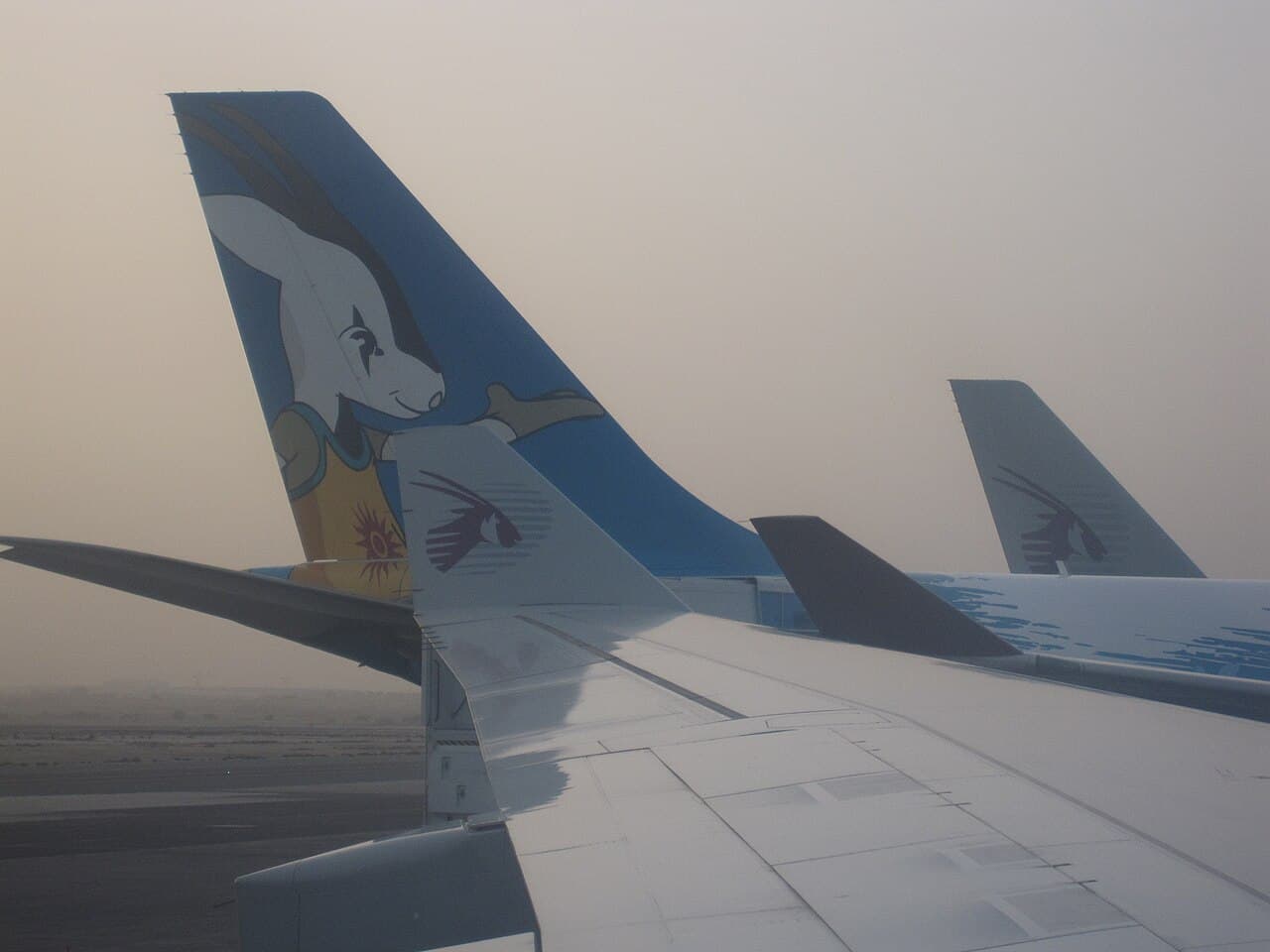
A family from Dresher, Pennsylvania, is suing Qatar Airways after a teenage relative tragically died mid-way through an ultra-long-haul flight from Doha to New York JFK after a flight attendant served the victim a sandwich that may have been laced with an ingredient he was severely allergic to. The family claims that the medical equipment on the plane was not working properly, and when desperate efforts to save the boy’s life were unsuccessful, his relatives had to endure the rest of the flight with his body laid out the floor behind their seats. The heartbreaking incident occurred on August 21, 2024, when 16-year-old Jason Hu was returning home to the United States with his sister Erica Hu and father, Eric Hu, having spent some time visiting family in China. The return journey saw them initially fly from China to Doha and then get on a connecting Qatar Airways flight to New York JFK. Flight QR-701 departed Doha at around 8 am for the 13-hour flight to New York, but midway through, as the plane was flying high above the Atlantic, things went horribly wrong. Flight attendants were passing through the cabin and handing out sandwiches as a mid-flight snack. Before Jason took the sandwich, he asked the crew member what allergens the snack contained. Jason suffered severe allergies to peanuts, fish, and dairy products, so it was important that he knew the exact allergens in the sandwich before he took a bite. According to a new lawsuit filed in a Pennsylvania district court, the flight attendant advised Jason that the sandwich was safe for him to eat. Within moments of eating the sandwich, however, Jason began to experience breathing difficulties. He started to use a nebulizer in an attempt to catch his breath, but it had no effect. Not long after, he suddenly collapsed. Flight attendants rushed to Jason’s aid, and one crew member is believed to have administered an EpiPen-style shot, which contains life-saving Epinephrine medication – the primary first-line treatment for reversing the effects of a life-threatening anaphylactic reaction. The shot did not, however, provide any relief, and Jason continued to struggle to breathe. The flight attendants then fetched an oxygen cylinder and attached a mask to his face, but his family claims the oxygen tank was not working properly. Within minutes, Jason became lifeless, although it wasn’t until the plane landed at New York JFK that he was officially pronounced dead. The lawsuit claims Jason’s death is the result of the “affirmative misrepresentation and specific assurance by the flight crew member that the food product was safe for Jason to consume, which directly induced Jason to consume the allergen.” The family further claims that Qatar Airways failed to ensure that the medical equipment on board the flight was operational, including the oxygen tank and the EpiPen or generic alternative that was administered to Jason. In addition, the family is also suing MedAir, the Phoenix-based telemedicine vendor that provides numerous international airlines with 24/7 emergency medical advice via airplane satellite phones, saying that MedAire failed to give suitable treatment and diversion advice to the flight crew. The lawsuit is being brought against Qatar Airways and MedAire via Article 17 of the Montreal Convention, a global treaty that makes airlines responsible for death or injury sustained by passengers during the course of an international flight. The specific wording of Article 17 states: “The carrier is liable for damage sustained in case of death or bodily injury of a passenger upon condition only that the accident which caused the death or injury took place on board the aircraft or in the course of any of the operations of embarking or disembarking..” In many cases, airlines are able to limit their liability under Article 17 to 128,821 Special Drawing Rights – a monetary instrument developed by the IMF to represent a basket of currencies. At present, 128,821 SDR is equivalent to around $176,000. Jason’s family is asking the court to award a higher compensation payout because Jason’s death was due to the “negligence or other wrongful act or omission of the carrier or its servants or agent.” Qatar Airways has yet to respond to the complaint. The case has been filed in the District Court for the Eastern District of Pennsylvania under case number: 2:26-cv-04882. Last November, Swetha Neerukonda sued Qatar Airways for $5 million after a flight attendant fed her three-year-old daughter a KitKat bar during an ultra-long-haul flight from Washington Dulles to Doha, despite being informed the child was severely allergic to dairy and nuts. Swetha says her daughter suffered a severe anaphylactic shock after being fed the chocolate bar and had to be administered a life-saving shot of epinephrine. The flight attendant allegedly fed the KitKat to Swetha’s daughter when she went to the bathroom during the flight. The crew member then allegedly mocked Swetha and dismissed her concerns. The lawsuit has not been settled.
The Daily Touch & Go
The day's best aviation news in your inbox. Free, no spam.