


Wisk Aero and NASA Demonstrate Ground Supervisor Managing Three Autonomous eVTOLs
Wisk Aero successfully simulated one ground-based supervisor remotely overseeing three autonomous Generation 6 eVTOL air taxis alongside regular IFR air traffic during NASA-partnered tests in California.
The gist
Wisk Aero and NASA achieved a key milestone enabling one supervisor to manage multiple autonomous eVTOL air taxis simultaneously under IFR conditions.
Continuing coverage
All Urban Air Mobility →Wisk Aero, Boeing’s electric vertical takeoff and landing (eVTOL) air taxi subsidiary, announced a significant breakthrough in autonomous flight operations in collaboration with NASA. In a high-fidelity simulation, Wisk demonstrated that a single ground-based operator could manage three uncrewed Generation 6 eVTOL aircraft simultaneously, navigating controlled airspace alongside conventional IFR traffic. This achievement advances Wisk’s vision of scalable autonomous urban air mobility, where oversight efficiency is crucial for operational viability.
The Generation 6 eVTOL is designed without pilot controls and carries four passengers. Unlike many competitors that plan to introduce autonomy gradually, Wisk intends to launch their air taxi with full autonomy integrated from the start. The company's approach involves Multi-Vehicle Supervisors (MVSors), trained personnel remotely monitoring multiple aircraft and capable of intervening if an eVTOL deviates from its assigned flight path. This model aims to greatly reduce human resource requirements and enable high-frequency operations.
Under a five-year Space Act Agreement initiated last year, Wisk and NASA have collaborated to investigate the integration of fully autonomous aircraft into the National Airspace System (NAS) under Instrument Flight Rules (IFR). Utilizing NASA Ames Research Center’s advanced flight simulation facilities, the tests replicated IFR flights between Moffett Federal Airfield (KNUQ) and San Martin Airport (E16) in California’s Silicon Valley region. These environments allow simultaneous interaction with live and prerecorded traffic scenarios for robust system assessment.
The tests focused on assessing communication latency, the cognitive workload of supervisors, situational awareness, and response times in both typical and challenging conditions designed collaboratively by Wisk and NASA experts. This research also involved live simulated communication between the MVSors and air traffic controllers, who operated using existing tools and protocols. The data collected aims to inform future standards for airspace design, safety procedures, and air traffic control communications with autonomous aircraft.
Wisk’s head of system and operations integration, Erick Corona, emphasized that demonstrating the 1:3 supervisor-to-aircraft ratio in a realistic NAS environment marks a pivotal step towards making commercial autonomous air taxi operations not only feasible but also scalable and cost-effective. Their findings may contribute to policy frameworks like Automated Flight Rules (AFR), which would complement existing Visual and Instrument Flight Rules by enabling automated conflict management for properly equipped autonomous aircraft.
NASA’s efforts in UAS Traffic Management (UTM) have historically influenced FAA policies, including the development of the Low Altitude Authorization and Notification Capability (LAANC) and air traffic management models for beyond visual line of sight (BVLOS) drone operations in metropolitan areas such as Dallas-Fort Worth. Collaboration with Wisk continues this trajectory, supporting the FAA’s efforts to safely integrate autonomous passenger air taxis into controlled airspace.
Unlike some eVTOL companies introducing autonomy incrementally, Wisk’s Gen 6 aircraft employs a suite of onboard computing, predictive software, radar, sensors, and ground communications to detect and avoid traffic autonomously. Systems paralleling components used in transport airliners like the Boeing 737 and Airbus A350 ensure a robust safety framework. Wisk is also providing autonomous flight systems for future Archer Aviation eVTOL models, indicating potential wider adoption of their ground-based supervisory approach within the emerging urban air mobility ecosystem.
Two Generation 6 prototype aircraft have been constructed, with the first flight conducted in December 2025 and a second prototype completed in May 2026. While the recent NASA simulation campaign did not include actual flights of these prototypes, public demonstrations are anticipated before the completion of the FAA’s eVTOL Integration Pilot Program (eIPP). Through the eIPP, Wisk is collaborating with the Texas Department of Transportation to expand high-frequency autonomous operations, with potential approval for passenger revenue flights during the program.
The integration of autonomous eVTOLs into complex airspace, combined with remote multi-vehicle supervision, addresses key scalability and safety challenges facing urban air mobility. The work by Wisk and NASA sets foundational standards and operational concepts that could foster broader acceptance and regulatory approval, potentially transforming the future of air taxi services in densely populated regions.
Frequently asked questions
- What was the nature of Wisk Aero's recent autonomous flight test with NASA?
- Wisk Aero and NASA conducted a simulation where one ground-based supervisor remotely managed three autonomous Generation 6 eVTOL air taxis operating under IFR alongside traditional air traffic.
- Why is the ability for one supervisor to manage multiple autonomous eVTOLs important?
- Managing multiple eVTOLs remotely with one supervisor is key to scaling air taxi operations efficiently and cost-effectively, reducing the need for one pilot per aircraft.
- How does Wisk Aero's Generation 6 eVTOL differ from competitors' models?
- Wisk's Generation 6 is fully autonomous without pilot controls from launch, designed to operate with remote supervision, unlike others introducing autonomy more gradually or retaining pilots initially.
Read more
All Aviation Safety →NBAA Honors Doug Carr for 28 Years Driving Safety and Security in Business Aviation
NBAA Senior Vice President for Safety, Security, Sustainability and International Operations Doug Carr recently announced his decision to retire from NBAA at the end of August after 28 years of outstanding service to NBAA and the entire business aviation community.
FAA Administrator Bryan Bedford Drives Rapid Modernization with Trump-Era Urgency
Bryan Bedford took over leadership of the FAA in July 2025 after a long career in commercial aviation, including senior roles at Republic Airways and Frontier Airlines. He is an instrument-rated pilot, an aircraft owner, and one of the few recent agency leaders to arrive in Washington, D.C., with direct experience in both a general aviation cockpit and the airline C-suite. Some in aviation may also remember him from an appearance on reality TV's Undercover Boss , a fitting footnote for an executive whose management style has long emphasized seeing operations up close rather than from a distance. So close, in fact, that Bedford can be seen in the show servicing lavatories on a Frontier Airbus jet. That operating background now intersects with a White House that has pushed the FAA to move faster. In FLYING’s conversation with Bedford, he repeatedly pointed to President Donald Trump's role in setting the tone and timetable for the agency's agenda—from air traffic control (ATC) modernization to drone policy, supersonic flight, and broader aviation innovation. Bedford said the president has been unusually clear about what he wants delivered, and he described the FAA and Department of Transportation as "moving at the speed of Trump" on initiatives tied to those priorities. This Article First Appeared in FLYING Magazine If you're not already a subscriber, what are you waiting for? Subscribe today to get the issue as soon as it is released in either Print or Digital formats. Subscribe Now Nine months into the job, Bedford framed the FAA less as an agency building toward distant benchmarks than one being pressed to show measurable progress on a shorter clock. He discussed the administration's push for a "brand-new" ATC system, the role AI and machine learning could play in future traffic management, what MOSAIC could mean for general aviation, and why the fight over landing fees and ADS-B has become a safety issue in his eyes. FLYING interviewed Bedford at the agency's headquarters in Washington in April. What follows is an edited Q&A for length and clarity: Setting the Pace FLYING Magazine (FM) : Your first year on the job is coming up this summer. As you look at the agency today, what do you think has changed the most? Bryan Bedford (BB): Well, so much has changed. I want to be careful, but I think the biggest thing is our focus. We've got Flight Plan 2026, and the purpose of that is to drive agency focus from the top of the executive branch all the way down to the front line that's delivering the services, whether you're a technician, a controller, or a regional manager. We just wanted to make sure everybody was aligned on the same priorities. Generally, the FAA, when it would put out a plan, it would be no less than five years and generally a 10-year-long plan. So there was never really that excitement that we can see things being accomplished. So we set goals and we actually finish goals. That ability to connect to the fact that we're doing things and we're doing it at speed, I think, is creating a sense of energy and accomplishment. READ MORE: FAA Aims to Block State, Local Crew Break Requirements READ MORE: FAA Says Happy Fourth of July With $1.776B in Airport Grants Of course, we redesigned the organizational structure, just trying to flatten it out a bit, make it more accountable, and make it easier to manage from an executive sense. And this is my perspective, not necessarily the agency's perspective, but I think most people who come into this role tend to want to fly it at about 30,000 feet. I really want to get below the surface, so to speak, and see if we're being effective. What are the issues that our frontline employees are feeling on a day-to-day basis? And are we giving them the solutions? FM: You came from the private sector, and the airline business moves fast. What was the biggest transition coming into government? BB: As I testified, I'm not political. I don't profess to understand it. It's a contact sport I've never played before. So I have a hard time really adapting to the political nature of some of the decisions that we make. That's created a learning curve for me to understand that I'm not the CEO of a business. I am one cog in a really big machine. Understanding what the big boss wants to deliver and making sure that our resources are aligned with delivering on the executive orders—that's something where frankly the president's been really, really clear about what his priorities are, and that's given the agency a lot of direction that we can actually turn into action, like eVTOLs, supersonic, and space. There's a lot of innovation that this administration is feverishly trying to unlock, and to the extent it touches the FAA or the DOT, we're certainly moving at the speed of Trump to try to make those executive orders turn into rulemaking and then turn into actual innovation that customers feel. FM: That is a striking phrase—"moving at the speed of Trump." Does that urgency change the way the FAA operates? Bryan Bedford (left) is in lockstep with President Donald Trump and DOT Secretary Sean Duffy on the direction of the FAA. [Credit: FAA] BB: It does, because it gives us clarity. The president's been really clear about what his priorities are. That allows us to align resources around delivering on those priorities instead of drifting into long-term discussions without real action. We're trying to do things and do them at speed. Modernizing ATC FM: Let's talk about the new air traffic control system. For pilots, especially in general aviation, what does that actually mean? BB: In the most practical terms, you've seen a step-function change in how aeromedical works. We went from having over 4,900 medical certificates outstanding for more than 18 months to less than 142 outstanding for more than six months. So again, this idea that there's a sense of urgency, and we want to actually fix things that are pain points for our stakeholders. And, certainly, GA is a huge stakeholder for us. But on the modernization side, I think the easiest way to explain it is this: Next-gen, for all of the good things it did, brought us a lot of great technologies, but the adoption cycle is measured in decades, not years. And the president gave me and the secretary very clear instructions that he wants this brand-new air traffic control system built before he leaves office, which gives us a really hard date in 2028. So we've created a waterfall implementation that completes in Q4 of 2028. And we're either on track or ahead of that deployment. The long poles in the tent were on the supply-chain side—buy 612 radars, make sure you got a great price, and they can be delivered and operational in three years. Same thing with voice switches. Same thing with the analog-to-digital conversion. FM: And that is only the first step? BB: Right. [This] is very equipment focused. Modernization, which is what the president really wants to get at, requires a second level of funding, and that is to actually bring advanced automation, AI, machine learning, all of those things that are going to be needed to manage traffic in the 21st century. That stuff has to ride on a cloud-native architecture that has unlimited compute power to do all the things those advanced algorithms need to do. We don't have that in the current data architecture for the FAA. So there is a second step, which we're busily working on, to transform how data is managed and acted upon. FM: You mentioned AI and machine learning. What specifically are you looking at? BB: I won't get too deep into the weeds, but we've got three labs in here competing right now for what we would think of as a transformational use of technology or use of advanced machine learning and AI—pre-flying, if you will, to develop four-dimensional flight trajectories that are strategically deconflicted before planes leave the ground. Versus today, how we manage it is you file a flight plan, we accept your flight plan, you
DARPA and US Air Force Integrate AI-Enabled Autonomy Kit on Operational F-16 Fighters
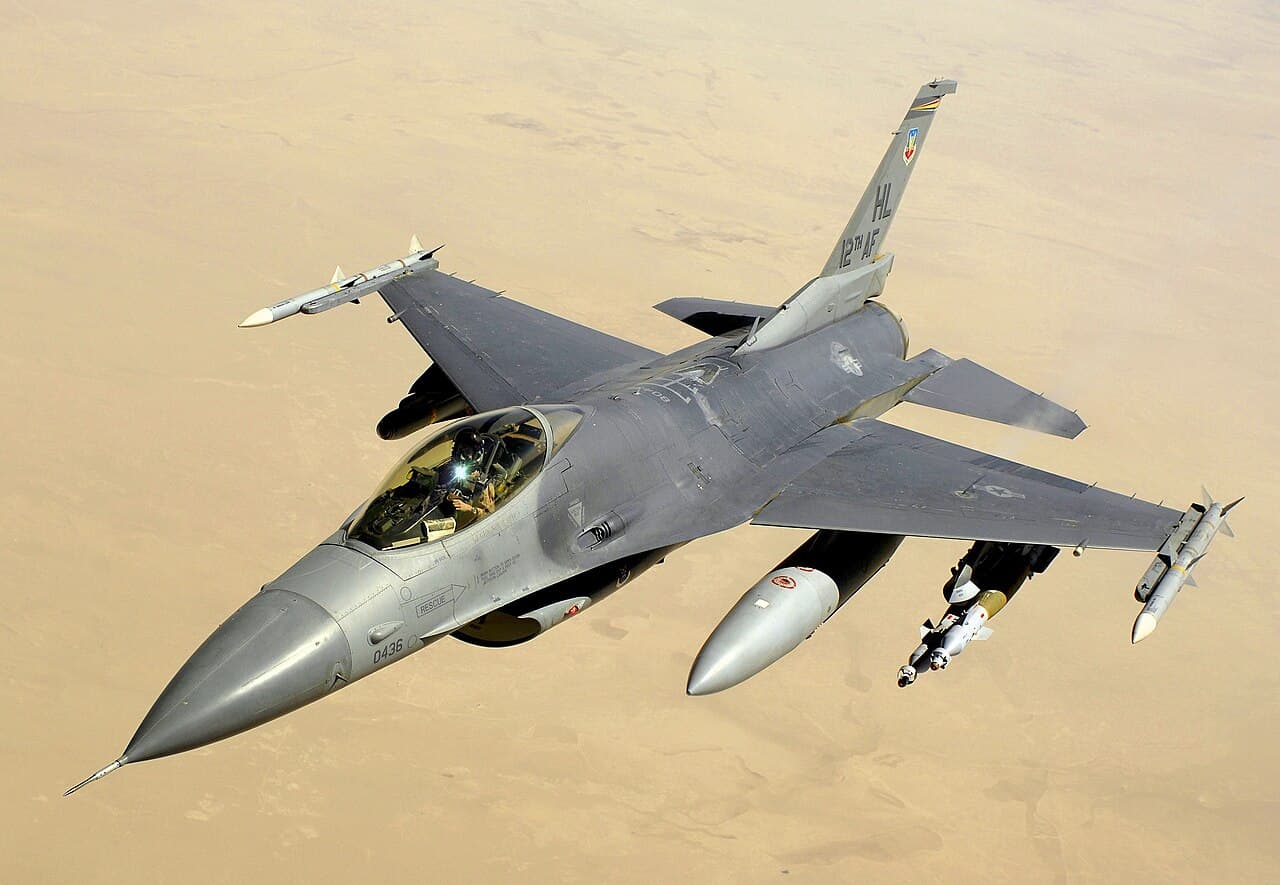
The VENOM jets use an aftermarket kit that allows a pilot to switch between traditional human flight controls and autonomous flight with the flip of a switch. The secretive Defense Advanced Research Projects Agency (DARPA) has collaborated with the US Air Force to develop a modification kit for the Lockheed Martin F-16 fighter that allows the jet to fly in both conventional and AI-controlled autonomous modes. The Viper Experimentation and Next-generation Operations Model (VENOM) autonomy kit interfaces with the F-16’s flight controls and mission systems, with the pilot able to toggle between human and AI control of the aircraft “with the flip of a switch”, according to DARPA. Several F-16s have been outfitted with the VENOM kits as part of the joint DARPA-USAF experiments with autonomous aerial combat. At least one of those fighters is already flying with the air force’s 96th Test Wing at Eglin AFB in Florida. “The air force and DARPA team has automated flight controls and sensors on a standard F-16 without changing the jet's core software,” says Brigadier General James Valpiani, a programme manager in DARPA’s tactical technology office. “This enables an efficient pipeline for developing dominant AI for aerial combat.” At least four F-16s are known to be included in the VENOM programme, including three jets that arrived at Eglin in 2024 and a fourth in 2025. Amongst the physical changes made to each aircraft is the addition of an auto-throttle that allows the AI pilot to regulate control surfaces and thrust. DARPA says the kit “ensures a safe, reliable environment for human-on-the-loop experimentation” with autonomous combat technologies. The VENOM F-16s are equipped with specialised hardware, software, and instrumentation that enable AI agents to control the aircraft while human pilots remain in the cockpit as monitors. Source: DARPA The VENOM project builds upon the autonomous flight technology developed aboard the X-62 VISTA – a heavily modified F-16 used by DARPA to test and refine the air combat skills of AI agents. In 2024, the technology research agency revealed it had used the X-62 to pit a Shield AI autonomy agent against human fighter pilots in within-visual-range dogfighting exercises. Those drills included the safe execution of at least 21 sorties over 10 months between December 2022 and September 2023 at Edwards AFB, California. The flights featured "increasingly complex air combat scenarios", according to DARPA, including offensive high-aspect nose-to-nose engagements that involved the dogfighting jets passing within 610m (2,000ft) of each other at speeds of 1,040kt (1,930km/h). Shield AI later told FlightGlobal that its Hivemind autonomy software showed the ability to “improvise” and develop novel combat tactics. The X-62 Variable Stability In-flight Simulator Test Aircraft technology demonstrator pioneered autonomous combat technologies in dogfighting drills in 2022 and 2023. Source: US Air Force "AI has tremendous potential to help humans manage this complexity in beyond-visual-range combat,” DARPA’s Valpiani notes. “But many hard questions remain concerning the performance and trustworthiness of combat AI in the extreme fog and friction of modern warfare.” While DARPA describes the X-62 as a “one-of-a-kind” aircraft, the agency says the VENOM project proves that standard fighters from the operational fleet can also deploy with AI enhancements. Going forward, the VENOM fleet will be used to test multiple AI agents in live-flight scenarios. That work will help the air force develop methods for its human pilots to command and control teams of autonomous platforms, such as the new General Atomics FQ-42 and Anduril Industries FQ-44 Collaborative Combat Aircraft. Optionally automated fighter cockpits could also provide significant enhancements to safety and workload reduction for combat aviators, who are tasked with managing increasingly complex arrays of sensors, communications equipment and weapons.
FAA Restores Boeing's Authority to Self-Certify 737 MAX and 787 Aircraft
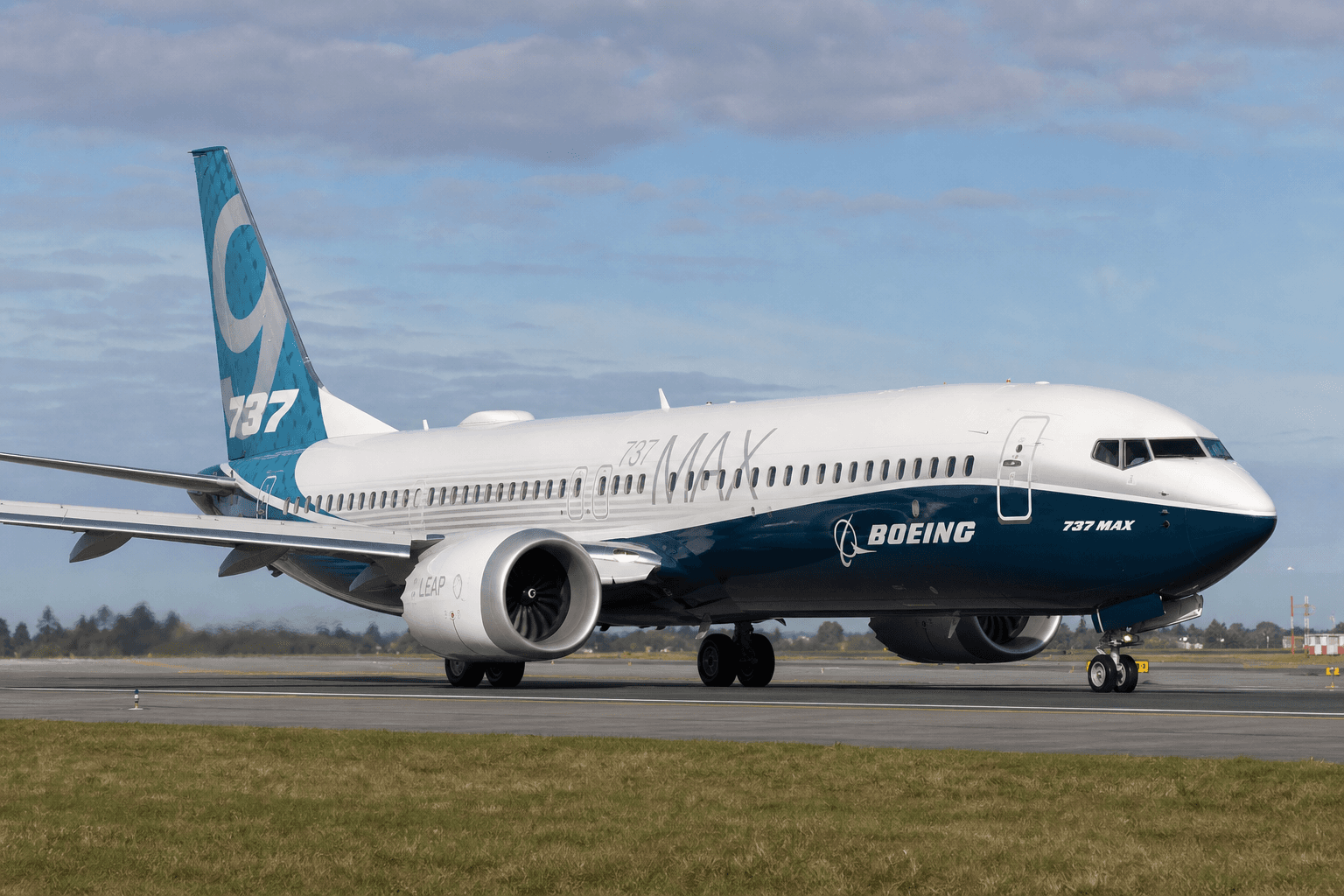
The Federal Aviation Administration (FAA) is once again letting Boeing consistently issue airworthiness certificates for new 737 MAXs and 787s, years after that was yanked due to production quality issues. This is good news from an efficiency standpoint, but can Boeing be trusted? FAA allows Boeing to issue airworthiness certificates again Effective immediately, the FAA is once again allowing Boeing to issue its own airworthiness certificates for new 737 MAX and 787 aircraft. This is a major development for Boeing, as the aerospace giant had these privileges yanked in 2019 for the 737 MAX, and in 2022 for the 787. For some background, Boeing has of course been under incredible regulatory scrutiny in recent years, and for good reason. First there were the two fatal 737 MAX crashes in 2018 and 2019 (Lion Air and Ethiopian Airlines), and then we've seen all kinds of additional quality control issues with both the 737 MAX and 787. As part of the increased oversight, Boeing's ability to self-certify the airworthiness of new aircraft was taken away. In other words, Boeing couldn't just say that its planes were safe, but it had to actually prove it to regulators, before they'd sign off on that. The concept of self-certifying planes is possible through the FAA's Organization Designation Authorization (ODA) program, which allows authorized organizations to perform certification functions on behalf of the FAA, such as issuing airworthiness and production certifications for aircraft. So the FAA is now once again delegating this to Boeing, so Boeing can decide if an aircraft is safe to operate. Getting to this point has been a process. As of late September 2025, the FAA started to allow Boeing to issue its own airworthiness certificates, but only on alternating weeks. The idea was then to see if there was any difference in production quality for the planes certified directly by Boeing, rather than by the FAA. The FAA claimed that there was no difference in quality. Boeing can again issue its own airworthiness certificates The FAA claims that it's confident in Boeing's quality The FAA claims that safety drives everything that the organization does, and the FAA is only allowing this step because it's confident that it can be done safely. This decision follows a thorough review of Boeing's ongoing production quality, and will reportedly allow FAA inspectors to focus additional surveillance on the production process. For example, there will be more FAA inspectors observing critical assembly stages, examining trends, ensuring Boeing mechanics are performing work to approved type design and engineering requirements, and assessing all activities for Boeing's continuous improvement of its Safety Management System (SMS). Inspectors will also observe Boeing's safety culture, ensuring that Boeing employees can report safety issues without fear of retribution. Here's what FAA Administrator Bryan Bedford had to say about this development: "Safety drives everything we do, and this step forward is only possible because we are confident it can be done safely. Our inspectors will continue rigorous oversight of Boeing's production while focusing more of their time where it has the greatest impact—identifying and addressing potential risks earlier in the manufacturing process." I'm sure people will have conflicting takes on this, with many thinking it reflects the current administration's anti-regulation attitude. I don't have a terribly strong take on this, though this is definitely positive news in terms of Boeing being able to deliver planes more efficiently, which has been a massive issue for the company in recent years. Can Boeing be trusted to self-certify planes in this way, given its track record? I mean, I don't think any for-profit, publicly traded company can be "trusted." However, I do believe that the top executives at Boeing now finally have the mandate to focus on quality and long term sustainability over short term profits, so in that sense, I do think progress has been made. Hopefully this represents Boeing turning a corner in a positive way, though only time will tell. Let's hope this all works out well for air travelers Bottom line Boeing has regained the ability to consistently issue airworthiness certificates for new planes. These are privileges that were taken away in 2019 for the 737 MAX, and in 2022 for the 787. As of late 2025, we saw Boeing regain the ability to issue airworthiness certificates on alternating weeks, and now it can do so consistently. The FAA claims that it's confident in Boeing's quality improvements, and that resources would better be put into oversight of Boeing in other areas. We'll see how this plays out, but it should be good news in terms of the pace at which planes are delivered. What do you make of Boeing regaining the ability to self-certify its aircraft?
The Daily Touch & Go
The day's best aviation news in your inbox. Free, no spam.