

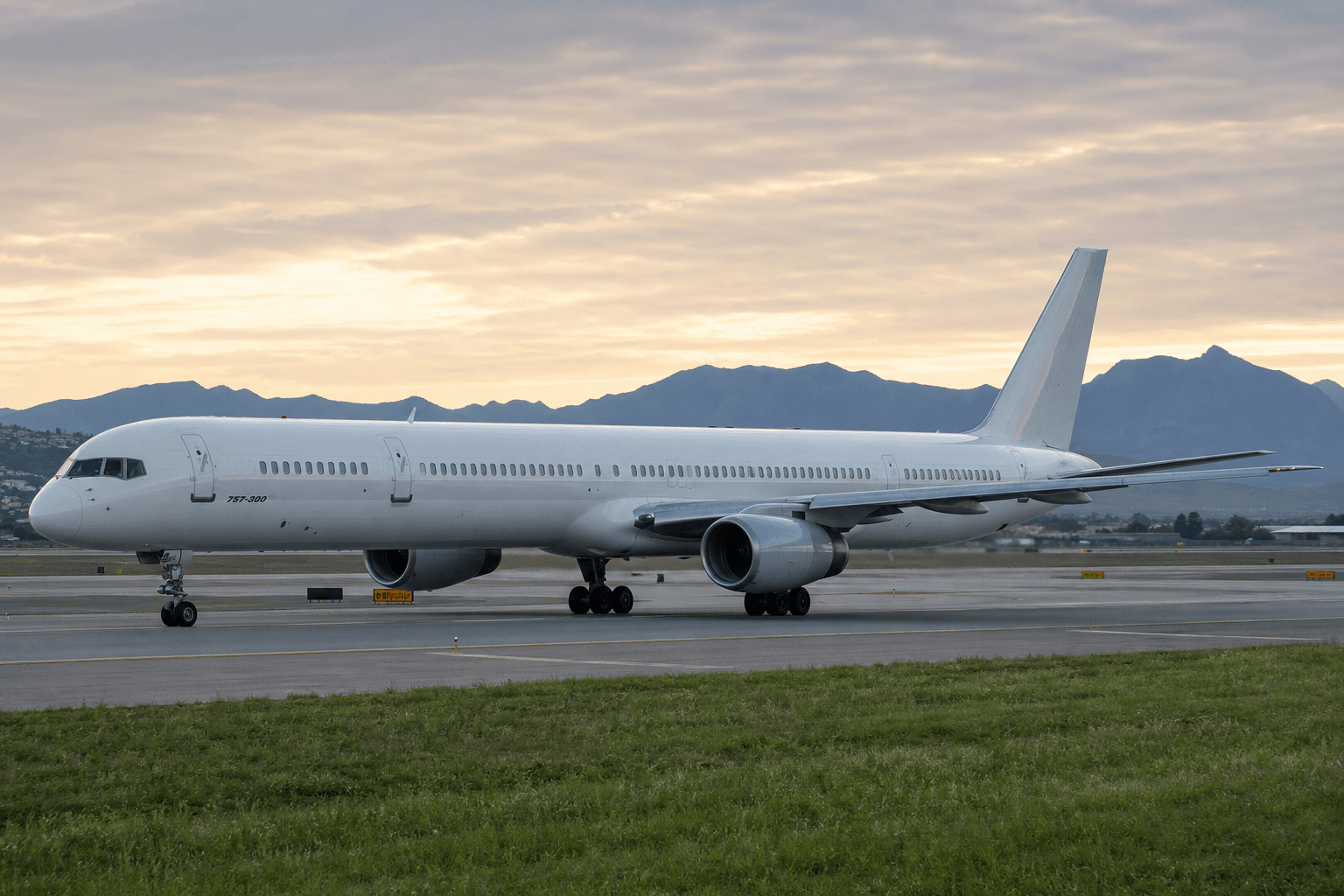
Illustration: The Touch & Go
Boeing Built Only 55 of Its Longest 757-300 Due to Design Limits and Market Response
The Boeing 757-300 stretch, developed for German airline Condor in 1996, ultimately saw just 55 units produced because structural challenges and range limitations hindered broad appeal.
The gist
Boeing’s longest 757 variant, the -300, was limited to 55 aircraft due to design compromises and shrinking orders.
The Boeing 757-300, the longest single-aisle commercial airplane Boeing has ever produced, never achieved significant market success despite entering service in 1999. Developed primarily for the German leisure carrier Condor, this stretched version of the 757-200 was intended to offer greater seating capacity at a lower cost per seat, targeting Mediterranean and Canary Island routes. Boeing’s approach to fulfilling this demand was to lengthen the fuselage of their already successful 757-200 rather than design an entirely new aircraft, a solution that was initially cost-effective but later proved structurally challenging and less competitive.
Originally announced in 1978 alongside the Boeing 767, the 757 was a breakthrough aircraft featuring a 20% fuel efficiency improvement compared to its predecessor, the 727, and pioneering advanced systems such as electronic flight instrument systems (EFIS) that eliminated the need for a flight engineer. Its powerful engines enabled excellent performance in hot and high environments as well as on short runways, complemented by a long range of nearly 3,900 nautical miles. The cockpit design also allowed seamless cross-training with the 767, adding operational flexibility for airlines.
The 757-300 variant extended the fuselage from 155 feet 3 inches on the -200 to 178 feet 10 inches, increasing passenger capacity from about 200 to nearly 295 in typical two-class layouts. Despite retaining the same wing and landing gear as the -200, the aircraft’s maximum takeoff weight increased to 272,000 pounds, up from 255,000 pounds on the shorter model. To address this, the -300 was equipped with more powerful Pratt & Whitney engine options offering 43,500 lbf of thrust compared to 40,200 lbf on the -200. However, the stretch resulted in a reduction in range to approximately 3,395 nautical miles, limiting operational flexibility for airlines.
Several aerodynamic and structural compromises arose from stretching the 757-300 without redesigning wings or landing gear. The heavier rear fuselage shifted the tail significantly farther from the main landing gear, raising the risk of tail strikes during takeoff rotation and landing flare. Boeing mitigated this by installing a retractable tailskid and implementing a pitch-attitude protection system linked to spoilers to automatically prevent excessive nose-up angles. These salvaging measures highlight how the airframe was stretched close to the practical limits of narrowbody design.
Operators also found the 757-300’s heavier max weight degraded takeoff and climb performance compared to the highly capable -200. The latter’s power-to-weight ratio had enabled it to excel on challenging routes and airports, a coveted trait among airlines. The -300’s sluggish handling reduced its appeal for operational conditions demanding versatile performance, despite the allure of added passenger capacity to lower seat-mile costs.
From a market perspective, the 757-300’s range disadvantage was a critical drawback. While airlines like Condor valued the larger capacity for dense leisure routes, many others favored more flexible narrowbodies or smaller widebodies with greater range and fuel efficiency. As the early 2000s approached, the aviation market shifted toward newer single-aisle jets such as the Airbus A321 and Boeing 737 Next Generation variants, which offered better economics and operational adaptability.
Ultimately, only 55 Boeing 757-300s were produced, a stark contrast to over 1,000 units of the 757-200 model. This limited production stemmed from a combination of factors: structural inefficiencies imposed by the fuselage stretch, reduced range relative to the -200, compromised performance on challenging airports, and fierce competition from evolving aircraft models. Despite its shortcomings, the 757-300 stands as the longest narrowbody ever built and remains notable for pushing the boundaries of single-aisle aircraft design during its era.
Today, the 757-300 is a niche aircraft but has contributed meaningfully to Boeing’s developmental history and the operational evolution of narrowbody jets. Insights from its design constraints and market reception inform future decisions on stretching airframes versus new development. For legacy operators, the 757-300 still serves routes where capacity is vital and airport performance demands moderate, reflecting a careful balance between volume and range in single-aisle aviation.
Read more
All Airlines →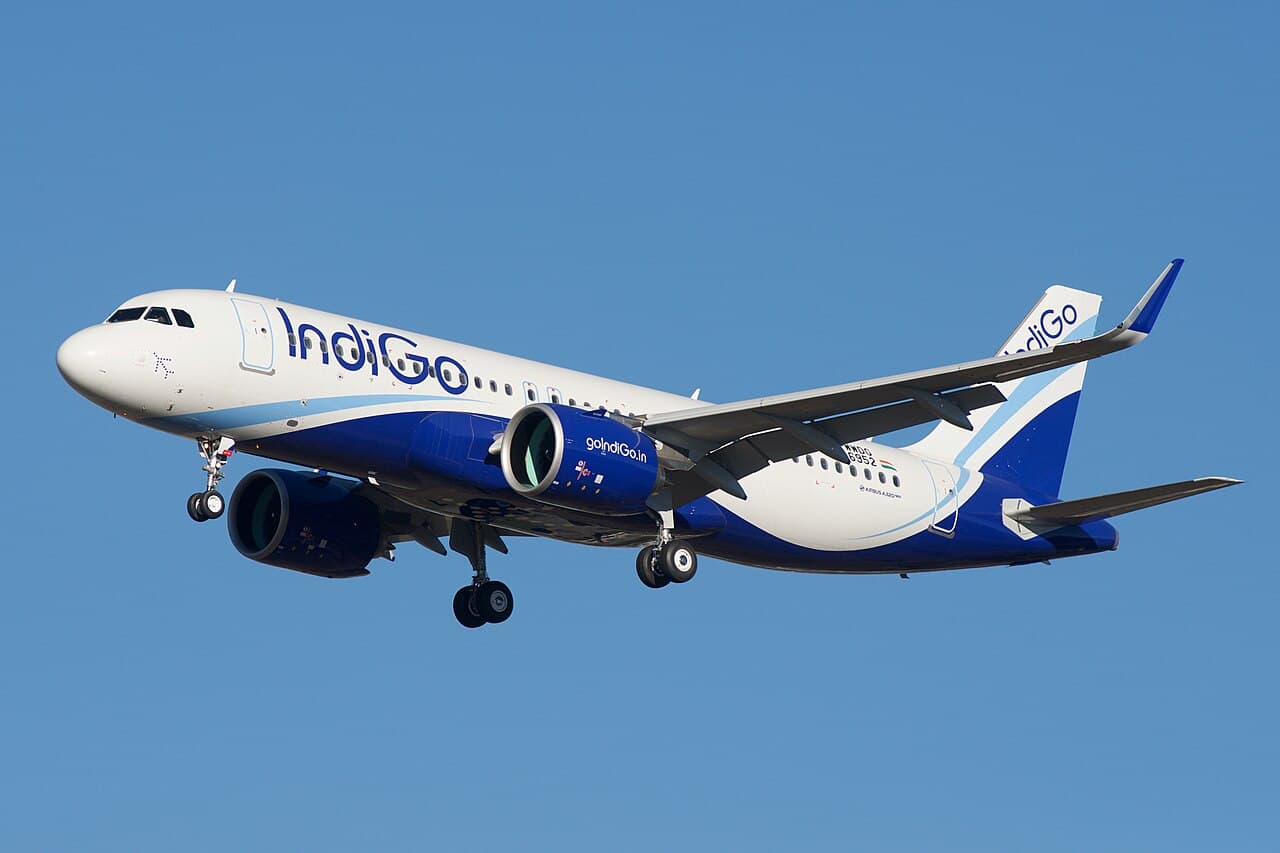
British Airways to Power Up to 63 A320neos with Pratt & Whitney Engines, Ending Long CFM Exclusivity
The United Kingdom's primary flag carrier, British Airways, has selected Pratt & Whitney's geared turbofan, or GTF engine to power up to 63 Airbus A320neo family aircraft, ending decades of exclusive reliance on CFM International engines for its Airbus narrowbody fleet. So in this video, we take a look at why the airline is introducing a second engine supplier for the first time on its A320neo family fleet, and what this decision says about how airlines are choosing engines in today's increasingly complex aviation market.
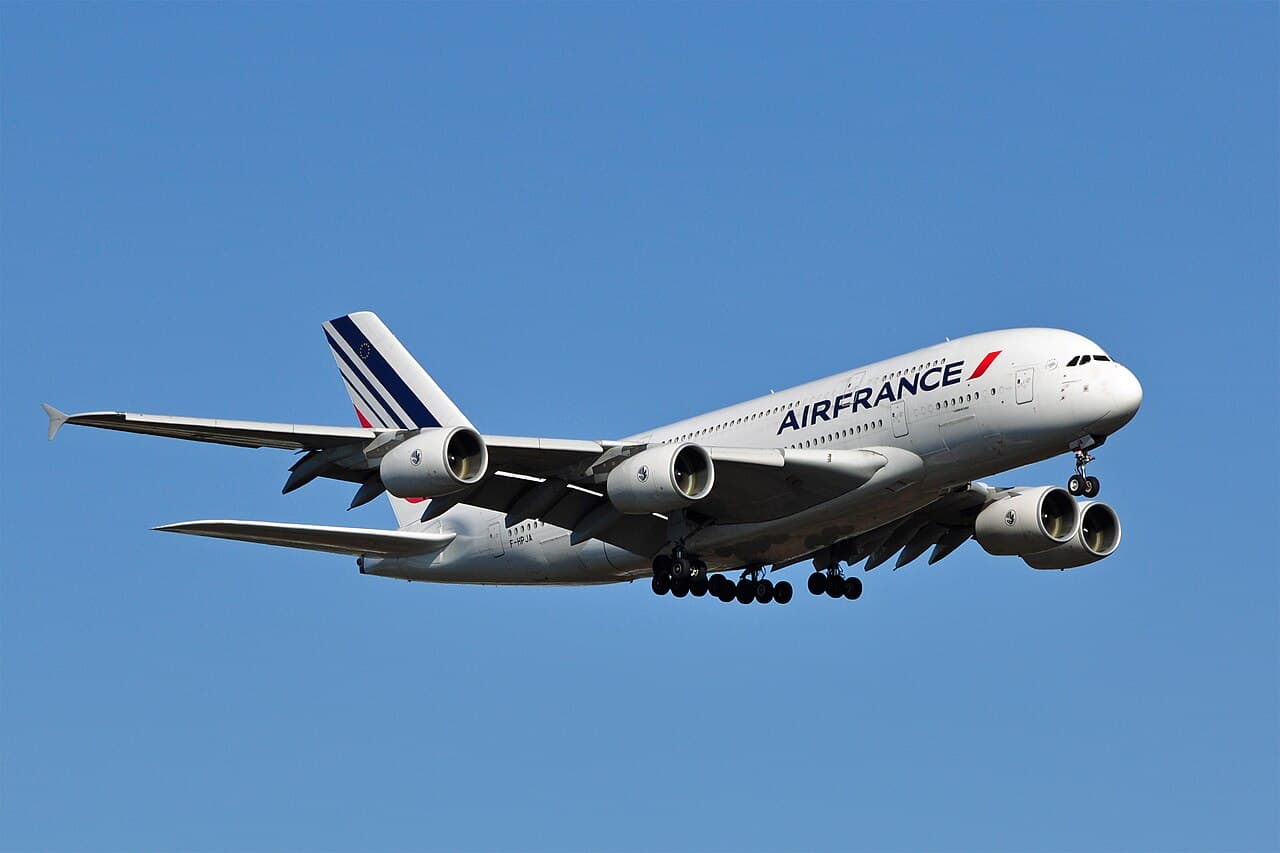
Emirates Crafts 8-Foot Arsenal Badge Sculpture from Retired A380 and 777 Parts
The partnership between Emirates and Arsenal FC is one of the most notable sports sponsorship deals of the 21st century. With The Gunners having won the Premier League title last season, and their cooperation with the Dubai-based UAE flag carrier having now lasted for some 20 years, Emirates is in a celebratory mood, which has manifested itself in the production of a 2.4-meter (eight feet) sculpture.
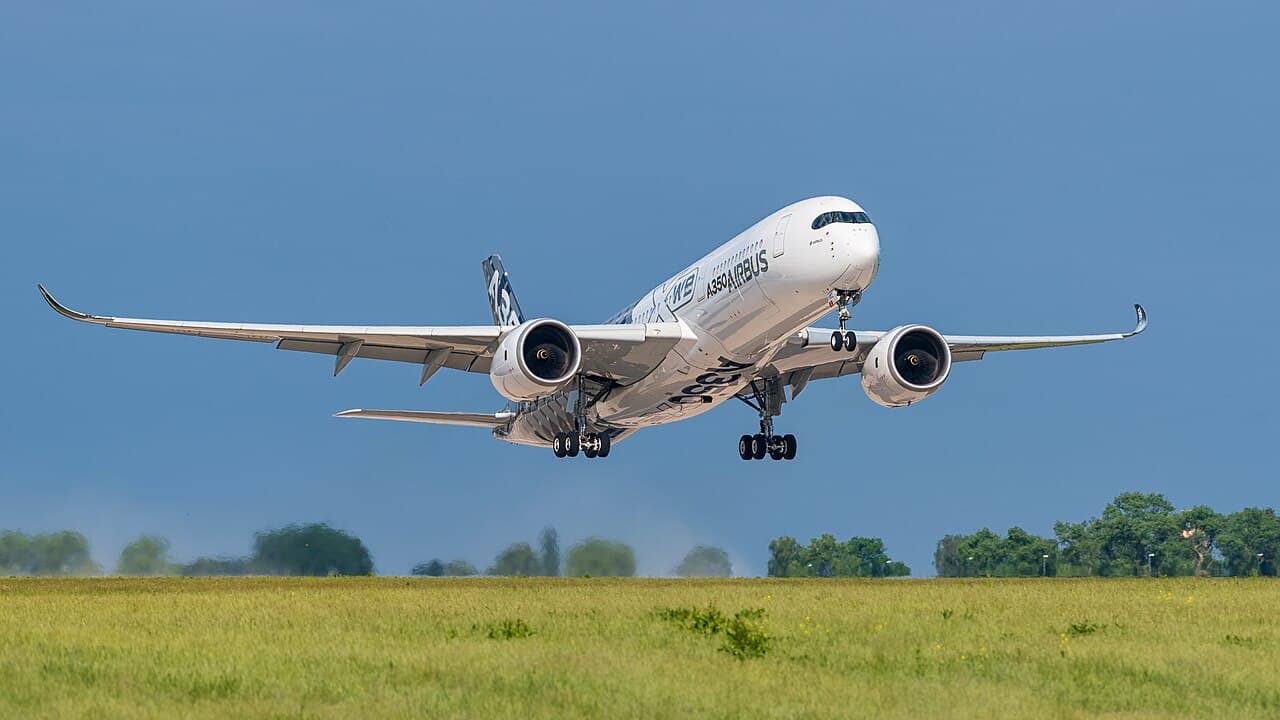
Global Widebody Aircraft Shortage Grows Amid Boeing, Airbus Production Delays
The years after the COVID-19 pandemic have been tumultuous in the airline industry. While some airlines are succeeding, many are also struggling or have failed altogether, and strikingly, demand for new planes is up while manufacturers cannot keep up. Narrowbody jets are generally being produced at high rates that meet demand (although engines are a constraint), but the discrepancy between supply and demand is most striking with widebody airliners.
Vietjet to launch thrice-weekly flights from Western Sydney to Ho Chi Minh City in 2027
Asian budget airline’s link to new Australian airport from Vietnam commences at the beginning of 2027. Vietnamese budget carrier Vietjet is the latest operator to sign up to services from the new Western Sydney airport, with plans to open routes from January next year. Cargo flights have been operating at Western Sydney since 27 July and passenger operations are scheduled to commence on 25 October. Qantas, Jetstar, Singapore Airlines and Air New Zealand have already committed to serving the 24h airport. Vietjet will bring the number of airlines to five with a twice-weekly link to Ho Chi Minh City from 10 January 2027, rising to thrice-weekly in March. These flights will be operated by Airbus A330s. “Becoming one of the first airlines to operate at this new airport reinforces Vietjet's strategy of pioneering the expansion of its international network," says Vietjet chief Nguyen Thanh Son. The carrier's Vietjet Thailand venture also intends to begin a four-times weekly operation to Bangkok the following November. Western Sydney airport chief Simon Hickey says the Ho Chi Minh City route expands the number of links available, and "reinforces the choice, flexibility, and global connectivity" of the new facility. "Vietnam is an incredibly popular destination for [Australian] travellers," he adds. Vietjet's Ho Chi Minh City flights are being supported by an incentive programme from the New South Wales government, the Western Sydney International Take-Off Fund.
The Daily Touch & Go
The day's best aviation news in your inbox. Free, no spam.