

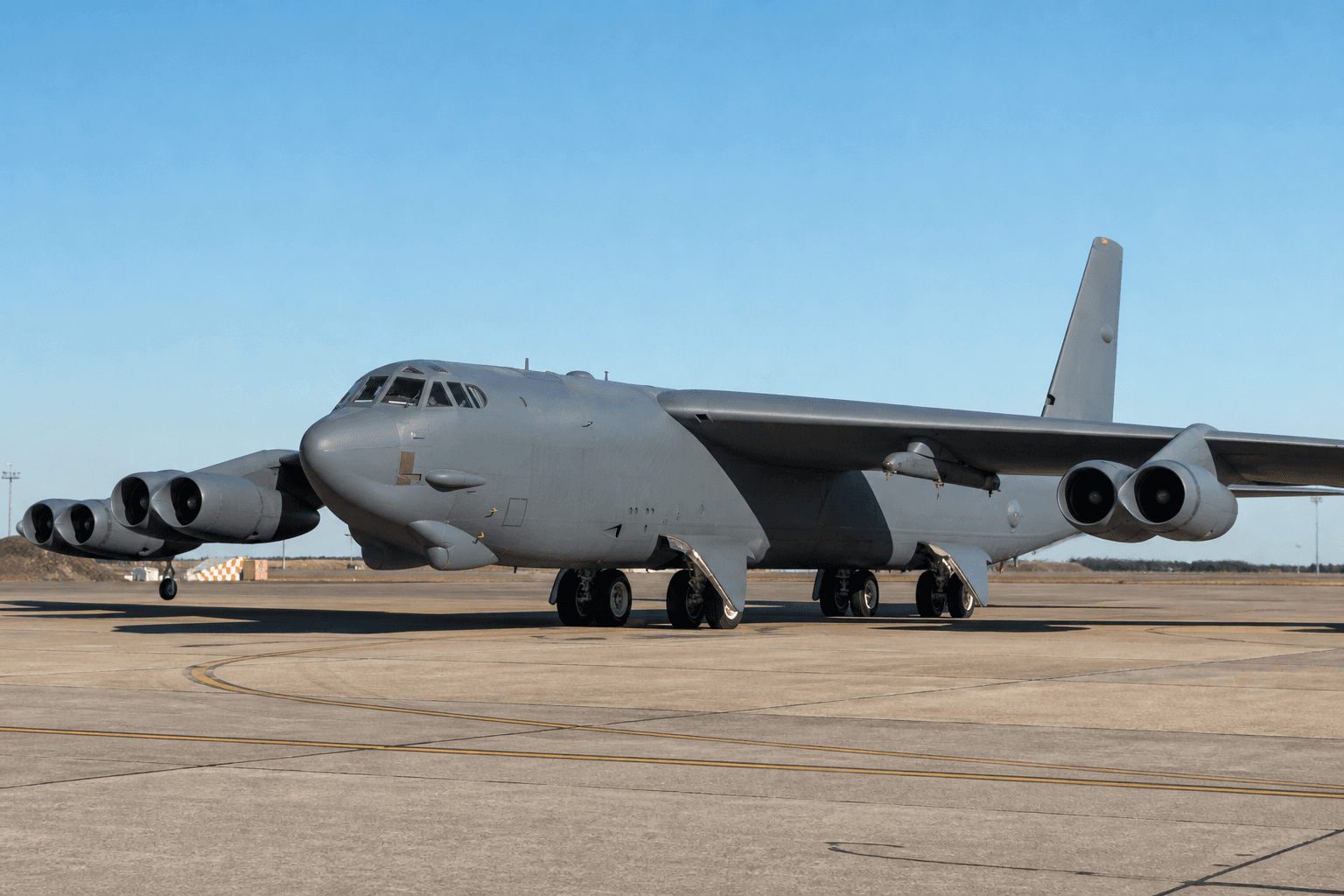
Illustration: The Touch & Go
B-52J Engine Upgrade Set to Outpace Jets Built Decades Later
The US Air Force's B-52 bomber will gain 30% improved fuel efficiency and greater range with new engines, keeping it operational into the 2050s beyond successors like the B-1B.
The gist
A new engine upgrade will let the B-52 bomber outperform much newer jets and remain operational well into the 2050s.
The United States Air Force is undertaking a significant upgrade to the venerable Boeing B-52 Stratofortress by replacing its original eight engines through the Commercial Engine Replacement Program (CERP). This initiative will result in a new variant dubbed the B-52J, which will feature modern engines delivering approximately 30% better fuel efficiency than the current powerplants. The engine swap promises to substantially extend the unrefueled operational range of the aircraft, ensuring it remains a vital component of the USAF’s bomber fleet for decades to come.
Notably, this upgrade allows the B-52, a bomber design first flown more than 70 years ago, to surpass jets developed over 40 years later in terms of operational efficiency and cost-effectiveness. The Rockwell B-1B Lancer, which entered service in 1986 as the designated replacement for the B-52, is now being retired from active duty. In contrast, the upgraded B-52J with its new engines is slated to remain in service into the 2050s, evidencing an unusual reversal in the expected lifespan comparison between the two aircraft.
This stark performance improvement is attributed entirely to the CERP engine intervention. Prior to the upgrade, the B-52’s older turbojet engines limited its fuel economy and range. By swapping in modern commercial turbine engines, the aircraft will see operational costs reduced significantly, including maintenance expenses that will fall below those of the B-1B despite the B-1B’s newer airframe. These savings promise to reduce the cost per flight hour, easing the logistical and budgetary burdens faced by the USAF.
The B-52’s longevity and ongoing relevance underscore both its robust airframe design and the adaptability afforded by incremental upgrades. The program leverages advances in engine technology developed for commercial aviation to revitalize a platform that was introduced before many modern avionics and propulsion concepts became widespread. By integrating state-of-the-art engines, the Air Force maximizes the bomber’s range, payload flexibility, and overall mission capability.
This engine replacement program follows a historical pattern of incremental modernization that has kept the B-52 viable through decades of evolving military requirements. Earlier upgrades have included avionics modernization, structural refurbishments, and defensive system enhancements. The CERP initiative takes this modernization further by dramatically improving the aircraft’s propulsion system, which had been one of its primary limiting factors in terms of efficiency and operational cost.
The extended operational range of the B-52J will enhance strategic reach, allowing for fewer in-flight refuelings and increasing mission flexibility. This capability is particularly relevant considering the evolving strategic environment, which demands persistent global strike options with quick reaction times. Maintaining a bomber fleet with versatile and cost-effective aircraft like the upgraded B-52J is a cornerstone of US airpower projection.
Furthermore, the B-52J will continue supporting a variety of roles including nuclear deterrence, conventional bombing, and intelligence, surveillance, and reconnaissance (ISR) escort missions. This multi-role capability amplifies the importance of ensuring its propulsion technology keeps pace with current demands. The CERP upgrades thus represent a vital investment in long-term operational capability and effectiveness.
The decision to invest in upgrading the B-52’s engines rather than retiring the airframe altogether reflects a broader strategic choice to balance cost with capability. With newer designs such as the B-21 Raider still in development, the USAF needs to bridge the gap using proven platforms enhanced with modern technology. The B-52J’s increased efficiency and reduced maintenance burden make it a prudent and impactful solution.
As the B-1B phases out, the B-52J will play a critical role in the future bomber fleet composition. The engine replacement program exemplifies how legacy military aircraft platforms can be effectively modernized to meet contemporary and future mission requirements. The success of this program will likely influence decisions on extending service lives of other current-generation aircraft through targeted technological advancements.
Read more
All Military/Defense →
Massive multi-branch flight display celebrates US 250th anniversary over Washington DC
The United States celebrated its 250th anniversary on July 4, 2026, with a massive flight display over the…
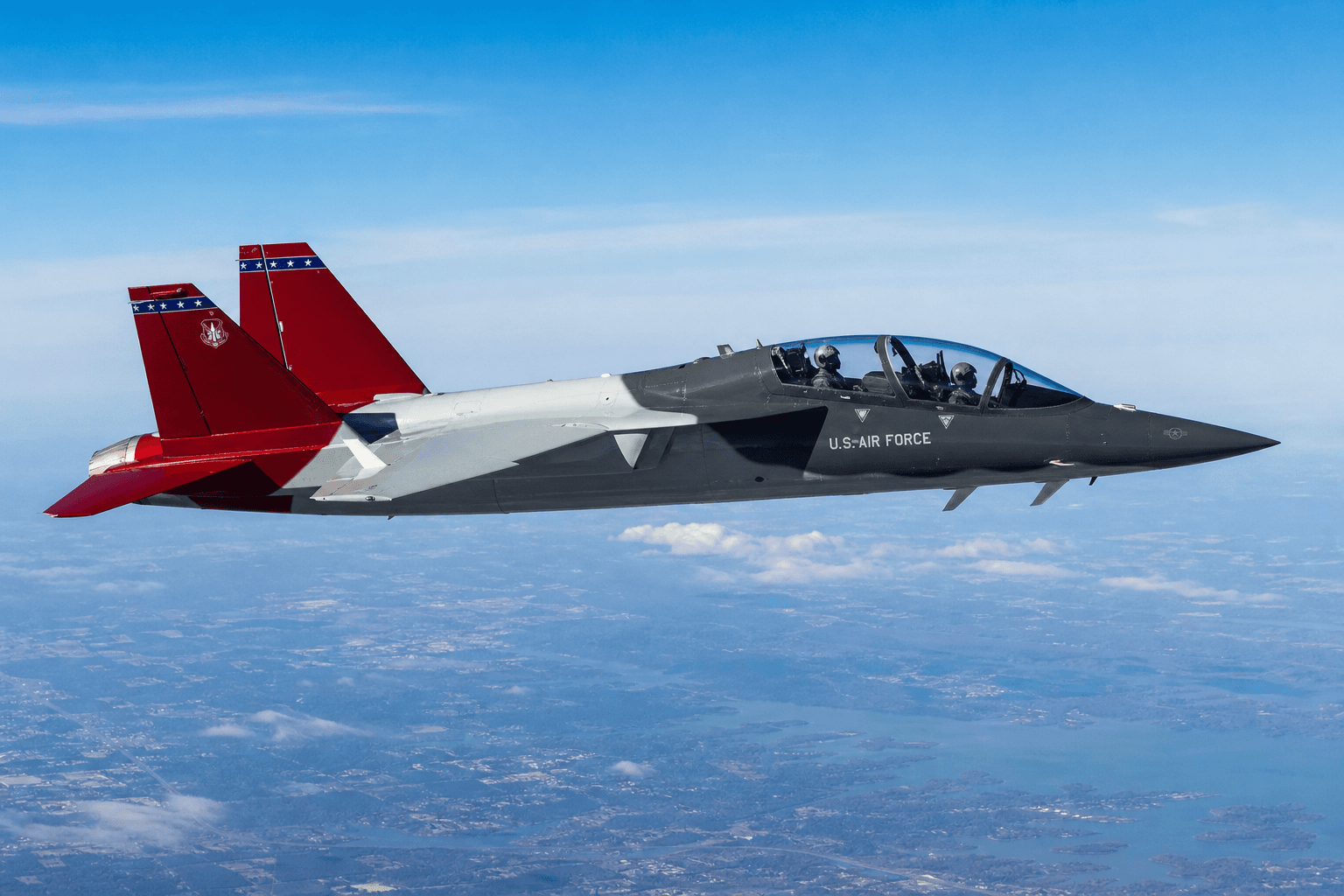
USAF's New T-7A Red Hawk Trainer Set to Revolutionize Pilot Training by 2027
The US Air Force needs a new training aircraft; the Red Hawk is their answer. This aircraft will prepare pilots for the future of air warfare.
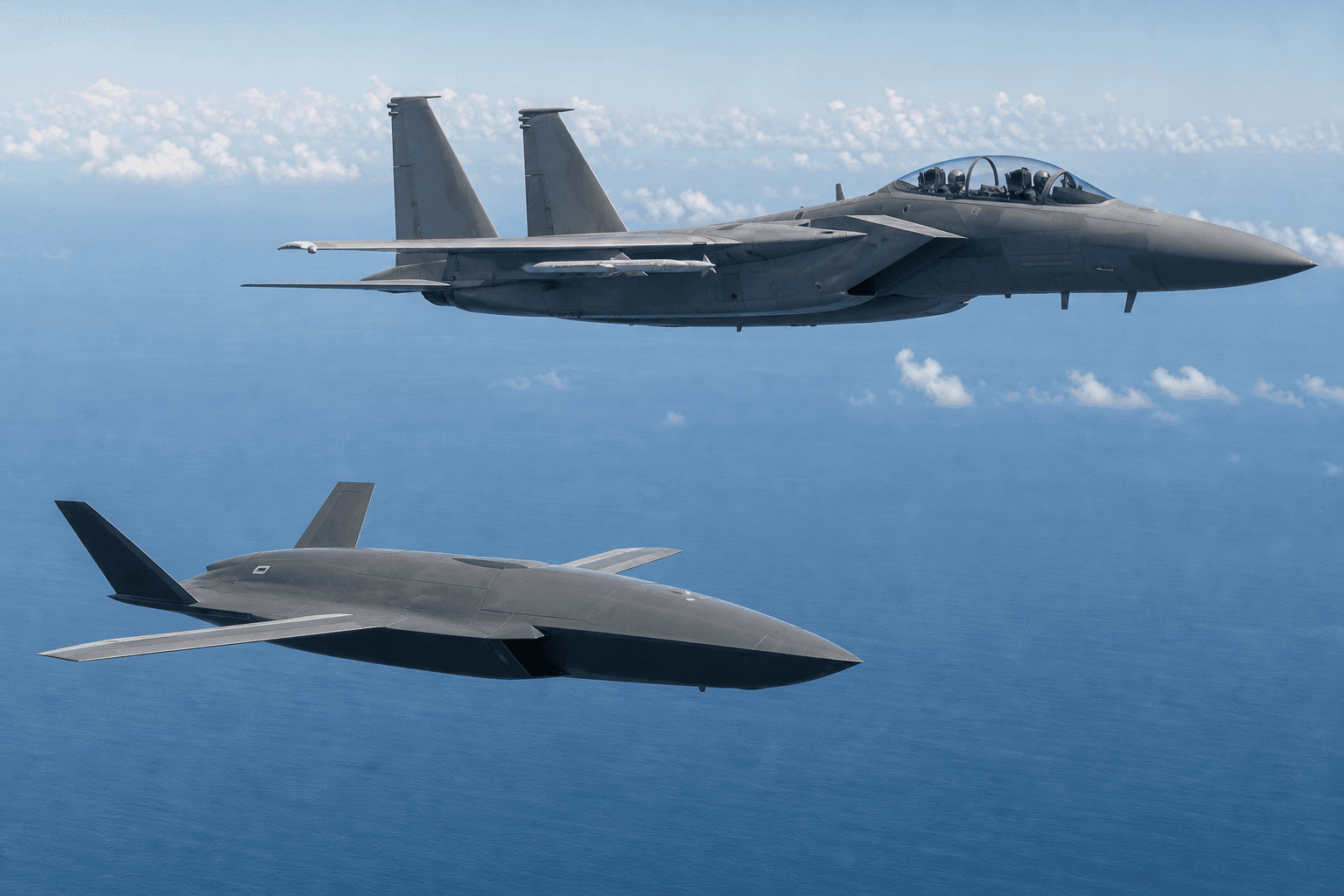
Boeing's MQ-28 Ghost Bat Joins US Air Force in Landmark Indo-Pacific Exercise
- MQ-28 Ghost Bat is first collaborative combat aircraft (CCA) to be integrated into multinational, joint force Exercise Valiant Shield 2026

China's Datangshan Aviation Museum Closes for Major Relocation to Changchun
For years, the China Aviation Museum at Datangshan, on the northern outskirts of Beijing, ranked among the world’s greatest destinations for aviation enthusiasts. Home to hundreds of military and civil aircraft, it was a museum unlike any other, combining an extraordinary outdoor collection with a vast underground hangar carved into the side of a mountain. Sadly, however, visitors hoping to experience this remarkable museum will have to wait. The museum closed in late 2025, with its priceless collection now being relocated to a new site, meaning one of aviation’s great pilgrimage destinations is temporarily no more. One of the World’s Greatest Aviation Museums Opened in 1989 to mark the 40th anniversary of the People’s Liberation Army Air Force (PLAAF), the China Aviation Museum quickly became the country’s national aviation museum and one of the largest collections of aircraft anywhere in the world. Located on the site of the former Shahezhen Air Base, around 40km (25 miles) north of central Beijing, the museum occupied more than 700,000 square metres and displayed well over 300 aircraft representing the history of Chinese military and civil aviation. Perhaps its most distinctive feature was the enormous underground exhibition hall. Originally constructed as a hardened aircraft shelter during the Cold War, this huge tunnel bored deep into Datangshan Mountain became home to dozens of historic aircraft, creating one of the most unique museum settings anywhere in the world. Outside, visitors could spend hours wandering among rows of fighters, bombers, transports and helicopters representing almost every type ever flown by the Chinese Air Force. A Treasure Trove for Airliner Enthusiasts Former Orbis DC-8 at Datangshan. Photo: Peter Garwood Although much of the museum focused on military aviation, Datangshan held an equally fascinating collection of classic airliners. Many had once flown with the Civil Aviation Administration of China (CAAC), the state airline that eventually evolved into today’s Chinese airline industry. Others had been acquired from overseas operators or preserved because of their historical importance. Among the highlights were: Hawker Siddeley Trident British Aerospace BAe 146 Douglas DC-8 (formerly operated by ORBIS International) Airbus A310 Vickers Viscount Tupolev Tu-124 Ilyushin Il-18 (including Chairman Mao Zedong’s former VIP aircraft) Lisunov Li-2 Antonov An-24 Convair 240 For enthusiasts interested in classic jetliners, this was one of the few places in the world where British, Soviet, American and Chinese aircraft stood side by side. Alongside these were dozens of rare military aircraft, including early MiGs, indigenous Chinese fighters, experimental prototypes and aircraft captured or obtained from countries around the world. The collection also featured everything from a Lockheed F-104 Starfighter and Northrop F-5 to a Martin RB-57D Canberra and even a Lockheed D-21 reconnaissance drone. Why Has the Museum Closed? A line-up of Migs. Photo: allen In October 2025, the museum closed to visitors as preparations began to relocate the collection. Although no detailed official public announcement has been issued explaining the full plans, multiple aviation and travel sources report that much, if not all, of the collection is expected to move to a brand-new aviation museum in Changchun, in Jilin Province, northeastern China. The relocation is believed to be one of the largest museum moves ever undertaken in the aviation world. Moving more than 300 historic aircraft is an enormous logistical undertaking. Many of the exhibits are too large to transport by road without extensive dismantling, while others are unique or fragile museum pieces requiring specialist conservation work. When Will It Reopen? At the time of writing, the new museum has not yet opened. Reports from visitors and aviation museums monitoring the relocation suggest that the new facility is unlikely to welcome visitors before mid-2027 at the earliest. While work is believed to be progressing, no confirmed opening date has been announced publicly. This means anyone planning an aviation-focused trip to Beijing should be aware that Datangshan is currently unavailable, despite older travel guides and websites continuing to list normal opening hours. A Museum Worth Waiting For Curtiss-Wright C-46. Photo: Erwin Although its closure is disappointing, there is every reason to be optimistic. The Datangshan museum had become increasingly difficult to maintain, particularly its enormous outdoor displays, and relocating the collection offers the opportunity to conserve many historically important aircraft while presenting them in a more modern setting. For enthusiasts, the hope is that the new museum will preserve not only China’s remarkable military aviation heritage but also its unique collection of classic Western airliners—aircraft such as the Trident, BAe 146, DC-8, Airbus A310 and Vickers Viscount that are becoming increasingly rare elsewhere in the world. Until then, the China Aviation Museum remains one of aviation’s great “missing” museums. It may be closed, but its remarkable collection still promises to become one of the world’s essential destinations for aircraft enthusiasts once its new home finally opens its doors.
The Daily Touch & Go
The day's best aviation news in your inbox. Free, no spam.