

Illustration: The Touch & Go
Boeing's MQ-28 Ghost Bat Joins US Air Force in Landmark Indo-Pacific Exercise
Boeing's MQ-28 Ghost Bat unmanned combat aircraft took part in Exercise Valiant Shield 2026, integrating with US and allied forces over the Western Pacific to advance human-machine teaming.
The gist
Boeing’s MQ-28 Ghost Bat became the first collaborative combat aircraft deployed in a major multinational Indo-Pacific exercise alongside US forces.
Continuing coverage
All Boeing →- Boeing launches 737 Max assembly at new Everett North Line to boost production
- Boeing updates B777X range and capacity quietly, boosting performance outlook
- Boeing's 737 MAX 7 Nears FAA Approval More Than a Decade After Launch
- Boeing advances new St Louis factory for sixth-generation combat jet production
- USAF's New T-7A Red Hawk Trainer Set to Revolutionize Pilot Training by 2027
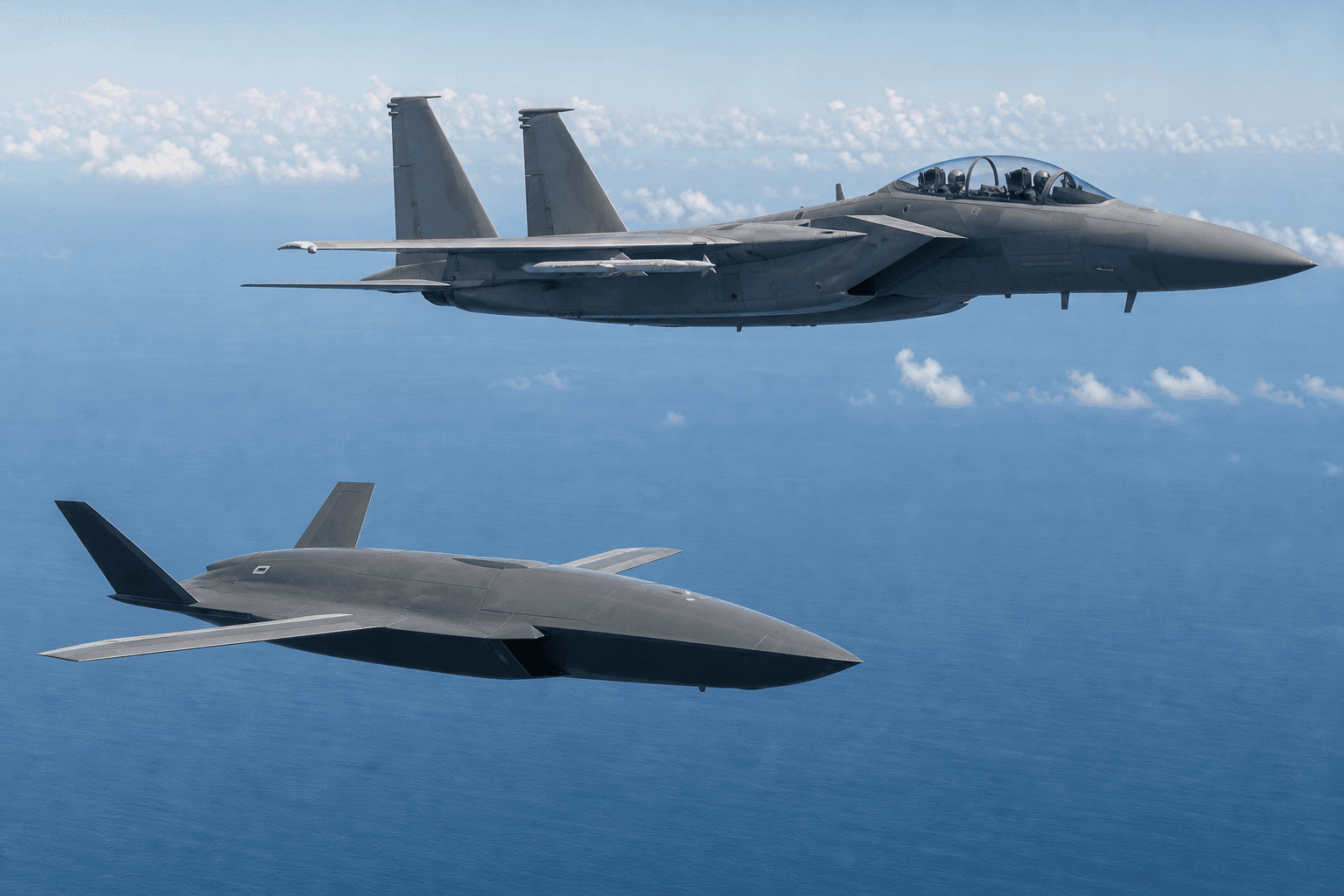
The Australian-developed MQ-28 Ghost Bat, operated by Boeing, made its debut in a major multinational military exercise, Exercise Valiant Shield 2026, conducted over the Philippine Sea. This marked the first time a collaborative combat aircraft (CCA) participated alongside a comprehensive array of USAF and allied aircraft in a joint operational drill in the Indo-Pacific region. The exercise was held in June 2026, leveraging the Marianas Island Range Complex to test and refine joint tactics and interoperability.
During the exercise, the MQ-28 operated in conjunction with crewed platforms including F-35A and F-35B Lightning IIs, F-15EX Eagle IIs, HC-130 transports, E-3 Sentry AWACS, E-2D Hawkeyes, EA-18G Growlers, and intelligence aircraft like the RC-135, representing a snapshot of joint and coalition air power. The integration of the unmanned MQ-28 with these platforms embodied the cutting-edge concept of human-machine teaming under the command of the U.S. Air Force’s Experimental Operations Unit.
The MQ-28 Ghost Bat is designed with open mission systems architecture and government reference frameworks that enable rapid customization and integration of sovereign payloads, allowing flexibility for different defence forces’ mission profiles. Boeing highlighted the aircraft’s ability to operate alongside fourth, fifth, and future sixth-generation platforms, boosting the capabilities and situational awareness of the broader air fleet.
Steve Parker, president and CEO of Boeing Defense, Space & Security, emphasized that the MQ-28’s participation signals a significant leap forward in combat readiness and joint force capability. He pointed out that this demonstration provides a tangible experience for the U.S., allied, and partner forces to understand the operational value the MQ-28’s collaborative combat capabilities add to the force mix.
Amy List, vice president and managing director at Boeing Defence Australia, underscored the MQ-28’s maturity and proven technology status among allied nations. She stated that the aircraft’s involvement in Valiant Shield affirms Boeing’s readiness to market and deliver this Australian-developed capability to air forces worldwide.
Exercise Valiant Shield is held biennially with the goal of integrating joint forces and improving real-world operational proficiency across various domains: sea, air, land, and cyberspace. The 2026 iteration was a complex scenario involving detection, tracking, and engagement of simulated threats, focused heavily on collaboration between multiple services and nations in the Indo-Pacific theatre.
This successful deployment not only advances the concept of manned-unmanned teaming but also validates the MQ-28's ability to integrate and operate seamlessly within a joint force context. The experience gained will inform tactics, techniques, and procedures essential for future combat operations involving CCAs and crewed platforms together.
The MQ-28’s participation strengthens the U.S. and allied coalition's capability in a strategically vital region, where the evolving security environment demands advanced, interoperable systems. Boeing’s role as a major aerospace exporter brings technological innovation to enhance defense cooperation across more than 150 countries, with the MQ-28 poised to become a key asset in allied air power.
As the exercise concluded, Boeing affirmed its commitment to safety, quality, and integrity in delivering defense innovations. The MQ-28 Ghost Bat's successful integration sets a precedent for unmanned systems expanding the reach and awareness of manned aircraft, highlighting a new dimension in collaborative air combat that will influence future deployments.
Read more
All Military/Defense →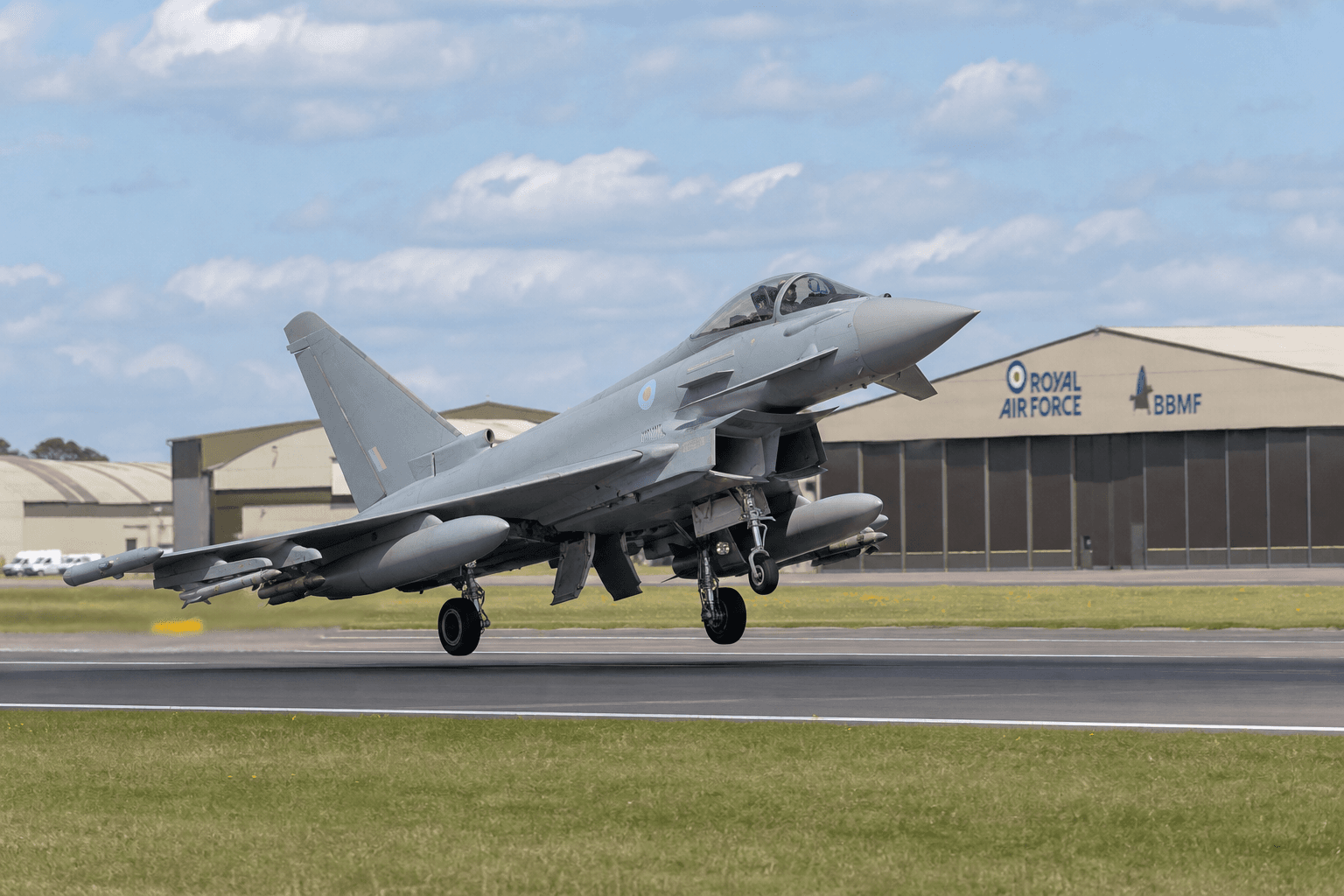
RAF Coningsby: UK's Premier Base for Typhoon Jets and Historic Battle of Britain Aircraft
Few military airfields in the UK are as rewarding for aviation enthusiasts as RAF Coningsby . Home to the Royal Air Force’s frontline Typhoon force and the world-famous Battle of Britain Memorial Flight, the Lincolnshire base offers a fascinating mix of modern combat aircraft and priceless Second World War classics. On almost any visit, there’s the chance to watch cutting-edge fighters carrying out training sorties before seeing an 80-year-old Spitfire or Lancaster taxi out for a commemorative flight. Located in the heart of what became known as ‘Bomber County’ , RAF Coningsby is surrounded by aviation history. Alongside nearby RAF Waddington, RAF Cranwell and the former bomber stations that once dotted Lincolnshire, it remains one of Britain’s premier aviation destinations and a must-visit location for military aircraft spotters. A Brief History of RAF Coningsby RAF Coningsby opened in 1940 during the Second World War as one of the many bomber stations built across Lincolnshire to support RAF Bomber Command. Initially home to Whitleys before receiving Avro Lancasters, the station became an important operational base from which crews flew missions over occupied Europe. Following the war, Coningsby entered the jet age, operating a succession of famous aircraft including the English Electric Canberra, Avro Vulcan and Panavia Tornado F3. Since 2005, it has become one of the principal operating bases for the Eurofighter Typhoon , cementing its role at the forefront of UK air defence. Today, while many of Lincolnshire’s famous wartime bomber stations have disappeared or become museums, Coningsby remains a fully operational RAF station, continuing the county’s proud aviation tradition while preserving its remarkable heritage through the Battle of Britain Memorial Flight . Aircraft and Squadrons RAF Coningsby is one of the Royal Air Force’s busiest fast-jet stations and serves as a major centre for Typhoon operations. The station is home to: No. 3 (Fighter) Squadron – Frontline Eurofighter Typhoon FGR4 unit. No. XI (Fighter) Squadron – Another operational Typhoon squadron responsible for UK air defence and overseas deployments. No. 29 Squadron – The RAF’s Operational Conversion Unit, responsible for training new Typhoon pilots before they join frontline squadrons. Coningsby also hosts the Battle of Britain Memorial Flight , whose hangars house the Flight’s priceless collection of historic aircraft. While these aircraft fly only on selected training and display sorties, spotting one alongside modern Typhoons is an unforgettable experience. Thanks to the station’s operational tempo, visitors can often expect multiple Typhoon departures and recoveries during weekdays, together with occasional visits from other RAF, NATO and international military aircraft. Visit the Battle of Britain Memorial Flight Visitor Centre No visit to RAF Coningsby is complete without spending time at the Battle of Britain Memorial Flight Visitor Centre . Situated just outside the station, the Visitor Centre offers guided tours of the BBMF hangars, where visitors can get remarkably close to the Flight’s legendary aircraft, including the Avro Lancaster , Supermarine Spitfires , Hawker Hurricanes and Douglas Dakota . It’s a rare opportunity to see these historic aircraft undergoing maintenance and learn about the engineering expertise required to keep them airworthy. If you’re planning a spotting trip to Coningsby, combining it with a BBMF tour makes for an outstanding day out. ( You can read our full guide to visiting the BBMF Visitor Centre here .) Plane Spotting at RAF Coningsby Whether you’re hoping to photograph Typhoons launching on Quick Reaction Alert training sorties, capture a Lancaster taxying past in the sunshine, or simply enjoy one of Britain’s most historic military airfields, RAF Coningsby rarely disappoints. Below, we’ve rounded up the best spotting locations around the airfield, together with advice on photography, runway usage and the best times to visit. Spotters Car Park Along Dogdyke Lane there is a car park situated at the end of runway 07 (postcode LN4 4TE). From here you can sit and watch or photograph movements on the runway (however 25 departures are a little high by this point). There's usually plenty of spotters around, and vans selling food and drink. BoBMF Layby A little further up Dogdyke Lane is a layby next to the fence which looks out onto the Battle of Britain Memorial Flight hangar and apron. It's great for seeing these aircraft coming and going, and you can also see Typhoons parked up beyond. Runway 25 The B1192 runs past the end of runway 25. To get there you can continue past spot 1, then turn left onto New York Road and left onto the B1192/Langrick Road, heading north. Just before the traffic lights at the end of the runway is some rough ground on the left, in a farmer's field. You can pull onto here and park (with a donations box for local charity). If aircraft are landing on 25 this is a great spot for photography. Discover 150 More Spotting Locations Across the UK and Ireland If you enjoy exploring airports like RAF Coningsby, our Airport Spotting Guides: UK & Ireland (2nd Edition) is the perfect companion. This comprehensive guide features 150 airports, military airfields and aviation museums across the UK and Ireland, with detailed spotting locations, photography advice, runway information, visitor facilities and practical tips to help you make the most of every visit. Whether you’re watching Typhoons at Coningsby, airliners at Heathrow, maritime patrol aircraft at Lossiemouth or classic warbirds at Duxford, it’s an essential reference for every aviation enthusiast. Available in print from our online shop and major booksellers, it’s the ideal resource for planning your next spotting adventure—and a book you’ll return to time and time again. Get Your Copy Here
US Navy P-8 Poseidon excels at high-altitude missions despite low-level flight capability
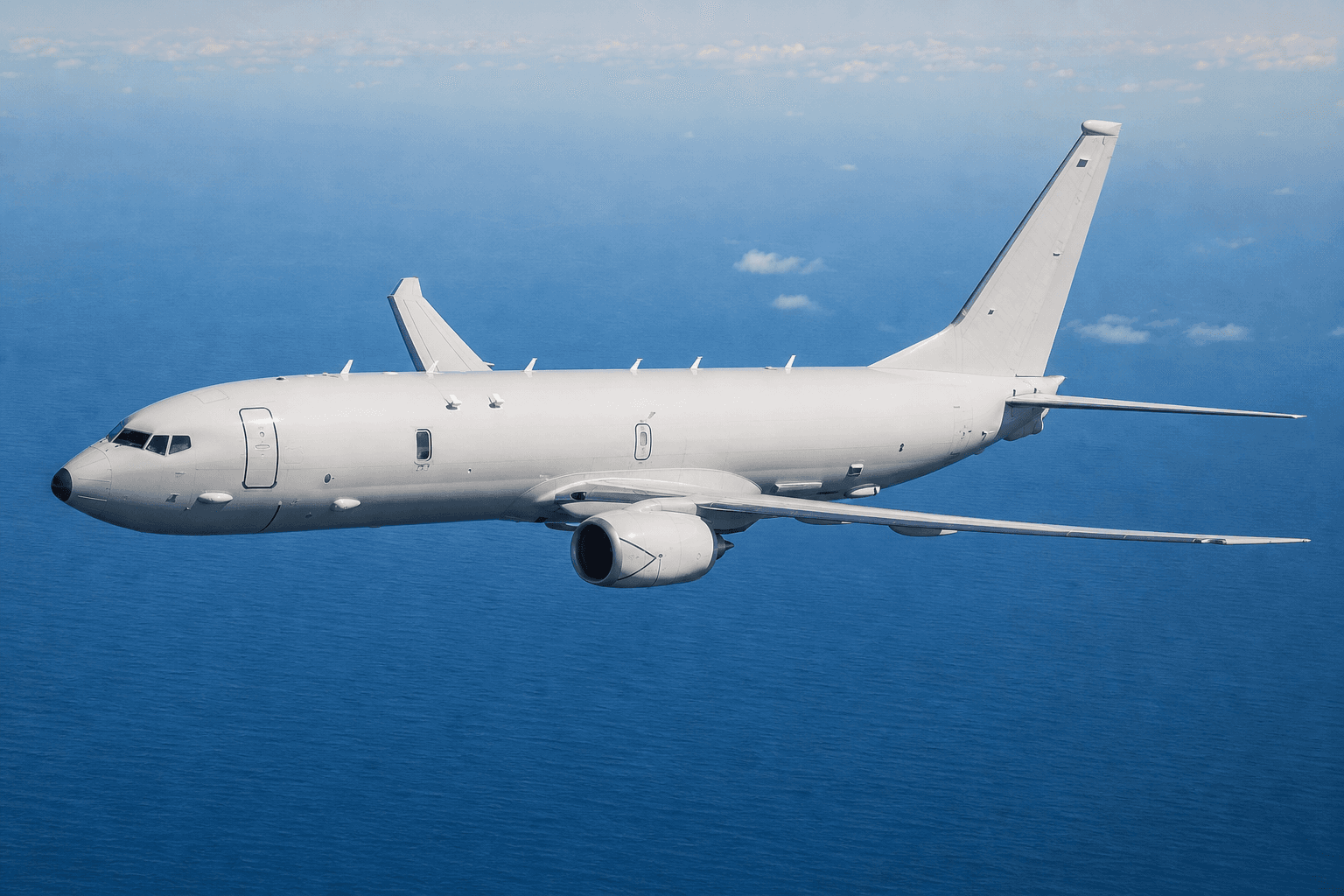
When the US Navy introduced the Boeing P-8A Poseidon, it did a lot more than trade turboprop engines for turbofans. The military-grade 737 Next Generation is the successor to the Lockheed P-3C Orion Maritime Patrol and anti-submarine warfare aircraft. The Orion was a 1960s-vintage submarine hunter made to serve in the Cold War to track and deter Soviet submarines.
USMC F-35Bs Demonstrate Unique Finnish Highway Landing Amid NATO Exercise
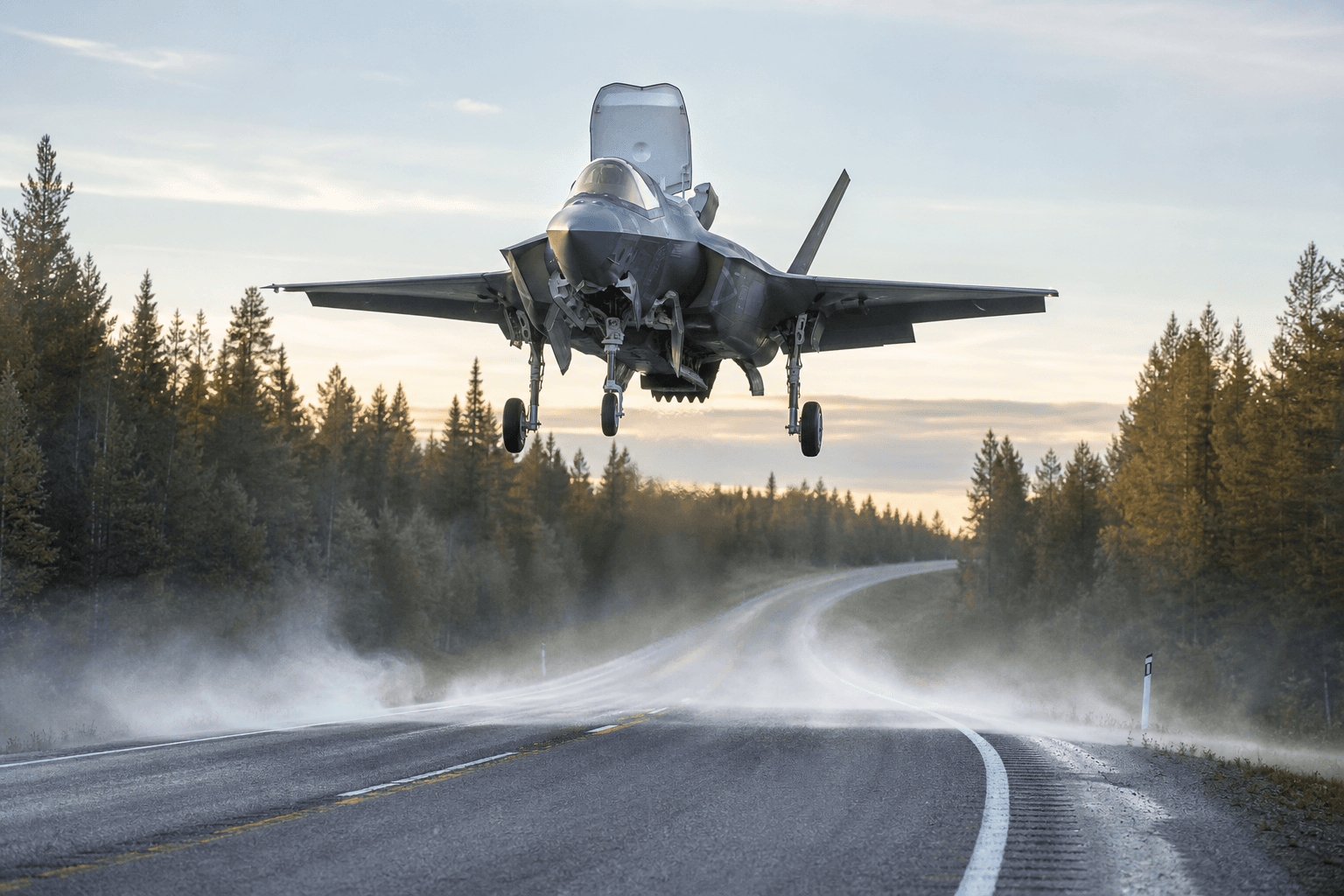
How the F-35B's lift fan allows NATO jets to operate from Finnish roads and why that capability matters near Russia.

Massive multi-branch flight display celebrates US 250th anniversary over Washington DC
The United States celebrated its 250th anniversary on July 4, 2026, with a massive flight display over the…
The Daily Touch & Go
The day's best aviation news in your inbox. Free, no spam.