

Illustration: The Touch & Go
Severe Storms Cause Nearly 1,000 Flight Delays and Cancellations at Heathrow and Gatwick
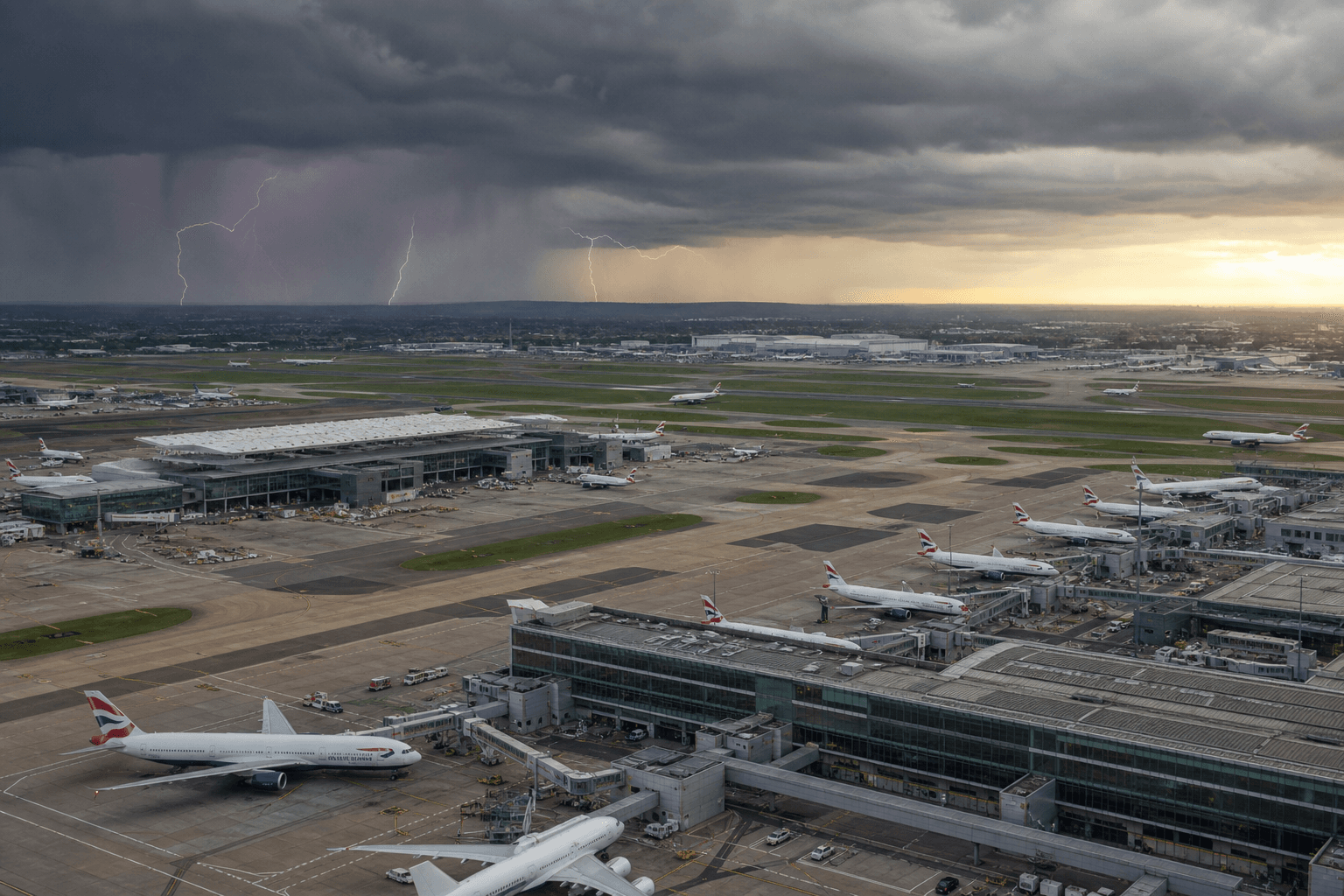
Thunderstorms following a historic UK heatwave have disrupted about 900 flights at London Heathrow and Gatwick airports, leading to long delays and cancellations this weekend.
The gist
Storms after the UK heatwave disrupted almost 1,000 flights at Heathrow and Gatwick with extensive delays and cancellations.
Continuing coverage
All Flight Delays →- How Crews and Aircraft Separation Amplify Flight Delays Even After Weather Clears
- American Airlines Offers $1,125 to Volunteers for Seat Waiver on Philadelphia Flight
- American Airlines Faces Flight Attendant Shortages at Dallas Hub Due to Management Groundings
- Fuel System Failure at Boston Logan Triggers 370+ Delays and 100+ Cancellations
- American Airlines Delay Causes Lawmakers to Miss Critical House Votes Amid Peak Travel
The United Kingdom's two busiest airports, London Heathrow (LHR) and London Gatwick (LGW), experienced significant disruptions over the weekend as severe thunderstorms battered the region following an intense heatwave. Close to 900 flights were either delayed or canceled, affecting both inbound and outbound services. Passengers faced delays up to half a day, with dozens of cancellations as the tempestuous weather conditions forced tighter air traffic control measures to ensure operational safety.
The UK's national air traffic control service, NATS, explained that the thunderstorms had resulted in aircraft needing to be spaced further apart than usual to maintain safe distances. This spacing limitation significantly reduced the number of flights that could be processed simultaneously, causing backlogs and congestion at the two major London airports. Both Heathrow and Gatwick actively advised travelers to verify their flight statuses with airlines before traveling to the airports, as ongoing schedule adjustments were inevitable amidst the adverse weather.
According to data cited at 8:00 AM BST, Heathrow had 474 flights disrupted, while Gatwick experienced 439 affected flights. These numbers represent a substantial portion of daily traffic for each airport, underscoring the scale of the impact. The disruption primarily centered on southeastern England, with other UK airports largely maintaining normal operations despite the volatile weather.
A broader look at continental Europe showed that England and northwestern Europe were among the most severely affected areas by the storms. Eurocontrol highlighted that thick storm clouds blanketed the region, contributing to widespread flight disturbances. The hot and unstable air mass, the catalyst for these storms, stretched from Spain in the south up to Sweden in the north, and was expected to continue generating thunderstorms overnight and into the next day.
The heatwave that preceded the storms set a record with the UK’s highest June temperature on record, reaching 37.3 degrees Celsius (99 degrees Fahrenheit) in Suffolk. This extensive heat created the atmospheric instability that led to the severe thunderstorms, disrupting the complex air traffic systems of the capital. NATS issued a clear statement emphasizing that flight safety necessitated the imposition of spacing restrictions among aircraft in affected areas, which remain in place until weather conditions stabilize.
Passengers caught in the disruption experienced significant challenges. Reports emerged of travelers stranded with canceled flights, such as one passenger stuck in Venice after his flight to Gatwick was delayed beyond four hours then canceled. Airlines, including British Airways, responded with apologies and began adjusting schedules for subsequent days to mitigate the backlog caused by Saturday’s adverse weather conditions.
Despite the scale of delays and cancellations, regulatory frameworks exempt airlines from compensating passengers under EC 261 rules for disruptions caused by air traffic control restrictions, as these are deemed extraordinary circumstances out of the carriers’ control. This legal context affects passengers’ rights regarding compensation for delays stemming from weather-induced airspace restrictions.
Looking to the near term, weather forecasts predicted continuing thunderstorms across mainland Europe on Sunday, raising the possibility of secondary disruptions for flights beyond the UK. Airlines and airport authorities remain focused on managing operations under uncertain atmospheric conditions, balancing passenger needs and safety considerations.
Overall, the convergence of record-setting heat and subsequent severe thunderstorms has revealed the vulnerability of vital London air transport hubs to extreme weather episodes. The extensive flight delays and cancellations over the weekend reflect the operational challenges imposed by climatic extremes, reinforcing the crucial role of adaptive air traffic management in maintaining safety amid volatile conditions.
Read more
All Airports →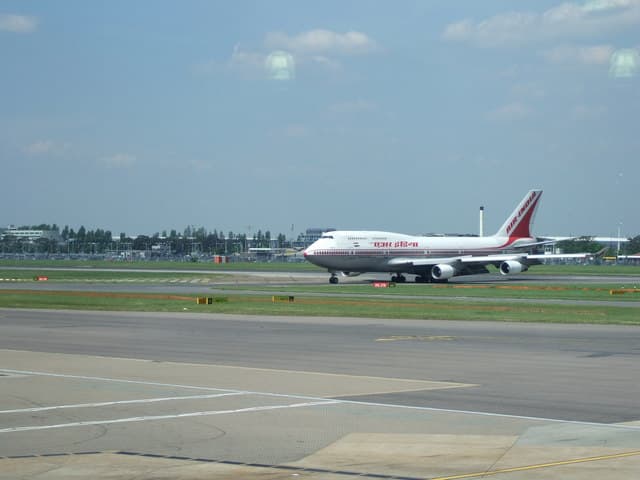
Air India Sets New Flight Frequency Record on Delhi-Melbourne Route This Winter
Air India has scheduled a record number of flights between Delhi Indira Gandhi International Airport (DEL) and Melbourne Airport (MEL) this coming northern winter season, increasing weekly frequencies to ten flights. This is the largest schedule the Indian carrier has ever planned between the two cities as it rebuilds an international network scaled back sharply during the summer.
Gulf Air Positions Itself as Signature Premium Connector Amid Gulf Giants
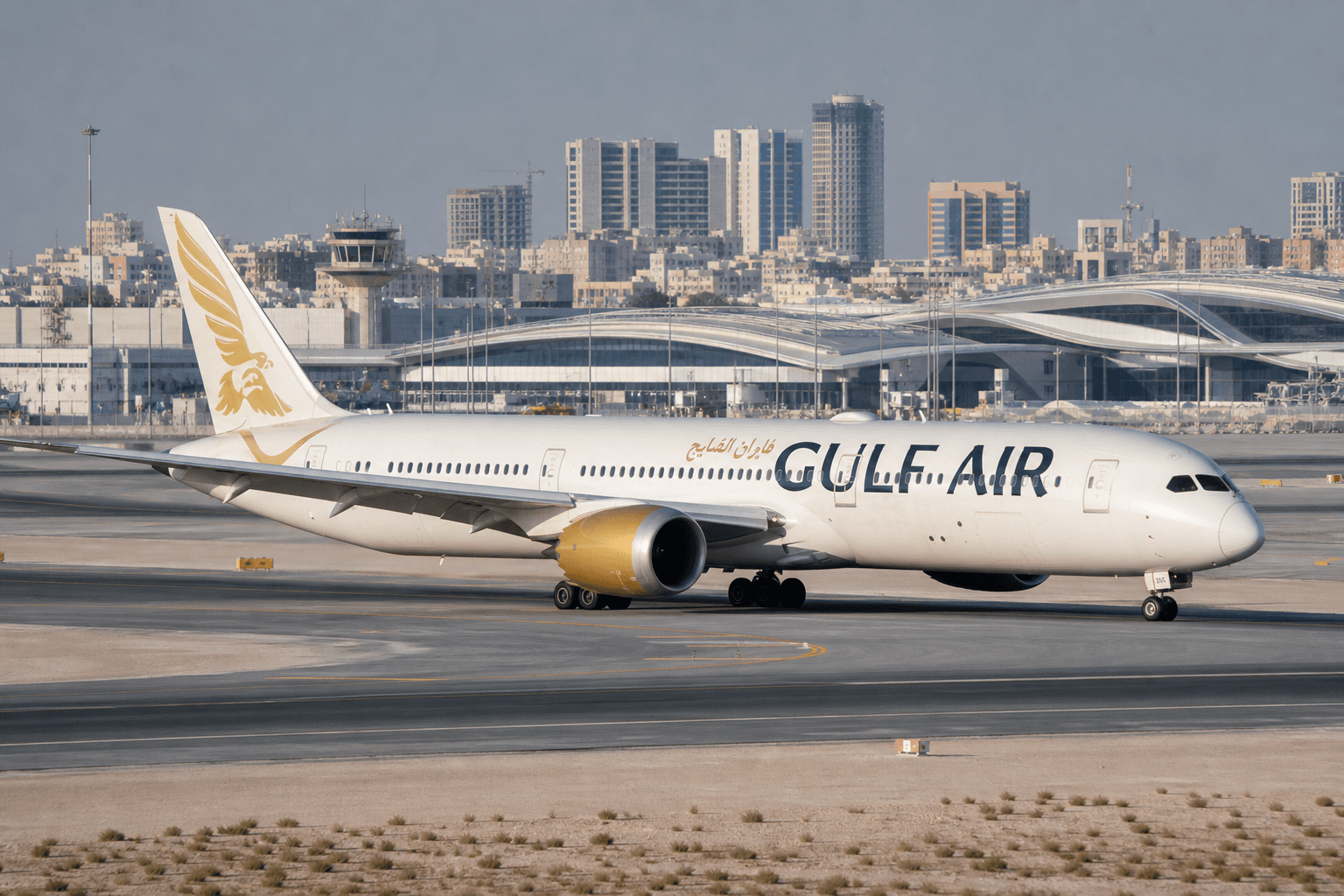
Gulf Air is the flag carrier of the small Gulf state of Bahrain and is based at Bahrain International Airport (BAH), the only commercial airport in the country. However, it is also in a region where it has to compete with much larger and better-known rival airlines . Gulf Air CEO Martin Gauss told Simple Flying at the Farnborough Airshow how the airline is planning to compete with its much larger neighbors that include Qatar's Qatar Airways, the UAE's Emirates and Etihad, and Saudi Arabia's Saudia and Riyadh Air.
British Airways A380 Returns to Johannesburg After Weather Radar Failure En Route to London
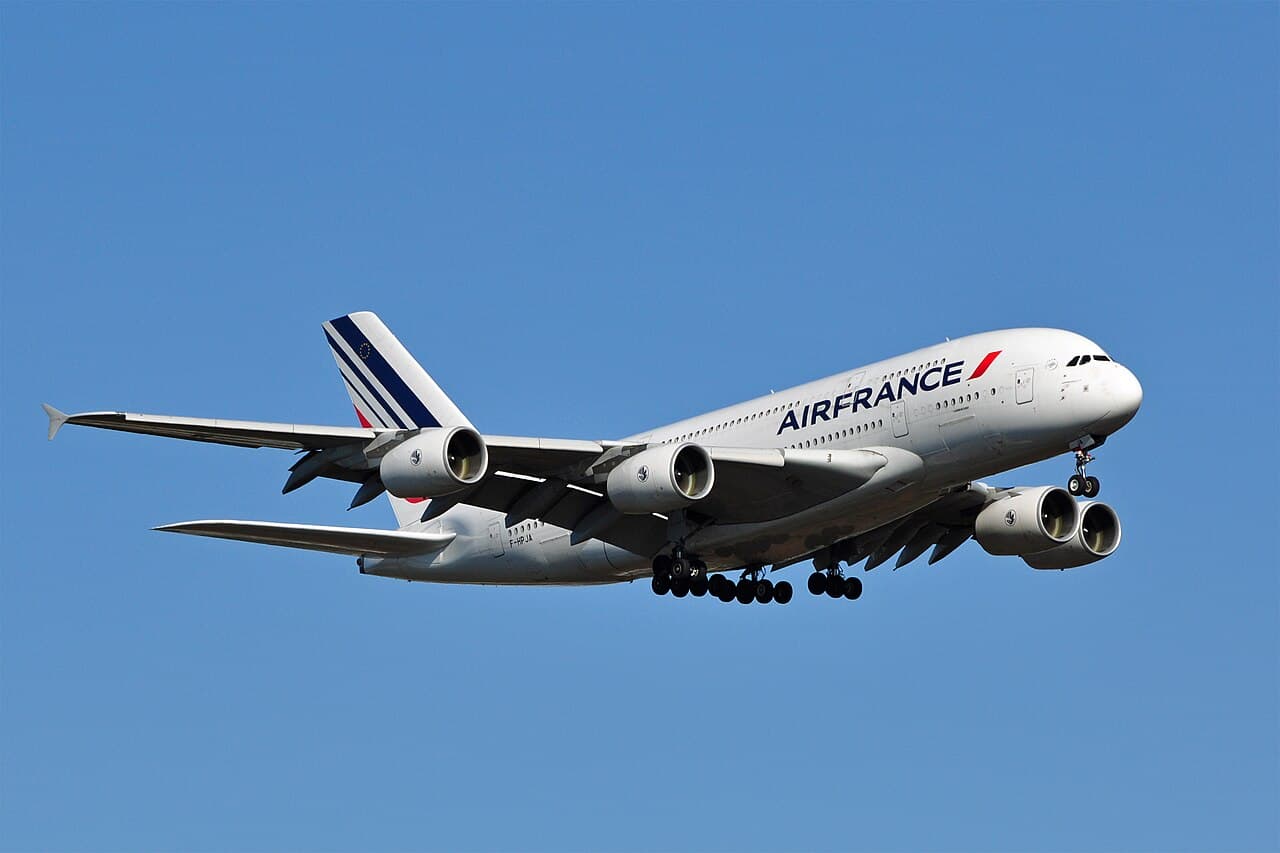
On August 8, a British Airways Airbus A380 was forced to return to base seven hours after departing Johannesburg Airport (JNB) bound for London Heathrow Airport (LHR). The pilots decided to divert back to JNB because the weather radar persistently malfunctioned and no troubleshooting efforts could resolve the issue.
Qatar Airways to operate its first Airbus A380 flight to Amman in January 2027
Qatar Airways has scheduled a one-off rotation with the Airbus A380 on its short-haul route between its main hub at Hamad International Airport (DOH) in Doha, Qatar, and Queen Alia International Airport (AMM) in Amman , Jordan. This filing has raised eyebrows as, while the carrier does already serve Amman on a regular basis, it does so with smaller widebody twinjets, as opposed to the huge A380.
The Daily Touch & Go
The day's best aviation news in your inbox. Free, no spam.