

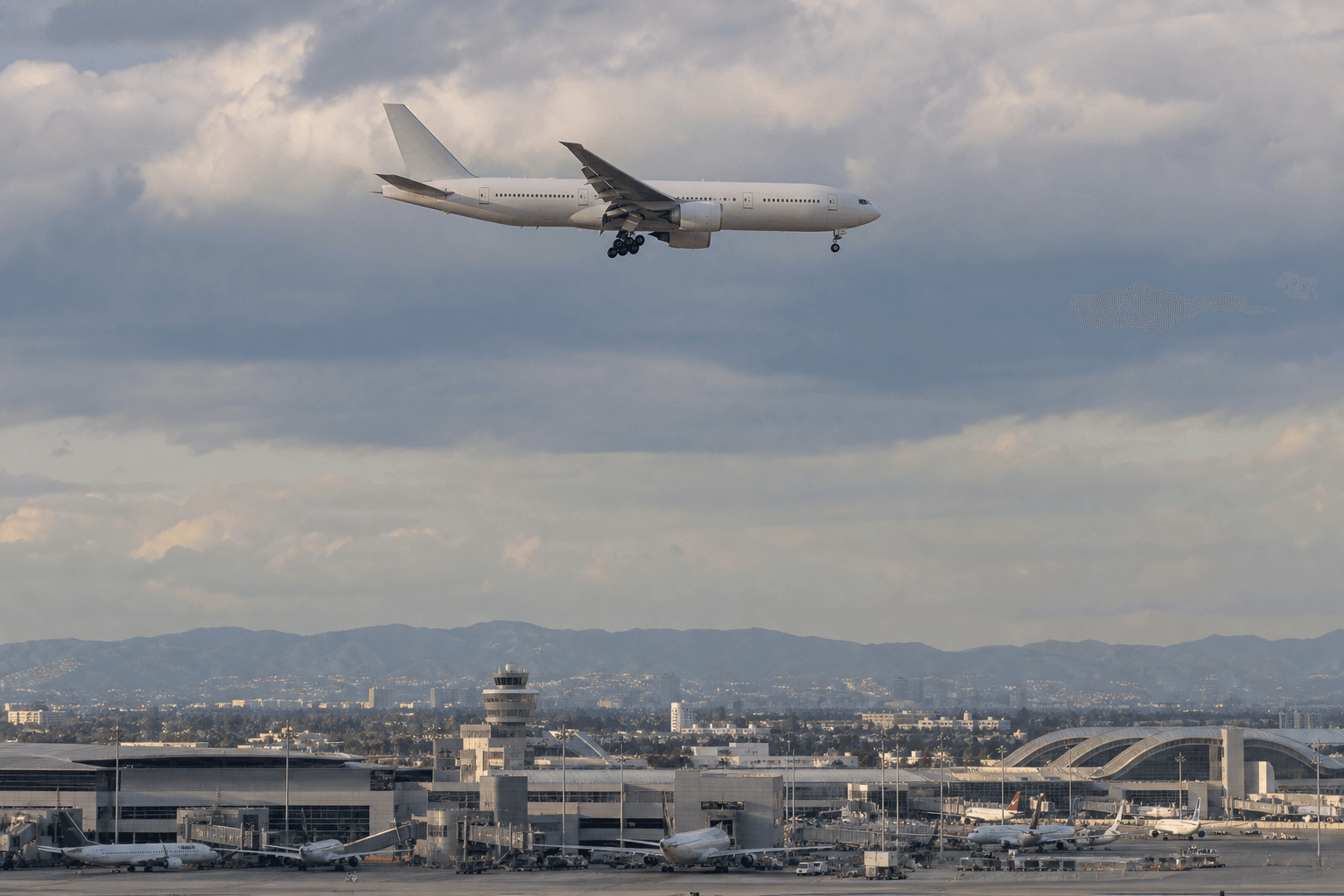
Illustration: The Touch & Go
Why Commercial Flights Circle Above Airports Before Landing for Up to an Hour
Holding patterns keep inbound air traffic safely sequenced amid congestion, weather delays, or operational disruptions at busy airports.
The gist
Holding patterns let air traffic controllers safely manage congested or disrupted airport arrivals, often causing planes to circle before landing.
Continuing coverage
All Heathrow →Commercial aircraft sometimes circle repeatedly near their destination airports for extended periods before landing, a phenomenon known as holding patterns. These racetrack-shaped loops help air traffic controllers manage the flow of inbound flights when factors such as heavy traffic, adverse weather, or temporary disruptions prevent immediate landings. Passengers often find these holds frustrating, especially when the runway seems within sight, but they are essential for maintaining safe separation and orderly sequencing of arrivals.
Holding patterns are a time-tested tool in air traffic control, allowing aircraft to remain within a designated protected airspace while awaiting clearance to begin approach. Controllers assign aircraft to fly standardized hold patterns around specified navigation fixes, creating predictable flight paths that simplify stacking aircraft vertically and managing spacing. Modern airliners can execute these patterns automatically, with pilots monitoring performance and prepared to take control if necessary.
A clear example of holding patterns in operation exists at London's Heathrow Airport, one of the world's busiest two-runway airports. Heathrow uses four well-known holding stacks—Bovingdon, Lambourne, Ockham, and Biggin—to funnel arriving aircraft. Each stack is vertically separated by 1,000 feet increments, starting around 7,000 feet above mean sea level, enabling dozens of aircraft to circle simultaneously while awaiting landing clearance. In 2024, Heathrow reported an average hold time of just over 7 minutes for the 311 daily aircraft entering these stacks.
The primary reason for holds is demand exceeding airport capacity. Even major hubs like Heathrow, JFK, and Frankfurt have firm hourly landing limits dictated by runway configurations, weather conditions, and wake turbulence requirements. During peak arrival windows, long-haul, domestic, and regional flights converge, often necessitating holds when arrival rates must be reduced. Brief operational delays can ripple through the system, creating queues of inbound flights that only holding patterns can manage safely.
Weather significantly influences holding patterns, as conditions like low clouds, rain, fog, or strong crosswinds typically require increased spacing between aircraft. Thunderstorms can close arrival routes or airspace sectors temporarily, forcing controllers to hold flights while waiting for safer conditions. Additionally, strong headwinds reduce the groundspeed of arriving aircraft, artificially spacing flights apart in time and reducing landing rates. Heathrow mitigates this with Time-Based Separation, a system introduced in 2015 that adjusts spacing by time rather than fixed distance to improve throughput in headwind conditions.
Operational disruptions such as runway inspections, debris removal, wildlife activity, emergency responses, or disabled aircraft can halt arrivals, causing controllers to hold flights until the runway reopens. Emergencies onboard inbound aircraft also take priority, with other flights instructed to hold until emergency landings conclude. While passengers in holding patterns may not know the reason for delays, these holds often enable urgent operational or safety measures to be completed without event escalation.
These holding patterns are not merely inconveniences but essential components of modern air traffic management that balance safety and efficiency. By maintaining orderly sequencing and ensuring guaranteed separation among multiple arriving flights, holding patterns prevent congestion-related accidents and delays. The stacks at airports like Heathrow are operational lifelines that have been proven effective for over half a century, adapting with new technologies and procedures to accommodate growing air traffic demand.
As global air traffic continues to rebound and grow, the importance of holding patterns and related air traffic control innovations remains high. Airports approaching capacity limits will increasingly rely on precise sequencing tools to maintain safe and efficient operations. Understanding why flights sometimes circle in holds helps clarify the complex choreography behind every landing, revealing a dimension of aviation crucial to passenger safety and system resilience.
Frequently asked questions
- What is a holding pattern in aviation and why is it used?
- A holding pattern is a racetrack-shaped flight path assigned by air traffic control to keep aircraft safely separated and delayed before landing when airport capacity is exceeded or conditions prevent immediate approach.
- How do holding patterns help manage airport congestion?
- By stacking aircraft vertically and flying predictable loops, holding patterns organize inbound flights into orderly sequences, allowing controllers to regulate arrival flow and maintain safe distances during peak traffic or operational limits.
- What factors commonly cause aircraft to enter holding patterns?
- Holding patterns result from heavy traffic exceeding runway capacity, adverse weather such as low visibility or storms, operational disruptions like runway inspections or emergencies, and slower approach speeds due to strong headwinds.
Read more
All Airports →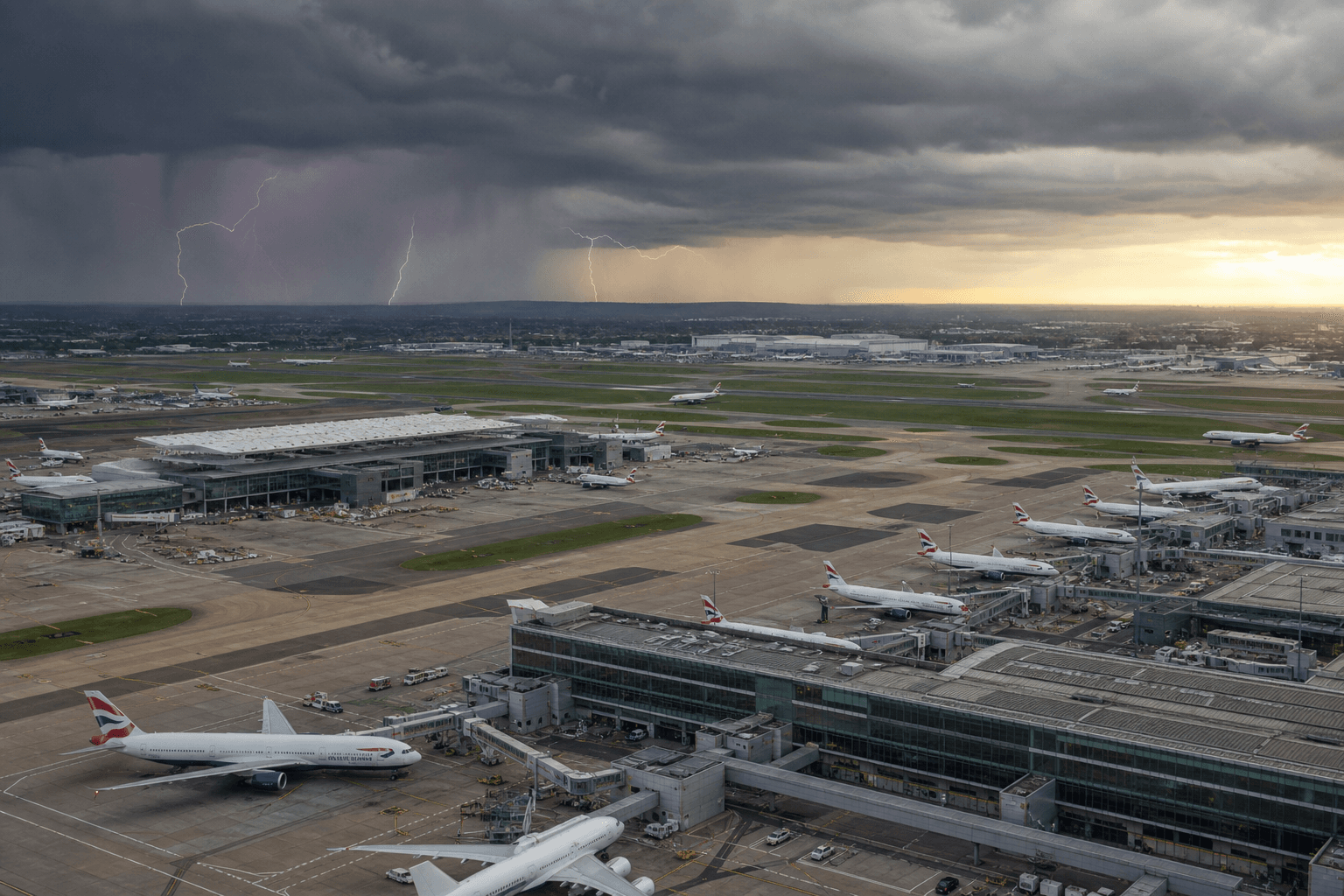
Severe Storms Cause Nearly 1,000 Flight Delays and Cancellations at Heathrow and Gatwick
Heathrow and Gatwick faced severe thunderstorms, resulting in hundreds of flights being canceled or delayed, causing chaos for travelers.
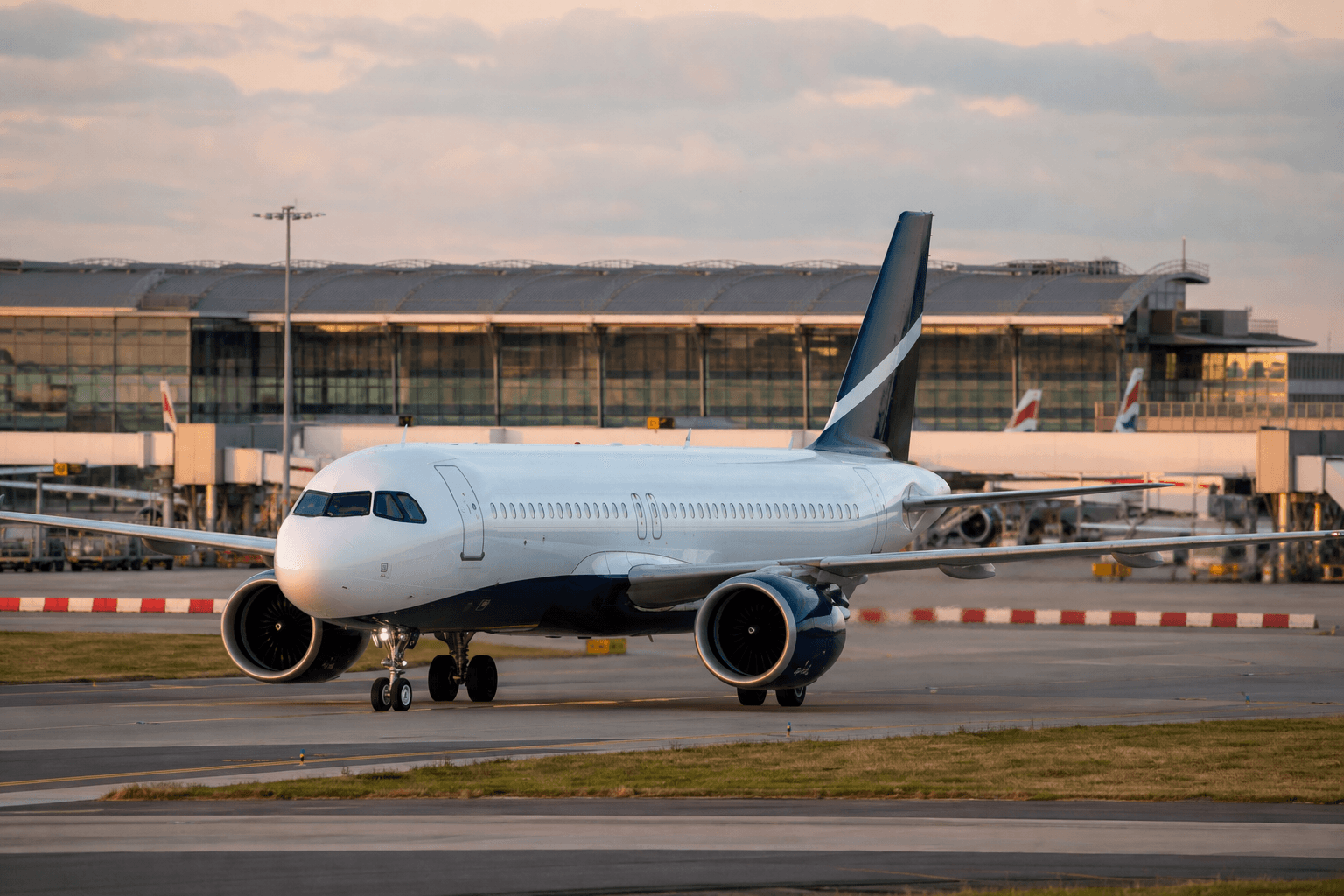
Star Alliance CEO urges Heathrow to keep members co-located and ensure affordable expansion
The grouping's member airlines have all operated from Heathrow's Terminal 2 since 2014. Any proposal from London Heathrow to break up co-located Star Alliance airlines as part of the airport's terminal occupancy review would be met with strong opposition from the grouping, the alliance's chief executive Theo Panagiotoulias told attendees at an Aviation Club event…
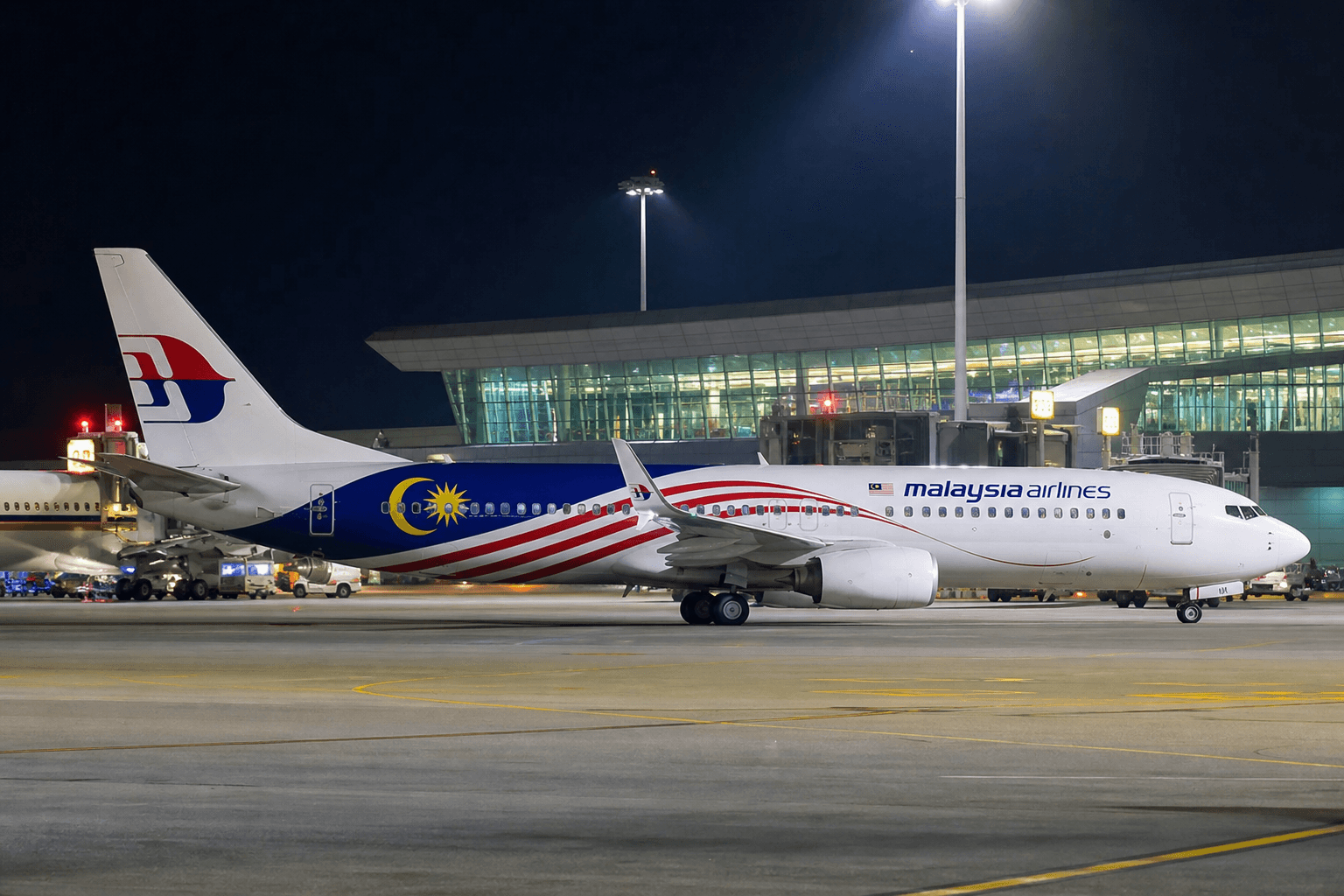
Malaysia Airlines Launches New Weekly Flights to Shenzhen and Changsha from Kuala Lumpur
Malaysia Airlines has strengthened its presence in China by launching new direct services from Kuala Lumpur to Shenzhen and Changsha. ezstandalone.cmd.push(function () { ezstandalone.showAds(119); }); The move responds to growing demand for travel between the two countries, supported by strong economic ties and rising interest in both business and leisure trips. China remains Malaysia Airlines’ second-largest international market by number of destinations. The first flight to Shenzhen, MH522, departed Kuala Lumpur International Airport (KUL) Terminal 1 on 1 July 2026 at 9:05 pm local time. The return flight, MH523, left Shenzhen at 2:45 am on 2 July 2026. Services to Changsha began on 8 July 2026, with flight MH520 departing Kuala Lumpur at 8:00 pm. ezstandalone.cmd.push(function () { ezstandalone.showAds(127); }); The return flight MH521 departed Changsha at 2:05 am on 9 July 2026.Both new routes operate up to seven times weekly using the efficient Boeing 737-8 aircraft. This schedule gives travellers more choices and better connectivity between Malaysia and these important Chinese cities. Image Credit: Boeing Supporting Business, Tourism and People-to-People Ties Bryan Foong, Chief Executive Officer of Airline Business at Malaysia Aviation Group (MAG) , highlighted the importance of the expansion. “The launch of our services to Shenzhen and Changsha marks a proud milestone in our continuous efforts to expand our network across China,” he said. ezstandalone.cmd.push(function () { ezstandalone.showAds(128); }); “By connecting Kuala Lumpur to these high-growth regional hubs, we are offering travellers greater convenience and flexibility while supporting stronger business, tourism and people-to-people ties between our two countries.” The new routes also align with Malaysia’s tourism goals under the Visit Malaysia 2026 campaign. Mutual visa-free arrangements between Malaysia and China make travel easier, encouraging more visitors to explore both nations. ezstandalone.cmd.push(function () { ezstandalone.showAds(129); }); Kuala Lumpur continues to grow as a key regional aviation hub, serving as a convenient gateway to Asia and beyond. Nine Gateways Across China With the addition of Shenzhen (SZX) and Changsha (CSX), Malaysia Airlines now serves nine gateways in China. The full list includes Beijing (PKX), Shanghai (PVG), Guangzhou (CAN), Xiamen (XMN), Hong Kong (HKG), Taipei (TPE), and Chengdu (TFU). This wider network gives passengers more options for seamless journeys across the region. Photo Credit: M Abd Hafiz/Malaysia Airlines Special Fares for UK Travellers To celebrate the new routes, Malaysia Airlines offers UK passengers attractive introductory return fares from London Heathrow to Shenzhen or Changsha. Economy Class fares start from GBP 1,009++ per person. ezstandalone.cmd.push(function () { ezstandalone.showAds(130); }); Travellers can book these promotional tickets until 20 July 2026, making it an ideal time to plan business trips or leisure getaways. The expansion reflects Malaysia Airlines’ commitment to meeting passenger demand while boosting economic and cultural links. Travellers now enjoy more convenient direct access to two dynamic Chinese cities known for technology, industry, culture and tourism. As demand for travel between Malaysia and China continues to rise, these new services provide greater flexibility and comfort. Passengers can look forward to enhanced connectivity on board the modern Boeing 737-8 fleet. ezstandalone.cmd.push(function () { ezstandalone.showAds(131); }); Malaysia Airlines’ latest moves position Kuala Lumpur firmly as a leading hub in Southeast Asia.
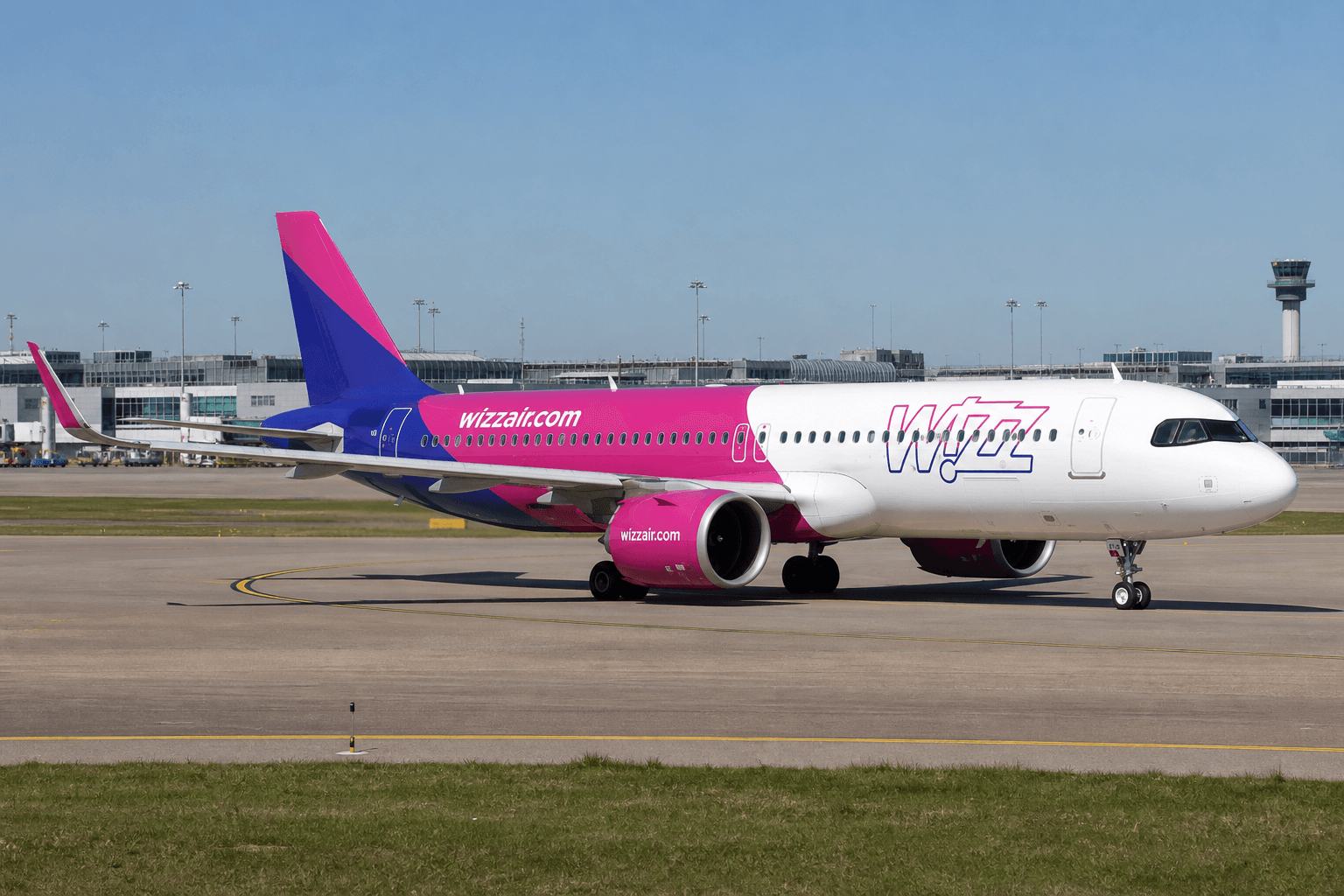
Wizz Air Opens New Year-Round London Gatwick Route to Chișinău Enhancing UK Connectivity
Wizz Air, one of Europe’s leading low-cost carriers, has announced a new direct route from London Gatwick Airport to Chișinău, Moldova. ezstandalone.cmd.push(function () { ezstandalone.showAds(119); }); This addition further strengthens the airline’s growing presence in the UK. It gives travellers more affordable ways to visit one of Eastern Europe’s most promising destinations. Starting in October 2026, the year-round service will operate four times a week on Mondays, Wednesdays, Fridays, and Sundays. The new Gatwick flights complement Wizz Air’s existing Chișinău services from London Luton, offering greater flexibility for UK passengers. Fares start from as little as £36.99, making Moldova more accessible than ever. ezstandalone.cmd.push(function () { ezstandalone.showAds(127); }); Why Chișinău and Moldova Appeal to Travellers Chișinău, Moldova’s vibrant capital, welcomes visitors with leafy boulevards, a lively café culture, and a rich blend of history and modern hospitality. Travellers can explore beautiful parks, impressive architecture, and a thriving food scene. Just beyond the city, Moldova boasts some of Europe’s oldest wine regions. Visitors enjoy picturesque countryside, historic monasteries, and excellent local wines — perfect for a unique short break or longer adventure. ezstandalone.cmd.push(function () { ezstandalone.showAds(128); }); This new route reflects Wizz Air’s focus on uncovering lesser-known gems across Europe. As demand for off-the-beaten-path destinations grows, Moldova stands out for its authenticity, warm welcome, and great value. Photo Credit: Anna Zvereva, CC BY-SA 2.0, via Wikimedia Commons Wizz Air Leadership Comments Yvonne Moynihan, Managing Director at Wizz Air UK , gave comment on the new route. “We’re delighted to give our UK customers another opportunity to discover Chișinău with the launch of our new service from London Gatwick.” ezstandalone.cmd.push(function () { ezstandalone.showAds(129); }); “Moldova is one of Europe’s emerging destinations. It offers everything from fascinating history and vibrant culture to some of the world’s oldest wine regions. With four weekly flights and fares from just £36.99, we’re making it easier than ever for customers to uncover one of Europe’s best-kept secrets for less.” Wizz Air UK’s Broader Network Growth The new Chișinău route forms part of Wizz Air’s significant UK expansion. The airline continues to strengthen its operations at both London Gatwick and Luton. In recent months, it added multiple new routes from Luton, including services to Yerevan, Alicante, Lyon, Corfu, Faro, and Turin. These additions followed capacity shifts and reflect Wizz Air’s strategy to maximise efficient operations. ezstandalone.cmd.push(function () { ezstandalone.showAds(130); }); Wizz Air UK now operates a modern fleet of around 20 aircraft. They are primarily based at Luton with a growing presence at Gatwick. The airline has steadily increased its UK footprint, delivering one of its largest-ever summer schedules with dozens of routes from London airports. This growth aligns with the carrier’s wider European ambitions, including new bases, hundreds of fresh routes, and a push toward a 1,000-route network. Passengers benefit from more choice, competitive low fares, and reliable service. Wizz Air recently hit a major milestone by operating 1,200 flights in a single day, highlighting its expanding scale and operational strength. ezstandalone.cmd.push(function () { ezstandalone.showAds(131); }); Conclusion The Gatwick-Chișinău link provides convenient access for those in southern England and beyond. Combined with Luton services, it creates year-round options for weekend getaways or extended trips. Travellers can easily plan visits to Moldova’s wine trails, cultural sites, or simply enjoy the capital’s relaxed atmosphere. As Wizz Air continues to invest in the UK market, it reinforces its position as a key player for affordable European travel. Whether you seek sunny beaches, city adventures, or emerging destinations like Moldova, the airline’s expanding network makes exploration simpler and more budget-friendly. With low fares, increased frequencies, and a commitment to new routes, Wizz Air UK is set to help more British travellers discover Europe’s hidden treasures in the months and years ahead. ezstandalone.cmd.push(function () { ezstandalone.showAds(132); });
The Daily Touch & Go
The day's best aviation news in your inbox. Free, no spam.