


Illustration: The Touch & Go
Wreckage of K2 Airways Boeing 737-400 Freighter Found in Arabian Sea After Disappearance
Search operations located debris from K2 Airways' only Boeing 737-400 freighter south of Ormara following its loss of contact en route from Sharjah to Karachi.
The gist
K2 Airways’ sole Boeing 737-400 freighter was found wreckage in the Arabian Sea after vanishing with five crew off Pakistan's coast.
Continuing coverage
All Aviation Accident →K2 Airways experienced a grave aviation incident when its only Boeing 737-400 freighter disappeared over the Arabian Sea during a cargo flight from Sharjah International Airport in the UAE to Jinnah International Airport in Karachi, Pakistan. The Pakistan Airports Authority confirmed recovery of wreckage approximately 53 nautical miles south of Ormara after a prolonged search and rescue mission that lasted 12 hours, involving the Pakistan Navy and Maritime Security Agency. Despite recovery efforts, the five crew members remain missing.
The freighter lost radio and radar contact with air traffic control around 21:21 local time on July 7, 2026, shortly after reporting navigation system problems at 21:18. The aircraft was tracked making an abrupt heading change followed by a rapid descent, signaling significant distress in the final minutes before disappearance. The Pakistan Airports Authority immediately activated a rescue coordination center to orchestrate a multi-agency search operation focused on the area where contact was lost.
K2 Airways identified the aircraft as a 27-year-old Boeing 737-400 model, a variant from Boeing's classic 737 'Next Generation' lineage, converted for freight service. Registered as AP-BOI, this aircraft is notably two generations senior to Boeing's latest 737 MAX series. It was the sole type in the K2 Airways fleet, a Karachi-based cargo airline, increasing the operational and commercial impact of the loss.
On board were five personnel: a captain, first officer, loadmaster, and two engineers, highlighting the operational complexity and crew workload on this cargo mission. K2 Airways has expressed commitment to working closely with Pakistan's aviation authorities and government agencies to assist with the ongoing search and investigation. The airline released a statement emphasizing earnest prayers for the crew’s safety, underscoring the human toll and uncertainty following the crash.
Pakistani Prime Minister Shehbaz Sharif has mandated the deployment of all available resources for search and rescue efforts. The challenging marine environment complicates recovery, with waters near the crash site reaching depths of approximately 3,000 meters. Authorities caution that surface debris distribution may not directly indicate the precise impact point due to ocean currents and weather conditions that can displace wreckage.
Despite debris being located, no main wreckage or flight data recorders have been recovered to date. This absence poses a significant obstacle to determining the causal factors behind the aircraft’s abrupt failure. Preliminary flight tracking data reveals large altitude fluctuations before complete loss of signals, suggesting possible instrument or system malfunction that precipitated the accident.
The circumstances draw attention to the risks faced by single-aircraft operators conducting critical cargo services on older model aircraft, often involving extended logistical routes over water with limited immediate recovery prospects. The navigation issue reported just minutes before loss of contact signals potential onboard system failures that may have severely impaired the crew’s ability to maintain control or communicate distress effectively.
This incident adds to the challenges of air cargo operations in the region, emphasizing the critical need for robust aircraft maintenance and emergency response protocols, particularly for smaller carriers with limited fleets. As the investigation continues without recovery of key flight recorders, reliance on derived flight data, radar tracking, and recovered debris analysis will be central to uncovering the events that led to the tragic disappearance over the Arabian Sea.
Read more
All Aviation Safety →
Light aircraft crashes into China Zun skyscraper in Beijing
Social medai video and photos show debris and wreckage at base of 109-storey China Zun tower. Images circulating on social media are indicating that a light aircraft has collided with one of the upper floors of the China Zun skyscraper in Beijing. Video images show debris falling to the ground adjacent to the building —…

US Coast Guard MH-60 Jayhawk Crashes Near Sitka, Alaska During Training Flight
A US Coast Guard MH-60 Jayhawk helicopter crashed during a training flight near Sitka, Alaska, leaving four crew… Coast Guard MH-60 Jayhawk crashes during training flight in Alaska appeared first on AeroTime.
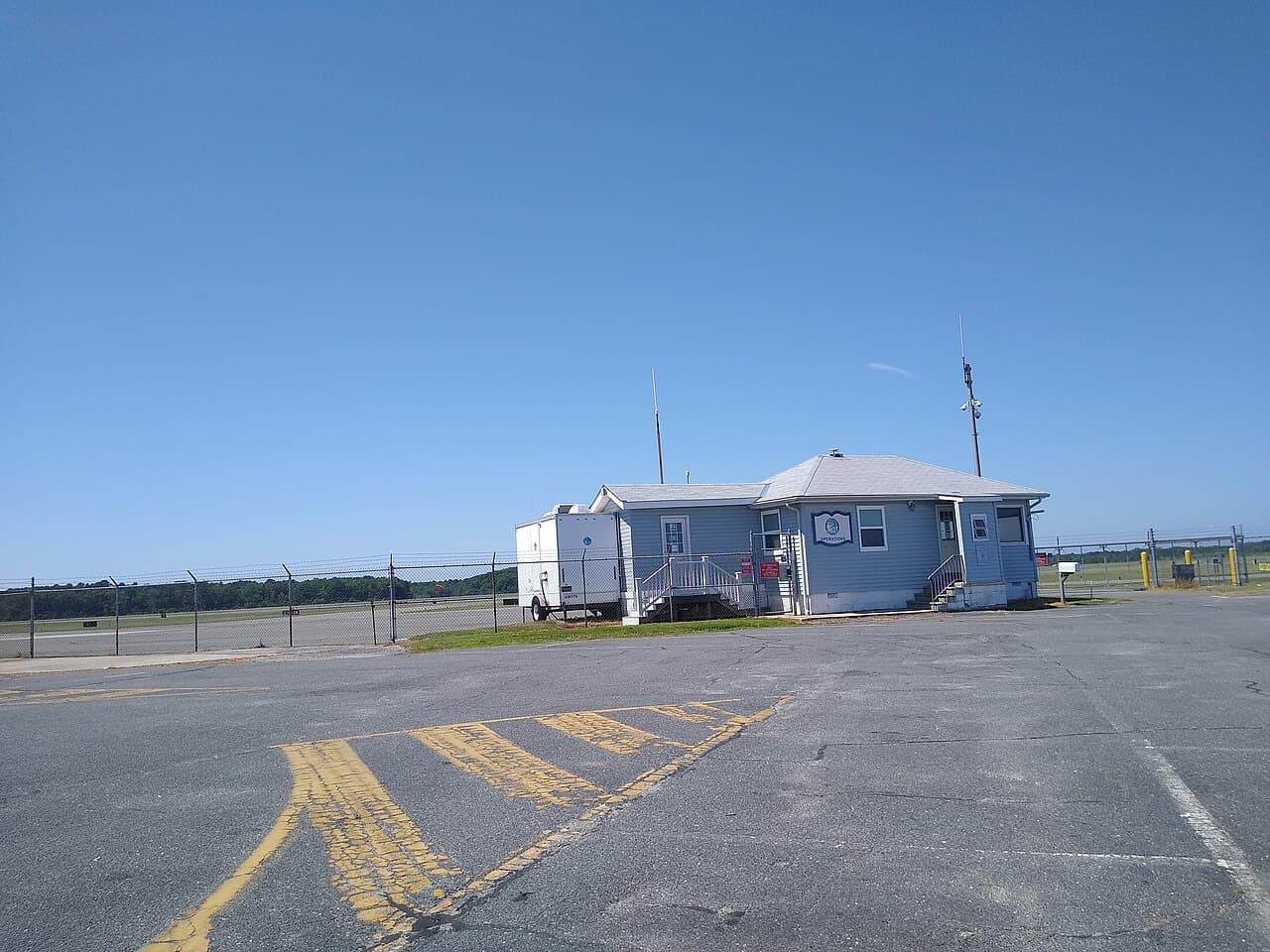
Guide for Airports on Unleaded Avgas Transition Released Ahead of FAA Final Plan
The June publication of a new Airport Cooperative Research Program guide arrives during a very much unresolved stage of the federal unleaded avgas process. The FAA's comment period on its draft Transition Plan to Unleaded Aviation Gasoline closed earlier this year, and as of this writing, the final plan has not been published, nor has the agency released the public comments it received. "Our priority is releasing the Transition Plan," the FAA said in response to an AVweb status inquiry. "We will do that first and then release the comment summary in late 2026." That leaves airports and aircraft owners preparing for a transition whose direction is established while many of its key governing details remain pending. The National Academies Press published Transitioning to Unleaded Aviation Gasoline, A Guide and Tools in June, along with a companion primer . The documents were developed under ACRP Project 03-73, sponsored by the FAA and administered by the Transportation Research Board. It is important to mention that they do not attempt to replace the FAA transition plan. They instead serve a different purpose of bringing the national effort down to the airport level to address some of the practical issues they will face as the transition moves forward. Federal Policy Meets Airport Operations Most who have any skin in the game when it comes to the upcoming unleaded avgas transition are probably well aware of the history, but a bit of background before we dive in. In 2023, the Environmental Protection Agency issued its finding that lead emissions from aircraft engines operating on leaded fuel endanger public health and welfare. The ACRP primer says leaded aviation gasoline is now the largest current source of airborne lead emissions in the United States, after the phaseout of leaded automotive gasoline and reductions from other sources. "Lead emissions from aircraft are an important and urgent public health issue," the EPA said. "Lead exposure can have harmful effects on cognitive function, including reduced IQ, decreased academic performance, as well as increased risk for additional health concerns. There is no evidence of a threshold below which there are no harmful effects on cognition from lead exposure." Congress has also defined part of the airport problem. The FAA Reauthorization Act of 2024 requires airports that offered leaded avgas in 2022 or earlier to keep it available until Dec. 31, 2030, unless an FAA-authorized unleaded avgas replacement for nearly all piston-engine aircraft and engines is available and meets a standard the agency considers acceptable for safe use, production and distribution. That requirement preserves 100LL access for aircraft that still need it, at least for the moment. It also creates the transitional period that airport operators now have to manage. Some fields have the tankage, staff and fuel volume to add an unleaded avgas option before leaded fuel disappears. Others have a single avgas tank, a small based fleet and little operational room for parallel fuels. The ACRP guide’s starting point is that difficulty. Its recommended process begins with fuel suppliers and FBOs, then moves through local fleet compatibility, demand estimates, infrastructure review, funding options, financial analysis, unleaded avgas selection, implementation, safety procedures, training and continued monitoring. The sequence treats fuel choice as the product of airport-specific information and decisions. The Fuel Snapshot Needs A Date Stamp The report is a June publication, but its fuel-status discussion reflects information available when the guide was being prepared in January 2025. At that point, it identified non-oxygenated mogas, Swift Fuels UL94, GAMI G100UL and Swift Fuels 100R as unleaded avgas options that were commercially available or moving toward commercial availability. UL100E from LyondellBasell and VP Racing Fuels remained in FAA testing. Of course, unleaded avgas availability is not the same as universal usability. Mogas, UL94, G100UL and 100R depend on STCs unless the aircraft's type certificate already allows the fuel. The guide acknowledges this, and also describes the FAA's fleet authorization process, which depends on testing and standards work. For an airport, the relevant unit is not the national fleet, but the aircraft it actually services. A traffic count does not answer how many based airplanes can use UL94, how many still need a particular fuel, how many owners will obtain an STC, or how transient pilots will know which pump is appropriate. Those answers, the guide says, will have to come from aircraft surveys, N-number checks, engine information, STC status and fuel-use estimates. The guide also puts attention on unleaded avgas standards and compatibility. Mogas and UL94 are covered by ASTM standards. G100UL had no ASTM standard at the time covered by the report. Swift 100R had an ASTM standard in development. Those details may affect how airports, fuel providers, insurers and aircraft owners evaluate misfueling risk, product acceptance and infrastructure decisions. The Checklist Is The Work The National Academies material includes five tools for airports as they make the unleaded avgas transition. These include a transition checklist, separate survey forms for individual-aircraft owners and multi-aircraft operators, a fleet inventory spreadsheet and a fuel cost evaluation tool. Together, they are intended to give airports a way to track the process, estimate which aircraft can use available unleaded fuels, evaluate demand and compare the costs of possible transition paths. The guide draws on case studies from seven airports that had begun , or were preparing for, unleaded avgas service while continuing to offer 100LL. It also includes material related to Alaska, where seasonal fuel delivery, storage limits, remote communities and reliance on piston aircraft create a different transition problem from the one faced by many airports in the lower 48. Aircraft owners will face their own set of questions around unleaded avgas that the guide addresses only in part. It discusses fuel approval paths, STC requirements, compatibility, standards, price differences and some cost considerations, mainly as they affect airport planning. It does not settle what pilots will encounter in daily use, including long-term fuel availability, final pricing, warranty and insurance treatment, resale effects, or the fate of aircraft that may be legal to convert but difficult to justify economically. The FAA's draft plan raised many of those issues without closing them, and since the final plan has not yet been released, we still do not have a final, authoritative answer on how these will be addressed. The ACRP guide is strongest where it stays on airport work. It gives operators a way to survey the local fleet, evaluate tankage, train line staff and reduce misfueling risk. Those steps are necessary, although the guide has limited answers for airports with one avgas tank, uncertain transient demand, competing unleaded avgas products, unresolved production capacity or local economics that do not support adding another fuel grade. Its tools can help an airport organize the problem, but they cannot remove the market and regulatory gaps that will determine whether a local plan is workable. The final FAA transition plan will still matter greatly, and so will the comments the agency received and plans to summarize later this year. Production capacity, price, distribution, fuel standards and aircraft eligibility will shape the pace of change. The ACRP publications do not answer every national question, but of course, they do not claim to. Rather, they describe the work that airports can begin while those questions remain open. And that is where the unleaded avgas transition now sits. The policy deadline remains 2030 and the final federal plan is still pending as quite a few very practical questions remain unanswered. Even so, the burden is al

Pilot's personal motives confirmed in Beijing Aurora SA60L crash into CITIC Tower
Chinese officials said a light aircraft that crashed into a high-rise building in Beijing was caused by the pilot's "personal reasons" and that he wrote before the crash of ending his life. The aircraft struck a high-rise building in Beijing's Chaoyang district at about 17:55 local time on June 26, 2026, killing the pilot, the sole occupant aboard the aircraft, and injuring 13 people on the ground, according to official statements. The single-engine, two-seat light sport aircraft was identified as an Aurora SA60L. Authorities imposed a nationwide light-aircraft flight ban after the crash. The building was the CITIC Tower, also known as China Zun, Beijing's tallest skyscraper. Beijing officials identified the pilot only by his surname, Liu, and said he was a 66-year-old Beijing resident who lived alone. Officials said Liu had suffered long-term insomnia and anxiety, and that his diary contained repeated references to suicide. The district said the 13 injured people were not in life-threatening condition after treatment. Videos circulating after the crash showed debris falling near the tower after the aircraft struck the building.
The Daily Touch & Go
The day's best aviation news in your inbox. Free, no spam.