

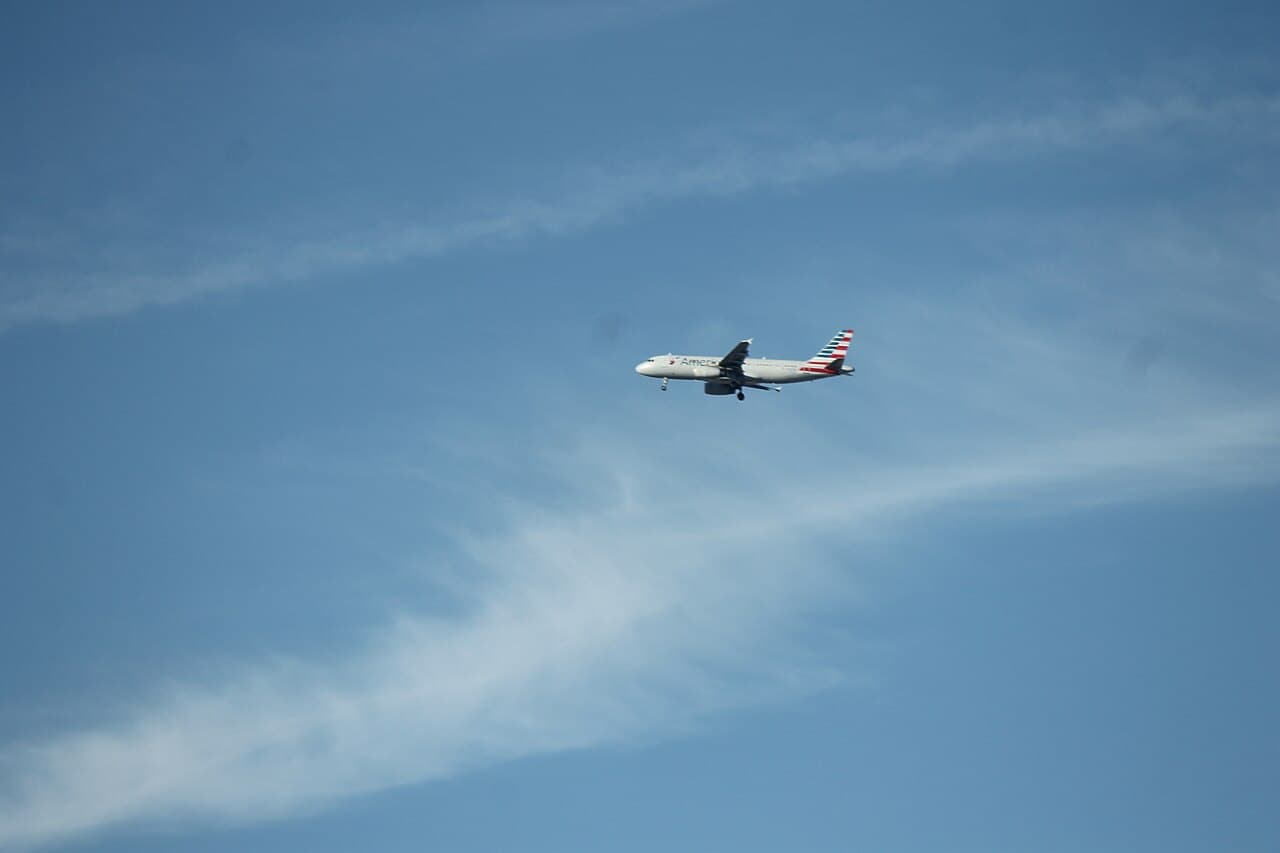
Image: Noah Wulf · CC BY-SA 4.0 · via Wikimedia Commons
American Airlines and Delta Operate Record Long 7-Hour US Flights with Airbus A321neo
American and Delta deploy the versatile Airbus A321neo on seven domestic US routes exceeding 2,300 nautical miles, with flights nearing 7 hours and connecting hubs to Hawaii and Alaska.
The gist
American and Delta fly seven US domestic routes over 2,300 nm using A321neos, including 7-hour flights linking hubs to Hawaii and Alaska.
Continuing coverage
All Delta Air Lines →- Delta plans fleet growth with Boeing 737 Max 10 and 787-10 to boost efficiency
- Delta A319 struck by fireworks during final approach at Chicago Midway on July 4
- Delta to retrofit entire Boeing 737 fleet with finlets promising over $25 million in annual fuel savings
- Delta A350 and US Boeing 777 Pilot Pay Align Closely in 2026
- Delta Air Lines Opens Intimate New 4,000-Square-Foot Delta One Lounge at LAX Terminal 2
American Airlines and Delta Air Lines are operating the Airbus A321neo on several long domestic routes in the United States that push the narrowbody’s capabilities close to its range limits. Data for 2026 reveals seven routes exceeding 2,300 nautical miles where the A321neo is the workhorse, with the longest westbound flights clocking block times near seven hours.
Among these seven routes, six are operated exclusively by American Airlines. Four flights connect American's hub in Phoenix to islands in Hawaii, and two flights link its Dallas/Fort Worth and Chicago hubs to Anchorage, Alaska. The seventh is an important transcontinental pairing between Miami and Seattle, operated by both American and Delta. These routes highlight the A321neo's ability to bridge long overwater sectors that traditionally required larger aircraft.
The Miami to Seattle route is noteworthy for being the only one served by both carriers using the A321neo. With an annual service frequency of roughly 370 flights each way by American and approximately 365 by Delta, the route spans 2,367 nautical miles. Block times average about 6 hours 40 minutes westbound, with the longer duration reflecting jet stream headwinds, while eastbound return segments are somewhat shorter. The flight connects two major hubs offering international and regional connectivity, facilitating onward travel to Latin America and Asia-Pacific markets.
Phoenix to Kahului in Maui is the busiest A321neo Hawaiian route for American, with 538 flights annually each way. Flights westbound take approximately 6 hours 30 to 6 hours 50 minutes, while eastbound returns are shorter due to tailwinds. This route sees consistent year-round leisure demand from the American Southwest and Mountain West, with the A321neo replacing larger Boeing 757 and 767 aircraft on these routes to lower operating costs while meeting range and payload requirements. Kahului’s 6,995-foot runway suits the A321neo’s performance needs on these sectors.
Seasonal summer service between Chicago O'Hare and Anchorage utilizes the A321neo to offer daily flights during peak travel months, with 137 flights scheduled in each direction for 2026. This route focuses on leisure tourism to Alaska’s natural attractions, with westbound block times close to 6 hours 50 minutes. American upgauges from its 737 MAX 8 during the summer to the A321neo, boosting seating capacity by 24 seats per flight to match seasonal demand spikes.
The Phoenix to Kona route, also operated daily by American with added frequencies during peak periods, covers 2,485 nautical miles with westbound flights around 6 hours 35 to 6 hours 50 minutes. Kona caters to a distinct leisure market with an emphasis on activities like volcanic park tours and marine resorts. Kona’s 11,000-foot runway accommodates the A321neo comfortably, and its flexible open-air terminal provides a unique experience within the domestic network.
Phoenix to Honolulu ranks alongside Kahului among the highest frequency A321neo routes for American Airlines. The 2,535 nautical mile sector benefits from the aircraft’s extended range and operational efficiency on overwater routes. The substitution of the A321neo for larger widebody aircraft enables better cost management without sacrificing network reach.
This deployment of the A321neo on these extended domestic routes underscores the aircraft’s versatility and efficiency. Where traditional long-haul narrowbody or smaller widebody jets were previously required, the A321neo performs with lower operating costs and maintains appropriate capacity. Its ability to connect mainland hubs to destinations in Alaska and Hawaii with flights approaching seven hours opens operational flexibility and route economics previously limited to larger aircraft types.
Read more
All Airlines →![7-Hour Flights: JetBlue's Longest Nonstop Airbus A220 Routes Revealed [Map]](/_next/image?url=https%3A%2F%2Favoibnodqwjxlpbhunuu.supabase.co%2Fstorage%2Fv1%2Fobject%2Fpublic%2Fstory-images%2Fai%2F7-hour-flights-jetblue-s-longest-nonstop-airbus-a220-routes-revealed-map-802f2393.png&w=3840&q=75)
JetBlue Flies Longest Airbus A220 Routes Up to 6.5 Hours, Deploying Smaller Jets Strategically
The latest data shows that JetBlue's longest flight with the Airbus A220 is close to seven hours. Historically, airlines were forced to operate larger aircraft on routes with lower demand, purely because of the range capabilities of the aircraft. However, technological advancements have allowed for narrowbody aircraft to be able to fly for longer durations, covering more distance than ever before.
American Airlines Plans for Next Widebody Fleet as 777-200ERs Near Retirement
For more than two decades, the Boeing 777-200ER has been one of the cornerstones of…
DOT Greenlights Allegiant's Use of Sun Country's Domestic and International Routes
Sun Country and Allegiant merged in May and are in the process of rationalizing operations.
WestJet tops North America in on-time performance for June and Q2 2026
WestJet is celebrating another milestone in operational excellence, securing a place among the world’s most on-time airlines for the second month in a row. Earning back-to-back accolades in the Cirium On-Time Performance Report, WestJet is the most on-time airline in North America for the month of June and the entirety of Q2, a new record milestone. In […]
The Daily Touch & Go
The day's best aviation news in your inbox. Free, no spam.