

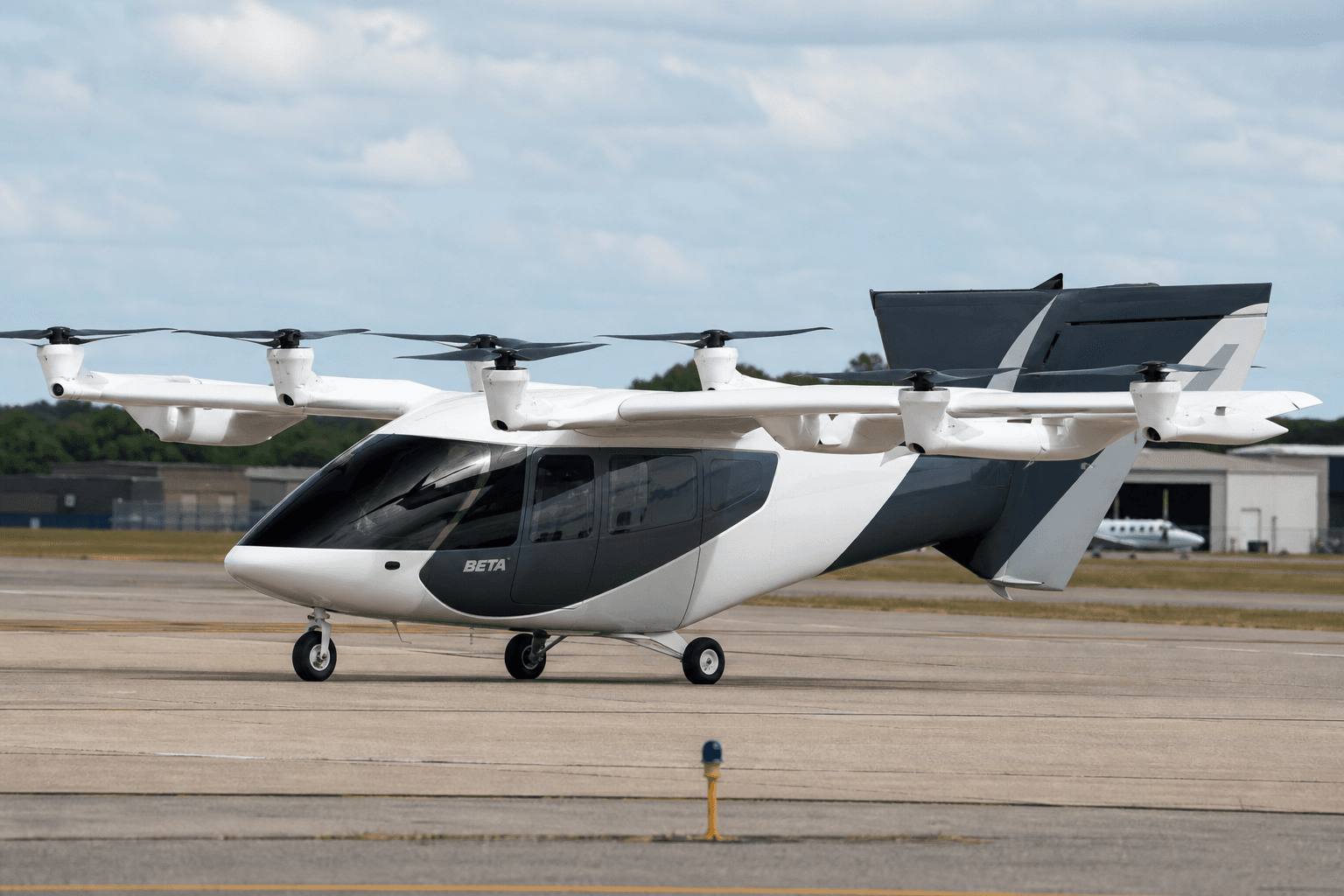
Illustration: The Touch & Go
FAA and DOT Launch Multi-State Trials for Electric and Autonomous Aircraft Integration
The FAA and U.S. DOT have officially begun a three-year program across 26 states to test electric air taxis and autonomous cargo drones, starting with medical cargo flights using Beta Technologies' all-electric aircraft.
The gist
FAA and DOT start extensive trials of electric and autonomous aircraft in 26 states, including organ delivery flights with Beta Technologies’ Alia CX300.
Continuing coverage
All Evtol →The FAA and U.S. Department of Transportation have initiated a landmark program to integrate precertified electric vertical takeoff and landing (eVTOL) aircraft and autonomous drones into the national airspace. Officially launched in mid-2026, the program will span at least three years and cover operations in 26 states, marking an unprecedented step toward regular commercial use of electric and autonomous aviation technologies. This initiative involves operational trials of novel vehicles, including Beta Technologies’ all-electric Alia CX300, currently being used in medical cargo missions delivering manufactured organs.
Beta Technologies kicked off the program with flights transporting vital medical cargo between airports in Maryland and Virginia. These inaugural operations demonstrated the practical application of the Alia CX300 aircraft, which offers a range of 337 nautical miles and a top speed of 153 knots. Beta aims to certify and begin commercial operations of this model within the next few years. Alongside the CX300, Beta's eVTOL A250 model complements their all-electric fleet, having collectively logged more than 160,000 nautical miles across multiple continents during market survey and demonstration flights.
The newly commenced Integration Pilot Program (eIPP) permits Beta and other manufacturers with precertified aircraft to perform operations previously not authorized by the FAA. This includes both cargo and passenger flights potentially authorized for revenue generation. Crucially, these activities generate essential data on the integration of electric and autonomous aircraft with existing air traffic systems, providing regulators empirical insights for future certification and operational frameworks. The FAA is not providing funding but will use findings from the eIPP to inform permanent regulatory standards.
The eIPP, announced with eight lead participants in early 2026, is structured through agreements with states and local agencies that set detailed operational parameters, including required flight hours and data collection standards. Beta's recent flights were conducted under one such agreement, signifying full operational commencement. According to Beta's leadership, the program allows them to deepen their understanding of domestic operating environments and demonstrate consistent aircraft performance in varied conditions, including Instrument Meteorological Conditions (IMC) and with operational payloads critical for reliability.
Collaborating states have organized under the Multistate Collaborative eIPP (MSCE) National Integration Complex, led by Pennsylvania's Department of Transportation. This consortium includes 18 states, three operators, and four original equipment manufacturers (OEMs), among them Beta, Electra, and Pivotal Aerospace. Electra plans to test regional eVTOL links around New Jersey and Pennsylvania, while Pivotal has ties with Republic Airways for operational testing. The consortium aims to support regional connectivity and revitalize local air services through electric aircraft.
The initial medical cargo missions involve United Therapeutics, a key Beta investor and customer who develops manufactured organs for transplantation. United Therapeutics is training pilots and collaborating closely on aircraft autonomy, structural design, and electric charging infrastructure across more than 120 sites. The business model anticipates thousands of daily flights to fulfill organ delivery goals, leveraging the Alia CX300's efficiency and environmental benefits to enhance mission success and reduce operational costs.
This program builds on prior FAA regulations issued in 2024, which established provisional pilot training and operational requirements for eVTOL and powered-lift aircraft. Those rules expire in a decade, prompting regulators to pursue permanent standards through iterative data gathering and testing like the eIPP. The program’s explicit federal support was further reinforced by a 2025 White House executive order, emphasizing the need for comprehensive integration of emerging aerial technologies within the national airspace system.
Beyond Beta, the eIPP includes prominent players in electric air taxis and cargo aircraft, such as Archer Aviation, Joby Aviation, Wisk Aero, Electra’s hybrid-electric regional models, and Elroy Air’s autonomous cargo drones. Retrofit technologies like Reliable Robotics’ autonomy system and Ampaire’s hybrid powertrain are also participating, showcasing a wide spectrum of innovation under evaluation.
The first phase prioritizes cargo operations with fixed-wing electric aircraft like Beta's CX300, advancing to passenger-carrying electric VTOLs subsequently. Industry experts predict that within three years, autonomous and remotely piloted operations will become routine in participating states. This multi-state, multi-operator initiative represents a pivotal move toward the commercial viability and regulatory acceptance of electric and autonomous aviation technologies.
Frequently asked questions
- What aircraft has begun operations under the FAA and DOT’s integration pilot program?
- Beta Technologies’ all-electric Alia CX300 aircraft has begun operating under the eVTOL Integration Pilot Program, conducting medical cargo flights in Maryland and Virginia.
- What is the main goal of the FAA and DOT’s eVTOL Integration Pilot Program?
- The program aims to test electric and autonomous aircraft operations across 26 states, collecting data to safely integrate these new technologies into the national airspace and guide future regulations.
- Which organizations are involved in the multistate consortium leading these electric aircraft trials?
- The consortium, led by Pennsylvania Department of Transportation, includes 18 states, operators like Beta, Electra, and Pivotal Aerospace, and customers such as United Therapeutics.
Read more
All Aviation Safety →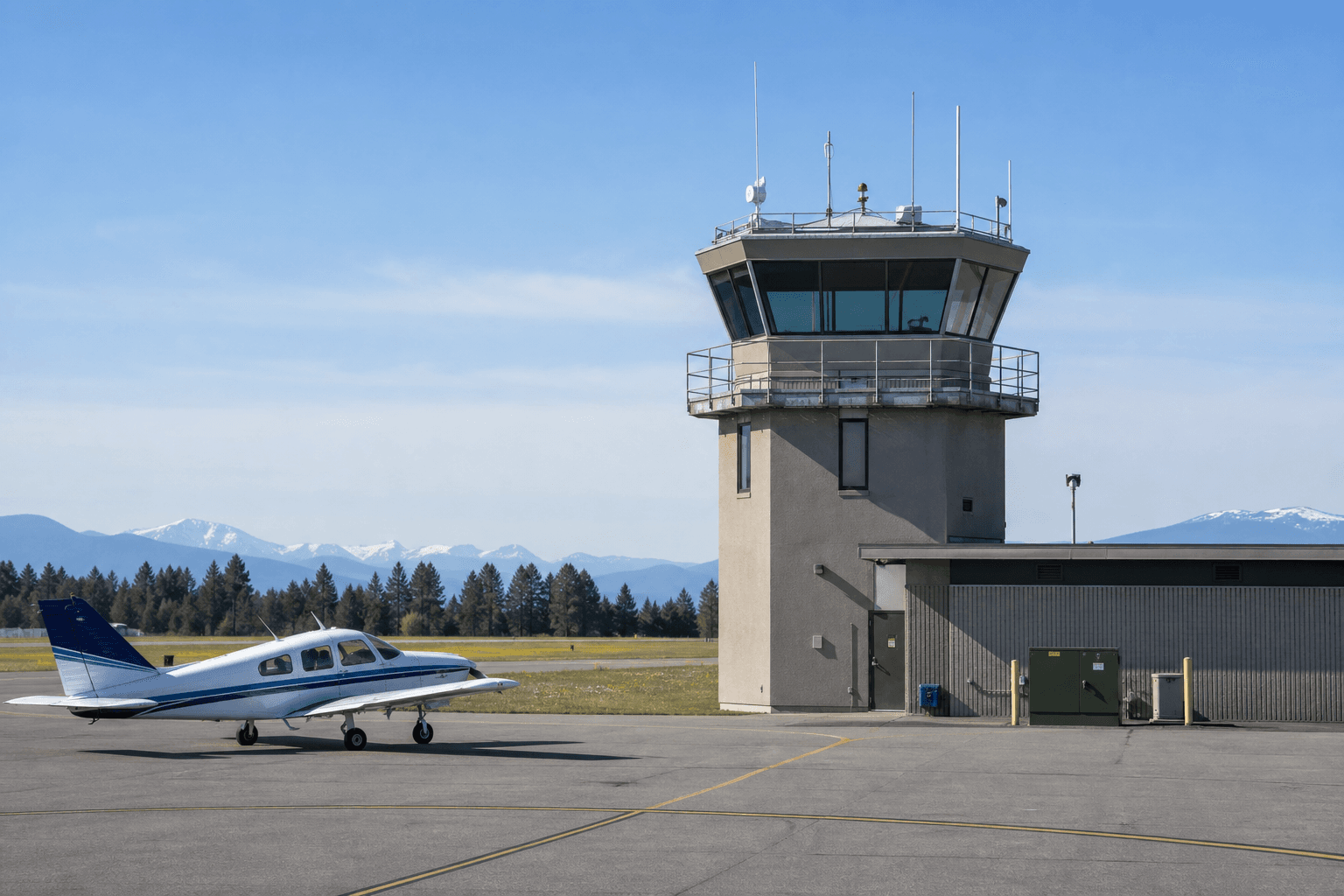
FAA Makes Control Tower Operator Partnership Hiring Path for Contract Towers Permanent
The FAA has made permanent a newer hiring pathway for Federal Contract Tower controllers, adding graduates from FAA-approved Control Tower Operator Partnership schools to the list of candidates eligible for hire by FCT companies. The change appears in FAA Order JO 7210.3EE Change 3 , effective July 9, 2026. The order sets FAA policy for facility operation and administration. Contract towers are FAA-funded air traffic control towers staffed by private companies, and many serve smaller airports with substantial general aviation activity. CTO-P Added To Eligibility Rule The revised eligibility language allows FCT companies to hire applicants who graduate from an FAA-approved CTO-P school. It also keeps the existing path for applicants who have a valid Enhanced Air Traffic Collegiate Training Initiative tower endorsement letter. Developmental controllers hired through those paths still must complete required facility training before controlling traffic independently. "This change will assist FAA Contract Tower (FCT) companies by allowing the FCTs to hire graduates from an FAA-approved Control Tower Partnership ( CTO-P ) school," the FAA said in its explanation of changes. "This change also clarifies the language for eligibility for FCT hire from an E-CTI school." Before the CTO-P path was added, FCT companies generally hired from a smaller pool of controllers who already had a previous control tower operator certificate or an FAA Air Traffic Safety Oversight credential with a tower rating. FAA had also added the Enhanced AT-CTI route through an earlier notice. Staffing Context The change moves the CTO-P pathway from a temporary FAA notice into the standing rulebook for FCT hiring. According to the FAA's briefing material, the CTO-P program is intended to prepare candidates for developmental controller jobs through classroom work and simulation training aligned with FAA Academy standards. The Department of Transportation Office of Inspector General said in a March 24 report that the FCT program includes 266 contract towers in 46 states and territories. The report said contract towers account for about half of the control towers in the National Airspace System and handled more than 18 million tower operations in calendar year 2024. "While FAA took steps to expand the controller hiring pool at contract towers, FCT contractors continue to face challenges in maintaining adequate staffing levels," the DOT Office of Inspector General said in the report. "Based on our analysis of contractor MAFR data, as of April 2025, the FCT Program remained understaffed by 276 controllers, or roughly 18 percent of their workforce." The OIG report also said all four FCT contractors told auditors they had not hired any Enhanced AT-CTI graduates as of July 2025. The report cited attrition, wage rates, remote locations and high cost-of-living areas among the factors affecting contract tower staffing.
FAA Proposes Replacing 53-Year-Old Ban on Supersonic Flight Over U.S. Land With Noise-Based Rules
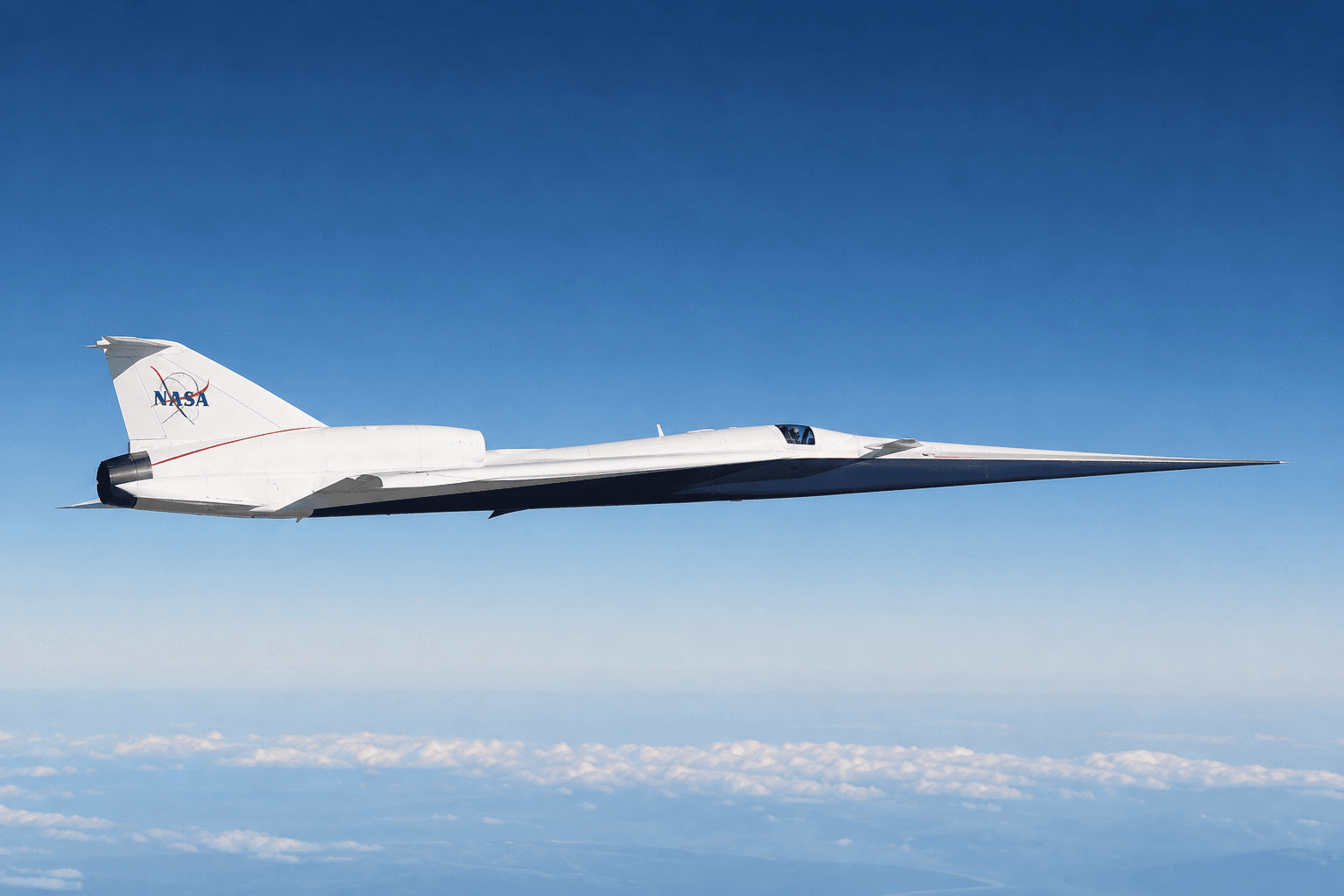
Global Aviation Round-Up from Aircraft Value Intelligence (AVN) A computer rendering of what the United Airlines supersonic aircraft will look like in the future. (Boom Supersonic) Editor's Note: To watch a video version of this article, click here . For 53 years, one federal regulation has stood between Americans and the return of supersonic air travel over the continental United States. That rule, adopted during the Nixon administration, prohibits civilian aircraft from exceeding the speed of sound over land. Now the Federal Aviation Administration (FAA) is preparing to rewrite it. On July 2, the agency published a Notice of Proposed Rulemaking in the Federal Register that would replace the existing speed-based restriction with a performance standard centered on noise. The proposal follows an announcement by the Department of Transportation on June 30 and represents the most significant shift in U.S. supersonic policy in decades. The change reflects a different way of thinking about the problem. Instead of asking whether an aircraft breaks the sound barrier, regulators are asking whether people on the ground are disturbed when it does. That distinction could reshape the future of commercial aviation. For many travelers, supersonic passenger service is synonymous with the Concorde, the sleek Anglo-French jet that cut transatlantic flight times in half. Its future unraveled after the fatal Air France crash near Paris in 2000. Although Concorde briefly returned to service, passenger demand weakened, operating costs climbed, and the aircraft was retired in 2003. Since then, commercial supersonic travel has largely disappeared. Today’s aircraft designers believe the technology has advanced enough to make another attempt. The original U.S. ban grew out of public frustration during the 1960s, when military testing produced frequent sonic booms over populated areas. Residents complained of rattling walls, cracked plaster, broken windows and sudden explosions of noise that interrupted everyday life. Thousands of complaints poured into government offices, convincing regulators that the public cost outweighed the benefit of faster travel. The FAA responded by banning routine civilian supersonic flight over land. With few exceptions, commercial aircraft have remained below Mach 1 across the continental U.S. ever since. Engineering, however, has changed dramatically over the past half-century. Instead of allowing powerful shock waves to merge into the classic sonic boom, engineers have learned how to shape an aircraft so those pressure waves remain dispersed. The resulting sound reaching the ground is significantly weaker than the ear-splitting boom associated with earlier generations of supersonic aircraft. The FAA’s proposal reflects those advances. Under the draft rule, future aircraft would have to meet a strict ground-level overpressure limit of 0.11 pounds per square foot. While the measurement is technical, the practical goal is straightforward: produce a sound that resembles a soft thump rather than the explosive crack historically associated with breaking the sound barrier. NASA’s Supersonic Experiment The proposed rule arrives as NASA continues work on one of its most ambitious experimental aircraft. The X-59 Quiet SuperSonic Technology (QueSST) demonstrator hardly resembles a conventional jet. Its unusually long, narrow nose and carefully sculpted airframe were designed with a single objective: reducing the intensity of sonic booms before they reach people on the ground. The aircraft recently completed another important step in its flight-test program, reaching Mach 1.4 at roughly 55,000 feet. Engineers view the milestone as another indication that the research program is progressing as expected. The most important testing, however, won’t focus on speed alone. NASA plans to fly the X-59 over selected U.S. communities while researchers gather feedback from residents who experience its sound signature. Beyond measuring decibel levels, scientists want to understand how people actually react. Does the sound surprise them? Is it annoying? Or is it mild enough to blend into the background of everyday life? Those public-response studies could prove pivotal. If communities consistently report that the aircraft produces little more than a brief, unobtrusive noise, regulators would have stronger evidence that quiet supersonic operations can safely coexist with populated areas. The research is expected to influence not only future FAA decisions but also international standards governing commercial supersonic aviation. The stakes extend well beyond NASA. Several aerospace manufacturers are investing heavily in next-generation supersonic airliners designed to shorten travel times between major cities. Because of the current U.S. ban, most development plans have centered on transoceanic routes where aircraft can legally accelerate beyond Mach 1. A new regulatory framework would dramatically broaden those possibilities. Flights that now consume most of a business day could eventually take only a few hours. A traveler leaving New York in the morning could conduct afternoon meetings in Los Angeles and return home that evening. Commercial service remains years away, but for the first time in decades, the regulatory landscape appears to be moving in the same direction as the technology. The proposal also provides something the aerospace industry values almost as much as technical innovation: regulatory certainty. Designing, certifying and manufacturing an entirely new generation of commercial aircraft requires billions of dollars and years of development. A clearer path through the approval process reduces investment risk, giving manufacturers and their financial backers greater confidence that quiet supersonic flight could become a viable commercial business rather than an engineering experiment. John Persinos is the editor-in-chief of Aircraft Value Intelligence .
Guide for Airports on Unleaded Avgas Transition Released Ahead of FAA Final Plan
The June publication of a new Airport Cooperative Research Program guide arrives during a very much unresolved stage of the federal unleaded avgas process. The FAA's comment period on its draft Transition Plan to Unleaded Aviation Gasoline closed earlier this year, and as of this writing, the final plan has not been published, nor has the agency released the public comments it received. "Our priority is releasing the Transition Plan," the FAA said in response to an AVweb status inquiry. "We will do that first and then release the comment summary in late 2026." That leaves airports and aircraft owners preparing for a transition whose direction is established while many of its key governing details remain pending. The National Academies Press published Transitioning to Unleaded Aviation Gasoline, A Guide and Tools in June, along with a companion primer . The documents were developed under ACRP Project 03-73, sponsored by the FAA and administered by the Transportation Research Board. It is important to mention that they do not attempt to replace the FAA transition plan. They instead serve a different purpose of bringing the national effort down to the airport level to address some of the practical issues they will face as the transition moves forward. Federal Policy Meets Airport Operations Most who have any skin in the game when it comes to the upcoming unleaded avgas transition are probably well aware of the history, but a bit of background before we dive in. In 2023, the Environmental Protection Agency issued its finding that lead emissions from aircraft engines operating on leaded fuel endanger public health and welfare. The ACRP primer says leaded aviation gasoline is now the largest current source of airborne lead emissions in the United States, after the phaseout of leaded automotive gasoline and reductions from other sources. "Lead emissions from aircraft are an important and urgent public health issue," the EPA said. "Lead exposure can have harmful effects on cognitive function, including reduced IQ, decreased academic performance, as well as increased risk for additional health concerns. There is no evidence of a threshold below which there are no harmful effects on cognition from lead exposure." Congress has also defined part of the airport problem. The FAA Reauthorization Act of 2024 requires airports that offered leaded avgas in 2022 or earlier to keep it available until Dec. 31, 2030, unless an FAA-authorized unleaded avgas replacement for nearly all piston-engine aircraft and engines is available and meets a standard the agency considers acceptable for safe use, production and distribution. That requirement preserves 100LL access for aircraft that still need it, at least for the moment. It also creates the transitional period that airport operators now have to manage. Some fields have the tankage, staff and fuel volume to add an unleaded avgas option before leaded fuel disappears. Others have a single avgas tank, a small based fleet and little operational room for parallel fuels. The ACRP guide’s starting point is that difficulty. Its recommended process begins with fuel suppliers and FBOs, then moves through local fleet compatibility, demand estimates, infrastructure review, funding options, financial analysis, unleaded avgas selection, implementation, safety procedures, training and continued monitoring. The sequence treats fuel choice as the product of airport-specific information and decisions. The Fuel Snapshot Needs A Date Stamp The report is a June publication, but its fuel-status discussion reflects information available when the guide was being prepared in January 2025. At that point, it identified non-oxygenated mogas, Swift Fuels UL94, GAMI G100UL and Swift Fuels 100R as unleaded avgas options that were commercially available or moving toward commercial availability. UL100E from LyondellBasell and VP Racing Fuels remained in FAA testing. Of course, unleaded avgas availability is not the same as universal usability. Mogas, UL94, G100UL and 100R depend on STCs unless the aircraft's type certificate already allows the fuel. The guide acknowledges this, and also describes the FAA's fleet authorization process, which depends on testing and standards work. For an airport, the relevant unit is not the national fleet, but the aircraft it actually services. A traffic count does not answer how many based airplanes can use UL94, how many still need a particular fuel, how many owners will obtain an STC, or how transient pilots will know which pump is appropriate. Those answers, the guide says, will have to come from aircraft surveys, N-number checks, engine information, STC status and fuel-use estimates. The guide also puts attention on unleaded avgas standards and compatibility. Mogas and UL94 are covered by ASTM standards. G100UL had no ASTM standard at the time covered by the report. Swift 100R had an ASTM standard in development. Those details may affect how airports, fuel providers, insurers and aircraft owners evaluate misfueling risk, product acceptance and infrastructure decisions. The Checklist Is The Work The National Academies material includes five tools for airports as they make the unleaded avgas transition. These include a transition checklist, separate survey forms for individual-aircraft owners and multi-aircraft operators, a fleet inventory spreadsheet and a fuel cost evaluation tool. Together, they are intended to give airports a way to track the process, estimate which aircraft can use available unleaded fuels, evaluate demand and compare the costs of possible transition paths. The guide draws on case studies from seven airports that had begun , or were preparing for, unleaded avgas service while continuing to offer 100LL. It also includes material related to Alaska, where seasonal fuel delivery, storage limits, remote communities and reliance on piston aircraft create a different transition problem from the one faced by many airports in the lower 48. Aircraft owners will face their own set of questions around unleaded avgas that the guide addresses only in part. It discusses fuel approval paths, STC requirements, compatibility, standards, price differences and some cost considerations, mainly as they affect airport planning. It does not settle what pilots will encounter in daily use, including long-term fuel availability, final pricing, warranty and insurance treatment, resale effects, or the fate of aircraft that may be legal to convert but difficult to justify economically. The FAA's draft plan raised many of those issues without closing them, and since the final plan has not yet been released, we still do not have a final, authoritative answer on how these will be addressed. The ACRP guide is strongest where it stays on airport work. It gives operators a way to survey the local fleet, evaluate tankage, train line staff and reduce misfueling risk. Those steps are necessary, although the guide has limited answers for airports with one avgas tank, uncertain transient demand, competing unleaded avgas products, unresolved production capacity or local economics that do not support adding another fuel grade. Its tools can help an airport organize the problem, but they cannot remove the market and regulatory gaps that will determine whether a local plan is workable. The final FAA transition plan will still matter greatly, and so will the comments the agency received and plans to summarize later this year. Production capacity, price, distribution, fuel standards and aircraft eligibility will shape the pace of change. The ACRP publications do not answer every national question, but of course, they do not claim to. Rather, they describe the work that airports can begin while those questions remain open. And that is where the unleaded avgas transition now sits. The policy deadline remains 2030 and the final federal plan is still pending as quite a few very practical questions remain unanswered. Even so, the burden is al

FAA Issues New Guidance to Preserve Cockpit Voice Recorder Data After Incidents
The FAA is developing recommendations to protect information captured by the cockpit voice recorder (CVR) of an aircraft that has been involved in an accident or reportable incident. The agency has issued a Safety Alert for Operators (SAFO) advising airline crews and maintenance teams to shut off power to the CVR to protect critical audio data after a reportable event. CVRs are designed with a finite amount of memory that is overwritten, unless the circuit breaker for the device is pulled. The SAFO advises operators to provide clear shutoff instructions for the CVR through flight, maintenance, and dispatch manuals, and instructs airlines and air taxi companies to assess applicable procedures through their Safety Management Systems (SMS) to ensure the guidance is implemented and effective. READ MORE: NTSB Releases Final Report on Alaska Door Plug Failure READ MORE: 4 Flight Attendants Sue Boeing Over Alaska Door Plug Blowout According to the FAA, the SAFO addresses a National Transportation Safety Board (NTSB) recommendation in 2025 stemming from the January 2024 in-flight loss of a door plug from Alaska Airlines Flight 1282, a Boeing 737-900. The mid-exit door plug (MED) departed the aircraft shortly after takeoff from Portland International Airport (KPDX) in Oregon. The loss of the MED as the jet climbed through 14,830 feet resulted in explosive decompression. The door, along with unsecured objects including cellphones, paper, children's toys, clothing, and parts of the aircraft interior rained down on a Portland suburb. One flight attendant and seven passengers received minor injuries. The captain, first officer, three flight attendants, and 164 passengers were uninjured. Video taken from inside the aircraft during the return to KPDX appeared on social media, showing supplemental oxygen masks hanging from the ceiling, seat frames twisted as if they were made of Play-Doh, and a gaping hole in the fuselage with the city lights of Portland below. The aircraft was able to land safely at the airport, where the passengers and crew departed. Mid-exit door (MED) plug from Alaska Airlines Flight 1282. [Credit: NTSB] During the preliminary NTSB hearing it was learned that the force of the decompression blew open the cockpit door and the flight crew lost their headsets. The loss of cabin pressure necessitated the use of supplemental oxygen, which further made it difficult for the crew to communicate. In addition, the interphone was knocked out, making it impossible to reach the flight attendants in the cabin to determine the extent of the severity of the event. The CVR was not available for review by the NTSB, because, as noted by several people during testimony, by the time the technicians returned to the cockpit, the CVR had overwritten itself as it is designed to record two hours at a time, then recycle. The procedure in the event of an accident or incident is to pull the circuit breaker to preserve the information on the CVR, but it was noted that the flight crew was focused on the welfare of the passengers and getting the aircraft safely back on the ground. As the FAA report indicates, because the CVR had been overwritten, the NTSB was not able to fully evaluate some flight deck environment events associated with the rapid depressurization, such as the difficulties the pilots had establishing communications back to their headsets after removing oxygen masks. Because of the missing CVR, the NTSB could not determine whether factors other than the loud noises in the airplane contributed to the reported communication difficulties that occurred while the pilots were wearing their oxygen masks, such as the captain and a flight attendant reporting inability to communicate with each other over the interphone despite multiple attempts. "Such a determination would support the development of recommendations for safety enhancements, which, depending on the reason for the difficulties, could involve equipment, procedural, or training solutions," the FAA report stated. One of the recommendations to come out of the NTSB investigation was to require CVRs capable of recording 25 hours at a stretch before the overwrite. The FAA recommends that each operator with a CVR installed "confirm that company manuals contain instructions that the CVR circuit breaker be pulled after a reportable event. The instruction that the CVR circuit breaker is pulled could be included in flight operation manuals, maintenance manuals, and dispatch manuals, increasing the likelihood that the task is accomplished. Certificate holders operating under Title 14 Code of Federal Regulations (14 CFR) parts 121 or 135 should use their safety assurance processes within their Safety Management System (SMS) to ensure the recommended risk controls are analyzed and assessed to meet the organization's safety objective." In an email to the FAA, the NTSB noted that following the accident Alaska Airlines implemented several changes related to preserving flight data recorder (FDR) and CVR data after an incident or accident, such as adding circuit breaker information to the Quick Reference Handbook (QRH) used by pilots, and adding a reminder to the flight operations duty officer and dispatch brief checklists to confirm that CVR and FDR circuit breakers are pulled following an event. The airlines also revised the Emergency Coordination Center maintenance and engineering checklist, non-Emergency Coordination Center maintenance control checklist, and Emergency Coordination Center flight operations checklist to prioritize timely pulling of the FDR and CVR circuit breakers following an event. "The FAA recognizes the importance of protecting cockpit voice recorder (CVR) data following a reportable event," said FAA Administrator Bryan Bedford in an email to the NTSB. "There are several 14 CFR sections, §§ 121.135, 125.73, 135.23, and 91.1025, that stipulate manual content requirements. However, none of these sections require operators to ensure the cockpit voice recorders (CVR) circuit breaker has been pulled after a reportable event." Bedford's email continues, noting that after May 28, 2027, "every Part 121 and Part 135 certificate holder is required under 14 CFR Part 5 to have a Safety Assurance module within their Safety Management System which will require them to consider notifications from external sources and, therefore, use their safety assurance module to determine if they have procedures in place to ensure that CVR data retention is located throughout their manual system."
The Daily Touch & Go
The day's best aviation news in your inbox. Free, no spam.