

Illustration: The Touch & Go
Loose Elevator Plug Jammed Controls in Rob Holland MXS Crash at Langley AFB
NTSB final report finds a faulty counterweight plug caused elevator jam leading to aerobatic pilot Rob Holland's fatal crash in 2025.
The gist
A loose elevator counterweight plug jammed the controls of Rob Holland's MXS, causing his fatal crash at Langley Air Force Base.
The National Transportation Safety Board (NTSB) released its final report on July 2 detailing the cause of aerobatic pilot Rob Holland’s fatal accident on April 24, 2025, at Langley Air Force Base. The investigation concluded that a loose elevator counterweight plug jammed the airplane’s flight controls, leading to a loss of control during landing. This finding finalizes and confirms earlier suspicions about damage to the customized elevator counterweight system causing the mishap.
Rob Holland was flying his MXS aerobatic aircraft from Smyrna, Tennessee, to perform at the Air Power Over Hampton Roads airshow. Witness testimonies and flight data recovered from the accident revealed that the airplane executed a stable approach to Runway 08 and maintained steady flight roughly 50 feet above ground level. However, the airplane subsequently pitched up and down multiple times before climbing and rolling left 90 degrees, then descending rapidly into the ground, resulting in the fatal crash.
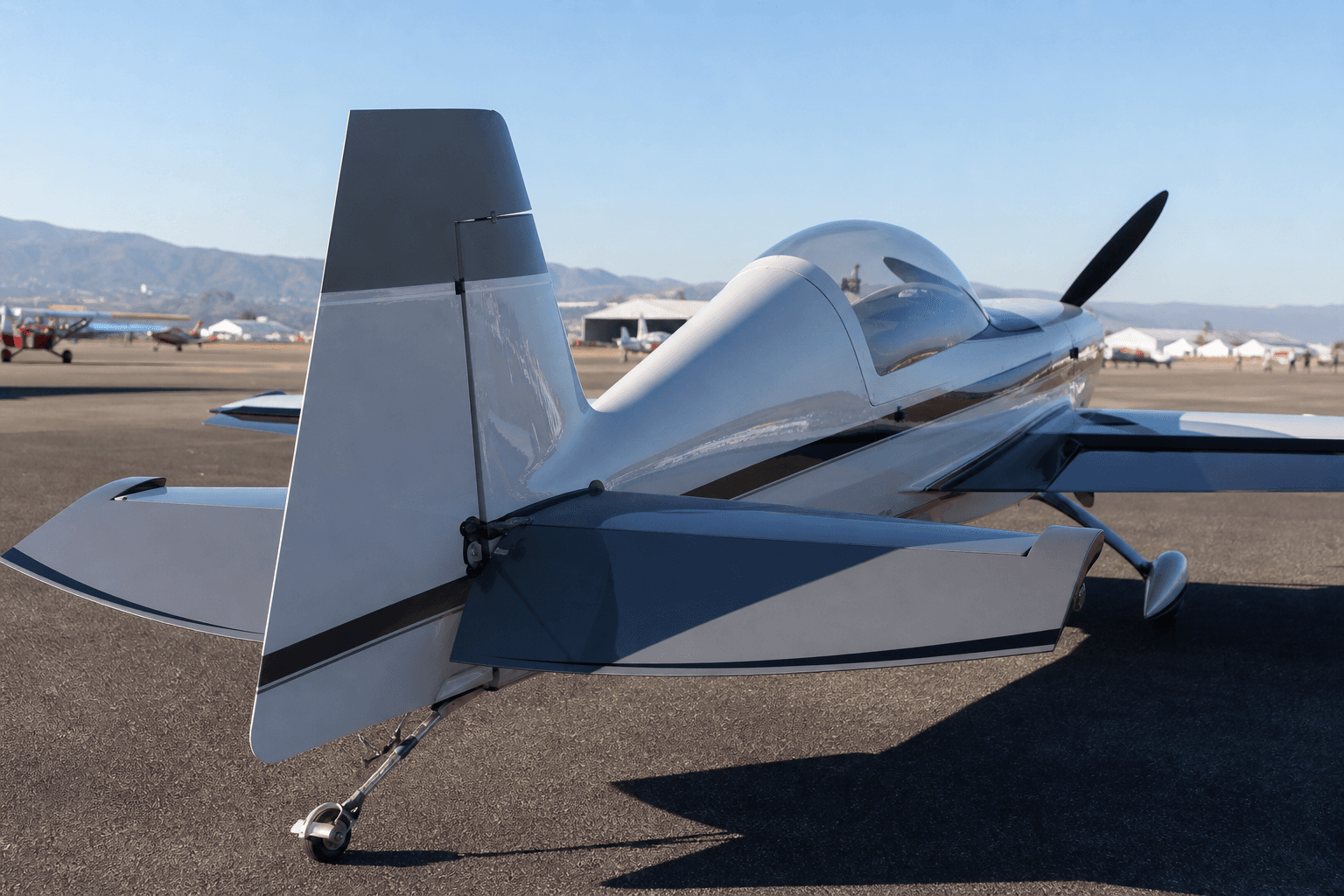
Investigators discovered the left elevator counterweight plug approximately 10 feet behind the main wreckage. The plug bore gouges and paint transfers consistent with contact damage. Similarly, the horizontal stabilizer surfaces exhibited dents and scrub marks corresponding to the plug’s imprints. Laboratory analysis showed that the plug’s markings matched a nearby washer and screw, indicating repeated and damaging contact between these components during flight.
The elevator system involved was equipped with an adjustable balance tube, a modification that Holland requested during construction of the MXS. MX Aircraft, the manufacturer, described the counterweight plugs used as a provisional solution without providing continued airworthiness instructions or torque specifications for installation. The original design required an O-ring as a secondary locking mechanism, but investigators found no such O-rings on the plugs recovered from the wreckage, nor were the parts consistent with the original design dimensions.
The NTSB’s probable cause statement ascribes the accident to the loosening of a counterweight plug in flight that jammed the elevator control surface, thus causing a loss of control during the critical landing phase. This mechanical failure prevented proper pitch control inputs from being executed, ultimately resulting in the aircraft’s uncontrollable descent.
Following the accident, MX Aircraft issued a mandatory safety notice addressing MXS and MX2 models fitted with adjustable balance tubes. The directive recommended removing the adjustable counterweight setup and replacing it with a solid fill of lead-and-resin mixture to prevent similar malfunctions. This change aims to enhance reliability and avoid plug loosening and elevator jamming in the future.
Rob Holland, aged 50 at the time of the accident, was a highly respected pilot in the aerobatic and airshow community. He held an airline transport pilot certificate and reported more than 15,000 total flight hours. His accolades included winning six World 4-Minute Freestyle championships and 13 consecutive U.S. National Aerobatic Championships. Holland’s talent and contributions had earned him a reputation as one of the most inspiring aerobatic pilots in aviation history.
Rob Holland Aerosports released a statement mourning the loss of a great pilot and competitor. The accident and the NTSB report serve as a sobering reminder of the critical importance of mechanical integrity in aerobatic aircraft control systems, particularly in highly customized builds where standard manufacturer instructions may be limited or absent.
The new safety directive from MX Aircraft signals a push toward eliminating adjustable counterweight plugs in the affected aerobatic models. This incident underlines the need for rigorous adherence to design specifications and the potential hazards when temporary parts are employed without extensive airworthiness guidance.
Frequently asked questions
- What caused the accident involving Rob Holland's MXS aircraft?
- The NTSB determined a counterweight plug on the left elevator loosened during flight, jamming the elevator and causing a loss of control during landing.
- What was unique about the elevator system on Rob Holland's MXS?
- The MXS had a custom adjustable elevator balance tube with counterweight plugs installed at Holland’s request, which lacked proper secondary locking and manufacturer airworthiness guidance.
Read more
All Aviation Safety →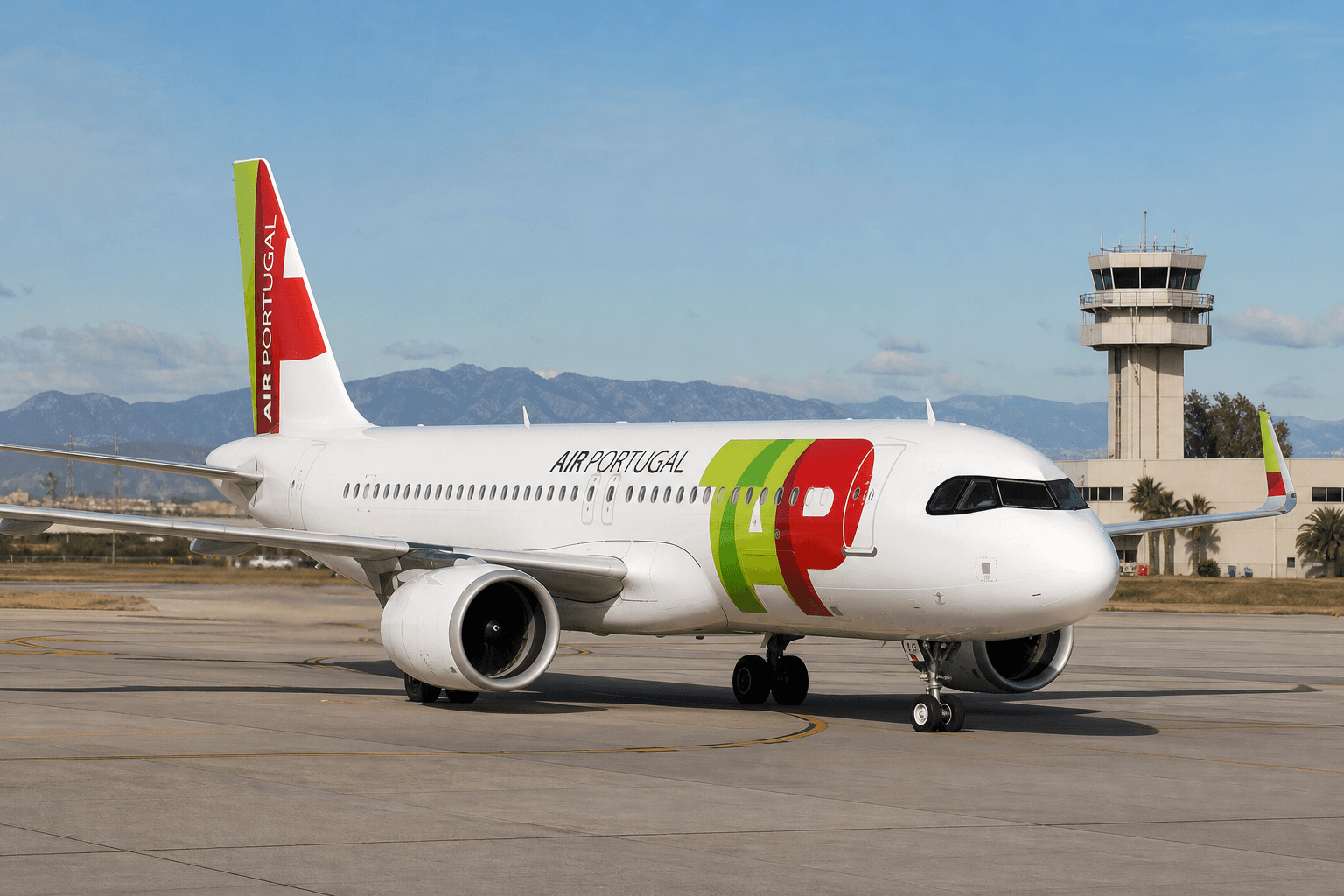
TAP Air Portugal to Restart Venezuela Flights via Valencia amid Caracas Airport Repairs
Portuguese carrier will initially fly to Valencia as work continues to resume services to capital. TAP Air Portugal will resume flights to Venezuela on 13 July, three weeks after two strong earthquakes struck the country, killing thousands and destroying infrastructure. The Portuguese carrier says it will initially operate to Arturo Michelena International airport in Valencia instead of Caracas's Simon Bolivar airport, which sustained damage during the earthquakes. "At this stage, flights will operate to Arturo Michelena International airport in Valencia, allowing for the gradual re-establishment of air links between Portugal and Venezuela while the necessary work is under way to resume regular operations," says TAP. The Lisbon-based carrier will operate the route as a one-stop service with a technical stop in Pointe-a-Pitre in Guadeloupe. It says no aircraft or crew will remain in Venezuela. The first flight on 13 July will transport 8.7t of medical supplies to assist with humanitarian aid missions. "The company continues to monitor the evolving situation and is committed to resuming its regular operations to Venezuela as quickly as possible and under conditions of complete safety," adds TAP. Venezuela's interim president Delcy Rodriguez said in a 7 July Telegram post that after assessing the damage to one of the runways at the Caracas airport, she had initiated a plan aimed at temporarily allowing commercial flights to use a parallel runway.

Boeing Plaza Hosts Historic and Modern Aircraft at Oshkosh AirVenture 2026
Boeing Plaza, the large aircraft ramp of the EAA AirVenture showgrounds, becomes the center of the aviation universe in less than two weeks when Oshkosh 2026 gets underway. The fly-in convention runs from July 20-26, and the aircraft on display on the central grounds will likely change day by day. According to the Experimental Aircraft Association, the 2026 lineup features an eclectic mix of modern military aircraft, the latest innovations, cultural favorites, and historic aircraft both civilian and military. Decades of aviation will be on display and it's a bit of a thrill to see a modern Boeing B-29 parked a few feet away from a Boeing C-17 and a B-52, or a modern airline a few feet from a DC-3 that your grandparents might have flown in. EAA said the lineup will change through the week as some airplanes are visiting for only one day, while others will remain for several. The theme of the Boeing Plaza display is AirVenture's salute to America's 250th birthday.. READ MORE: NASA's Super Guppy Will Miss AirVenture Due to Storm Damage READ MORE: Wingfoot One Returns to AirVenture "There is no place else in the world where one can see a combination of noteworthy aircraft and people as you can on Boeing Plaza during EAA AirVenture," said Rick Larsen, EAA's vice president of communities and member programs, who coordinates the annual event's features and attractions. "Nearly every notable type of airplane of the past 35 years has appeared in that area at some point." Aerial view of Boeing Plaza at EAA AirVenture in 2025 in Oshkosh, Wisconsin [Credit: EAA] Larsen gives a nod to the folks tasked with getting those airplanes in and out of the plaza—AirVenture's dedicated (and skilled) volunteers. You will see them in the safety vests working as a team to maneuver and place those often-rare aircraft. "[These are people] who have probably pulled and tugged more aircraft types than any ramp crew in the world," Larsen said. Aircraft scheduled to be displayed on Boeing Plaza: • U.S. Air Force B-52 • C-5 and C-17 • F-16, F-35, and F-15 • Airliners in special livery designs from Southwest Airlines and Delta Air Lines. Aerial view of Boeing Plaza at EAA AirVenture in 2025 in Oshkosh, Wisconsin [Credit: EAA] Boeing Plaza was created in the late 1980s as a taxiway with four aircraft parking "fingers." As the AirVenture show grew in attendance, there was a need for more space, and it was expanded into the full ramp in 1993. Boeing Plaza also provides a popular photo-taking platform, as large group portraits, such as the annual Women In Aviation gathering, are done on the ramp.

Experienced Pilot Disoriented in Night IFR Approach Crashes Short of Raleigh-Durham Runway
FREDERICK, Md.—The Aircraft Owners and Pilots Association Air Safety Institute (ASI) has released a new episode of its popular Accident Case Study video series.

Student Pilot Safely Lands Cessna 150 After Instructor's Mid-Air Jump in Argentina
A trainee pilot was left on his own to land an aircraft after his pilot instructor , Leandro Andrés Bertazzo , decided to jump out of a moving plane high in the air in the skies of Argentina on Saturday, July 4. This forced the student, known as Rosario, to safely land the aircraft on his own. Bertazzo, who was the age of 42, was later found dead following the incident.
The Daily Touch & Go
The day's best aviation news in your inbox. Free, no spam.