

Illustration: The Touch & Go
FAA Sets Certification Rules for Electra EL9 Ultra Short Hybrid-Electric Aircraft
FAA finalizes certification basis under Part 23 for Electra's hybrid-electric EL9 Ultra Short aircraft, enabling progress toward commercial flights from minimal runway infrastructure.
The gist
FAA approval of certification basis marks key milestone for Electra EL9 Ultra Short hybrid-electric aircraft’s entry into commercial service.
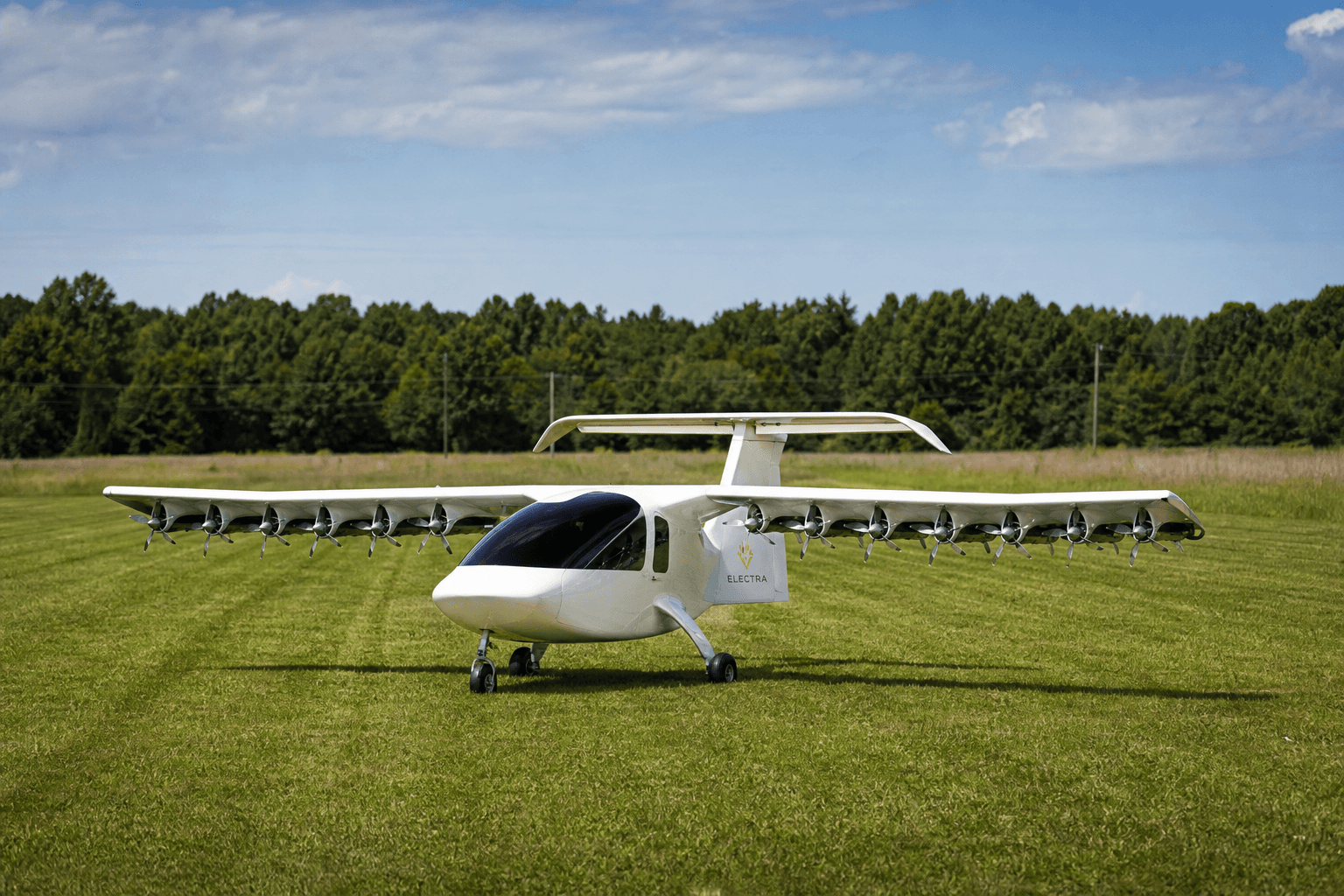
Electra has reached a crucial milestone in certifying its hybrid-electric aircraft, the EL9 Ultra Short, as the Federal Aviation Administration (FAA) has approved the certification basis regulations that will govern its airworthiness and environmental compliance. This approval entails the closure of the so-called G-1 issue paper, establishing a formal framework under the existing FAR Part 23 standards that Electra must meet to demonstrate the safety of the EL9 model. The EL9 is designed for operations in extremely confined spaces, requiring only 150 feet for both takeoff and landing, making it capable of operating from surfaces roughly the size of a soccer field.
The G-1 certification basis not only specifies which established FAA airworthiness and environmental regulations apply to the EL9 but also details special conditions and equivalent level of safety (ELOS) requirements to address the aircraft’s innovative features. Among these novel systems is a blown-lift propulsion design, which reroutes airflow over the wing’s flaps and ailerons and directs it toward the ground, enabling takeoff speeds as low as 35 knots. This technology underpins the EL9’s ultra-short runway capability and sets it apart from conventional designs.
Distributed electric propulsion forms a core component of the EL9’s configuration, consisting of eight Evolito electric motors arrayed across the leading edge of the wing. Controlled by a digital fly-by-wire system based on Honeywell flight computers, the aircraft’s control surfaces and electric motors work in concert to enhance low-speed handling and reduce pilot workload. These integrated systems represent a significant advancement in hybrid-electric aircraft design, demonstrating Electra’s approach to combining efficient propulsion with advanced avionics.
Electra submitted its Part 23 type certification application to the FAA in November and now looks ahead to the next major phase: developing the G-2 issue paper. This document will form a compliance checklist that defines how Electra will verify adherence to each certification requirement through rigorous engineering analyses, ground and flight testing, inspections, and conformity assessments. Such stepwise regulatory milestones ensure that emerging aircraft technologies are thoroughly vetted and meet the FAA’s stringent safety criteria before entering service.
The certification pathway for the EL9 sets a precedent within the burgeoning electric aviation industry. Electra now joins an elite group of developers including Joby Aviation, Archer Aviation, and Beta Technologies that have secured their G-1 approvals, an essential prerequisite to obtain type certification. Airbus is also active in developing hybrid-electric propulsion systems, though its efforts remain in earlier stages, while some startups like Maeve Aerospace have struggled to maintain operations. NASA has singled out Electra’s technology for its Advanced Aircraft Concepts for Environmental Sustainability (AACES) 2050 program to explore designs for all-electric commercial airliners.
Beyond regulatory progress, Electra has validated the EL9’s ground roll distance through flights of its smaller demonstrator, the EL2 Goldfinch. The full-size EL9, planned for its first flight in 2027 or 2028, aims to carry a pilot and nine passengers with a full payload capacity of 3,000 pounds. It will offer a cruising speed of 175 knots and a projected range of 330 nautical miles, all while producing a relatively quiet noise footprint measured at 75 dBA during takeoff and landing.
A distinctive goal for the EL9 is enabling point-to-point travel from unconventional locations, such as rooftops, parking lots, and even floating barges. Electra envisions ‘access points’ outside of traditional airports, unlocking rapid local and regional connections along over 2,600 routes under 265 miles that are inefficient for road travel and lack regular air service. To meet anticipated demand, Electra estimates producing between 12,000 to 16,000 aircraft over the first decade of operations, reflecting confidence in the commercial viability of ultra-short takeoff and landing hybrid-electric vehicles.
The company’s vision, branded as ‘direct aviation,’ seeks to decentralize aviation infrastructure and make flight accessible in urban and remote environments alike. Recently, Electra partnered with Signature Aviation and UrbanV to explore the deployment of such access points at private aviation terminals—a move that will integrate the EL9 within existing aviation ecosystems. Additionally, Electra has attracted attention and interest from U.S. military branches, including the Air Force, Army, and Navy, underscoring the EL9’s potential for varied operational uses beyond civilian markets.
As Electra advances through FAA certification stages, its experienced engineering team—responsible for developing or certifying more than 40 prior aircraft—will guide the company toward type inspection and eventual full type certification. With these regulatory and technological hurdles progressing steadily, the EL9 Ultra Short could become among the first hybrid-electric aircraft to routinely operate with passengers, signaling a transformative step in sustainable regional air mobility.
Frequently asked questions
- What is the significance of the FAA closing the G-1 issue paper for Electra's EL9?
- Closing the G-1 issue paper establishes the official certification basis under Part 23 regulations, outlining the safety and environmental standards the EL9 must meet to gain FAA type certification.
- What enables the EL9 Ultra Short to take off from very short runways?
- The EL9 uses a blown-lift propulsion system that redirects airflow over wing surfaces into the ground, allowing it to achieve takeoff speeds as low as 35 knots and requiring only 150 feet for ground roll.
- What are Electra’s plans for operating the EL9 outside traditional airports?
- Electra envisions deploying ultra-short ‘access points’ on rooftops, parking lots, fields, barges, and other locations, enabling operations on over 2,600 suboptimal travel routes without conventional airport infrastructure.
Read more
All Aviation Safety →
TezJet grounded after Boeing MD-83 landing gear collapse at Bishkek Manas Airport
Accident at Bishkek Manas airport occurred just a month after Kyrgyzstan was removed from European blacklist. Kyrgyz authorities have temporarily suspended the operations of carrier TezJet after one of its Boeing MD-83s has suffered a landing-gear collapse while taxiing for the runway at Bishkek's Manas airport. The airport operator states that the accident occurred as the twinjet prepared to depart for Osh on 7 July. "After taxiing and reaching take-off position during pre-flight procedures, the left main landing-gear collapsed," says the company. "As a result, the aircraft listed to the left, touched the runway with its left wing, and came to a stop." None of those on board was injured, the airport operator adds. Images from the scene identify the MD-83 involved as EX-80003, a 1996 airframe originally delivered to Korean Air. The tail-cone of the aircraft, which serves as an evacuation exit, appears to have been jettisoned during the occurrence. Work is under way to remove the jet from the runway. Manas has a single runway, designated 08/26. Kyrgyzstan had been subject to a European Commission blanket blacklisting for some 20 years, a restriction which was only removed in early June based on evidence of substantial safety improvement. The Kyrgyz state civil aviation agency is investigating the occurrence. "Until the necessary verification activities are completed, a decision has been made to temporarily suspend the operation of TezJet aircraft," says the airport operator. "This is a purely preventative measure aimed at ensuring the highest level of flight safety." The aircraft had arrived from Osh earlier in the day. Manas airport will remain closed until around 06:00 on 8 July. "Flight safety remains our highest priority," says the airport operator, adding that schedule disruption is possible.
FAA and DOT Launch Multi-State Trials for Electric and Autonomous Aircraft Integration
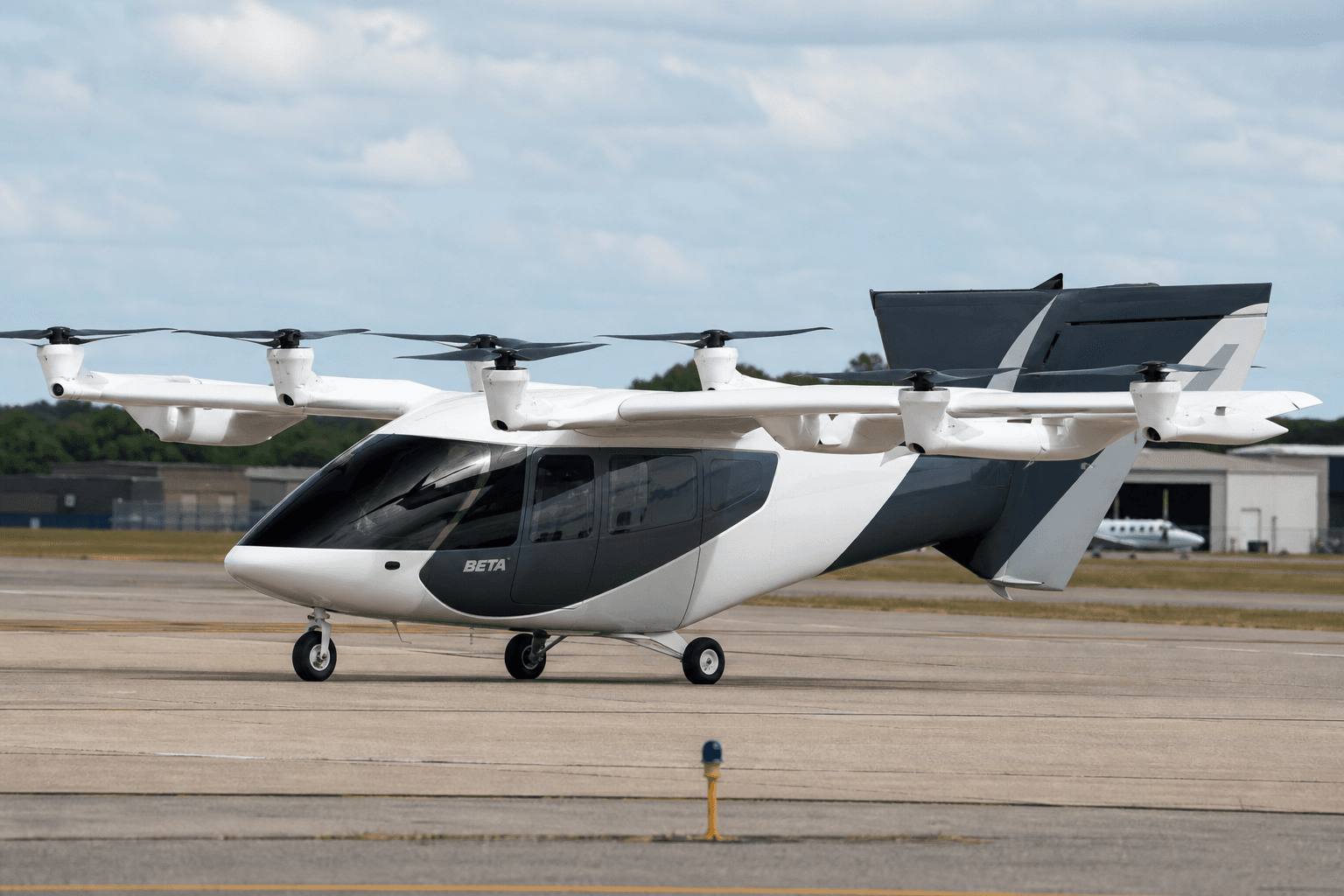
The FAA and U.S. Transportation Department's (DOT) highly anticipated trials of precertified electric air taxis, autonomous cargo drones, and other novel aviation technologies—expected to span at least three years and 26 states —are officially underway. The first operational flights under the agencies' eVTOL (electric vertical takeoff and landing) Integration Pilot Program (eIPP) comprised deliveries of manufactured organs in Maryland and Virginia, conducted using Beta Technologies' all-electric Alia CX300 aircraft. Beta aims to certify and commercially launch the model—which has a demonstrated range of 337 nm and intended top speed of 153 knots—within the next few years. Beta said Friday that its Alia family of aircraft—which also includes the eVTOL A250—have flown more than 160,000 nm across the U.S., Europe, Japan, and New Zealand. Nearly all of that flying was conducted under the company's market survey ticket. But the eIPP will permit Beta and other manufacturers' precertified aircraft to conduct operations that were previously not allowed, potentially including cargo and passenger flights for revenue. The flights will also generate data on how these activities can be safely integrated alongside regular air traffic. The FAA is not funding them, but it could use those insights to create future requirements governing how the new entrants are certified and regulated. The FAA in March announced the eight lead eIPP participants, each led by a state or local transportation agency. After that, participants began negotiating with the agency toward other transaction agreements (OTAs) that set specific requirements, such as for data reporting and the number of flight hours and demonstrations required. A Beta spokesperson said the recent Alia campaign was conducted under one of these OTAs, which means the eIPP has officially begun. Kristen Costello, who leads government and regulatory affairs for Beta, told FLYING earlier this year that the eIPP will allow the company, which does much of its flying abroad, to become more familiar with the U.S. operating environment. It expects to generate operational data on a larger scale than it has been able to previously. "It's not, 'Does the airplane work?'" founder and CEO Kyle Clark told FLYING in April. "It's, 'Does the airplane work every single day in IMC, with real operational payloads? Charge at the right rate? Does the training work? Do the service and reliability meet the standards that our customers expect?'" First eIPP Flights Beta said the inaugural campaign covered about 275 nm and comprised "routine operations" between four airports—Virginia Tech/Montgomery Executive Airport (KBCB) in Blacksburg; Charlottesville-Albemarle Airport (KCHO) in Virginia; Frederick Municipal Airport (KFDK) in Maryland; and Martin State Airport (KMTN) in Baltimore County, Maryland. The activities were conducted in partnership with the Pennsylvania Department of Transportation (PennDOT), Virginia Department of Aviation, and Maryland Aviation Administration. The manufactured organs are being developed by United Therapeutics, Beta's first investor and customer. Beta has already begun training the company's pilots to fly Alia. Per a recent Securities and Exchange Commission filing , United Therapeutics, which ordered an unspecified number of aircraft, pays Beta about $5 million annually in aircraft development costs. Beta has indicated that organ delivery will be one of Alia's first missions. It plans to test medical logistics throughout the eIPP and deliver the manufactured organs commercially once they become available. The company said Friday that United Therapeutics' subsidiary, United Bioelectronics, has advised it on aircraft autonomy, structures, and the deployment of electric charging infrastructure across 123 locations. "United Therapeutics contracted Beta to build an electric aircraft capable of delivering lifesaving cargo, and today we delivered on that agreement," Clark said in a statement. "Our long-term partnership with United Therapeutics has shaped Beta and our mission to build the aircraft, infrastructure, and operational ecosystem." United Therapeutics CEO Martine Rothblatt said in a statement that achieving the company's mission of saving millions of lives by delivering an unlimited supply of organs will require thousands of flights per day. The idea with Beta's Alia is to reduce the cost, improve the reliability, and lower the carbon footprint of those operations. But the Alia flights are only the beginning. PennDOT is leading a consortium of 18 states called the "Multistate Collaborative eIPP (MSCE) National Integration Complex." According to Anthony McCloskey, director of PennDOT's bureau of aviation, the group comprises three operators and four OEMs, three of which are Beta, Electra, and Pivotal. Electra plans to demonstrate 50-to-500-mile links between Atlantic City in New Jersey and locations such as Philadelphia International Airport (KPHL). Per a news release shared by Pivotal, Republic Airways is one of the other operators. The manufacturer of personal eVTOL aircraft said one goal of the consortium is to fly aircraft across state lines, within "heartland" regions that may lack reliable air service. The DOT said the PennDOT-led project will aim to "revitalize regional flights across the country, including routes similar to those supported through the Essential Air Service program." More to Come The FAA in 2024 published a special federal aviation regulation that set initial pilot training and operational requirements for eVTOL and other powered-lift aircraft. But they will expire after a decade, and regulators are working to develop permanent rules. The eIPP was established via a June 2025 White House executive order to help guide regulators as they complete that arduous task. It brings together state and local governments, manufacturers, operators, airports, and other partners at a scale not seen previously. Beta was selected for seven of the eight eIPP projects. But the program will also include electric air taxis from Archer Aviation, Joby Aviation, and Wisk Aero, hybrid-electric regional aircraft such as Electra's EL9, and autonomous cargo aircraft such as Elroy Air's Chaparral. Additional activities will be performed using Reliable Robotics' aircraft autonomy system and Ampaire's hybrid-electric powertrain, both of which are designed for retrofits. "Each eIPP project will showcase the broad public benefits of this technology—from moving people and cargo to supporting lifesaving emergency response—and the data we gather will help shape policies for safe, scalable operations nationwide,” said Chris Rocheleau, FAA deputy administrator, in a statement. As the eIPP progresses, it will touch an increasing number of states and incorporate more complex aircraft and operations. Beta has said it will initially conduct cargo operations using the conventional takeoff and landing CX300 before moving to passenger operations with the vertical takeoff A250. Wisk earlier this year told FLYING it plans to use helicopters and other aircraft before bringing its autonomous Generation 6 air taxi into the fold. Electra similarly will begin activities with its EL2 demonstrator before advancing to its flagship EL9 Ultra Short. Clark in June predicted that within three years, uncrewed, autonomous operations will become routine in several of the eIPP states.

Double engine flameout doomed NetJets Citation Latitude near Laredo highway landing
Damage to fuel system and engine starter generator under scrutiny after Texas-bound NetJets aircraft attempted emergency diversion. US investigators have disclosed that both engines on a Cessna 680A Citation Latitude flamed out while it was attempting an emergency approach to Laredo, resulting in its crashing fatally on a highway . They are working to understand the significance of damage to the fuel system and engine starter generator discovered during inspection of the wreckage. The NetJets aircraft's crew — en route from Los Cabos, Mexico, to Austin, Texas, on 16 June — had informed Houston area centre of a generator failure and multiple other system problems, including a low fuel level, and requested diversion to Laredo. Houston controllers vectored the aircraft for a runway 36L approach to Laredo, with a 270° turn to allow it to reduce altitude. But on final approach the jet's right-hand engine flamed out followed, a few seconds later, by the left engine, says the National Transportation Safety Board. The jet was powered by Pratt & Whitney Canada PW306D1 engines. While the captain was flying, the first officer asked Laredo tower whether there were open fields on the right, but was informed that there was only a highway. This north-south highway, known as the Bob Bullock Loop, is located about 1.5km east of the 36L axis, and the crew aligned the jet with the northbound lane in a bid to touch down. Video evidence suggests "fire flaring up around the airplane" while it was on final approach, says the inquiry in preliminary findings. "As the airplane touched down in the northbound lanes of traffic, it sheared off several light poles, struck a vehicle, and came to rest straddling the right-hand edge of an overpass," it adds. The aircraft's fuselage rolled onto its right side and, after the main cabin door was opened, five of the six occupants emerged. One of the jet's four passengers did not survive. Damage to the fuel tube assembly and fuel pressure switch NTSB Investigators have revealed that the crew had reported an unusual intermittent vibration early in the flight, and sought advice from NetJets, but were ultimately cleared to proceed to the destination. As the jet neared the Mexico-US border, however, the crew began to receive alerts about the fuel system — initially cautions about low right-hand fuel pressure, before indications of electrical issues and then a low-fuel warning — prompting the crew to declare an emergency with Monterrey area centre, which handed the flight to Houston. Examination of the wreckage found the right engine fuel pressure switch was separated from the fuel tube assembly, with a fracture of a weld joint between the two. Several fuel tube assembly clamps were found fractured. The inquiry also discovered that the right-hand engine starter generator was missing "multiple" screws from its outer housing. This generator had been overhauled in April last year, and had about 57h of time remaining. When the generator was removed, its shaft was found bent and the cooling fan fractured, while several cooling-fan blades and ball bearings were discovered. The cooling-fan shroud also contained "circumferential scoring marks". Investigators have transferred the starter generator, fuel tube assembly, and other components to the safety board's Washington laboratory for analysis.
Loose Elevator Plug Jammed Controls in Rob Holland MXS Crash at Langley AFB
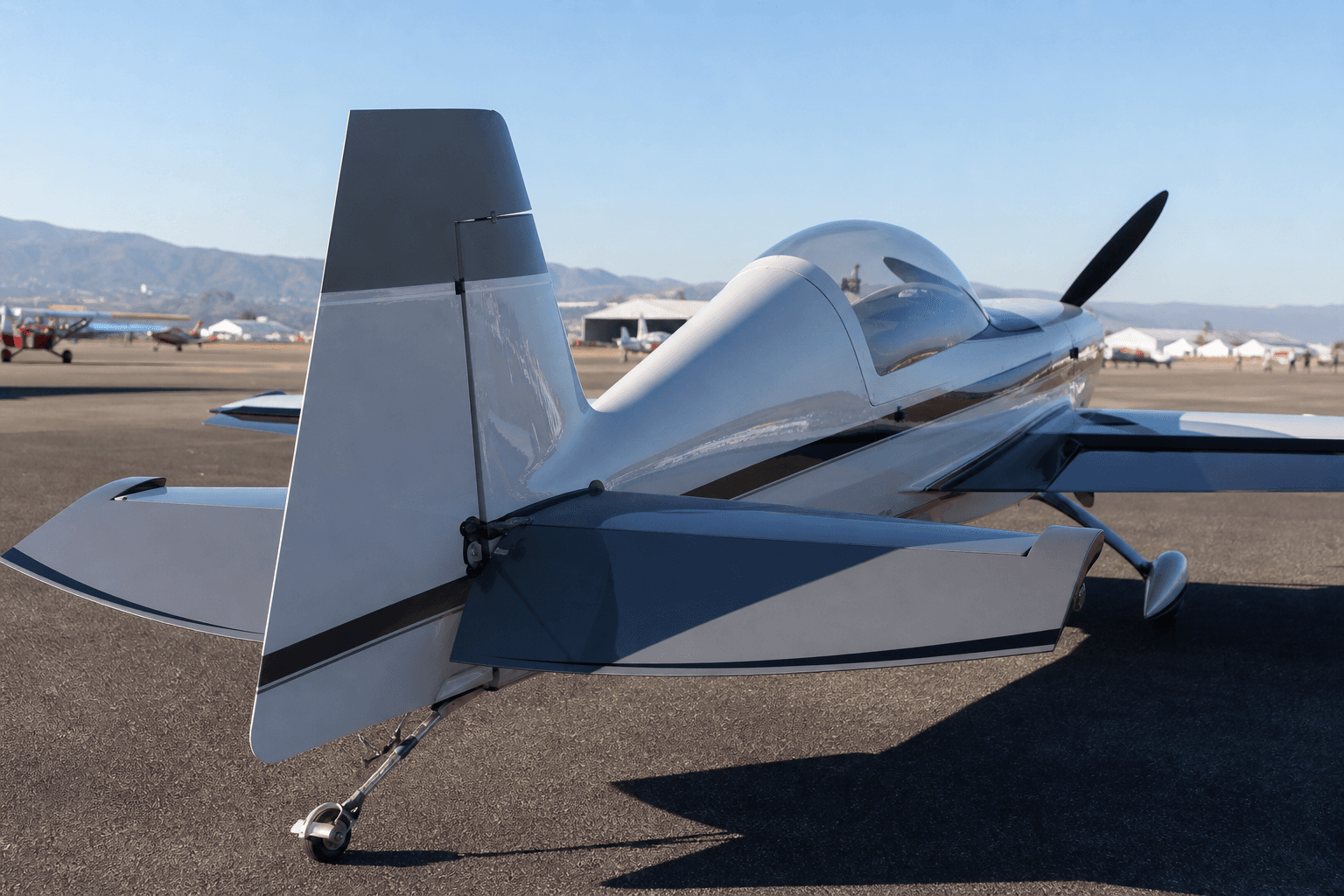
The NTSB’s final report determined that a loose elevator counterweight plug jammed the flight controls of aerobatic pilot Rob Holland's MXS before his fatal accident at Langley Air Force Base. The agency published its final report July 2, more than 14 months after the April 24, 2025, accident. An earlier preliminary report identified damage around the customized elevator counterweight system as a possible explanation for the loss of control. The final report confirms that theory and details how contact between the plug and nearby horizontal stabilizer hardware restricted the elevator. Report_ERA25FA185_200061_7_10_2026 9_52_59 AM Download Final Report Details Failure Holland was arriving from Smyrna, Tennessee, to perform at the Air Power Over Hampton Roads airshow. Witnesses and recovered flight-instrument data showed that the airplane made a stable approach to Runway 08 and leveled about 50 feet above the runway. It traveled several hundred feet before pitching up and down twice. The airplane then climbed several hundred feet, rolled 90 degrees left and descended into the ground. Investigators found the left elevator counterweight plug in the grass about 10 feet behind the wreckage. Gouging and paint transfer were present around part of its circumference, and the horizontal stabilizer had corresponding dents and paint scrapes. Laboratory examination showed that impressions on the plug matched a nearby washer and screw, indicating repeated contact between the components. The adjustable elevator balance tube was a custom feature Holland had asked the manufacturer to add during construction. MX Aircraft described the plugs as a short-term solution, according to the report. The manufacturer did not provide continued-airworthiness instructions or specify installation torque values. Its design drawing also called for an O-ring to serve as a secondary locking device. Investigators found no O-ring on either elevator plug, and the installed plugs did not match the dimensions in the drawing. The NTSB said in its probable-cause determination that it was “a counterweight plug that loosened during the accident flight, jammed the elevator, and resulted in loss of control during landing." Safety Action And Holland's Career Following the accident, MX Aircraft issued a mandatory safety notice for MXS and MX2 airplanes fitted with adjustable balance tubes. The notice instructed owners to replace the adjustable counterweight arrangement by filling the tubes with a lead-and-resin mixture. Rob Holland, 50, had reported 15,387 hours of flight experience and held an airline transport pilot certificate. He was known internationally for his airshow performances and aerobatic competition record. AOPA reported that Holland won six World 4-Minute Freestyle championships and 13 consecutive U.S. National Aerobatic Championships. "Rob was one of the most respected and inspiring aerobatic pilots in aviation history," Rob Holland Aerosports said in a Facebook statement after the accident.
The Daily Touch & Go
The day's best aviation news in your inbox. Free, no spam.