


Heart Aerospace Advances Hybrid-Electric ES-30 Regional Airliner Program with X1 Demonstrator Flights
Heart Aerospace is progressing its hybrid-electric regional aircraft program with the X1 demonstrator at Plattsburgh, aiming for 40% operating cost reduction and type certification by 2031.
The gist
Heart Aerospace’s hybrid-electric ES-30 aims to slash regional flight operating costs by 40%, with X1 demonstrator flights starting soon.
Heart Aerospace is developing a hybrid-electric regional aircraft designed to carry 30 passengers, targeting a significant reduction in the cost and environmental impact of short-haul flights. The company’s ES-30 model features a hybrid propulsion system combining electric motors and a turboprop engine, intending to achieve about a 40% reduction in overall operating costs compared to current regional aircraft. This ambitious goal aligns with growing industry demands for sustainable and efficient regional air travel solutions.
To advance the ES-30's development, Heart Aerospace is currently testing its X1 demonstrator aircraft at Plattsburgh International Airport in upstate New York. The X1 is the largest fully electric aircraft to have flown to date and serves as a technology testbed for the ES-30’s propulsion and systems integration. So far, the X1 has completed low-speed taxi tests, with first flight expected imminently. The demonstrator’s ongoing progress marks a critical milestone in certifying a clean-sheet regional airliner designed specifically under the newer Part 25 standards for commercial aircraft.
The company’s leadership emphasizes a strategic approach to aerospace development by managing uncertainty and setting clear, falsifiable objectives. Heart Aerospace co-founder and CEO Anders Forslund, who has an extensive academic background including a Ph.D. in Aerospace Product Development and prior research experience at Chalmers University and MIT, leads the project. Forslund has also contributed to electric aviation research in Sweden and is a founding member of the Nordic Network for Electric Aviation, bringing significant expertise to the company’s innovation efforts.
Heart Aerospace enjoys broad industry backing from notable investors such as Bill Gates’ Breakthrough Ventures and Y Combinator, alongside strategic partnerships with major airline operators United Airlines and Air Canada. Such partnerships provide essential operational insights and support, facilitating the integration of electric propulsion technologies into commercial regional fleets. These stakeholders share the vision for greener, more affordable regional air travel, enhancing Heart’s exposure and market potential as it advances toward certification.
The ES-30's propulsion approach blends electric motors with a conventional turboprop engine, making it a hybrid rather than a fully electric aircraft like the X1 demonstrator. This hybrid configuration balances the range and payload capabilities required for regional service with cleaner operations and fuel efficiency enhancements. The company’s aim is to offer an aircraft viable within current infrastructure while harnessing electrification to reduce emissions and operational expenses.
Heart Aerospace aims to obtain type certification for the ES-30 by 2031, positioning the aircraft as a timely solution for airlines seeking to replace aging regional fleets with lower-emission alternatives. Certification will require demonstrating safety, reliability, and compliance with the latest regulatory standards under Part 25, encompassing aspects such as systems redundancy and performance in various operating conditions. The Pioneering nature of the ES-30 will likely make it a template for future electric and hybrid regional aircraft designs.
The development of the ES-30 arrives amid heightened attention on sustainability in aviation, with various programs including NASA’s Advanced Aircraft Concepts for Environmental Sustainability 2050 shaping the future of aircraft propulsion and design. Heart Aerospace’s technology fits within this broader context of innovation focusing on reducing carbon footprints for short-haul flights where alternatives to conventional jet fuel powertrains offer compelling benefits. The hybrid approach enables practical operational integration today while facilitating eventual transitions to even cleaner propulsion methods.
The company actively engages with the aviation community via its social media presence, sharing milestones and insights through platforms such as YouTube, Facebook, Instagram, X, and LinkedIn. This transparency connects developers, investors, and customers, fostering dialogue about electric aviation’s evolution. Heart Aerospace’s progress with the X1 demonstrator and the ES-30 contributes tangible advancement toward electrifying commercial regional aviation with measurable cost and environmental advantages.
Read more
All Aviation Safety →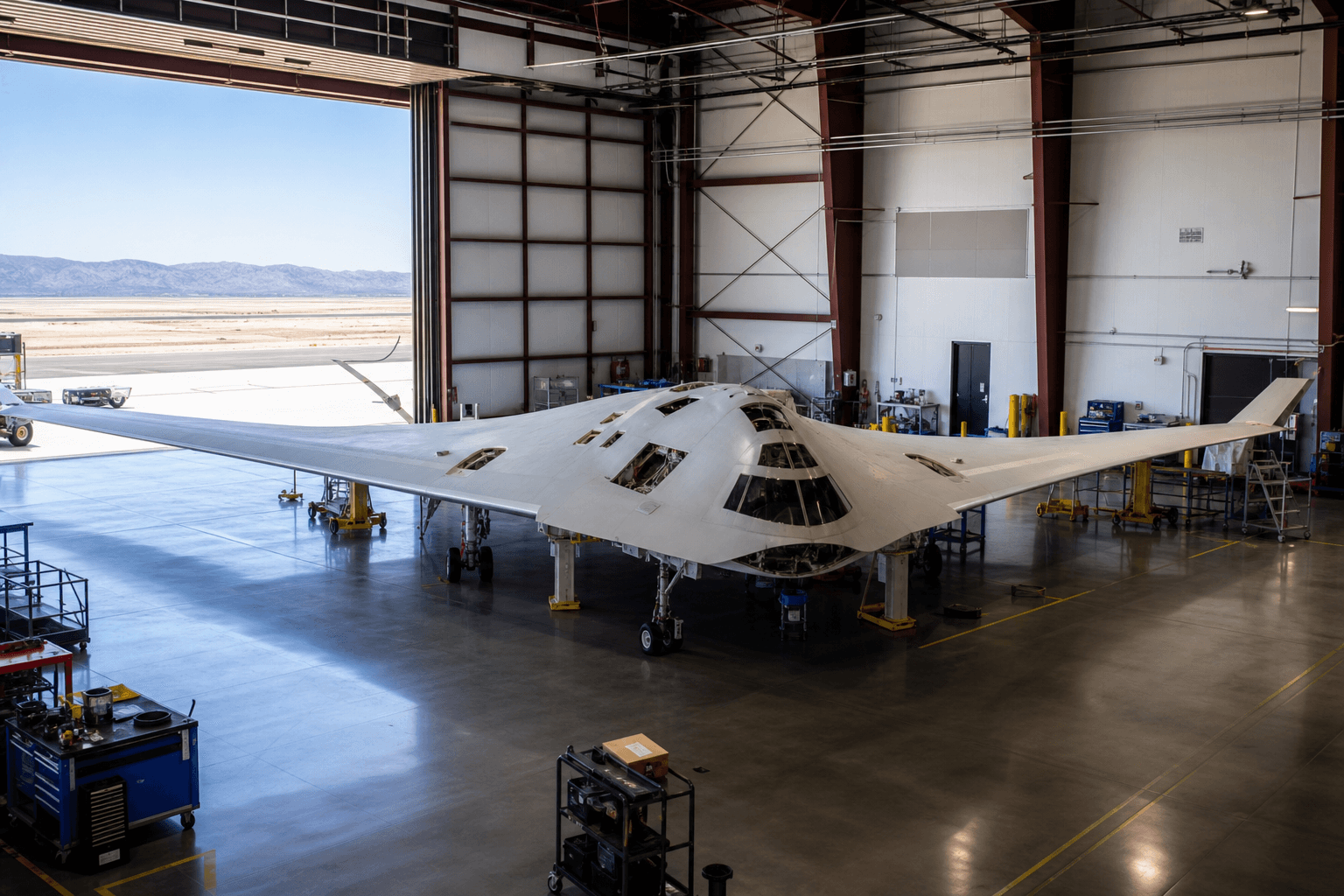
JetZero Advances Blended Wing Aircraft with Key Milestones, Demonstrator Taking Shape
Though my focus is usually on airlines, I do occasionally dive into the world of aircraft manufacturing. And there is no manufacturer I find more fun to follow than JetZero. Sure, it helps that the company is based right here in Long Beach, but it’s a large aircraft concept that has promise, something I can’t say about much else outside of Boeing and Airbus. Recently, the company held its annual media day, and I was there to see what’s new. The answer? Surprisingly little. When airlines put on media days, they are always focused on making sure there’s some flash. They need to make news, announce new routes or aircraft configurations or… something that’ll get coverage. Visuals? Oh yeah, they need those too. But JetZero? None of that. Oh there could have been some good visuals, but photography is strictly forbidden. Even beyond that, I had to put a cover on my phone camera when I entered the facility. At least they did provide some renderings which you’ll see below. Instead of announcing something new and exciting, JetZero announced nothing except that it is meeting milestones and moving forward on time and under budget. As someone who doesn’t cover manufacturers as much, I had to turn to those who do to confirm that this mundane presentation was actually a good thing. Indeed, people seemed to agree. JetZero met its goals last year, and it even had a pleasant surprise. It was moved from the AIR-600 certification group at the FAA which is more for innovation and experimental aircraft to AIR-500 which is for Part 25 aircraft meant for Part 121 airlines. That’s where you find Boeing, and it’s a big deal for JetZero to be categorized that way as it prepares to apply for its type certificate. The company set forth four main goals for this year. It will do a Series C funding round that will exceed the recent $195 million Series B round It will open its first office building and begin manufacturing testing at the new North Carolina factory It will submit its type certification application to the feds It will finish building the Jet1 demonstrator aircraft in partnership with the US military These are all pretty big milestones in their own right, but I want to focus on that last one. See, JetZero is going down two parallel paths right now. First, it continues to work on its Z4 commercial aircraft which will fit in the middle of the market between the largest B737/A321 and the smallest widebody, refining the design and preparing to apply for the type certificate. Second, it is actively building the Jet1 demontrator which was part of a military contract to prove that this entire blended wing concept works. (Think, B-2 stealth bomber on serious steroids.) When I heard they were building a demonstrator, I figured this was something like Boom building an irrelevant small aircraft with different engines and no real relation to the production aircraft. That is not what’s happening here. They already have Pathfinder remote control aircraft to help test a variety of things including wind tunnel performance and more. The Jet1 demonstrator is an enormous aircraft that is nearly the size of the Z4. Let me try to help frame this. Here is what the Z4 was going to look like as of last year. Image via JetZero There are no updated renders yet, but we do have a new look at the Jet1 demonstrator, now with a fancy v-tail and cool little engine fins on top. (This design change will allow takeoff with one engine out. It’s a safety change that will help the Z4 get certified.) Image via JetZero The problem with this rendering is that it doesn’t really show the scale. It also doesn’t help explain just how far along things are in the process. So, to show us that this wasn’t just some paper dream, they rolled up a 40-year old Saab 340A to the hangar where media day was being held and flew us out to Mojave. There, Scaled Composites is building the demonstrator right now. If you thought JetZero was strict on photographs, well, think again. I’m pretty sure the PR person out there at Scaled was thinking about tackling people if they even touched their phones. I wish I could show you photos of the two assembled cockpit sections (one for testing, the other for flight) or the massive join where those sections will be affixed to the blended wing, but all I have is some pre-approved images directly from JetZero that aren’t as recent. Here is one of the cockpits not ready for primetime: Image via JetZero What you can’t see here is that this airplane will take up the entire hangar. It was hard to fathom how big this airplane will be before seeing the early build in person. But now? It’s even harder to believe. It is not very long, but it is incredibly wide. I cannot wait to see this fly. I’ll put this image to try to help give you a sense of scale, but it still doesn’t do it justice. If the cockpit sits where that bulbous structure is, the wing will stretch almost all the way to the far wall. Image via JetZero The demonstrator will just have a pressurized cockpit section. Everything behind is just to show the characteristics of blended wing flying. When the testing is done, JetZero will get to keep the airframe to use for other testing purposes, but then it can focus manufacturing efforts in North Carolina on the Z4. Right now, the Z4 progress is focused on some of the known bottlenecks in manufacturing. Apparently landing gear has a really long lead-time and is remarkably complicated, so that is well underway. Structures are also in progress, and engine selection is being reviewed. And yes, seats have started to be settled on, knowing how hard it has been to get those certified and flying. I hate that I can only describe this and not show photos, but the amount of progress in the last year is encouraging. In-service dates are pegged in the early-2030s. That sounds quick, but as CEO Tom O’Leary said on stage, he is in the business of the “art of the possible.” This is possible if everything goes as hoped, but of course it might extend further out. That seems reasonable to me. I look forward to doing this again next year, and I hope it is again a boring presentation simply repeating the same story over and over again.
K2 Airways Boeing 737 freighter lost over Arabian Sea after sudden altitude drops near Karachi
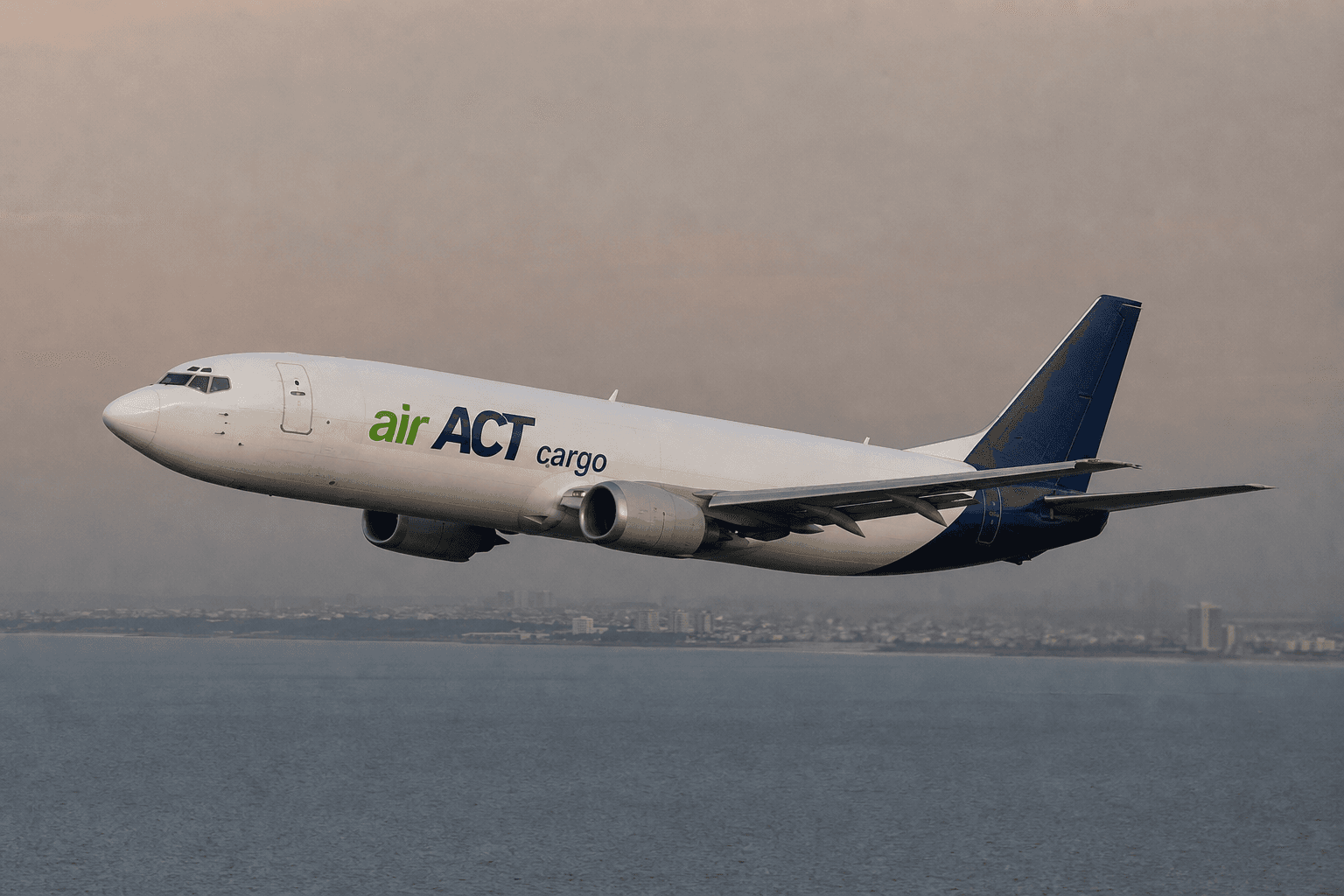
A K2 Airways Boeing 737 freighter is missing over the Arabian Sea after preliminary flight-tracking data showed a sudden loss of altitude southwest of Karachi, Pakistan. The aircraft, registered AP-BOI, was operating as K2 Airways Cargo Flight KTA1732 from Sharjah, United Arab Emirates, to Karachi, Pakistan, on July 7, 2026, according to Flightradar24. Authorities launched a search effort after the aircraft did not arrive in Karachi as scheduled. Preliminary ADS-B data showed the aircraft lost altitude, climbed, and then suffered a second sudden and dramatic loss of altitude. The final ADS-B point received by Flightradar24 was recorded at 16:21 UTC, placing the aircraft at 1,100 feet above mean sea level with a reported vertical rate of -22,400 feet per minute. Pakistan's Civil Aviation Authority said the aircraft reported a navigation system problem at 21:18 local time before radar data showed it rapidly descending and making a sharp heading change at about 21:21. Radar and radio contact were then lost about 155 nautical miles west of Karachi, according to the AP, citing Pakistan's Civil Aviation Authority. The AP reported that five crew members were aboard the aircraft. AP-BOI is a Boeing 737-4M0(BDSF) that began service with K2 Airways in 2024. The aircraft originally entered service as a passenger aircraft with Aeroflot in 1999, later flew with Garuda Indonesia, and was converted to a freighter in 2012. K2 Airways is a privately owned Pakistani carrier based in Karachi. The airline was launched to serve regional passenger and cargo markets and received its air operator certificate in 2024. AP-BOI is listed as the carrier's sole aircraft. The aircraft and other traffic in the region experienced GNSS interference shortly after takeoff from Sharjah, which degraded data near Sharjah before the aircraft transitioned to multilateration tracking. Flightradar24 said ADS-B data was received again after the aircraft left the interference area. The aircraft remained missing late on July 7 as search efforts continued.

FAA recommends airlines ensure cockpit-voice recorder audio is preserved after incidents
US regulator issues voluntary recommendations after the NTSB had urged it to mandate the action. The US Federal Aviation Administration (FAA) is recommending that airlines take steps to ensure cockpit-voice recorders (CVRs) retain relevant audio following safety incidents. On 1 July, the agency issued guidance calling on aircraft operators to confirm that their employee manuals instruct pilots and other workers to pull CVR circuit breakers following such events to preserve audio that would otherwise be overwritten. But the FAA’s guidance is “voluntary only” rather than mandating the action. It has been introduced in response to a 2025 recommendation from the National Transportation Safety Board (NTSB), which said many of its investigations have suffered from missing CVR audio and that airlines have “inconsistent” procedures. The NTSB had wanted operators to be forced to comply. “The FAA recommends that each operator who has a CVR installed confirm that company manuals contain instructions that the CVR circuit breaker be pulled after a reportable event,” the FAA says in a new Safety Alert for Operators. “The instruction that the CVR circuit breaker is pulled could be included in flight operation manuals, maintenance manuals and dispatch manuals, increasing the likelihood that the task is accomplished,” it adds. The NTSB has since the early 2000s flagged the problem of being unable to access CVR audio needed for investigations. However, many existing recorders retain only the prior few hours of audio, after which it is overwritten. Pilots can preserve audio by pulling the circuit breakers, and some airlines have already recommended that action, including Alaska Airlines, according to the NTSB. But in many cases flightcrew have not done so, such as with Alaska flight 1282, a Boeing 737 Max 9 that suffered an in-flight door-plug blow-out on 21 January 2024. From that aircraft, the NTSB recovered CVR audio starting 1h 20min after the incident, rendering the recording useless, according to its accident report. Its report recommended the FAA require airlines to instruct pilots to pull the breakers, calling the issue a “long-standing concern”. It cites previous similar cases, including two 2023 runway incidents and a 2017 Air Canada event. “Despite existing guidance on preserving CVR data, operators still lack effective measures to safeguard CVR recordings after accidents and reportable events,” the NTSB says. The agency declines to comment about the FAA’s guidance, saying it is still reviewing the document. The NTSB can classify recommendations as closed if it deems FAA action sufficient. Southwest Airlines says its pilot manuals already call for the CVR breakers to be pulled.
Hellenic Air Force F-16 makes emergency belly landing at Zakynthos, catches fire
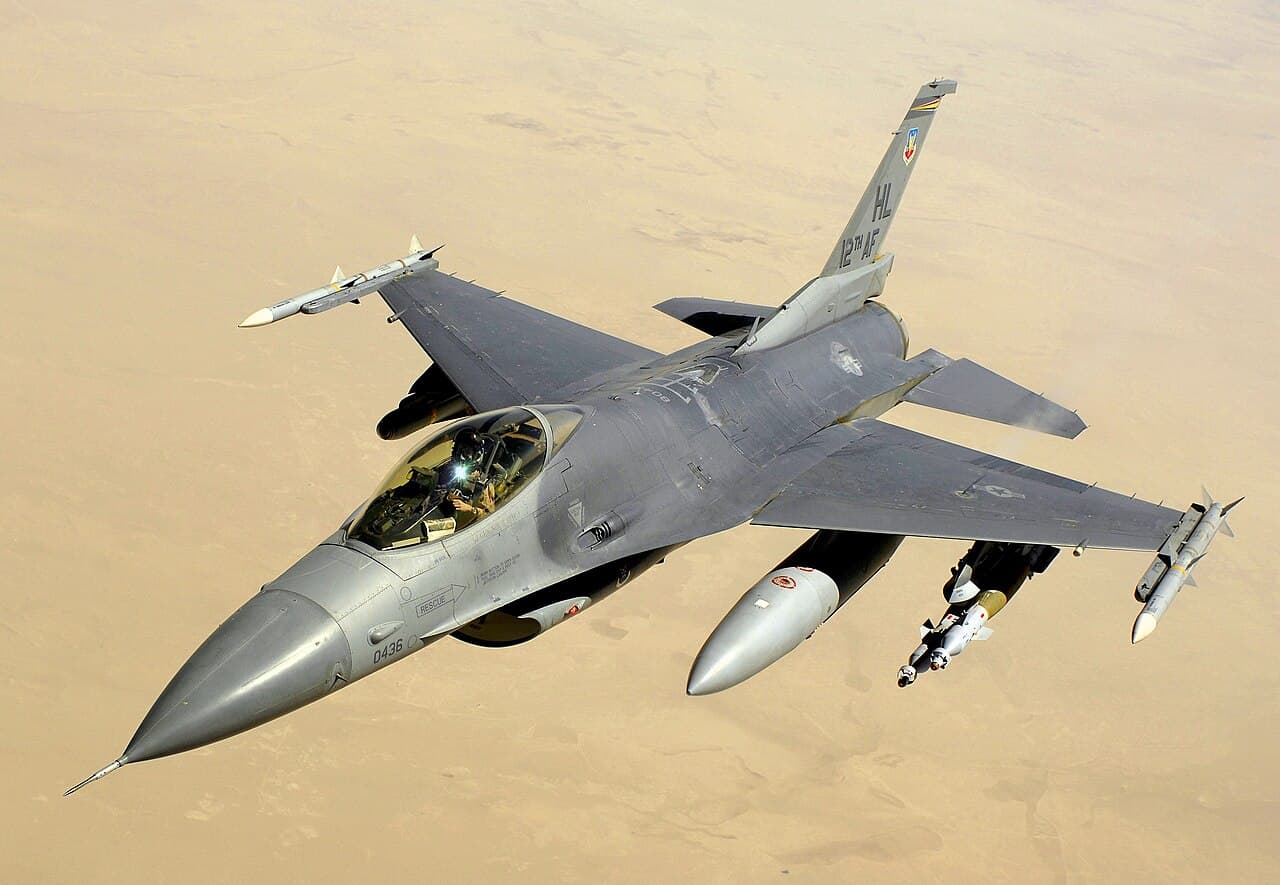
A Hellenic Air Force F-16 fighter jet performed an emergency landing at Zakynthos International Airport (ZTH) on July 9, 2026, touching down without its landing gear deployed before catching fire on the runway. The pilot escaped unharmed. According to a statement issued by the Hellenic Air Force General Staff, the aircraft, belonging to the 335 Squadron of the 116 Combat Wing, was taking part in a training flight when it carried out an emergency landing at Zakynthos Airport at 13:45 local time due to a malfunction. The pilot is in good health, and the causes of the incident are under investigation, the statement said. The jet had taken off from Araxos Air Base, home of the 116 Combat Wing, and was conducting a training flight over the wider Ionian Sea area when the pilot received a fire indication, according to Greek media reports. Αναγκαστική προσγείωση F-16 στο αεροδρόμιο της Ζακύνθου pic.twitter.com/pbceDCzXuD — Kathimerini_Web (@KathimeriniWeb) July 9, 2026 Pilot brings aircraft down without landing gear Because the landing gear failed to deploy, the pilot brought the aircraft down on its belly, sliding onto a layer of foam that firefighters had spread on the runway in advance. Footage circulating on social media shows the aircraft engulfed in flames as fire crews doused it. Zakynthos Airport will remain closed until the fighter jet is removed from the runway, a significant disruption at the height of the summer season for the popular Ionian island destination. The F-16 is the backbone of the Hellenic Air Force fighter fleet. The type has been involved in previous incidents in Greek service, including a crash at Andravida Air Base in November 2021 , in which the pilot ejected safely. Greek F-16s have seen recently deployed to Cyprus in March 2026, following drone attacks on UK bases on the island.
The Daily Touch & Go
The day's best aviation news in your inbox. Free, no spam.