

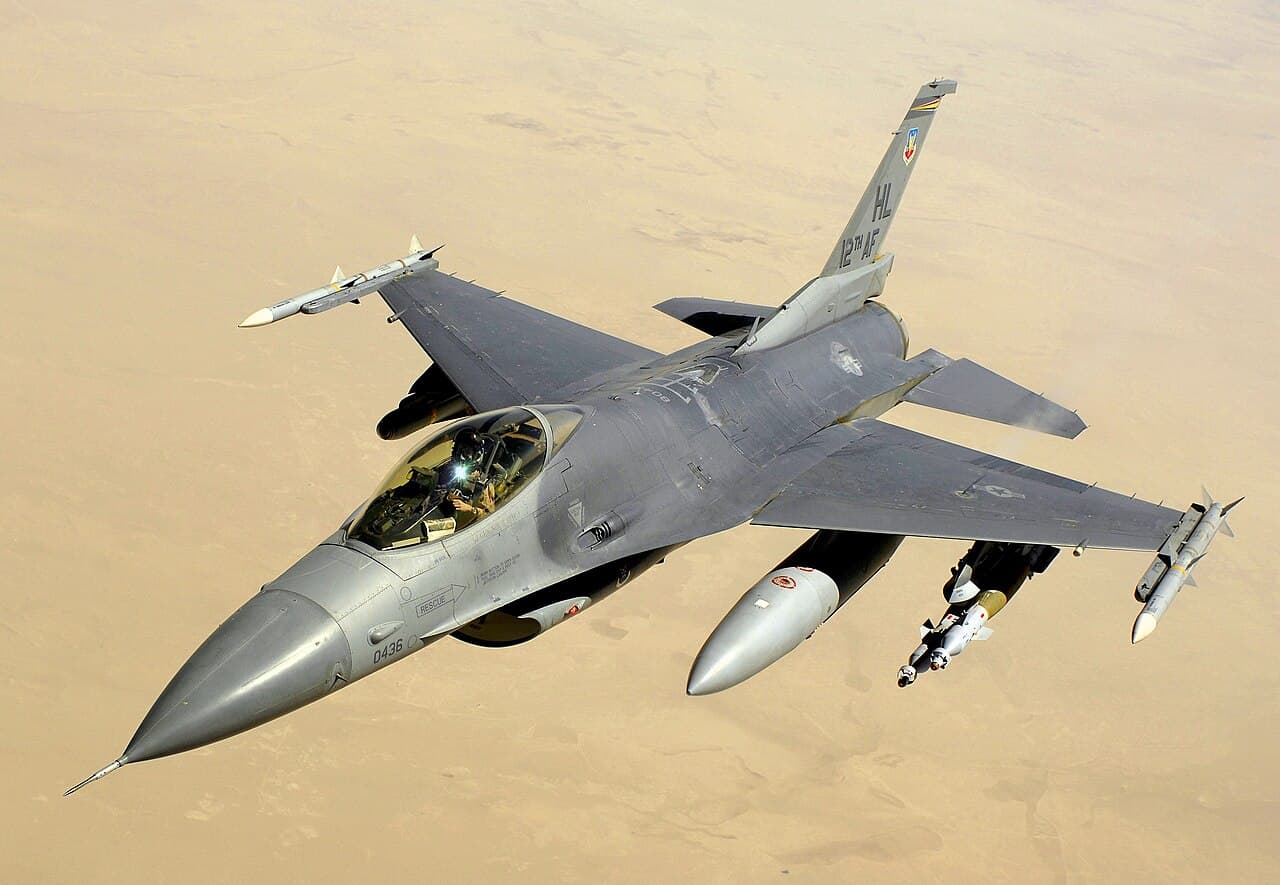
Image: Master Sgt. Andy Dunaway · Public domain · via Wikimedia Commons
Hellenic Air Force F-16 makes emergency belly landing at Zakynthos, catches fire
A Hellenic Air Force F-16 suffered a landing gear malfunction forcing a belly landing at Zakynthos Airport, resulting in runway fire but no pilot injuries.
The gist
Hellenic Air Force F-16 belly landed at Zakynthos due to gear failure, caught fire, pilot safe, causing airport closure.
A Hellenic Air Force F-16 fighter jet conducted an emergency belly landing at Zakynthos International Airport (ZTH) on July 9, 2026, after a landing gear malfunction prevented its wheels from deploying. The incident occurred at approximately 13:45 local time, with the aircraft catching fire upon touchdown. Fortunately, the pilot escaped without injury. Fire crews responded promptly, extinguishing the flames following the aircraft’s slide along the runway on its belly.
The F-16 involved belongs to the 335 Squadron of the 116 Combat Wing, based at Araxos Air Base. The affected fighter was engaged in a routine training mission over the Ionian Sea area prior to the emergency landing. According to a statement by the Hellenic Air Force General Staff, the pilot received a fire indication onboard, which triggered the decision to return to Zakynthos Airport for an emergency landing.
Due to the failure of the landing gear to deploy, the pilot executed a controlled belly landing, sliding the aircraft on a foam-covered runway prepared in advance by airport firefighters. This emergency procedure aimed to minimize damage and enhance safety during the descent without functional wheels. Videos circulated on social media capturing the intense scene of the jet enveloped in flames, underscoring the severity of the situation.
Zakynthos Airport has been closed while authorities work to remove the damaged fighter from the runway, causing disruption at one of Greece’s popular summer travel destinations. The closure highlights the operational impact an air force incident can have on civilian airports, particularly during peak tourist seasons for the Ionian island region.
The F-16 remains a cornerstone of the Hellenic Air Force fighter fleet, known for its versatility and long service history. Despite its proven capabilities, the type has experienced prior incidents within Greek service. Notably, in November 2021, a Greek F-16 crashed at Andravida Air Base where the pilot safely ejected, underscoring the risks inherent even in peacetime flying.
In recent geopolitical developments, Greek F-16s were deployed to Cyprus earlier in 2026 following drone strike threats against UK military bases on the island. This operational history reflects the strategic importance of the aircraft in regional defense and rapid response scenarios by the Hellenic Air Force.
The investigation into the cause of the landing gear failure remains ongoing. The Hellenic Air Force General Staff has not provided details beyond confirming the pilot’s safety and the aircraft’s involvement in a training flight. Insights from this investigation will be crucial for addressing maintenance or technical issues and preventing similar emergencies.
This event reaffirms the challenges military aviators face during technical malfunctions and the importance of emergency preparedness at airports serving both civilian and military operations. Zakynthos International Airport’s closure will persist until full clearance is achieved, affecting scheduled flights and passenger transit during the busy holiday period.
Read more
All Aviation Safety →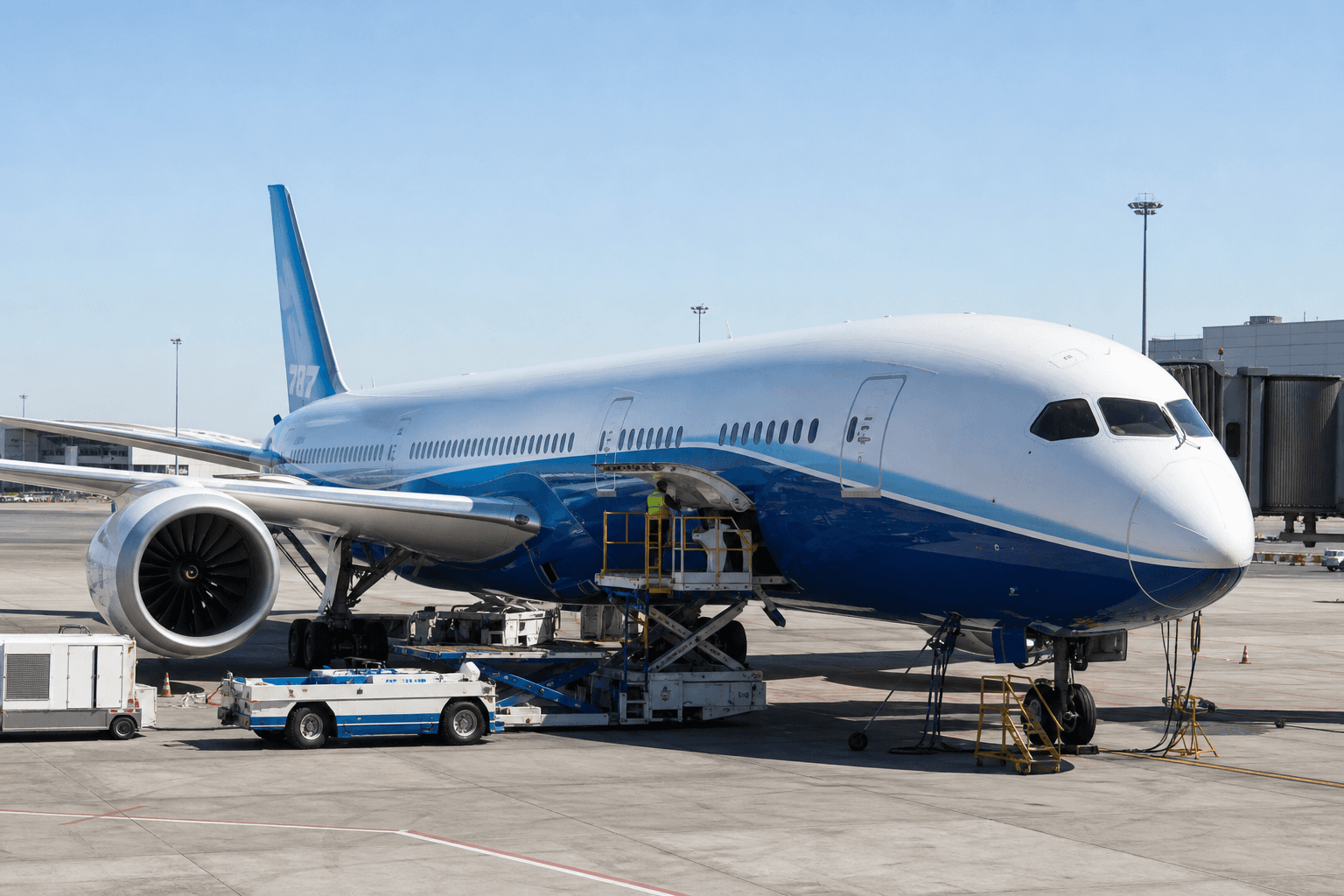
Lufthansa 787-9 Nose Gear Collapses at Frankfurt with Locking Pin Left in Storage
Technicians in cockpit were trying to resolve gear-door control issue before Frankfurt accident that injured 23. German investigators probing a Lufthansa Boeing 787-9 nose-gear collapse at Frankfurt have disclosed that a nose-gear locking pin was found in its storage box after the accident. Four other locking pins had been properly installed in the two main landing-gear assemblies, says investigation authority BFU in preliminary findings. But it says the nose-gear pin "was not inserted into the intended hole", nor was it located in the area of the nose-gear. The aircraft had arrived at Frankfurt Main Terminal 1's gate A15 following a service from Austin on 4 June, and was being prepared for a flight to Los Angeles. When the captain and senior first officer entered the cockpit, two technicians were sitting in the pilots' seat carrying out a test to address an issue with the main landing-gear door control system. As part of the test, the landing-gear lever was to be selected 'up'. But with the locking pin not fitted, the nose-gear retracted when the lever was activated, and the 787's nose and engine nacelles struck the ground. The electrical system simultaneously failed and the aircraft's lights went out. BFU says parts of the fuselage and the nose-gear bay were "severely damaged". Twenty-eight people, including 13 crew members, 13 ground-handling personnel, and the technicians, had been on board. BFU says two of the occupants were seriously injured, with another 20 receiving minor injuries. Six other personnel — five ground-handlers and a technician near the nose-gear — were attending the aircraft. There was a high loader positioned at the open forward cargo door, and it was damaged during the accident. Two handlers in the vicinity of the cargo hold were unharmed, but another stationed on the handling equipment was slightly injured. Two crew members and four other people were ultimately taken to hospital. BFU says that a partition to the avionics compartment was accessed through the forward cargo hold, and a nose-gear locking pin — with its red flag — was found in the locking-pin storage box. While the investigation is continuing, the inquiry points out that the fault isolation manual used in the analysis procedure includes an instruction to fit the landing-gear locking pins. This task also referred to the procedure described in the aircraft maintenance manual for securing the landing-gear with the pins, which includes illustrations on insertion. No flight-recorder information was available because the conditions for recorder activation were not met at the time.
Aviation Pioneer Wally Funk Dies at 87, Remembered for Mercury 13 and Spaceflight Legacy
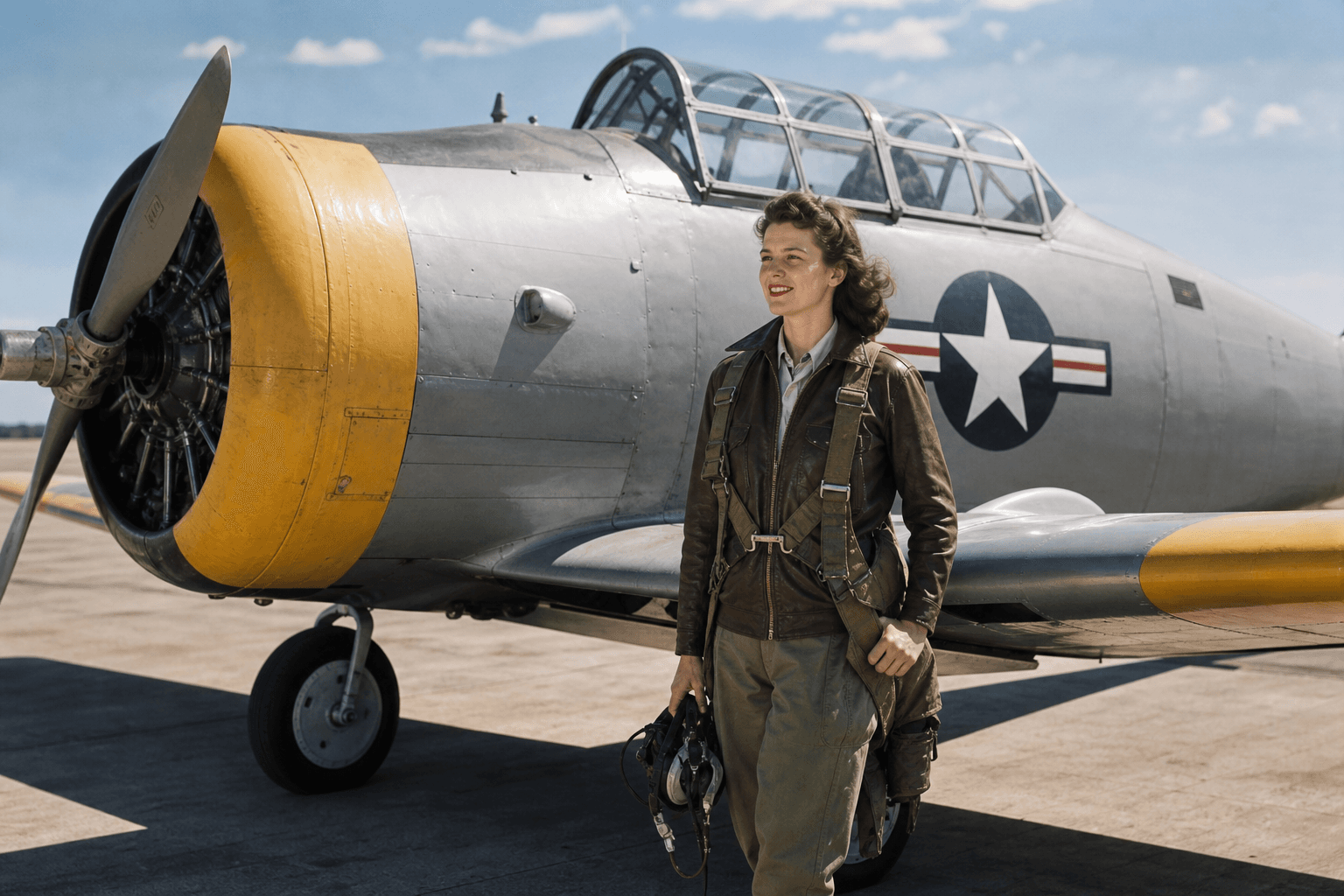
Mary Wallace "Wally" Funk, the youngest member of the first "Women in Space Program," later known as the Mercury 13, died at her home in Grapevine, Texas, on Wednesday night. She was 87. In 1961 Funk at 22 volunteered for the Women in Space program, which was created to train women as astronauts. The program was privately created by physician William Lovelace II and funded by Jacqueline Cochran, who in 1943 created the Women Airforce Service Pilots (WASPs). Cochran felt that women were more physiologically suited to the space program than men because they tended to be smaller and therefore lighter and consumed less oxygen—aspects critical to space flight. NASA was not keen on the idea of sending a woman into space since the men's training program was still in its infancy, and the agency was focused on that. READ MORE: Wally Funk: Breaking the Glass Ceiling, All the Way to Space READ MORE: Wally Funk Sets World Record During Space Flight The Women in Space Program had the women training individually or in pairs. They performed the same grueling tests and physical training as the NASA-funded male candidates. The program was shut down in 1961 when NASA mandated that astronaut candidates be military test pilots. At the time women were not permitted to serve in that capacity. However, Funk would earn her chance to go into space in 2021 at 82 when she flew aboard Blue Origin's suborbital New Shepard- 16 mission to become the oldest person (82) at that time to accomplish that feat, breaking the record held by John Glenn for 23 years. We are deeply saddened by the passing of Wally Funk. Wally was a pioneer in every sense of the word. In her 20s, she was the first female civilian flight instructor at a U.S. military base. She became the youngest of the Mercury 13, outperforming nearly every test put in front… pic.twitter.com/XIDWFXSfaq — Blue Origin (@blueorigin) July 9, 2026 Early Life Born on February 1, 1939, in Las Vegas, New Mexico, self-declared tomboy Funk insisted on being called "Wally." She grew up in Taos, New Mexico, where she excelled in hunting and fishing and outdoor sports, especially skiing. In 1956 her parents sent her to Stephens College, a two-year preparatory school for women in Columbia, Missouri. The Funk family was not terribly well off, and according to Promised The Moon: The Untold Story of the First Women in the Space Race by Stephanie Nolan, when Funk boarded the train and saw other girls heading for Stephens College dressed in tailored suits and fancy hats, she realized she would not fit in with her more plain clothes. Determined to receive an education, she went anyway. The year 2021 saw aviation legend Wally Funk (pictured in 1961) finally fulfill her dream to fly into space. [Credit: National Air & Space Museum] When she was home on winter break, a skiing accident put her in a half body cast. The doctor said she would never walk again, but she did, and she returned to school, although the cast made it impossible to sit down. A teacher suggested she enroll in the aviation course as a distraction. Funk began taking flying lessons and soon realized she loved it. Not only because of the freedom she felt in the air but also because the girls enrolled in the program were allowed to break the school dress code requiring skirts. Girls in the aviation program were allowed to wear trousers on days they flew. Funk arranged her schedule so she flew every day. She joined the school flying team and competed in collegiate flying meets, winning many awards. In the meantime she pursued a degree in education with the intent of teaching. She graduated from Stephens in 1960, the same year she earned her flight instructor certificate and went to work instructing at a local flying club. Later Impact Despite the early dashing of her astronaut dreams, Funk went on to have an impact in the aviation world. She was both the first woman to become an FAA inspector and National Transportation Safety Board air safety investigator. Funk's friends said she flew every chance she could, and her experience included military as well as civilian aircraft. Aviation pioneer Wally Funk died on July 8, 2026, at age 87. [Credit: FLYING Archive] Funk was an active member of several aviation groups. She was a celebrity favorite at the annual Women in Aviation International (WAI) conventions, where she often taught seminars on how to perform a thorough preflight inspection and was often surrounded by admirers who asked questions and posed for selfies with her. Funk will be particularly remembered for her energy. When the WAI's house band played a conga, it was Funk who led the line.

CoachAir CEO Details Digital Infrastructure Vital for Advancing Advanced Air Mobility
Global Aviation Round-Up from Aircraft Value Intelligence (AVN) Jacob Baumler, founder and CEO of CoachAir. Editor’s Note: This week, John Persinos interviewed Jacob Baumler, founder and CEO of CoachAir , which verifies private charter compliance and protects payments through partner branded infrastructure. The company's work spans Part 135 charter operations, public safety aviation, and advanced air mobility. An influential voice on the intersection of aviation, technology, and regulatory compliance, Jacob advises industry stakeholders on the digital transformation of aviation operations and commerce. John’s questions are in bold. The Federal Aviation Administration (FAA) is steadily laying the groundwork for Advanced Air Mobility (AAM), but commercialization still faces regulatory hurdles. Which compliance or operational bottlenecks do you believe are most underestimated by the industry, and how can technology help overcome them? Much of the conversation surrounding AAM has focused on aircraft certification, propulsion technology, and airspace integration. Those are all critical milestones, but I believe the industry's greatest challenge is creating trust at operational scale. As AAM moves from demonstration flights to thousands of daily commercial operations, every mission must be verified for legality, operational readiness, and regulatory compliance before takeoff. That level of oversight simply cannot rely on manual processes. This realization is one of the reasons we founded CoachAir. We recognized early that AAM would require more than revolutionary aircraft—it would require aviation intelligence that strengthens public safety and operational resilience. CoachAir helps verify the legality of the aircraft, operator, and mission before funds move, then securely manages the transaction from booking through flight completion. By automating verification and creating transparent audit trails, we help operators, regulators, airports, and passengers make decisions with greater confidence. The future of AAM will not simply depend on certifying innovative aircraft. It will depend on building a resilient aviation ecosystem where every commercial flight is safe, legal, transparent, and operationally ready before it ever leaves the ground. As electric Vertical Take-Off and Landing ( eVTOL) operators prepare for commercial service, digital trust will become increasingly important. How do you see automated compliance verification and transaction infrastructure evolving to support high-frequency AAM operations safely and efficiently? As operations become more frequent, trust must become automated. High-frequency AAM cannot depend on disconnected databases, manual document reviews, or fragmented payment systems. Every commercial flight should move through a continuous digital workflow where operational readiness is verified before funds move and every transaction is supported by transparent, auditable records. I believe the industry is moving toward intelligent systems that continuously validate operational requirements while securely managing the entire customer transaction. That includes verifying the legality of the mission, monitoring operational status throughout the flight, and providing complete financial and operational accountability from booking through completion. Automated verification also strengthens operational resilience. By continuously validating compliance and securely managing transactions end to end, operators can adapt to changing conditions while maintaining safety, regulatory integrity, and public confidence. Ultimately, digital trust is not just about efficiency—it is about creating the foundation that allows AAM to scale safely. Many AAM companies have focused heavily on aircraft development, but less attention has been paid to the supporting ecosystem. What pieces of infrastructure, whether regulatory, digital, or operational, need to mature before AAM can scale beyond pilot programs? Every major advancement in aviation has required more than new aircraft. It has required an ecosystem capable of supporting safe, reliable, and scalable operations. AAM will be no different. Beyond certification, the industry needs mature digital infrastructure that connects operators, airports, vertiports, regulators, insurers, financial institutions, and passengers through trusted operational data. Identity verification, compliance monitoring, secure payment systems, maintenance records, operational intelligence, cybersecurity, and standardized data exchange will all become essential components of commercial AAM. CoachAir was built around that vision. Rather than creating another booking platform, we are building aviation intelligence infrastructure that connects stakeholders through trusted verification, secure transaction management, and operational intelligence. That trusted foundation creates a more resilient aviation ecosystem capable of supporting commercial AAM safely, efficiently, and at scale. Part 135 charter operators have decades of experience navigating complex regulatory requirements. What lessons from today's on-demand aviation industry can AAM startups apply as they transition from testing to commercial passenger service? The Part 135 industry has spent decades proving that aviation succeeds through operational discipline. Every flight requires countless decisions involving maintenance, crew qualifications, weather, dispatch, insurance, documentation, and regulatory compliance. Those processes are not barriers to innovation—they are the reason aviation remains one of the safest forms of transportation in the world. AAM startups have an opportunity to build upon those lessons instead of reinventing them. Technology should reduce administrative burden while reinforcing the operational standards and safety culture that aviation has refined over generations. Automation should support experienced operators, not replace their judgment. The companies that successfully balance innovation with disciplined operations, regulatory compliance, and public safety will be the ones that earn long-term trust and lead the industry into its next chapter. Public confidence will ultimately determine how quickly Advanced Air Mobility gains widespread acceptance. Beyond aircraft safety, what role do transparent data, compliance records, and operational intelligence play in building that trust with passengers, regulators, and investors? Public confidence has always been built on transparency. Passengers do not simply trust an aircraft because it is technologically advanced—they trust the systems behind it that ensure every flight meets rigorous operational and regulatory standards. Transparent compliance records, verified operational data, and continuous operational intelligence allow every stakeholder to make informed decisions with confidence. Regulators gain greater oversight. Operators strengthen accountability. Investors reduce operational risk. Passengers gain confidence that safety extends beyond the aircraft itself. At CoachAir, we have summarized that philosophy in three words: Verify Before You Fly. We believe public safety begins long before takeoff. Our trademarked platform verifies the legality of the aircraft, operator, and mission before funds move, then securely manages the transaction from booking through flight completion. Trust should never be assumed—it should be verified. That approach not only strengthens public confidence but also builds the resilience necessary for the next generation of aviation. Looking five years ahead, do you expect the biggest breakthroughs in AAM to come from advances in aircraft technology, regulatory modernization, digital compliance infrastructure, or business models? Which area deserves more attention from investors and policymakers today? Aircraft technology will continue advancing rapidly, and regulators are making meaningful progress toward commercial AAM. However, I believe the most signific
FAA Proposes Replacing 53-Year-Old Ban on Supersonic Flight Over U.S. Land With Noise-Based Rules
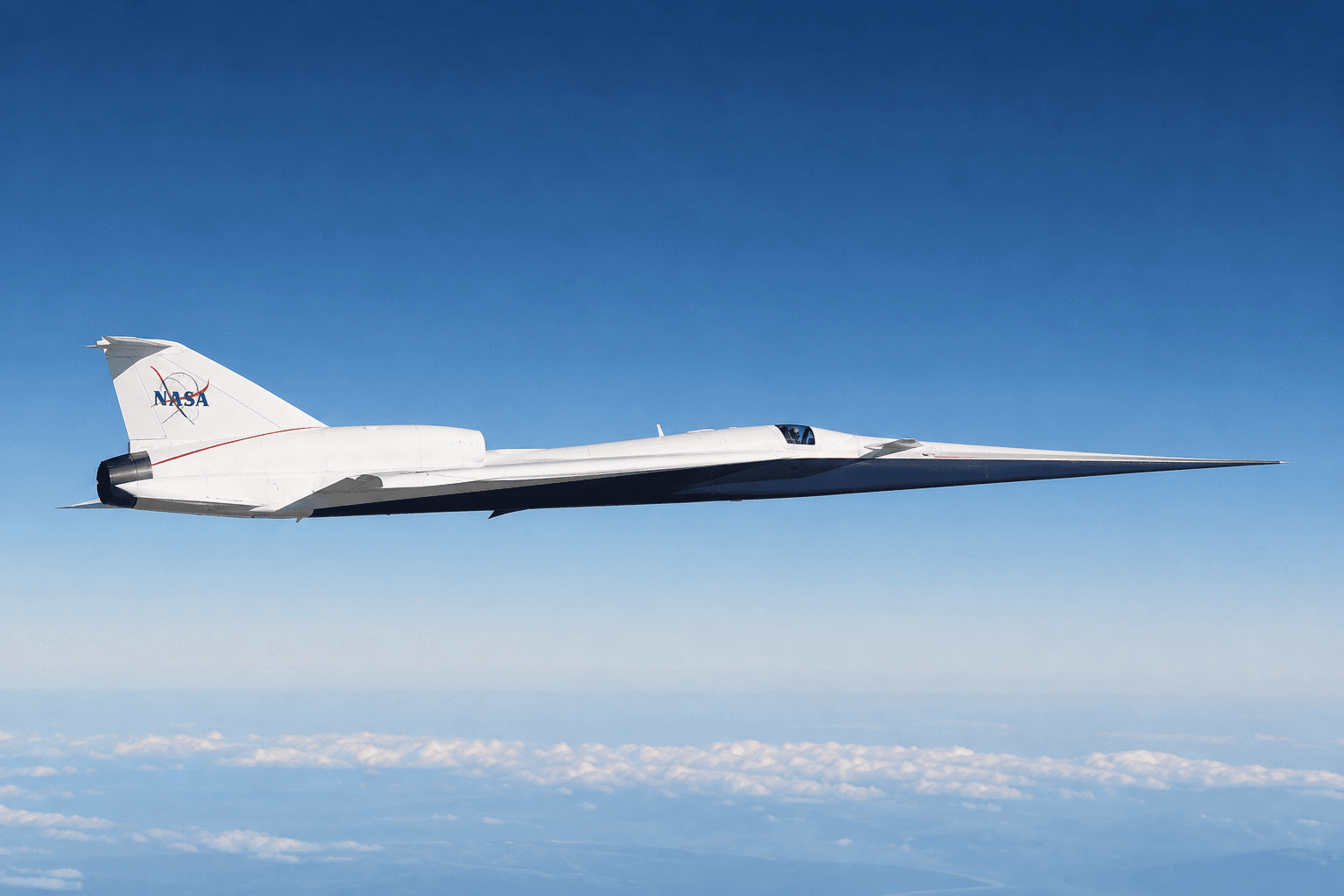
Global Aviation Round-Up from Aircraft Value Intelligence (AVN) A computer rendering of what the United Airlines supersonic aircraft will look like in the future. (Boom Supersonic) Editor's Note: To watch a video version of this article, click here . For 53 years, one federal regulation has stood between Americans and the return of supersonic air travel over the continental United States. That rule, adopted during the Nixon administration, prohibits civilian aircraft from exceeding the speed of sound over land. Now the Federal Aviation Administration (FAA) is preparing to rewrite it. On July 2, the agency published a Notice of Proposed Rulemaking in the Federal Register that would replace the existing speed-based restriction with a performance standard centered on noise. The proposal follows an announcement by the Department of Transportation on June 30 and represents the most significant shift in U.S. supersonic policy in decades. The change reflects a different way of thinking about the problem. Instead of asking whether an aircraft breaks the sound barrier, regulators are asking whether people on the ground are disturbed when it does. That distinction could reshape the future of commercial aviation. For many travelers, supersonic passenger service is synonymous with the Concorde, the sleek Anglo-French jet that cut transatlantic flight times in half. Its future unraveled after the fatal Air France crash near Paris in 2000. Although Concorde briefly returned to service, passenger demand weakened, operating costs climbed, and the aircraft was retired in 2003. Since then, commercial supersonic travel has largely disappeared. Today’s aircraft designers believe the technology has advanced enough to make another attempt. The original U.S. ban grew out of public frustration during the 1960s, when military testing produced frequent sonic booms over populated areas. Residents complained of rattling walls, cracked plaster, broken windows and sudden explosions of noise that interrupted everyday life. Thousands of complaints poured into government offices, convincing regulators that the public cost outweighed the benefit of faster travel. The FAA responded by banning routine civilian supersonic flight over land. With few exceptions, commercial aircraft have remained below Mach 1 across the continental U.S. ever since. Engineering, however, has changed dramatically over the past half-century. Instead of allowing powerful shock waves to merge into the classic sonic boom, engineers have learned how to shape an aircraft so those pressure waves remain dispersed. The resulting sound reaching the ground is significantly weaker than the ear-splitting boom associated with earlier generations of supersonic aircraft. The FAA’s proposal reflects those advances. Under the draft rule, future aircraft would have to meet a strict ground-level overpressure limit of 0.11 pounds per square foot. While the measurement is technical, the practical goal is straightforward: produce a sound that resembles a soft thump rather than the explosive crack historically associated with breaking the sound barrier. NASA’s Supersonic Experiment The proposed rule arrives as NASA continues work on one of its most ambitious experimental aircraft. The X-59 Quiet SuperSonic Technology (QueSST) demonstrator hardly resembles a conventional jet. Its unusually long, narrow nose and carefully sculpted airframe were designed with a single objective: reducing the intensity of sonic booms before they reach people on the ground. The aircraft recently completed another important step in its flight-test program, reaching Mach 1.4 at roughly 55,000 feet. Engineers view the milestone as another indication that the research program is progressing as expected. The most important testing, however, won’t focus on speed alone. NASA plans to fly the X-59 over selected U.S. communities while researchers gather feedback from residents who experience its sound signature. Beyond measuring decibel levels, scientists want to understand how people actually react. Does the sound surprise them? Is it annoying? Or is it mild enough to blend into the background of everyday life? Those public-response studies could prove pivotal. If communities consistently report that the aircraft produces little more than a brief, unobtrusive noise, regulators would have stronger evidence that quiet supersonic operations can safely coexist with populated areas. The research is expected to influence not only future FAA decisions but also international standards governing commercial supersonic aviation. The stakes extend well beyond NASA. Several aerospace manufacturers are investing heavily in next-generation supersonic airliners designed to shorten travel times between major cities. Because of the current U.S. ban, most development plans have centered on transoceanic routes where aircraft can legally accelerate beyond Mach 1. A new regulatory framework would dramatically broaden those possibilities. Flights that now consume most of a business day could eventually take only a few hours. A traveler leaving New York in the morning could conduct afternoon meetings in Los Angeles and return home that evening. Commercial service remains years away, but for the first time in decades, the regulatory landscape appears to be moving in the same direction as the technology. The proposal also provides something the aerospace industry values almost as much as technical innovation: regulatory certainty. Designing, certifying and manufacturing an entirely new generation of commercial aircraft requires billions of dollars and years of development. A clearer path through the approval process reduces investment risk, giving manufacturers and their financial backers greater confidence that quiet supersonic flight could become a viable commercial business rather than an engineering experiment. John Persinos is the editor-in-chief of Aircraft Value Intelligence .
The Daily Touch & Go
The day's best aviation news in your inbox. Free, no spam.