

Illustration: The Touch & Go
JetZero Advances Blended Wing Aircraft with Key Milestones, Demonstrator Taking Shape
JetZero reported solid progress on its revolutionary blended wing aircraft, meeting 2026 goals and building a large military demonstrator amid preparations for certification.
The gist
JetZero hits milestones, advances Z4 blended wing design, and builds sizable Jet1 military demonstrator to prove concept.
Continuing coverage
All Commercial Aircraft →JetZero, the California-based aerospace startup focused on a blended wing commercial aircraft, recently held its annual media day with a refreshingly low-key update. Despite a lack of flashy announcements or new visuals allowed, JetZero confirmed it is on track with its project milestones, progressing under budget and on schedule toward certifying its novel aircraft concept. This follows a noteworthy reclassification by the FAA, demonstrating the company’s move closer to mainstream commercial aviation standards.
Unlike typical airline or manufacturer events designed for maximum media buzz and photo ops, JetZero’s media day remained tightly controlled. Photos were prohibited and journalists had to cover their phone cameras, underscoring JetZero’s caution around revealing proprietary technologies during this advanced development phase. Media were provided only with official renderings illustrating the JetZero Z4 design and the military Jet1 demonstrator.</p><p>The FAA’s recategorization of JetZero from the AIR-600 to the AIR-500 certification group is a significant endorsement. The AIR-500 category covers Part 25 aircraft approved for Part 121 commercial airline operations, where Boeing and Airbus programs reside. This shift signals regulator recognition of JetZero as a serious commercial aircraft manufacturer, paving the way for its forthcoming type certificate application.
JetZero outlined four major objectives for the year: to secure a Series C funding round surpassing the prior $195 million Series B; open its first dedicated office and manufacturing test facility in North Carolina; submit the type certification application to the FAA; and complete construction of the Jet1 demonstrator aircraft under a U.S. military contract.
The JetZero program comprises two parallel tracks. The commercial Z4 aircraft is designed to fill a market gap between largest single-aisle aircraft like Boeing 737/A321 and smaller widebodies. Meanwhile, the Jet1 demonstrator under a military contract serves as a large-scale proof-of-concept testbed for the blended wing body design, somewhat akin to a massively scaled-up B-2 stealth bomber concept demonstrating aerodynamic and systems characteristics.
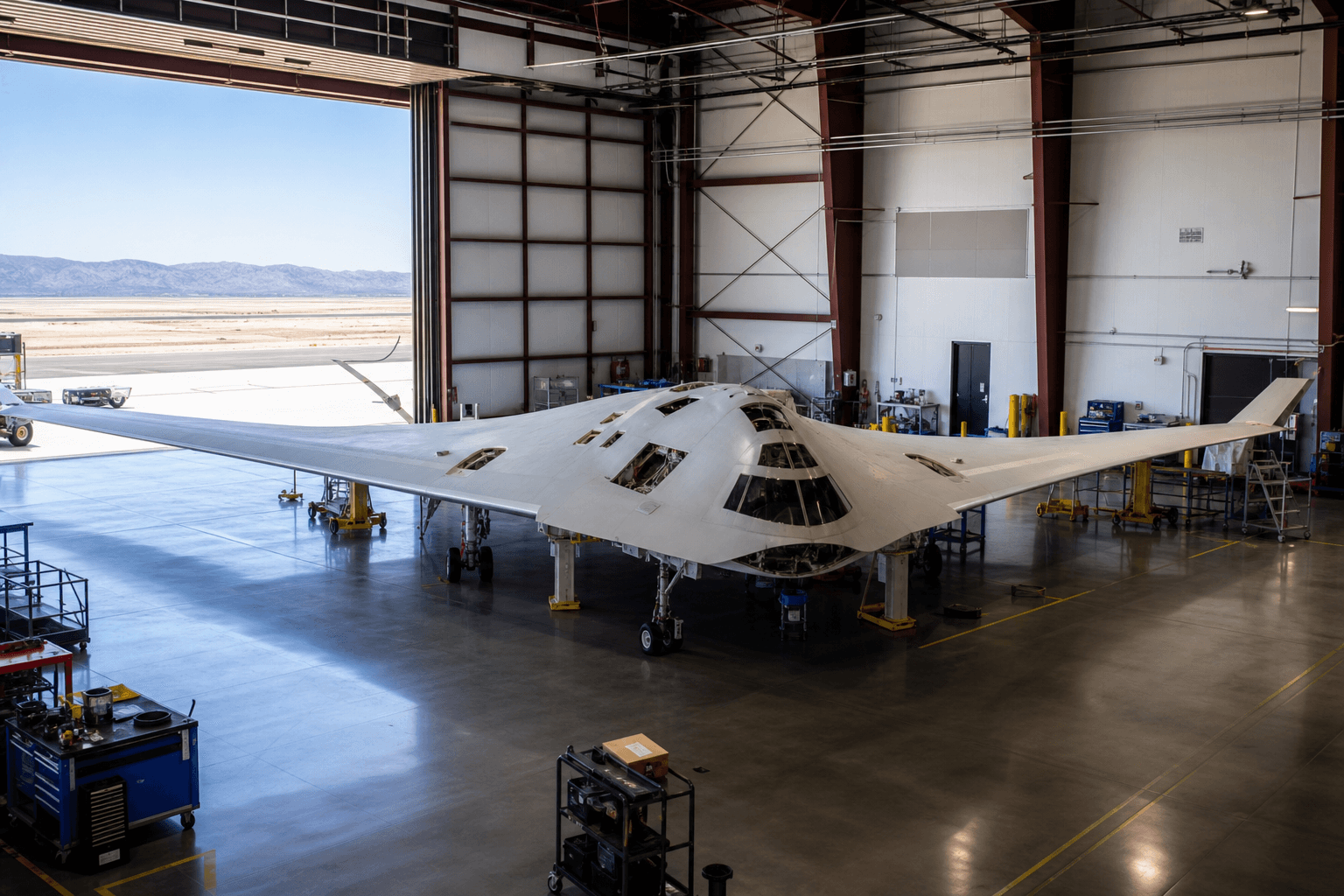
The Jet1 demonstrator is substantial, approximately the size of the Z4 commercial aircraft. Although updated renders of the Z4 are pending, the Jet1 now sports a distinctive V-tail and engine fin designs atop the rear fuselage, engineered for increased safety such as enabling takeoff with one engine inoperative, a feature critical for FAA certification.
To showcase progress, the company transported a vintage Saab 340A aircraft to the media event and flew journalists to Mojave where the Jet1 assembly is underway by Scaled Composites. Security was intense, with strict no-photography policies reinforcing the sensitivity of this unique demonstrator under construction, including two assembled cockpit sections—one for testing and one for eventual flight.
Inside the hangar, the scale of the Jet1 is impressive: it spans almost the entire width of the facility, with the blended wing extending far beyond the cockpit section. The demonstrator will have a pressurized cockpit to gather flight data, while the rest of the aircraft serves aerodynamic and structural testing functions. After test completion, JetZero plans to retain the airframe for ongoing research.
Concurrently, the Z4 program advances on multiple engineering fronts. The company has begun addressing manufacturing challenges such as the integration of complex landing gear systems, which have long lead times. Structural assembly is underway, engine selection is under review, and cabin seats are being finalized, reflecting the rigors of type certification and customer expectations.
JetZero anticipates entry into commercial service in the early 2030s. CEO Tom O’Leary described the timeline as the art of the possible—ambitious but achievable if all milestones progress without delay. This long-term horizon aligns with the complex nature of certifying a disruptive blended wing aircraft design for commercial airlines.
Read more
All Aviation Safety →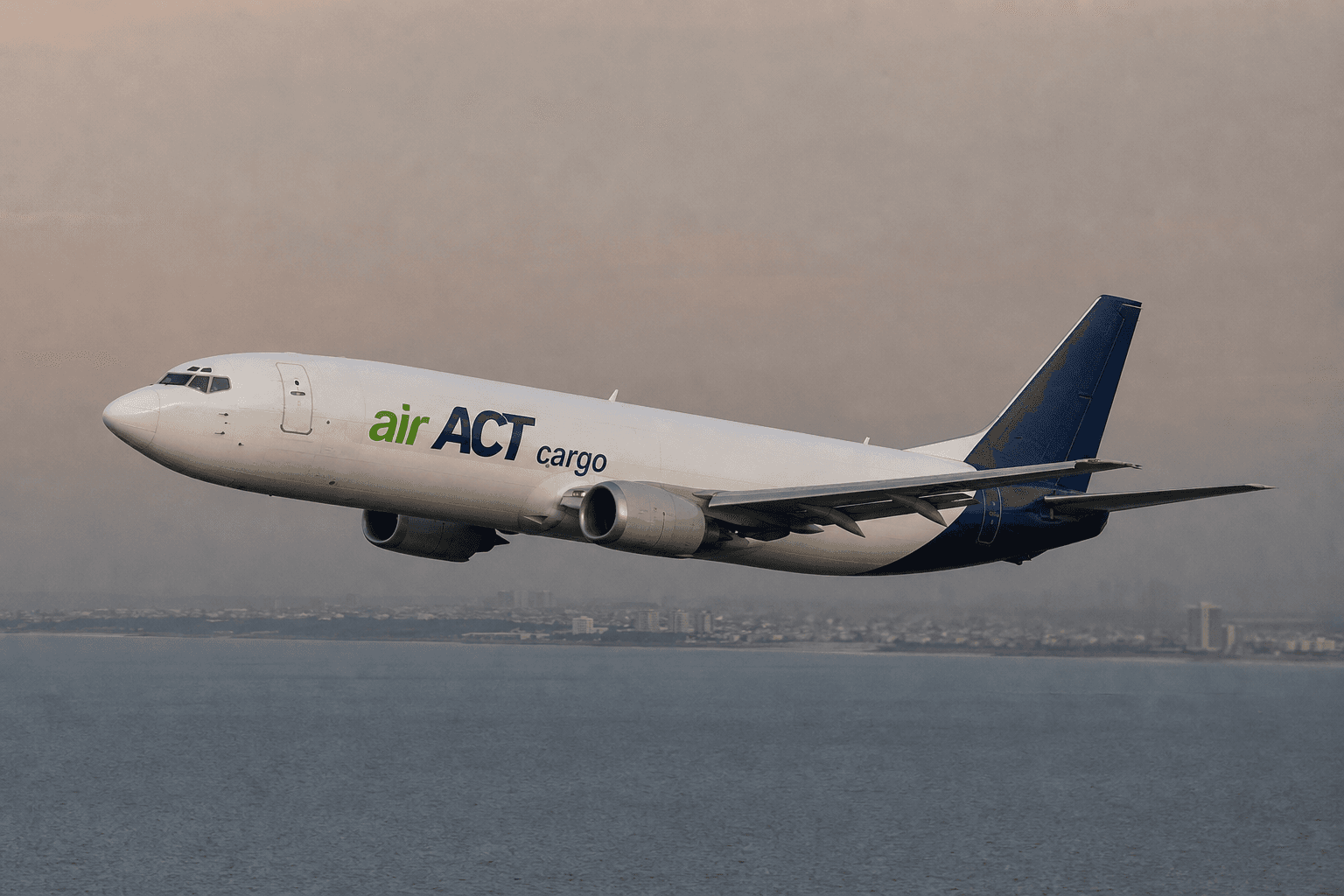
K2 Airways Boeing 737 freighter lost over Arabian Sea after sudden altitude drops near Karachi
A K2 Airways Boeing 737 freighter is missing over the Arabian Sea after preliminary flight-tracking data showed a sudden loss of altitude southwest of Karachi, Pakistan. The aircraft, registered AP-BOI, was operating as K2 Airways Cargo Flight KTA1732 from Sharjah, United Arab Emirates, to Karachi, Pakistan, on July 7, 2026, according to Flightradar24. Authorities launched a search effort after the aircraft did not arrive in Karachi as scheduled. Preliminary ADS-B data showed the aircraft lost altitude, climbed, and then suffered a second sudden and dramatic loss of altitude. The final ADS-B point received by Flightradar24 was recorded at 16:21 UTC, placing the aircraft at 1,100 feet above mean sea level with a reported vertical rate of -22,400 feet per minute. Pakistan's Civil Aviation Authority said the aircraft reported a navigation system problem at 21:18 local time before radar data showed it rapidly descending and making a sharp heading change at about 21:21. Radar and radio contact were then lost about 155 nautical miles west of Karachi, according to the AP, citing Pakistan's Civil Aviation Authority. The AP reported that five crew members were aboard the aircraft. AP-BOI is a Boeing 737-4M0(BDSF) that began service with K2 Airways in 2024. The aircraft originally entered service as a passenger aircraft with Aeroflot in 1999, later flew with Garuda Indonesia, and was converted to a freighter in 2012. K2 Airways is a privately owned Pakistani carrier based in Karachi. The airline was launched to serve regional passenger and cargo markets and received its air operator certificate in 2024. AP-BOI is listed as the carrier's sole aircraft. The aircraft and other traffic in the region experienced GNSS interference shortly after takeoff from Sharjah, which degraded data near Sharjah before the aircraft transitioned to multilateration tracking. Flightradar24 said ADS-B data was received again after the aircraft left the interference area. The aircraft remained missing late on July 7 as search efforts continued.
FAA recommends airlines ensure cockpit-voice recorder audio is preserved after incidents
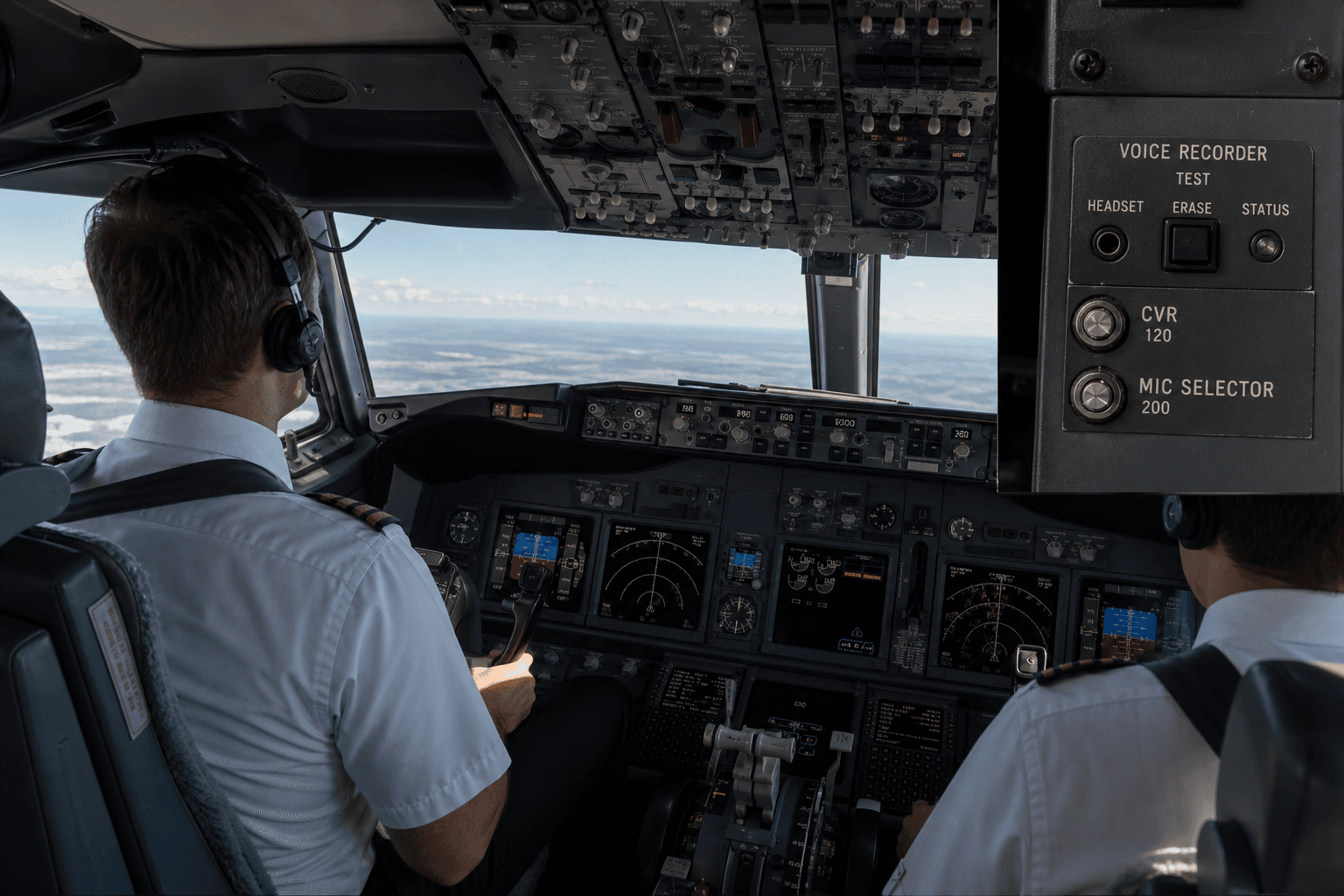
US regulator issues voluntary recommendations after the NTSB had urged it to mandate the action. The US Federal Aviation Administration (FAA) is recommending that airlines take steps to ensure cockpit-voice recorders (CVRs) retain relevant audio following safety incidents. On 1 July, the agency issued guidance calling on aircraft operators to confirm that their employee manuals instruct pilots and other workers to pull CVR circuit breakers following such events to preserve audio that would otherwise be overwritten. But the FAA’s guidance is “voluntary only” rather than mandating the action. It has been introduced in response to a 2025 recommendation from the National Transportation Safety Board (NTSB), which said many of its investigations have suffered from missing CVR audio and that airlines have “inconsistent” procedures. The NTSB had wanted operators to be forced to comply. “The FAA recommends that each operator who has a CVR installed confirm that company manuals contain instructions that the CVR circuit breaker be pulled after a reportable event,” the FAA says in a new Safety Alert for Operators. “The instruction that the CVR circuit breaker is pulled could be included in flight operation manuals, maintenance manuals and dispatch manuals, increasing the likelihood that the task is accomplished,” it adds. The NTSB has since the early 2000s flagged the problem of being unable to access CVR audio needed for investigations. However, many existing recorders retain only the prior few hours of audio, after which it is overwritten. Pilots can preserve audio by pulling the circuit breakers, and some airlines have already recommended that action, including Alaska Airlines, according to the NTSB. But in many cases flightcrew have not done so, such as with Alaska flight 1282, a Boeing 737 Max 9 that suffered an in-flight door-plug blow-out on 21 January 2024. From that aircraft, the NTSB recovered CVR audio starting 1h 20min after the incident, rendering the recording useless, according to its accident report. Its report recommended the FAA require airlines to instruct pilots to pull the breakers, calling the issue a “long-standing concern”. It cites previous similar cases, including two 2023 runway incidents and a 2017 Air Canada event. “Despite existing guidance on preserving CVR data, operators still lack effective measures to safeguard CVR recordings after accidents and reportable events,” the NTSB says. The agency declines to comment about the FAA’s guidance, saying it is still reviewing the document. The NTSB can classify recommendations as closed if it deems FAA action sufficient. Southwest Airlines says its pilot manuals already call for the CVR breakers to be pulled.
Hellenic Air Force F-16 makes emergency belly landing at Zakynthos, catches fire
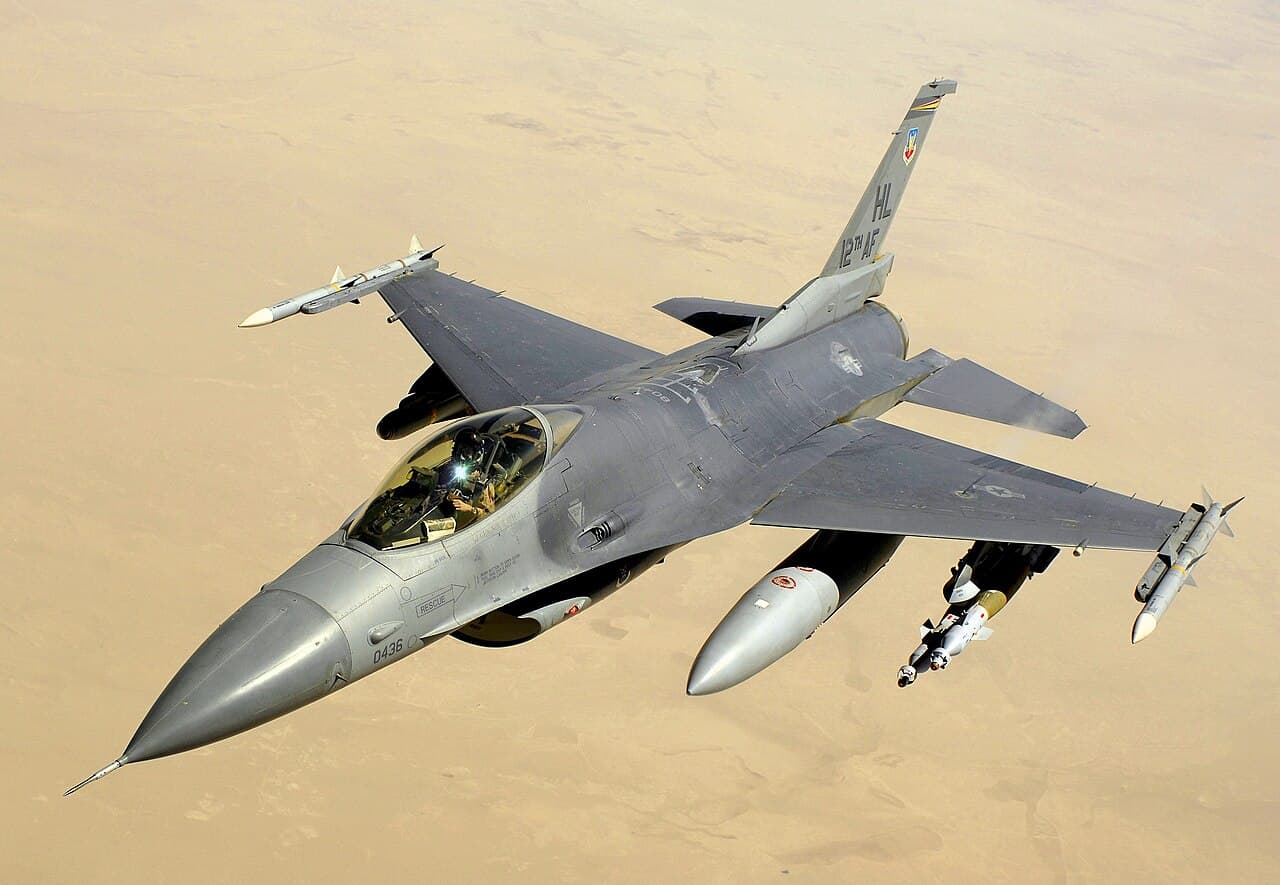
A Hellenic Air Force F-16 fighter jet performed an emergency landing at Zakynthos International Airport (ZTH) on July 9, 2026, touching down without its landing gear deployed before catching fire on the runway. The pilot escaped unharmed. According to a statement issued by the Hellenic Air Force General Staff, the aircraft, belonging to the 335 Squadron of the 116 Combat Wing, was taking part in a training flight when it carried out an emergency landing at Zakynthos Airport at 13:45 local time due to a malfunction. The pilot is in good health, and the causes of the incident are under investigation, the statement said. The jet had taken off from Araxos Air Base, home of the 116 Combat Wing, and was conducting a training flight over the wider Ionian Sea area when the pilot received a fire indication, according to Greek media reports. Αναγκαστική προσγείωση F-16 στο αεροδρόμιο της Ζακύνθου pic.twitter.com/pbceDCzXuD — Kathimerini_Web (@KathimeriniWeb) July 9, 2026 Pilot brings aircraft down without landing gear Because the landing gear failed to deploy, the pilot brought the aircraft down on its belly, sliding onto a layer of foam that firefighters had spread on the runway in advance. Footage circulating on social media shows the aircraft engulfed in flames as fire crews doused it. Zakynthos Airport will remain closed until the fighter jet is removed from the runway, a significant disruption at the height of the summer season for the popular Ionian island destination. The F-16 is the backbone of the Hellenic Air Force fighter fleet. The type has been involved in previous incidents in Greek service, including a crash at Andravida Air Base in November 2021 , in which the pilot ejected safely. Greek F-16s have seen recently deployed to Cyprus in March 2026, following drone attacks on UK bases on the island.
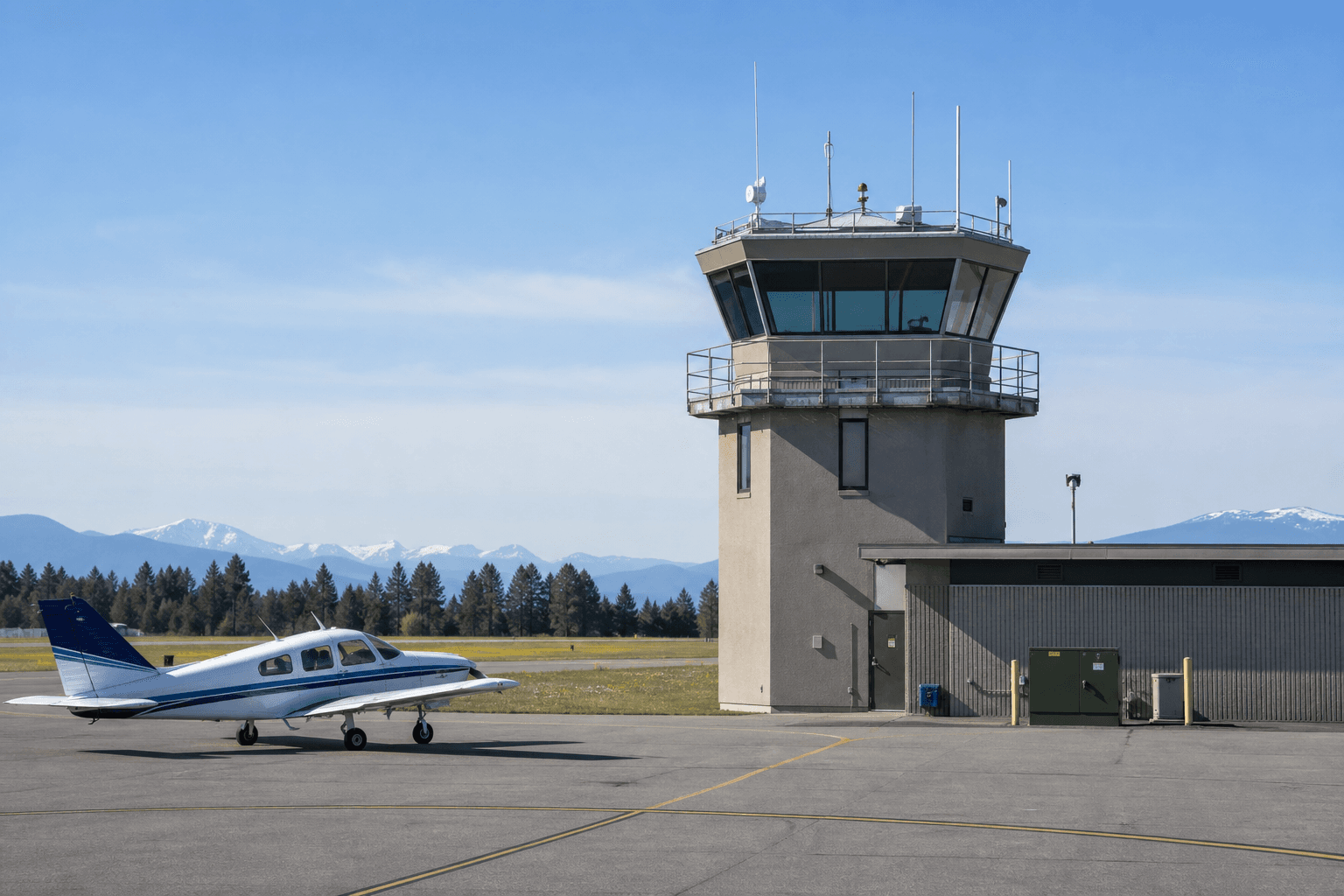
FAA Makes Control Tower Operator Partnership Hiring Path for Contract Towers Permanent
The FAA has made permanent a newer hiring pathway for Federal Contract Tower controllers, adding graduates from FAA-approved Control Tower Operator Partnership schools to the list of candidates eligible for hire by FCT companies. The change appears in FAA Order JO 7210.3EE Change 3 , effective July 9, 2026. The order sets FAA policy for facility operation and administration. Contract towers are FAA-funded air traffic control towers staffed by private companies, and many serve smaller airports with substantial general aviation activity. CTO-P Added To Eligibility Rule The revised eligibility language allows FCT companies to hire applicants who graduate from an FAA-approved CTO-P school. It also keeps the existing path for applicants who have a valid Enhanced Air Traffic Collegiate Training Initiative tower endorsement letter. Developmental controllers hired through those paths still must complete required facility training before controlling traffic independently. "This change will assist FAA Contract Tower (FCT) companies by allowing the FCTs to hire graduates from an FAA-approved Control Tower Partnership ( CTO-P ) school," the FAA said in its explanation of changes. "This change also clarifies the language for eligibility for FCT hire from an E-CTI school." Before the CTO-P path was added, FCT companies generally hired from a smaller pool of controllers who already had a previous control tower operator certificate or an FAA Air Traffic Safety Oversight credential with a tower rating. FAA had also added the Enhanced AT-CTI route through an earlier notice. Staffing Context The change moves the CTO-P pathway from a temporary FAA notice into the standing rulebook for FCT hiring. According to the FAA's briefing material, the CTO-P program is intended to prepare candidates for developmental controller jobs through classroom work and simulation training aligned with FAA Academy standards. The Department of Transportation Office of Inspector General said in a March 24 report that the FCT program includes 266 contract towers in 46 states and territories. The report said contract towers account for about half of the control towers in the National Airspace System and handled more than 18 million tower operations in calendar year 2024. "While FAA took steps to expand the controller hiring pool at contract towers, FCT contractors continue to face challenges in maintaining adequate staffing levels," the DOT Office of Inspector General said in the report. "Based on our analysis of contractor MAFR data, as of April 2025, the FCT Program remained understaffed by 276 controllers, or roughly 18 percent of their workforce." The OIG report also said all four FCT contractors told auditors they had not hired any Enhanced AT-CTI graduates as of July 2025. The report cited attrition, wage rates, remote locations and high cost-of-living areas among the factors affecting contract tower staffing.
The Daily Touch & Go
The day's best aviation news in your inbox. Free, no spam.