

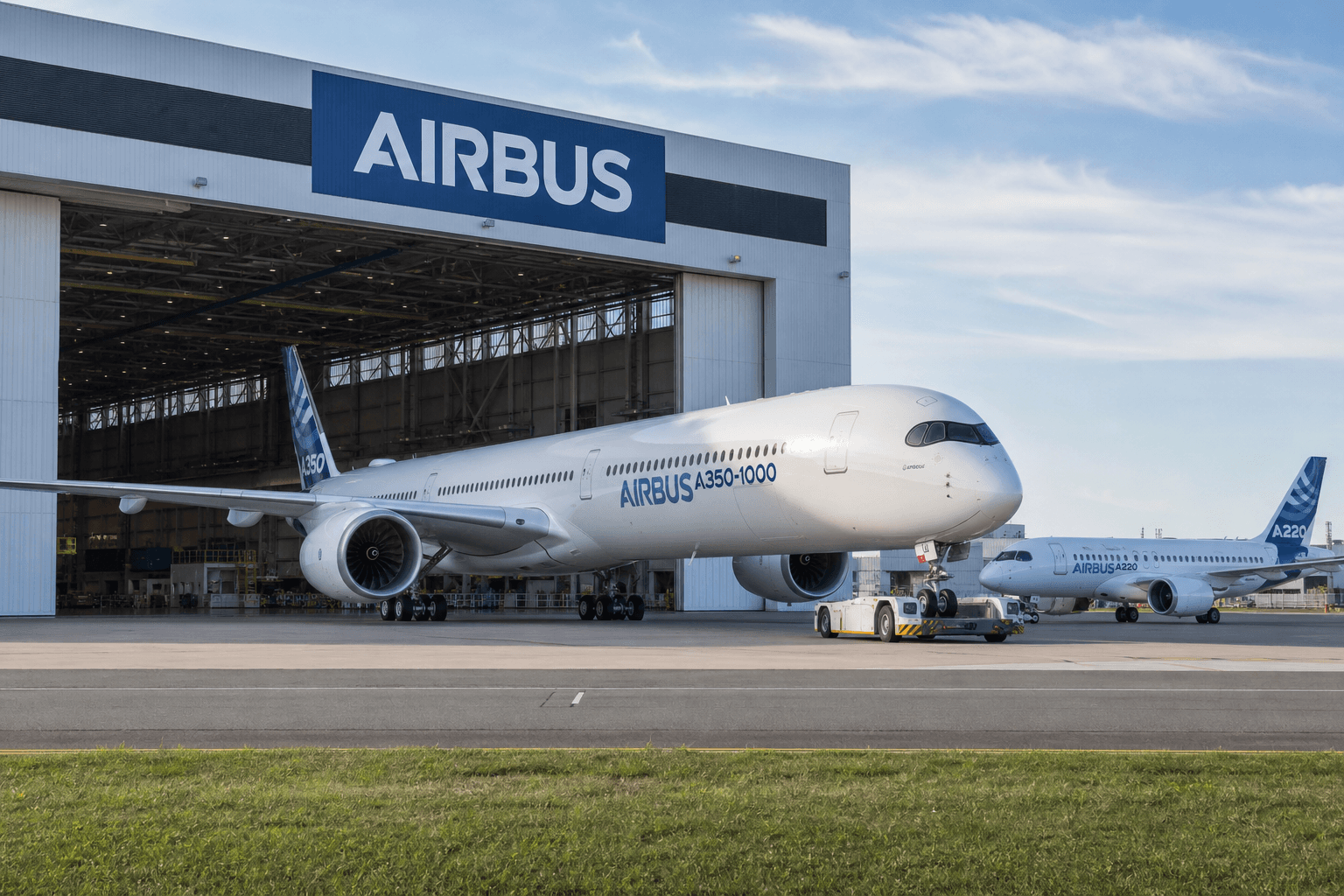
AI-generated illustration
Airbus Sets 2027 as Decision Year for Stretched A220 and A350 Variants
Airbus Commercial Aircraft chief Lars Wagner listed possible A220-500 and A350-2000 stretches among next year's priorities as the company also studies a second A350 final assembly line.
The gist
Airbus plans to decide in 2027 whether to launch larger A220 and A350 models, while weighing a second A350 assembly line beyond Toulouse's 12-a-month cap.
Continuing coverage
All Airbus →- Airbus Eager to Launch A320neo Successor as Boeing Says Market Is Not Ready for a New Narrowbody
- Airbus Banks on 250 Year-End Handovers as A350 Directive, Cathay Order and Buyback Land at Once
- French A321XLR Maritime Patrol Program Cost Estimate Jumps 65% to EUR 4.57 Billion
- Airbus Starts Building Wing-Tip Extensions for Wing of Tomorrow Flight Tests Due in 2027
- Goyal Says Indian Airlines Could Order 1,000 More Jets as Fleet Needs Top 2,000
Airbus expects to make strategic decisions in 2027 on stretched versions of the A220 and A350, according to Lars Wagner, chief executive of Airbus Commercial Aircraft. Wagner named the two projects among the manufacturer's priorities for next year during a November 18 meeting with members of the French Association of Professional Aeronautics and Space Journalists (AJPAE). Speaking to French newspaper La Dépêche, he said Airbus would keep raising production rates, improving quality and working on new technologies in 2027, and would also take strategic decisions on possible extensions of the two families.
The aircraft are widely referred to as the A220-500 and A350-2000, though Airbus has not formally adopted either designation. Both remain in the pre-launch phase, and the company has made no final decision to proceed with either. Wagner's remarks put a clearer timeframe on work that Airbus chief executive Guillaume Faury described on October 28 as still under analysis. At that time, Faury said Airbus was discussing configurations with customers and assessing suppliers, engines and the business case for each aircraft.
On the smaller jet, Airbus has already moved to squeeze more seats out of the existing A220-300. AirAsia ordered 150 aircraft in May and will launch a 160-seat high-density layout, 10 seats above the previous maximum. That configuration needs an additional overwing exit on each side, and Airbus documentation published in June showed it was still awaiting certification. AirAsia has also pointed to a prospective A220-500 seating more than 180 passengers as an eventual replacement for its older A320s.
Airbus has been weighing how far to take an A220 stretch. The simplest option would keep much of the current aircraft and accept some loss of range and performance in return for more seats, lower development costs and earlier entry into service. A more ambitious design would add aerodynamic and wing changes, more fuel capacity and possibly more engine thrust to retain more of the A220-300's capability, at much greater program cost. Any larger A220 would also move closer to the A320neo in passenger capacity, creating overlap between the two Airbus families.
The A350-2000 targets a different competitor: Boeing's 777X. Sitting above the A350-1000, the stretch would give Airbus a direct rival to the 777-9 in the largest twin-engine passenger segment, with more than 400 seats in some configurations. That would return Airbus to a capacity bracket it largely ceded to Boeing after ending A380 production. Boeing originally planned for the 777-9 to enter service in 2020, but first delivery has slipped into 2027, giving Airbus time to study whether a stretch could take on an aircraft conceived more than a decade ago.
Engines are one of the main open questions. Rolls-Royce holds an exclusive position on the A350 family with the Trent XWB, and Wagner declined in October to guarantee that arrangement would carry over to a larger variant. The engine choice would shape the aircraft's size, range, performance and development schedule. Faury said in October that Airbus was working with engine makers, other suppliers and customers to define the aircraft and test whether a viable business case exists.
Separately, Airbus is running out of room to build more A350s. The type is assembled on a single final assembly line in Toulouse, which Wagner said has a maximum capacity of around 12 aircraft per month. He said Airbus intends to go beyond that level because demand justifies it, and the company is studying a second A350 final assembly line, including where to put it and how to organize it. Wagner denied reports that Toulouse had already been chosen, saying no location decision has been made.
Airbus did not use the vacated A380 hall for widebody work. The Jean-Luc Lagardère building in Toulouse instead received a first A320-family final assembly line in 2023 and a second in June 2026, both housed in its 1.31-million-sq.-ft. (122,000-m²) central hangar. Those lines are part of a global network of 10 A320-family final assembly lines. Airbus expects to reach 70-75 A320-family aircraft per month by the end of 2027 and then stabilize output at 75.
Originally reported by Air Data News
Read more
All Airlines →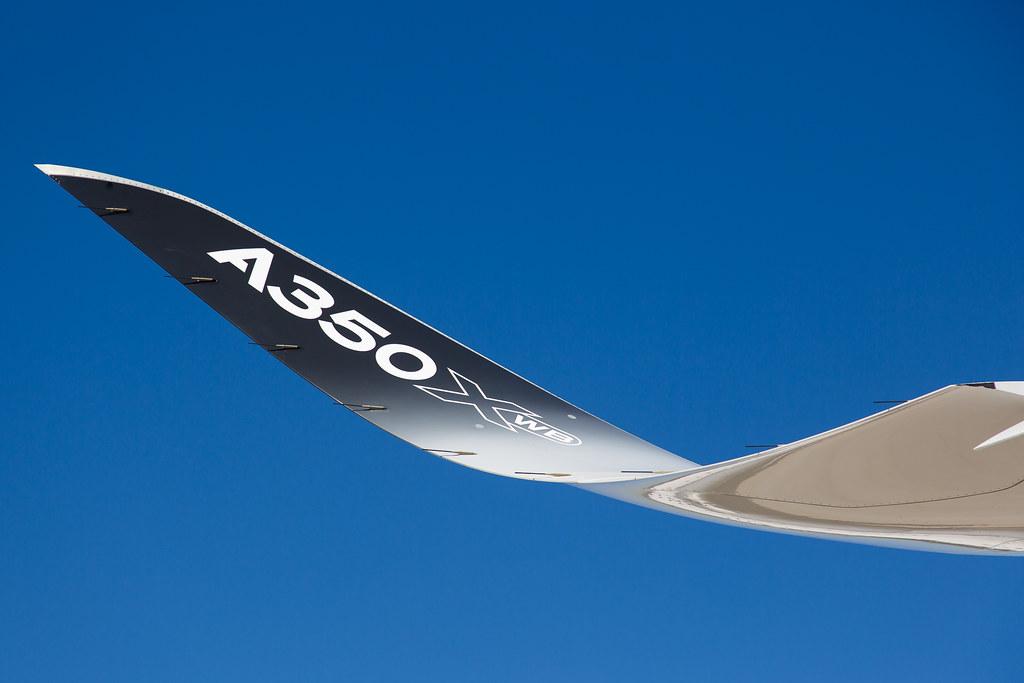
Airbus Banks on 250 Year-End Handovers as A350 Directive, Cathay Order and Buyback Land at Once
Airbus says every aircraft it needs to meet its 2026 delivery goal is already in final assembly or on delivery lines, as an EASA directive on the A350 and a €5 billion buyback add to a busy November.
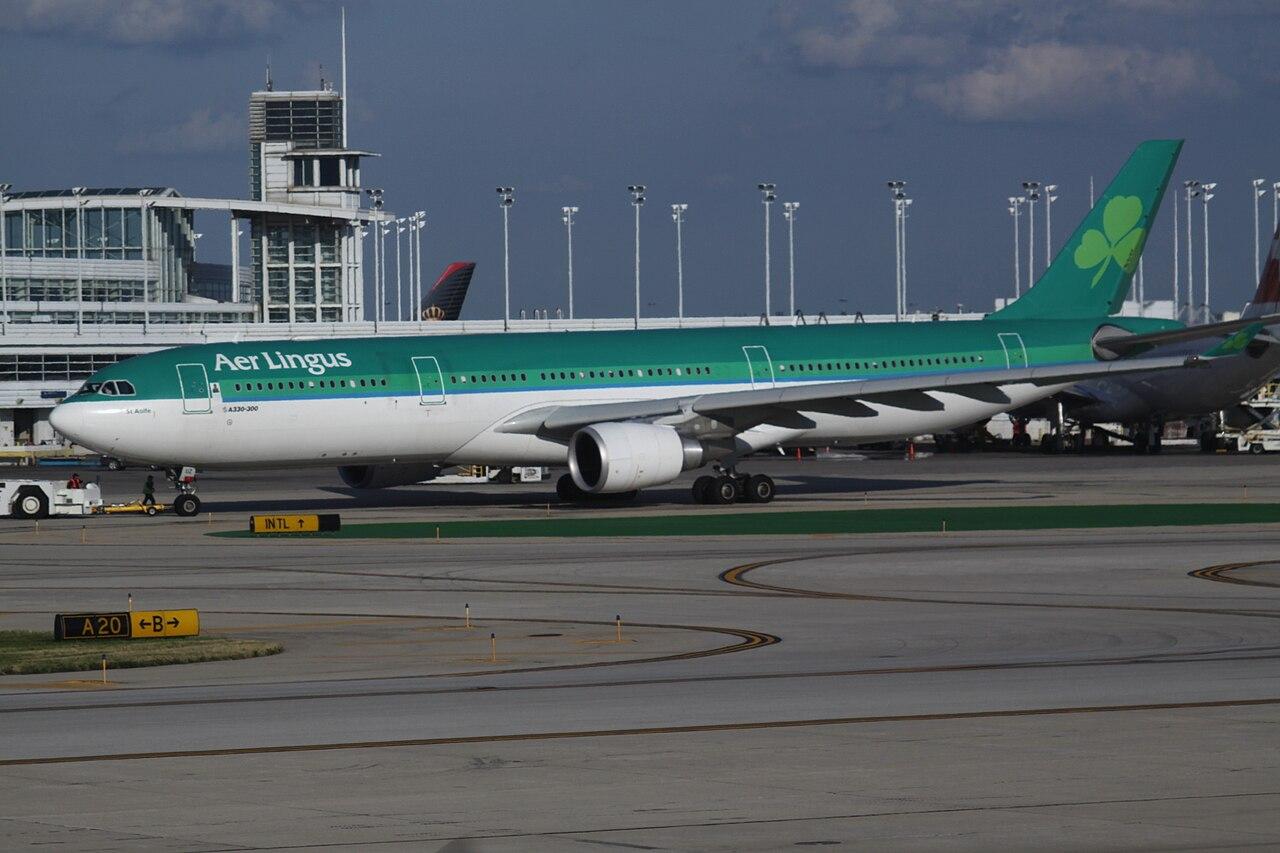
Aer Lingus Reveals Refitted A330 Cabins with Its First Premium Economy, Debuting on Dublin-New York in 2027
The Irish carrier will refurbish 10 Airbus A330s with Business Class suites, a new 28-seat Premium Economy cabin and redesigned Economy, starting with JFK flights on 1 October 2027.
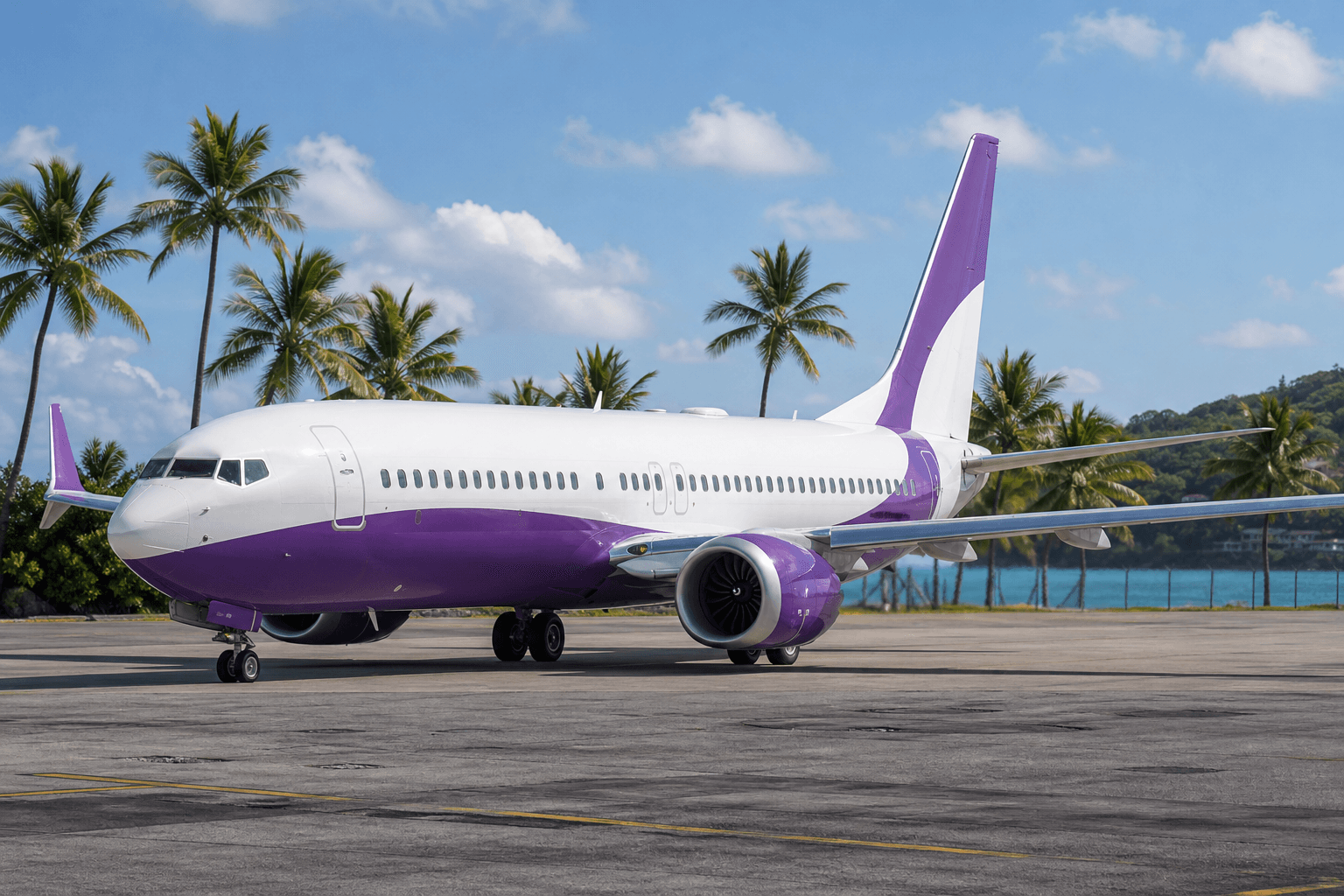
Arajet Sets April 2027 Launch for Santo Domingo Flights to Caracas and Valencia
The Dominican low-cost carrier will start seven weekly 737 MAX 8 flights to two Venezuelan cities, selling onward connections to Miami, Newark and Mexico City through its Santo Domingo hub.
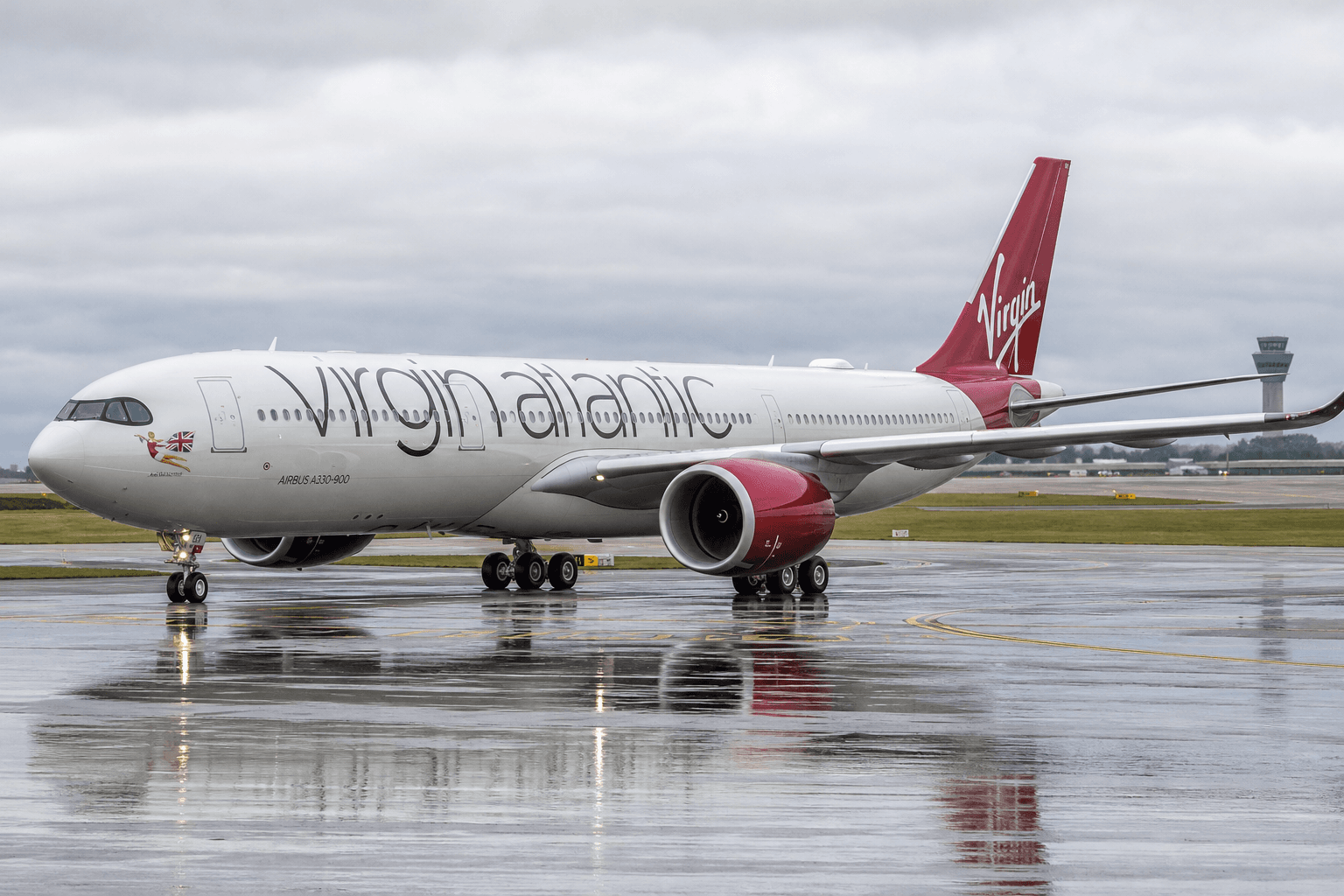
Virgin Atlantic Turns to Manchester as Heathrow Slots Run Out, Adding A330neos From March 2027
Chief executive Corneel Koster says Virgin Atlantic has no Heathrow slots left to grow, so Manchester will get A330neos and more U.S. frequencies while Las Vegas is dropped.
The Daily Touch & Go
The day's best aviation news in your inbox. Free, no spam.