

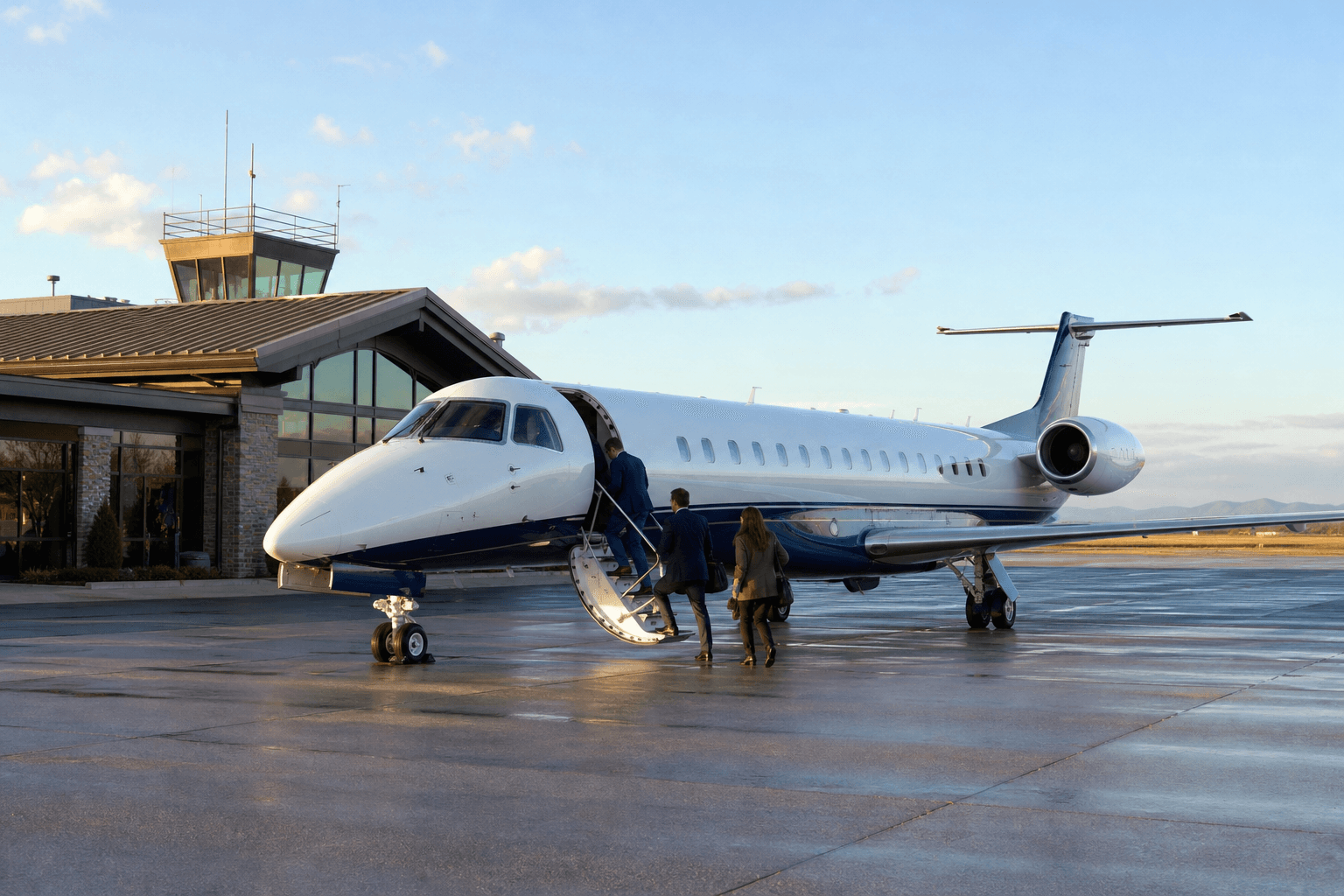
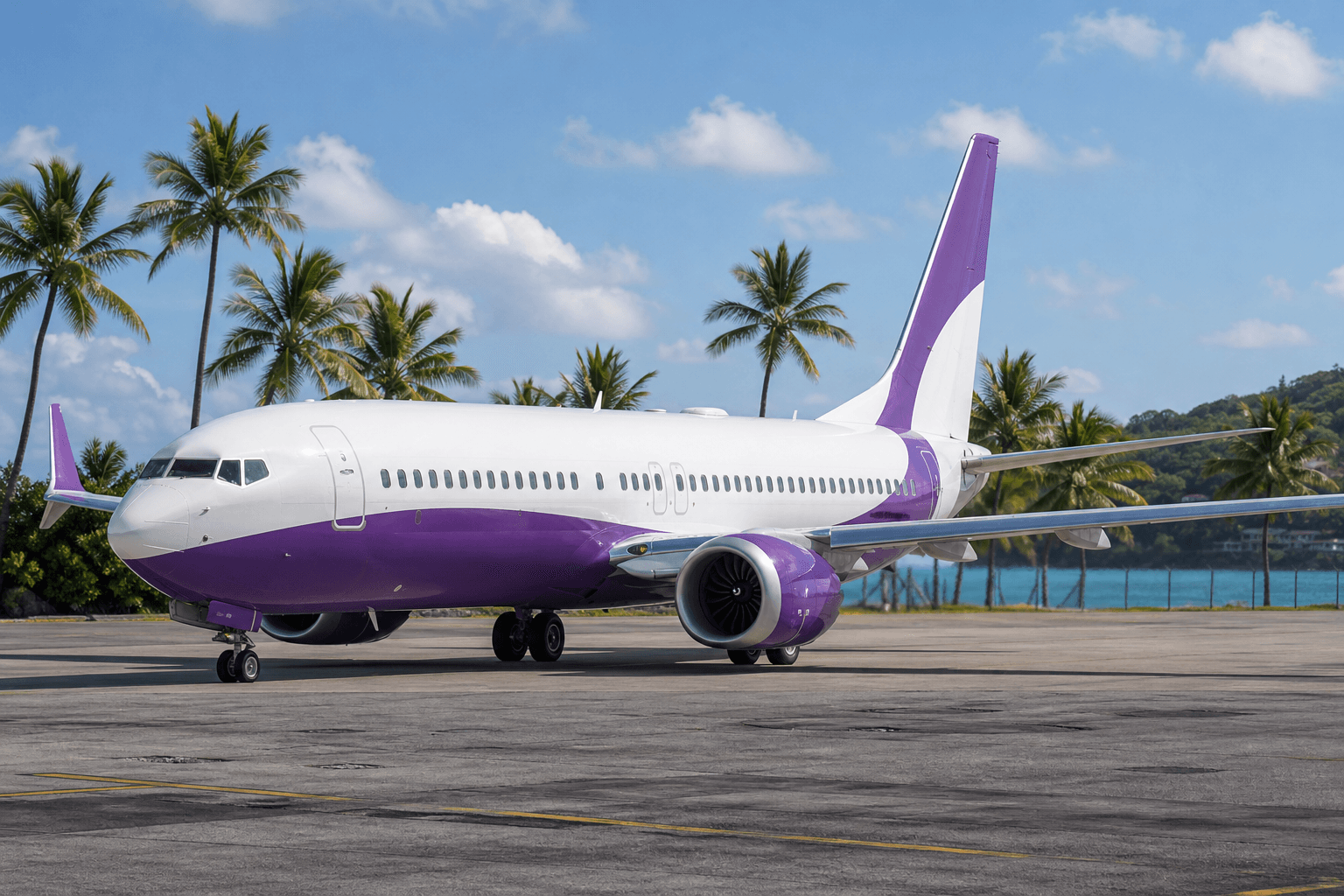
AI-generated illustration
JSX Acquires New Pacific Airlines, Plans 42-Seat Embraer ERJ145 Flying Under Part 121
The semi-private carrier now controls a Part 121 certificate that would let it fly regional jets with more than 30 seats, and New Pacific has filed to resume service with up to six ERJ145s.
The gist
JSX bought New Pacific Airlines and its Part 121 certificate, opening a path to 42-seat ERJ145 flights beyond its 30-seat charter limit.
JSX has acquired New Pacific Airlines, the carrier that shut down last November, and plans to return it to service with 42-seat Embraer ERJ145-LR regional jets. The cabin would hold 12 more seats than JSX sells on its aircraft today. The deal gives JSX control of a Part 121 air carrier certificate, which allows operations above the 30-passenger ceiling that applies to its current Part 135 public charter model.
New Pacific has filed notice of its intent to resume flying and asked regulators to waive the usual 45-day advance filing requirement. Its operating projection calls for two aircraft at launch, growing to six by the fifth month. The plan anticipates 10,106 flights and about 309,000 passenger boardings in the first year, with flights averaging roughly 1.2 hours gate to gate. Staffing would grow to 104 employees.
JSX has not laid out its strategy for the new unit. In a statement, the company said it is continually evaluating opportunities to support long-term growth and bring its flying experience to more customers and communities, and that it is pursuing additional pathways that could provide more ways to deliver its service. JSX said its focus remains on the experience, convenience and hospitality its customers expect.
New Pacific began life as Northern Pacific, a startup that intended to link the mainland U.S. with Asia through Anchorage using Boeing 757s. The closure of Russian airspace to U.S. carriers kept that plan from getting off the ground. The airline shifted to short domestic routes and then to sports and corporate charters. It shut down roughly two weeks after announcing an all-business-class venture with beOnd, and its 757s were disposed of in bankruptcy, leaving the certificate as its main asset.
JSX built its business on inexpensive used aircraft, a cabin with one seat on each side of the aisle, and private terminals that let customers arrive minutes before departure. Airport access has been its main constraint. At Santa Monica, where the city shortened the runway to 3,500 feet, JSX brought in 30-seat ATR 42-600 turboprops. At Teterboro, which prohibits publicly advertised scheduled passenger service, JSX sells seats only to members of Club JSX, a free program that customers must join to book. JSX was also the first carrier to install Starlink and the first to finish equipping its full fleet; United Airlines holds a stake in the company.
Larger aircraft need not mean giving up private terminals. Federal security rules provide for scheduled and public charter flights with 31 to 60 seats to operate outside the usual secure terminal area. The model would not work at every airport JSX serves, however, because of airport certification requirements. Part 121 also brings different pilot rules, including mandatory retirement at age 65, which would exclude the senior former American and Southwest captains who fly for JSX today.
The certificate also offers a hedge against regulatory pressure. American Airlines, Southwest Airlines and the Air Line Pilots Association have lobbied to restrict the public charter model JSX relies on. The FAA never closed that rulemaking effort, but its current agenda lists public charter rulemaking as a long-term action with the next step undetermined.
A 42-seat ERJ145 layout would sit between JSX's current 30-seat cabin and the 50-seat configuration typical of the type, with more passengers sharing the cost of each departure. The aircraft would come from regional jets JSX already owns, fitted with roughly 40 percent more seats than its existing product.
Originally reported by View From The Wing
Read more
All Airlines →
airBaltic Shuts Gran Canaria Base, Cutting Direct Nordic and Baltic Links to Maspalomas
The Latvian carrier is closing every base outside Riga after a €115 million loss in 2025, ending point-to-point service that fed northern European visitors to southern Gran Canaria.
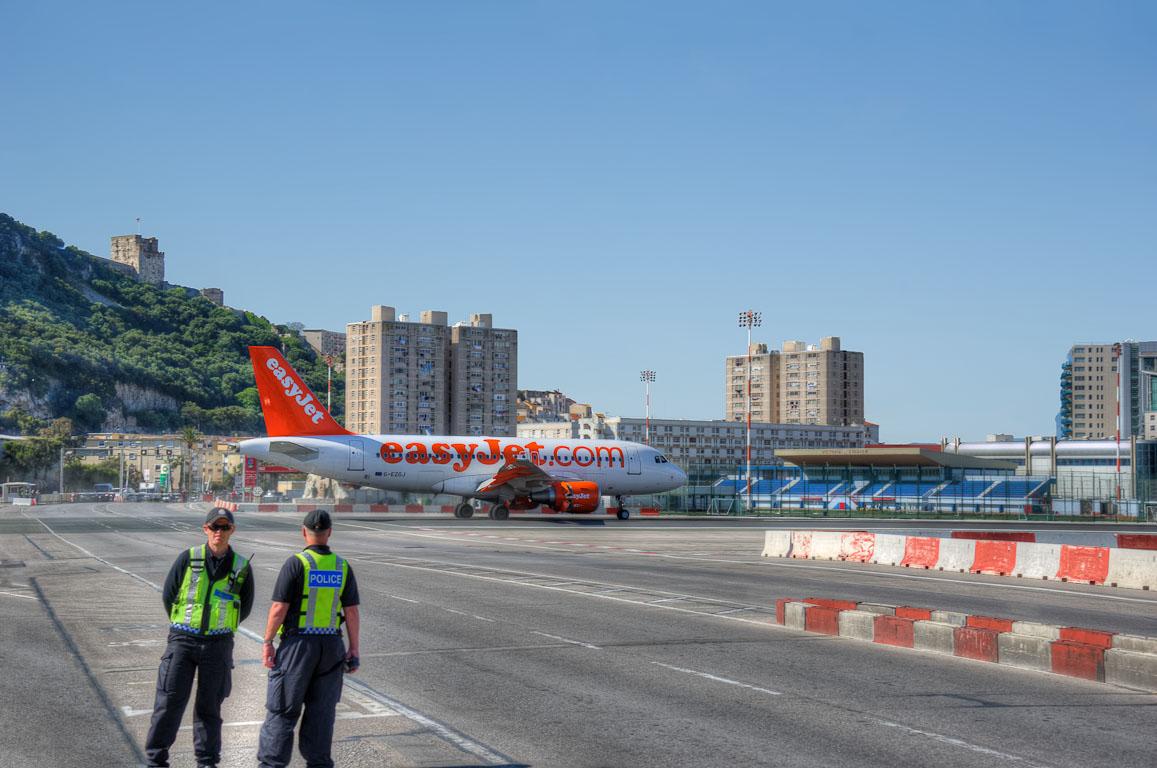
Apollo's £5.7 Billion easyJet Deal Caps Its Funds at 49.9% to Keep EU Operating Rights
The US asset manager will hold no more than 49.9% of easyJet's new parent, with rollover shareholders and an EU trust holding the rest so the airline stays compliant with European and UK ownership rules.
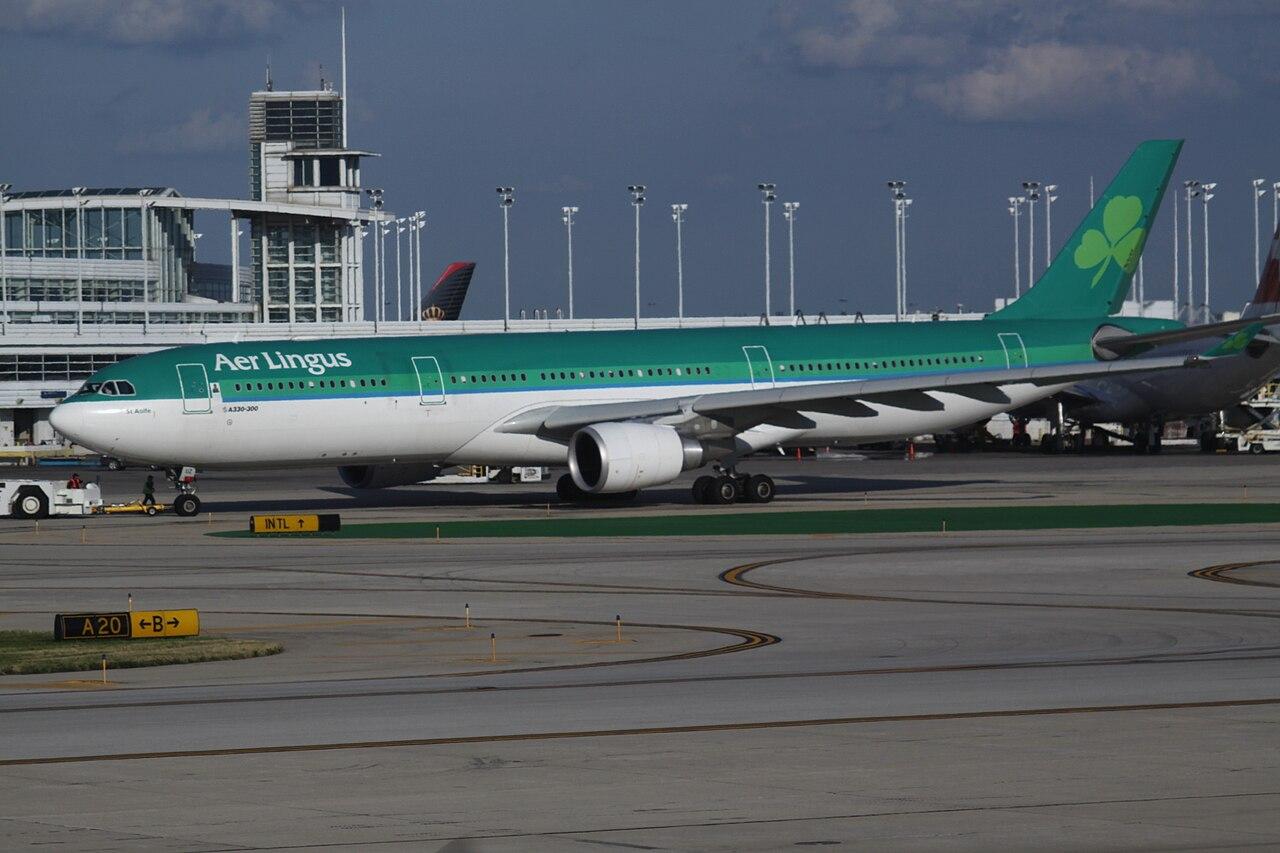
Aer Lingus Reveals Refitted A330 Cabins with Its First Premium Economy, Debuting on Dublin-New York in 2027
The Irish carrier will refurbish 10 Airbus A330s with Business Class suites, a new 28-seat Premium Economy cabin and redesigned Economy, starting with JFK flights on 1 October 2027.
Arajet Sets April 2027 Launch for Santo Domingo Flights to Caracas and Valencia
The Dominican low-cost carrier will start seven weekly 737 MAX 8 flights to two Venezuelan cities, selling onward connections to Miami, Newark and Mexico City through its Santo Domingo hub.
The Daily Touch & Go
The day's best aviation news in your inbox. Free, no spam.