

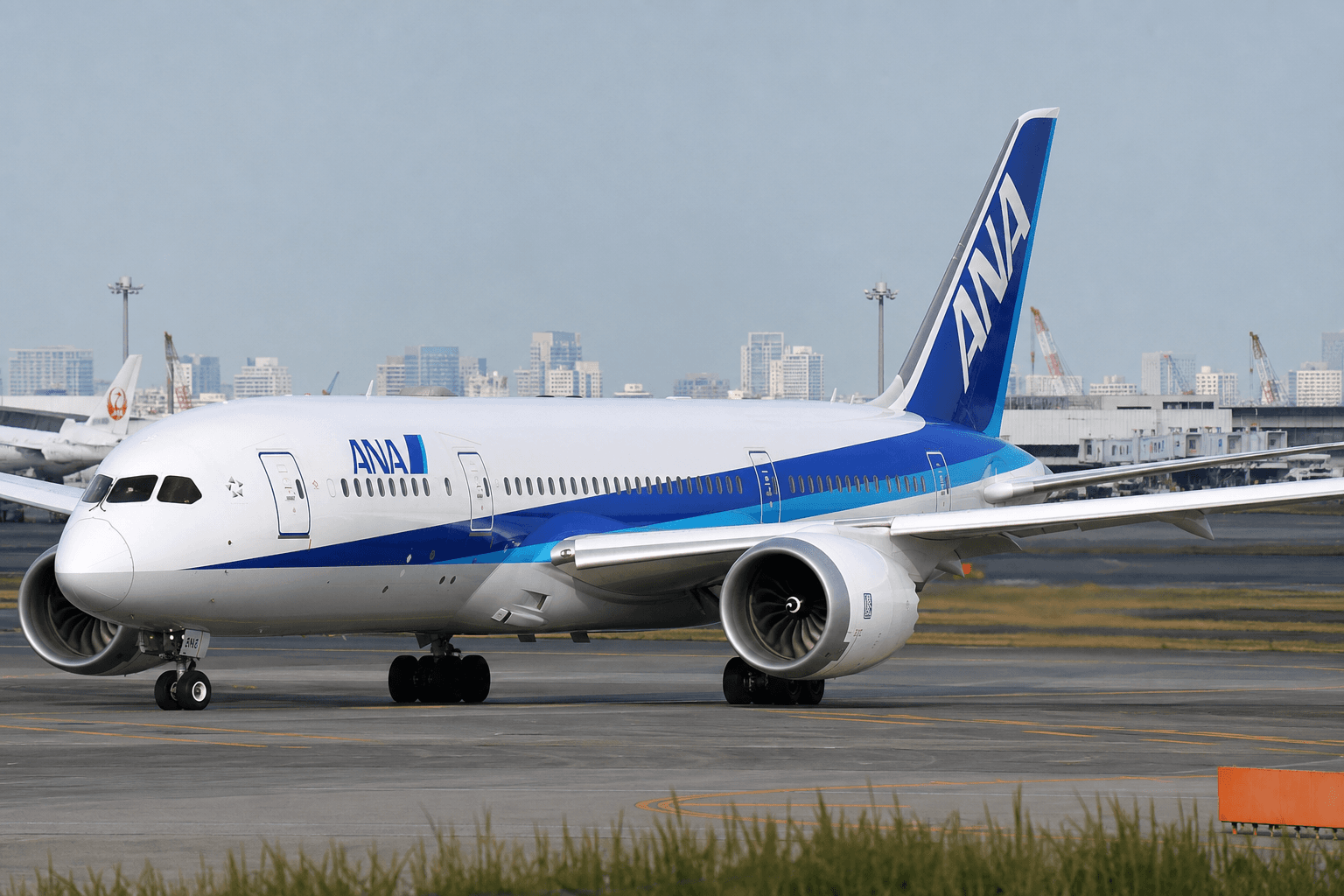
Illustration: The Touch & Go
All Nippon Airways Captain Sentenced to Prison for Sexual Assault of Flight Attendant
A Tokyo court sentenced ANA Captain Ryota Mise to 18 months in prison for sexually assaulting a flight attendant during a 2023 layover, highlighting workplace power abuse concerns.
The gist
ANA pilot Ryota Mise received an 18-month prison sentence after sexually assaulting a flight attendant who feared reporting due to career risks.
A captain for All Nippon Airways (ANA), Japan's largest airline, has been sentenced to eighteen months in prison after a Tokyo court found him guilty of sexually assaulting a female flight attendant during a domestic layover. Ryota Mise, 44, allegedly grabbed the attendant's buttocks multiple times as they were walking and inside a convenience store while returning to their hotel in Takamatsu, Kagawa Prefecture. The incident occurred in October 2023 after the two had socialized with other crew members following a flight to Takamatsu earlier that day.
The victim testified that she felt unable to refuse the assault because she feared significant harm to her career if she resisted. She and Mise had met the previous day and were returning after dinner with a group of crew. Despite Mise's claim to the court that he believed he had permission to touch her, Judge Takao Okawa rejected this defense, calling her testimony convincing and highly credible. This ruling played a critical role in the conviction and sentencing of the captain.
Following the incident, the flight attendant reported the assault internally to ANA, prompting the airline to open its own investigation. Mise admitted to touching the attendant but, based on his explanation, the airline initially allowed him to continue flying. However, after the case was reported to police, criminal charges were pursued. The police arrested Mise, and the subsequent legal proceedings culminated in the prison sentence handed down on July 14, 2026, which was slightly less than the 20 months requested by prosecutors.
This case underscores ongoing concerns about workplace hierarchies and power dynamics within certain sectors in Asia, including aviation. In Japan and other countries, employees sometimes feel pressured to comply with inappropriate behavior from superiors out of fear for their professional advancement or safety. Such a culture can be especially problematic in aviation, where strict hierarchies make speaking out against misconduct particularly difficult.
The ANA case has drawn parallels with recent issues at Japan Airlines, which faced scrutiny after a senior flight attendant was found over the legal alcohol limit before a domestic flight. The attendant had avoided submitting pre-flight breathalyzer tests until being caught during a company-administered test, leading to flight delays. This prompted Japan Airlines to enforce a strict no-alcohol policy during layovers for all flight attendants and resulted in the airline's CEO taking a temporary pay cut.
ANA's decision to permit Mise to continue flying after the internal probe, prior to police involvement, has raised questions about corporate responses to sexual misconduct allegations. The criminal conviction and imprisonment mark a firm judicial stance but also spotlight the importance of timely and decisive internal action to protect crew members and uphold workplace safety.
Legal experts and aviation observers say that the case could have broader implications for how Japanese airlines and possibly other Asian carriers handle harassment complaints and manage crew welfare. Given the operational risks associated with impaired or psychologically compromised personnel, airlines must balance disciplinary actions with safety mandates.
This ruling is among the more severe legal outcomes related to intra-crew misconduct in Japan's aviation industry, setting a precedent that could influence internal policies and the willingness of victims to come forward. It also serves as a cautionary example highlighting the critical need to address hierarchical abuses and ensure a safe environment within airline operations.
Frequently asked questions
- What was the reason the flight attendant did not refuse the captain's advances?
- The flight attendant feared she could suffer damage to her career if she said no, leading her to allow the captain's inappropriate behavior.
- How did All Nippon Airways initially respond to the sexual assault complaint?
- ANA conducted an internal investigation, accepted the captain's admission but allowed him to continue working as a pilot prior to police involvement.
- What sentence did the court give to Captain Ryota Mise?
- A Tokyo court sentenced Ryota Mise to 18 months imprisonment for sexually assaulting the flight attendant during a layover in 2023.
Read more
All Aviation Safety →
Deaf Man Sentenced to 18 Months for Targeting Delta Pilot with Laser Pointer Near Buffalo Airport
A deaf man from Cheektowaga, New York, has been sentenced to 18 months in a federal prison after he pleaded guilty to aiming a laser pointer at the pilot of a Delta Air Lines plane, which was on its final approach to land at Buffalo Niagara International Airport. 31-year-old Joseph L. Crapsi had been fighting the prosecution brought by the Assistant U.S. Attorneys Charles M. Kruly and Craig R. Gestring following an investigation by the Niagara Frontier Transportation Authority Police Department and the FBI. Crapsi’s attorneys had asked the court to suppress evidence that the laser pointer was found in his bedroom and objected to a finding that police had probable cause to arrest him. In the end, however, the court found that the police were within their rights to arrest him, and the laser pointer was used in evidence. The case stemmed from an incident on the night of March 2, 2024, when Delta flight DL-2334 was coming into land. The final approach path saw the jet fly close to Crapsi’s house in Cheektowaga, just a few miles from Buffalo Niagara Airport. Following the incident, the pilot reported the ‘laser strike’ to police, who started making enquiries in the area that the crew said the laser was coming from. One of Crapsi’s neighbors told officers that they saw a laser shining through his window on ‘multiple occasions.’ Given that the laser was seen shining into the sky, the court ruled that this was sufficient to meet the low standard of probable cause. Officers knocked at Crapsi’s address and were invited inside. They went with him to his bedroom, where they noticed a laser pointer ‘in plain sight.’ The laser pointer was seized as evidence, and Crapsi was arrested. Crapsi eventually pleaded guilty to aiming a laser pointer at an aircraft contrary to 18 U.S. Code § 39A, which carries a maximum sentence of five years imprisonment. Late last week, U.S. District Judge Lawrence J. Vilardo sentenced Crapsi to 18 months’ imprisonment. In 2023, there were a record 13,304 laser pointer incidents reported across the United States – an increase of nearly 80% compared to 2016. The number of incidents have, however, slightly decreased in recent years. In 2024, there were 12,840 reported laser incidents, and 10,993 were reported in 2025. So far this year, there have been 3,325 incidents up to the end of June. It was made illegal to aim a laser pointer at aircraft in 2012, following a dramatic rise in the number of incidents being reported by pilots. The Federal Aviation Administration (FAA) reports that the vast majority of laser strikes occur on Fridays and Saturdays, with a noticeable increase in reports during the months of October and November. Laser incidents can temporarily blind and injure pilots. In one incident involving a Virgin Atlantic flight from London to Tel Aviv, Israel, the pilots had to return to London because the pilot’s vision got progressively worse and he was only able to see out of one eye.
Cirrus Debuts SF50 G3 Vision Jet With Advanced Avionics and Enhanced Comfort
It was in the middle of a flight to explore the capabilities, handling, and operating envelope of the Cirrus SF50 G3 Vision Jet that it happened. Ensconced at FL 220, a modest height for a jet with a max operating altitude of FL 310, with the features of the Garmin Perspective Touch+ automation gracefully keeping the aircraft in the proper groove in the sky, I finally had time to simply look around and enjoy the experience. My overall impression was that the large flight deck and cabin windows allowed me to see much more of the sky, the world, and the airframe of this jet than I ever have in an airplane that didn't have a bubble canopy. The air was dead smooth, and despite a ground speed north of 300 knots, it felt as if the flying machine were suspended in the sky, with the earth turning beneath us. I was seated as comfortably as I have been in any aircraft, savoring the extent of the view when it hit me. This Article First Appeared in FLYING Magazine If you're not already a subscriber, what are you waiting for? Subscribe today to get the issue as soon as it is released in either Print or Digital formats. Subscribe Now I was on a magic carpet, every bit as luxurious and capable as those of ancient tales. All that remained was for adventures to begin as it carried me forward. Vision Jet Development How did a general aviation manufacturer get here, delivering over 700 of the first general aviation, single-engine, single-pilot personal jets with the Cirrus Airframe Parachute System (CAPS)? Cirrus did it the same way musicians get to Carnegie Hall, with practice, hard work, progressive thinking, and a plan for the future. Cirrus succeeded where at least seven other companies did not. Even before the Vision Jet became hopeful drawings, the manufacturer was designing its SR Series (SR20, SR22, SR22T) with flight decks, performance profiles, and sophisticated avionics with the goal of making it realistic for a competent SR pilot with significant IFR experience to step up into its planned but as yet undesigned jet. In 2007 Cirrus principals Dale and Alan Klapmeier began publicly talking about "the jet" that was being designed in what they called the company's "Moose Works" in Minnesota. It was to be similar to the SR series and capable of being stored in the same 40-by-40 hangar that could house a Cirrus SR22. READ MORE: We Fly: ScaleWings SW-51 Is So Real, It's Surreal READ MORE: We Fly: Pilatus PC-12 Pro An early prototype was flown in 2008, a bad time for general aviation overall, so it was not until 2014 that there was enough capital to build and fly a conforming prototype. In 2016 the first production SF50 flew, the jet received FAA type-certification, and deliveries began. Since then, Cirrus has shown that pilots with experience in high-performance, piston-engine airplanes can step up into the SF50, pass the type rating practical exam on the first try, and safely operate the jet in the real world. Cirrus has also made upgrades to the Vision Jet, most notably with the G2 in which it upped its maximum altitude from FL 280 to FL 310, bumped max cruise up to 317 ktas, and installed the Garmin Perspective Touch+ integrated flight deck. Along the way, "Safe Return Emergency Autoland," Garmin's Autoland, was added and payload and performance boosted. G3 Vision Jet Model In February, Cirrus announced and began deliveries of the G3 Vision Jet with some 30 enhancements, primarily to increase the capabilities of the avionics, visibility of the plane, and comfort for those in the cabin. Without attempting to go into all the G3 improvements, I'll look at some that grabbed my attention. From an operational and pilot workload perspective, the ATC Data Link (Cirrus also uses the acronym CPDLC for Controller-Pilot Data Link Communication) system, allowing text communications between a controller and the jet, is way up there in providing support to a pilot. The pilot initiates contact with ATC through the CPDLC and starts receiving clearances, new radio frequencies, altitudes and routes via text message. A tone alerts the pilot to an incoming message. The pilot reads it, decides if it can be complied with and, if so, taps the Wilco and send buttons. If unable to comply, the pilot can say so and explain why, just as we do now via voice—except this is faster. Plus, the message is saved, so the pilot has, for example, the route clearance written out in much better handwriting of their own. Ergonomic leather seats are notably comfortable on the Cirrus SF50 G3 Vision Jet. [Credit: Erin Armstrong] If desired, the pilot can tell the system to load the clearance into the Garmin automation, setting up the route, initial altitude, and additional information. The pilot then just confirms that everything loaded correctly and activates the change. En route, a call to change frequencies doesn't take up airtime, the pilot sees the frequency written (less chance of loading it incorrectly), punches Wilco and send to confirm receipt and compliance, and has the new frequency loaded into the appropriate comm radio in either the standby or active position. It's delightfully easy, and there's no back and forth with a controller trying to get the numbers right. Another new feature is a time-saver anyone operating an aircraft should like—all databases are automatically updated while the Vision Jet is parked with Cirrus IQ Pro Advanced. Alerts-linked checklists are almost a third hand for a single pilot when something out of the ordinary pops up. In the event the electronic alerting system advises them of an abnormal or emergency event, it also pulls up the appropriate checklist—no more pulling out a thick binder and finding the appropriate one. As the pilot deals with each checklist item, they use the scroll wheel to track and then click on it, and the cursor moves to the next item. That continues until the checklist is complete and the situation has been handled or it's time to put the jet on the ground—and the electronic checklist provides guidance for that as well. Having used Garmin's Taxiway Routing and 3D SafeTaxi in other aircraft, I'm glad to see that safety feature in the Vision Jet. No matter how many times I've gotten into a Vision Jet, I am always mildly surprised how big the cabin is. For the G3, Cirrus has made even better use of the space. Until now, the SF50 could hold five adults and two kids—one adult in the center of the rear bench seat flanked by the two children. All the passenger seating has been reworked. The rear bench seat now holds two adults, one on each end, with space and a restraint system for a child between them. Although the passenger seats still use the same attach points, they have been upgraded in a fashion that gives 2 inches more legroom for the rear seat and smoother operation of the middle seats. Use of new foam makes what I always thought were comfortable seats even more so. As Cirrus was developing the SF50, it was also considering appropriate training for the required type rating. If it's a jet, the PIC must have a type rating in it, which involves a check ride to ATP performance standards with an examiner satisfactory to the FAA. Planning for pilots stepping up from its SR series, Cirrus decided to keep the Vision Jet training in-house, at its Knoxville, Tennessee, Vision Center containing two full-motion Level D flight simulators. Cirrus personalizes type training by working with the new owner-to-be beginning several months before the formal type rating training is to begin. Delivery of the aircraft is not tied to the training schedule, reducing pressure during training. The Basics Powering the SF50 is a Williams International FJ33-5A jet engine developing 1,846 pounds of thrust. Maximum operating altitude is FL 310, where its max cruise is 317 ktas while burning 65 gph. At that height the pressurization system generates an 8,000-foot cabin altitude. Maximum ramp weight is 6,040 pounds with max
Flamingo Air grounded after fatal Cessna 402 crash at San Andros airport
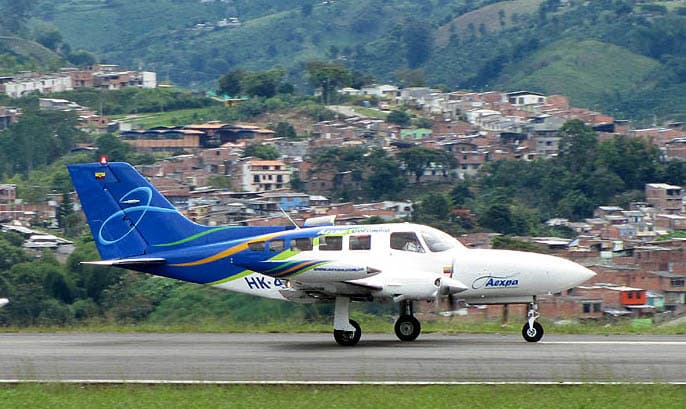
No survivors after twin-engined aircraft came down near San Andros airport. Bahamian authorities have suspended the air operator's certificate of regional carrier Flamingo Air after a fatal Cessna 402 accident. The Royal Bahamas Police Force says 10 occupants were on board the aircraft, only one of whom survived the initial crash at San Andros airport before succumbing to injuries. "Upon arrival, officers found the aircraft engulfed in flames," it states, adding that the fuselage, tail and right wing sustained "extensive" fire damage. Civil Aviation Authority Bahamas says Flamingo Air's AOC has been "temporarily suspended" following two safety occurrences involving the operator on 10 July, the Caribbean region state's anniversary of independence. "The suspension will remain in effect pending the outcome of the authority's investigation," it adds. "The authority emphasises that this is a precautionary regulatory measure intended to ensure the continued safety of the travelling public." Investigators in the Bahamas have commenced preliminary work to preserve evidence and collect technical information after the accident. The aircraft "encountered difficulties" and "crashed into bushes" prior to landing, says the Bahamas aircraft accident investigation authority. It identifies the airframe involved as C6-FLX and says it was en route to San Andros after departing Nassau's Lynden Pindling airport. There are indications, yet to be confirmed, that the aircraft crashed short of runway 12 while on approach. Initial investigative activities already completed include securing and documenting the accident site, it says. "The investigation remains in its preliminary stage," it adds. "Investigators will continue to gather and analyse factual information relating to all aspects of the occurrence." The authority has asked individuals to contact the inquiry if they have any relevant photographs or video recordings. It stresses that "no determination" has been made regarding the cause of, or contributing factors to, the accident.
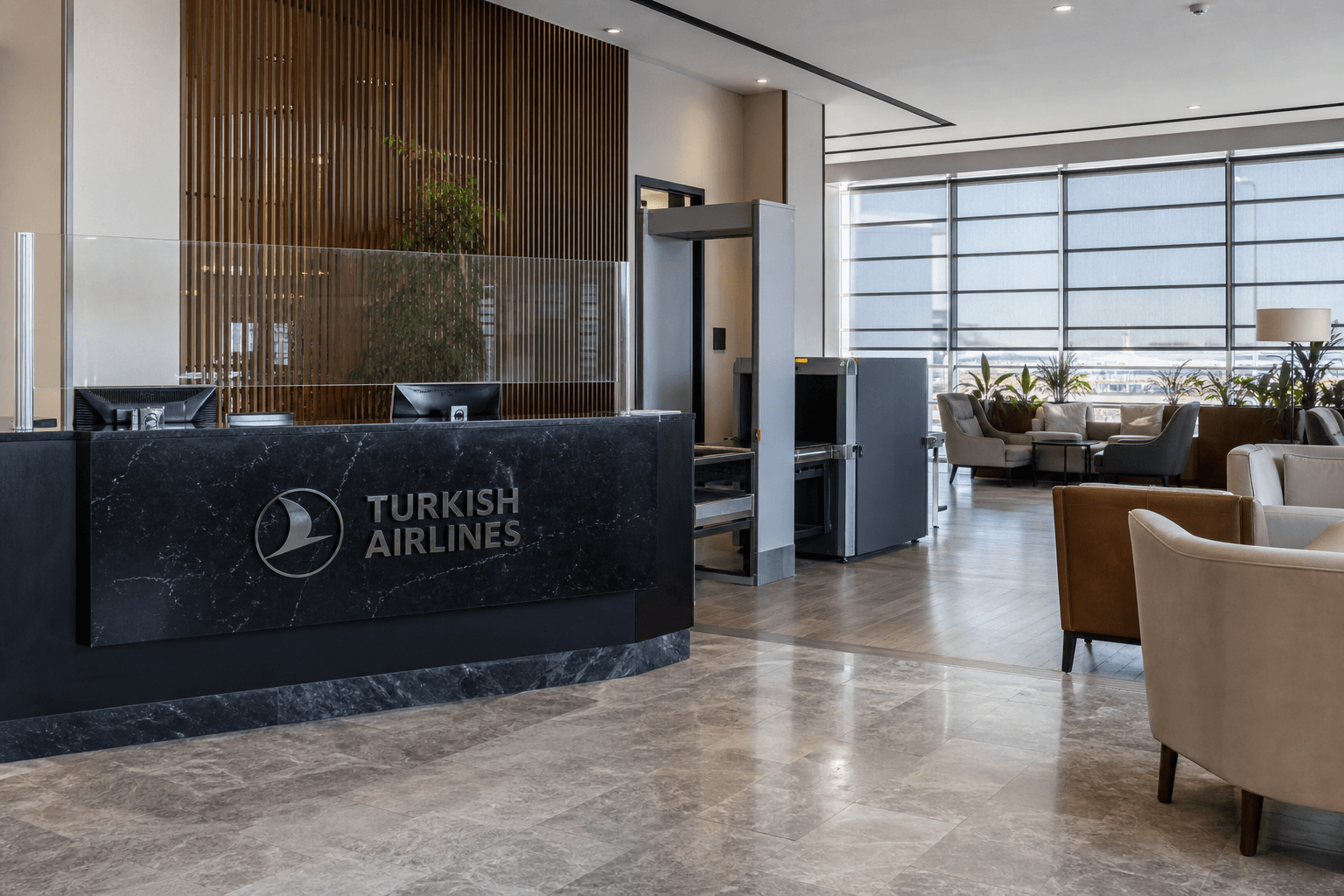
Passenger Reports Sexual Assault by Security Guard in Turkish Airlines Lounge at Kayseri Airport
OMAAT reader Ivan shared a bizarre experience with me, whereby he was sexually assaulted in a domestic Turkish Airlines lounge by a security guard… with multiple interactions! He asks for my take on this, and I find this to be so shocking that I'm not even sure what to think. Predator security guard in Turkish Airlines lounge Kayseri At around 4PM on July 4, 2026, Ivan was traveling out of Kayseri, Turkey (ASR). Let me just share his claims in full, since I want to be as accurate as possible: My family (wife and two kids) and I were in the Turkish Business Class Lounge at the airport. I'm not sure how familiar you are with Turkish domestic lounges, but the ones we visited had their own security and agents, apart from the main terminal. After we were seated, I noticed there was an issue with our connecting flight in Istanbul, so I went to clear up the matter with the agent in the lounge. When I exited the doors to discuss the issue with the agent, I realized that the agent was not there. There were two security agents nearby, and the male security agent must have seen a confused look on my face, and must have thought I needed to use the the bathroom. I told him three times that I did not need to use the restroom, I need to talk to an agent. At this point he stood up and walked over to me. When he got near me he asked what I needed. At this point he got very close to me but I didn't think much of it, as I assumed he was trying to look at my tickets. At the same time, I felt a hand or something brush against the front of my pants, and I backed up. Again, I thought this was an accident, and it wasn't intentional. This was all happening in a wide open space that was within eye shot of the other security person, a female, if she were paying attention, so I had no reason to think it was malicious. The next thing that happened, which I then began to question internally, was that he got closer while looking at our tickets. One hand was near the tickets in my hand, as I was explaining what was going on, and the other hand was down near my crotch, and he had a finger pressed against my private area. I thought to myself, "ok, this is strange but I don't want to make a scene here because I'm just trying to fly to the beach with my family and I just need this sorted out." This entire interaction lasted about one to two minutes, and the the Turkish agent was back and we got all of our ticketing issues sorted out. That brings us to the second interaction, which happened just shortly thereafter: After that interaction, I went back to join my family in the lounge, and didn't make mention of it, since it was odd and brief and not worth alarming my wife about, though in hindsight I should have said something. About 15 minutes before boarding, I figured it'd be best to use the bathroom in the lounge before getting on the flight. The way the lounge is set up, you have to "leave" the lounge to use the bathroom, but it's before the business class security station ,and the bathroom is right next to the security station. The airport is very small, so security doesn't have much to do most of the time. I walked out of the lounge and walked towards the bathroom, passing the security station in the process. As soon as I walked by the security station, I noticed the male security agent stand up and walk towards the bathroom. At this point I thought it was weird, but it got really weird right after that. The main door to the bathroom was propped open, not too dissimilar to bathrooms all over the world. After I walked in the main door, the security guard came in after me, maybe five seconds or so later, and closed the door behind him. This bathroom was small, two urinals and two stalls. When he came in, he closed the door, and I immediately got nervous and knew I was in a bad situation. As I was standing at the urinal attempting to do my business, I noticed him behind me checking to see if anyone was in any of the stalls. At this point I was frozen and did not know what to do. After he realized that no one was in the stalls, he goes to the urinal next to mine. The urinals have those half walls so that you can't really see anything below the shoulder/neck of the person next to you. He puts his chin on the half wall and looks at me, down there. I did not look over at him or make any eye contact. I was thinking to myself, "how in the hell am I going to get out of this situation?" Maybe about 20-30 seconds into this encounter another passenger walks into the bathroom, and by the time the other passenger comes around the corner, the security agent "zipped up" and was on his way over to "wash his hands." I had an immediate wave of relief come over me, and was unbelievably happy that someone else walked in and saved me from whatever was about to happen. They had no idea. For what it's worth, I did not use the bathroom at all. Once I realized what was going on, nothing was happening and I just stood there. In hindsight, the security agent was probably wondering what was going on since he was so into what I was doing. Then when he returned to the lounge, here's the conversation he had with his wife, along with the questions he asks me: I walked back to the lounge and told my wife EVERYTHING. I told her about both interactions, and she was shocked, pissed, floored, and wanted to do something about it. I told her that I didn't even end up going to the bathroom at all, and the reasons for it. She asked if I wanted my son (13) to go with me so that I could use the bathroom, but I told her no, because if he was that brazen to do that to me, I don't want him anywhere near my son. She asked why I didn't say or do anything, and my response was that we're not in America. Every country has different rules. I dont know what would have happened I stepped up to the guy. Perhaps we were in a country where they heavily side with security and any mention from to authorities that I did anything wrong could result in my being in jail or detained for a few days. If this occured in the US, I would have most likely told him off during the first interaction, and definitely in the second interaction. Lastly, I looked up reporting it to Turkish authorities, but wanted to wait until after I left the country. It's not a straightforward process so I just let it go. How would you have handled this situation? Although it was traumatizing and infuriating, I think I handled it as best I could, based on the factors mentioned above, especially the fact that I was traveling with my family and we were in a foreign country. This guy is a predator and I know for a fact that he has done this before, and will do it again. It's extremely unfortunate but not sure what can be done about it. This all happened inside a Turkish Airlines lounge How does one even approach a situation like this? I think Ivan handled this situation incredibly well, all things considered. A few initial thoughts come to mind: I can see how at first Ivan thought the situation was strange, but didn't want to draw any conclusions, but when the second incident played out, there was no denying what was going on here I agree with Ivan that if the details in this post are as presented, this wasn't the first time that this guy has done something like this I don't blame Ivan for being cautious about reporting this to authorities, especially when traveling with family in a foreign country, because who knows how they'd respond, especially in a country where you're not so familiar with the laws, the approach police take in such situations, etc. I think I would've handled the situation the way Ivan did, and I don't think I would've tried to get "authorities" involved, since I could see situations where that wouldn't end well for me. I think Ivan is taking the right approach here — he's sharing his story after leaving the country, and I'm writing about it, and hopefully this gets forwarded to the right person to be addressed (or maybe I just get banned from Turkey, I du
The Daily Touch & Go
The day's best aviation news in your inbox. Free, no spam.