

Illustration: The Touch & Go
FAA Broadens Eligibility for Swift Fuels 100R Unleaded Avgas to Over 1,600 Aircraft Models
The FAA has expanded the Supplemental Type Certificate for Swift Fuels' 100R unleaded avgas, approving more than 1,200 engine and 1,600 airframe models to support lead-free aviation fuel adoption.
The gist
FAA approves Swift Fuels' 100R unleaded avgas for over 1,600 piston aircraft models, advancing the shift from leaded aviation gasoline.
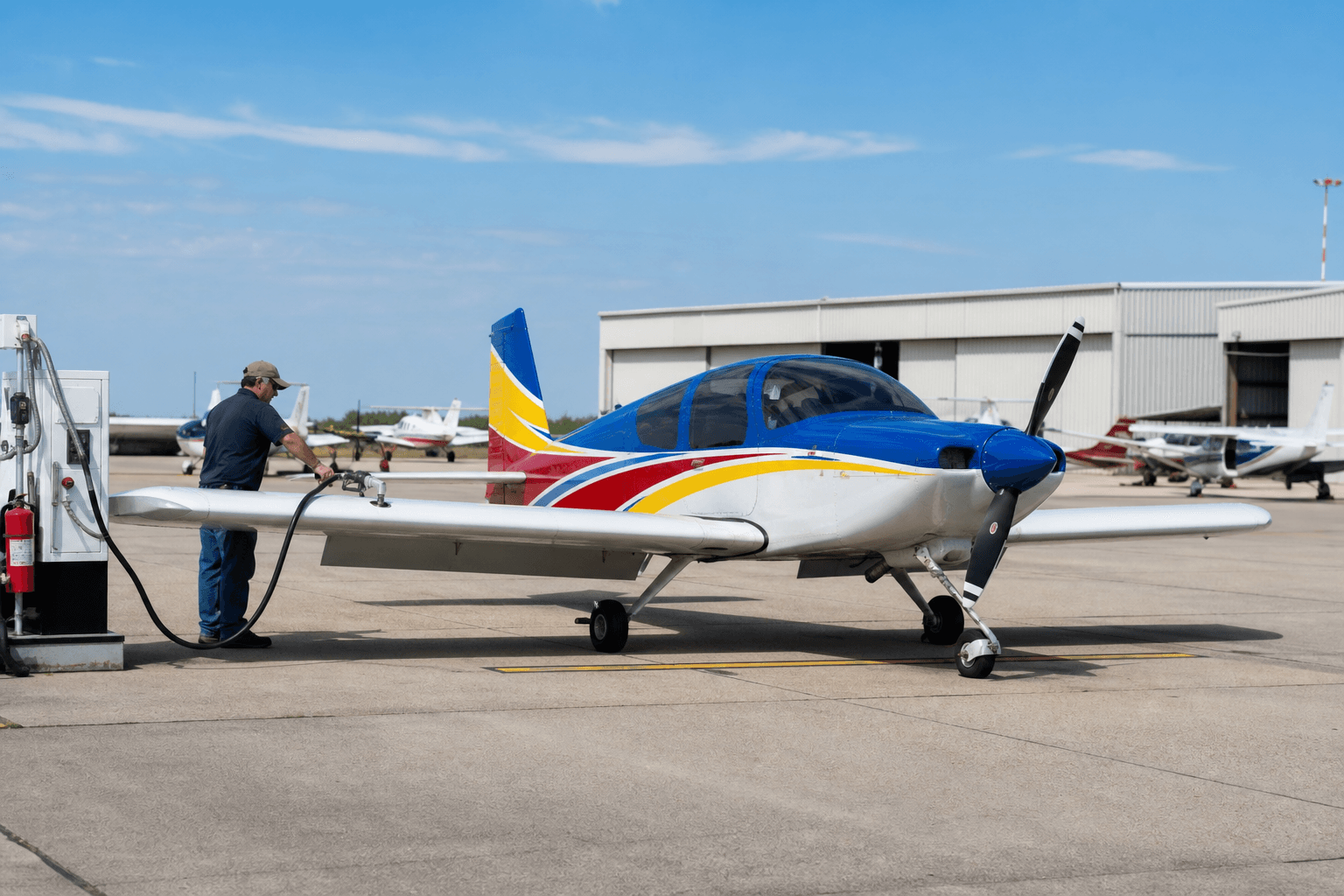
Swift Fuels announced on Tuesday that the Federal Aviation Administration has greatly expanded the list of piston aircraft eligible to use its 100R unleaded aviation gasoline. This expansion, applied through updates to the fuel’s Supplemental Type Certificate, adds more than 1,200 engine models and 1,600 airframe models. The move is a significant milestone in reducing the piston fleet’s reliance on leaded 100LL avgas by the end of the 2020s.
The expanded Approved Model List now includes engines from more than 80 manufacturers, with a detailed breakdown highlighting approximately 395 Lycoming, 195 Continental, 95 Curtiss-Wright, and 95 Pratt & Whitney engine models. On the airframe side, the update also covers more than 1,600 aircraft models, including about 118 Cessna, 101 Beechcraft, and 98 Piper models. Additional approved airframes come from Mooney, Grumman, Stinson, WACO, and Fairchild, among others.
This addition to the STC means that aircraft owners and operators representing roughly 56 percent of current U.S. consumption of 100LL avgas now have the regulatory clearance to transition to Swift Fuels’ 100R. This phase constitutes the first step in Swift’s broader certification plan, signaling a systematic approach to expanding unleaded avgas usage throughout the piston fleet.
The company expects further certification rounds in Phase II and Phase III, scheduled through 2028, to add higher-performance engines and airframes that remain uncertified. These steps are part of ongoing efforts by the FAA and industry stakeholders to progressively replace leaded avgas in piston-powered aviation.
Swift Fuels emphasizes that 100R remains the sole commercially available 100-octane unleaded avgas meeting both FAA-approved Supplemental Type Certificates for eligible aircraft and ASTM International’s D8603 production standard. Use of this fuel requires aircraft owners to obtain the corresponding STC, ensuring compliance with certification requirements.
For those who previously acquired the company’s UL94 STC, Swift Fuels offers automatic transition to the 100R STC under its Forever STC program at no additional charge. This policy facilitates easier adoption of the new unleaded fuel and supports fleet modernization efforts without imposing extra cost burdens on owners.
Commercial sales of 100R have been ongoing for nearly two years across five airports each in the United States and Europe. Now, distribution is expanding, with the initial transition from UL94 to 100R slated to begin this summer at participating U.S. airports spanning 29 states, including California, Colorado, Arizona, Florida, Minnesota, Utah, and Wisconsin. The international footprint has also grown to include airports in Canada, Australia, Germany, France, Austria, the United Kingdom, and the Netherlands.
Certification work continues collaboratively among the FAA, Swift Fuels, and engine manufacturers to bring the remaining high-performance piston engine fleet into compliance with unleaded fuel operation. Additional approvals are planned for 2027 and early 2028, extending the environmental and operational benefits of 100R to an even broader base of piston aircraft.
The FAA initially approved Swift Fuels’ 100R STC in September 2024, marking the regulatory groundwork upon which these recent expansions build. With these latest updates, Swift Fuels advances the nation’s flight departments and general aviation community toward a safer and cleaner piston aviation fuel environment.
Frequently asked questions
- Which aircraft engines are now approved to use Swift Fuels’ 100R unleaded avgas?
- The expanded FAA Supplemental Type Certificate includes over 1,200 engine models from more than 80 manufacturers, notably approximately 395 Lycoming, 195 Continental, 95 Curtiss-Wright, and 95 Pratt & Whitney engines.
- What proportion of the U.S. 100LL avgas consumption is covered by the new 100R approval?
- The newly approved aircraft account for about 56 percent of current U.S. 100LL avgas consumption, marking significant progress toward unleaded fuel adoption.
- How can owners of aircraft with previous UL94 STCs switch to using 100R avgas?
- Owners who purchased Swift Fuels’ UL94 STC will automatically receive the 100R STC through the company’s Forever STC program at no additional cost, facilitating an easy transition to 100R usage.
Read more
All Regulatory →
FAA Seeks Members for Aircraft Noise Advisory Committee Over Six Months Late
The FAA published a notice July 10 seeking members for an aircraft noise committee more than six months after the panel's recommendations were due under a congressional timetable. Nominations for the Aircraft Noise Advisory Committee must be submitted by Aug. 10. Committee Created By Congress Congress directed the FAA to establish the committee within 180 days of the FAA Reauthorization Act's May 16, 2024 , enactment. The FAA chartered the panel Jan. 14, 2025. The law required the committee to recommend changes to federal aviation noise policy within one year of establishment, placing that deadline on Jan. 14, 2026, based on the FAA's stated establishment date. The delay also affects the FAA's broader review of aircraft noise policy. The agency said it will wait for the committee's recommendations before completing its Noise Policy Review or updating Part 150 airport-noise regulations. The FAA began the review in 2023 and received 4,857 public comments. Noise Standard Under Review The committee will evaluate the FAA's 65-decibel Day-Night Average Sound Level threshold, alternative noise metrics and existing mitigation strategies. The threshold originated in federal policy adopted in 1976 and was incorporated into Part 150 land-use guidelines in 1981. It helps determine residential land-use compatibility, eligibility for federally funded sound insulation and whether noise effects are considered significant during environmental reviews. Membership will include representatives from engine and aircraft manufacturers, airlines, airports, advanced air mobility companies, higher education and airport-adjacent communities. Those categories were established by Congress and do not include a dedicated seat for general aviation pilots, aircraft owners or GA organizations. Members will serve two-year terms and are expected to meet at least twice annually.
FAA Unveils Proposal to Revamp Mechanics' Inspection Authorization Renewals
The proposal would replace the current inspection authorization renewal process.
FAA Contracts L3Harris to Modernize ADS-B Ground Network Through 2045
L3Harris will modernize more than 700 FAA ground stations used for aircraft position reporting.
Embraer's Praetor 500E Earns Triple Certification in U.S., Europe, and Brazil
Manufacturer receives approval to introduce the midsize jet in the U.S., Europe, and Brazil.
The Daily Touch & Go
The day's best aviation news in your inbox. Free, no spam.