

Illustration: The Touch & Go
San Diego ATC Clash with Pilots Highlights Stress on Busy Single-Runway Operations
A tense exchange between San Diego ground controllers and airline pilots reveals operational challenges amid high traffic and constrained taxiways at the airport.
The gist
San Diego's congested single-runway airport sparked a sharp verbal clash between ground controllers and pilots amid complex taxiing delays.
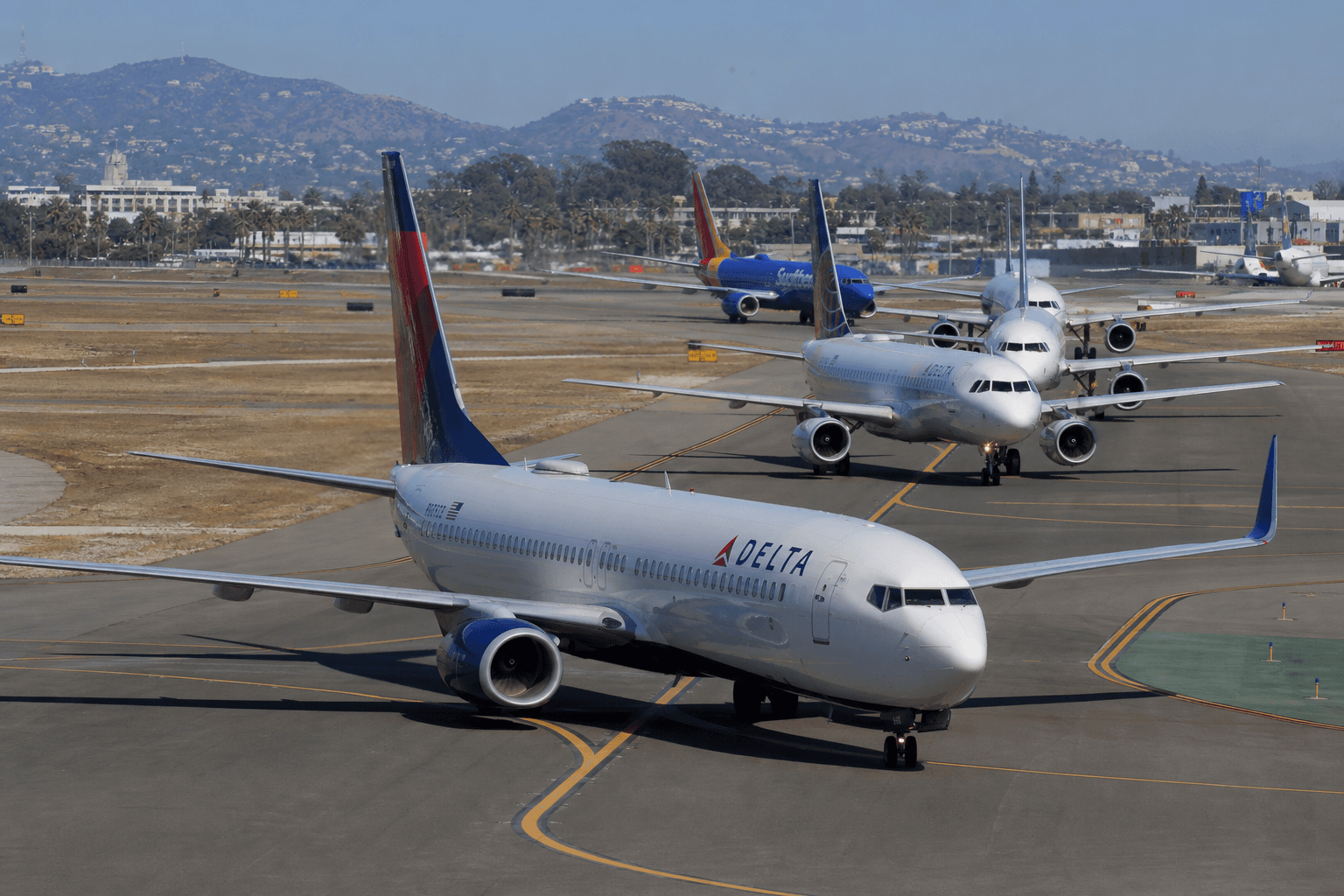
San Diego International Airport (SAN) recently became the spotlight for a notably fraught interaction between ground air traffic controllers and commercial pilots striving for timely taxi clearance. Amid a busy morning, the airport's limited single-runway infrastructure and constrained taxi space created a challenging environment for controllers trying to manage a steady stream of aircraft movements. This scarcity of maneuvering space compounded difficulties when multiple planes landed ahead of schedule with no available gates to immediately serve them, leading to bottlenecks on the ground that required careful orchestration to resolve.
The ground controller responsible for managing arrivals and departures was evidently under pressure to manage several aircraft clustered around limited taxiways while coordinating their movement without incident or delay. When a United Airlines pilot queried the controller about the taxi clearance status for flight 1069 to Chicago, the controller's terse refusal highlighted the ongoing congestion. The operator explained that taxiway availability was effectively blocked by planes holding after early arrival, creating a queue that negated the advantage of being first or fourteenth in line.
Following the United Airlines exchange, a Southwest Airlines pilot attempted to obtain taxi clearance for flight 3896. The controller cited inbound traffic and local congestion in what was referred to as the 'alley'—a narrow taxiway segment—as reasons for the delay. Despite the pilot's insistence that the inbound aircraft were now parked, the controller remained firm, indicating that an appropriate slot to proceed would be called when traffic permitted. He further instructed the pilot to check with ground crew for visual confirmation of the following aircraft’s position when clearance became feasible.
Tensions evidently escalated when the Southwest pilot suggested the controller be replaced, a remark that elicited a sharp comeback questioning the pilot’s attitude. This verbal exchange continued with an unidentified third party telling the controller to return to LaGuardia Airport, injecting a dose of regional airport rivalry into the confrontation. Such exchanges underscore the emotional toll and interpersonal friction that can arise when operational constraints meet high-stakes airline scheduling pressures.
San Diego's setup as a single-runway airport with limited taxiways inherently predisposes it to congestion and operational complexity, particularly during peak traffic periods. Air traffic controllers in such environments must balance efficiency and safety, juggling fast turnaround expectations from airlines and pilots against the ground infrastructure's finite capacity. The controllers’ responsibility to sequence departures and arrivals while avoiding runway incursions or bottlenecks challenges both their procedural skills and composure under stress.
These incident recordings provide a rare, candid glimpse into the dynamic, sometimes fraught communications on airport ground frequencies. Controllers aim to manage numerous aircraft movements safely and expeditiously, often with barely moments between transmissions. While the controller's firm tone and detailed justifications might reflect the necessary urgency in the scenario, protracted explanations can sometimes exacerbate tension rather than defuse it. A more succinct communication style might help maintain professionalism and reduce confrontations during busy operations.
The pilots’ candid responses reflect their pressure to meet tight schedules, with follow-up requests for taxi clearance representing a frequent feature at congested airports. Such requests are part operational necessity and part pilot impatience, which can be fueled by unpredictable ground delays. However, discontent expressed through inappropriate remarks risks undermining the cooperative spirit necessary for smooth air traffic management, especially in constrained operational settings.
This episode illustrates the delicate balance between maintaining order on the ground and managing human factors during busy airport operations. It also highlights the potential value of improved airport infrastructure or procedural adjustments to ease taxiway congestion and reduce queue lengths. Until changes in physical or system capacity can be made, both controllers and pilots must navigate the tensions inherent to managing limited ground resources while upholding safety and efficiency.
Frequently asked questions
- Why was the air traffic controller at San Diego airport unable to clear planes to taxi promptly?
- Because San Diego has only one runway and limited taxiway space, multiple planes arriving early created congestion and limited taxiway availability, causing delays in clearance.
- How did pilots react to the delays and communication from the San Diego ground controller?
- Some pilots followed up repeatedly on their taxi clearance requests and expressed frustration, including telling the controller he needed to be replaced and making other disparaging comments.
- What operational challenges at San Diego International contribute to tense pilot-controller interactions?
- The airport's single runway and cramped taxiway layout create complex ground management challenges during busy periods, requiring controllers to carefully sequence aircraft with limited room for maneuvering, which can lead to delays and stress-induced confrontations.
Read more
All Aviation Safety →
Failure of Ryanair 737-800 Engine Fan Blade Preceded Cabin Window Rupture
Air safety reporting is made accessible without a subscription as a public service. Subscribe to The Air Current for full access to our scoops, in-depth reporting and industry analysis. The rupture of a Ryanair Boeing 737-800 window Friday morning was preceded by an apparent failure of a fan blade from its right engine, a CFM International CFM56-7B, people familiar with the accident told The Air Current. A fan blade failure is a rare but serious safety issue that aircraft manufacturers […]
Trump switches from new VC-25B Air Force One mid-trip amid security concerns
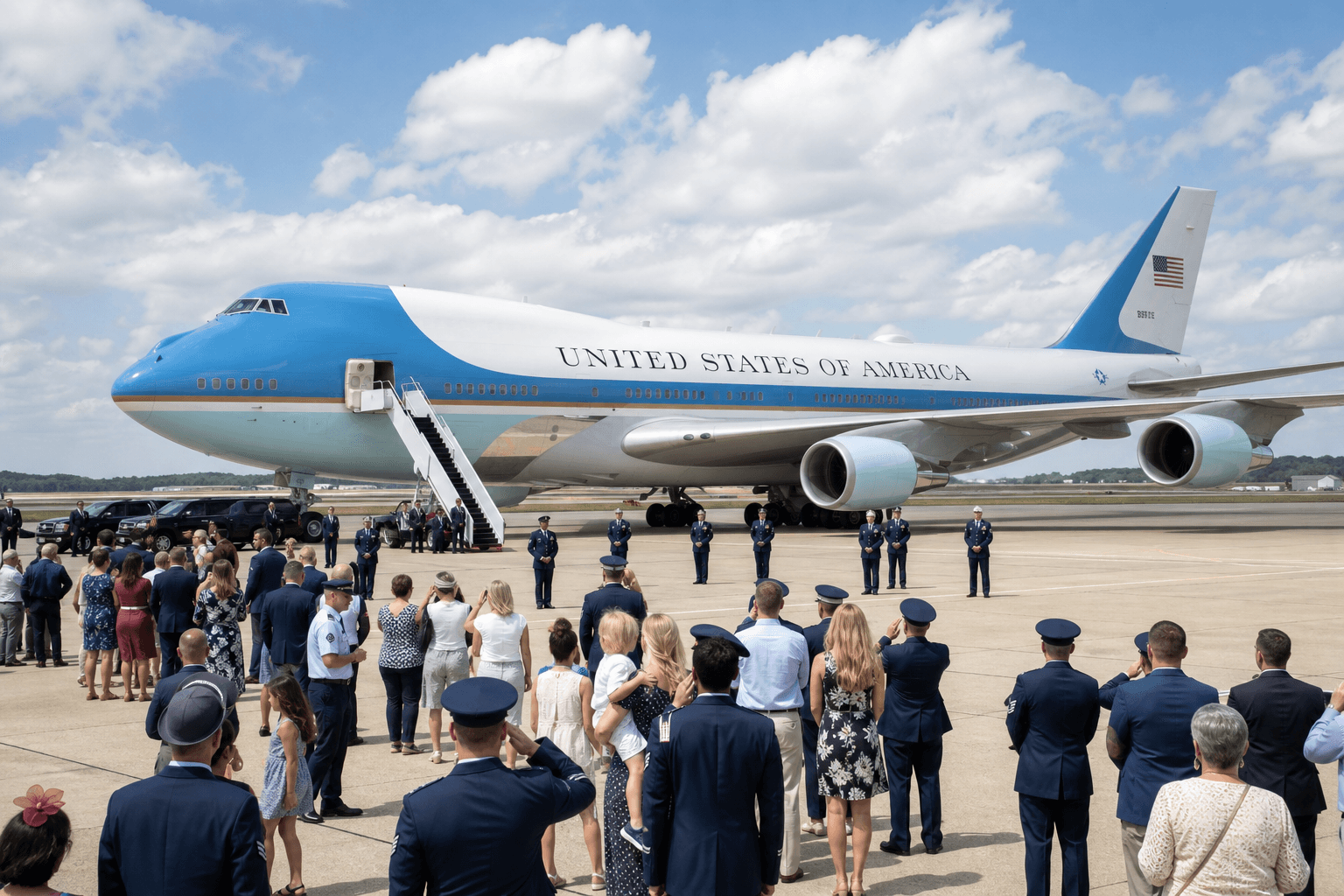
Although the new VC-25B carried US President Donald Trump to Turkey for the NATO summit, he left aboard one of the classic VC-25As. After a high-profile entry into service at the start of July, US President Donald Trump has already had to curtail his use of a new Air Force One executive transport jet. Officially known as the VC-25B Bridge aircraft, the converted 747-8 is the jet famously, or perhaps infamously, gifted to Washington by the government of Qatar. The Boeing Business Jet was then modified into a presidential transport by conversion specialist L3Harris, which delivered it to the US Air Force (USAF) in June. The VC-25B Bridge carried Trump on a domestic trip at the start of July and flew in the Independence Day air show over Washington, DC to celebrate the semiquincentennial anniversary of the USA’s founding on 4 July. Trump then opted for the VC-25B Bridge as his jet of choice to travel to Ankara, Turkey, to attend the annual summit of NATO leaders on 7 and 8 July. However, the freshly painted red-white-and-blue 747 did not carry the US president for the entirety of his journey back to the United States. Instead, one of the older, classically painted blue-and-white VC-25As assumed the Air Force One callsign and bore the presidential retinue from Turkey to RAF Mildenhall in the UK. There, Trump and his entourage swapped jets and crossed the Atlantic on the new VC-25B. The reasons for the switch are not entirely clear. US President Donald Trump boarded one of the air force’s older VC-25A executive transports for the trip from Ankara back to Washington, DC. Source: The White House When asked about the change in Turkey, Trump said the new VC-25B Bridge would stop at a US military base in Europe as an exposition for American troops. The president later posted a photo of the jet on the ramp at RAF Mildenhall, flanked by a number of USAF personnel and their families. Speaking at Joint Base Andrews in Maryland after the return flight aboard the VC-25B, Trump denied that a security concern was behind the 747 shuffle. "No, no,” Trump said on 9 July. “We sent it a little bit early so we could let them see it. The base, the whole base came out and saw the plane." However, media reports suggest there was in fact a serious security worry. During the Ankara summit, Trump reopened hostilities in the Persian Gulf between the USA and Iran, declaring a tenuous ceasefire over. In light of the renewed fighting, the president’s Secret Service security detail urged him to return home on one of the VC-25As, a detail first reported by the New York Times . No specific threat has been officially disclosed. Unverified reports are circulating, including several citing Israeli intelligence sources, that Tehran may have been planning an attack on the president in the near future. Iran has for years been open about its desire to exact revenge on Trump for the killing of former Iranian General Qasem Soleimani in 2020, which Trump ordered during his first term in the White House. Trump and Israeli Prime Minister Benjamin Netanyahu also oversaw the decapitation strikes that killed Iran’s former supreme leader Ali Khamenei and several of his family members on 28 February, which kicked off a devastating bombing campaign against Iran. The L3Harris VC-25B is being described as a “Bridge” aircraft, distinct from the two VC-25Bs the Pentagon originally contracted from Boeing, scheduled for delivery in 2028. Source: US Air Force A week-long, state funeral for Khameni concluded on 10 July, including processions in multiple cities across Iran and neighbouring Iraq. The events were used to rally supporters of the fundamentalist government in Tehran. So why the aircraft change in Ankara? The USAF declared that “no risk was taken in security, safety or mission communications” of the VC-25B Bridge when the aircraft was delivered after a 10-month conversion process. Both the service and L3Harris assured the public that extensive precautions were also taken to clear the former Qatari jet of any espionage risk. "The aircraft is clean and very secure," Jason Lambert, president of L3Harris’ ISR business unit, told FlightGlobal in June, following delivery of the VC-25B. L3Harris also provides the secure SL3CS-A communications suite that will be featured on the two primary VC-25Bs that Boeing expects to deliver in 2028, making that unlikely to be the source of the issue. The USAF admits that the converted Bridge aircraft does not contain all of the systems included on the two purpose-built VC-25Bs being prepared by Boeing. “The collective team made trades on some of the less commonly used mission sets that Boeing must deliver to support the next 40 years,” the USAF says. What exactly those less commonly used systems were, and if they impacted the decision to switch planes, remains unclear.
Ryanair 737 Window Failure Nearly Ejects Passenger Mid-Flight
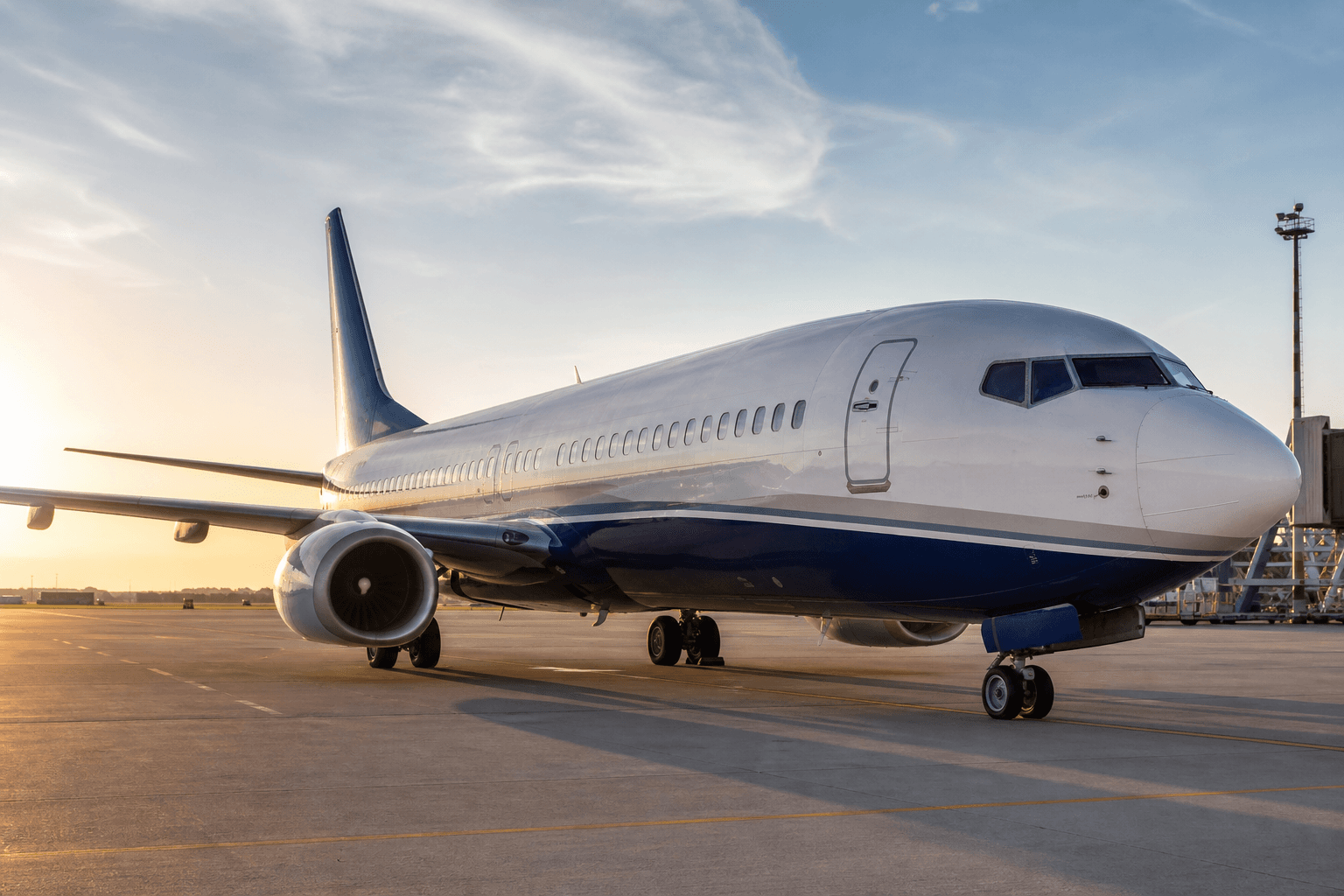
A passenger aboard a Ryanair 737 was nearly ejected from the aircraft when the cabin window failed mid-flight. Multiple sources stated the window may have been struck by a piece of the aircraft's engine, which caused the structure to fail, but the airline has not verified this. The aircraft, operated by Malta Air for Ryanair, took off from the Greek city of Thessaloniki just before 6 a.m. local time on Friday. The flight was heading to Memmingen, Germany. According to a statement from Ryanair, shortly after takeoff the aircraft returned to Thessaloniki when a "passenger window dislodged inflight." The airline noted the aircraft made a normal landing and passengers returned to the terminal. One passenger requested and received medical assistance on the ground in Thessaloniki. A replacement aircraft was brought in to get passengers on their way. READ MORE: Ryanair Inks Deal for 300 Boeing 737 Max Jets READ MORE: 4 Flight Attendants Sue Boeing Over Alaska Door Plug Blowout According to media reports in Greece and Germany, several passengers described hearing a loud bang like a tire exploding, followed by the window breaking and oxygen masks dropping from the ceiling as the cabin lost pressure. At the time the aircraft was passing through an altitude of approximately 20,000 feet. The passenger sitting next to the window that gave way was partially ejected. Passengers said his head and shoulders were outside the aircraft, and they helped pull him back inside. He was still wearing his seat belt. The injured passenger is believed to be a 61-year-old Serbian national. According to Dutch newspaper De Telegraaf , the passenger sustained an injury to the neck caused by the impact as well as scrapes and burns about the head and shoulders. The injured man was conscious but in shock when the airplane landed. The cause of the blow out is under investigation. FLYING reached out to Ryanair, but inquiries were not returned by publication time. About the Aircraft The Boeing 737 in question is 19 years old. The fuselage windows on Boeing 737s are made from three layers of acrylic or polycarbonate, which is designed for strength and durability. The outer pane is the thickest and designed to withstand external pressures and impacts. The windows are bonded to the fuselage using an aviation-grade adhesive for structural integrity. The aircraft windows are designed to experience pressure changes during the flight. The cabin is pressurized to 6,000 feet for passenger comfort and safety. There is less air pressure outside the aircraft during flight. The tiny hole on the bottom of the inner piece of window acrylic allows some of the cabin air to enter the pocket between the inner and outer panes, allowing the pressure to slowly equalize as the aircraft climbs. At altitude, the air pressure is considerably lower than it is inside the cabin. When a window fails at altitude, objects within the cabin are pushed toward the window by the higher cabin pressure, then drawn out of the aircraft by the vacuum created by lower pressure.

NTSB: Loose Counterweight Plug Caused Rob Holland's Fatal MXS-RH Crash
The final NTSB report on the April 24, 2025, landing accident that killed legendary aerobatic competitor and performer Rob Holland draws the same conclusion that was evident in the early stages of the investigation: A loose fitting, part of a custom modification, jammed the elevator in the final seconds of the fatal flight.
The Daily Touch & Go
The day's best aviation news in your inbox. Free, no spam.