

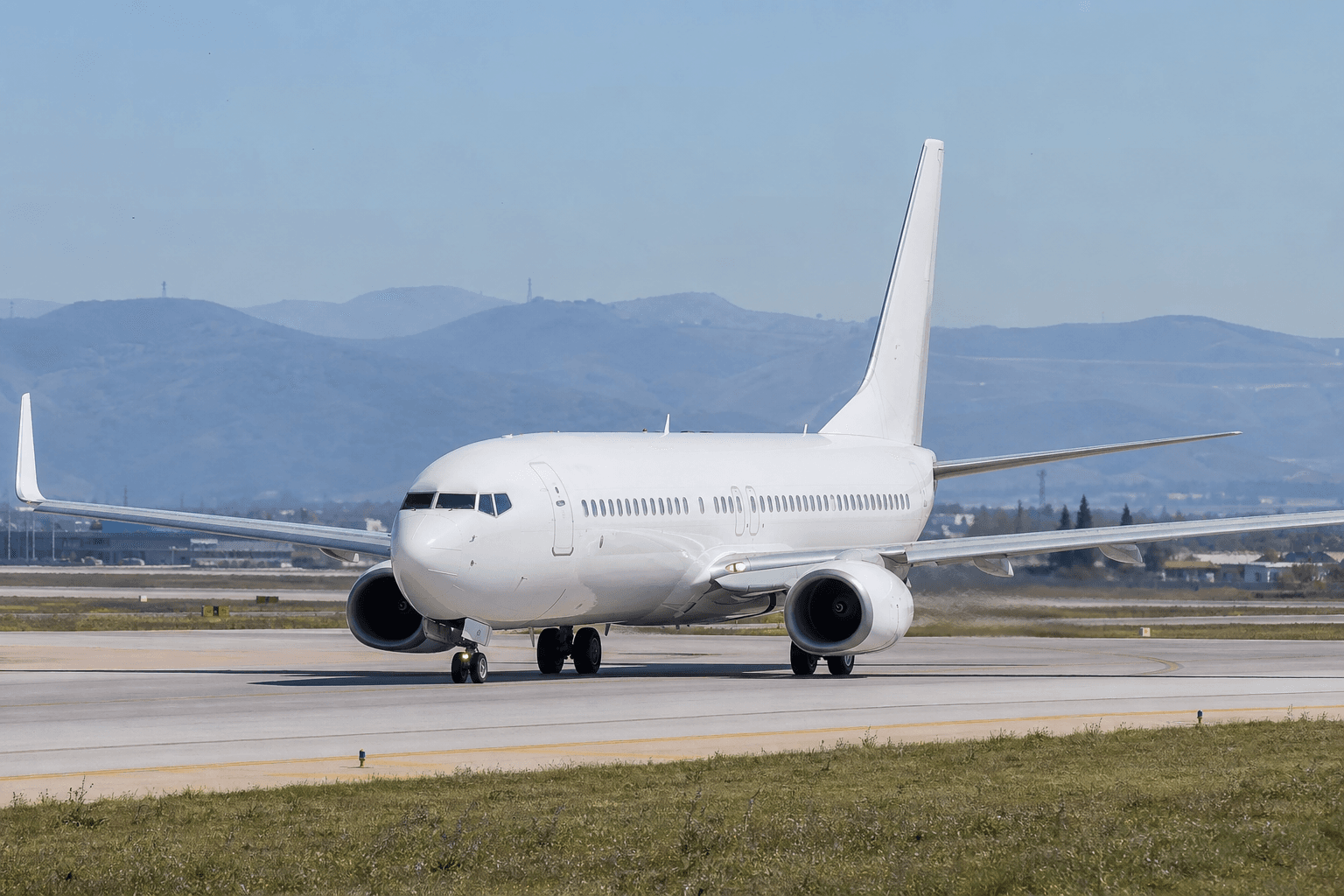
Illustration: The Touch & Go
Failure of Ryanair 737-800 Engine Fan Blade Preceded Cabin Window Rupture
A Ryanair Boeing 737-800 experienced an engine right fan blade failure that led to cabin decompression and window rupture shortly after departure from Thessaloniki Airport, Greece.
The gist
A failed right engine fan blade caused a cabin window rupture and decompression on a Ryanair 737-800 shortly after takeoff in Greece.
Continuing coverage
All Ryanair →- Ryanair 737 Window Failure Nearly Ejects Passenger Mid-Flight
- Ryanair Flight Suffers Explosive Decompression After Window Shatters Mid-Flight
- Ryanair 737 Diverts to Brest After Runway Closure at Nantes by Iberia Emergency Landing
- Ryanair and Cebu Pacific Lead World in Economy Seat Density with Ultra-Compact Cabins in 2026
- Ryanair Flights Often Operated by Subsidiary Airlines Including Buzz and Malta Air
A serious in-flight incident occurred on a Ryanair Boeing 737-800 operating flight FR1879 when a right engine fan blade failed shortly after departure from Thessaloniki Airport, Greece. This failure caused the rupture of a cabin window and subsequent cabin decompression, prompting the aircraft to return safely to the airport. One passenger reportedly received medical attention after being partially sucked out of the aircraft through the damaged window.
The engine involved was a CFM56-7B, manufactured by CFM International, a joint venture between GE Aerospace and Safran. Fan blade failure in modern turbofan engines is a rare but critical safety event and is among the key risks addressed during aircraft engine certification processes. These engines are rigorously tested to contain fan blade fragmentation to protect the aircraft.
Historically, similar failures have led to tragic outcomes. Notably, in April 2018, a Southwest Airlines Boeing 737-700 experienced an uncontained fan blade failure causing a fatality when a passenger was partially ejected through a breach in the fuselage. Another 2016 failure on a Southwest flight caused no injuries but still resulted in significant damage. These events have led regulators to impose stricter airworthiness directives focused on inspections and redesigns to better contain fan blade failures.
The FAA mandated compliance with these directives by July 31, 2028, incorporating improved engine inlet designs to minimize the risk of blade fragments puncturing the aircraft fuselage or windows. In the previous Southwest incidents, engine inlets were torn away by the failures, allowing debris to strike the fuselage.
The National Transportation Safety Board (NTSB) announced it is supporting the investigation alongside North Macedonia's Aircraft Accident and Incident Investigation Committee (AAIIC), the primary investigative authority given Ryanair's aircraft registration. The accident occurred soon after departure and forced an immediate return due to a right engine malfunction and cabin decompression.
Boeing, as the aircraft manufacturer, confirmed it is assisting the AAIIC investigation and remains in close contact with Ryanair. Meanwhile, CFM International expressed condolences to those involved and assured full cooperation with investigative authorities. Both companies emphasized the priority of safety and the importance of determining the root cause.
The incident underscores ongoing challenges around engine component durability and containment on older 737 Classic and Next Generation fleets employing CFM56 engines. Although fan blade failures are infrequent, their potential consequences necessitate continuous monitoring and improvement in inspection protocols and component designs.
The medical incident involving a passenger partially sucked from the cabin reaffirms the critical need for robust fuselage integrity when engine containment fails. Ryanair has publicly stated its commitment to safety following the incident, which did not result in fatalities but prompted emergency medical response on the ground.
Investigators will closely examine maintenance records, blade stress-testing data, and any signs of fatigue or manufacturing defects that could have contributed to the fan blade failure. The outcome may influence future regulatory measures and design enhancements for the CFM56-7B engine family and Boeing 737 fuselage safety features.
Frequently asked questions
- What caused the cabin window rupture on the Ryanair Boeing 737-800?
- The cabin window rupture was caused by a failure of a right engine fan blade from the CFM56-7B engine, leading to cabin decompression.
- What aircraft and engine are involved in the Ryanair incident?
- The incident involved a Boeing 737-800 equipped with a CFM International CFM56-7B engine operating on Ryanair flight 1879.
- What safety measures exist to prevent fan blade failure incidents on 737 aircraft?
- The FAA has airworthiness directives requiring inspections and redesigned engine inlets to contain fan blade failures, with compliance deadlines set for July 31, 2028.
Read more
All Aviation Safety →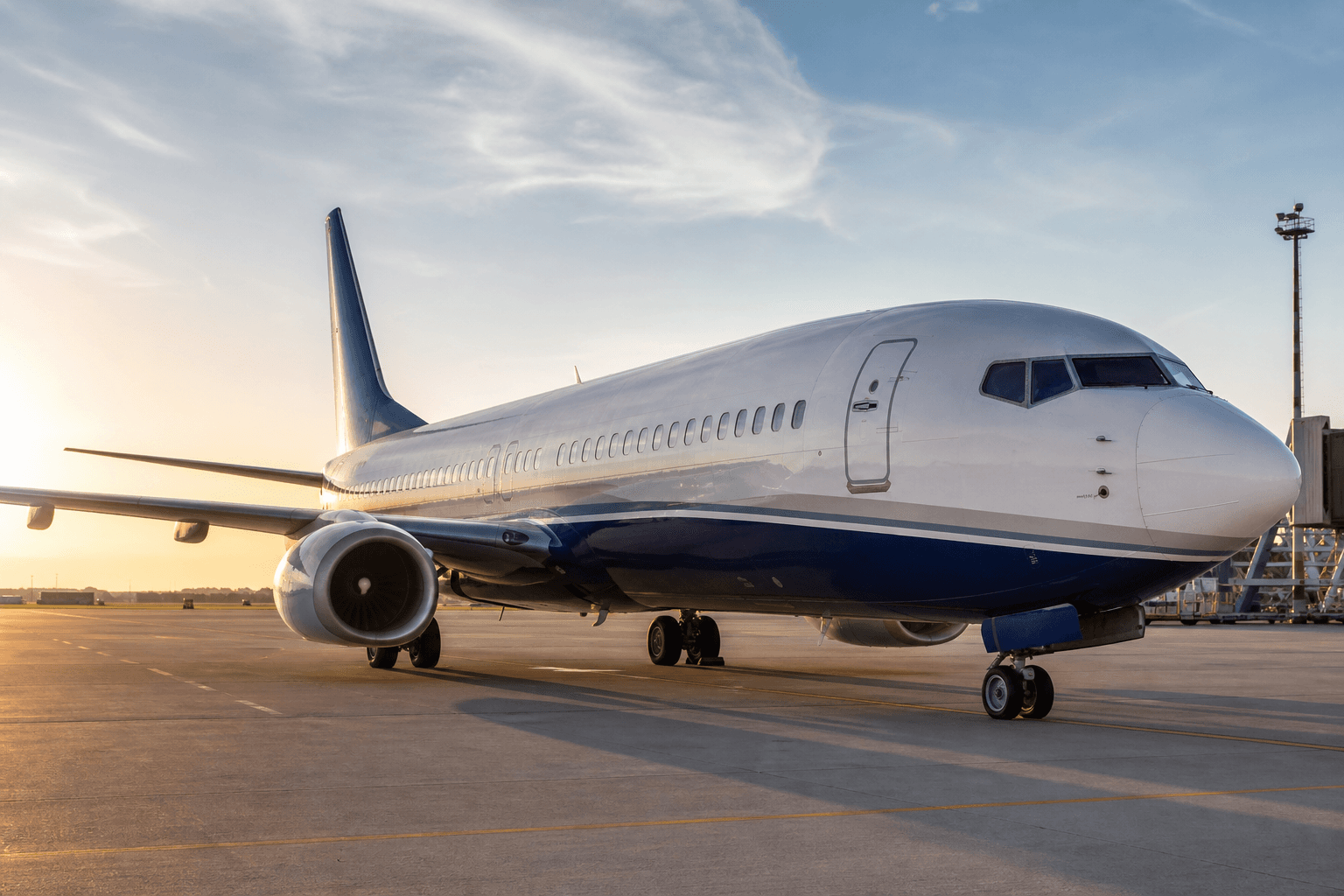
Ryanair 737 Window Failure Nearly Ejects Passenger Mid-Flight
A passenger aboard a Ryanair 737 was nearly ejected from the aircraft when the cabin window failed mid-flight. Multiple sources stated the window may have been struck by a piece of the aircraft's engine, which caused the structure to fail, but the airline has not verified this. The aircraft, operated by Malta Air for Ryanair, took off from the Greek city of Thessaloniki just before 6 a.m. local time on Friday. The flight was heading to Memmingen, Germany. According to a statement from Ryanair, shortly after takeoff the aircraft returned to Thessaloniki when a "passenger window dislodged inflight." The airline noted the aircraft made a normal landing and passengers returned to the terminal. One passenger requested and received medical assistance on the ground in Thessaloniki. A replacement aircraft was brought in to get passengers on their way. READ MORE: Ryanair Inks Deal for 300 Boeing 737 Max Jets READ MORE: 4 Flight Attendants Sue Boeing Over Alaska Door Plug Blowout According to media reports in Greece and Germany, several passengers described hearing a loud bang like a tire exploding, followed by the window breaking and oxygen masks dropping from the ceiling as the cabin lost pressure. At the time the aircraft was passing through an altitude of approximately 20,000 feet. The passenger sitting next to the window that gave way was partially ejected. Passengers said his head and shoulders were outside the aircraft, and they helped pull him back inside. He was still wearing his seat belt. The injured passenger is believed to be a 61-year-old Serbian national. According to Dutch newspaper De Telegraaf , the passenger sustained an injury to the neck caused by the impact as well as scrapes and burns about the head and shoulders. The injured man was conscious but in shock when the airplane landed. The cause of the blow out is under investigation. FLYING reached out to Ryanair, but inquiries were not returned by publication time. About the Aircraft The Boeing 737 in question is 19 years old. The fuselage windows on Boeing 737s are made from three layers of acrylic or polycarbonate, which is designed for strength and durability. The outer pane is the thickest and designed to withstand external pressures and impacts. The windows are bonded to the fuselage using an aviation-grade adhesive for structural integrity. The aircraft windows are designed to experience pressure changes during the flight. The cabin is pressurized to 6,000 feet for passenger comfort and safety. There is less air pressure outside the aircraft during flight. The tiny hole on the bottom of the inner piece of window acrylic allows some of the cabin air to enter the pocket between the inner and outer panes, allowing the pressure to slowly equalize as the aircraft climbs. At altitude, the air pressure is considerably lower than it is inside the cabin. When a window fails at altitude, objects within the cabin are pushed toward the window by the higher cabin pressure, then drawn out of the aircraft by the vacuum created by lower pressure.
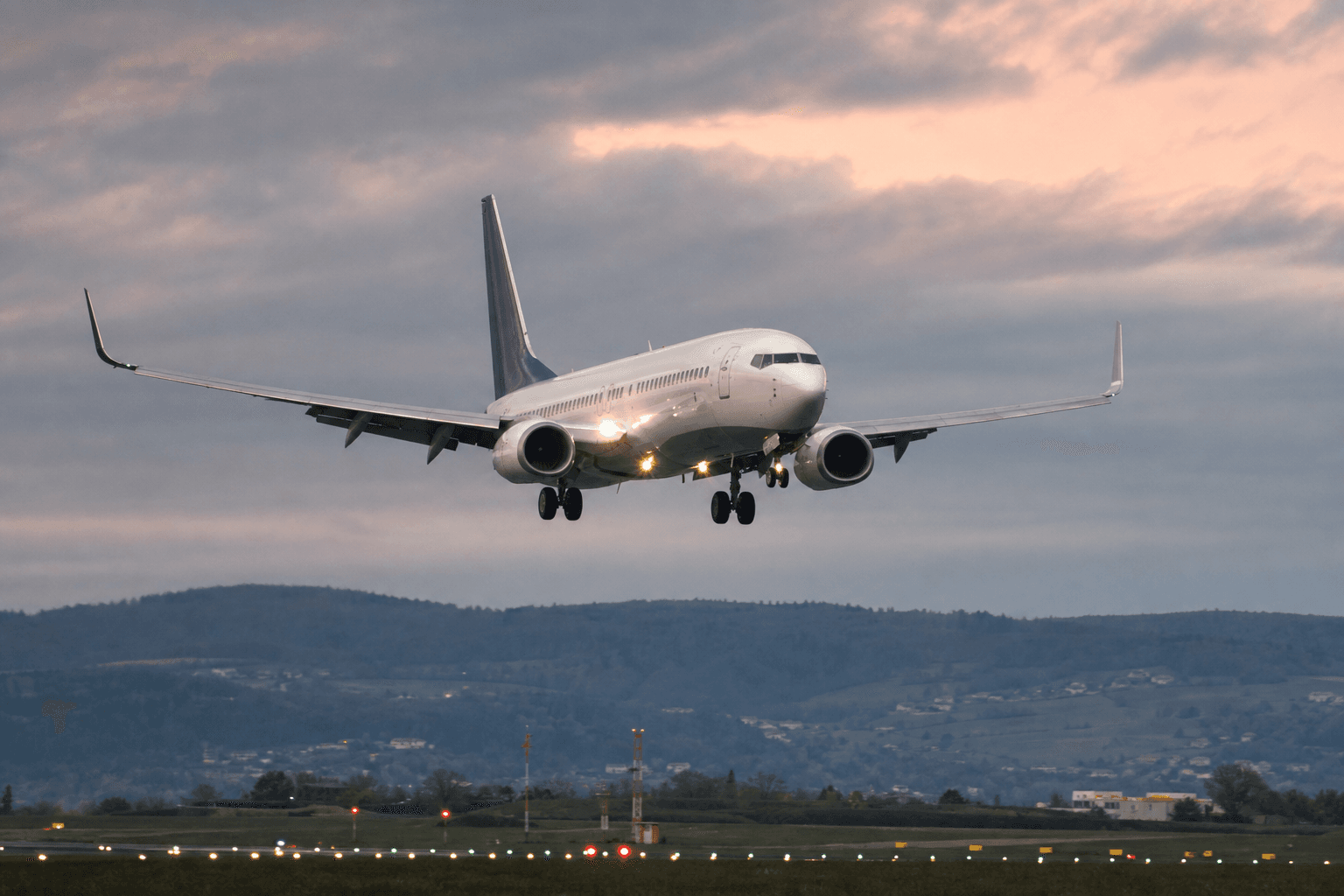
Ryanair 737 Diverts to Brest After Runway Closure at Nantes by Iberia Emergency Landing
Ryanair flight FR5448 was forced to divert from Nantes-Atlantique Airport (NTE) after an emergency landing by an Iberia Mitsubishi CRJ-1000 closed the runway, according to Air Plus News via X. The go-around caused the 737-800 to declare an emergency due to low fuel before it touched down at Brest Bretagne Airport (BES) , France, as shown in tracking data from Flightradar24.
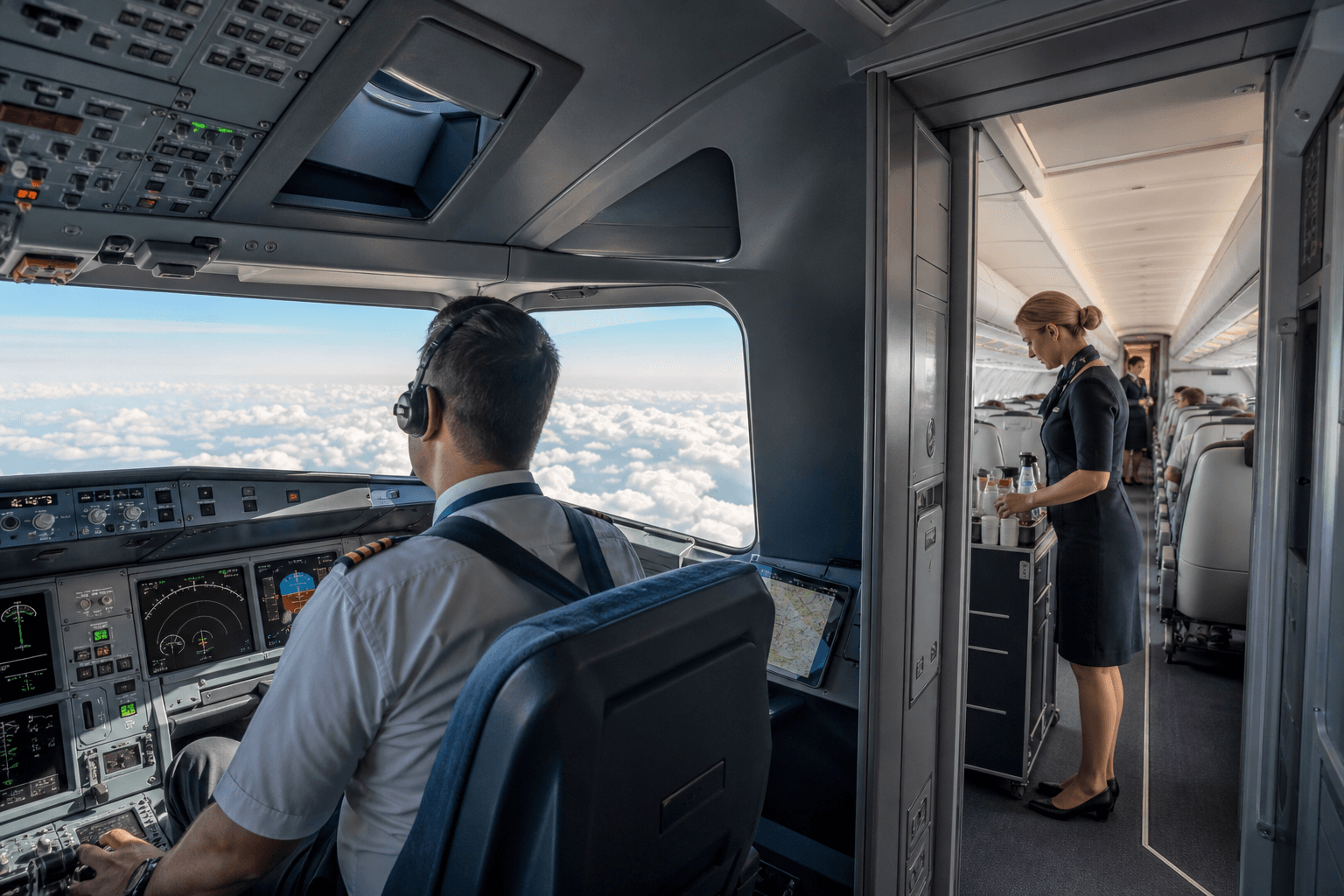
FAA proposes to block state meal and rest break laws for airline crews
The Federal Aviation Administration (FAA) is moving to stop US states and local governments from applying their own meal and rest-break laws to airline pilots and flight attendants after court rulings allowed California-based flight attendants to pursue claims against airlines under state labor law. The FAA published a notice of proposed rulemaking on July 6, 2026, seeking to clarify that federal duty and rest rules for flightcrew members and flight attendants override state and local break requirements. The issue centers on whether pilots and flight attendants can be covered by the same state labor laws that require other workers to receive meal or rest breaks at set intervals, or whether airline crew breaks should be governed only by federal aviation rules. The FAA says airline crews are different from most other workers because they must remain available during a duty period to perform safety tasks, including while an aircraft is in flight. Some state laws require workers to be relieved of all duties during a meal or rest break. The FAA says that standard cannot always apply to pilots and flight attendants, who may need to respond to emergencies, medical events, unruly passengers, evacuations or other safety issues. The FAA "proposes to clarify that FAA regulations governing flightcrew member and flight attendant duty and rest periods preempt all State and local meal and rest break requirements," the agency said in the proposed rule. The FAA also said US state meal and rest-break requirements are preempted by the Airline Deregulation Act of 1978 if they significantly affect airline prices, routes and services. The proposed rule would amend Part 117, which covers flightcrew duty and rest limitations, and Part 121, which governs domestic, flag and supplemental airline operations. The agency said recent litigation prompted it to review how its crew duty and rest regulations interact with state labor laws. The FAA cited cases involving Virgin America and SkyWest Airlines flight attendants as part of the background to the proposal. In Bernstein v. Virgin America, California-based flight attendants sued Virgin America over alleged violations of California labor law, including meal-break and rest-break requirements. Virgin argued that the state break rules were preempted by federal aviation law and the Airline Deregulation Act, but the US Court of Appeals for the Ninth Circuit rejected those arguments and upheld rulings in favor of the flight attendants on the break claims. The FAA also cited Wilson v. SkyWest Airlines, a case brought by two California-based flight attendants who alleged that SkyWest failed to provide meal breaks, rest breaks and compliant wage statements under California law. A federal district court found that the break claims were not preempted by federal aviation law or the Airline Deregulation Act. Those cases centered on whether California meal and rest-break rules could apply to flight attendants. California generally requires a 30-minute meal period when employees work more than five hours and a second meal period when employees work more than 10 hours. The US Department of Labor lists 21 states or jurisdictions with meal-period requirements for adult private-sector workers. It lists seven states — California, Colorado, Kentucky, Minnesota, Nevada, Oregon and Washington — as having both meal-period and rest-period requirements. The FAA said applying different state requirements to airline crews could create operational problems for carriers. The agency said airlines might have to carry additional crewmembers, block passenger seats, remove passengers from flights or alter service to comply with state break rules. The FAA said those changes could affect the price, route or service of air transportation. The FAA said its proposal would not prevent airlines from allowing pilots and flight attendants to eat, drink or use the restroom during duty periods. Instead, the agency said airlines would remain responsible for managing those needs while keeping crewmembers available for safety duties. The proposal also notes that some flight attendant breaks are already covered by collective bargaining agreements, airline policies or crew resource management procedures. California amended its labor code in 2023 to exempt certain flight attendants from standard meal and rest-break requirements when they are covered by a collective bargaining agreement that addresses breaks. The FAA said not all airlines and flight attendants are covered by such agreements. Comments on the proposed rule are due by September 4, 2026.
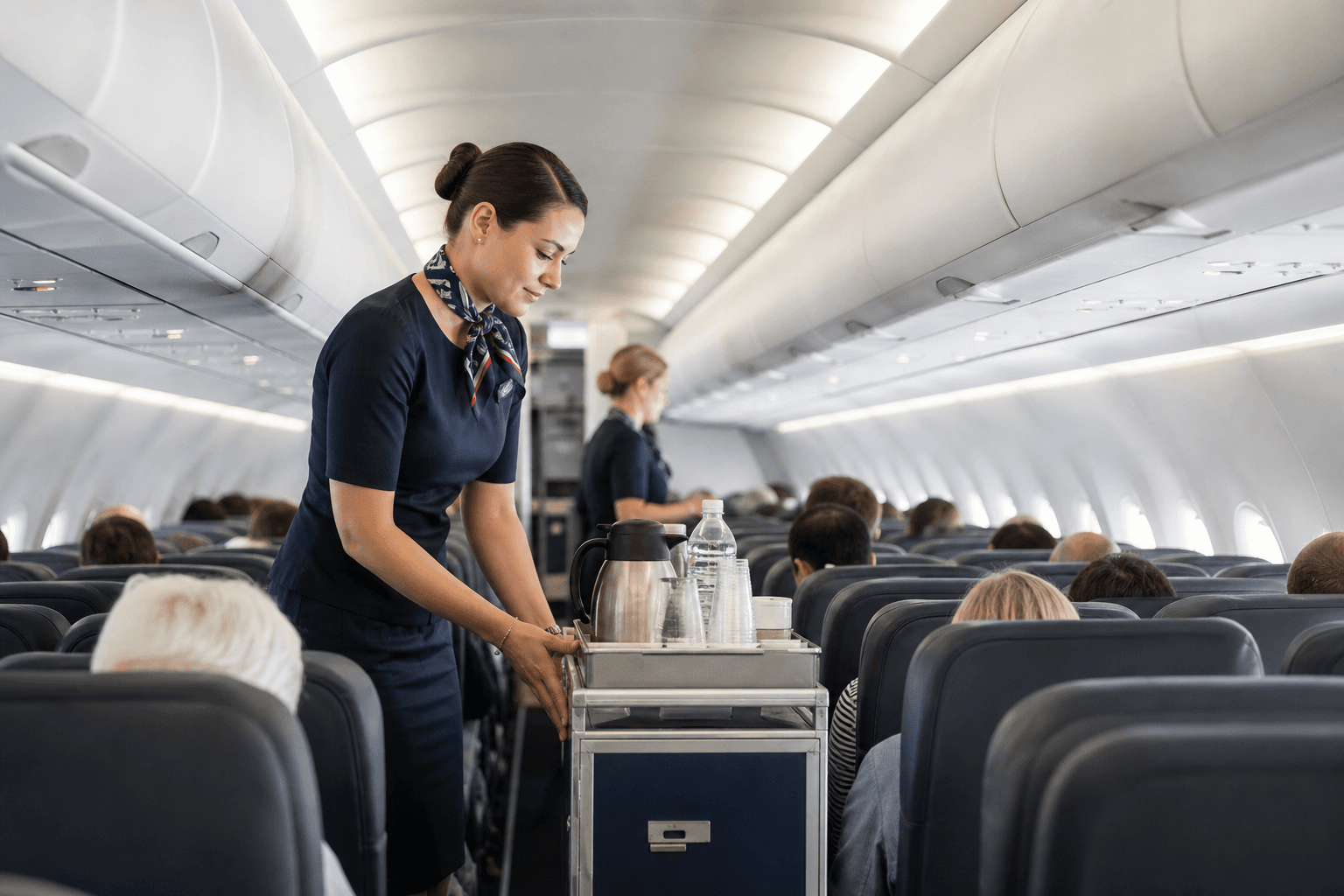
FAA seeks to block state meal and rest break rules for flight crews nationwide
The FAA is seeking to block state and local governments from setting meal and rest period requirements for flight crews and flight attendants , asserting that those breaks are adequately covered by federal law. According to a notice of proposed rulemaking (NPRM) published in the Federal Register this week, the agency would add language to parts 117 and 121 that clarifies the federal preemption of state and local laws governing these rest periods. Whereas previous rulemaking has centered on crew breaks between shifts , the new proposal tackles breaks during duty, including while flying. Per the Department of Labor , there are 21 states that set meal period requirements for private sector employees, seven of which also have rest period requirements. At issue is whether those rules cover flight crews and flight attendants. The FAA in its NPRM argued that a "patchwork" of state and local break requirements violates the Airline Deregulation Act (ADA) of 1978, which prohibits any law that creates a "significant impact" on airline prices, routes, or services. Federal preemption, it said, would create uniform requirements across states that reduce operational disruptions for carriers. However, federal district and appellate courts in recent years have come to the opposite conclusion. Flight crews and flight attendants who have sued airlines over violations of state or local break requirements have often prevailed, allowing them to claim damages. The FAA in the NPRM said that "recent litigation" spurred its rulemaking—"most notably" a pair of decisions handed down by the courts in 2021. What the FAA Proposes The FAA in a 2022 final rule changed its requirement for scheduled rest periods for flight attendants assigned to duty periods of 14 hours or less, raising it from as low as eight hours to at least ten. This week's proposal addresses break requirements during rather than between shifts. One rationale provided by the agency is that fragmented state and local rules are untenable for carriers. It said such a framework may require them to staff additional flight attendants, raise costs, or remove passengers from flights, leading to operational impacts and violating the 1978 ADA. The FAA does not propose any new federal laws regarding aircrew break requirements. Instead, it argues that the status quo of "rules about duty periods, collective bargaining agreements (CBA) reached between air carriers and labor unions, and…specific air carrier crew resource management procedures" adequately strikes a balance between aviation safety and crew health. Notably, the proposal would require Part 121 certificate holders to ensure that flight attendants remain available for safety duties—including responding to medical emergencies or dealing with unruly passengers—during their breaks. The FAA contended that it mitigates fatigue by regulating rest between rather than during shifts. "The primary mission of flight attendants is to ensure safety, a role that is undermined if a flight attendant is legally 'off-duty' during an emergency," the agency said. However, the regulator also proposes that carriers ensure flight attendants have enough time to eat, drink, or use the restroom. Other employees covered by state and local rules receive uninterrupted meal and rest periods. Comments on the proposal are due September 4, after which time the FAA may modify it. Why Now? The FAA specifically called out two legal rulings as the basis for this week's proposal. In 2021, the 9th U.S. Circuit Court of Appeals held that California's meal and rest requirements for flight attendants are not preempted by the ADA or other federal laws. The ruling came after California-based flight attendants sued Virgin America over failing to meet the state's mandates, which include 30-minute meal breaks for employees who work more than five hours. As a result, flight attendants were allowed to pursue claims. Alaska Airlines acquired Virgin during the case, Bernstein et al. v. Virgin America, and became a codefendant. The carrier appealed the decision to the Supreme Court, which declined to review it. Alaska later secured an Association of Flight Attendants-backed aircrew exemption and backtracked on threats to close its California crew bases over the decision. However, it failed to secure a similar exemption in Washington state. Following the case, California in 2023 exempted flight attendants from state break requirements when they are covered by certain Railway Labor Act collective bargaining agreements (CBAs). The FAA in the NPRM noted that not all airlines are covered by these CBAs. In another 2021 ruling referenced by the FAA, Wilson v. SkyWest Airlines, the U.S. District Court for the Northern District of California made a similar finding. It likewise sided with flight attendants who sued SkyWest, reiterating that federal laws do not preempt state or local rules. In another case, which the FAA did not cite, American Airlines in 2023 reportedly settled with California flight attendants, who had sued over alleged wage and meal break violations, for about $24 million. Cementing the federal preemption of these state and local laws will likely be cheered by airlines who have contended with lawsuits from unhappy personnel. The proposal may also face pushback from unions representing flight crews and flight attendants. In the Bernstein case, the Association of Flight Attendants filed a friend of the court brief urging the court to side with Virgin flight attendants. "Instead of preemption, AFA pushed the airlines to resolve the operational challenges of meal and rest law through a legislative fix that would codify our rights to bargain over these provisions," the union wrote in a 2022 news release .
The Daily Touch & Go
The day's best aviation news in your inbox. Free, no spam.