

Illustration: The Touch & Go
AOPA and Aviation Coalition Push Congress for $20B Boost to Air Traffic Control Modernization
More than 50 aviation groups, led by AOPA, have appealed to Congress to increase funding for the Brand-New Air Traffic Control System by $20 billion to advance modernization efforts.
The gist
AOPA and over 50 aviation groups urge Congress for a $20B funding increase to the air traffic control modernization program.
The Aircraft Owners and Pilots Association (AOPA), in coordination with a coalition of more than 50 aviation organizations, has formally petitioned congressional leaders to secure an additional $20 billion in funding for modernization of the United States air traffic control system. This collective effort underscores the aviation community’s push to enhance safety, efficiency, and capacity through technological upgrades under the Brand-New Air Traffic Control System (BNATCS) initiative.
The BNATCS initiative represents a comprehensive effort to overhaul the country's aging air traffic control infrastructure, replacing legacy systems with state-of-the-art radar, communications, and automation technologies. These upgrades are critical to managing the increasing volume of air traffic in U.S. skies and to ensuring future operational resilience amid growing demand for both commercial and general aviation flights.
The coalition’s letter was addressed to congressional leaders, highlighting the urgent need for robust and sustained investment beyond current allocations to fully realize the BNATCS goals. The $20 billion figure corresponds to the funding gap the coalition believes is necessary to accelerate deployment schedules and expand modernization scope.
AOPA's participation is notable as the association directly represents the general aviation community, which accounts for a significant portion of national airspace usage alongside commercial and cargo operators. By jointly advocating with over 50 organizations, including industry groups and pilot associations, the petition reflects a wide consensus on the critical nature of ATC modernization across the spectrum of aviation stakeholders.
Past modernization programs have faced funding shortfalls and delays impacting system performance and safety improvements. The BNATCS initiative aims to break this cycle by leveraging modern technology integration, such as satellite-based navigation and digital communication, which offer enhanced precision and reliability compared to older radar-based methods.
The timing of this request coincides with a period of growing air traffic volumes, technological advancements, and increasing demands on airspace management. Implementing BNATCS is seen as essential to preventing congestion, minimizing delays, and bolstering the U.S. aviation system’s global competitiveness.
Congressional response to the funding request will be pivotal in determining the pace and breadth of ATC modernization efforts. The coalition’s appeal signals broad industry alignment on the importance of substantial federal investment to maintain airspace safety and capacity.
The focus on BNATCS reflects the ongoing recognition that air traffic control modernization underpins not only commercial air travel but also emergency services, military operations, and general aviation activities. Successful funding and execution of this program will shape the country’s aviation infrastructure for decades to come.
Frequently asked questions
- What funding amount are AOPA and its coalition requesting from Congress?
- They are requesting an additional $20 billion to support the ongoing Brand-New Air Traffic Control System modernization initiative.
- What is the purpose of the BNATCS initiative?
- The BNATCS initiative aims to modernize the US air traffic control system by replacing aging infrastructure with advanced technology to improve safety, capacity, and efficiency.
Read more
All Airlines →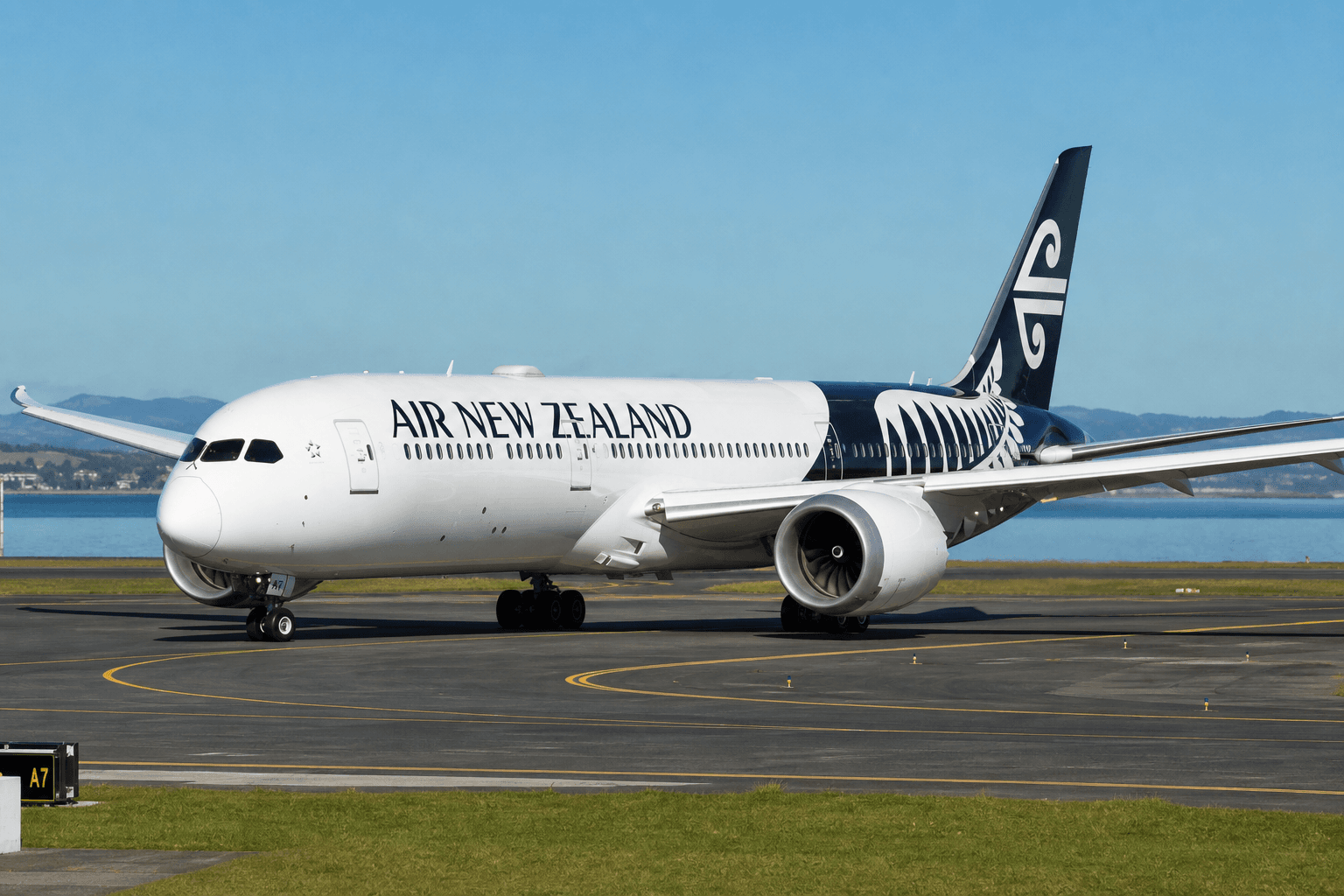
Air New Zealand CEO Nikhil Ravishankar outlines strategy to enhance sleep and connectivity
When even your closest neighbor is several hours' flight away, concepts such as air connectivity and passenger experience become even more important. For many decades, Air New Zealand has successfully connected one of the most geographically remote countries to the rest of the world, while innovating its aircraft cabins with fresh and unique concepts aimed at making long journeys more enjoyable for regular passengers. In June 2026, seven months after his appointment to the role of Air New Zealand CEO, Nikhil Ravishankar met with AeroTime during the International Air Transport Association (IATA) 82 nd Annual General Meeting (AGM) in Brazil to discuss the Kiwi airline's unique market positioning. At the time of our conversation, a topic that was the focus of much of Ravishankar's attention was the fuel crisis triggered by the conflict in the Middle East. In fact, Air New Zealand was one of the first airlines to cancel flights in the first half of 2026 in response to this exogenous supply shock. "At the moment we are now facing more tailwinds than headwinds. I like using a sort of rugby analogy to describe it as 'a game of two halves'," he stated, before going on to dissect the overall situation at the airline, beginning with the positives. "On one side, our operational performance as an airline is as good as it's ever been. We're now consistently one of the top five airlines when it comes to on-time performance, cancelation rates and operational performance. So, our operational performance is really fantastic," he said. "Our customer satisfaction scores are also as high as they've ever been. Air New Zealand has a legacy of being very good at customer experience, we have a very unique Kiwi service proposition, and our customers love flying with us, which is always helpful." "Your customers liking your product is always a good starting point," he added. "For a long time, we've been suffering engine issues, both on the narrowbody and widebody fleets. This time last year, about 20% of our fleet was grounded," he continued. "We're now in a place where most of our aircraft are flying and, at the end of this month, we will only have one aircraft on the ground [AOG] because of engine issues, and that's a huge improvement in 12 months." Ravishankar then switched to the challenges faced by the airline, the "headwinds" as he described them. "On the flip side, of course, like everybody else, we're now dealing with the fuel crisis and Asia-Pacific is a little bit more exposed," he said. "A lot of our crude comes from the conflict zone, and that has sort of impacted us, but the markets continue to clear." "This is a pricing issue for us, not a supply issue," he continued. "So, we haven't seen any challenges with supply. Since it's a price shock, we're trying to minimize it, but we can't do so fully. We are mitigating about 40% of the price increase through a combination of fare increases, flying consolidation, frequency reductions and cost management." "It's the same algorithm that all airlines are using to deal with this situation," he added. "So that's a bit of a headwind, and that in turn has an impact on the demand profile." But what is the traffic profile Ravishankar referred to? Here, the CEO offered two points as a way to frame an answer to the question. "New Zealand is actually a bigger country than many people think. It's the size of Japan, but only has 5.3 million people, versus Japan's 125 million. So, we're a large, hilly, sparsely populated country. Domestically, aviation is very important to us to connect many smaller communities to our main centers." Ravishankar explained how Air New Zealand flies to 20 domestic destinations, quite a dense domestic aviation network for the population size of the country. "And we're far away from everywhere else in the world. If you put a 2,000-kilometer circle around Auckland, you don't even hit the East Coast of Australia, but if you did that over Berlin, you cover from Western Russia to the Nordics, the UK, and even parts of North Africa. So international connectivity is very important too." "Those two dynamics are critical because we do about 16 million flights a year, about 10 to 11 of those are domestic flights, so a lot of the flying we do is just to connect New Zealanders with each other," he added. "The remaining you could say is a 50-50 split between Kiwis going abroad and incoming visitors, a large portion of whom, around 43%, are tourists." Tourism is New Zealand's second largest GDP earner, Ravishankar said, adding that tourism demand into New Zealand is currently as strong as it's ever been. "I often say I've never met anyone around the world who says they never want to visit New Zealand. It's on everyone's bucket list and, particularly now, in this sort of chaotic world, it's an oasis of peace, tranquility and stability," he said. "So, our tourism proposition is very strong." Beating the tyranny of distance The growth in international demand has been somewhat balanced out by weaker domestic demand, whether it is for movement within the islands or Kiwis traveling abroad. "That demand is much softer at the moment and that's reflective of the strength of the underlying economy and the New Zealand dollar, but that's part of economic cycles, and that will come right," Ravishankar explained. Interestingly, Ravishankar named Singapore, not neighboring Australia, as the airline's single largest foreign market. Australia, the United States, and parts of Asia follow suit. China, the giant of the Asia-Pacific region, is also a growth market for Air New Zealand. "China visitor numbers have started to pick up again," he said. "So, I think it'll always remain an important market for New Zealand. 40% of our global trade is with China, so it's a very, very important market for us. We fly to Shanghai, Hong Kong, and Singapore, and they all act as sort of hubs for us." In response to the strong international demand, Air New Zealand has reactivated its B787 fleet , part of which had been grounded since the COVID-19 pandemic (the last of those stored aircraft re-entered service in early July 2026), but also preparing for a significant expansion of its long-haul capacity, adding 10 more Dreamliners and bringing the fleet from 14 to 24. "It's an aircraft that works for us really well in terms of our network design," Ravishankar said. "On the long-haul fleet, if I could summarize our strategy into a single line, it would be 'to win on sleep'. So, if you look at our first two new long-range B787-9s which are to be delivered shortly, these are fitted with SkyNest , that is bunk beds in economy class," he explained. "And alongside SkyNest, those new aircraft will have seven different seat products within a single aircraft, five of those seven seats are optimized for sleep." Here, Ravishankar was talking about the rather unique, innovative product which will allow economy class passengers to pay a bit extra to spend a few hours sleeping in a proper bed. Air New Zealand first unveiled SkyNest in 2020, with sales going online in May 2026. "We're excited about the bunk beds. The early signs are very promising commercially as well. They're selling well, so you can buy it today. It's on sale," he said. "That's going to be interesting for all our widebodies." RELATED Air New Zealand to sell Skynest sleep pods for economy travelers starting May But SkyNest is far from a one-off, it follows in the footsteps of SkyCouch, which entered service in 2011. SkyCouch allows families traveling together to combine the three economy class seats in a row to make a bed. "Sky Couch is very popular with families with young kids," Ravishankar said, before also going on to talk about the other types of seats on offer onboard Air New Zealand's Dreamliners. "We've also got our premium economy offering, which is a brand-new seat, and then, obviously, Business Premier and Business Premier Luxe which are two different flavors of our business class." The airl
Retired Delta pilot urges airline to replace Amazon Wi-Fi with Starlink for better service
Retired Delta Air Lines pilot Buzz Patterson shared a plea to his former carrier to install Starlink Wi-Fi in a post on X . In his statement, the former pilot and self-described 'SkyMile aficionado' described the Delta Sync as " bad" and Starlink as " good ," requesting the airline improve its inflight internet service for business travelers.
Chase Increases Bonus on World of Hyatt Business Card to 70,000 Points
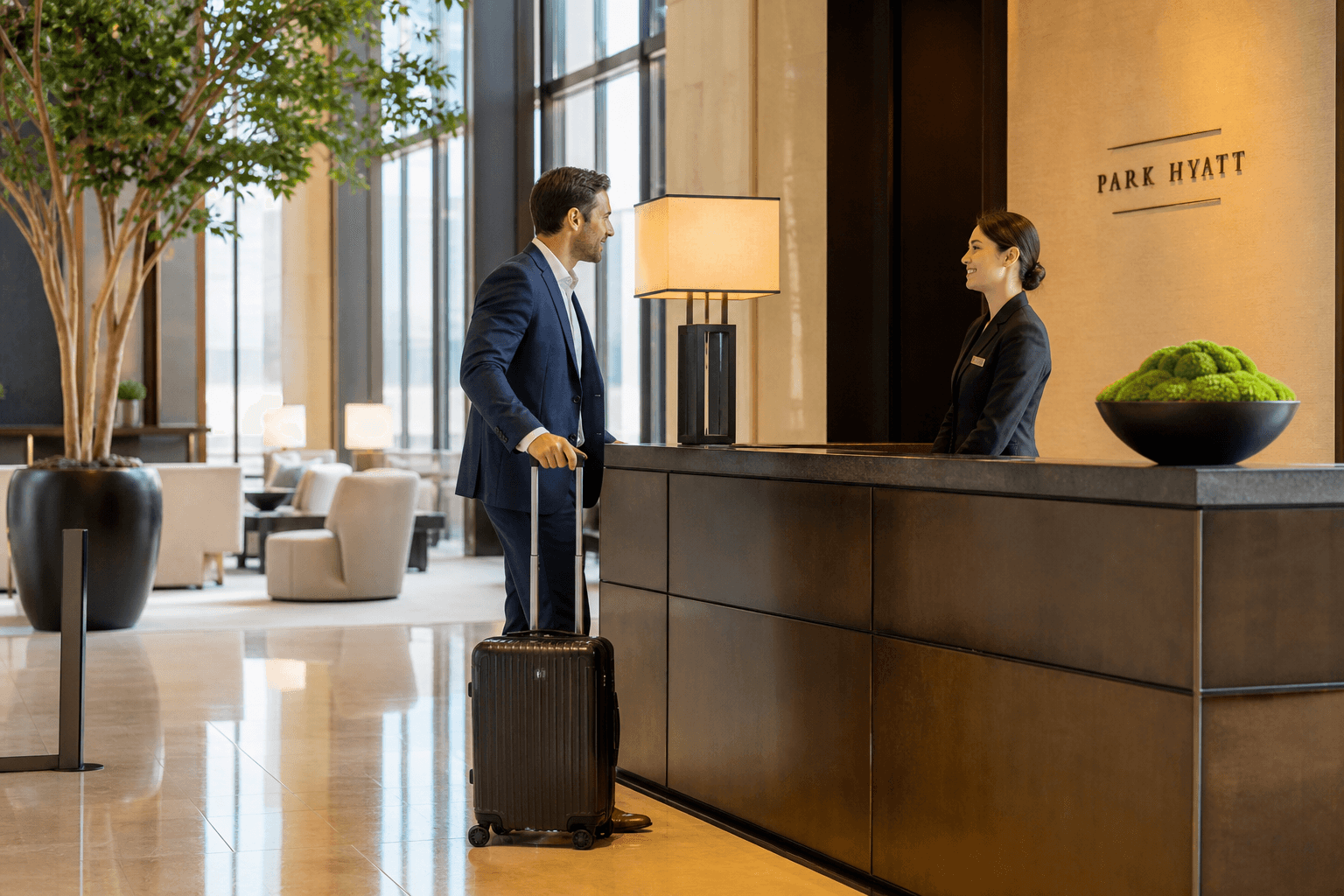
Chase has increased the World of Hyatt Business Card's offer to 70,000 bonus points after $7,000 in spending within three months. Beyond the bonus, the card earns five elite nights for every $10,000 spent and offers up to $100 in annual Hyatt credits.
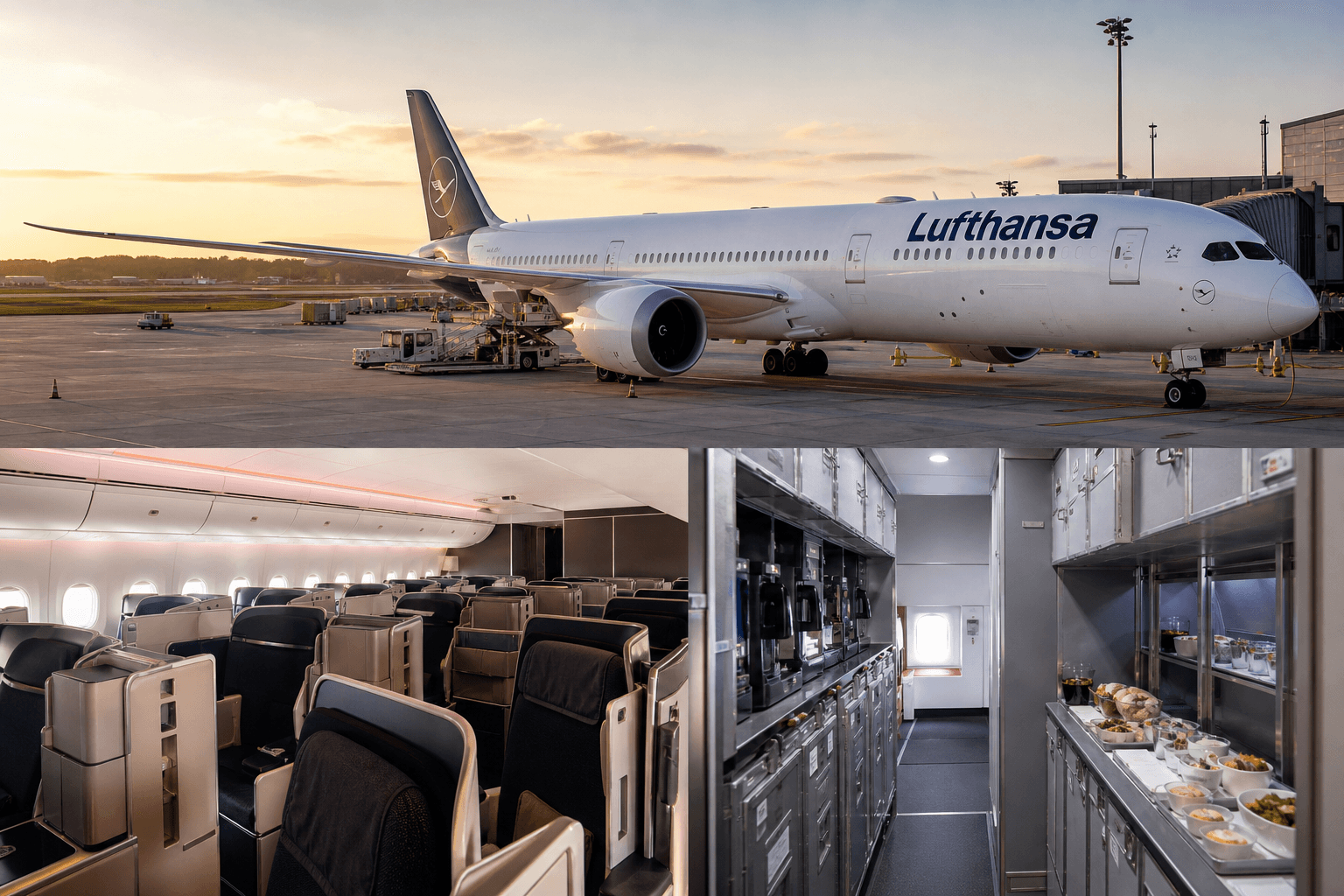
Lufthansa Locks Business Class Lavatory During Meal Service for Catering Space
While not particularly significant, and while there's nothing wrong with this, here's something I find interesting. Lufthansa recently improved its business class catering, and as a result, the airline is now blocking a business class lavatory during the meal service on some planes. It's funny, because I just flew Lufthansa's new Allegris business class on the 787 (more on that soon), and I noticed something was up with the lavatory. At the same time, aeroTELELGRAPH published a story explaining what's going on. Lufthansa's upgraded catering leads to downgraded bathroom options In addition to Lufthansa's new Allegris cabins , Lufthansa also recently overhauled its entire onboard soft product, with what's being referred to as "FOX." Among other things, this includes improvements in the business class meal service, including a lot more effort being put into presentation. Rather than all dishes just being "nuked" in the oven and looking like they fell off a truck, the crew puts more effort into plating, garnishes, etc. As you'd expect, that takes a bit of effort, and galley space can be limited. That brings us to what I find noteworthy. Lufthansa has confirmed that "on a few aircraft types – including the Boeing 787 – one of the two toilets in Business Class will be closed during preparations for the first service." The logic here is that the forward galley on the Dreamliner isn't huge, and there is a lavatory up there. The crews have little carts they place in the galley so they can work on properly plating the dishes, and there's really not room for people to be navigating around them, without getting in the way of their workflow, and slowing down the service. Apparently this plating required a lot of effort? 😉 I knew something was up with the Dreamliner lavatory! I tend to notice the little details of the passenger experience, even the most minor things. After all, I've flown a massive number of airlines in premium cabins, and it's the little details that set airlines apart. I just flew the Lufthansa 787 with Allegris cabins, and there are two lavatories behind the business class cabin, and one in front. It seemed like one of the rear ones may have been intended for premium economy, or something, as it wasn't clear (this is supported by Lufthansa claiming that one of two business class lavatories is blocked). After takeoff I tried to go to the forward lavatory, and as I walked up, the crew asked me to use the lavatory in the back. I thought that was odd at first, since the lavatory sign indicated it was unoccupied. However, as soon as I walked back, the forward lavatory showed as occupied, and stayed that way throughout the service (in other words, they locked it). As you can imagine, this made me wonder about the logic for this policy, and now I know! Personally, I don't have an issue with this. Most people tend to not use the lavatory during the meal service, for obvious reasons. So having fewer lavatories available shouldn't be an issue. For what it's worth, the airline claims it hasn't received any complaints about this policy. Lufthansa is blocking some business class lavatories Bottom line Lufthansa recently rolled out its new soft product on long haul flights, which includes improved catering in business class. This largely centers around the crew putting more effort into plating and presentation, and that takes time… and space. In light of that, Lufthansa crews are now blocking one of the lavatories in business class on some aircraft, so that they have more space to work in the galley. Much of the effort that goes into presentation doesn't happen on galley counters, but instead, happens on carts that are set up in the galley, so I understand why they need more space. Anyway, in case you're like me and wonder why the forward lavatory is blocked during the meal service (as I just noticed on a flight), now you know!
The Daily Touch & Go
The day's best aviation news in your inbox. Free, no spam.