

Illustration: The Touch & Go
Retired Delta pilot urges airline to replace Amazon Wi-Fi with Starlink for better service
Ex-Delta pilot Buzz Patterson called on the airline to switch from Amazon Leo to Starlink Wi-Fi, deeming current Delta Sync service poor and highlighting Starlink's faster connectivity.
The gist
Retired Delta pilot Buzz Patterson urges Delta Air Lines to adopt Starlink Wi-Fi over Amazon Leo to enhance inflight internet quality.
Continuing coverage
All Delta Air Lines →- Delta Medallion Loyalty Faces New Challenges as CRJ200 Fleet Retires and MQD Rules Tighten
- Delta Air Lines Relies on Older Boeing Jets Amid Airbus Engine Groundings
- Delta Air Lines Lets Basic Economy Passengers Keep Full-Size Carry-Ons, Bucking Industry Trend
- Deaf Man Sentenced to 18 Months for Targeting Delta Pilot with Laser Pointer Near Buffalo Airport
- Man sentenced to 18 months for shining laser at Delta flight nearing Buffalo airport
Retired Delta Air Lines pilot Buzz Patterson made a striking appeal for better inflight Wi-Fi service by urging Delta to drop its planned Amazon Leo installation in favor of SpaceX's Starlink. Known for his combat flight experience and high-level government service, Patterson criticized the current Delta Sync internet as poor and praised Starlink as a superior alternative for business travelers. His comments gained attention as Delta announced plans in March 2026 to equip 500 aircraft with Amazon Leo Wi-Fi starting in 2028.
Delta's current inflight internet relies on legacy providers such as Viasat and Hughes, offering comparatively slow and lag-prone connectivity. The planned Amazon Leo upgrade, although promising improvements, has yet to be rolled out. In contrast, Starlink is already operational with a low latency around 50 milliseconds, nearly ten times faster than Delta Sync's 600 milliseconds. This performance gap is due to Starlink’s low Earth orbit satellites linked by optical lasers enabling uninterrupted global coverage, including remote regions.
Captain Patterson's credentials bring gravitas to the Wi-Fi debate. He flew combat missions over Somalia and Bosnia, served as the presidential aide managing the Bill Clinton administration's nuclear football, and commanded White House military units including Air Force One and Marine One. He also remains active in the political arena, currently running for Congress. His transition from cockpit to public advocate highlights concerns over inflight connectivity among seasoned aviation professionals.
Delta CEO Ed Bastian emphasized the airline's global ambitions in the March announcement of the Amazon Leo partnership. The company views the collaboration with Amazon Web Services as cost-effective and technologically advanced, intending to deepen their existing relationship with AWS. However, internal considerations about passenger data control and brand integration appear central to Delta’s choice.
A pivotal reason Delta declined Starlink is the latter’s refusal to integrate its Wi-Fi service as a mandatory login portal via Delta Sync. This platform not only facilitates internet access but also drives the SkyMiles loyalty program, helps collect passenger data, and supports high-margin advertising partnerships like those with American Express. Starlink's model would compromise Delta's control over this digital ecosystem, prompting the airline to prioritize brand over cutting-edge technology for now.
The broader commercial aviation sector is increasingly adopting Starlink. Major U.S. carriers American, United, Hawaiian, and Alaska Airlines have signed on, as have budget operators like Southwest and Frontier. Even small charter services such as JSX have moved to Starlink, underscoring its rising industry acceptance. Delta remains the lone major legacy carrier to exclusively commit to Amazon's competing satellite network.
Amazon’s Project Kuiper, the satellite constellation supporting Amazon Leo, still needs to achieve full operational capacity before Delta can begin fleetwide Wi-Fi upgrades. This dependency exposes Delta to potential delays if Amazon’s satellite launches or technical development encounter setbacks. By contrast, Starlink is already a proven, fully deployed system with hundreds of operational satellites, offering a significant competitive advantage in reliability and coverage.
The ongoing war of inflight internet providers has major implications for passenger experience and airline revenue streams. Faster, more reliable Wi-Fi can attract business travelers and boost sales for in-flight services and advertising. Delta’s decision reflects a balance between long-term operational upgrade costs and strategic control over passenger engagement channels, highlighting the complex interplay between technology choices and business models in aviation connectivity.
Frequently asked questions
- Why did Delta decide against adopting Starlink Wi-Fi?
- Delta declined Starlink because it refused to implement the required Delta Sync login portal, which supports passenger data tracking, loyalty programs, and advertising partnerships that Delta prioritizes.
- How does the performance of Starlink compare with Delta's current Wi-Fi and the planned Amazon Leo service?
- Starlink offers latency of about 50 milliseconds, roughly ten times faster than Delta Sync's 600 milliseconds, matching Amazon Leo’s anticipated performance but with a proven operational network.
- What is the timeline for Delta’s deployment of Amazon Leo Wi-Fi?
- Delta plans to begin installing Amazon Leo Wi-Fi on 500 aircraft starting in 2028, pending Amazon's Project Kuiper achieving full operational capacity and timely satellite launches.
Read more
All Airlines →
Chase Increases Bonus on World of Hyatt Business Card to 70,000 Points
Chase has increased the World of Hyatt Business Card's offer to 70,000 bonus points after $7,000 in spending within three months. Beyond the bonus, the card earns five elite nights for every $10,000 spent and offers up to $100 in annual Hyatt credits.
Lufthansa Locks Business Class Lavatory During Meal Service for Catering Space
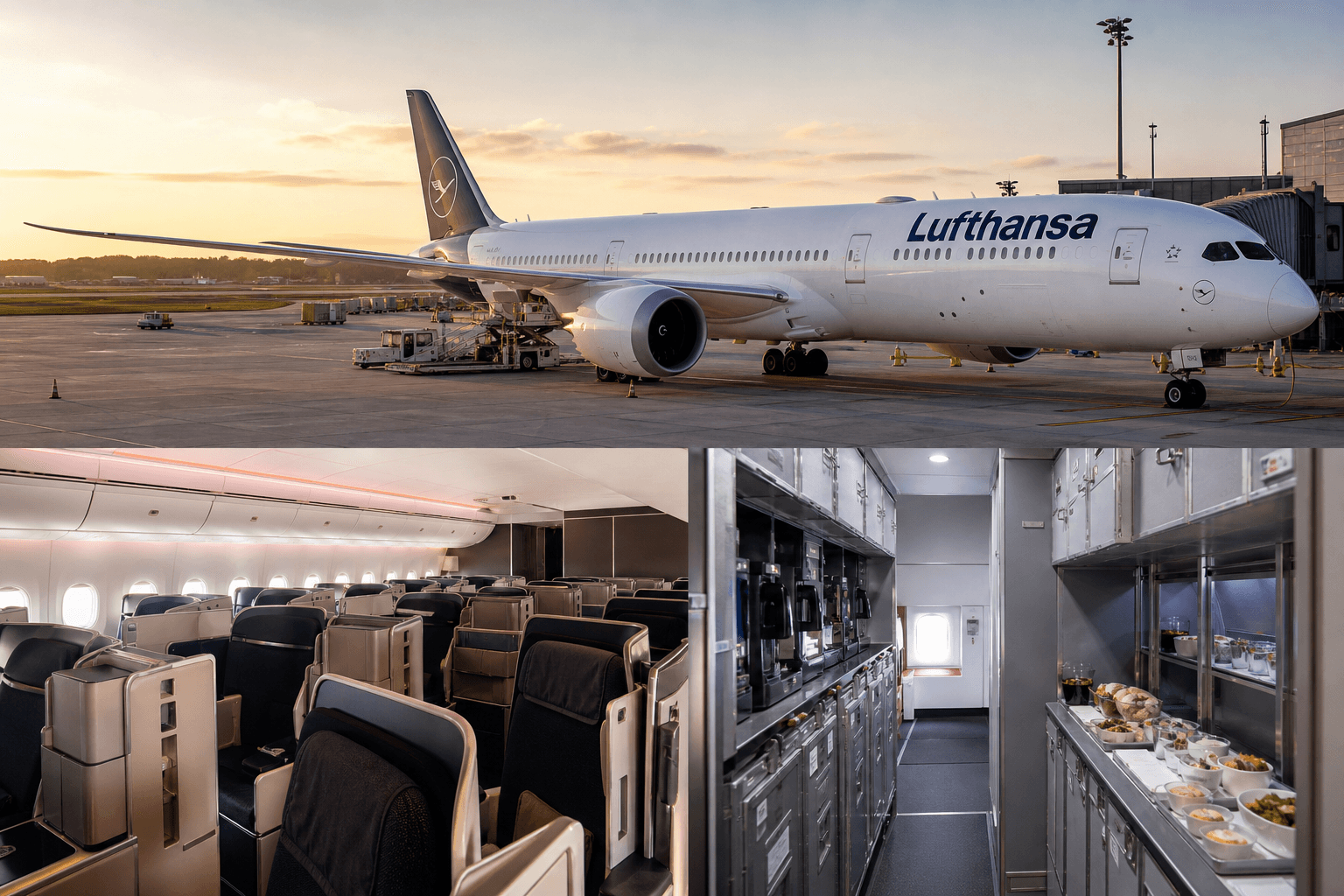
While not particularly significant, and while there's nothing wrong with this, here's something I find interesting. Lufthansa recently improved its business class catering, and as a result, the airline is now blocking a business class lavatory during the meal service on some planes. It's funny, because I just flew Lufthansa's new Allegris business class on the 787 (more on that soon), and I noticed something was up with the lavatory. At the same time, aeroTELELGRAPH published a story explaining what's going on. Lufthansa's upgraded catering leads to downgraded bathroom options In addition to Lufthansa's new Allegris cabins , Lufthansa also recently overhauled its entire onboard soft product, with what's being referred to as "FOX." Among other things, this includes improvements in the business class meal service, including a lot more effort being put into presentation. Rather than all dishes just being "nuked" in the oven and looking like they fell off a truck, the crew puts more effort into plating, garnishes, etc. As you'd expect, that takes a bit of effort, and galley space can be limited. That brings us to what I find noteworthy. Lufthansa has confirmed that "on a few aircraft types – including the Boeing 787 – one of the two toilets in Business Class will be closed during preparations for the first service." The logic here is that the forward galley on the Dreamliner isn't huge, and there is a lavatory up there. The crews have little carts they place in the galley so they can work on properly plating the dishes, and there's really not room for people to be navigating around them, without getting in the way of their workflow, and slowing down the service. Apparently this plating required a lot of effort? 😉 I knew something was up with the Dreamliner lavatory! I tend to notice the little details of the passenger experience, even the most minor things. After all, I've flown a massive number of airlines in premium cabins, and it's the little details that set airlines apart. I just flew the Lufthansa 787 with Allegris cabins, and there are two lavatories behind the business class cabin, and one in front. It seemed like one of the rear ones may have been intended for premium economy, or something, as it wasn't clear (this is supported by Lufthansa claiming that one of two business class lavatories is blocked). After takeoff I tried to go to the forward lavatory, and as I walked up, the crew asked me to use the lavatory in the back. I thought that was odd at first, since the lavatory sign indicated it was unoccupied. However, as soon as I walked back, the forward lavatory showed as occupied, and stayed that way throughout the service (in other words, they locked it). As you can imagine, this made me wonder about the logic for this policy, and now I know! Personally, I don't have an issue with this. Most people tend to not use the lavatory during the meal service, for obvious reasons. So having fewer lavatories available shouldn't be an issue. For what it's worth, the airline claims it hasn't received any complaints about this policy. Lufthansa is blocking some business class lavatories Bottom line Lufthansa recently rolled out its new soft product on long haul flights, which includes improved catering in business class. This largely centers around the crew putting more effort into plating and presentation, and that takes time… and space. In light of that, Lufthansa crews are now blocking one of the lavatories in business class on some aircraft, so that they have more space to work in the galley. Much of the effort that goes into presentation doesn't happen on galley counters, but instead, happens on carts that are set up in the galley, so I understand why they need more space. Anyway, in case you're like me and wonder why the forward lavatory is blocked during the meal service (as I just noticed on a flight), now you know!
Lightspeed Introduces Rotax-Specific Audio Profile for Delta Zulu Headsets
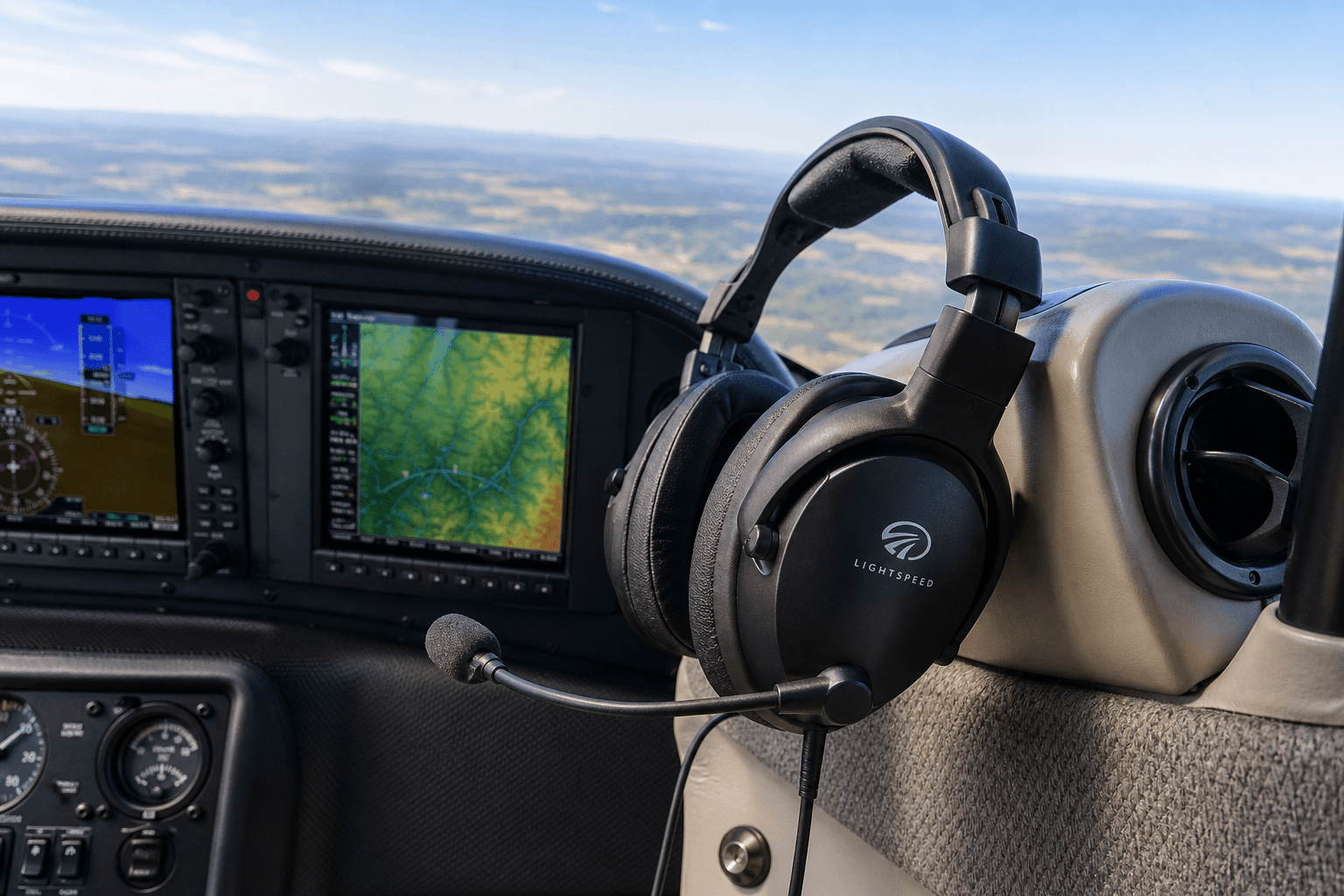
One of the challenges for pilots who fly multiple aircraft is finding a headset that works well with the powerplant. Lightspeed Aviation , one of the industry leaders in customizable headsets, is now offering the first Rotax-specific audio and automatic noise reduction (ANR) profile for the Lightspeed Delta Zulu model. According to Lightspeed, as part of this collaboration, the Rotax-optimized profile will be available as part of the Rotax Care program for Rotax 912 iS/c, 915 iS/c, and 916 iS engines. The company said in a news release the result is a listening experience purpose-built for Rotax-powered flight—clearer communications and a more refined cockpit environment overall. READ MORE: Lightspeed Releases Zulu 4 Headset: 'Best Seller Made Even Better' READ MORE: CO Detection on Lightspeed Delta Zulu Proves Its Worth The new profile is designed to be specifically tailored to the acoustic characteristics of Rotax engines and will result in "clearer communication and greater cockpit comfort when flying an aircraft with a Rotax engine." Users of the Lightspeed Delta Zulu headset will be able to take advantage of the new feature later this fall through a firmware update. To enable the Rotax profile once it becomes available, the company said to follow these steps: Open your Lightspeed App and ensure you are using the latest version. Connect your Lightspeed Delta Zulu via Bluetooth. If a firmware update is available, you will see a prompt on your iOS app. Select "Yes" to begin the update. Allow the update to download and install.

Russian government hikes investment for 63 new domestic aircraft, delivery pushed to 2026-29
Investment figures revised for batch of more than 60 MC-21s, SJ-100s and Tu-214s. Revised Russian government documents detailing investment in the acquisition of more than 60 new-build aircraft have revealed a substantial price hike for the batch. The investment covers the acquisition of 18 Yakovlev MC-21s and 34 SJ-100s, plus 11 Tupolev Tu-214s. These were originally scheduled to be delivered to operators over the course of 2023-25 according to a January 2023 government document on the preferential leasing of domestically-produced aircraft. The document stated that they would be delivered to Aeroflot and Rossiya on 18-year terms through the lessor Aviakapital-Servis. But a revision to the document published on 2 July this year amends several aspects of the transaction. Delays in the development programmes have pushed back the delivery schedule to 2026-29. Although the composition of the 63 aircraft remains the same, the document states that the overall volume of the investment has risen sharply to Rb290.7 billion ($3.7 billion) from the previous figure of Rb175.4 billion. The price of the MC-21 is given as around Rb5.3 billion, up from the prior Rb3.2 billion, and similarly large rises are listed for the other models. According to the revision, the transfer of aircraft from Aviakapital-Servis to operators will start this year, but it only refers to "Russian airlines" rather than identifying Aeroflot and Rossiya. This could relate to Aeroflot Group's apparent shift, in 2024, entirely in favour of the MC-21, after it had previously committed additionally to the SJ-100 and Tu-214. The government document also states that the lease term from Aviakapital-Servis has increased to 22 years.
The Daily Touch & Go
The day's best aviation news in your inbox. Free, no spam.