

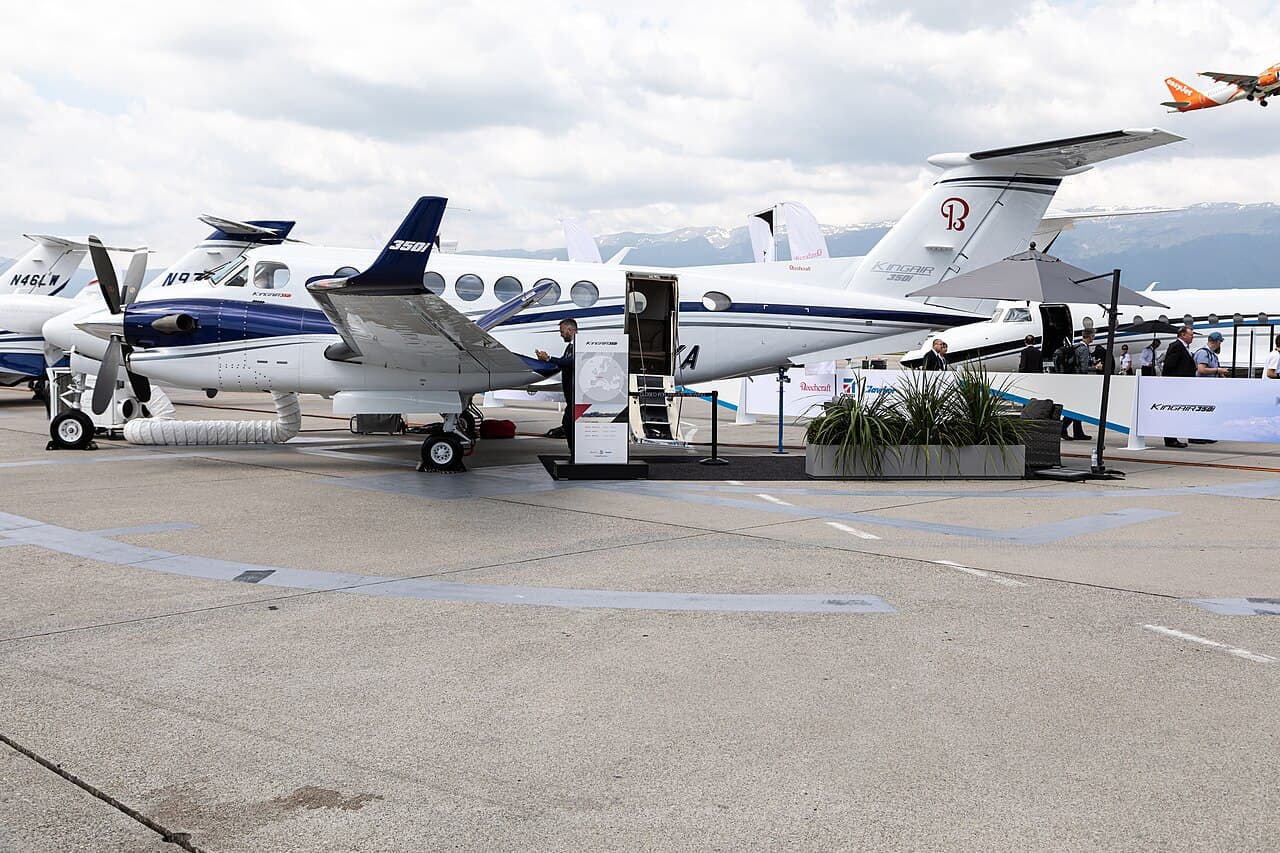
Image: Matti Blume · CC BY-SA 4.0 · via Wikimedia Commons
Beechcraft King Air E90 crashes onto hangar roof after fuel exhaustion during go-around
US investigation finds flight crew ignored low fuel warnings and continued flight, leading to fuel starvation and crash onto hangar roof at Kansas airport.
The gist
Fuel exhaustion caused a King Air E90 to crash onto a hangar roof during a go-around after crew ignored critical low fuel warnings.
A Beechcraft King Air E90 collided with the roof of a hangar in Kansas during a go-around maneuver last year, with US investigators attributing the accident to fuel exhaustion. The National Transportation Safety Board (NTSB) inquiry revealed that both pilots onboard had observed wing-tank fuel gauges indicating levels within a yellow caution band, a warning against take-off. Despite this, the crew proceeded with the flight, which ended with the aircraft impacting the hangar roof and sustaining serious damage. Both the flight instructor and the pilot undergoing training survived the incident on 16 June 2025.
According to the King Air E90 flight manual, take-off is prohibited if fuel gauges show fuel quantities within the yellow caution band, which corresponds to zero to 260 pounds (118 kilograms) of fuel. Testimony to the NTSB revealed the right and left wing tanks were displaying fuel levels within this hazardous range before departure. The instructor estimated 300 pounds in the left tank and 250 pounds in the right, whereas the pilot believed each tank had between 150 to 200 pounds. Neither pilot performed a visual fuel check, and the instructor was reportedly unaware of the minimum fuel requirements for take-off on this aircraft.
The flight originated from Butler, Missouri, and was intended to be a short 16-minute journey to New Century airport in Kansas. Upon turning onto the base leg for the final approach to runway 18, the aircraft slowed below its minimum control speed (Vmc), prompting the pilot to apply increased power. The airplane began yawing left, leading the instructor to take control and suspect left engine flameout due to fuel starvation. The instructor retracted the landing gear and flaps but chose not to feather the left-hand propeller, presuming limited thrust was still available.
Despite the instructor’s control inputs and attempts to roll the aircraft right, the King Air continued its left turn and headed toward a hangar structure. The instructor anticipated sufficient acceleration to clear the building and elected not to turn back to the runway. The aircraft ultimately struck the hangar’s roof and came to rest there. The impact caused significant damage to the aircraft, designated N1UC in registration.
Post-accident examination indicated the wing tanks were not breached, containing only 3 fluid ounces (90 milliliters) in the left tank and 30 fluid ounces in the right. The NTSB concluded these quantities were insufficient to conduct a successful go-around and re-enter the landing pattern, especially on a single engine. The fuel starvation scenario led directly to the partial engine flameout and the aircraft’s inability to maintain controlled flight.
Both pilots survived the crash without fatal injuries. The NTSB investigation placed emphasis on the pilots’ decision to depart despite fuel indications that violated safety guidelines. The lack of a physical fuel check and the instructor’s unfamiliarity with minimum fuel criteria contributed to the misjudgment. The accident highlights critical operational risks when pre-flight fuel assessments are inadequate and warnings from onboard indicators are disregarded.
Fuel management and adherence to published flight manual limitations remain essential for safe operations, particularly in multi-engine turboprop aircraft like the King Air E90. This accident serves as a cautionary example of the consequences when crews overlook or underestimate low-fuel warnings. The NTSB’s findings reinforce the importance of strict pre-flight fuel verification and conservative decision-making when fuel gauges show caution band indications.
Frequently asked questions
- What caused the Beechcraft King Air E90 to crash onto the hangar roof?
- The crash was caused by fuel exhaustion leading to engine flameout during a go-around; the crew ignored fuel gauges showing critically low fuel before take-off.
- Did the pilots check the fuel levels visually before departure?
- No, neither the instructor nor the pilot-in-training performed a visual check of the fuel tanks before departure.
- Was the aircraft able to clear the hangar during the go-around?
- No, the aircraft impacted the hangar roof because it slowed below minimum control speed and continued turning left during the go-around.
Read more
All Aviation Safety →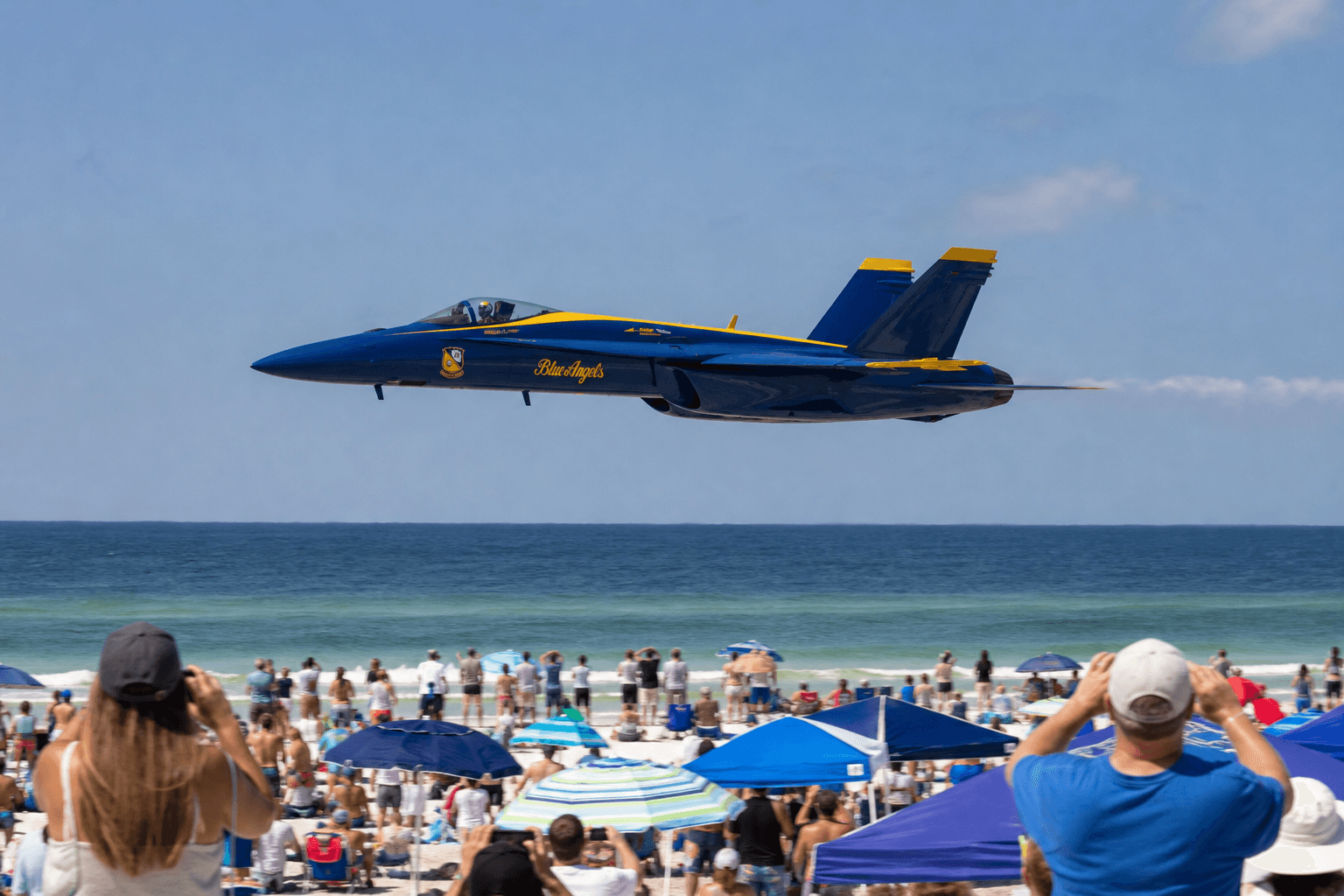
Navy Clears Blue Angels Pilot After Controversial Low-Altitude Florida Beach Flyby
A video showing an extremely low pass over a beach near the home of the US Navy aerial demonstration team, the Blue Angels, has gone viral with controversy over dangers it presented to bystanders. The altitude of the fighter jet has been estimated around 40 feet (12 meters), well below the typical minimum safe altitude of 1,000 feet (305 meters) normally expected for any aircraft, military or civilian plane.

Garmin launches G2000 PRIME flight deck for high-performance piston and electric aircraft
Garmin announced the G2000 PRIME integrated flight deck Thursday for high-performance Class I and II piston and electric aircraft. The system uses an all-touchscreen interface and incorporates technologies introduced through the company's G3000 PRIME platform. Larger Touchscreen Displays The flight deck includes 14-inch primary display units that use edge-to-edge, sunlight-readable glass. Garmin said the displays offer more than twice the processing power of earlier systems and system connectivity speeds up to 100 times faster. Seven-inch secondary displays provide system control and data entry. In some aircraft installations, they can also serve as the standby flight instrument. "The response to our PRIME flight decks has been incredibly enthusiastic, and we're excited to bring this next-generation technology to high-performance light general aviation aircraft with G2000 PRIME ," Phil Straub, Garmin's executive vice president and managing director of aviation, said. The interface can recognize as many as 10 touchscreen inputs simultaneously and includes hand-stabilization technology for use during turbulence. Flight Planning And Safety Features The system includes graphical flight plan editing, taxiway routing and a Modified Flight Plan function that previews proposed route changes. Pilots can configure an Emergency Return function during initialization. Smart checklists can open through crew alerting system messages and recognize whether selected switches or systems are in the required position. G2000 PRIME will support Garmin technologies that include Autoland , Smart Glide, Smart Rudder Bias, Electronic Stability Protection, Emergency Descent Mode and autothrottle. Available airport-surface tools include Runway Occupancy Awareness, 3D SafeTaxi and SurfaceWatch. Connectivity options include LTE, Wi-Fi, Bluetooth, SiriusXM and Connext satellite services. Garmin said aircraft manufacturers will announce the first models scheduled to receive the system. The company also introduced its new AXIS panel suite for GA aircraft on July 8. AXIS combines flight display, IFR GPS, NAV/COMM and audio panel functions into a single display.
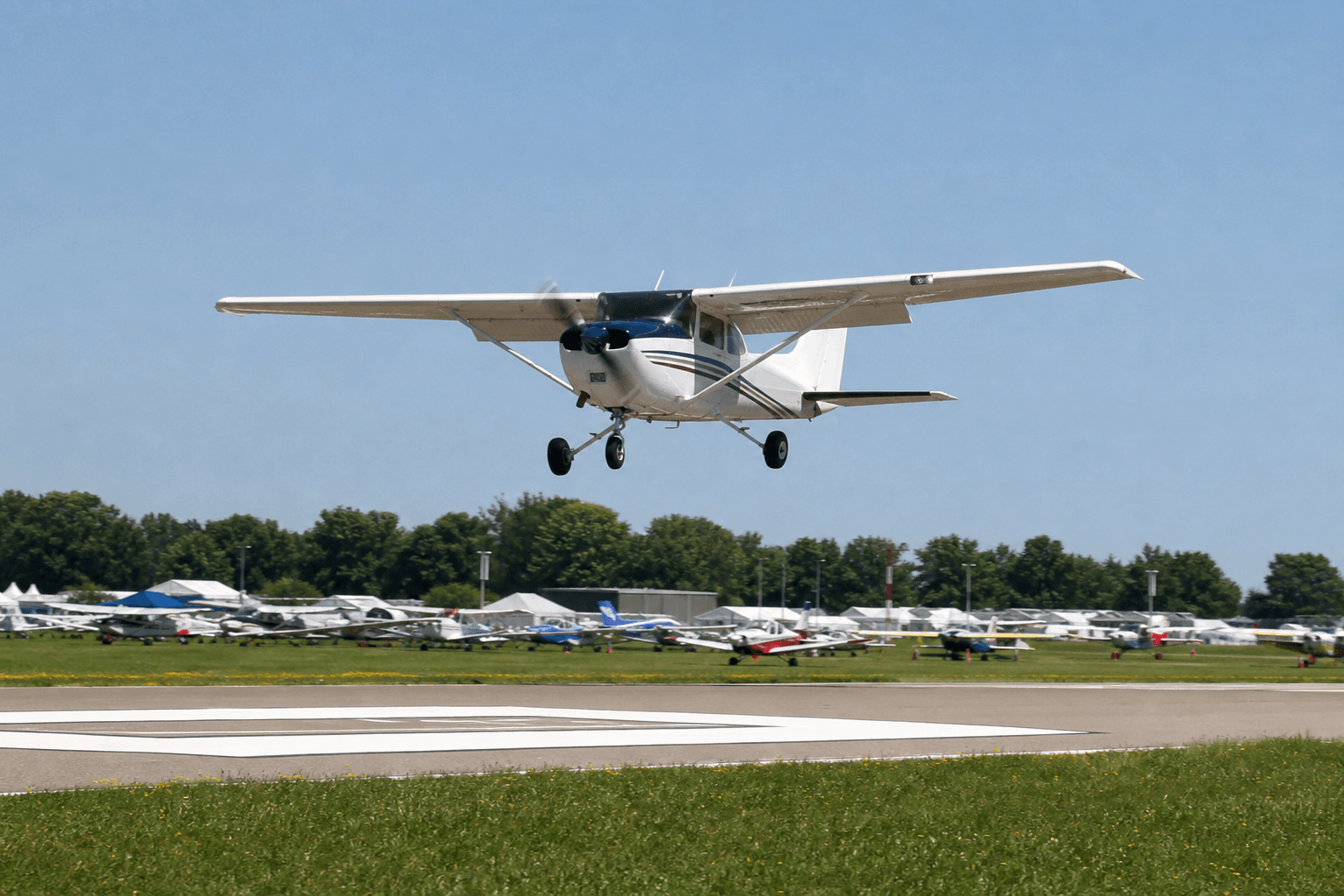
FAA Activates 2026 Oshkosh Flight Procedures for EAA AirVenture Operations
The FAA's special flight procedures for EAA AirVenture Oshkosh 2026 are now in effect. The 32-page notice applies through noon CDT July 27 and covers operations at Wittman Regional Airport and several surrounding airports. Take a look, below. 2026 OSH NOTICE FINAL2_Reviewed Download A few points below serve only as a quick, high level refresher and are by no means comprehensive, nor are they an official guide. It should go without saying that anyone flying the Oshkosh flight procedures should read and rely on the complete FAA notice , carry it in the aircraft and check current NOTAMs, TFRs and ATIS information. Arrival Basics Most VFR traffic will use the Fisk arrival, beginning at a transition point assigned by ATC. Traffic will then proceed toward Ripon and follow the railroad tracks to Fisk. Pilots should obtain the Arrival ATIS on 125.9 no later than 60 miles from Oshkosh. They should then monitor Fisk Approach on 120.7. The standard arrival profile is 90 knots at 1,800 feet MSL, while faster aircraft may use 135 knots at 2,300 feet when needed for safety. Aircraft should remain at least one-half mile behind similar traffic and avoid overtaking, side-by-side flight or S-turns. At Fisk, controllers assign the runway, route to the airport and tower frequency. Pilots may be asked to fly a short approach or land on a designated runway dot, and the notice repeatedly reminds crews to maintain a safe airspeed and go around when an approach does not look right. Closures And Planning Wittman Regional is closed to arrivals each night from 8 p.m. until 7 a.m. and to departures from 8 p.m. until 6 a.m. The airport also closes during airshows, TFRs and certain special activities. Nonscheduled IFR arrivals and some IFR departures require reservations during designated periods, while separate procedures apply to turbine and warbird aircraft, seaplanes, helicopters, ultralights, rotorcraft and approved no-radio vintage aircraft. Fond du Lac, Appleton and Green Bay are among the recommended alternates when Oshkosh closes, parking fills or the arrival becomes unavailable. Pilots should arrive with enough fuel for holding, a possible go-around and a diversion. The full FAA Oshkosh flight procedures notice remains the controlling reference for the applicable routes, frequencies, altitudes and contingencies. Have fun, and fly safe!
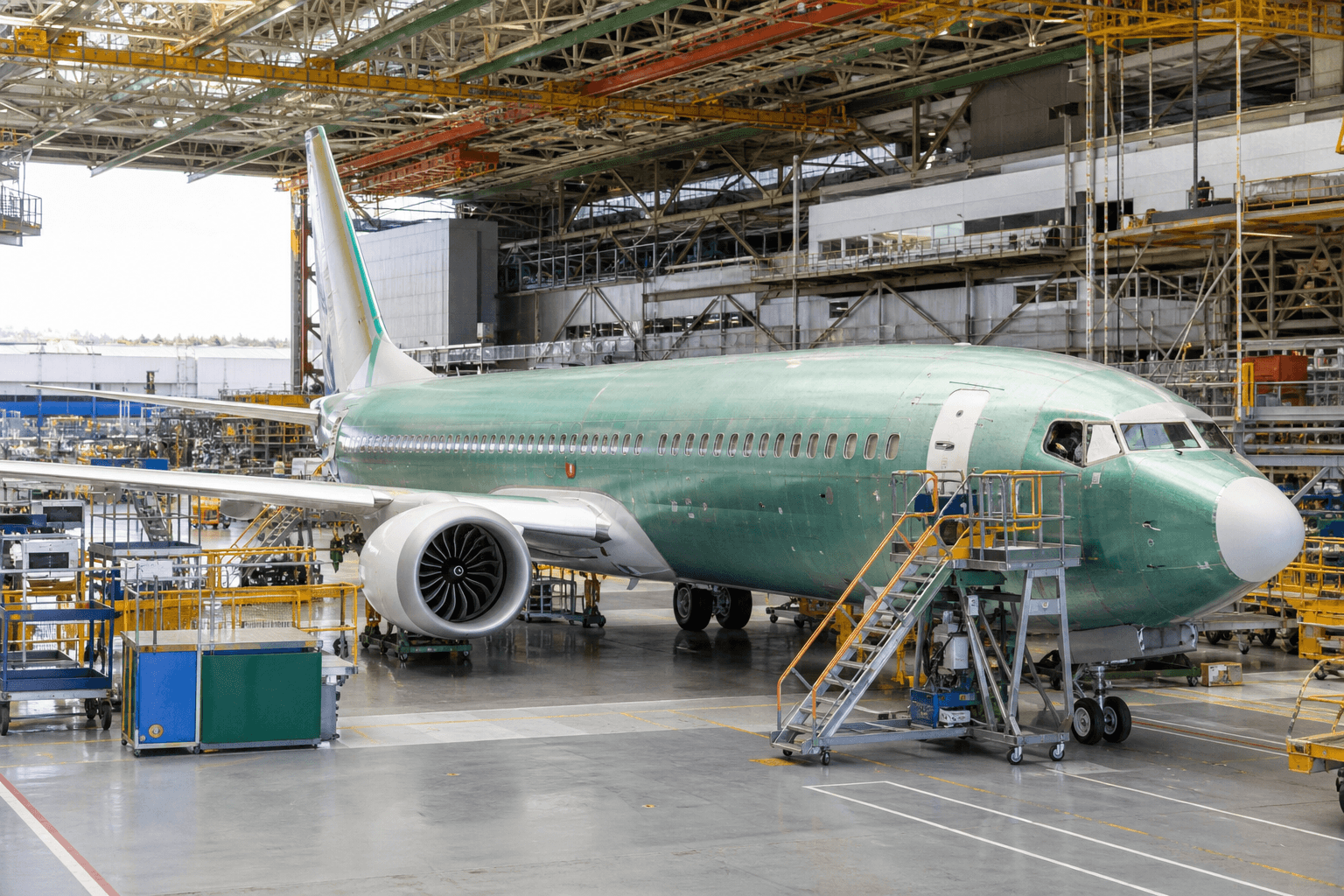
Boeing advances 737 Max and 777-9 programs with key system redesigns and production ramp-up
Executives detail redesigns of the 737 Max’s engine anti-ice and angle-of-attack systems, alongside flight-test headway with new widebody-twin. Ahead of this year’s signature aviation event in Farnborough, Boeing has more wind at its back than at any time in recent memory. The company has hiked production to rates not seen in years, finalised two 737 Max system updates and is close to securing the Max 7’s long-delayed certification, with approval for the Max 10 to follow. Boeing also just opened a new 737 production line in Everett and is ticking off regulatory boxes for certification of its delayed 777-9. Executives have disclosed more about those programmes in recent days, while insisting the airframer has made progress addressing quality and cultural issues. Boeing has said it expects the Federal Aviation Administration will certificate the Max 7 this summer, although on 9 July The Wall Street Journal reported that the approval could come as early as this month. Boeing vice-president of 737 development Chris Payne says the company has now completed all Max 7 certification flight tests and 95% of “certification deliverables” due to the Federal Aviation Administration (FAA). Anti-Ice Redesign He also detailed the redesign of the 737 Max’s engine anti-ice system, a change required because the existing system in certain circumstances can cause engine inlet inner barrels to overheat. The changes notably involve installing “turbulators” on the forward fan case that sits ahead of the Max’s twin CFM International Leap-1B engine. The turbulators are “literally a washer and fastener that go through the inlet in a circumferential row around the engine”, says Payne. Their purpose is to make air entering the engine swirl, which draws in colder air and reduces the temperature “at the critical point” by 93°C (200°F). “It does a fantastic job of really taking care of the temperature conditions,” Payne says. “It’s a highly integrated solution for the aircraft and the engine.” The redesign also includes replacing the forward fan case, which has “acoustic perforations” intended to reduce noise, with a perforation-free “hard-walled” case. Contrary to expectations, those perforations did not reduce noise; the hard-walled case is actually quieter and the change ensures sufficient “fan-flutter margin”, says Boeing senior vice-president of development programmes Mike Sinnett. The anti-ice redesign also includes a new “flow restrictor”, limiting how much hot air strikes critical components, insulation blankets around inlet ducts, circuit breakers, wiring, a “fault redundancy” pressure switch and an integrated air systems controller for the engine anti-ice valve. “We have done all of the [anti-ice] certification testing. We’ve done all the analysis, all the flying, all the lab testing,” Payne says. “We’ve submitted almost all of the deliverables for it. We’re just in the last throes of getting certified.” With the 737 Max 10 Boeing will introduce its “enhanced AoA” system. Source: AirTeamImages Payne says Boeing has meanwhile completed 98% of the Max 10’s flight-test programme. It has two planned flight tests remaining and should complete those this quarter, putting the company on track to achieve certification for the variant before year-end. Payne also says that last quarter Boeing completed level 3 of the Max 10’s “development assurance” work – the regulatory framework used to demonstrate adherence to processes. It has also finished 60% of Development Assurance Level 4 (the final level), and expects to be done this quarter. Additionally, Boeing has submitted 30% of required documents for the Max 10’s system safety analysis, Payne adds. With the Max 10, Boeing is introducing another change, to the angle of attack (AoA) system. It undertook that project because two Max 8 crashes, in 2018 and 2019, revealed that failure of one of the Max’s two external AoA sensors can trigger the Maneuvering Characteristics Augmentation System (MCAS), which trims the aircraft nose-down and is supposed only to activate to counteract excessive nose-up pitch. That sequence preceded both Max crashes, putting those jets into dives from which the pilots did not recover. In addition to MCAS issues, investigators cited pilot workload as contributing to the accidents. That is because AoA failures can activate the stall-warning stick shaker even if the aircraft is not stalling and prompt “five different” cockpit warnings, including false alarms, says Boeing 737 deputy chief test pilot Bill Quashnock. For that reason, Boeing developed its “enhanced AoA” for the 10. The redesign simplifies “flight deck effects” by identifying AoA faults, inhibiting stick shake and displaying a simple message to pilots: “AoA Fault”. “Our engineers have run all the simulations, showing that for pretty much every conceivable error that we know, the monitors will catch it,” Quashnock says. As a backup, Boeing’s enhanced AoA system includes a cockpit switch for pilots to deactivate the stick shaker. Following Max 10 certification, Boeing will deliver other Max models with the improved system, and within two years retrofit in-service jets. Boeing has for two years been delivering Max with “provisions” enabling technicians to complete the updates in as little as 2h. Some 1,200 jets, about half of the in-service fleet, have those provisions. Updates to other aircraft will take several days, Boeing says. Boeing’s North Line became operational on 6 July when workers started assembling a 737 Max 10 for WestJet. Source: Jennifer Buchanan/Seattle Times/Pool Perhaps the most visible sign of Boeing’s upswing lies within Everett hangar space that until several years ago housed 787 assembly (a jet now built entirely in South Carolina). On 6 July, Boeing began operating a 737 Max assembly line in that space, adding to three lines in Renton. The company says the extra space will allow it to ramp 737 output from 47 to 52 jets monthly, with additional rate hikes to follow. "Long term, we really want to use the space to support the [Max] 10,” says Boeing Commercial Airplanes chief executive Stephanie Pope. Though the 777-9’s approval is seven years behind Boeing’s original schedule, executives insist the project is progressing, noting the company has completed half planned 777-9 certification flight tests. It aims to start delivering 777-9s next year. Boeing 777-9 vice-president Terry Beezhold notes many certification flight tests require the aircraft be in its final configuration. Boeing has made several updates to the jet in recent years, contributing to delays. “We’ve had a number of lay-ups throughout our test programme, updating the aircraft from its original build,” he says. “We are in the final phases of completing those lay-ups.” Two 777-9 test aircraft (WH001 and WH002) are now in the “final certification configuration”. WH001 is ready to begin certification flight tests and WH002 will come online in “a couple of weeks”, Beezhold says. Boeing is now working through the final step, stage 5, of the 777-9’s Type Inspection Authorization (TIA) – the document confirming an aircraft meets certification requirements and approving certification flight tests. Historically the FAA approves TIAs in their entirety but has been approving the 777-9’s authorisation in stages. When all primary 777-9 certification work is complete, Boeing will turn its focus to securing 180min ETOPS (extended twin-engined operations) approval for the type. It may later work with airlines to receive longer-duration approvals, Beezhold says
The Daily Touch & Go
The day's best aviation news in your inbox. Free, no spam.