

Illustration: The Touch & Go
Navy Clears Blue Angels Pilot After Controversial Low-Altitude Florida Beach Flyby
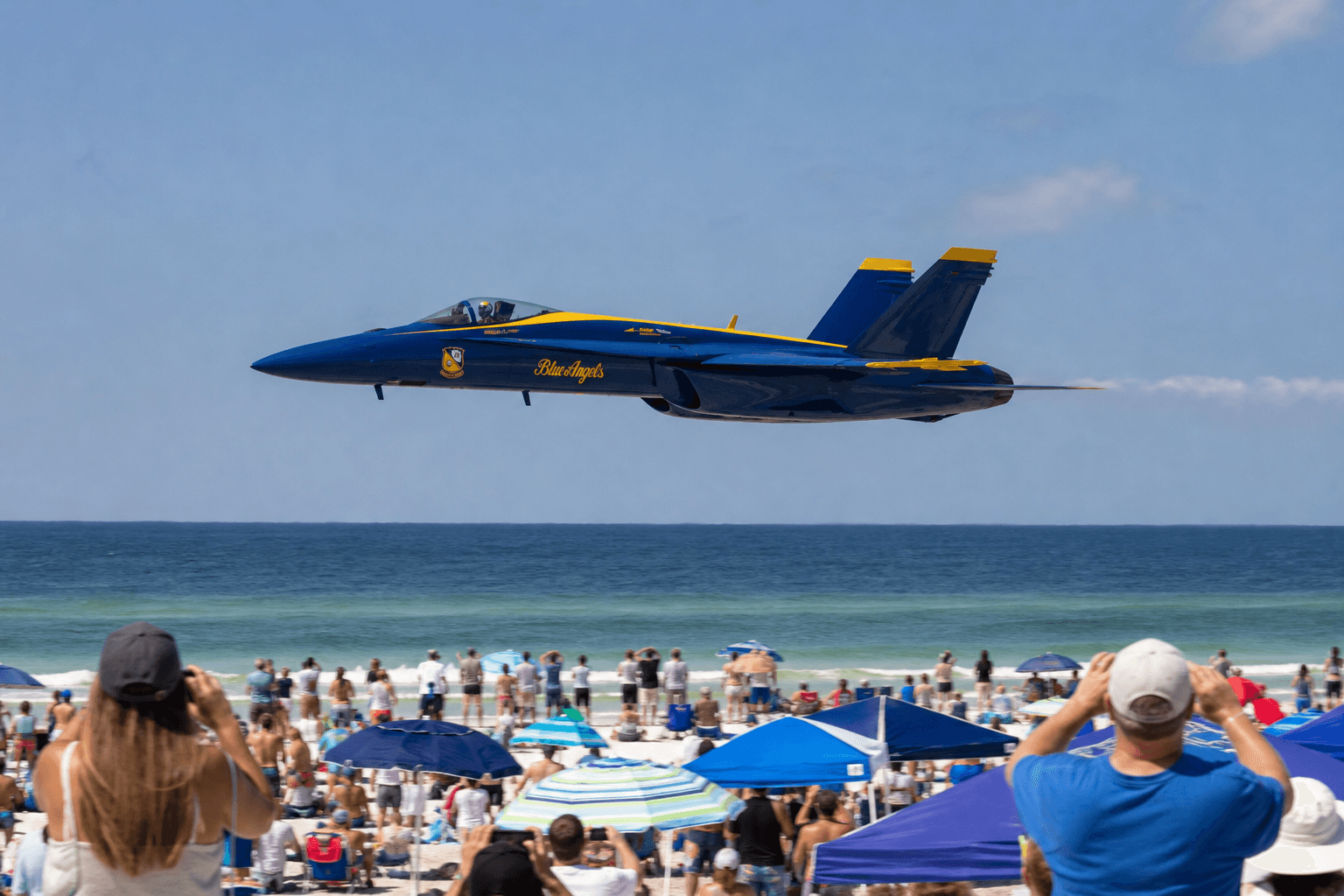
A Blue Angels F/A-18E pilot flew roughly 40 feet over Pensacola Beach, sparking safety concerns, but the Navy confirmed no disciplinary action will be taken.
The gist
Blue Angels pilot who flew an extremely low pass over a Florida beach won’t face firing or reprimand, Navy says.
A video capturing a Blue Angels F/A-18E Super Hornet performing an ultra-low pass over Pensacola Beach, Florida, on July 15 has gone viral, igniting debate over the maneuver's safety. The jet reportedly flew at an estimated altitude of just 40 feet, far below the commonly accepted minimum safe altitude of 1,000 feet for both military and civilian aircraft. The downdraft caused by the jet’s turbulence scattered sand, blew beach umbrellas and canopies down, and even sent hats flying among the crowd gathered at the beach near Naval Air Station Pensacola.
Despite the disruption and the apparent risk posed to beachgoers, including many children attending a 'Breakfast with the Blues' event, the Navy has announced it will not discipline or fire the pilot involved. The Navy emphasized that an internal safety review is underway but publicly assured that no reprimands will be issued. High-profile endorsements for the pilot came from Defense Secretary Pete Hegseth, acting Secretary of the Navy Hung Cao, and even the White House. Cao summarized the decision with a statement reflecting the sentiment within the Navy leadership that the flight aligned with the spirit of freedom and upheld morale.
The Blue Angels operate under specific Federal Aviation Administration (FAA) exemptions allowing aerobatic performances below normally authorized altitudes and speeds. These waivers specify permitted airspace and time frames but explicitly forbid maneuvers directly over crowds. The low pass resembled dramatic military aviation scenes like those in the Top Gun films, yet such actions typically violate established protocols and would commonly result in grounding or disciplinary measures.
Naval Air Station Pensacola, known as the Cradle of Naval Aviation, serves as home base to the Blue Angels. The surrounding region is one of the busiest in the country for military flight training and operations, explaining why low-altitude flying activities are regularly observed by locals, many of whom are former or current naval aviators. Nevertheless, Navy officials stated this particular flyover was not routine and declined to identify the pilot involved, underscoring the exceptional nature of the event.
Historically, the Blue Angels have faced consequences for crossing safety thresholds during displays. An incident in 2011 at the Lynchburg Regional Air Show involved the team dipping below the minimum safety altitude with no injuries or damage but led to the team commander voluntarily stepping down. This contrasted with the current event, where no such disciplinary precedents have been invoked, and political leaders appear to have quickly embraced the pilot’s actions as boosting esprit de corps.
The Navy’s response to the Pensacola flyby also highlights tension between strict safety oversight and the desire to maintain public enthusiasm for military aviation exhibitions. While the FAA establishes stringent rules for aerial performances, the Blue Angels’ exemption allows some latitude, but within tightly controlled boundaries aimed at protecting spectators and property. The episode raises questions about balancing daring demonstrations and community safety in such well-observed environments.
With no injuries or official reports of hearing damage yet reported, the Navy continues to defend the pilot’s decision and promises a careful internal review. Meanwhile, Secretary Hegseth’s public endorsement suggests the Navy is prioritizing morale and tradition over punitive measures. This approach may set a precedent for how similar incidents involving the Blue Angels are addressed in the future.
Frequently asked questions
- What altitude did the Blue Angels pilot fly over Pensacola Beach?
- The pilot flew an estimated altitude of approximately 40 feet (12 meters) over the beach, significantly below the typical minimum safe altitude of 1,000 feet.
- Did the Navy take any disciplinary action against the pilot?
- No disciplinary action or reprimands have been issued; the Navy confirmed the pilot will not be fired and an internal review is ongoing.
- Are Blue Angels pilots allowed to perform low-altitude maneuvers over crowds?
- The Blue Angels operate under FAA exemptions allowing low-altitude aerobatics only within designated areas and times, explicitly prohibiting maneuvers directly over spectators.
Read more
All Aviation Safety →
Family Sues UPS, Boeing Over 2025 Louisville Cargo Plane Crash Fatality
The accident killed 15 and resulted in the temporary grounding of the McDonnell Douglas MD-11.
All Nippon Airways Captain Sentenced to Prison for Sexual Assault of Flight Attendant
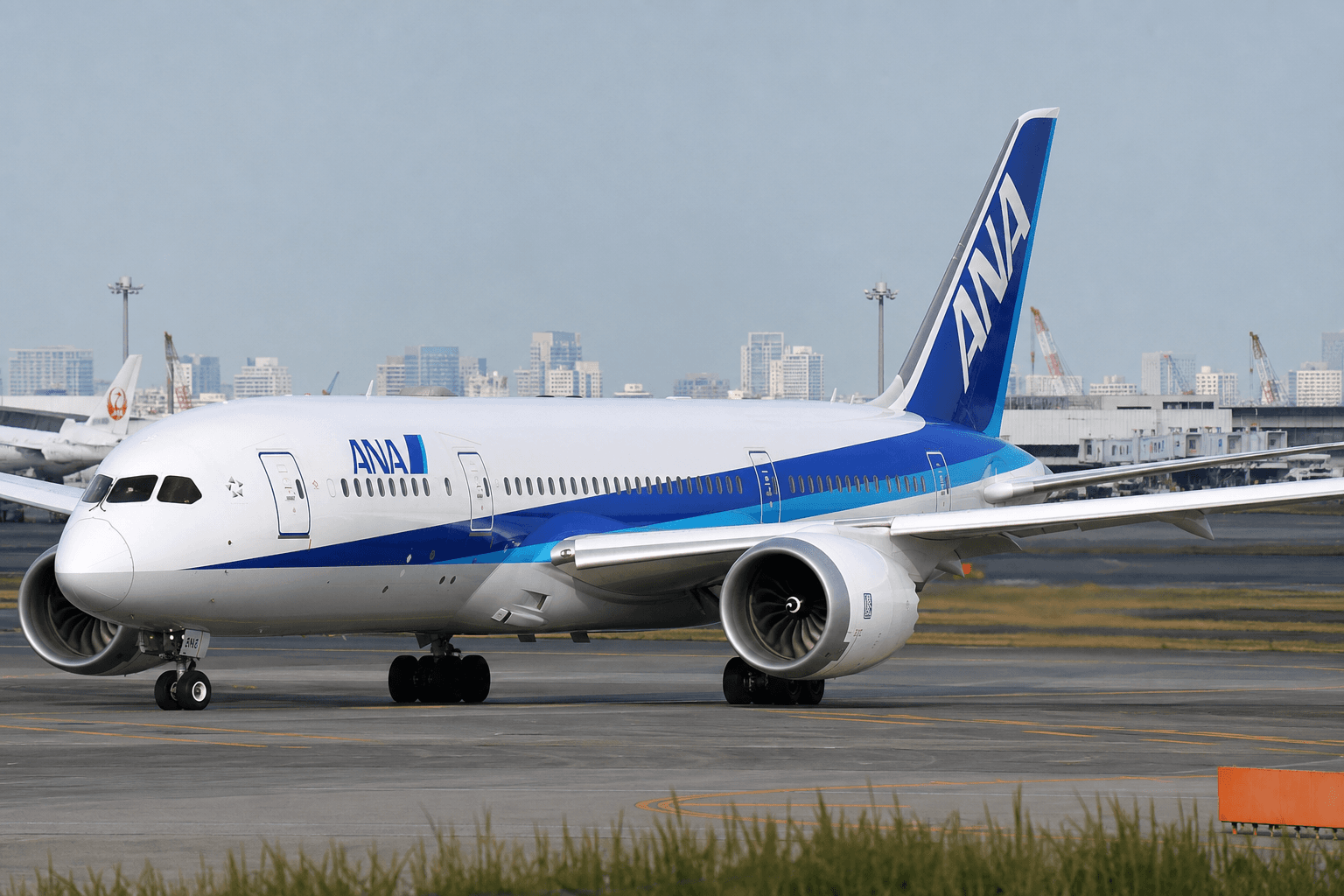
A Captain for All Nippon Airways, the largest airline in Japan, has been sentenced to 18 months’ imprisonment by a Tokyo court after he was found guilty of sexually assaulting a young female flight attendant during a layover. The suspect has been identified as Ryota Mise, a 44-year-old Captain who repeatedly grabbed the buttocks of his victim while they walked along a street together and inside a convenience store. The incident occurred during a domestic layover in Takamatsu, Kagawa Prefecture, while the pair was walking back to their hotel. The flight attendant said she felt like she had no option but to allow the Captain to assault her because she feared he would be able to hurt her career if she refused. The two crew members had met the previous day during a flight to Takamatsu and had gone out with a group of crew for dinner. On the return to the hotel, however, Mise repeatedly grabbed his colleague’s buttocks. He told the court that he thought he had permission to touch the victim, but that defense was dismissed by Judge Takao Okawa, who described the flight attendant’s testimony as “convincing and highly credible.” In the wake of the October 10, 2023, incident, the flight attendant reported her concerns to ANA, and the airline opened an internal investigation. The Captain admitted he had touched the flight attendant and, given his explanation of the events, ANA allowed him to continue working as a pilot. Following this internal investigation, the flight attendant then reported the incident to the police, who arrested Mise. The lengthy investigation culminated in Mise being sentenced to 20 months’ imprisonment on Tuesday – less than the two-and-a-half-year sentence that prosecutors had been seeking. There’s long been concern that workers in some Asian countries feel like they can’t challenge or say no to their superiors. This is a particular issue in the aviation industry, where safety can be compromised due to this culture of being afraid to speak out to someone of a higher rank. Japan Airlines was only recently engulfed in a scandal after it was revealed that a senior flight attendant was caught over the legal alcohol limit ahead of a domestic flight to Tokyo. Alcohol consumption had become such an issue for Japan Airlines that the carrier requires all of its pilots and flight attendants to carry out a pre-flight breath test using a personally issued device. Ahead of this flight, however, the senior flight attendant deliberately didn’t submit the results of her test. Her junior coworkers reminded her to submit the test result, but when she brushed off those concerns, no one pushed back or reported the issue to the company. The senior crew member was eventually caught when she completed a company-conducted test at the airport, causing a delay to the flight. Japan Airlines has now banned flight attendants from consuming any alcohol during layovers, and the carrier’s chief executive took a temporary pay cut over the scandal.
Pilots urged to use updated airmets and sigmets for safer flights in changing weather
Most pilots can tell at least one story about a flight that did not go as planned because of unpredicted weather along the route. We all know that weather forecasts aren’t perfect, but that can lead to concerns regarding the safety of the flight.
Deaf Man Sentenced to 18 Months for Targeting Delta Pilot with Laser Pointer Near Buffalo Airport
A deaf man from Cheektowaga, New York, has been sentenced to 18 months in a federal prison after he pleaded guilty to aiming a laser pointer at the pilot of a Delta Air Lines plane, which was on its final approach to land at Buffalo Niagara International Airport. 31-year-old Joseph L. Crapsi had been fighting the prosecution brought by the Assistant U.S. Attorneys Charles M. Kruly and Craig R. Gestring following an investigation by the Niagara Frontier Transportation Authority Police Department and the FBI. Crapsi’s attorneys had asked the court to suppress evidence that the laser pointer was found in his bedroom and objected to a finding that police had probable cause to arrest him. In the end, however, the court found that the police were within their rights to arrest him, and the laser pointer was used in evidence. The case stemmed from an incident on the night of March 2, 2024, when Delta flight DL-2334 was coming into land. The final approach path saw the jet fly close to Crapsi’s house in Cheektowaga, just a few miles from Buffalo Niagara Airport. Following the incident, the pilot reported the ‘laser strike’ to police, who started making enquiries in the area that the crew said the laser was coming from. One of Crapsi’s neighbors told officers that they saw a laser shining through his window on ‘multiple occasions.’ Given that the laser was seen shining into the sky, the court ruled that this was sufficient to meet the low standard of probable cause. Officers knocked at Crapsi’s address and were invited inside. They went with him to his bedroom, where they noticed a laser pointer ‘in plain sight.’ The laser pointer was seized as evidence, and Crapsi was arrested. Crapsi eventually pleaded guilty to aiming a laser pointer at an aircraft contrary to 18 U.S. Code § 39A, which carries a maximum sentence of five years imprisonment. Late last week, U.S. District Judge Lawrence J. Vilardo sentenced Crapsi to 18 months’ imprisonment. In 2023, there were a record 13,304 laser pointer incidents reported across the United States – an increase of nearly 80% compared to 2016. The number of incidents have, however, slightly decreased in recent years. In 2024, there were 12,840 reported laser incidents, and 10,993 were reported in 2025. So far this year, there have been 3,325 incidents up to the end of June. It was made illegal to aim a laser pointer at aircraft in 2012, following a dramatic rise in the number of incidents being reported by pilots. The Federal Aviation Administration (FAA) reports that the vast majority of laser strikes occur on Fridays and Saturdays, with a noticeable increase in reports during the months of October and November. Laser incidents can temporarily blind and injure pilots. In one incident involving a Virgin Atlantic flight from London to Tel Aviv, Israel, the pilots had to return to London because the pilot’s vision got progressively worse and he was only able to see out of one eye.
The Daily Touch & Go
The day's best aviation news in your inbox. Free, no spam.