

Image: Wikimedia Commons · CC BY-SA 3.0 · via Wikimedia Commons
House Panel Divided on U.S. Airline Competition Amid Deregulation Legacy and Consolidation Concerns
A House subcommittee hearing revealed stark disagreements on U.S. airline industry competition, with Republicans praising deregulation and Democrats warning of rising consolidation and costs.
The gist
House Republicans hail airline deregulation for improved access while Democrats decry consolidation driving up prices and harming consumers.
The U.S. airline industry’s competitive landscape was sharply debated at a House subcommittee hearing on Wednesday, exposing a partisan divide over deregulation, consolidation, and consumer impact. Republican members and Airlines For America CEO Chris Sununu credited deregulation since the 1970s with expanding flight access, improving customer experiences, and enhancing traveler flexibility. They asserted that persistent issues stem more from outdated infrastructure and flawed federal policy than from airline conduct itself.
In contrast, Democrats portrayed the industry as regressing, accusing airlines of cartel-like behavior that fuels rising fares and diminished service. Representative Becca Balint of Vermont condemned rising ticket costs, increased cancellations, and the monetization of once-standard amenities such as seat selection and carry-on allowances. These positions framed the hearing held by the House Subcommittee on the Administrative State, Regulatory Reform, and Antitrust, which examined competition, airline mergers, and antitrust enforcement efficacy.
Discussion referenced recent events such as the collapse of Spirit Airlines and examined merger attempts including a blocked effort by United Airlines and a rival thwarted proposal involving American Airlines. Republicans criticized federal opposition to JetBlue’s proposed acquisition of Spirit, suggesting that regulators missed an opportunity to preserve a low-cost carrier struggling amid economic headwinds. Kristian Stout of the International Center for Law and Economics echoed this view, hinting that the administration’s stance exacerbated Spirit’s demise.
However, economic expert Nancy Rose, a Massachusetts Institute of Technology professor and former Justice Department antitrust official, countered this argument, contending that JetBlue had planned to abandon Spirit’s ultra-low-cost structure and that regulatory scrutiny was justified. Additionally, she highlighted that Spirit’s financial difficulties were largely due to soaring jet fuel prices following geopolitical disruptions, notably Iran’s closure of the Strait of Hormuz, which sharply increased operational costs.
Democrats further assigned blame internally within U.S. politics, with Representative Jamie Raskin accusing the Trump administration of politicizing merger approvals and commodifying regulatory processes. Raskin described a 'Trump transaction tax,' suggesting that merger permissions became less about competition and more about political and financial expediency. This critique linked policy decisions directly to broader questions of fairness and market stability.
Arguments supporting deregulation highlighted how airline access has dramatically broadened since the era of the Civil Aeronautics Board, resulting in significantly higher passenger volumes on commercial flights. Timothy Ravich from Tressler LLP recounted historical deregulation debates, noting that while fare and route competition remain important, modern challenges increasingly revolve around bottlenecks in airport infrastructure, restricted access to gates, and terminal capacity limitations that constrain carriers’ competitive abilities.
Infrastructure modernization emerged as a critical priority, with Sununu advocating for comprehensive air traffic control upgrades. The Department of Transportation, under Secretary Sean Duffy, has received over $12 billion in congressional funding for modernization projects, though this falls short of the department’s full financial request. This shortfall underscores ongoing challenges in aligning legislative support with aviation system needs.
Consumer protection measures introduced under the Biden administration, many of which were later rejected or withdrawn, also featured prominently in the debate. These regulations attempted to enforce stricter airline accountability, including cash refunds for lengthy delays. Republicans argued that such mandates disproportionately harm low-cost carriers—like Spirit—that primarily serve budget-conscious travelers, potentially raising fares and reducing service options.
Democrats defended the discarded measures as crucial consumer safeguards projected to return hundreds of millions annually in value to passengers. They accused airlines and their trade groups of lobbying extensively against these rules to preserve profits at passengers’ expense, alleging collusion with government officials to block protections. This clash of regulatory philosophy exemplifies enduring tensions between airline industry priorities and consumer advocates.
Read more
All Regulatory →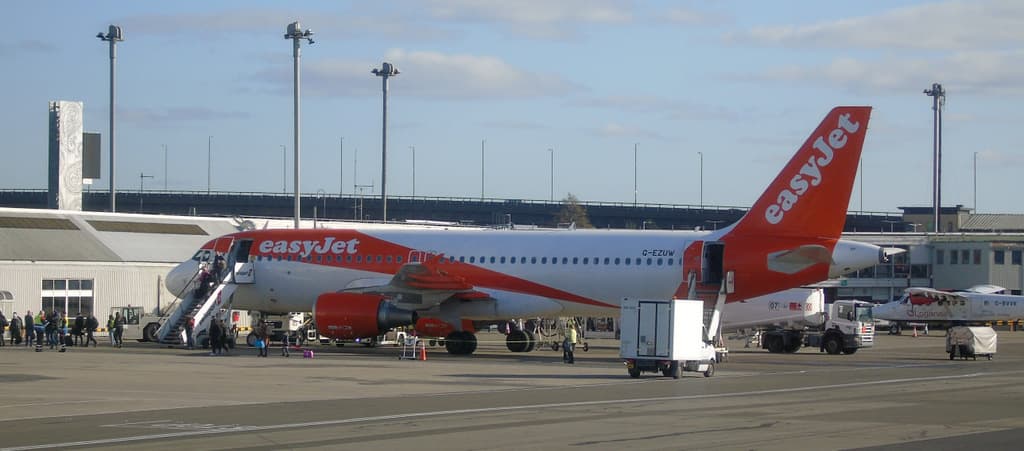
Apollo Global Management Secures Majority Stake in EasyJet While Navigating EU Ownership Rules
Apollo Global Management appeared to pull off something remarkably straightforward this week: the New York-based investment giant agreed to buy easyJet for £5.7 billion ($7.7 billion), beating out fellow US investor Castlelake to one of Europe's largest low-cost airlines. Reuters reports that Apollo's £7.15-per-share offer represented an 81% premium to easyJet's closing price before investor interest became public, while easyJet founder Sir Stelios Haji-Ioannou and the airline's board backed the transaction.
Black Comedians Settle Lawsuit Over Racially Targeted Jet Bridge Stops at Atlanta Airport
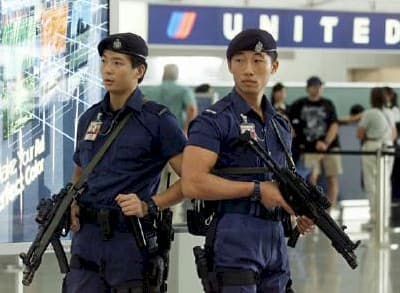
What to Know Comedians Eric André and Clayton English have settled their lawsuit against Clayton County over a jet bridge stop program at Atlanta’s airport, which disproportionately targeted Black passengers. In This Article The statistics behind the lawsuit, including odds researchers say are less than one in 100 trillion that the racial disparity happened by chance. What each comedian experienced when police intercepted them on the jet bridge before boarding. What Clayton County has agreed to change, including body cameras and constitutional rights training for officers. How much each comedian will receive, and what the county did and didn’t admit to. Show 4 more points + .pyok-callout { display: flex; border-radius: 0; background: #f7f9fc; margin: 24px 0; font-family: -apple-system, BlinkMacSystemFont, "Helvetica Neue", Arial, sans-serif; } .pyok-callout-inner { padding: 20px 24px; width: 100%; } .pyok-callout-head { margin-bottom: 12px; } .pyok-callout-tag { font-size: 20px; font-weight: 900; letter-spacing: 0.04em; text-transform: uppercase; color: #120E43; } .pyok-callout-list { margin: 0; padding: 0; list-style: none; } .pyok-callout-list li { position: relative; padding-left: 18px; margin-bottom: 12px; font-size: 17px; line-height: 1.55; color: #1a1a1a; } .pyok-callout-list li::before { content: ""; position: absolute; left: 0; top: 9px; width: 6px; height: 6px; border-radius: 50%; background: #120E43; } .pyok-callout-list-more li:last-child { margin-bottom: 0; } .pyok-callout-subhead { text-align: center; font-size: 11px; font-weight: 700; letter-spacing: 0.1em; text-transform: uppercase; color: #8a93a3; margin: 22px 0 14px; padding-top: 14px; border-top: 1px solid #e1e7ef; } .pyok-callout-more { max-height: 0; overflow: hidden; transition: max-height 0.35s ease; } .pyok-callout-toggle { display: inline-flex; align-items: center; gap: 6px; margin-top: 10px; padding: 0; border: none; background: none; color: #120E43; font-size: 14px; font-weight: 700; cursor: pointer; } .pyok-callout-toggle:hover { text-decoration: underline; } .pyok-callout-toggle-icon { display: inline-flex; align-items: center; justify-content: center; width: 16px; height: 16px; border: 1.5px solid #120E43; border-radius: 0; font-size: 12px; line-height: 1; } (function () { document.querySelectorAll('.pyok-callout-toggle').forEach(function (btn) { btn.addEventListener('click', function () { var card = btn.closest('.pyok-callout-inner'); var more = card.querySelector('[data-more]'); var isOpen = btn.getAttribute('aria-expanded') === 'true'; var textEl = btn.querySelector('.pyok-callout-toggle-text'); var iconEl = btn.querySelector('.pyok-callout-toggle-icon'); if (isOpen) { more.style.maxHeight = '0px'; btn.setAttribute('aria-expanded', 'false'); textEl.textContent = btn.dataset.moreText; iconEl.textContent = '+'; } else { more.style.maxHeight = more.scrollHeight + 'px'; btn.setAttribute('aria-expanded', 'true'); textEl.textContent = btn.dataset.lessText; iconEl.textContent = '\u2212'; } }); }); })(); Two Black actors and comedians, Eric André and Clayton English, have reached a settlement with Clayton County, which covers Atlanta-Hartsfield International Airport (ATL), over a "coercive" jet bridge stop program that subjected passengers to “racial profiling” by local law enforcement. The lawsuit dates back to October 2022 when André and English took the Clayton County Police Department to court in a bid to shut down the 'jet bridge stop program' which involved police officers standing on a jet bridge as passengers are boarding a plane and "randomly" stopping people. On April 21, 2021, Eric was flying from Atlanta to Los Angeles when he was intercepted by two police officers who were waiting on the jet bridge. The officers questioned him for five minutes, during which time they asked if he was carrying illegal drugs, all while other passengers "gawked" at him as they squeezed past. Eric was allowed to board the flight, but he says the encounter with the police officers was a "humiliating and degrading experience". Clayton had a very similar experience as he went to board a flight to Los Angeles just six months earlier in October 2020. In an eight-month period, the Clayton County Police Department had 402 "consensual encounters," of which only two resulted in passengers being charged with drug offenses. During that same time period, however, the police department seized more than $1 million in cash and money orders based on the "slightest suspicion" that the money was connected to criminal activity. An Open Records Act request revealed that 56% of the passengers stopped during the same eight-month period were Black. Researchers from the Policing Project, which supported Eric and Clayton, claim that the odds that Black passengers were randomly selected for these stops are less than one in 100 trillion. The actors have, however, now reached an out-of-court settlement with Clayton County. The settlement includes a $15,000 payout for each of the actors. “It´s a major victory that Clayton County has confirmed that it has ended this program and is now taking steps to prevent this type of abuse from happening in the future,” André said after the settlement was announced on Tuesday. In a separate statement, English said: “What happened to me was wrong, and I wasn´t willing to let it happen to other people.” Clayton County did not make any admission of guilt or liability as part of the settlement. The county has, however, committed to putting its police officers through constitutional rights training, and will require officers on duty at Atlanta-Hartsfield to wear body cameras.
SkyBrief app streamlines preflight planning with personalized weather and training tools
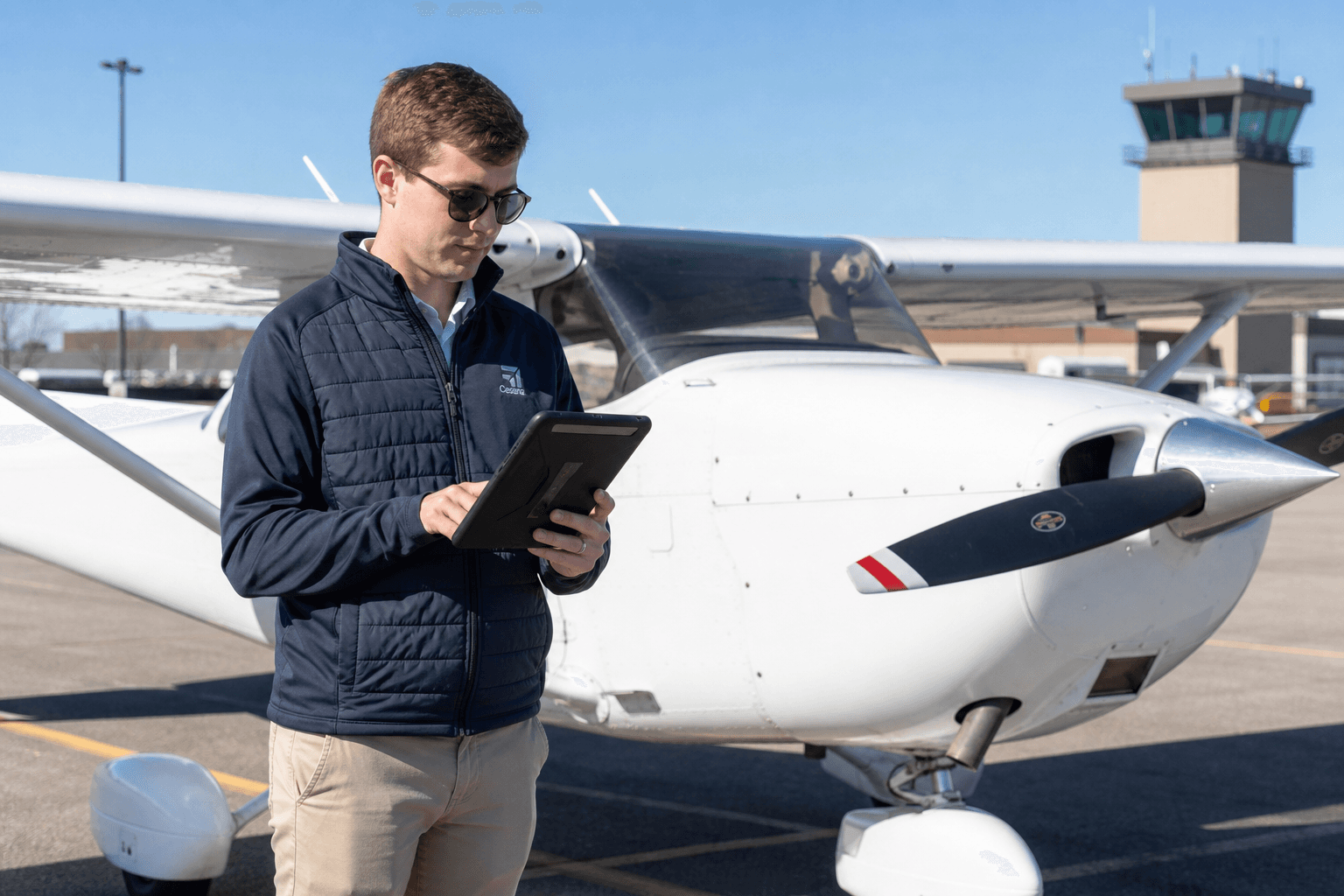
Rohith Velmurugan was working toward his commercial pilot certificate when he noticed how much of his training time was being spent on the ground.
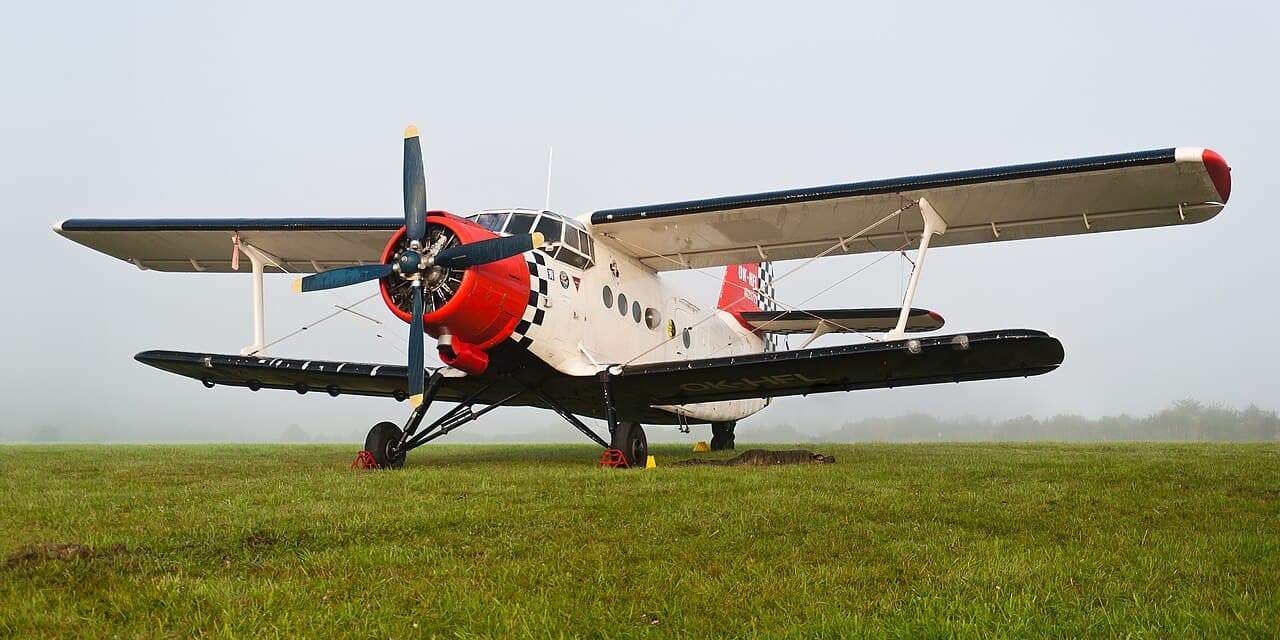
Klimov Advances VK-1600S Turboprop to Power Modernised An-2 Aircraft
VK-1600S powerplant to be based on helicopter engine. Russia's United Engine is preparing to build a demonstrator of a new engine for smaller aircraft types including a modernised Antonov An-2. It has completed design documentation for a prototype of the Klimov VK-1600S turboprop. "The next stage is creation of a demonstrator engine and a test rig, which are necessary to validate the design and certify the new product," says the firm. Intended to generate 1,450shp (1.08MW) at take-off, the powerplant is based on the VK-1600V for helicopters. "Existing key components, including the gas generator, are used as the basis, accelerating the development process," says United Engine, adding that the two powerplants will have 60-65% commonality. It says it is aimed at applications including modernised versions of the An-2 – such as the TVS-2DTS. Such modernisation programmes had originally been developed to feature a Honeywell engine. "There are still many of these aircraft in Russia, so there is a need for new engines," says state technology firm Rostec. United Engine says the VK-1600S would be used with the Aerosila AV-17 propeller. "We plan to complete the demonstrator engine soon and prepare a specialised test rig," says Klimov chief designer Anton Kolosov.
The Daily Touch & Go
The day's best aviation news in your inbox. Free, no spam.