


Mastering the First Dual Cross-Country Flight Requires Solid Prep and Navigation Skills
Flight instructors emphasize thorough preflight planning and analog navigation skills to ease student pilots through their first dual cross-country lesson.
The gist
Successful first dual cross-country flights hinge on solid ground prep and mastery of basic nav skills before takeoff.
The initial dual cross-country flight in pilot training stands out as one of the most demanding experiences for student aviators. Typically lasting longer than prior lessons and conducted beyond familiar practice areas, it challenges trainees to integrate numerous skills simultaneously. Part 141 flight schools often schedule this flight shortly after a student’s first solo and limit destinations to a set list of approved airports. Part 61 training, however, offers more latitude regarding timing and destination choices. Nonetheless, building a foundation of local dual instruction before this step markedly improves the learner’s readiness, emphasizing checks, radio communications, and fundamental navigation.
To be considered a cross-country flight in pilot training, the trip must cover a minimum straight-line distance of 50 nautical miles from the starting airport to the destination, where a landing occurs. This requires precise planning using traditional navigation tools like plotting on VFR sectional charts. More experienced instructors and training programs advocate for exceeding the minimum distance slightly to maximize skill exposure.
Experienced certified flight instructors (CFIs) suggest conducting a thorough ground briefing before the first dual cross-country flight. This preparation includes creating a detailed paper navigation log (navlog), even if electronic aids will be used later in training. Encouraging trainees to verbally explain their chosen landmarks, estimated altitudes, and navigation checkpoints reinforces understanding. Analog navlogs and map reading cultivate a deeper grasp of pilotage, dead reckoning, and aircraft performance calculations.
A cautionary example highlights the pitfalls when this groundwork is overlooked. A student and a relatively inexperienced CFI departed with an incomplete navlog, resulting in confusion and difficulty identifying landmarks mid-flight. The student struggled with ground speed computations and sectional interpretation, leading to erratic altitude and heading deviations and missed radio communications. The instructor’s unhelpful reminder about prior ground school knowledge compounded stress, prompting an early return to the home airport. Postflight discussion revealed a gap between theoretical knowledge and in-flight application, especially for learners without prior hands-on navigation coaching.
To bridge the transition to full cross-country flights, CFIs recommend integrating incremental navigation exercises during routine out-and-back practice flights within the local area. Assigning manageable tasks like timing ground speed between landmarks and performing E6-B flight computer calculations familiarize students with navigation principles in a low-pressure context. Repeated exposure to sectional charts, radio frequencies, and identification of airspace regulations build confidence before embarking on longer trips.
Learners are advised to initiate a ground session several days before their first dual cross-country flight, ensuring familiarity with filling out an analog navlog and understanding key landmarks spaced no more than 15 nautical miles apart. Selection criteria include prominent physical features such as large lakes, cities, stadiums, or airports easily spotted from the air. Scoping out VOR and weather frequencies on sectionals, reviewing clearance requirements, and factoring winds aloft with performance data from the aircraft’s pilot operating handbook complete the planning stage.
Using a mechanical E6-B flight computer may initially intimidate students, but instructors stress its simplicity when following the printed instructions. Practicing calculations seated with a kneeboard mimics cockpit conditions, helping pilots adapt to inflight navigation work. Part of this practice includes managing sectional charts to prevent clutter while enabling easy landmark identification and route tracking.
Instructors are encouraged to teach diversion techniques by selecting alternate airports before the flight. Navigating to less conspicuous airfields enhances situational awareness and problem-solving skills, discouraging overreliance on GPS direct-to functions. This approach prepares students for check rides where reliance on electronic navigation aids may be limited or scrutinized.
Proactive CFIs often prepare customized navlogs for predictable cross-country routes, pre-populated with landmarks, VORs, and frequencies. These serve as reliable backups if the student’s calculations are incomplete or erroneous, allowing the student to focus on developing visual navigation and situational assessment. This structured approach reduces confusion and reinforces core navigation skills critical to safe, independent flight.
Frequently asked questions
- What distance qualifies a flight as a cross-country flight in pilot training?
- A cross-country flight requires a straight-line distance between the starting point and destination airport of at least 50 nautical miles, with a landing at the destination.
- Why is a ground session important before the first dual cross-country flight?
- A ground session helps ensure the student pilot understands how to create a navigation log, use sectional charts, calculate ground speed and time using an E6-B flight computer, and recognize landmarks, which prepares them for in-flight navigation tasks.
- How can flight instructors help students prepare for navigation challenges during cross-country flights?
- Instructors recommend incremental navigation exercises on local flights, teaching analog navigation skills, setting up diversion plans, and providing pre-made navlogs with key landmarks and frequencies to build student confidence and reduce errors during cross-country flights.
Read more
All Aviation Safety →
Embraer debuts Phenom 300EV light jet with Garmin Emergency Autoland and upgraded range
Embraer has launched the Phenom 300EV, the third generation of the planemakers best-selling light jet following the highly successful Phenom 300E and Phenom 300. On July 14, 2025, the Brazilian aircraft manufacturer said that the updated model arrives with intuitive safety technology, including Garmin Emergency Autoland. Embraer said the 'EV' designation stands for Evolution and deliveries of the new model are expected to begin in 2028. The latest executive jet "incorporates a series of performance and interior enhancements" from its predecessors such as Garmin G3000 Prodigy Touch, which includes runway and taxi situational awareness. PAUL BOWEN Landings and takeoffs are also supported by Autobrake and a new Embraer-developed Multi-Purpose Electronic Controller (MEC), integrates rudder-by-wire and other electronically controlled aircraft functions, contributing to reduced pilot workload and simplified maintenance. Michael Amalfitano, President and CEO of Embraer Executive Jets, said that for over a decade the Phenom 300 series have set the industry standard and the aircraft holds the "undisputed position as the category leader". "With the new Phenom 300EV, we are raising the bar once again," Amalfitano said. "Through purposeful innovations combining enhanced safety technology, amplified performance, and thoughtful cabin refinements, we have introduced meaningful advancements that make flying more intuitive, seamless and enjoyable. It is not only the evolution of the world's best-selling light jet, but a clear statement that the market leadership excellence benchmark continues to belong to Embraer." Embraer Performance updates include an extended range of up to 2,055 nautical miles and an increase in maximum zero fuel weight, adding approximately 430 pounds of payload capacity. The Phenom 300EV also introduces new True Blue Power lithium-ion batteries and LED taxi and landing lights designed to support improved reliability and dispatch performance. Starlink connectivity will also be available as an aftermarket solution through a Supplemental Type Certificate (STC). Introducing the Phenom 300EV, a bold evolution of the world's best-selling light jet for 14 consecutive years. There are light jets. And then there's the Phenom 300EV. Intuitive. Refined. Legendary. Read more: https://t.co/SD3KhYUZWx Phenom 300EV: https://t.co/2lTwriWz1C pic.twitter.com/UEMyMjJbiU — Embraer (@embraer) July 14, 2026 Additional enhancements include the introduction of an odorless vacuum lavatory, improved cabin temperature control, a redesigned refreshment center with the flexibility to bring a hot beverage machine of preference, and an air ionization system. RELATED India certifies multiple Embraer aircraft including E195 and E195-E2 jets
New Marine One Helicopters Cause Lawn Damage, FAA Reviews DC Crash Safety
New Sikorsky Marine One helicopters damage the White House lawn, the airports renamed for U.S. presidents, airline consolidation, DCA crash safety recommendations, controversy over ADS-B In regulations, Air France and Airbus manslaughter verdict, passengers sue Delta over turbulence injuries, a Ryanair window ruptures, and a seaplane makes a hard landing in New York's East River. Also, interviews from the Spurwink Farm fly-in. Aviation News Lockheed Martin Is Covering the Cost of Trump's White House Helipad President Trump said that Sikorsky, part of Lockheed Martin, would cover the cost of building a new helipad at the White House. Lockheed Martin confirmed the report. Sikorsky helicopters have been used to transport the president since the 1970s. The new VH-92A Patriot helicopter has propulsion exhaust vents located toward the rear of the airframe and pointed downward, unlike the VH-3D’s configuration. Also, with much more powerful engines, the VH-92A generates significantly more downwash than the VH-3D. The hot exhaust gets combined with the intense rotor downwash at touchdown, and the combined heat-and-airflow effect scorches the turf and can physically rip sod loose. Airline consolidation now rules the skies. Has it been good for passengers? Continental Airlines, Northwest Airlines, and US Airways are gone. Spirit Airlines is gone as well. Now, the Big Four U.S. airlines control roughly three-quarters of the U.S. market. Has this been good for the flying public? It depends on who you ask. Former governor Chris Sununu, now the head of Airlines for America, said at a Capitol Hill hearing, “We have more competition per route than ever before. When I go to buy a ticket, I have four, five, or six carriers going from Wichita to Dallas. So now they’re all competing on that exact same route." There are six airlines serving Wichita Dwight D. Eisenhower National Airport, but there’s only one that flies nonstop to Dallas. Past guest Ganesh Sitaraman, a professor at Vanderbilt Law School and the author of the book Why Flying Is Miserable and How to Fix It said, “From the airlines’ perspective, it makes sense. Bigger is better, and it’ll be more efficient for them, even if there’s a lot of drawbacks for communities and passengers.” A Florida airport is officially renamed for Trump. What does he stand to gain? FAA Details First Official Response to DC Crash Safety Recommendations After the January 2025 midair collision near Washington, D.C., that killed 67 people, the NTSB issued nearly three dozen recommendations. As is always the case, the FAA is not obligated to implement the NTSB’s recommendations. Earlier this year, the FAA said it had fully addressed seven of the recommendations and that it would evaluate the others, with further updates to come by May 31, 2027. The Air Current reported that the FAA indicated it is evaluating whether the number of arrivals permitted per hour at DCA is appropriate. This is a key metric that the NTSB said contributed to the airport’s congestion at the time of the crash. Also, any adjustments will be determined after an official analysis in 2027. This $50,000 Safety Fix Is Dividing the Aviation Industry and Washington This could be characterized as a conference-committee fight over how strong an ADS-B In mandate should be, not whether there will be one. ALPA and NTSB are on one side (ROTOR Act), and industry groups like A4A/AOPA/NBAA on the other (ALERT) side. Senate: ROTOR Act (Rotorcraft Operations Transparency and Oversight Reform Act) Would require all aircraft to be equipped with ADS-B In and repeal certain military exemptions from the technology requirements. Passed the Senate by unanimous consent in December, with strong support, including from ALPA. The House rejected it on February 24, 2026, falling one vote short of the two-thirds majority needed after the Defense Department raised national security concerns House: ALERT Act (Airspace Location and Enhanced Risk Transparency Act) House lawmakers revised the bill to explicitly include an ADS-B In mandate after the earlier version was criticized for failing to clearly require it. The updated version requires that aircraft carry both ADS-B In and ACAS X (Airborne Collision Avoidance System X), integrated so ADS-B In data feeds the alerting function. Opposition: ALPA doesn’t endorse it, arguing that ACAS Xa (the large-commercial-aircraft variant) isn’t yet commercialized, that no integration standards exist, and that the system suppresses alerts below 1,000 feet when situational awareness matters most. The NTSB also declined to support it, saying it falls short of requiring ADS-B In for all aircraft operating in airspace where ADS-B Out is already required, even though it allows compliance via portable receivers with line-of-sight limitations. Air France and Airbus found guilty of manslaughter over 2009 plane crash A Paris Appeals Court found Air France and Airbus “solely and entirely responsible” for the 2009 AF447 accident, which killed 228 people when it crashed into the Atlantic Ocean. The companies were cleared in April 2023 but were found guilty after an eight-week trial. Both Air France and Airbus have denied the charges and say they will appeal. In 2012, French investigators found a combination of technical failure involving ice in the pitot tubes and pilot confusion over faulty air-speed readings. Pilot training has since been modified, and pitot tube sensors have been replaced. 20 Sue Delta Over 2.5 Minutes of Terror on Flight Out of Utah A lawsuit has been filed against Delta Air Lines on behalf of 20 passengers of Delta Flight 56, claiming that pilots “recklessly flew” too close to thunderstorms, where severe turbulence caused multiple injuries. The turbulence lasted 2 1/2 minutes over Wyoming, and the flight was diverted to Minnesota. Twenty-five people were transported to local hospitals. The NTSB said the pilots were caught by surprise. In the lawsuit, the plaintiffs allege that the National Weather Service issued an advisory warning that turbulent conditions were present in the mountains east of Salt Lake City and that thunderstorms were present along portions of the flight path. Apparent engine fan blade failure preceded rupture of Ryanair 737 window The Air Current reports that the rupture of a Ryanair Boeing 737-800 window resulted from a fan blade failure on the right CFM56-7B engine. Fan blade failures are serious but rare. Aircraft engines are designed to contain fan blade failures and are tested during the certification process. The FAA issued airworthiness directives to mitigate the risk of fan blade failure through inspections and an engine inlet redesign to ensure containment. The FAA set a July 31, 2028, deadline for compliance. Small plane makes hard landing into New York's East River, officials say A Kodiak 100 seaplane with eight people on board made a hard landing in the East River between Brooklyn and Manhattan. There was "substantial damage" to the plane, but there were no injuries. The plane bounced three times, and the pilot subsequently told the passengers that a pontoon had broken. A pattern of progressive porpoise leading to structural failure appears in NTSB seaplane accident reports across various types, including Cessna 206 and 208 Caravan floatplanes, de Havilland Beavers, and Twin Otters on floats. A few East River/urban seaplane-specific factors that might be in play: Wake and chop from harbor traffic (ferries, tour boats) create a much less predictable water surface than open lake/bay operations. Confined approach corridors near Skyport limit go-around and abort options if the pilot senses a bad touchdown developing. The area has had at least one other recent seaplane mishap (a two-seater damaged by a wave three weeks prior), suggesting water-surface conditions have been a recurring operational challenge
Tecnam Builds Modern General Aviation Fleet Focused on Training, Commuter, and Private Markets
The global aviation industry faces a familiar tension with the promise of revolutionary technology on one hand and the immediate demands of operators, flight schools, and private owners on the other. Italian aircraft manufacturer Tecnam has built its strategy around refusing to choose between the two. In a conversation with FLYING , Giovanni Pascale Langer, Tecnam's managing director, laid out the company's vision across three growth pillars: professional flight training, commercial regional operations, and the private owner market. The Capua-based manufacturer believes pragmatism and innovation are not mutually exclusive as it tackles these challenges. "Our focus is strategically divided into three primary avenues: the professional flight training market, the commercial regional/utility sector, and the private owner market," Pascale said. On the training side, Tecnam knows the world needs airline pilots, and the academies producing them need modern, capable fleets. "There is an unprecedented global demand for airline pilots, and academies need modern, integrated fleets to prepare them," Pascale said. "We provide that complete ecosystem, from basic trainers to advanced IFR and multi-engine platforms." Tecnam P-Mentor, Belgium [Credit: Tecnam Aircraft] Rather than selling individual airframes, Tecnam offers a progression path from the single-engine Tecnam P2008 to the Tecnam P-Mentor for advanced instrument work, then to the multi-engine Tecnam P2006T. All of these are built around shared design logic and Garmin avionics. The result is a cohesion that keeps students inside one manufacturer's ecosystem from first flight to commercial rating. "A student can start in a single-engine P2008, move to the P-Mentor for advanced IFR, and transition to the multi-engine P2006T, all while staying within the same design logic and Garmin avionics environment," Pascale said, pointing to strong global adoption. "In Europe, academies like Canavia in Spain are flying their Tecnam fleets for over 1,000 hours per aircraft annually due to our dispatch reliability." The P-Mentor, Tecnam’s newest dedicated trainer, has drawn particular attention from flight schools due to its total cost of ownership. Pascale called it a "revolution in flight training," given that it bridges a gap between basic VFR trainers and expensive complex aircraft by packing a variable pitch propeller, simulated retractable gear, a ballistic parachute, and a full Garmin G3X Touch flight deck into a single certified airframe. Student Inside a Tecnam P-Mentor [Credit: Tecnam Aircraft] But the headline number is fuel burn. "The P-Mentor burns an incredible 14 liters per hour [3.7 gph]," he said. "When you compare that to traditional legacy IFR trainers, which typically burn anywhere from 8 to 10 gallons per hour of expensive avgas, the P-Mentor slashes fuel costs and carbon emissions by more than half." Tecnam P2012 STOL Landing at Saint Barthélemy Airport [Credit: Tecnam Aircraft] On the commercial side, the Tecnam P2012 Traveller continues to gain ground with Part 135 and commuter operators seeking modern replacements for aging Cessna 402s and Britten-Norman Islanders. The order book is incredibly strong and diverse, with repeat purchases from high-frequency operators across the United States, the Caribbean, Europe, and Australia. "What we hear consistently from operators is how transformative the modern avionics and dispatch reliability are for their bottom line," Pascale said. "The legacy aircraft they are replacing were great in their day, but they are 50-year-old designs requiring massive maintenance hours. The P2012 brings 21st-century aerodynamics, Garmin G1000 NXi glass cockpits, and a cabin volume that passengers actually enjoy, all while keeping piston-twin operating economics." Tecnam P2012 VIP Interior [Credit: Tecnam Aircraft] The P2012 line has also expanded into STOL and VIP configurations, broadening its reach into short-field island operations and premium charter. Underpinning all of it is Tecnam's vertically integrated manufacturing operation in Capua, which Pascale called an "absolute superpower." Where competitors have struggled with post-pandemic supply chain disruptions, Tecnam's in-house control of fuselage, wing, and component production has allowed it to maintain delivery timelines. "By controlling the manufacturing process at our Capua aerospace hub, we insulate our customers from the severe supply chain shocks that have plagued the rest of the industry," Pascale said. The company recently spun out Altair Solutions, an independent aftermarket support entity located adjacent to the factory, to handle Part 145 maintenance and FBO services. This move was designed to let the manufacturing side stay focused on production while operators get dedicated support infrastructure. Tecnam also occupies a distinctive position in the sustainability conversation. The company's H3PS program (a parallel hybrid-electric powertrain developed with Rolls-Royce and BRP-Rotax under EU Horizon 2020 funding) flew a modified P2010 in December 2021, making it the first general aviation aircraft with a parallel hybrid configuration to take flight. The demonstrator was primarily a research platform rather than a production precursor, but it proved that hybrid technology could deliver significant fuel savings and emission reductions in general aviation. "Currently, our R&D teams are evaluating how to best integrate the massive amount of data we collected into future scalable designs," Pascale said. While the industry debates distant zero-emission timelines, Tecnam is focused on what it can deliver now: efficient aerodynamics, lightweight construction, modern piston engines, and support for unleaded aviation fuels. P2012 Series Lineup [Credit: Tecnam Aircraft] "We are reducing emissions right now," Pascale said. "A Tecnam P2012 or P2006T burns a fraction of the fuel of the legacy turboprops or older pistons they replace." Tecnam's strategy is product-led in the North American market, where the manufacturer competes with other legacy brands that are household names. "When a U.S. buyer or flight school evaluates the lifecycle costs, the modern safety features, and the sheer ramp appeal of a Tecnam against a 40-year-old legacy design, the decision is very clear," Pascale said. Tecnam has built out a North American headquarters and parts distribution center in Sebring, Florida, and continues to appoint experienced sales directors and service centers across the Americas to close the support gap that has historically kept European manufacturers at arm's length from U.S. operators. If you've never sat in a Tecnam, the brand's Italian DNA is immediately apparent, as FLYING has discussed in the past . "When you sit in a Tecnam, you immediately notice the ergonomic brilliance, the exceptional visibility, and the modern glass cockpit," Pascale said. "But the real surprise comes when you take the controls. A Tecnam flies with a beautiful, harmonious balance. It's incredibly responsive and crisp, much like a high-performance European sports car, yet it remains remarkably forgiving and stable. It reminds pilots that an efficient, modern airplane doesn't have to be sterile. It can still be an absolute joy to fly." The FAA's Modernization of Special Airworthiness Certification (MOSAIC) rule is set to reshape the light sport aircraft landscape, with its LSA certification changes taking effect on July 24. MOSAIC replaces the legacy 1,320-pound weight limit with performance-based criteria, most notably a 59-knot clean stall speed threshold. This opens the door for four-seat aircraft, retractable landing gear, constant-speed propellers, and even twin-engine configurations within the light sport category. Tecnam P92 Echo MKII [Credit: Tecnam Aircraft] Tecnam has responded by launching its MOSAIK59 product family, a lineup of existing models engineered to meet the n
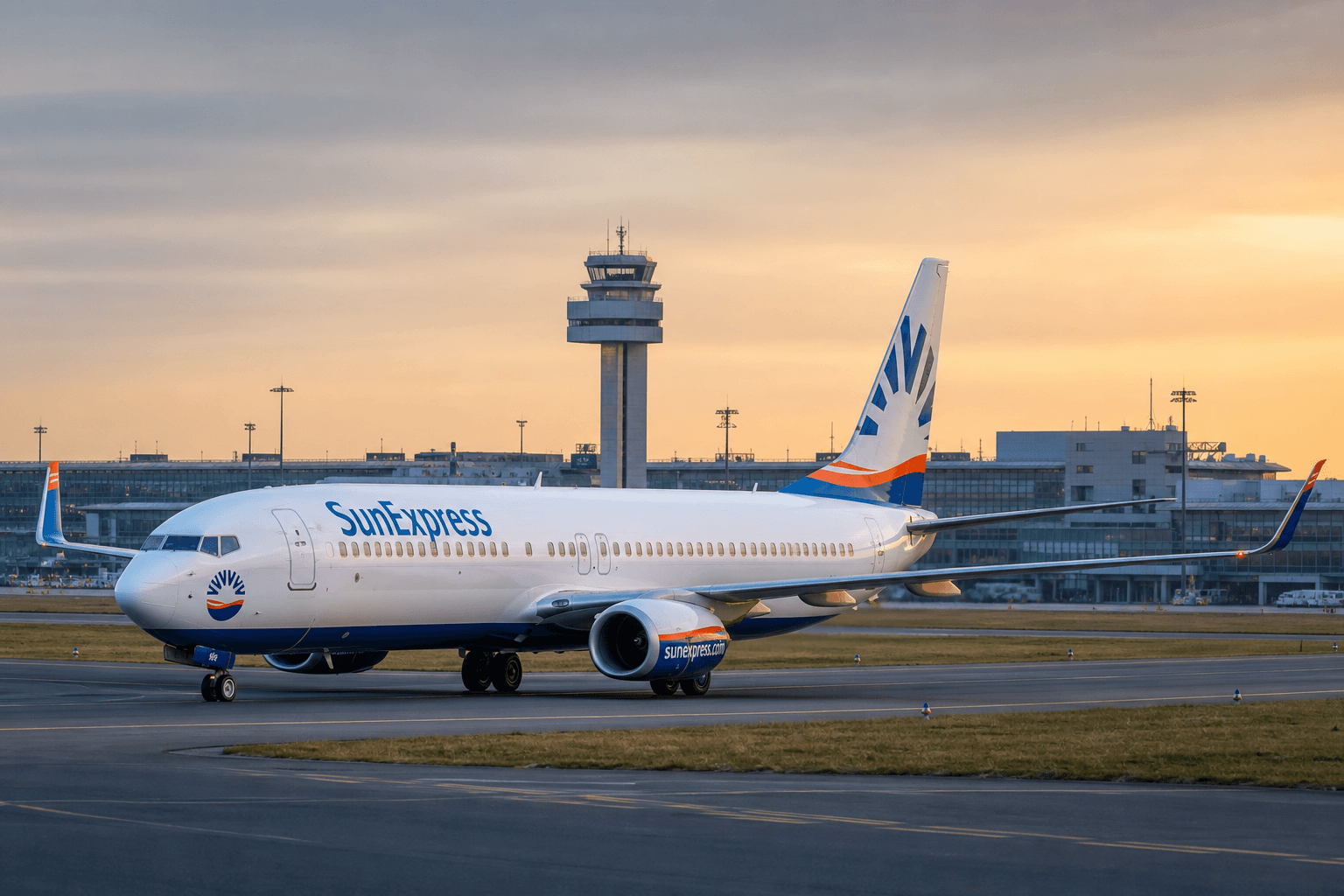
Passenger refuses to sit beside woman citing Sharia law, assaults flight attendant on Turkey-Germany flight
A German resident of Turkish descent was arrested upon landing on a flight from Turkey to Germany, after he refused to sit next to a female seat mate, only to then punch the flight attendant when she tried to help with the situation. The guy then proceeded to insult police officers in Turkish, leading to even more charges… talk about awful behavior. Passenger causes commotion on Turkey to Germany flight German media is reporting on an incident that happened on June 1, 2026, on a flight from Samsun, Turkey (SZF), to Dusseldorf, Germany (DUS). This happened on a SunExpress flight, with that being a leisure airline that's a joint venture between Lufthansa and Turkish Airlines. According to reports, the 29-year-old man ended up in a situation where he was sitting next to a female, which he wasn't comfortable with, claiming it was in violation of Sharia law. When the flight attendant confronted him, he reportedly punched her in the face. German Federal Police were called to the airport in Dusseldorf shortly before 7AM, to take a report of the assault. A criminal complaint was subsequently filed. The passenger confessed to the crime, though the conversation didn't go smoothly. The man reportedly insulted the police officers in Turkish, thinking they wouldn't understand. However, since one of the officers spoke Turkish, the man received an additional charge of insult, beyond his charge of assault. One detail that's not known is the context in which he ended up sitting next to a woman. Like, how did this incident only happen while the plane was in the air, and not on the ground in Turkey, before departure, since presumably he would've been offloaded at that point? This incident happened on a SunExpress flight This situation is obviously terrible on all levels Even as someone who isn't really religious, I think people are entitled to there sincerely held religious beliefs. However, if your religious beliefs impact the ability of others to go about their day, I think it's on the person with the religious beliefs to make accommodations, rather than putting that burden on others. On the topic of Sharia law, as you'd expect, different people have different interpretations. The idea is that direct contact and interaction with the opposite gender (if not related by blood, marriage, etc.) is only allowed for necessity. I guess the idea here is that if you're sitting next to someone on a plane you could accidentally touch, and that was presumably an issue for him. Now, let me point out that not all people with that general belief system interpret things that way, and many will view it as being fine to sit next to someone of the opposite gender on a plane. If this is really how the guy felt, he should've purchased an extra seat (which SunExpress allows) to prevent any potential touch. Of course the irony here is that he was so concerned about inadvertently making contact with a female, only to then… slap a female, which I'm pretty sure would qualify as direct contact. Then the icing on the cake here is that he insulted the police officers, which is a criminal offense in Germany, and it can even lead to imprisonment. Ouch all around… This guy should've purchased an extra seat, if it was so important Bottom line A passenger on a SunExpress flight had quite the meltdown, when he first refused to sit next to a woman, only to then punch the flight attendant when she tried to intervene. When the flight was met by police in Germany, he then insulted the officers, which is also a crime in Germany. While I respect sincerely held religious beliefs, this guy was 100% in the wrong on all counts here, and I imagine he'll be held accountable for his behavior. What do you make of this flight seating incident?
The Daily Touch & Go
The day's best aviation news in your inbox. Free, no spam.