


Oregon launches comprehensive public drone pilot training and testing framework
Oregon Department of Aviation introduces a detailed template to enhance public agency drone pilot skills beyond FAA Part 107 requirements, including practical evaluations and emergency drills.
The gist
Oregon sets new standards for public drone pilot training with practical tests and safety exercises beyond federal mandates.
Continuing coverage
All Oregon →The Oregon Department of Aviation has unveiled a pioneering training and testing template aimed at public agencies operating drones within the state. Released on July 10, this framework is designed to improve pilot qualifications, recurrent training schedules, and public-safety mission effectiveness. It offers a comprehensive approach that broadens the scope of drone operation training beyond existing FAA requirements, focusing on increasing operational safety and accountability in public drone programs.
Currently, remote pilots in the U.S. must hold a Part 107 certificate issued by the Federal Aviation Administration, which mandates online recurrent training every 24 calendar months to sustain aeronautical knowledge recency. Oregon’s new template expands on this baseline by including a more rigorous regimen of assessments such as written test questions and practical flight evaluations. Its emphasis on hands-on skills aims to ensure that drone pilots not only understand the regulations but apply them effectively in real-world scenarios.
The supplemental training also involves emergency drills and airspace deconfliction exercises essential for minimizing risks during complex operations. This is particularly critical in public safety contexts, where drones often operate near sensitive environments including roads, bridges, neighborhoods, and emergency scenes. These drills are complemented by instruction on privacy, public-records laws, and maintenance protocols to encourage responsible drone usage that aligns with both legal and ethical standards.
Kenji Sugahara, Director of the Oregon Department of Aviation, emphasized the importance of this initiative by highlighting the gap between policy and practical application. He explained that while agencies may know the rules, training and testing reveal if pilots can competently follow those rules in diverse, sometimes hazardous field conditions. This distinction is vital when drones assist firefighters, emergency responders, patients, or operate in disaster areas where mistakes can have serious consequences.
Oregon's drone management framework also incorporates launch decision checklists to standardize operational planning and reduce human error. Alongside, public bodies are reminded of existing state laws requiring all public-use drones to be registered with the Oregon Department of Aviation. Annual reporting is mandatory, obliging agencies to document flight frequency, describe mission purposes, and provide public access to their drone policies. Notably, educational institutions register as drone users rather than listing each individual aircraft, streamlining compliance.
The template is intended for a broad spectrum of public entities including city and county governments, state agencies, fire departments, emergency management teams, and transportation departments. It also features optional segments tailored for specialized community services such as Drone as First Responder programs, search and rescue operations, and support roles in fire and EMS. Additional guidance covers mutual aid operations, remote piloting, and flights authorized by the FAA beyond visual line of sight.
While this document serves as a robust training resource, the Oregon Department of Aviation is clear that it does not grant any new flight authority, authorize law enforcement activities, or permit flights outside of the FAA’s regulatory framework. Instead, it acts as a voluntary, customizable standard for public agencies committed to enhancing drone operational proficiency and safety. By doing so, Oregon aims to build a culture of accountability and elevated capability among its public drone operators.
This comprehensive framework situates Oregon among the more proactive states fostering advanced public sector drone use. By prioritizing rigorous training and practical evaluation, the state is addressing key challenges in integrating unmanned aircraft systems safely into civil airspace. The focus on community-sensitive operations and legal compliance signals Oregon’s intent to lead in responsible government drone deployment.
Frequently asked questions
- What does Oregon's new drone training template include beyond FAA Part 107 requirements?
- Oregon's template adds written tests, practical flight evaluations, emergency drills, airspace-deconfliction exercises, privacy training, maintenance rules, and launch-decision checklists beyond FAA's online recurrent training.
- Who is the new drone training and testing template designed for?
- The template is designed for public agencies in Oregon, including cities, counties, state agencies, fire and emergency departments, transportation, and other public bodies operating drones.
Read more
All Aviation Safety →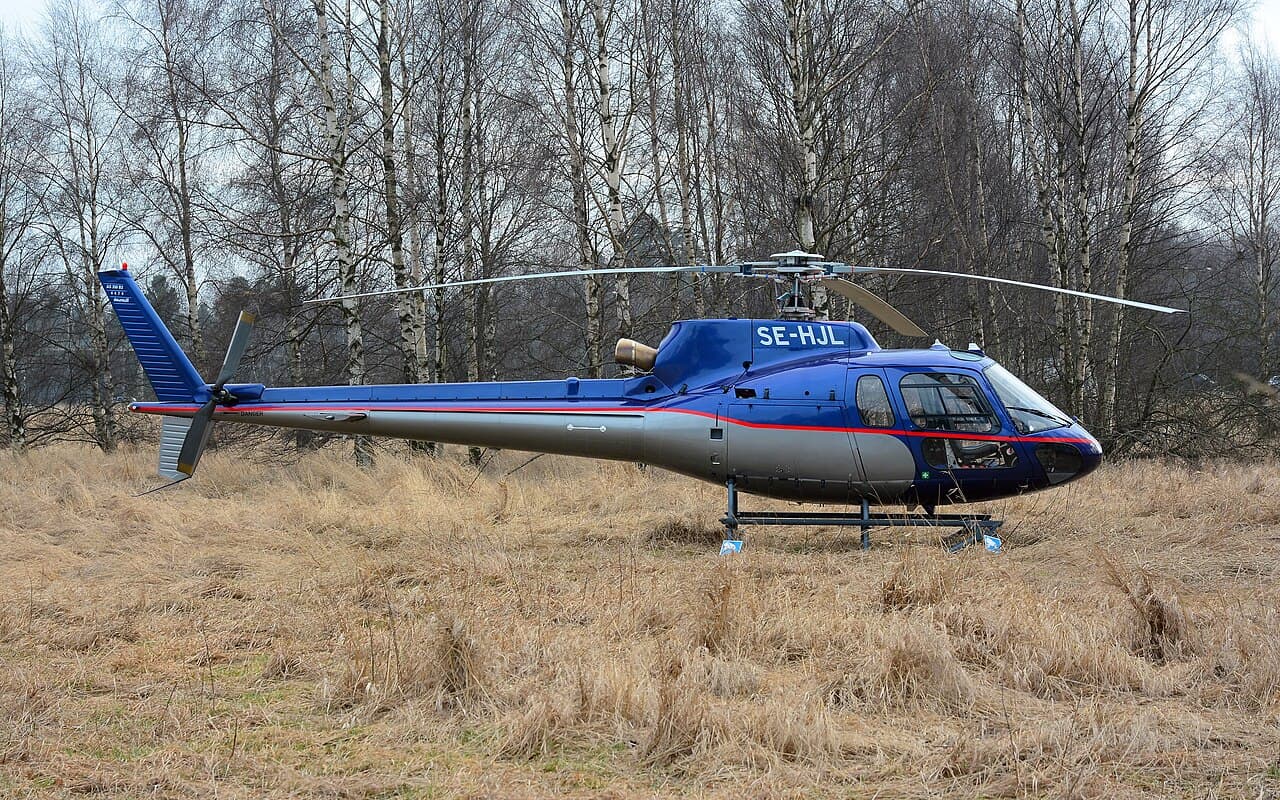
Large drone collides with LAPD helicopter over San Fernando Valley, forcing emergency landing
A large drone struck a Los Angeles Police Department helicopter during a patrol over the San Fernando Valley, damaging the aircraft's windshield and forcing the crew to make a precautionary landing. The Airbus AS350 was flying near the 101 Freeway and Reseda Boulevard in Tarzana shortly before 15:00 local time on July 7, 2026, when it collided with the drone, according to the LAPD and a preliminary Federal Aviation Administration (FAA) report. The pilot landed safely at nearby Van Nuys Airport (VNY). Neither of the two officers aboard the helicopter was injured. Authorities described the drone as measuring approximately three feet by three feet, considerably larger than most hobbyist drones. Investigators have not identified its make or model or the person operating it. The collision happened as firefighters battled a brush fire near the Encino Reservoir. An LAPD official said the drone operator may have been attempting to record the fire, although authorities have not determined whether the aircraft was deliberately flown near the helicopter. The FBI and FAA have opened investigations. Los Angeles Mayor Karen Bass called the incident "completely unacceptable" and warned drone operators against interfering with police and firefighting aircraft. "This is a warning to anybody who's flying a drone that interferes with Fire or Police: We will find you, you will be arrested, and you will be prosecuted," Bass said. Drones operating near wildfires can put a halt to aerial firefighting operations as crews cannot safely share the airspace with an unidentified aircraft. The FAA generally limits drones to 400 feet above the ground, with additional restrictions around airports and emergency operations. Authorities have not released photographs of the damaged helicopter or video showing the collision. The drone operator remained unidentified as of July 13. The incident is the latest collision involving a drone and a crewed aircraft in US airspace. The FAA receives thousands of reports each year involving drones operating near airplanes and helicopters, although confirmed midair collisions remain relatively rare.
Jeppesen ForeFlight Launches AI-Powered ClearNOTAMs to Simplify Flight Planning
One of the most challenging parts of being a pilot is gathering "all available information before a flight" as required by regulation. This is especially true when it comes to sifting through information dispersed in the form of Notices to Airmen (NOTAMs). Jeppesen ForeFlight is trying to make obtaining and understanding the information easier with ClearNOTAMs, an app that takes the raw NOTAMs, delivered in all capital letters and abbreviations, and decodes them to allow a pilot to sort them by relevance to the flight. According to Cole Crawford, director of product at Jeppesen ForeFlight, ClearNOTAMs provides pilots with an English translation of every NOTAM, while also conveying each one's real operational impact, so the pilot knows what to expect without altering the underlying meaning or fully replacing the original. READ MORE: Tecnam Forms Alliance With Jeppesen ForeFlight READ MORE: Jeppesen ForeFlight Introduces Emergency Glide Mode "ClearNOTAMs helps pilots spend less time deciphering information and more time understanding it," said Crawford in a news release. "By transforming complex NOTAM language into clear, concise summaries, we're making one of the most important parts of flight planning more accessible and actionable." AI Enabled ClearNOTAMs has been in development for a little over a year, according to Crawford, and part of that time was spent making sure the artificial intelligence-powered NOTAM intelligence was up to the task of correctly interpreting and summarizing NOTAM terminology. This includes building extensive automated cross-checks into the system for accuracy to maximize the quality of every translation. The outcome is a plain English summary that becomes the primary text for each NOTAM. In addition, the original coded version may be viewed alongside the translation with just a tap, making it easy for pilots to verify any translation's accuracy and view the original at any time. ClearNOTAMs is available through ForeFlight. The program has customizable filters so the pilot can separate categories such as airport, airspace, runway, etc., or by the NOTAM issuing body such as local or regional. The user can sort the NOTAMs by most recent update and effective time and "pin" specific NOTAMs to the top of the list with a tap, or collapse them with a double tap as they see fit. Three-Month Trial Individual ForeFlight users are invited to test-fly ClearNOTAMs through subscription plans following EAA AirVenture Oshkosh (July 20-26) for a complimentary three-month trial. Following the trial period, the feature will be available only with ForeFlight's Premium plan for individuals, Business Performance for flight departments, and MFB Performance and MFB One for military and government customers. The other user interface enhancements to NOTAMs, such as filtering, sorting, pinning, and collapsing, will be available with all ForeFlight subscription plans.
Vertical Aerospace Delays Valo eVTOL Air Taxi Certification to 2029
American Airlines and other carriers who placed conditional orders for U.K. manufacturer Vertical Aerospace's Valo, an eVTOL (electric vertical takeoff and landing) air taxi, will not receive the aircraft until 2029 at the earliest. Vertical—considered the U.K.'s leading air taxi developer by virtue of being one of the only firms conducting routine flight testing—said Monday in a business update that it "re-baselined" its certification program, through which it seeks concurrent Valo type certification from European and American regulators. The new timeline puts certification in 2029, a one-year slip from the 2028 target the company announced in late 2024. "This timeline reflects the rigor of certifying an entirely new class of aircraft under an established regulatory certification framework," the company said in Monday's update. Vertical added that it will discuss certification in more detail at July's Farnborough International Airshow and in an August 13 business update. Vertical unveiled Valo as its flagship air taxi in December. It plans to establish networks across cities such as New York, Miami, and London, ferrying passengers between airports, city centers, hospitals, and event venues. The company is certifying Valo to the European Union Aviation Safety Agency's (EASA) special condition for VTOL (SC-VTOL) standard in the enhanced category, which would permit operations over populated areas. SC-VTOL Enhanced requires manufacturers to meet the same 10 -9 standard—denoting one catastrophic failure per billion flight hours—required of commercial airlines. Michael Cervenka, Vertical's chief commercial and technology officer, in January told FLYING that the FAA will "literally sign the [type] certificate on the same day." The agency will hold small eVTOL air taxis to the lower 10 -8 standard, so Cervenka said achieving concurrent approval will be like "passporting." "That gives us, effectively, a certification moat in Europe, where we're going to be the only aircraft certified to that highest standard, able to fly over populated areas, all the kind of real high value use cases," he said. Vertical had been targeting 2025 certification and entry into service until '23, when it pushed the timeline back to '26. U.S. air taxi manufacturers such as Archer Aviation and Joby Aviation have similarly seen their certification targets slip over the years, in part because the FAA modified the pathway for eVTOL models. Some of them no longer offer firm timelines. Still, a divide is forming between the American and European air taxi manufacturers. Joby and Beta Technologies are already flying conforming, preproduction prototypes—a phase Vertical does not expect to begin until next year. And while the FAA is overseeing expanded testing of precertification air taxis at airports nationwide, the European regulatory environment has been more stringent, leading some of Vertical's competitors to go bankrupt . Illustrating the divide, Beta Technologies has flown electric prototypes across the U.S., Europe, New Zealand, and Japan, while Vertical has been limited to activities at Cotswold Airport (EGBP). The company on Monday said it finally obtained expanded privileges from the U.K. Civil Aviation Authority (CAA) that will open up flights away from Cotswold. When Are the Air Taxis Coming? U.S. eVTOL manufacturers toward the beginning of the decade communicated that their aircraft would begin flying passengers in 2024, give or take one year. As that timeline approached, they began to face the realities of type certification and operating at losses, prompting them to revise their expectations. Most recently, Joby gave a target of late 2026 for the launch of commercial air taxi service in Dubai, available on the Uber platform. But that timeline is now in question amid war in the Middle East. It has been a similar story for Vertical. The U.K. manufacturer estimated in September that it would require $700 million to complete Valo's certification. In April, it finalized a financing package worth up to $800 million and achieved Valo's first piloted transition from hover to forward flight and back again. The company is flight testing two prototypes under a CAA permit to fly authorization. American manufacturers have more aircraft in the sky, though, in part due to a crash that Vertical suffered during an uncrewed prototype flight in 2023. The incident permanently grounded the prototype, called the VX4. The company returned to flight testing with a second VX4 in 2024 and in June introduced a third and final prototype. Per Vertical's Flight Plan 2030 vision plan, released in December 2024, the third VX4 was supposed to debut in '25. It is intended to be followed by seven conforming, preproduction aircraft that Vertical will use for certification testing with the CAA. The Flight Plan also targeted the VX4's first piloted transition in 2025, but that did not happen until April. Vertical CEO Stuart Simpson said during an earnings call in May that the milestone came "slightly late" and "nudges up the risk" for certification in 2028. He reiterated that the target "remains absolutely doable" but earlier in the call said it was "under additional risk." In addition to delaying certification to 2029 on Monday, Vertical said it would complete Valo's critical design review (CDR) by the end of the year, a slip from Simpson's previous mid-2026 target. CDR would finalize the air taxi's baseline design and allow Vertical to begin building conforming prototypes for certification testing. Silver Linings Despite the delays, Vertical also announced some progress Monday. Ahead of CDR, it plans to open an assembly facility for early production aircraft in the coming months. By year's end, it aims to activate a battery production plant. Combined with the CAA's expanded permit to fly, those moves will position Vertical for expanded testing once the preproduction aircraft are ready. Vertical also said Monday that propulsion system evaluation for a planned hybrid-electric variant, designed for a range of up to 1,000 miles, is underway on a dedicated test rig. It expects to fly it in the first half of 2027 and announce a long-term turbogenerator supplier this year. It is possible that the hybrid-electric Valo enters service before the passenger air taxi variant. American manufacturers Archer, Joby, and Beta have similarly developed hybrid-electric variants of their flagship models as they pursue earlier opportunities in cargo and defense. In the near term, Vertical could bid for contracts—such as those the aforementioned companies have secured with U.S. military branches—to ease financial stress as it pushes forward with certification. Either way, the U.K. air taxi leader will need to get creative to achieve the goals it set in December 2024. Those include 150 customer deliveries and 200 aircraft produced annually by the end of the decade.
NetJets Citation Latitude suffers dual engine flameout, crashes near Laredo airport
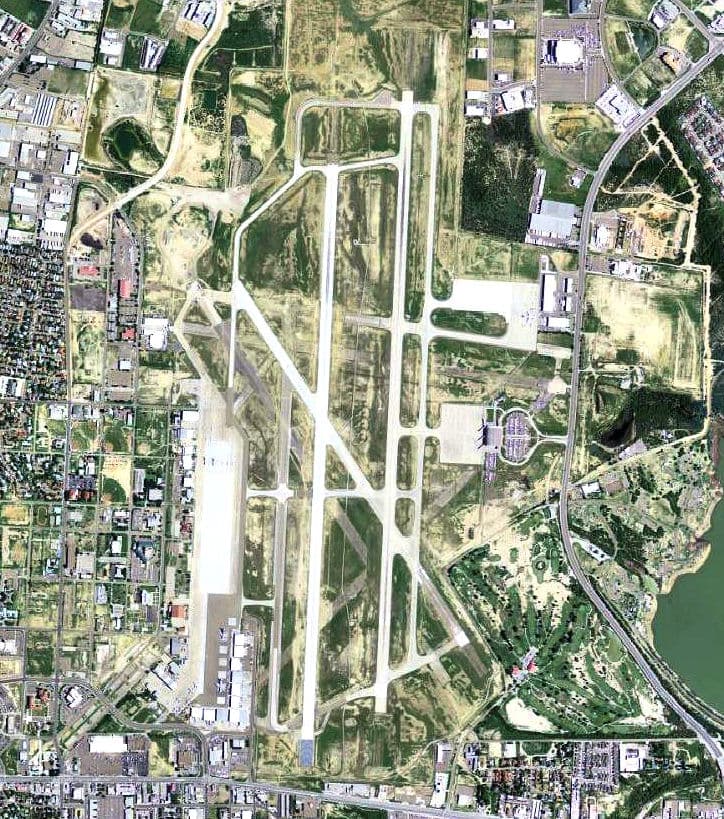
Both engines of a NetJets Citation Latitude flamed out during final approach to Laredo International Airport before the airplane landed on a highway June 16 , according to the NTSB’s preliminary report. One passenger was killed, a pilot was seriously injured and five people, including a motorist in another vehicle, received minor injuries. Vibration Preceded System Warnings The flight’s crew noticed a low-frequency vibration and humming noise early in the flight from Los Cabos, Mexico, to Austin, Texas. Pilots discussed the vibration with NetJets operations and maintenance personnel, and during that discussion an air data computer alert appeared. The alert cleared after the crew completed an applicable checklist, and the flight continued toward Austin. Report_CEN26FA228_203191_7_13_2026 11_44_02 AM Download Near the U.S.-Mexico border, the crew received warnings for low pressure in the right fuel system. Right-side electrical and windshield-heat alerts followed, along with a right fuel-level warning. The pilots declared an emergency and diverted to Laredo. The right engine flamed out on final approach, followed several seconds later by the left engine. Damaged Components Recovered The aircraft landed on the northbound lanes of Bob Bullock Loop about one mile southeast of the airport, striking light poles and a moving vehicle before managing to stop along the edge of an overpass. Five occupants exited through the main cabin door after the fuselage rolled onto its right side. Investigators found a fractured right-engine fuel-tube assembly and several broken support clamps. The right starter generator was missing multiple outer-housing screws. After it was removed, investigators found a bent shaft, a fractured cooling fan, multiple fan blades and ball bearings. The components, cockpit voice recorder and flight data recorder were sent for further examination. The NTSB has not determined the probable cause of the NetJets accident at this time, and the report remains preliminary.
The Daily Touch & Go
The day's best aviation news in your inbox. Free, no spam.