
Illustration: The Touch & Go
Passenger refuses to sit beside woman citing Sharia law, assaults flight attendant on Turkey-Germany flight
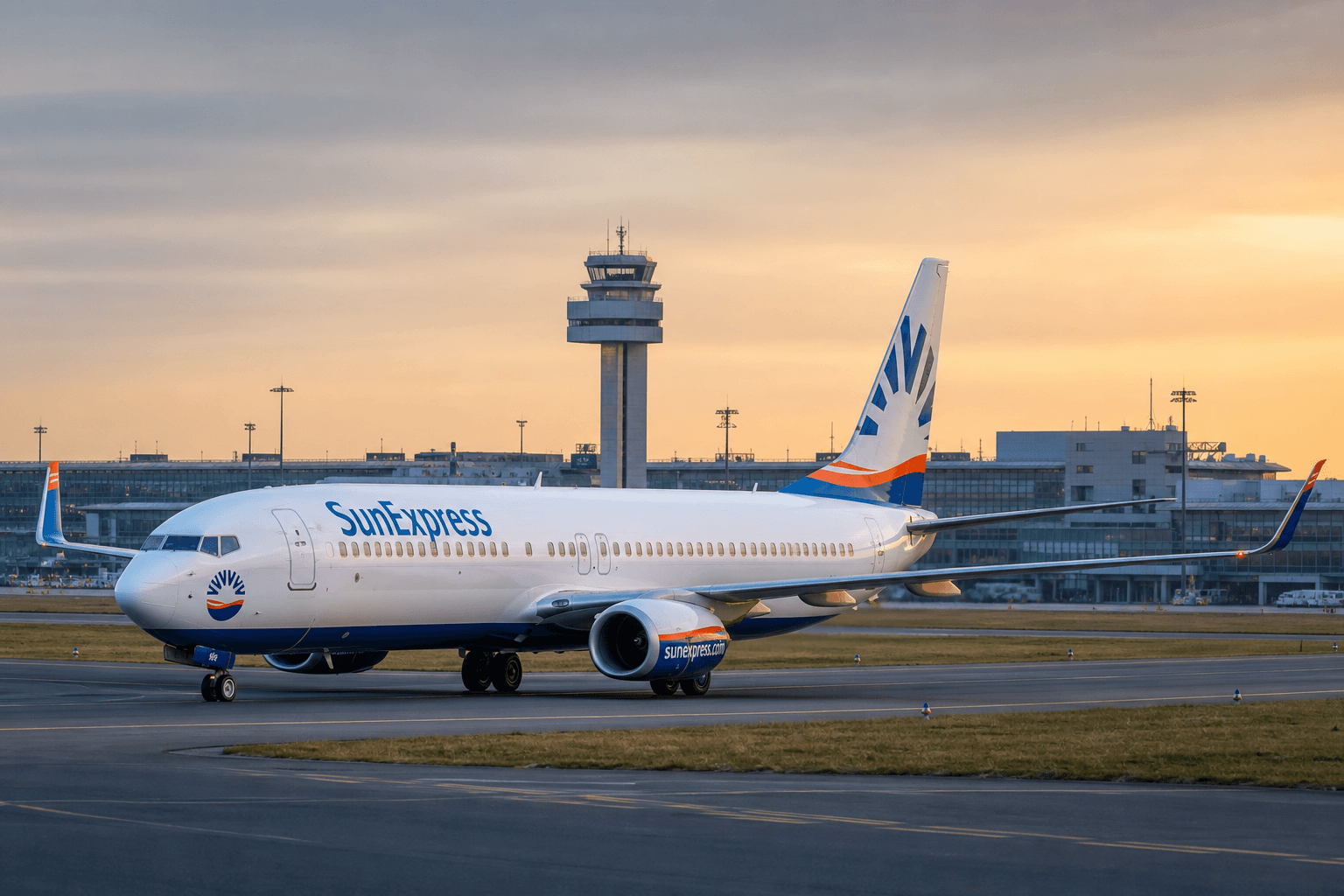
A passenger on a SunExpress flight from Samsun to Dusseldorf refused to sit next to a woman citing religious reasons, then assaulted a flight attendant and insulted police upon landing.
The gist
A man on a flight from Turkey to Germany refused to sit next to a female passenger, punched a flight attendant, and insulted police, leading to multiple charges.
On June 1, 2026, a passenger aboard a SunExpress flight traveling from Samsun, Turkey, to Dusseldorf, Germany, caused a serious incident after refusing to sit next to a female seatmate. The 29-year-old man, a German resident of Turkish descent, claimed that sitting beside a woman violated his interpretation of Sharia law. This refusal prompted flight attendants to intervene, during which the man assaulted one attendant by punching her in the face. The incident escalated quickly, resulting in police involvement upon the plane’s arrival in Dusseldorf.
SunExpress, a leisure airline jointly operated by Lufthansa and Turkish Airlines, was managing the flight during this event. The airline offers passengers the option to purchase an additional seat to accommodate personal preferences, which the man apparently did not avail himself of prior to departure. The reason the conflict arose mid-flight and not before departure remains unclear, leading to questions about boarding procedures and seat assignment management on this route.
Upon arrival at Dusseldorf Airport, German Federal Police were called shortly before 7 AM to report the assault on the flight attendant. The suspect was arrested and a criminal complaint was filed detailing charges of assault. During processing, the man reportedly insulted the police officers in Turkish, mistakenly assuming they would not understand the language. However, one officer’s fluency in Turkish led to an additional criminal charge of insult, which can carry significant penalties under German law.
The passenger’s actions highlight a clash between personal religious beliefs and the expectations for conduct onboard commercial flights. Sharia law can vary significantly in interpretation among practitioners; in this case, the man’s belief that sitting beside an unrelated woman was unacceptable prompted confrontational behavior. Normally, respect for sincerely held religious beliefs is practiced, but when such beliefs interfere with public order or safety, conflict arises, as evidenced here.
This incident underscores the challenges airlines face when individual religious or cultural practices come into conflict with operational realities. Airlines like SunExpress accommodate such needs with options like purchasing an extra seat, yet passengers do not always take advantage of these provisions. The man’s violent reaction contradicted his stated intent to avoid physical contact with women, further complicating understanding of his conduct.
Legal repercussions in Germany for assaulting a crew member and insulting police are serious and could lead to imprisonment or fines. The man’s multiple offenses demonstrate compounding legal consequences stemming from on-board misconduct. Airports and airlines maintain strict policies for such incidents to ensure the safety of passengers and crew, and this event will likely result in charges and possible restrictions on future air travel for the suspect.
This episode also calls attention to how airlines and airports address seating arrangements to prevent conflicts, especially on international flights involving diverse cultural backgrounds. Clear communication about seating choices and proactive measures could mitigate similar occurrences. The cooperation between law enforcement and airline crews proved critical in resolving this situation promptly and maintaining overall security.
In summary, a passenger’s refusal to comply with seat assignments led not only to an onboard assault but also to additional legal troubles on the ground. This case will remain a reference for aviation safety and security officials when developing strategies to manage conflicts involving religious beliefs and passenger conduct during flights.
Frequently asked questions
- Why did the passenger refuse to sit next to the woman on the flight?
- The passenger claimed that sitting next to a female violated his interpretation of Sharia law prohibiting physical contact with unrelated women.
- What charges were brought against the passenger after the flight?
- He was charged with assault for punching a flight attendant and with insult for verbally abusing police officers in Turkish.
Read more
All Aviation Safety →
Jeppesen ForeFlight Launches AI-Powered ClearNOTAMs to Simplify Flight Planning
One of the most challenging parts of being a pilot is gathering "all available information before a flight" as required by regulation. This is especially true when it comes to sifting through information dispersed in the form of Notices to Airmen (NOTAMs). Jeppesen ForeFlight is trying to make obtaining and understanding the information easier with ClearNOTAMs, an app that takes the raw NOTAMs, delivered in all capital letters and abbreviations, and decodes them to allow a pilot to sort them by relevance to the flight. According to Cole Crawford, director of product at Jeppesen ForeFlight, ClearNOTAMs provides pilots with an English translation of every NOTAM, while also conveying each one's real operational impact, so the pilot knows what to expect without altering the underlying meaning or fully replacing the original. READ MORE: Tecnam Forms Alliance With Jeppesen ForeFlight READ MORE: Jeppesen ForeFlight Introduces Emergency Glide Mode "ClearNOTAMs helps pilots spend less time deciphering information and more time understanding it," said Crawford in a news release. "By transforming complex NOTAM language into clear, concise summaries, we're making one of the most important parts of flight planning more accessible and actionable." AI Enabled ClearNOTAMs has been in development for a little over a year, according to Crawford, and part of that time was spent making sure the artificial intelligence-powered NOTAM intelligence was up to the task of correctly interpreting and summarizing NOTAM terminology. This includes building extensive automated cross-checks into the system for accuracy to maximize the quality of every translation. The outcome is a plain English summary that becomes the primary text for each NOTAM. In addition, the original coded version may be viewed alongside the translation with just a tap, making it easy for pilots to verify any translation's accuracy and view the original at any time. ClearNOTAMs is available through ForeFlight. The program has customizable filters so the pilot can separate categories such as airport, airspace, runway, etc., or by the NOTAM issuing body such as local or regional. The user can sort the NOTAMs by most recent update and effective time and "pin" specific NOTAMs to the top of the list with a tap, or collapse them with a double tap as they see fit. Three-Month Trial Individual ForeFlight users are invited to test-fly ClearNOTAMs through subscription plans following EAA AirVenture Oshkosh (July 20-26) for a complimentary three-month trial. Following the trial period, the feature will be available only with ForeFlight's Premium plan for individuals, Business Performance for flight departments, and MFB Performance and MFB One for military and government customers. The other user interface enhancements to NOTAMs, such as filtering, sorting, pinning, and collapsing, will be available with all ForeFlight subscription plans.
Boeing returns to Farnborough Airshow with emphasis on rebuilding trust and safety
Boeing will be attending this year's Farnborough Airshow with a more confident approach after tapering its commercial activity in 2024 due to the Alaska 737-9 door plug incident. In July 2024, Boeing said its focus would be on "safety, quality and meeting customer commitments" and that it would reduce commercial planes on display and flight demonstrations. "The best way to build trust is through high-quality performance in our factories, one airplane at a time," Brendan Nelson, President of Boeing Global, said at the time. On July 13, 2026, Boeing laid out its plans for Farnborough Airshow 2026 , with Kelly Ortberg, Boeing's CEO, saying he was looking forward to "reconnecting with their customers and suppliers". "Every day is an opportunity to continue building trust as we focus on safety, quality and on-time performance," Ortberg said. Qatar Airways Boeing 787-9 Dreamliner at FIA 2024 (AeroTime) He added that Boeing would also be "strengthening its international partnerships built upon the full range of our commercial, defense and services capabilities". Following the Alaska Airlines 737 MAX 8 incident in January 2024, Boeing was forced to take a root and branch approach to its safety and quality procedures. The Federal Aviation Administration (FAA) also limited production levels at the Boeing factories, and the Boeing boss Dave Calhoun moved on from the company. This year Boeing's production and delivery rate is much improved with the planemaker finding its feet under Ortberg's leadership following a challenging period. Boeing displays at this year's Farnborough Airshow Although Boeing will not be exhibiting any aircraft itself, the planemaker will be represented through GE Aerospace's 747-400 flying testbed and a Qatar Airways 777-300. Qatar Airways also exhibited a Boeing 787 Dreamliner in 2024 despite the US planemaker not presenting a commercial aircraft itself. For the first time, the uncrewed MQ-28 Ghost Bat collaborative combat aircraft will debut on static display at the airshow. A US Army CH-47F Chinook and UK Joint Aviation Command CH-47 Chinook will also be exhibited for visitors to see. A full-size 777X interior section will be presented and so will a T-7 flight deck simulator, providing a hands-on experience of the fighter trainer's performance and capabilities. Boeing will also highlight its services offerings for government and commercial customers including parts, modifications, cabin products, digital services and training solutions. There will be the hope that Boeing is far more active with order announcements at this year's airshow. In 2024, against the backdrop of the Alaska incident, Boeing announced only 96 firm commercial aircraft orders and commitments, plus 22 options while Airbus received 164 orders. AeroTime will be on the ground at Farnborough Airshow 2026 to bring you the latest breaking news and industry unveilings. To get in touch regarding the airshow email: ian.molyneaux@aerotime.aero RELATED Airbus and Boeing set to win Philippine Airlines orders at Farnborough: Reuters
Kyrgyzstan Revokes TezJet License Following MD-83 Taxiing Gear Collapse
Civil aviation agency initiates inspections of country’s carriers and warns operators of tough penalties for violations. Kyrgyzstan's air transport regulator has revoked the operating licence of carrier TezJet, after uncovering "serious" violations of aviation rules. The revocation by the Kyrgyz state agency for civil aviation follows a gear-collapse accident involving a Boeing MD-83 at Bishkek, as the aircraft taxied for a departure to Osh on 7 July. After opening an inquiry into the occurrence, the agency carried out unscheduled inspections of TezJet. "The inspection revealed serious violations of the aviation legislation of the Kyrgyz Republic that directly affect flight safety," it says. It adds that, owing to the discovery, it has "decided to revoke the licence" of TezJet. "Passenger safety is the top priority for the state civil aviation agency," it warns. In the aftermath of the TezJet accident the agency has also initiated plans to extend the inspections to all Kyrgyz carriers. "The strictest measures are taken against any operator that poses a threat to flight safety — regardless of the airline’s name, how long it has been operating, or its position in the aviation industry," it says. The measures underline the Kyrgyz authorities' keenness to crack down, having only just been removed from the European Commission's blacklist after two decades. This followed a comprehensive on-site evaluation in March this year by European safety regulators. "Particular attention was also given to the [civil aviation agency's] ability to ensure effective oversight of air carriers certified in Kyrgyzstan," states documentation which accompanied the blacklist revision in June. The assessment confirmed that the agency has enhanced its aviation safety oversight system and made substantial progress in implementing a revised air code. "In the area of flight operations, the [agency] has established appropriate certification and surveillance procedures, including elements of risk-based oversight and recertification activities under the revised legal framework," the documentation adds.
Oregon launches comprehensive public drone pilot training and testing framework
The Oregon Department of Aviation released a training and testing template July 10 for public agencies that operate drones. This new template provides additional model standards that public agencies may adopt and customize for pilot qualifications, recurrent training and public-safety missions. Training Beyond Part 107 The FAA requires Part 107 certificate holders to complete online recurrent training every 24 calendar months, in an effort to maintain aeronautical knowledge recency. Oregon's document goes further by adding written test questions, practical flight evaluations, emergency drills, airspace-deconfliction exercises, privacy and public-records training, maintenance requirements and launch-decision checklists. "This is the next step in building safe and accountable public agency drone programs in Oregon," Oregon Department of Aviation Director Kenji Sugahara said. "A policy tells an agency what the rules are. Training and testing show whether people can actually apply those rules in the field. That matters when drones are being used near roads, bridges, neighborhoods, emergency scenes, firefighters, patients, helicopters, or disaster areas." Public-Agency Requirements Oregon law already requires public bodies to register public-use drones with the state aviation department and submit annual reports. Those reports must summarize how frequently the aircraft were used, explain the primary purposes of the flights and direct the public to the agency's drone policies. Educational institutions register as drone users rather than registering each aircraft. The template is designed for cities, counties, state agencies, fire departments, emergency managers, transportation departments and other public bodies. Optional sections address Drone as First Responder programs, fire and EMS support, search and rescue, emergency management, mutual aid, remote operations and FAA-authorized flights beyond visual line of sight. The department said the document does not create new flight authority, authorize law enforcement activity or permit operations beyond FAA limits.
The Daily Touch & Go
The day's best aviation news in your inbox. Free, no spam.