


Image: Dbreemeersch · Public domain · via Wikimedia Commons
Cirrus Debuts SF50 G3 Vision Jet With Advanced Avionics and Enhanced Comfort
Cirrus Aircraft has launched the G3 Vision Jet featuring 30 upgrades including ATC data link, improved cabin space, and enhanced pilot automation.
The gist
Cirrus' new SF50 G3 Vision Jet adds advanced avionics, better comfort, and safety upgrades to its popular single-engine personal jet.
Cirrus Aircraft has introduced the third generation (G3) of its pioneering SF50 Vision Jet, a single-engine personal jet that continues to redefine light jet travel with a range of new features aimed at improving pilot workload management, safety, and passenger comfort. The G3 model brings approximately 30 enhancements that build upon the aircraft’s legacy as the first general aviation single-pilot, single-engine personal jet equipped with the Cirrus Airframe Parachute System (CAPS).
The Vision Jet’s hallmark has always been its ability to combine jet performance with the simplicity and approachability of a piston aircraft cockpit, appealing to owners transitioning from high-performance single-engine piston airplanes. The original Vision Jet’s design focused heavily on situational awareness, comfort, and safety by introducing large panoramic windows and the innovative CAPS system for the entire airframe. Delivered since 2016, over 700 units have established the Vision Jet as a leader in this niche market.
The G3 Vision Jet enhances the Garmin Perspective Touch+ integrated flight deck by adding Controller-Pilot Data Link Communication (CPDLC), which allows text-based communication between the pilot and air traffic control. This system facilitates faster, clearer exchange of clearances, route changes, and frequency transfers without the radio back-and-forth, reducing pilot workload and increasing efficiency, particularly in busy controlled airspace. Commands received by text can be directly loaded into the flight management system for quick activation.
Operational convenience continues with automatic update of all onboard databases when the aircraft is parked using the Cirrus IQ Pro Advanced system, saving time and ensuring the aircraft is always ready with up-to-date navigational and procedural data. Additionally, the aircraft’s electronic alerting system now directly links to checklists, providing pilots immediate guidance for handling abnormal or emergency situations via the scroll wheel, streamlining response protocols and improving safety.
Passenger comfort has not been overlooked in the G3 upgrades. Internal cabin modifications have reconfigured rear seating to comfortably accommodate two adults on the bench seat ends and a child in the center with new restraint systems. Minor increases in cabin legroom alongside the use of advanced foam in the ergonomic leather seats contribute to a more relaxing experience on longer flights. Large cabin windows continue to afford expansive views, adding a sense of spaciousness unusual in light jets.
From a training perspective, Cirrus continues to offer dedicated, in-house type rating instruction at its Knoxville, Tennessee Vision Center, where two full-motion Level D simulators provide tailored preparation for pilots moving up from Cirrus SR series piston aircraft. The training is personalized and decoupled from aircraft delivery timing to reduce pressure and ensure proficiency prior to jet operations.
The Vision Jet’s performance remains anchored by the Williams International FJ33-5A turbofan engine delivering 1,846 pounds of thrust. The aircraft boasts a maximum cruise speed of 317 knots true airspeed at its service ceiling of 31,000 feet, with a cabin pressurization environment that maintains an 8,000-foot cabin altitude for passenger comfort. Maximum ramp weight stands at 6,040 pounds, representing a balance between speed, range, and payload capability.
Overall, the Cirrus SF50 G3 Vision Jet represents an evolution in personal jet aviation, enhancing pilot interface and passenger experience through meaningful technological, ergonomic, and operational refinements. Its combination of single-pilot certification, integrated safety features like Autoland, and operationally supportive avionics like CPDLC positions the G3 as well suited to a growing demographic of owner-pilots seeking efficient regional jet travel with the ease and comfort of a high-performance single-engine airplane.
Frequently asked questions
- What new avionics features does the Cirrus SF50 G3 Vision Jet offer?
- The G3 version adds Controller-Pilot Data Link Communication (CPDLC) for text-based ATC communication, automated database updates, and alerts-linked electronic checklists to reduce pilot workload and improve safety.
- How has the cabin been improved in the G3 Vision Jet?
- The G3 cabin has reconfigured rear seating for two adults and a child with enhanced restraint systems, increased rear seat legroom by 2 inches, and upgraded foam in ergonomic leather seats for greater passenger comfort.
- What training is available for pilots transitioning to the SF50 Vision Jet?
- Cirrus offers in-house type rating training at its Knoxville Vision Center using two full-motion Level D simulators, with personalized schedules to help pilots transition safely from piston SR series aircraft.
Read more
All Aviation Safety →
Deaf Man Sentenced to 18 Months for Targeting Delta Pilot with Laser Pointer Near Buffalo Airport
A deaf man from Cheektowaga, New York, has been sentenced to 18 months in a federal prison after he pleaded guilty to aiming a laser pointer at the pilot of a Delta Air Lines plane, which was on its final approach to land at Buffalo Niagara International Airport. 31-year-old Joseph L. Crapsi had been fighting the prosecution brought by the Assistant U.S. Attorneys Charles M. Kruly and Craig R. Gestring following an investigation by the Niagara Frontier Transportation Authority Police Department and the FBI. Crapsi’s attorneys had asked the court to suppress evidence that the laser pointer was found in his bedroom and objected to a finding that police had probable cause to arrest him. In the end, however, the court found that the police were within their rights to arrest him, and the laser pointer was used in evidence. The case stemmed from an incident on the night of March 2, 2024, when Delta flight DL-2334 was coming into land. The final approach path saw the jet fly close to Crapsi’s house in Cheektowaga, just a few miles from Buffalo Niagara Airport. Following the incident, the pilot reported the ‘laser strike’ to police, who started making enquiries in the area that the crew said the laser was coming from. One of Crapsi’s neighbors told officers that they saw a laser shining through his window on ‘multiple occasions.’ Given that the laser was seen shining into the sky, the court ruled that this was sufficient to meet the low standard of probable cause. Officers knocked at Crapsi’s address and were invited inside. They went with him to his bedroom, where they noticed a laser pointer ‘in plain sight.’ The laser pointer was seized as evidence, and Crapsi was arrested. Crapsi eventually pleaded guilty to aiming a laser pointer at an aircraft contrary to 18 U.S. Code § 39A, which carries a maximum sentence of five years imprisonment. Late last week, U.S. District Judge Lawrence J. Vilardo sentenced Crapsi to 18 months’ imprisonment. In 2023, there were a record 13,304 laser pointer incidents reported across the United States – an increase of nearly 80% compared to 2016. The number of incidents have, however, slightly decreased in recent years. In 2024, there were 12,840 reported laser incidents, and 10,993 were reported in 2025. So far this year, there have been 3,325 incidents up to the end of June. It was made illegal to aim a laser pointer at aircraft in 2012, following a dramatic rise in the number of incidents being reported by pilots. The Federal Aviation Administration (FAA) reports that the vast majority of laser strikes occur on Fridays and Saturdays, with a noticeable increase in reports during the months of October and November. Laser incidents can temporarily blind and injure pilots. In one incident involving a Virgin Atlantic flight from London to Tel Aviv, Israel, the pilots had to return to London because the pilot’s vision got progressively worse and he was only able to see out of one eye.

Flamingo Air grounded after fatal Cessna 402 crash at San Andros airport
No survivors after twin-engined aircraft came down near San Andros airport. Bahamian authorities have suspended the air operator's certificate of regional carrier Flamingo Air after a fatal Cessna 402 accident. The Royal Bahamas Police Force says 10 occupants were on board the aircraft, only one of whom survived the initial crash at San Andros airport before succumbing to injuries. "Upon arrival, officers found the aircraft engulfed in flames," it states, adding that the fuselage, tail and right wing sustained "extensive" fire damage. Civil Aviation Authority Bahamas says Flamingo Air's AOC has been "temporarily suspended" following two safety occurrences involving the operator on 10 July, the Caribbean region state's anniversary of independence. "The suspension will remain in effect pending the outcome of the authority's investigation," it adds. "The authority emphasises that this is a precautionary regulatory measure intended to ensure the continued safety of the travelling public." Investigators in the Bahamas have commenced preliminary work to preserve evidence and collect technical information after the accident. The aircraft "encountered difficulties" and "crashed into bushes" prior to landing, says the Bahamas aircraft accident investigation authority. It identifies the airframe involved as C6-FLX and says it was en route to San Andros after departing Nassau's Lynden Pindling airport. There are indications, yet to be confirmed, that the aircraft crashed short of runway 12 while on approach. Initial investigative activities already completed include securing and documenting the accident site, it says. "The investigation remains in its preliminary stage," it adds. "Investigators will continue to gather and analyse factual information relating to all aspects of the occurrence." The authority has asked individuals to contact the inquiry if they have any relevant photographs or video recordings. It stresses that "no determination" has been made regarding the cause of, or contributing factors to, the accident.
Ryanair 737 Window Failure Nearly Ejects Passenger Mid-Flight
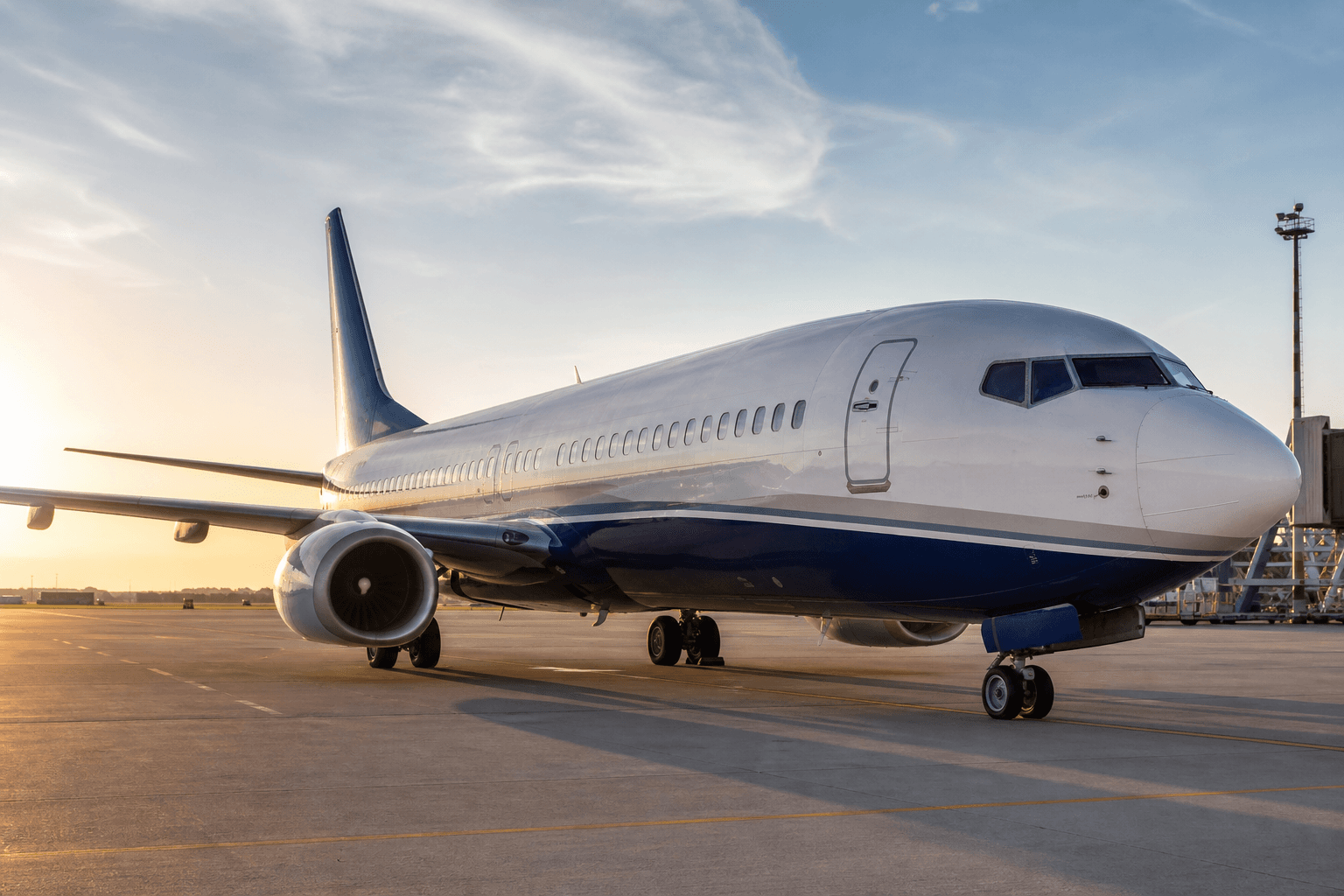
A passenger aboard a Ryanair 737 was nearly ejected from the aircraft when the cabin window failed mid-flight. Multiple sources stated the window may have been struck by a piece of the aircraft's engine, which caused the structure to fail, but the airline has not verified this. The aircraft, operated by Malta Air for Ryanair, took off from the Greek city of Thessaloniki just before 6 a.m. local time on Friday. The flight was heading to Memmingen, Germany. According to a statement from Ryanair, shortly after takeoff the aircraft returned to Thessaloniki when a "passenger window dislodged inflight." The airline noted the aircraft made a normal landing and passengers returned to the terminal. One passenger requested and received medical assistance on the ground in Thessaloniki. A replacement aircraft was brought in to get passengers on their way. READ MORE: Ryanair Inks Deal for 300 Boeing 737 Max Jets READ MORE: 4 Flight Attendants Sue Boeing Over Alaska Door Plug Blowout According to media reports in Greece and Germany, several passengers described hearing a loud bang like a tire exploding, followed by the window breaking and oxygen masks dropping from the ceiling as the cabin lost pressure. At the time the aircraft was passing through an altitude of approximately 20,000 feet. The passenger sitting next to the window that gave way was partially ejected. Passengers said his head and shoulders were outside the aircraft, and they helped pull him back inside. He was still wearing his seat belt. The injured passenger is believed to be a 61-year-old Serbian national. According to Dutch newspaper De Telegraaf , the passenger sustained an injury to the neck caused by the impact as well as scrapes and burns about the head and shoulders. The injured man was conscious but in shock when the airplane landed. The cause of the blow out is under investigation. FLYING reached out to Ryanair, but inquiries were not returned by publication time. About the Aircraft The Boeing 737 in question is 19 years old. The fuselage windows on Boeing 737s are made from three layers of acrylic or polycarbonate, which is designed for strength and durability. The outer pane is the thickest and designed to withstand external pressures and impacts. The windows are bonded to the fuselage using an aviation-grade adhesive for structural integrity. The aircraft windows are designed to experience pressure changes during the flight. The cabin is pressurized to 6,000 feet for passenger comfort and safety. There is less air pressure outside the aircraft during flight. The tiny hole on the bottom of the inner piece of window acrylic allows some of the cabin air to enter the pocket between the inner and outer panes, allowing the pressure to slowly equalize as the aircraft climbs. At altitude, the air pressure is considerably lower than it is inside the cabin. When a window fails at altitude, objects within the cabin are pushed toward the window by the higher cabin pressure, then drawn out of the aircraft by the vacuum created by lower pressure.
Trump Faces Backlash After Reporters Subpoenaed Over Air Force One Safety Concerns
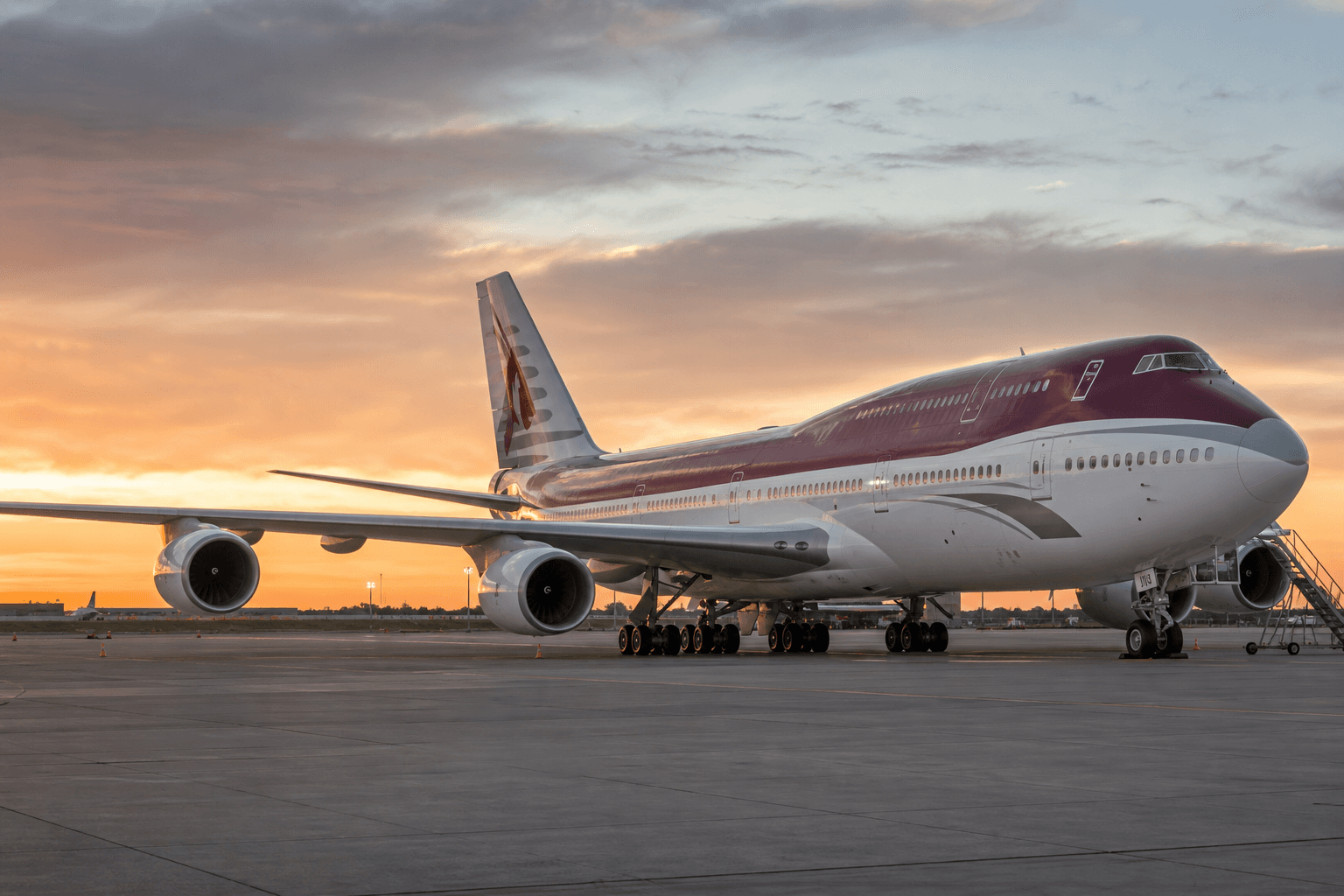
President Trump is reportedly fuming about the fact that the public has caught on to the (obvious) safety issues with his new $400 million "flying palace" Air Force One gifted by Qatar , and it's leading to journalists getting subpoenaed. While I can appreciate the desire to protect government secrets, the reporting seems about as shocking as finding out that water is wet, or that the sun is bright… Air Force One safety issues lead to journalist subpoenas In mid-June 2026, the Air Force took delivery of the new Boeing 747-8 that was gifted by Qatar, which will act as the primary new aircraft for carrying the president, which carries the designator "Air Force One" (though when Trump leaves office he gets to keep it, as it'll go into his presidential library). The converted Boeing 747-200s that acted as the primary Air Force One aircraft up until this point were definitely getting a bit old, and for years, there has been a contract in place for two replacement Boeing 747-8s. However, the delivery of those has been delayed massively, given the amount of special equipment that needs to be installed, to keep the president safe. So when Trump recently flew to Turkey for a NATO summit, he flew the outbound on his new Boeing 747-8. However, for the return flight out of Turkey, shortly after the ceasefire with Iran was called off, he once again flew the old Boeing 747-200. While he claimed that he was doing this to "honor the military," the reason was obvious — there were safety concerns with the plane. The new Air Force One is clearly about vanity and prestige, rather than about flying in the safest way possible. Following this, The New York Times reported that security precautions caused Trump to use the old Air Force One to fly out of Turkey, quoting people familiar with the matter. Well, Trump isn't happy with that reporting, and four reporters have now been subpoenaed by the US Justice Department, to testify before a grand jury in Manhattan next Wednesday. In a statement, the US Justice Department shared the following: "To the extent that we have to investigate breaches of national security, that's something that we will continue to do. To be clear, reporters are not the targets, those leaking classified information are. We recognize there may always be natural tension there. But we are not going to ignore the law and stop investigating the people who work in the administration and think it's okay to leak classified information impacting national security." "Were you aware of any credible threat by Iran against Air Force One?" @POTUS : "I have a threat all the time. I'm number one on their list, before you — but if I go, you go, right? So perhaps some of you want to change professions." 🤣 pic.twitter.com/5VlZBBySwx — Rapid Response 47 (@RapidResponse47) July 9, 2026 I understand wanting to prevent national security breaches, but… On the surface, I understand the need to look out for national security interests, and to prevent leaks. However, the report in question by The New York Times really didn't state anything that I wouldn't consider to be obvious to someone of average intelligence. The report suggested that: Officials were worried that the new aircraft didn't yet have all the defensive systems and countermeasures carried by the previous Air Force One, including some missile defense capabilities The report suggested that those concerns became more serious because of increased tensions with Iran The Trump administration has insisted that's not the case, and that the plane has met the high security standards. But seriously, let's look at this semi-objectively. The two purpose-built Boeing 747-8s that will act as Air Force One in the future have now been delayed by a minimum of four years. The delay isn't with building the 747-8 as such, but instead, with installing all the sophisticated equipment needed to protect the president. Meanwhile Trump's Qatar-gifted 747-8 was in service in less than a year. I mean, isn't it obvious that it doesn't have all the same safety equipment? If all the necessary safety equipment could actually be installed that fast, then why aren't the two existing 747-8s in production just fast tracked? Anyone? Bueller? I can't believe we're pretending this situation is a mystery? Bottom line The US Justice Department has subpoenaed reporters from The New York Times for breaking the news that the new Air Force One clearly doesn't have the same security equipment as the previous Air Force One. That seems exceedingly obvious, given that the jet was prepared for service in a matter of months, while the two replacement Air Force Ones are four years behind schedule (best case scenario) due to the complexity of installing this equipment. I understand the need to protect national security interests and prevent leaks, but if the government really thinks it's a "secret" that this plane doesn't have all the typical Air Force One equipment, then, well… we have bigger issues.
The Daily Touch & Go
The day's best aviation news in your inbox. Free, no spam.