

Image: San Diego Air & Space Museum · Public domain · via Wikimedia Commons
Deaf Man Sentenced to 18 Months for Targeting Delta Pilot with Laser Pointer Near Buffalo Airport
Joseph L. Crapsi received federal prison time after pleading guilty to aiming a laser at a Delta flight on final approach to Buffalo Niagara International Airport.
The gist
A deaf man from New York got 18 months federal prison after aiming a laser pointer at a Delta pilot landing at Buffalo airport.
Continuing coverage
All Delta Air Lines →- Man sentenced to 18 months for shining laser at Delta flight nearing Buffalo airport
- Delta Air Lines Posts $1.6 Billion Q2 Profit on Strong Revenue Growth Despite Rising Fuel Costs
- Delta Air Lines Projects Stable Airfares and Solid Revenue Amid Fuel Cost Normalization
- Delta Cancels Tokyo to Minneapolis Flight After 5.5-Hour Delay, Hotels Offered Only to Passengers With Babies
- Delta Air Lines Expands Global Reach With Six New Nonstop International Routes
A federal court has sentenced 31-year-old Joseph L. Crapsi of Cheektowaga, New York, to 18 months in prison for aiming a laser pointer at a Delta Air Lines aircraft on final approach to Buffalo Niagara International Airport. Crapsi had pleaded guilty after federal prosecutors charged him in connection with the March 2, 2024 incident, when a Delta flight DL-2334 was targeted during its landing approach. The case highlights ongoing concerns about the safety risks posed by laser pointer strikes on commercial aircraft.
The incident unfolded as Delta flight DL-2334 was making its final approach to Buffalo Niagara International Airport, flying within a few miles of Crapsi’s home. The pilot reported a laser strike coming from the vicinity of Crapsi’s residence, prompting an investigation by the Niagara Frontier Transportation Authority Police Department and the FBI. Neighbors corroborated the suspicion, stating they had observed a laser beam shining skyward from Crapsi’s home multiple times.
Officers sought probable cause and knocked on Crapsi’s door, where he invited them inside. Police accompanied him to his bedroom and saw a laser pointer in plain sight. Based on these observations and witness statements, they seized the device as evidence and arrested Crapsi. His attorneys had challenged the search and arrest as lacking probable cause and moved to suppress the evidence, but the court ruled against this argument and upheld the validity of the police actions.
Crapsi entered a guilty plea to violating federal law under 18 U.S. Code § 39A, which prohibits aiming laser pointers at aircraft and carries penalties of up to five years in prison. U.S. District Judge Lawrence J. Vilardo ultimately sentenced Crapsi to 18 months of federal incarceration. The prosecution was led by Assistant U.S. Attorneys Charles M. Kruly and Craig R. Gestring, underlining the severity with which the government treats laser pointer offenses involving aircraft safety.
This conviction arrives amid record numbers of laser pointer incidents reported across the United States. In 2023, the Federal Aviation Administration (FAA) recorded 13,304 laser strikes on aircraft, an almost 80% increase from seven years earlier. Though the total declined slightly to 12,840 incidents in 2024 and 10,993 in 2025, reports remain alarmingly high. In just the first half of 2026, over 3,300 incidents had already been documented, indicating this remains a persistent hazard to aviation safety.
Laser pointers pose serious risks to pilots due to their ability to temporarily blind or impair vision during critical phases of flight. The FAA notes the highest incidence of laser strikes typically occurs on Fridays and Saturdays, with a seasonal peak in October and November. Some cases have had grave consequences—for example, a Virgin Atlantic flight to Tel Aviv had to return to London after the pilot’s vision deteriorated severely from laser exposure.
The federal prohibition against aiming lasers at aircraft came into effect in 2012 as a direct response to the rising frequency and dangers of such attacks. Law enforcement agencies have since prioritized enforcement efforts, emphasizing the severe safety implications and potential for tragedy when pilots are visually compromised during flight operations.
Crapsi’s case underscores the judiciary’s readiness to impose stiff penalties on offenders to deter such acts. With aviation safety at stake, federal authorities continue to investigate laser pointer incidents aggressively, coordinating with local police and the FBI to apprehend perpetrators. The sentencing sends a clear message regarding the seriousness of this offense and its impact on the aviation community.
Frequently asked questions
- What was Joseph L. Crapsi convicted for in relation to aviation safety?
- He pleaded guilty to aiming a laser pointer at an aircraft, specifically a Delta Air Lines flight on final approach to Buffalo Niagara International Airport.
- What sentence did Joseph L. Crapsi receive for aiming a laser at a pilot?
- He was sentenced by a U.S. District Judge to 18 months in federal prison for the offense.
- How common are laser pointer incidents involving aircraft in recent years?
- Incidents have reached record highs with over 13,000 reports in 2023 and remain significant, with over 3,300 incidents reported in the first half of 2026 alone.
Read more
All Aviation Safety →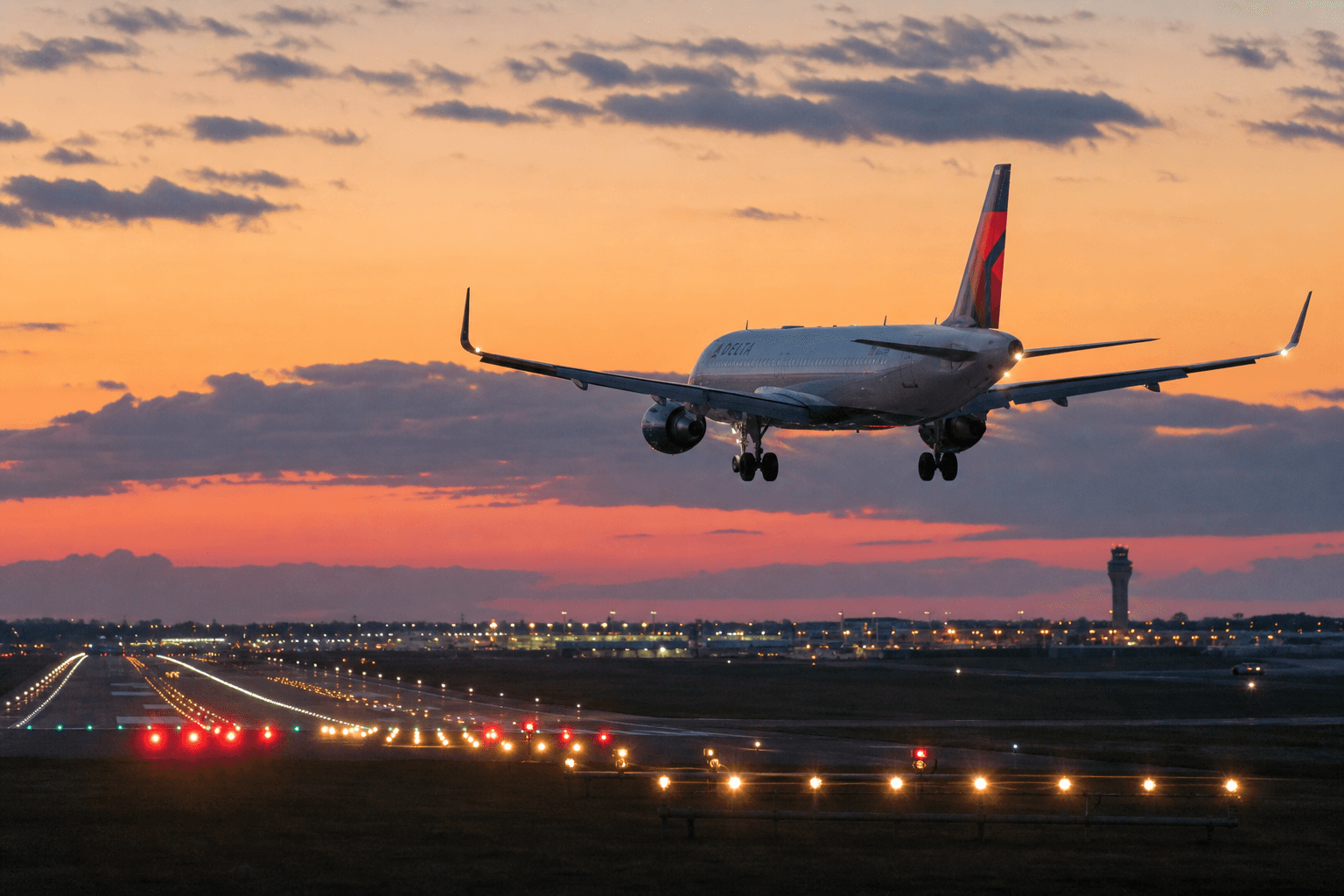
Man sentenced to 18 months for shining laser at Delta flight nearing Buffalo airport
A man who aimed a green laser pointer at a Delta Air Lines flight on approach to Buffalo Niagara International Airport (BUF) has been sentenced to 18 months in prison. During the March 2024 incident, Joseph L. Crapsi, 31, of Cheektowaga, repeatedly aimed the laser at the aircraft during the critical phase of flight.
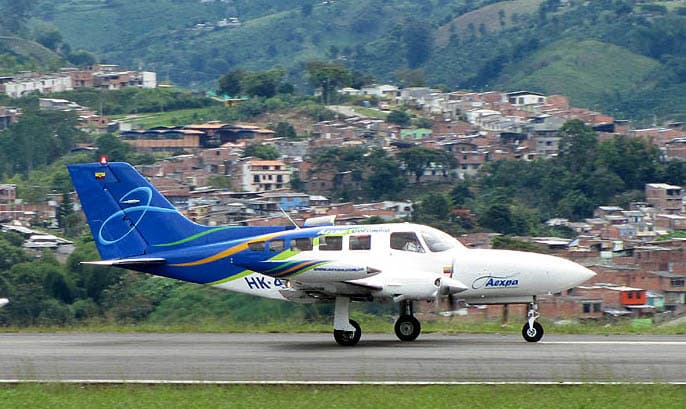
Flamingo Air grounded after fatal Cessna 402 crash at San Andros airport
No survivors after twin-engined aircraft came down near San Andros airport. Bahamian authorities have suspended the air operator's certificate of regional carrier Flamingo Air after a fatal Cessna 402 accident. The Royal Bahamas Police Force says 10 occupants were on board the aircraft, only one of whom survived the initial crash at San Andros airport before succumbing to injuries. "Upon arrival, officers found the aircraft engulfed in flames," it states, adding that the fuselage, tail and right wing sustained "extensive" fire damage. Civil Aviation Authority Bahamas says Flamingo Air's AOC has been "temporarily suspended" following two safety occurrences involving the operator on 10 July, the Caribbean region state's anniversary of independence. "The suspension will remain in effect pending the outcome of the authority's investigation," it adds. "The authority emphasises that this is a precautionary regulatory measure intended to ensure the continued safety of the travelling public." Investigators in the Bahamas have commenced preliminary work to preserve evidence and collect technical information after the accident. The aircraft "encountered difficulties" and "crashed into bushes" prior to landing, says the Bahamas aircraft accident investigation authority. It identifies the airframe involved as C6-FLX and says it was en route to San Andros after departing Nassau's Lynden Pindling airport. There are indications, yet to be confirmed, that the aircraft crashed short of runway 12 while on approach. Initial investigative activities already completed include securing and documenting the accident site, it says. "The investigation remains in its preliminary stage," it adds. "Investigators will continue to gather and analyse factual information relating to all aspects of the occurrence." The authority has asked individuals to contact the inquiry if they have any relevant photographs or video recordings. It stresses that "no determination" has been made regarding the cause of, or contributing factors to, the accident.
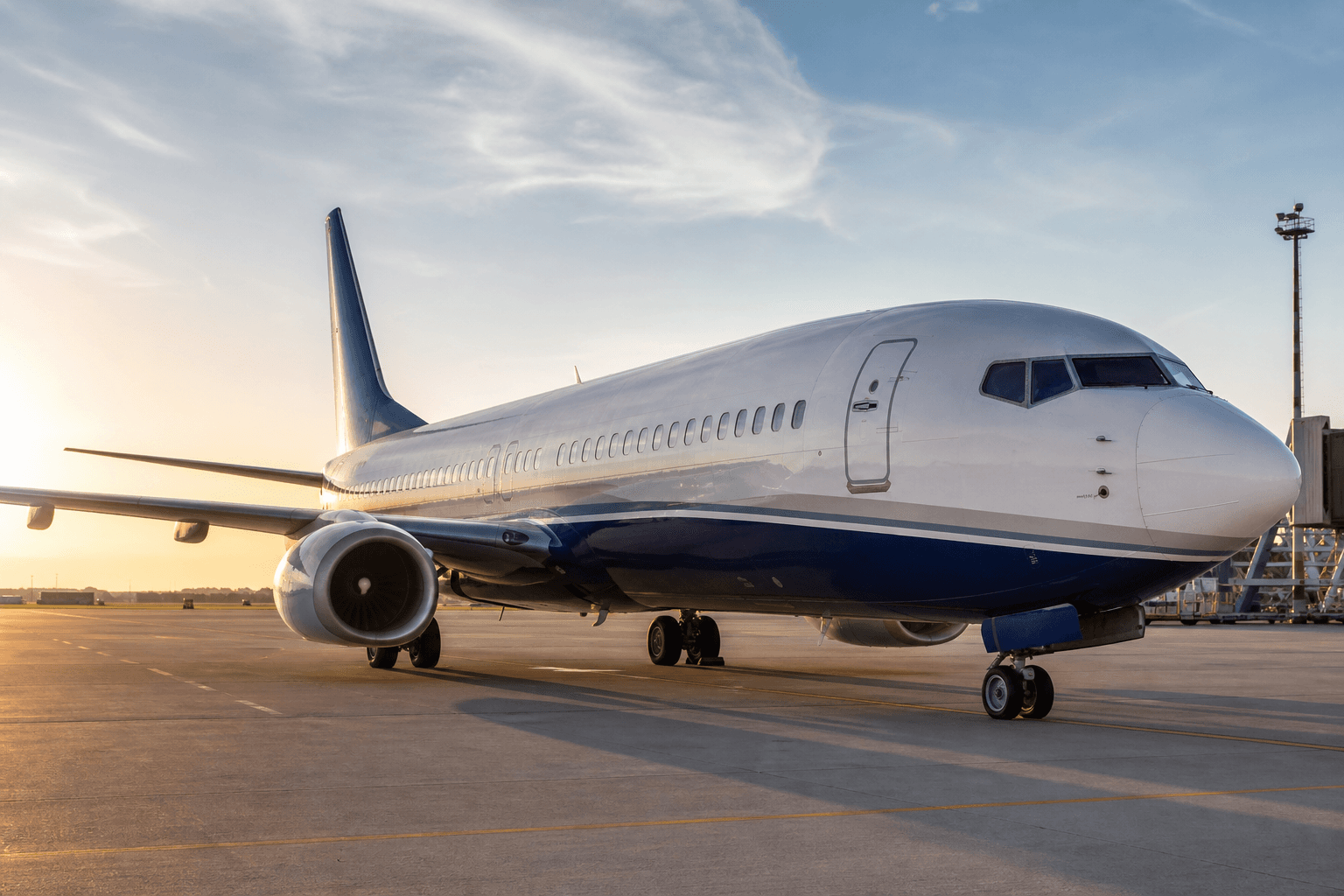
Ryanair 737 Window Failure Nearly Ejects Passenger Mid-Flight
A passenger aboard a Ryanair 737 was nearly ejected from the aircraft when the cabin window failed mid-flight. Multiple sources stated the window may have been struck by a piece of the aircraft's engine, which caused the structure to fail, but the airline has not verified this. The aircraft, operated by Malta Air for Ryanair, took off from the Greek city of Thessaloniki just before 6 a.m. local time on Friday. The flight was heading to Memmingen, Germany. According to a statement from Ryanair, shortly after takeoff the aircraft returned to Thessaloniki when a "passenger window dislodged inflight." The airline noted the aircraft made a normal landing and passengers returned to the terminal. One passenger requested and received medical assistance on the ground in Thessaloniki. A replacement aircraft was brought in to get passengers on their way. READ MORE: Ryanair Inks Deal for 300 Boeing 737 Max Jets READ MORE: 4 Flight Attendants Sue Boeing Over Alaska Door Plug Blowout According to media reports in Greece and Germany, several passengers described hearing a loud bang like a tire exploding, followed by the window breaking and oxygen masks dropping from the ceiling as the cabin lost pressure. At the time the aircraft was passing through an altitude of approximately 20,000 feet. The passenger sitting next to the window that gave way was partially ejected. Passengers said his head and shoulders were outside the aircraft, and they helped pull him back inside. He was still wearing his seat belt. The injured passenger is believed to be a 61-year-old Serbian national. According to Dutch newspaper De Telegraaf , the passenger sustained an injury to the neck caused by the impact as well as scrapes and burns about the head and shoulders. The injured man was conscious but in shock when the airplane landed. The cause of the blow out is under investigation. FLYING reached out to Ryanair, but inquiries were not returned by publication time. About the Aircraft The Boeing 737 in question is 19 years old. The fuselage windows on Boeing 737s are made from three layers of acrylic or polycarbonate, which is designed for strength and durability. The outer pane is the thickest and designed to withstand external pressures and impacts. The windows are bonded to the fuselage using an aviation-grade adhesive for structural integrity. The aircraft windows are designed to experience pressure changes during the flight. The cabin is pressurized to 6,000 feet for passenger comfort and safety. There is less air pressure outside the aircraft during flight. The tiny hole on the bottom of the inner piece of window acrylic allows some of the cabin air to enter the pocket between the inner and outer panes, allowing the pressure to slowly equalize as the aircraft climbs. At altitude, the air pressure is considerably lower than it is inside the cabin. When a window fails at altitude, objects within the cabin are pushed toward the window by the higher cabin pressure, then drawn out of the aircraft by the vacuum created by lower pressure.
Trump Faces Backlash After Reporters Subpoenaed Over Air Force One Safety Concerns
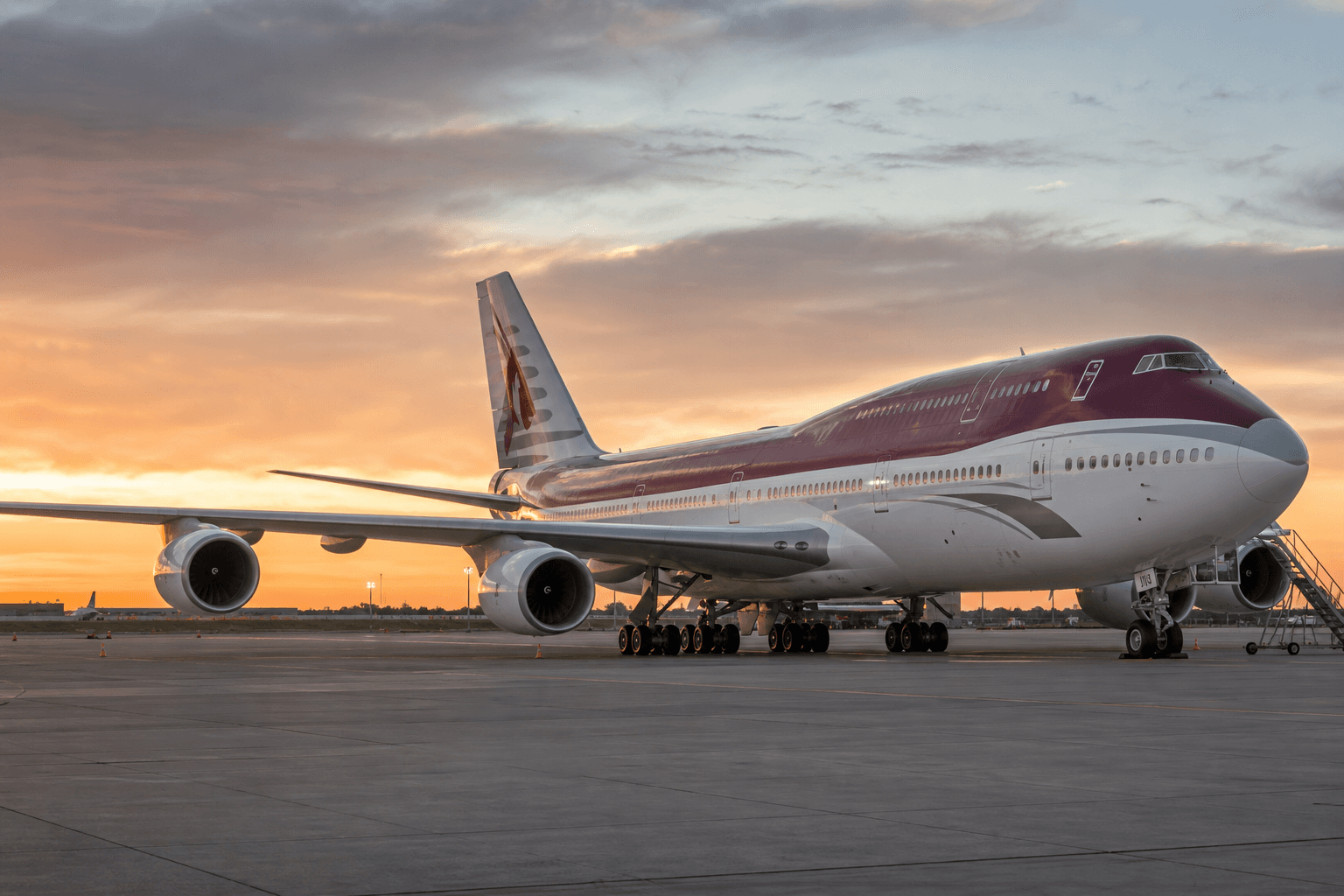
President Trump is reportedly fuming about the fact that the public has caught on to the (obvious) safety issues with his new $400 million "flying palace" Air Force One gifted by Qatar , and it's leading to journalists getting subpoenaed. While I can appreciate the desire to protect government secrets, the reporting seems about as shocking as finding out that water is wet, or that the sun is bright… Air Force One safety issues lead to journalist subpoenas In mid-June 2026, the Air Force took delivery of the new Boeing 747-8 that was gifted by Qatar, which will act as the primary new aircraft for carrying the president, which carries the designator "Air Force One" (though when Trump leaves office he gets to keep it, as it'll go into his presidential library). The converted Boeing 747-200s that acted as the primary Air Force One aircraft up until this point were definitely getting a bit old, and for years, there has been a contract in place for two replacement Boeing 747-8s. However, the delivery of those has been delayed massively, given the amount of special equipment that needs to be installed, to keep the president safe. So when Trump recently flew to Turkey for a NATO summit, he flew the outbound on his new Boeing 747-8. However, for the return flight out of Turkey, shortly after the ceasefire with Iran was called off, he once again flew the old Boeing 747-200. While he claimed that he was doing this to "honor the military," the reason was obvious — there were safety concerns with the plane. The new Air Force One is clearly about vanity and prestige, rather than about flying in the safest way possible. Following this, The New York Times reported that security precautions caused Trump to use the old Air Force One to fly out of Turkey, quoting people familiar with the matter. Well, Trump isn't happy with that reporting, and four reporters have now been subpoenaed by the US Justice Department, to testify before a grand jury in Manhattan next Wednesday. In a statement, the US Justice Department shared the following: "To the extent that we have to investigate breaches of national security, that's something that we will continue to do. To be clear, reporters are not the targets, those leaking classified information are. We recognize there may always be natural tension there. But we are not going to ignore the law and stop investigating the people who work in the administration and think it's okay to leak classified information impacting national security." "Were you aware of any credible threat by Iran against Air Force One?" @POTUS : "I have a threat all the time. I'm number one on their list, before you — but if I go, you go, right? So perhaps some of you want to change professions." 🤣 pic.twitter.com/5VlZBBySwx — Rapid Response 47 (@RapidResponse47) July 9, 2026 I understand wanting to prevent national security breaches, but… On the surface, I understand the need to look out for national security interests, and to prevent leaks. However, the report in question by The New York Times really didn't state anything that I wouldn't consider to be obvious to someone of average intelligence. The report suggested that: Officials were worried that the new aircraft didn't yet have all the defensive systems and countermeasures carried by the previous Air Force One, including some missile defense capabilities The report suggested that those concerns became more serious because of increased tensions with Iran The Trump administration has insisted that's not the case, and that the plane has met the high security standards. But seriously, let's look at this semi-objectively. The two purpose-built Boeing 747-8s that will act as Air Force One in the future have now been delayed by a minimum of four years. The delay isn't with building the 747-8 as such, but instead, with installing all the sophisticated equipment needed to protect the president. Meanwhile Trump's Qatar-gifted 747-8 was in service in less than a year. I mean, isn't it obvious that it doesn't have all the same safety equipment? If all the necessary safety equipment could actually be installed that fast, then why aren't the two existing 747-8s in production just fast tracked? Anyone? Bueller? I can't believe we're pretending this situation is a mystery? Bottom line The US Justice Department has subpoenaed reporters from The New York Times for breaking the news that the new Air Force One clearly doesn't have the same security equipment as the previous Air Force One. That seems exceedingly obvious, given that the jet was prepared for service in a matter of months, while the two replacement Air Force Ones are four years behind schedule (best case scenario) due to the complexity of installing this equipment. I understand the need to protect national security interests and prevent leaks, but if the government really thinks it's a "secret" that this plane doesn't have all the typical Air Force One equipment, then, well… we have bigger issues.
The Daily Touch & Go
The day's best aviation news in your inbox. Free, no spam.