

Image: MarcelX42 · CC BY-SA 4.0 · via Wikimedia Commons
Cambodia and US Enhance Aviation Partnership with $3.2B Boeing Deal and Airport Investment
Air Cambodia commits $3.2 billion for new Boeing 737-8 jets; US partners with Cambodia on airport upgrades and cargo hub development to boost regional connectivity.
The gist
Cambodia and the US forge stronger aviation links via Air Cambodia's major Boeing aircraft order and infrastructure investments at Techo International Airport.
Continuing coverage
All Air Cargo →Cambodia is amplifying its aviation sector through a strategic partnership with the United States, highlighted by Air Cambodia's substantial order for Boeing aircraft and US-backed investment in critical airport infrastructure. The agreement is positioned to significantly boost Cambodia's connectivity and economic development in Southeast Asia.
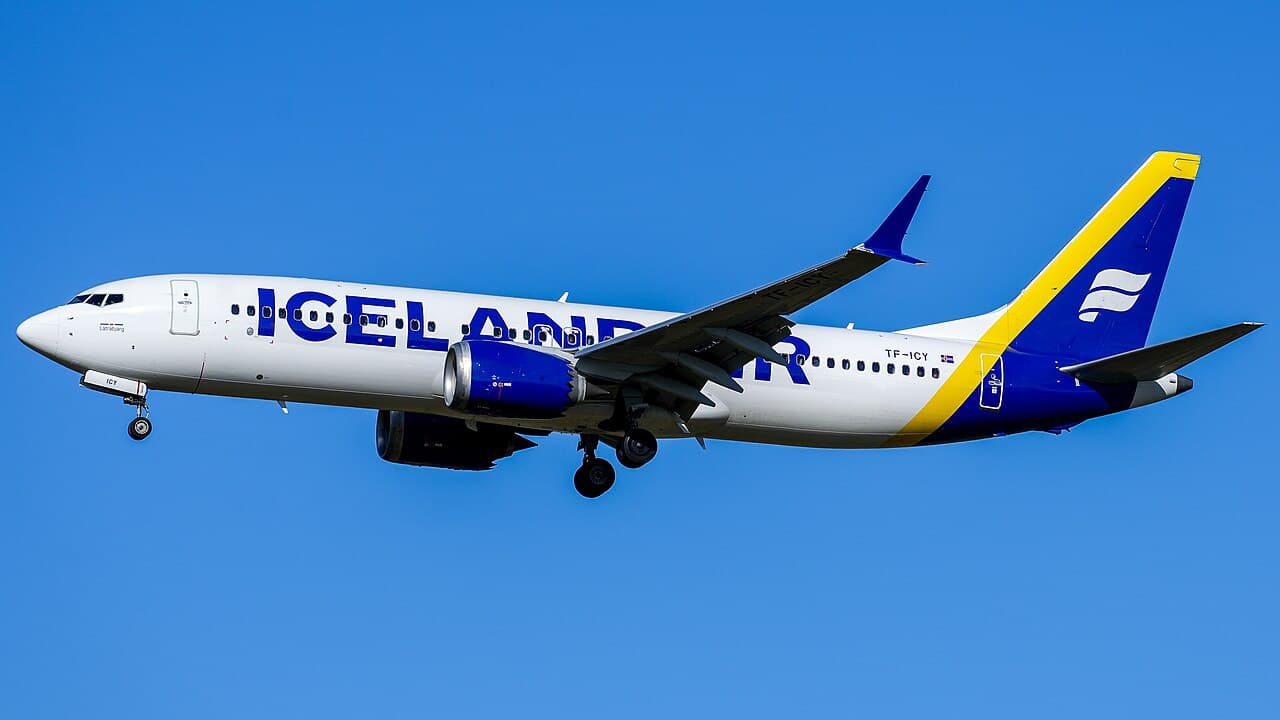
Air Cambodia has placed an order valued at approximately $3.2 billion for ten Boeing 737-8 jets, with options to acquire ten additional aircraft of the same model. This transaction marks the airline's inaugural acquisition of Boeing airplanes and distinguishes it as the first Cambodian carrier to operate this aircraft type. Deliveries are scheduled to commence in 2031, signifying a gradual fleet modernization.
The Boeing 737-8 is recognized for a combination of range, efficiency, and reduced fuel consumption. Designed to accommodate up to 178 passengers in a two-class layout, it can fly approximately 3,500 nautical miles. Compared to prior generation aircraft, the 737-8 uses about 20% less fuel, aligning with Air Cambodia's goals for improved operational economics and sustainability.
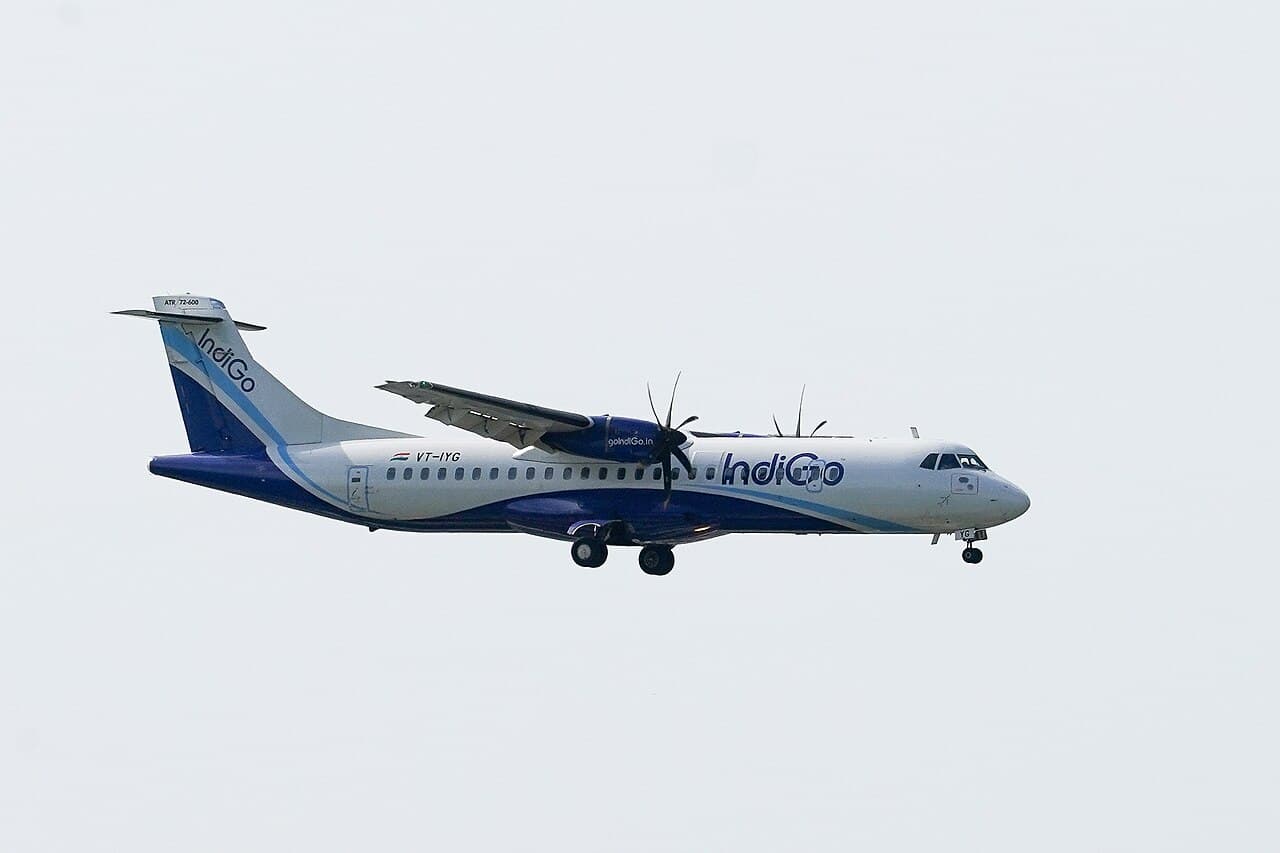
Currently, Air Cambodia operates a mixed fleet that includes Airbus A320 family jets and ATR 72 turboprop aircraft, servicing routes across Southeast Asia, China, India, and Japan. CEO Dr. David Zhan underscored the fleet expansion as a vital element for introducing new direct routes across North and Southeast Asia while generating employment opportunities and advancing workforce training in Cambodia.
Beyond aircraft acquisition, the US International Development Finance Corporation (DFC) is considering a $100 million investment to enhance Techo International Airport near Phnom Penh. Opened in 2025, this airport serves as Cambodia’s principal gateway, and the investment aims to develop it further as a hub for air cargo and logistics to support rising demand for both passenger and freight traffic.
Officials from Cambodia’s civil aviation authorities recently engaged with US Embassy representatives, discussing collaborative efforts encompassing aircraft procurement, airport investment, air cargo development, and logistics support. These talks reinforce a deepening bilateral aviation relationship focused on robust infrastructure and regional trade facilitation.
Cambodia is also progressing towards ratifying the Cape Town Convention, an international treaty providing a uniform legal framework for aircraft financing and leasing. Joining this pact is expected to reduce costs for airlines and increase investor confidence, harmonizing Cambodia’s aviation financing practices with global standards.
These initiatives dovetail with Air Cambodia’s transformation from its former identity as Cambodia Angkor Air into a nationally significant carrier for both domestic and international markets. The combined modernization of fleet and airports positions the airline and country for expanded roles in regional aviation and commerce.
The partnership between Cambodia and the United States exemplifies a long-term commitment to fostering growth in Cambodia’s aviation industry. By securing modern aircraft, improving airport infrastructure, and facilitating access to international financing, Cambodia strengthens its position in the dynamic Southeast Asian aviation landscape.
Frequently asked questions
- What aircraft is Air Cambodia ordering and when will deliveries start?
- Air Cambodia has ordered 10 Boeing 737-8 jets with options for 10 more; deliveries are expected to begin in 2031.
- How is the US supporting aviation infrastructure development in Cambodia?
- The US International Development Finance Corporation is considering a $100 million investment to develop Techo International Airport and strengthen air cargo and logistics facilities.
- What role does the Cape Town Convention play in Cambodia’s aviation plans?
- Cambodia is moving forward to approve the Cape Town Convention, establishing a legal framework for aircraft financing and leasing to reduce costs and attract investors.
Read more
All Cargo →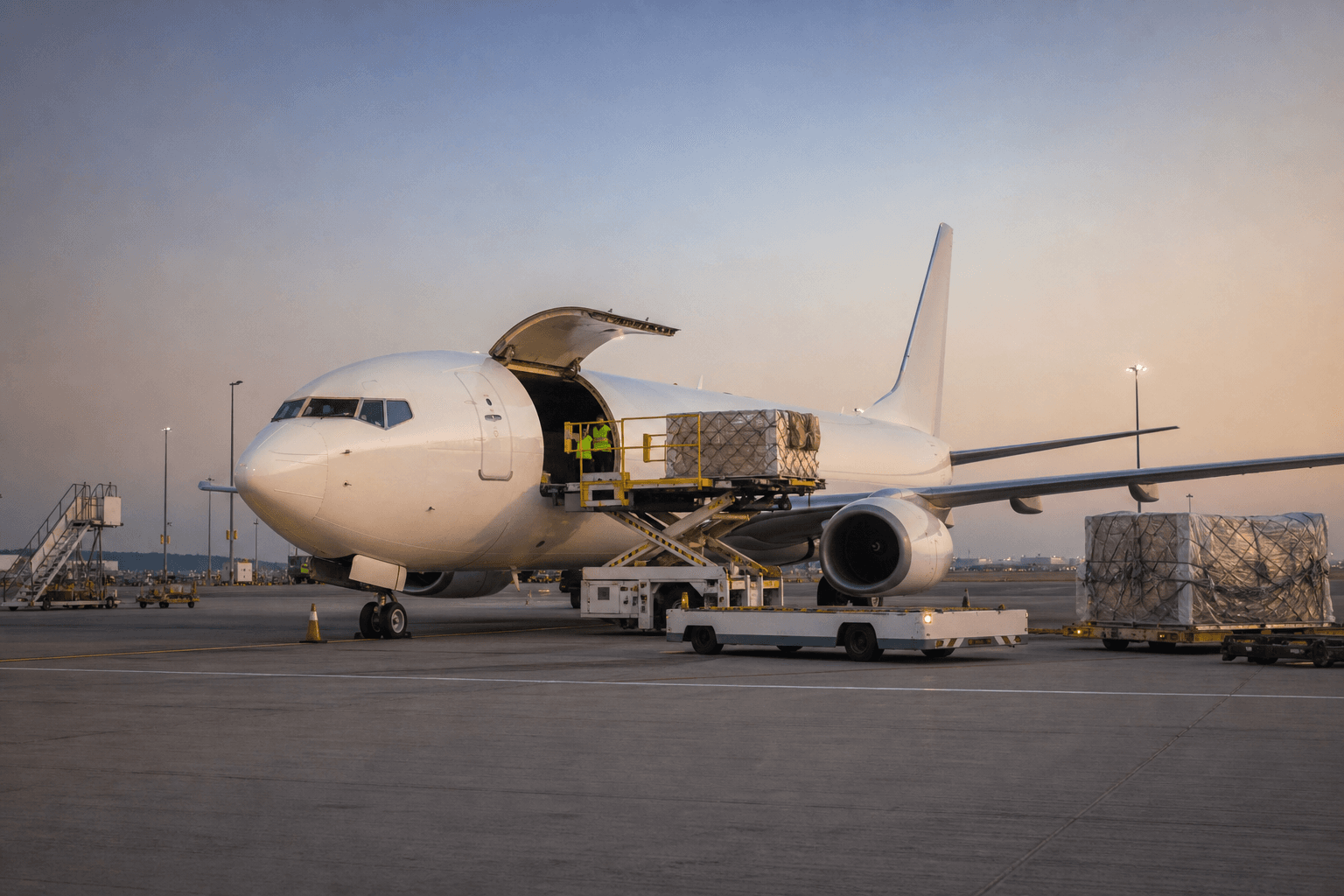
SolitAir Launches Direct Cargo Service Between Dubai and Tianjin to Boost China-UAE Trade
SolitAir, the UAE’s dedicated B2B airport-to-airport cargo airline, has launched a new scheduled route connecting its Dubai World Central (DWC) hub to Tianjin Binhai International Airport (TSN) in northern China. ezstandalone.cmd.push(function () { ezstandalone.showAds(119); }); The move strengthens the carrier’s growing footprint in one of the world’s most important trade markets, building on its successful operations to Hong Kong and Urumqi. The inaugural flight carried a VIP cargo shipment, underlining the route’s focus on secure, reliable, and time-critical air freight solutions. Customers needing fast, tailored transport for high-value or sensitive goods now have a direct and efficient link between the UAE and northern China. ezstandalone.cmd.push(function () { ezstandalone.showAds(127); }); Strategic Gateway in Northern China Tianjin, a bustling port city of 14 million people, ranks among China’s largest industrial and logistics hubs. It serves as the main maritime and air gateway for the Beijing-Tianjin-Hebei economic region, which accounted for 8.5% of China’s GDP in 2025. Tianjin Port is one of the world’s busiest, handling more than 23 million TEUs annually. Meanwhile, Tianjin Binhai International Airport supports advanced manufacturing sectors such as automotive, aerospace, electronics, pharmaceuticals, and high-value industrial equipment. The city also plays a growing role in the Belt and Road Initiative, making it a vital node for international trade. ezstandalone.cmd.push(function () { ezstandalone.showAds(128); }); CEO: “Supporting Evolving Customer Needs” Hamdi Osman, Founder and CEO of SolitAir , highlighted the importance of the new route. “China remains one of the most dynamic growth markets for global trade,” he said. “Adding Tianjin reflects our commitment to meeting our customers’ evolving needs.” “This route gives us direct access to northern China’s vibrant manufacturing and logistics hub while further strengthening the US$111 billion non-oil trade relationship between China and the UAE.” ezstandalone.cmd.push(function () { ezstandalone.showAds(129); }); Rapid Network Expansion The Tianjin launch follows SolitAir’s recent entry into Europe with its inaugural route to Sofia, Bulgaria. Since starting operations in October 2024, the airline has quickly scaled up to 56 routes across 33 countries. This includes a strong 18-city network across Africa. The carrier continues to focus on commercially vital, time-sensitive corridors linking Asia, the Middle East, Africa, and Europe. SolitAir operates a modern fleet of seven Boeing 737-800 BCF freighters. Each aircraft offers a 20-tonne cargo capacity and is well-suited for a wide range of shipments, including dangerous goods, pharmaceuticals, perishables, valuable items, and oversized freight. ezstandalone.cmd.push(function () { ezstandalone.showAds(130); }); The airline’s reliable, versatile aircraft deliver the range and performance needed for demanding routes. Comprehensive Service Offering The airline provides an integrated platform across four key service areas: On-Demand Charters, Tailor-Made Programs, Scheduled Flights, and ACMI Services. This flexible approach allows SolitAir to deliver custom solutions on both high-demand and underserved routes. SolitAir holds several important certifications, including the UAE GCAA Air Operator Certificate (AOC), Dangerous Goods certification, EASA Third Country Operator (TCO) authorisation, United Kingdom Third Country Operator Certificate, and ACC3 designation from the Belgian Civil Aviation Authority. ezstandalone.cmd.push(function () { ezstandalone.showAds(131); }); These approvals ensure secure and compliant cargo operations to and from the European Union. Future Growth Plans Looking ahead, SolitAir aims to expand its fleet to 20 aircraft. The airline operates from a 20,440-square-metre dedicated cargo hub at Dubai World Central (Al Maktoum International Airport), positioning it well for continued growth in global B2B air cargo. The new Tianjin route enhances connectivity for businesses moving goods between key economic centres. It reflects SolitAir’s strategy of linking dynamic markets with dependable, customer-focused air freight services. ezstandalone.cmd.push(function () { ezstandalone.showAds(132); });
China Southern Air Logistics to Add Three Boeing 777-300ER Converted Freighters
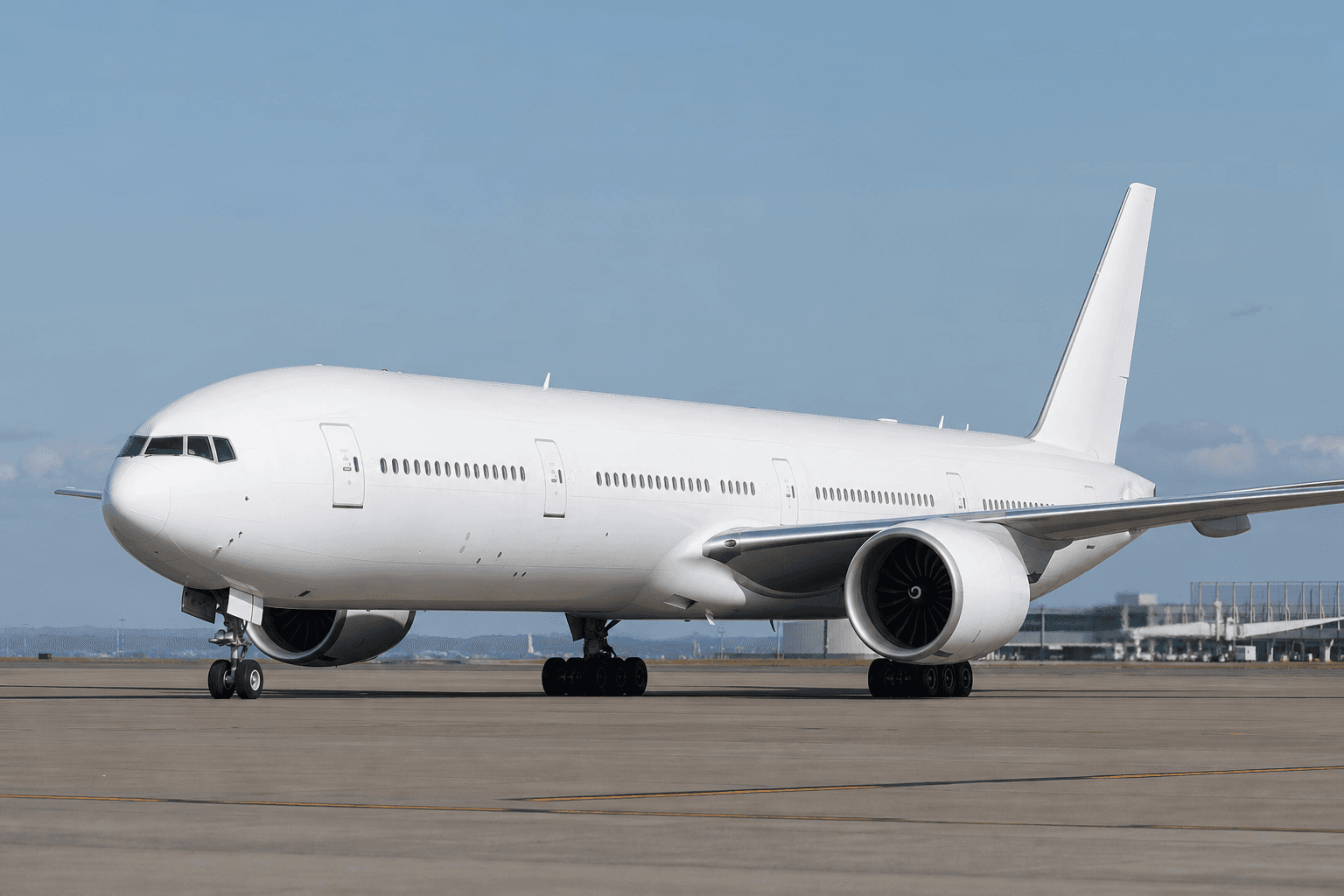
Operator to take IAI-modified twinjets under lease agreement with AerCap. China Southern Airlines has become the latest carrier to commit to introducing converted Boeing 777-300ER freighters. The airline's logistics division has signed a lease agreement for three of the type with Irish-based lessor AerCap. AerCap states that it will deliver the first of the modified twinjets to the Guangzhou-based company in October next year. The remaining two will be handed over in the first and second quarters of 2028 respectively. Designated the 777-300ERSF the aircraft are being converted under a programme partnership between Israel Aerospace Industries and AerCap. "These aircraft will provide strong support for our strategy to expand intercontinental routes, enabling us to deliver superior service to customers worldwide," says China Southern Air Logistics chair Li Xiao. "Introduction of the [777-300ERSF] marks a major milestone in the continued evolution of our fleet." China Southern has cargo hubs at Shanghai and Guangzhou and its cargo fleet includes a dozen Boeing 777Fs and a pair of 747-400Fs. AerCap chief Aengus Kelly says the 777-300ERSFs will "integrate seamlessly" into the Chinese carrier's 777 operation.
Airbus A330 Emerges as Quiet Successor to Boeing 767 on Cargo Routes
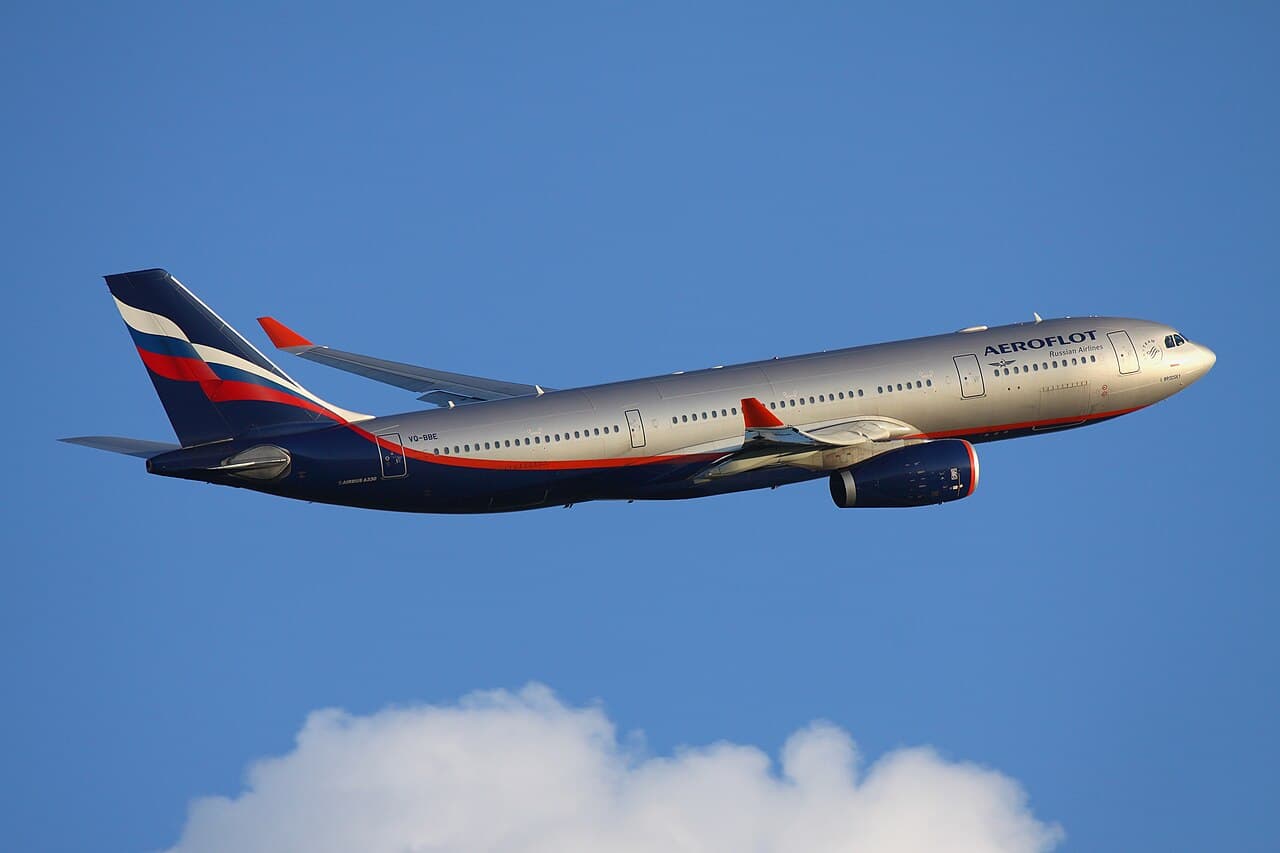
For decades, the Boeing 767 has been one of the defining aircraft of the global air cargo industry. It has become the backbone of fleets operated by dedicated cargo carriers, freight specialists, and airlines that found new life for aging passenger aircraft through passenger-to-freighter conversions. Its combination of payload, range, operating economics, and widespread availability made it the obvious solution for operators seeking a medium-capacity widebody freighter.
Dubai Aerospace Enterprise Poised to Be World's Third Largest Aircraft Lessor with 1000-Plane Fleet
Over the last couple of decades, the Middle East has emerged as the new "center of gravity" for the global aviation industry, particularly hubs like Dubai. So, it is understandable that we are seeing Dubai-based companies across the aviation value chain grow into major players in their respective market segments. One of these is Dubai Aerospace Enterprise (DAE), a diversified firm owned by the Investment Corporation of Dubai, the emirate's government investment arm. DAE has quietly become one of the world's largest aircraft lessors, particularly after the acquisition of two well-established players, Nordic Aviation Capital (NAC) and Macquarie AirFinance (MAF) in 2025 and 2026, respectively. What's more, DAE combines its leasing business with a sizable maintenance, repair and overhaul (MRO) operation based out of Amman, Jordan. And while DAE tends to keep a relatively low public profile, the 82nd Annual General Meeting (AGM) of the International Air Transport Association (IATA), which took place in Rio de Janeiro on June 6-8, 2026, offered AeroTime the opportunity to sit down with DAE's Chief Executive Officer (CEO) and a member of its board of directors Firoz Tarapore for an exclusive interview. "DAE has two business lines: one is aircraft leasing, where we are a very large player, and the other one is airframe MRO, where we provide airframe heavy maintenance services," Tarapore said. "The leasing business today is, I would say, about 85% of our business, and the engineering business is the remainder of that." "On the leasing side, our fleet today is about 700 aircraft and, as you may have seen, we have announced an agreement to acquire Macquarie," he said. "So, when that transaction closes, our fleet will be in excess of 1000 aircraft, allowing us to serve customers in like 80-85 countries." These figures place DAE among the world's top lessors, although Tarapore said he is not fixated with attaining a specific spot in the rankings. "If you look at the number of aircraft, we will be the third largest out there, but for us it's not that relevant," he explained. "What's relevant is the right number of aircraft to be relevant to our customers, to the OEMs, and to the suppliers." On dominating specific market niches Here, Tarapore continued to explain DAE's strategy when it comes to building its fleet. "We do not work across the entire spectrum. In fact, we will focus on narrowbody and one widebody product from Boeing and Airbus each, and then two unique aircraft types," he explained. "One is the ATR72-600, where we have a large position. And the other is the factory fresh B777 freighter from Boeing, where, again, we have a sizable position. We're pretty much the only ones of our size focused on them." He continued: "Those are two things that we do differently from our large competitors because those products are very unique, and the profitability associated with that is also very attractive." What are the reasons for the company's focus on these two specific aircraft models? "From my perspective, the reason we want to play in this space is that these are unique aircraft. The number of aircraft being made each year by the OEM is limited, and the number of lessors in this space is also limited, and when you put all those things together, that makes for a fairly unique financial proposition from a risk-reward perspective," he said. "It's capital well deployed relative to other liquid narrowbody products, or even liquid widebody aircraft." Another reason for DAE's strong position in the turboprop leasing market is the acquisition of Nordic Aviation Capital, a firm with a strong portfolio of regional aircraft. "We are now a lessor with the largest ATR72-600 position, and yes, there are other lessors, but when you look at the number of lessors in this segment relative to the number of lessors in other narrowbody products, it may be five to 50," he said. "So, the proportionality is very different." Perspectives for DAE's MRO business Besides the growth of the leasing business, DAE is also active in the MRO market, with a dedicated subsidiary providing airframe maintenance services out of its base at Queen Alia International Airport (AMM), in Amman, Jordan. Tarapore highlighted that this business works independently from the leasing operation, providing its services to many international airlines. "That is a separate business line; it's not meant for our fleet at all," he said. "The only time these two divisions come together is if there is a commercial reason for it to come together. Our engineering business is really for fleets of airline clients. We provide services to large carriers in Europe, the Middle East, Africa, and South Asia. That's our business. It's an airline-based business." In line with many of its peers in the MRO space, DAE has also been investing in adding capacity at its Jordanian maintenance base. "We have hangar space for 25 aircraft at the same time, 25 parallel lines of heavy maintenance. That's a big business," he said. "I think that makes us the fifth or the sixth largest single facility for airframe heavy maintenance in the world." On trends in the aircraft leasing and MRO markets What are Tarapore's views on the global leasing market and the main drivers behind it? "Just like in the broader aviation industry, we are at a point where we're seeing factors that we don't normally see. There is a shortage of aircraft that haven't been made for the last few years. There is a shortage because engine OEMs and supply chain people just cannot deliver what they need to deliver," he said. "Landing gear overhauls, for example, don't get done, so aircraft don't come back into service. At the same time, customer demand has stayed relatively sticky, even if this is normally a price-sensitive industry; demand has held up strongly over the last few years." He added: "Put all of that together and what you get is an industry where, because profitability has ups and downs, leasing has become a genuinely important and significant solution." How does this translate into the leasing market? "So, we see a climate that is very conducive. We see pricing that is relatively firm, and we see opportunities to grow, because some of these things are stickier than we thought they would be. They're not going away, whereas by now you would have thought that they would have gone away," Tarapore said. "So, we're quite encouraged overall in the near term." But what about the longer term? Is Tarapore concerned that overinvestment today may lead to a glut in the market further down the road? "If you look back, and then if you look forward, leasing today is approximately 50% of the fleet out there. If you look at the annual forecasts that Boeing and Airbus prepare for the next 20 years, and if you look back at how leasing is done, even if leasing doesn't increase [its market share], that's a massive increase in the number of aircraft that lessors will have to finance," he said. "And over that period of time there have been events which have driven that number up and down, but overall, there's a secular uptrend to our business. So, if we look out 20 years instead of five, the number of aircraft in the fleet that will be financed by lessors will be twice what it is now, which is a very unique way to kind of think about growth in our business." A truly global business Although the company is run from Dubai, DAE has a truly global footprint with offices in Singapore, Dublin, and the United States. "We originate from different jurisdictions around the world," Tarapore stated. Tarapore then outlined the advantages that the emirate offers for a global aviation business like DAE's. "Where you see special regimes, for example, in Singapore or Hong Kong, the special regime introduces a much lower tax rate in exchange for doing certain things well. In Dubai, when you're starting the tax rate is nothing. You don't really need a special tax regime to do that," he said, referring to h
The Daily Touch & Go
The day's best aviation news in your inbox. Free, no spam.