


Image: Ninjastrikers · CC BY-SA 4.0 · via Wikimedia Commons
National Airlines sets longest nonstop B777F flight from Scotland to Australia
National Airlines completed a record-breaking nonstop flight of its Boeing 777 freighter from Prestwick, Scotland, to Melbourne, Australia, covering 9,849 nautical miles in 19 hours 23 minutes.
The gist
National Airlines flew its B777 freighter nonstop from Scotland to Australia over nearly 9,850 nm, pushing the aircraft's range limits.
Continuing coverage
All Ultra-Long-Haul →- Philippine Airlines Debuts 10-Abreast Economy on Ultra-Long A350-1000 Flight
- Qantas A350-1000ULR completes 19-hour nonstop maiden flight from Toulouse to Melbourne
- Inside the Airbus A350's Concealed Crew Rest Compartment Beneath the Flight Deck
- Cathay Pacific to Operate 11 Ultra-Long Airbus A350 Routes of 14+ Hours in 2026
- Qatar Airways Sued After Teen Dies from Allergic Reaction on Doha-New York Flight
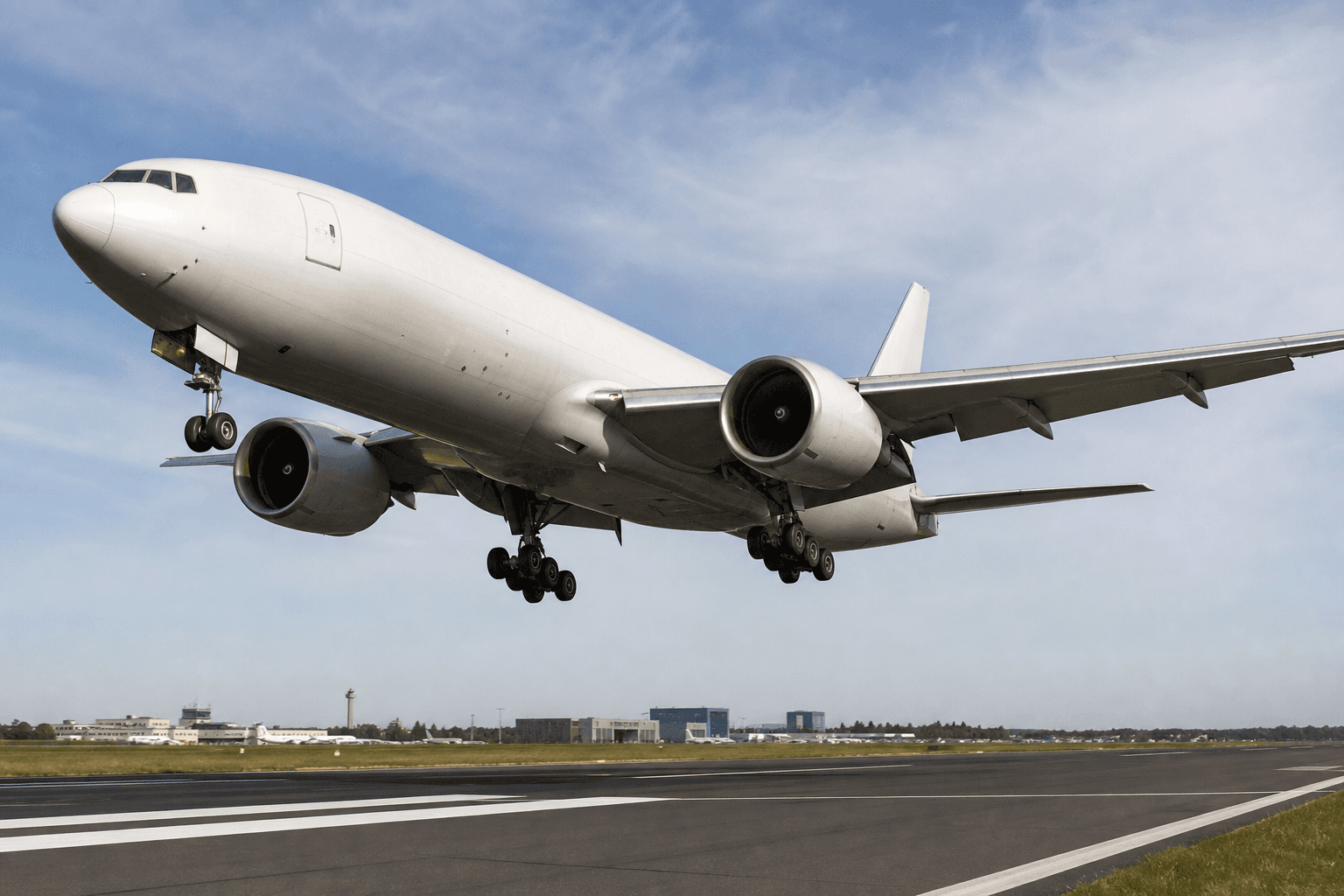
National Airlines, a Florida-based cargo and charter operator, has achieved what appears to be the longest nonstop flight ever operated by a Boeing 777 freighter on behalf of another carrier. On August 4, 2026, the airline flew its 777-200F, registered N795CA, nonstop from Prestwick Airport (PIK) in Scotland to Melbourne Airport (MEL) in Australia. The flight covered a distance of 9,849 nautical miles (18,240 kilometers) over 19 hours and 23 minutes. This flight notably pushed the Boeing 777 freighter to its limit, considering the aircraft's official range with a full payload is around 4,970 nautical miles (9,200 kilometers).
The undertaken nonstop journey from Scotland to Australia effectively doubled the typical operational range of the Boeing 777 freighter. While the 777F’s published range is usually cited at approximately 4,970 nm when fully loaded, this flight was managed with a reduced payload configuration, allowing the range to be extended to about 9,750 nautical miles (around 18,000 kilometers). Hence, the aircraft’s configuration and loading were carefully adapted to achieve this ultra-long-haul mission. This operational flexibility highlights the freighter’s capabilities when payload is traded off for extra fuel.
Details about the specific cargo carried on the historic flight have not been publicly disclosed by National Airlines. The airline mentioned only that UK-based aviation services company Golden Aviation was the customer for this particular mission. Speculation in aviation communities indicates the plane may have transported urgently needed aircraft spare parts, presumably to support grounded fleets in Australia. Such critical cargo would justify the need for a nonstop, long distance delivery, demonstrating the strategic role of cargo aircraft in sustaining global aviation operations.
This record-setting flight comes shortly after another notable achievement in ultra-long-haul aviation: the Airbus A350-1000ULR test flight completed between Toulouse, France, and Melbourne on July 24, 2026. That aircraft is purpose-built for ultra-long-range operations and recently completed an extended return leg of 24 hours and 24 minutes, covering 12,460 nautical miles (23,076 km), setting the benchmark for ultra-long haul flights by commercial airliners. National Airlines' flight with the Boeing 777 freighter, though slower and contemporaneously less hyped, equally showcases the operational limits of existing widebody airframes in cargo roles.
National Airlines operates a diverse fleet including nine Boeing 747-400 and four Boeing 777-200 freighters. Based in Orlando, Florida, the carrier also has significant operations as a contractor for the United States government, reflecting its broad operational scope beyond commercial cargo. Additionally, it runs a business segment focused on passenger charters and ACMI leasing utilizing Airbus A330-200 and A330-300 aircraft, reinforcing its multi-faceted aviation services.
This ultra-long-range flight from Prestwick to Melbourne not only demonstrates the Boeing 777F’s extended capabilities under special loading conditions but also highlights the evolving demands of global cargo operations. As passenger airline networks adjust post-pandemic, cargo operators like National Airlines play an increasingly vital role in bridging supply chain gaps across continents. Flights of this nature enable rapid delivery of essential goods over vast distances without intermediate stops, saving critical hours.
While National Airlines has not publicly elaborated on the flight’s operational specifics, such as fuel management or pilot logistics, the feat underscores the extreme planning and skill involved in operating at the edge of an airframe’s range. The mission represents one of the most ambitious demonstrations of a Boeing 777 freighter’s potential to connect geographically distant markets nonstop, which could influence future route planning and payload strategies in the cargo sector.
This milestone flight not only marks a point of operational excellence but also challenges perceptions of what current widebody freighters can achieve. With the global air cargo market continually adapting to new routes and customer needs, National Airlines’ accomplishment provides a tangible example of extending the reach of existing aircraft fleets without requiring new platforms. It also positions the Boeing 777F as a versatile workhorse capable of exceptional performance under optimized mission profiles.
Frequently asked questions
- What distance did the National Airlines Boeing 777 freighter cover nonstop?
- The flight covered 9,849 nautical miles nonstop between Prestwick, Scotland, and Melbourne, Australia.
- How did National Airlines extend the Boeing 777F's range for this flight?
- By reducing the payload, the 777F's range was extended from its official 4,970 nautical miles to approximately 9,750 nautical miles, enabling the ultra-long nonstop flight.
Read more
All Cargo →
National Airlines Expands Fleet with New GE90 and CF6 Engines for Boeing Freighters
GE Aerospace (NYSE: GE) announced on July 23, 2026 that National Airlines has committed to purchase one GE90-110B and six CF6-80C2 engines to power their Boeing 777F/747F cargo airplanes. The GE90 engine family powers all Boeing 777 models and is the exclusive powerplant on the 777-300ER, -200LR, and Freighter. The GE90 engine features several technology […]
Boeing 777-200LRF Performs Perilously Close Low Pass, Sparking Safety Concerns
In this day and age it's easy to see how this video footage could be AI-generated, or part of a high-quality flight simulator program. But, no. This actually happened, and it's left the aviation world in shock as many know just how dangerous such a maneuver can be.
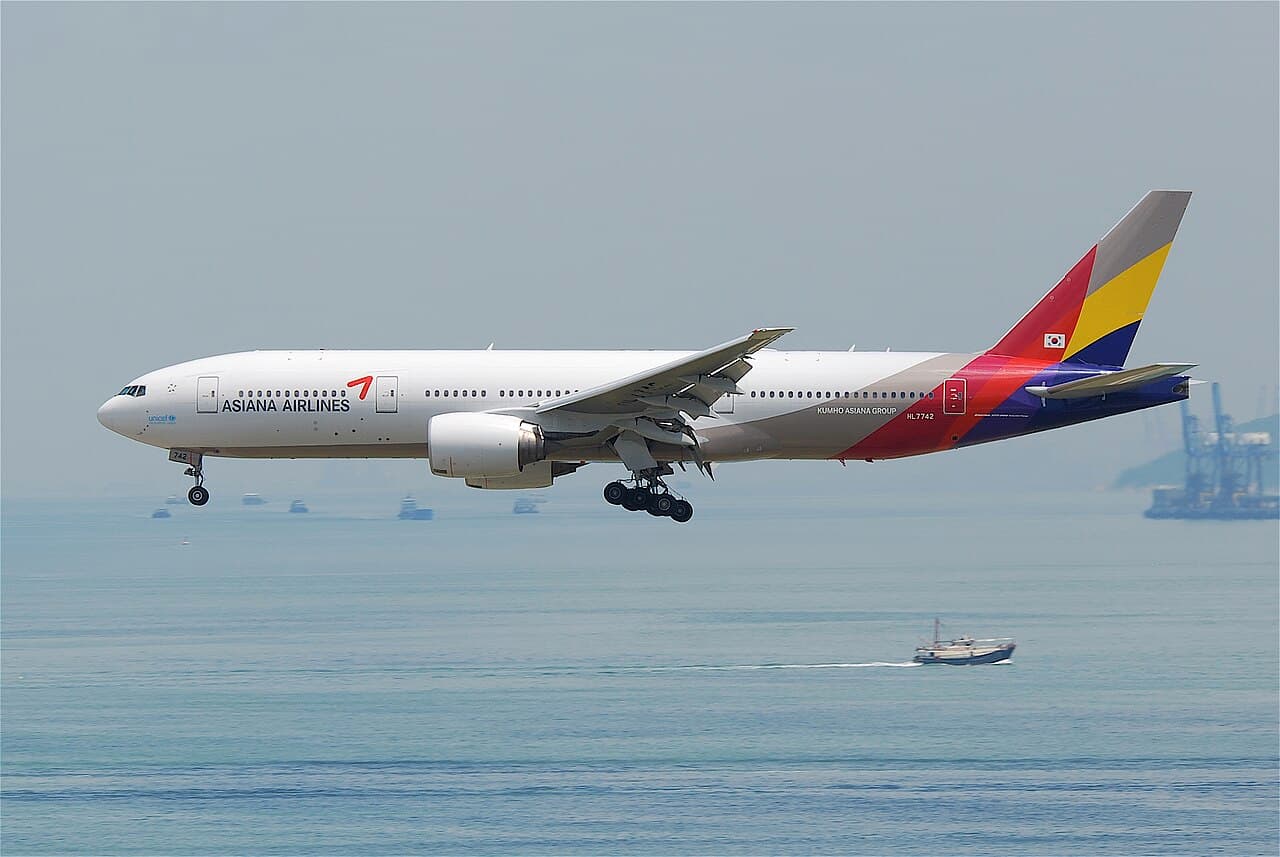
MSC Air Cargo Confirms Order for Five Boeing 777-8F Freighters, Boosting Backlog Over 80 Jets
MSC Air Cargo ordered five Boeing 777-8F Freighters at the 2026 Farnborough International Airshow 2026 , becoming the previously unidentified customer in Boeing's order book and making its first commitment to the Boeing 777X family. The order makes MSC the third European operator of the type and increases Boeing's firm 777-8F backlog to more than 80 aircraft, despite the aircraft not yet entering service. The 777-8F is positioned as a replacement for aging Boeing 747-400Fs and current 777Fs, whose production will end ahead of 2028 international emissions standards.
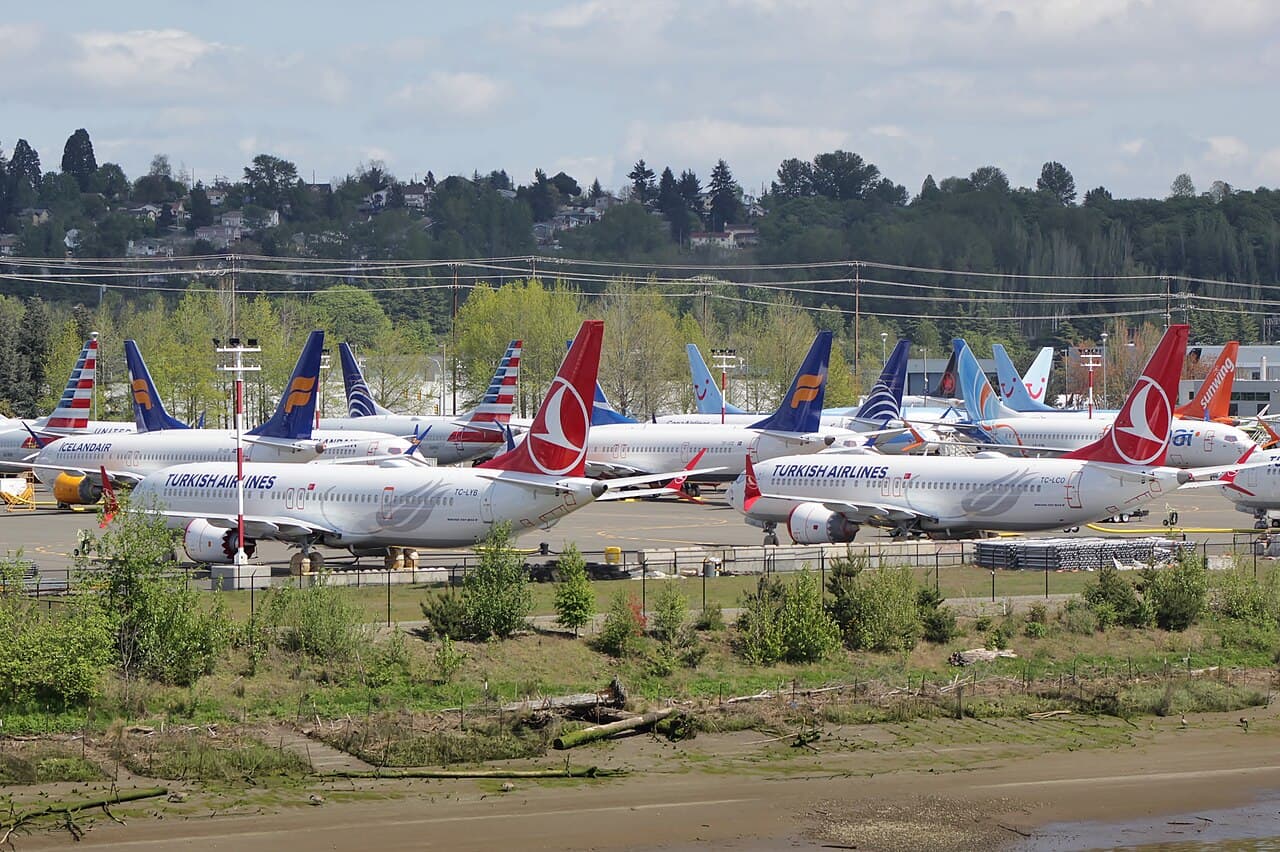
IAG Q2 profits fall as Aer Lingus loss and fuel costs weigh; Vueling to get first 737 Max jets
Airline group will keep capacity flat in 2026 but sees strong premium demand and cost-savings for Vueling as it transitions to 737 Max fleet. IAG's operating and net profits fell by a quarter and one-third, respectively, in the April-June period, as a loss-making Aer Lingus and higher fuel costs took a toll. But the group is confident it can deliver a full-year operating margin within its 12-15% target, pointing to the benefits of its transformation programme, "robust" demand, strong balance sheet and recovery of 60% of its additional fuel costs through revenue growth and cost initiatives. IAG's second-quarter operating profit dropped to €1.26 billion ($1.45 billion) from €1.68 billion in the same period last year, while net profit fell to €732 million from €1.13 billion. Revenue stayed relatively flat at €8.88 billion, as fuel costs and emissions charges soared almost 23%. Revenue at IAG Cargo declined 9.4% in the first half, reflecting “reduced capacity resulting from disruption in the Middle East”, says the group. British Airways turned in the strongest performance in the first six months of 2026, with operating profit before exceptional items coming in €61 million higher than the same period last year, reaching €885 million. However, Aer Lingus stood out as the only carrier in the group to report a first-half operating loss. IAG attributes this to "the combination of additional fuel costs and lower passenger revenues linked to competition on North Atlantic routes". Aer Lingus cuts Aer Lingus said earlier this month it would reduce capacity by 6% later this year , axe three US routes and cut jobs amid increased transatlantic competition. Speaking on IAG's first-half earnings call on 31 July, Aer Lingus chief executive Lynne Embleton said she was confident the carrier could eventually reach the group's 12-15% margin goal and attract investment for new aircraft, but it would take time. "As part of this group, if we want investment we need to be at 12-15% as well," says Embleton. "We do believe we can get to the 12% operating margin – some steps are quicker than others. We believe we can take cost action quickly but we believe the impact from things like premium economy and the business investment will take a little longer to come through. "If we can demonstrate that we're getting our house in order and we can get very close to that investable margin then I'd hope that new-generation aircraft would lift us over the hurdle, because there are certainly efficiencies from having new-generation aircraft." She adds: "We do believe we can get there – we don't think it's an immediate solution but there's certainly a pathway that we believe we can give confidence to the group." Vueling prepares to take first 737 Max jets IAG will take delivery of 13 aircraft in the second half of this year – including the first three Boeing 737 Max 8-200 jets that will begin low-cost unit Vueling's transition to an all-Boeing narrowbody fleet . "We are looking forward to the first of 60 737 deliveries to Vueling at the end of the year," said IAG chief executive Luis Gallego during the earnings call. Transitioning to the 737 Max will deliver a "significant" reduction in cost at Vueling, adds Gallego, noting that it will be "the first low-cost carrier in Europe" to offer SpaceX's Starlink in-flight wi-fi service, which will be installed on the new jets. The other aircraft deliveries planned for this year include six Airbus A320neos, six A321neos and two Boeing 787-10s. IAG received three aircraft in the first half of the year – one A320neo and two A321XLRs. It is due to receive the last A321XLR from its firm orderbook "soon", says Gallego, but it holds options on more of the type, and is "considering if we want to have more aircraft and where". Full-year capacity across IAG is expected to be flat, after coming in 0.1% lower year-on-year in the first half as a result of being forced to suspend Middle East routes. "Growth was lower than the original plan of approximately 2.5%, linked to cancellations due to the conflict in the Middle East, together with aircraft availability linked to engines," says IAG. The airline group is seeing some "softness" in the intra-European market, but points to strong premium demand – particularly on transatlantic routes – which is helping it recapture 60% of its additional fuel costs. IAG is 70% hedged for the remainder of this year and 40% hedged in 2027. The group says demand remains "robust" and 57% of its second-half revenue is booked, which Gallego says is "in line with last year".
The Daily Touch & Go
The day's best aviation news in your inbox. Free, no spam.