

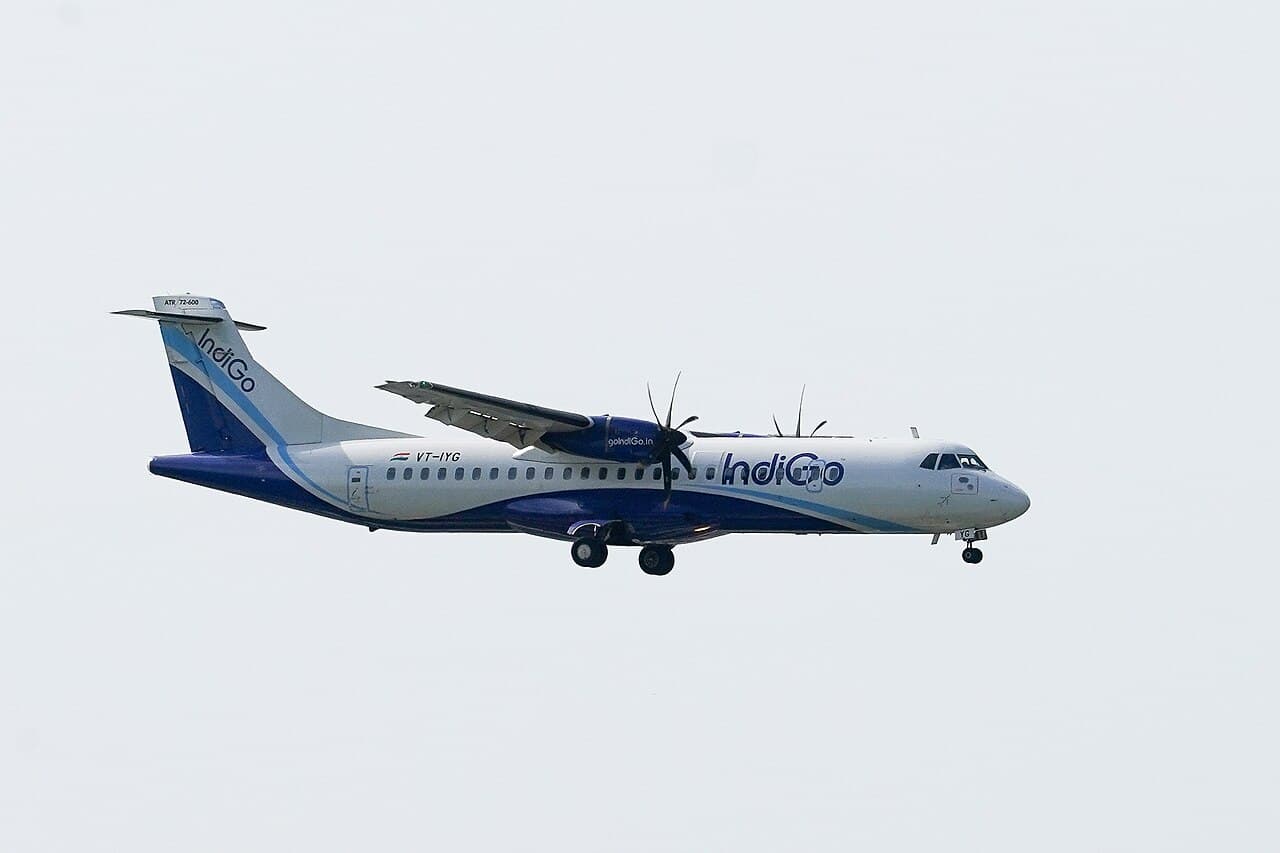
Image: This Photo was taken by Timothy A. Gonsalves . Feel free to use my photos, but p · CC BY-SA 4.0 · via Wikimedia Commons
Dubai Aerospace Enterprise Poised to Be World's Third Largest Aircraft Lessor with 1000-Plane Fleet
Dubai Aerospace Enterprise strengthens its global footprint with acquisitions, focusing on narrowbodies, ATR72-600 turboprops, and Boeing 777 freighters while expanding MRO capacity in Jordan.
The gist
Dubai Aerospace Enterprise is set to become the world's third largest aircraft lessor with over 1000 planes, combining leasing and MRO services globally.
Continuing coverage
All Mro →- Air France-KLM and Lufthansa submit binding bids for minority stake in TAP Air Portugal
- Boeing Forecasts Nearly $5 Trillion Market for Aviation Services and 2.4 Million Jobs by 2045
- Emirates completes 100th aircraft retrofit in unprecedented $5 billion overhaul program
- Air Europa to Receive First Airbus A350-900 in 2028 amid Strategic Overhaul
- Avia Solutions Group appoints FL Technics chief as new CEO amid reshuffling
Dubai Aerospace Enterprise (DAE), a government-owned aviation firm based in Dubai, is rapidly ascending the ranks of global aircraft lessors. The company currently manages a fleet of approximately 700 aircraft and is finalizing the acquisition of Macquarie AirFinance, which will increase its portfolio to over 1000 aircraft. This expansion enables DAE to serve customers in around 80 to 85 countries. CEO Firoz Tarapore highlighted that while they will be the third largest lessor by number of aircraft, their priority remains having a portfolio sized to meet customer and supplier needs rather than just rankings.
DAE’s strategy is focused and selective. The company emphasizes leasing narrowbody aircraft along with one Boeing and one Airbus widebody model each. Additionally, it holds significant market positions in two niche segments: the ATR72-600 turboprop and Boeing’s factory fresh 777 freighters. Tarapore emphasized that these aircraft types are relatively rare in production and leasing markets, providing attractive risk-reward dynamics compared to more common aircraft. This specialization differentiates DAE from other large lessors and enhances profitability.
The firm’s substantial position in turboprop leasing derives largely from its 2025 acquisition of Nordic Aviation Capital, a leader in regional aircraft leasing. DAE is now the largest lessor of ATR72-600s worldwide, a market with relatively few competitors. This segment contrasts starkly with the narrowbody lease market where the number of lessors is far higher, which provides DAE with a unique standing in a less crowded field. Their concentration on niche aircraft types is both a strategic and financial decision to capture underserved markets.
In parallel with its leasing operations, DAE runs a significant maintenance, repair, and overhaul (MRO) business through a subsidiary operating at Queen Alia International Airport in Amman, Jordan. This airframe heavy maintenance facility can handle 25 aircraft simultaneously, making it among the world’s largest single-site MRO operations. Unlike the leasing arm, the MRO division services airline fleets globally across Europe, the Middle East, Africa, and South Asia, operating independently unless operational synergies with the leasing business arise for commercial reasons.
Tarapore offered insights on current market trends shaping DAE’s outlook. The industry is experiencing an aircraft shortage impacted by supply chain bottlenecks and limited production capacity from OEMs and engine suppliers. Despite this, global demand for aircraft leasing remains robust, highlighting leasing as a critical component of airline fleet management. Pricing has remained firm, and opportunities for growth persist as these market constraints appear longer lasting than initially expected.
Looking beyond near-term market conditions, DAE views aircraft leasing as a long secular growth play. About half of the global fleet today is financed through leasing, and with forecasted aircraft deliveries over the next two decades, the aggregate value and market share of leased aircraft will increase substantially. This positions leasing companies like DAE to play an even larger role as financial intermediaries and asset managers over coming decades, underpinned by durable demand from airlines worldwide.
Despite its Dubai headquarters, DAE maintains a broad geographic presence with offices in Singapore, Dublin, and the United States to originate deals and manage global customers and asset portfolios. The company benefits from Dubai’s zero corporate tax regime, providing a competitive advantage over other aviation hubs that rely on special tax incentives to attract aviation businesses. This enables DAE to efficiently reinvest in its expanding global leasing and MRO operations.
Frequently asked questions
- What is the size of Dubai Aerospace Enterprise's aircraft leasing fleet after recent acquisitions?
- Following the acquisition of Macquarie AirFinance, Dubai Aerospace Enterprise's fleet is expected to exceed 1000 aircraft, positioning it among the world's top three aircraft lessors.
- Which niche aircraft types does DAE focus on in its leasing strategy?
- DAE specializes in leasing the ATR72-600 turboprop and factory fresh Boeing 777 freighter, complementing its narrowbody and select widebody aircraft portfolio.
- Where is DAE's MRO operation based and what is its capacity?
- DAE's MRO subsidiary operates out of Queen Alia International Airport in Amman, Jordan, with hangar space to perform heavy maintenance on up to 25 aircraft simultaneously.
Read more
All Cargo →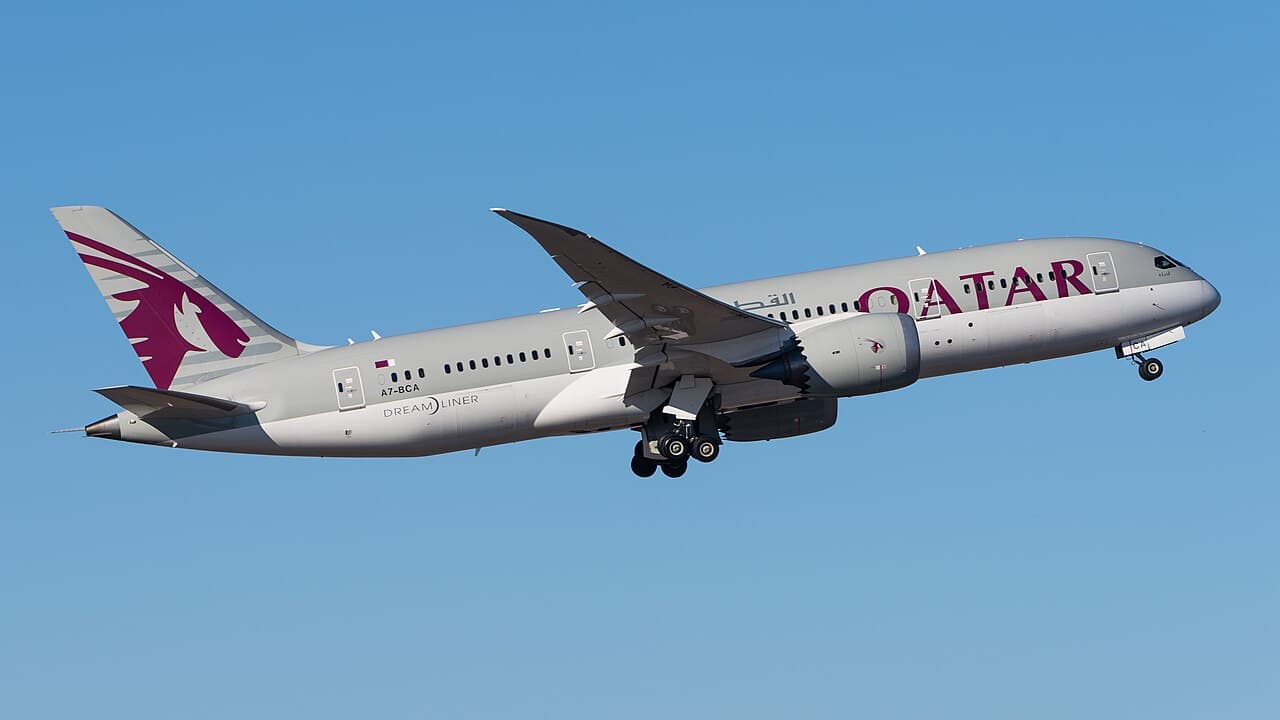
National Airlines Executes Record-Setting 19.5-Hour Nonstop 777F Flight from Scotland to Australia
What do you do when your Boeing 787-8 Dreamliner has been broken for nearly two weeks, and you need a spare part that is currently only in stock from a single facility on the other side of the world? Well, you charter a cargo plane to operate what is believed to be the longest ever flight by a Boeing 777 freighter aircraft. On August 4, that’s exactly what happened when National Airlines, a specialist cargo carrier based in Orlando, operated a 9,849 nautical mile flight from Prestwick in Scotland to Melbourne, Australia, in one non-stop flight that took around 19 and a half hours. The longest ever Boeing 777F flight in the world. The 777F (the suffix stands for Freighter) had only been delivered to National in early June, fresh from the Boeing assembly line in Everett, Washington, when a third-party cargo charter company made a booking for something they needed transported as quickly as possible. The original client is believed to be Australia’s low-cost carrier Jetstar, which has had one of its Boeing 787-8 Dreamliners stranded in Melbourne since July 25. In order to get it back in the air, the plane needs new thrust reversers for its huge GEnx jet engines, but availability for these parts is in short supply. The most reliable source was GE’s own maintenance and overhaul facility, based, of course, in Prestwick, Scotland. Of course, both National Airlines and Golden Aviation are limited to what they can say about this record-breaking flight due to client confidentiality, but in a statement posted to its official X account, National Airlines commented: “We are proud to have achieved what is believed to be the world's longest commercial B777F flight for another airline, operating nonstop from Prestwick to Melbourne.” Rumours has it that it was delivering new thrust reversers for Jetstar B787-8 (VH-VKF) that's been AOG at Melbourne since 25 July! Prestwick hosts a major GE engine overhaul facility for the GEnx engines! https://t.co/mVh7NXvEnG — Analytic Flying (@analyticflying) August 4, 2026 The aircraft (registration: N792CA) departed Prestwick just before 1 am on August 4, heading south across Europe, before threading the needle through Azerbaijan, Turkmenistan, Tajikistan, north Afghanistan, and Pakistan to avoid conflict zones across the Middle East. From there, the brand new 777F continued across India, the Bay of Bengal, Malaysia, Indonesia, and then across Melbourne, where it landed just before 5 am on August 5. The flight would have been operated by at least four pilots who would have taken turns at the controls, with two working and two sleeping in special bunks at any one time. It appears that National Airlines is well-versed in transporting engine parts, given that the plane has already visited Prestwick on several occasions since it has been with the carrier for a short amount of time. Although this is the longest ever flight of a Boeing 777F, this extraordinary flight pales in comparison to the 12,560 nautical mile journey recently completed by Airbus from Melbourne to Toulouse, France, to test the new A350-1000ULR. With a flight time of 24 hours and 24 minutes, the Airbus test pilots were putting the aircraft to the ultimate test ahead of its delivery to Australian flag carrier Qantas. The plane’s remarkable range is possible due to an additional center fuel tank that has been fitted to enable non-stop flights from Sydney to London, Paris, and New York.
MSC Air Cargo Confirms Order for Five Boeing 777-8F Freighters, Boosting Backlog Over 80 Jets
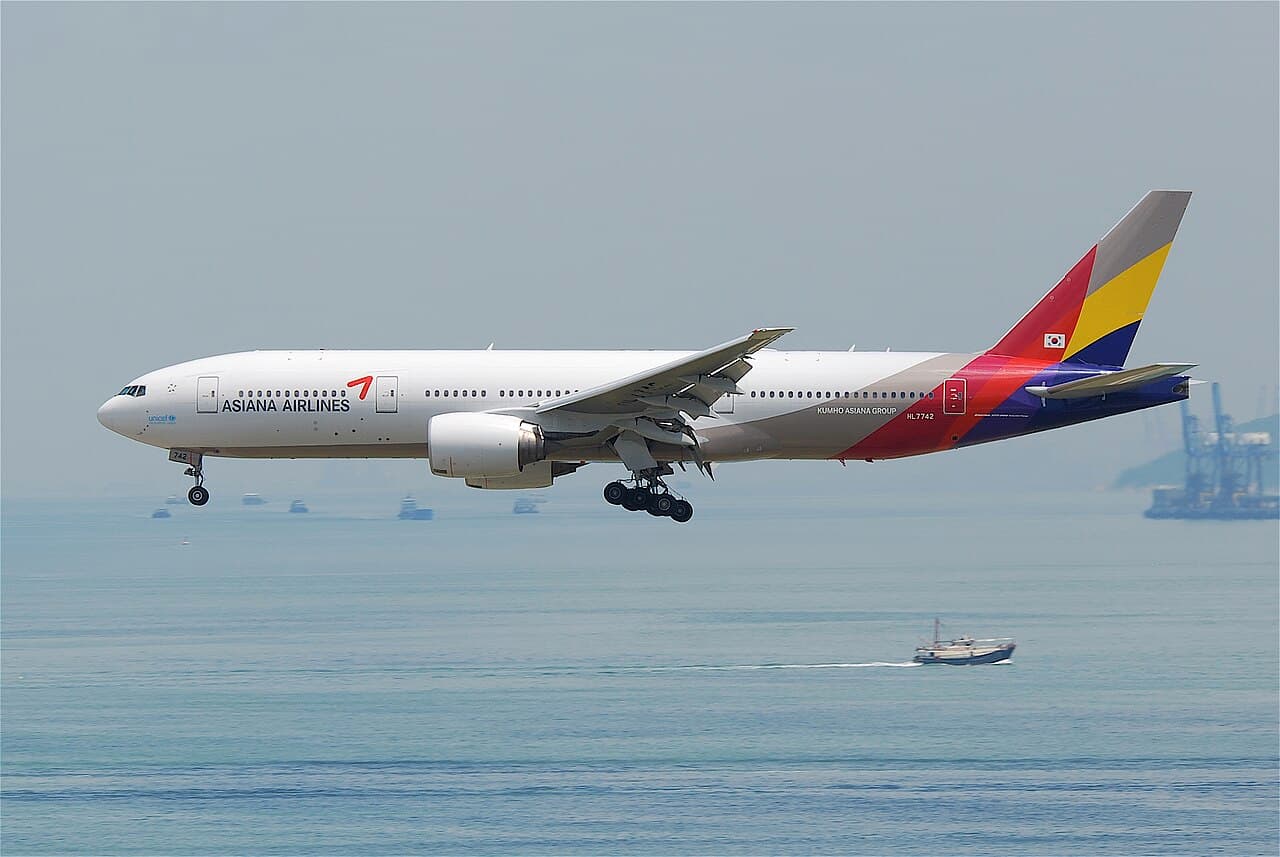
MSC Air Cargo ordered five Boeing 777-8F Freighters at the 2026 Farnborough International Airshow 2026 , becoming the previously unidentified customer in Boeing's order book and making its first commitment to the Boeing 777X family. The order makes MSC the third European operator of the type and increases Boeing's firm 777-8F backlog to more than 80 aircraft, despite the aircraft not yet entering service. The 777-8F is positioned as a replacement for aging Boeing 747-400Fs and current 777Fs, whose production will end ahead of 2028 international emissions standards.
IAG Q2 profits fall as Aer Lingus loss and fuel costs weigh; Vueling to get first 737 Max jets
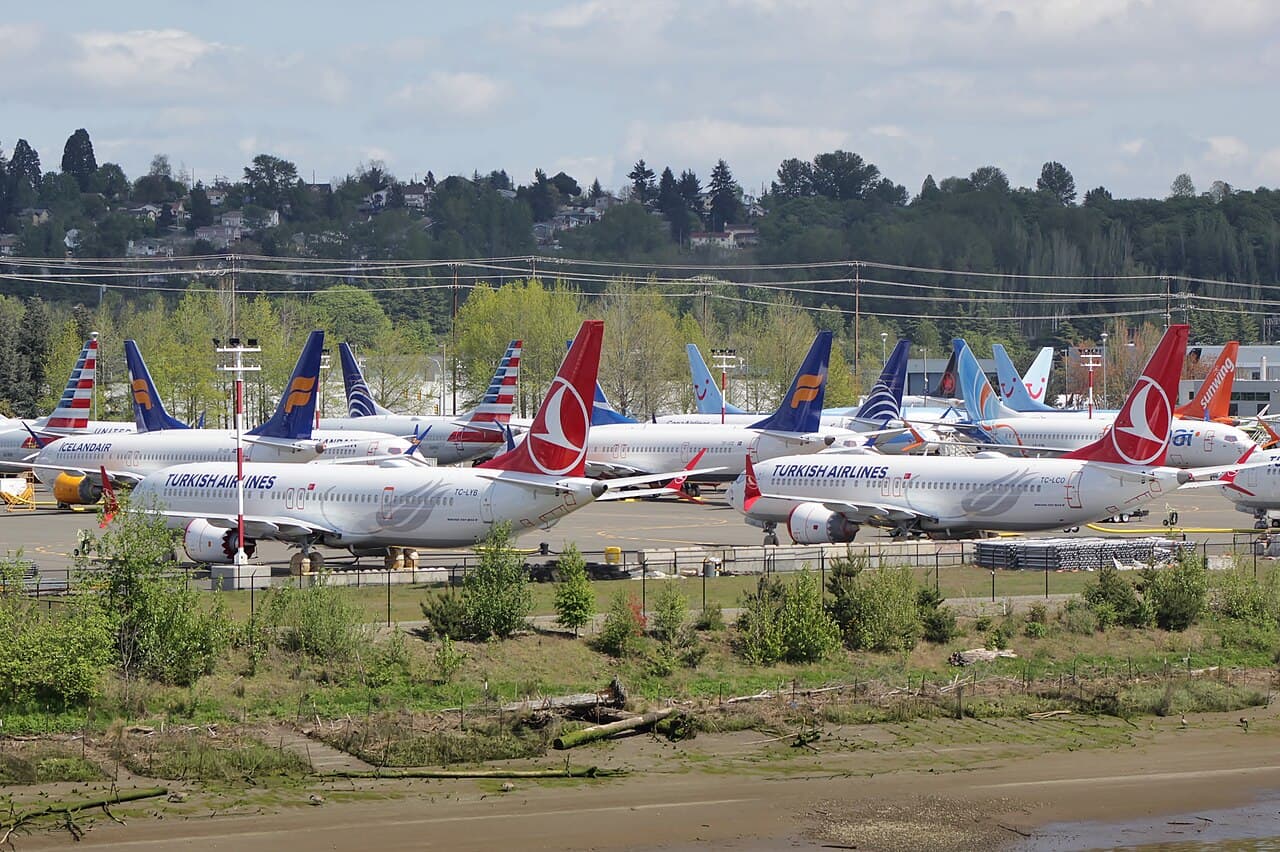
Airline group will keep capacity flat in 2026 but sees strong premium demand and cost-savings for Vueling as it transitions to 737 Max fleet. IAG's operating and net profits fell by a quarter and one-third, respectively, in the April-June period, as a loss-making Aer Lingus and higher fuel costs took a toll. But the group is confident it can deliver a full-year operating margin within its 12-15% target, pointing to the benefits of its transformation programme, "robust" demand, strong balance sheet and recovery of 60% of its additional fuel costs through revenue growth and cost initiatives. IAG's second-quarter operating profit dropped to €1.26 billion ($1.45 billion) from €1.68 billion in the same period last year, while net profit fell to €732 million from €1.13 billion. Revenue stayed relatively flat at €8.88 billion, as fuel costs and emissions charges soared almost 23%. Revenue at IAG Cargo declined 9.4% in the first half, reflecting “reduced capacity resulting from disruption in the Middle East”, says the group. British Airways turned in the strongest performance in the first six months of 2026, with operating profit before exceptional items coming in €61 million higher than the same period last year, reaching €885 million. However, Aer Lingus stood out as the only carrier in the group to report a first-half operating loss. IAG attributes this to "the combination of additional fuel costs and lower passenger revenues linked to competition on North Atlantic routes". Aer Lingus cuts Aer Lingus said earlier this month it would reduce capacity by 6% later this year , axe three US routes and cut jobs amid increased transatlantic competition. Speaking on IAG's first-half earnings call on 31 July, Aer Lingus chief executive Lynne Embleton said she was confident the carrier could eventually reach the group's 12-15% margin goal and attract investment for new aircraft, but it would take time. "As part of this group, if we want investment we need to be at 12-15% as well," says Embleton. "We do believe we can get to the 12% operating margin – some steps are quicker than others. We believe we can take cost action quickly but we believe the impact from things like premium economy and the business investment will take a little longer to come through. "If we can demonstrate that we're getting our house in order and we can get very close to that investable margin then I'd hope that new-generation aircraft would lift us over the hurdle, because there are certainly efficiencies from having new-generation aircraft." She adds: "We do believe we can get there – we don't think it's an immediate solution but there's certainly a pathway that we believe we can give confidence to the group." Vueling prepares to take first 737 Max jets IAG will take delivery of 13 aircraft in the second half of this year – including the first three Boeing 737 Max 8-200 jets that will begin low-cost unit Vueling's transition to an all-Boeing narrowbody fleet . "We are looking forward to the first of 60 737 deliveries to Vueling at the end of the year," said IAG chief executive Luis Gallego during the earnings call. Transitioning to the 737 Max will deliver a "significant" reduction in cost at Vueling, adds Gallego, noting that it will be "the first low-cost carrier in Europe" to offer SpaceX's Starlink in-flight wi-fi service, which will be installed on the new jets. The other aircraft deliveries planned for this year include six Airbus A320neos, six A321neos and two Boeing 787-10s. IAG received three aircraft in the first half of the year – one A320neo and two A321XLRs. It is due to receive the last A321XLR from its firm orderbook "soon", says Gallego, but it holds options on more of the type, and is "considering if we want to have more aircraft and where". Full-year capacity across IAG is expected to be flat, after coming in 0.1% lower year-on-year in the first half as a result of being forced to suspend Middle East routes. "Growth was lower than the original plan of approximately 2.5%, linked to cancellations due to the conflict in the Middle East, together with aircraft availability linked to engines," says IAG. The airline group is seeing some "softness" in the intra-European market, but points to strong premium demand – particularly on transatlantic routes – which is helping it recapture 60% of its additional fuel costs. IAG is 70% hedged for the remainder of this year and 40% hedged in 2027. The group says demand remains "robust" and 57% of its second-half revenue is booked, which Gallego says is "in line with last year".
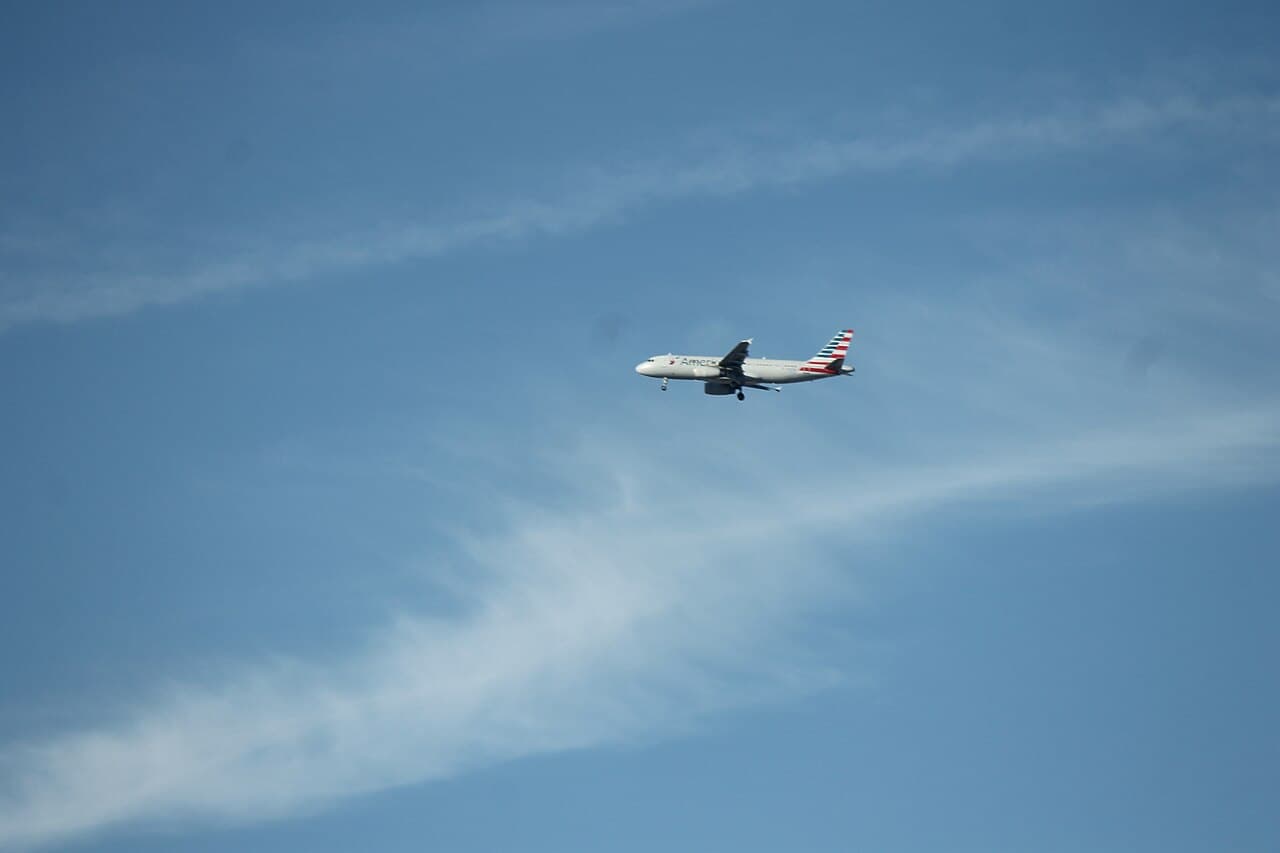
American Airlines Posts Record $16.7B Revenue in Q2 2026 Amid Premium Growth
American Airlines Group Inc. (NASDAQ: AAL) delivered its highest quarterly revenue in company history during the second quarter of 2026. ezstandalone.cmd.push(function () { ezstandalone.showAds(119); }); The airline reported total revenue of $16.7 billion, marking a strong 16.3% increase from the same period last year. This impressive performance highlights the success of its commercial strategy amid rising fuel costs. CEO Robert Isom praised the results. “American delivered year-over-year revenue growth of more than 16% in the second quarter, exceeding our initial expectations,” he said. ezstandalone.cmd.push(function () { ezstandalone.showAds(127); }); The growth came from robust demand and solid execution across the airline’s four key commercial pillars: elevating the customer experience, growing the global network, driving premium revenue, and leading in loyalty. Strong Revenue Growth Across All Segments Revenue momentum was broad-based. Premium cabins outperformed with passenger unit revenue up 13.4%, while Main Cabin unit revenue rose 8.8%. ezstandalone.cmd.push(function () { ezstandalone.showAds(128); }); Domestic passenger unit revenue grew 10.6%, showing a nice rebound. International routes also performed well: Pacific entity unit revenue jumped 15.1%, Atlantic rose 8.9%, and Latin America increased 6.6%. Managed corporate revenue surged 26% year over year. This marks the fifth consecutive quarter of double-digit growth in this important segment. ezstandalone.cmd.push(function () { ezstandalone.showAds(129); }); Overall passenger revenue reached $15.2 billion, up 15.9%. Cargo revenue grew 29.7%, and other revenue increased 17.9%. Capacity grew 5.4% year over year, yet the airline maintained operational resilience. On-time arrival performance improved by 2.8 points, and system misconnections dropped nearly 25% after successful rebanking at its Dallas-Fort Worth (DFW) hub. Unit revenue at DFW outperformed the system average by 4 points. Photo Credit: American Airlines Progress on Four Commercial Pillars Customer Experience American continues to invest in customer experience. Its Net Promoter Score (NPS) improved by 5 points year over year. ezstandalone.cmd.push(function () { ezstandalone.showAds(130); }); The airline plans to install Starlink high-speed Wi-Fi across its fleet starting in 2027. It is also expanding Admirals Club and premium lounges in key hubs like New York (JFK), DFW, Charlotte (CLT), and Miami (MIA). Network Growth Network growth remains a priority. New nonstop routes launched to Budapest and Prague from Philadelphia, and to Athens from DFW. American also resumed service to Caracas from Miami, becoming the first U.S. carrier to return to Venezuela. These moves strengthen its position in premium trans-Atlantic and Latin American markets. ezstandalone.cmd.push(function () { ezstandalone.showAds(131); }); Premium Market Premium seat expansion is underway with new aircraft deliveries and retrofits. This summer, American will offer more premium seats than any other U.S. airline. Updates to bag fees and Basic Economy options helped boost upsell rates from Basic Economy to Main Cabin by 5 points. Loyalty Program The AAdvantage loyalty program showed impressive growth. Enrollments rose more than 30% year over year. Co-branded credit card spend with Citi increased 8% in the quarter. These efforts reinforce customer engagement and premium demand. Photo Credit: American Airlines Fuel Headwinds and Financial Results Higher fuel prices presented a major challenge. Fuel expense surged over $2.2 billion (83%) year over year. Strong revenue performance offset nearly 50% of this increase. ezstandalone.cmd.push(function () { ezstandalone.showAds(132); }); GAAP net income was $71 million ($0.11 per diluted share), while adjusted net income reached $99 million ($0.15 per diluted share). The airline ended the quarter with $11.3 billion in total available liquidity. It completed financings to strengthen its balance sheet and address future maturities. Outlook for the Rest of 2026 American expects revenue momentum to continue. For Q3 2026, it forecasts total revenue growth of 16.0% to 19.0% year over year. ezstandalone.cmd.push(function () { ezstandalone.showAds(133); });  Capacity should grow 3.0% to 5.0%. However, due to elevated fuel prices, the company updated its full-year adjusted earnings per diluted share guidance to a range of ($0.65) to $0.65. CFO Devon May noted ongoing efficiency initiatives. These efforts, combined with revenue strength, position American to expand margins over time despite cost pressures. American Airlines is navigating a complex environment with confidence. Its focus on product improvement, network optimization, premium growth, and loyalty continues to deliver results. ezstandalone.cmd.push(function () { ezstandalone.showAds(134); }); As the airline celebrates its centennial in 2026, these record revenues signal a strong foundation for future success.
The Daily Touch & Go
The day's best aviation news in your inbox. Free, no spam.