

Image: Julian Herzog ( Website ) · CC BY 4.0 · via Wikimedia Commons
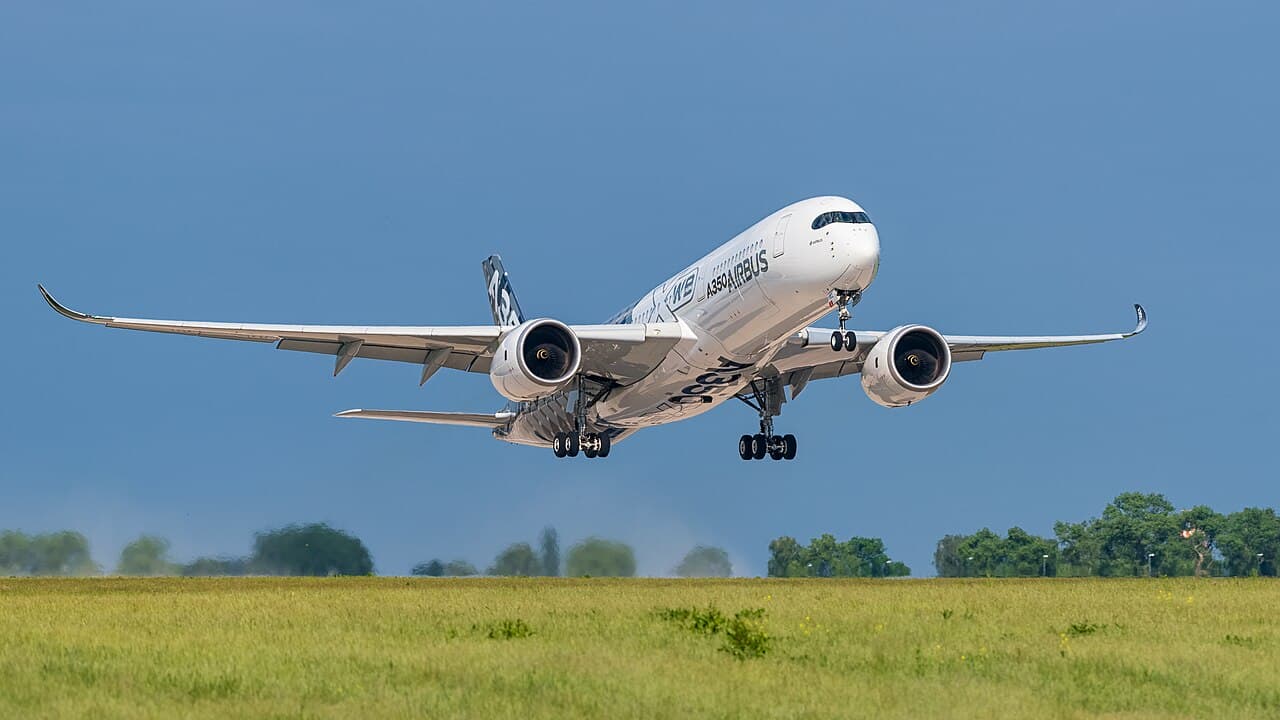
Airbus A350 Freighter Emerges as Significant Competitor to Boeing in Large Cargo Market
Airbus has secured over 100 orders for the A350F, challenging Boeing's previous freight aircraft dominance amid tightening emissions rules and 777X delays.
The gist
Airbus’ A350F freighter breaks Boeing’s hold on the large cargo market with 100+ orders, fueled by new regulations and delivery setbacks for Boeing’s 777X.
Continuing coverage
All Boeing 777x →- Boeing 777X Delays Cost Exceed Entire Airbus A350 Development
- Limited Facilities Worldwide Certified to Service Boeing 777X GE9X Engines at Launch
- GE9X Engine's Mid-Seal Crack Identified, Fix Underway as 777X Nears Certification
- Sydney Airport's Tight Space Requires Boeing 777X to Fold Wings at Gates
- Thai Airways to finalize new long-haul widebody choice within two years
For many years, Boeing’s purpose-built freighter aircraft have dominated the heavy air cargo sector with iconic models like the 747 Freighter and 777F. These aircraft defined cargo airlift for decades, making Boeing the near-monopoly leader in dedicated large freighters. Airbus traditionally lagged behind, struggling to convert its commercial passenger aircraft success into meaningful cargo market share.
That landscape has sharply altered with Airbus’ introduction of the A350F, a freighter variant of the advanced A350 widebody. Building on a composite airframe and next-generation design, Airbus has secured over 100 firm orders from a diverse set of approximately 10 customers. Key operators such as Cathay Pacific, Singapore Airlines, Air France, Martinair, Etihad Airways, Silk Way West Airlines, and recently Air China and Atlas Air have all joined the roster.
This surge is highlighted by Airbus executive comments indicating the company’s rapid ascent from almost no presence in large freighters to capturing nearly half of all new orders in this category. The A350F provides airlines with a fresh alternative to Boeing’s 777X freighter, which has faced significant development and certification delays, slowing its market entry.
Boeing’s dominance, however, remains substantial. The 747-8F family served as the heavy-lift backbone for decades, and the 777F is still widely regarded as the go-to twin-engine option for many operators. Previous Airbus attempts, notably with the A330-200F, never seriously challenged Boeing’s leadership until the A350F program, which is grounded in one of the newest and most efficient widebody platforms.
Crucially, regulatory changes have accelerated Airbus’ opportunity. ICAO’s new CO2 emission standards, effective from 2028, mean legacy freighters like the Boeing 767F and 777F cannot continue indefinite production without costly modifications. Airbus timed the A350F launch to coincide with this pivotal regulatory threshold, positioning it as an emissions-compliant, future-proof solution.
Meanwhile, Boeing’s 777X program delays have drawn attention and resources away from the freighter variant development, giving Airbus a valuable head start to build its freighter reputation and finalize customer orders. The combination of regulatory pressure and product scheduling is reshaping the competitive dynamic in Boeing’s historically quiet cargo fortresses.
From a customer perspective, endorsements from worldwide operators matter greatly. Cathay Group’s commitment to the A350F is especially telling, as it operates a prominent global cargo network. Air China’s order expansion to 10 aircraft underlines the type’s appeal in the world’s two largest airfreight markets. Such commitments validate the A350F as a credible contender, giving airlines practical choices and enhancing negotiation leverage.
The diversity across customers—from large network carriers to dedicated freighter operators, including traditional Boeing clients like Atlas Air—suggests Airbus is not relying on a captive market but genuinely expanding the footprint. This breadth indicates potential for Airbus to sustain and possibly grow its share in the competitive freighter market going forward.
While sales figures demonstrate clear progress, Airbus’ technical enhancements should not be overlooked. The A350F incorporates innovations in fuel efficiency, payload-range balance, and emissions that align tightly with emerging market demands and regulations. This technical competitiveness, combined with timing and strong commercial backing, marks the A350F as a pivotal development in cargo aviation, ending Boeing’s unchallenged supremacy in this sector.
Frequently asked questions
- How many Airbus A350F freighters have been ordered so far?
- Airbus has secured over 100 firm orders for the A350F freighter from 10 different customers worldwide.
- What regulatory changes benefit the Airbus A350F's market entry?
- New ICAO CO2 emissions standards effective from 2028 restrict the production of older freighters like the Boeing 767F and 777F, favoring newer, more efficient aircraft like the A350F.
- Which major airlines have committed to the Airbus A350F?
- Major operators including Cathay Pacific, Singapore Airlines, Air France, Air China, Etihad Airways, and Atlas Air have placed orders for the Airbus A350F.
Read more
All Cargo →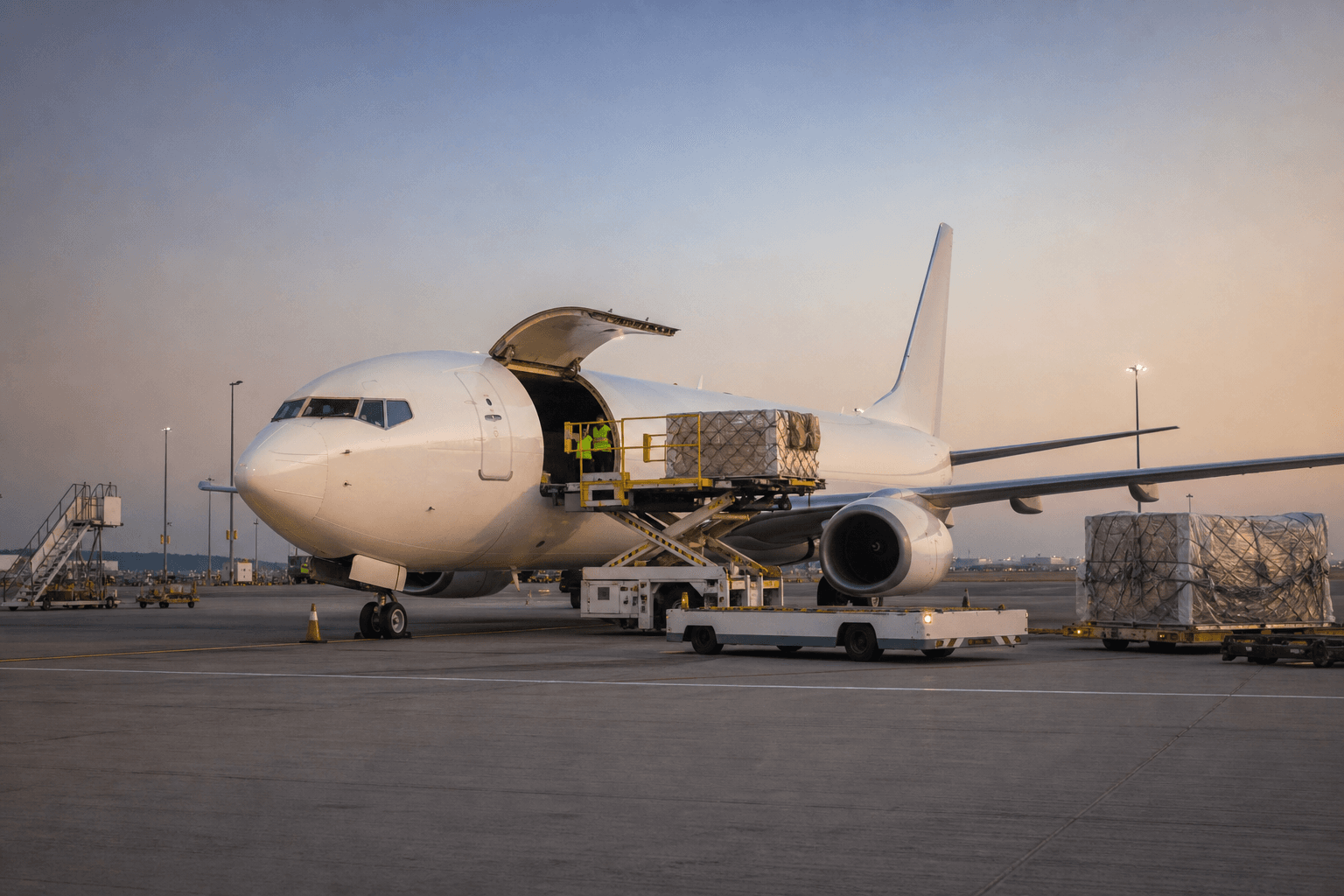
SolitAir Launches Direct Cargo Service Between Dubai and Tianjin to Boost China-UAE Trade
SolitAir, the UAE’s dedicated B2B airport-to-airport cargo airline, has launched a new scheduled route connecting its Dubai World Central (DWC) hub to Tianjin Binhai International Airport (TSN) in northern China. ezstandalone.cmd.push(function () { ezstandalone.showAds(119); }); The move strengthens the carrier’s growing footprint in one of the world’s most important trade markets, building on its successful operations to Hong Kong and Urumqi. The inaugural flight carried a VIP cargo shipment, underlining the route’s focus on secure, reliable, and time-critical air freight solutions. Customers needing fast, tailored transport for high-value or sensitive goods now have a direct and efficient link between the UAE and northern China. ezstandalone.cmd.push(function () { ezstandalone.showAds(127); }); Strategic Gateway in Northern China Tianjin, a bustling port city of 14 million people, ranks among China’s largest industrial and logistics hubs. It serves as the main maritime and air gateway for the Beijing-Tianjin-Hebei economic region, which accounted for 8.5% of China’s GDP in 2025. Tianjin Port is one of the world’s busiest, handling more than 23 million TEUs annually. Meanwhile, Tianjin Binhai International Airport supports advanced manufacturing sectors such as automotive, aerospace, electronics, pharmaceuticals, and high-value industrial equipment. The city also plays a growing role in the Belt and Road Initiative, making it a vital node for international trade. ezstandalone.cmd.push(function () { ezstandalone.showAds(128); }); CEO: “Supporting Evolving Customer Needs” Hamdi Osman, Founder and CEO of SolitAir , highlighted the importance of the new route. “China remains one of the most dynamic growth markets for global trade,” he said. “Adding Tianjin reflects our commitment to meeting our customers’ evolving needs.” “This route gives us direct access to northern China’s vibrant manufacturing and logistics hub while further strengthening the US$111 billion non-oil trade relationship between China and the UAE.” ezstandalone.cmd.push(function () { ezstandalone.showAds(129); }); Rapid Network Expansion The Tianjin launch follows SolitAir’s recent entry into Europe with its inaugural route to Sofia, Bulgaria. Since starting operations in October 2024, the airline has quickly scaled up to 56 routes across 33 countries. This includes a strong 18-city network across Africa. The carrier continues to focus on commercially vital, time-sensitive corridors linking Asia, the Middle East, Africa, and Europe. SolitAir operates a modern fleet of seven Boeing 737-800 BCF freighters. Each aircraft offers a 20-tonne cargo capacity and is well-suited for a wide range of shipments, including dangerous goods, pharmaceuticals, perishables, valuable items, and oversized freight. ezstandalone.cmd.push(function () { ezstandalone.showAds(130); }); The airline’s reliable, versatile aircraft deliver the range and performance needed for demanding routes. Comprehensive Service Offering The airline provides an integrated platform across four key service areas: On-Demand Charters, Tailor-Made Programs, Scheduled Flights, and ACMI Services. This flexible approach allows SolitAir to deliver custom solutions on both high-demand and underserved routes. SolitAir holds several important certifications, including the UAE GCAA Air Operator Certificate (AOC), Dangerous Goods certification, EASA Third Country Operator (TCO) authorisation, United Kingdom Third Country Operator Certificate, and ACC3 designation from the Belgian Civil Aviation Authority. ezstandalone.cmd.push(function () { ezstandalone.showAds(131); }); These approvals ensure secure and compliant cargo operations to and from the European Union. Future Growth Plans Looking ahead, SolitAir aims to expand its fleet to 20 aircraft. The airline operates from a 20,440-square-metre dedicated cargo hub at Dubai World Central (Al Maktoum International Airport), positioning it well for continued growth in global B2B air cargo. The new Tianjin route enhances connectivity for businesses moving goods between key economic centres. It reflects SolitAir’s strategy of linking dynamic markets with dependable, customer-focused air freight services. ezstandalone.cmd.push(function () { ezstandalone.showAds(132); });
China Southern Air Logistics to Add Three Boeing 777-300ER Converted Freighters
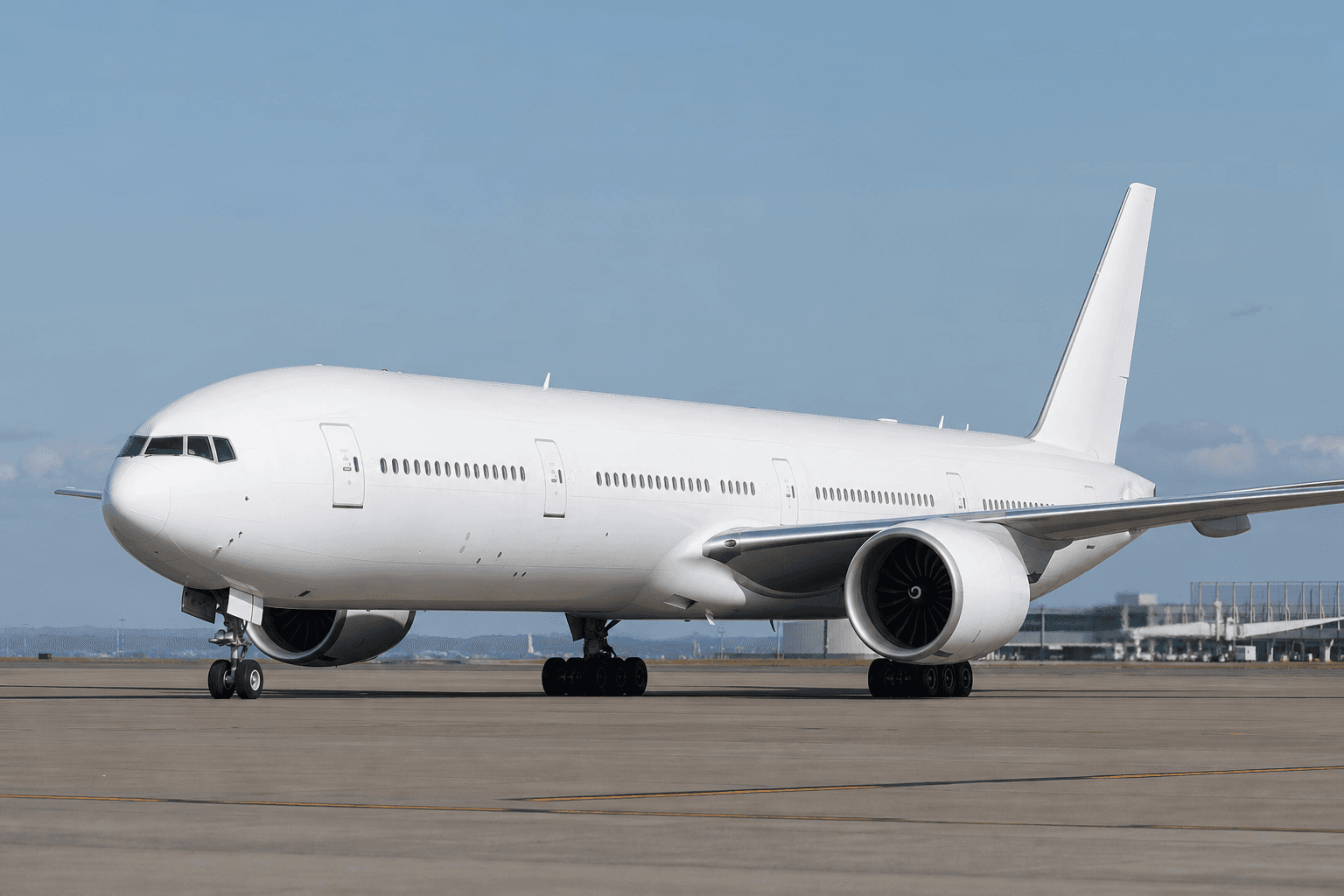
Operator to take IAI-modified twinjets under lease agreement with AerCap. China Southern Airlines has become the latest carrier to commit to introducing converted Boeing 777-300ER freighters. The airline's logistics division has signed a lease agreement for three of the type with Irish-based lessor AerCap. AerCap states that it will deliver the first of the modified twinjets to the Guangzhou-based company in October next year. The remaining two will be handed over in the first and second quarters of 2028 respectively. Designated the 777-300ERSF the aircraft are being converted under a programme partnership between Israel Aerospace Industries and AerCap. "These aircraft will provide strong support for our strategy to expand intercontinental routes, enabling us to deliver superior service to customers worldwide," says China Southern Air Logistics chair Li Xiao. "Introduction of the [777-300ERSF] marks a major milestone in the continued evolution of our fleet." China Southern has cargo hubs at Shanghai and Guangzhou and its cargo fleet includes a dozen Boeing 777Fs and a pair of 747-400Fs. AerCap chief Aengus Kelly says the 777-300ERSFs will "integrate seamlessly" into the Chinese carrier's 777 operation.
National Airlines Expands Fleet with New GE90 and CF6 Engines for Boeing Freighters
GE Aerospace (NYSE: GE) announced on July 23, 2026 that National Airlines has committed to purchase one GE90-110B and six CF6-80C2 engines to power their Boeing 777F/747F cargo airplanes. The GE90 engine family powers all Boeing 777 models and is the exclusive powerplant on the 777-300ER, -200LR, and Freighter. The GE90 engine features several technology […]
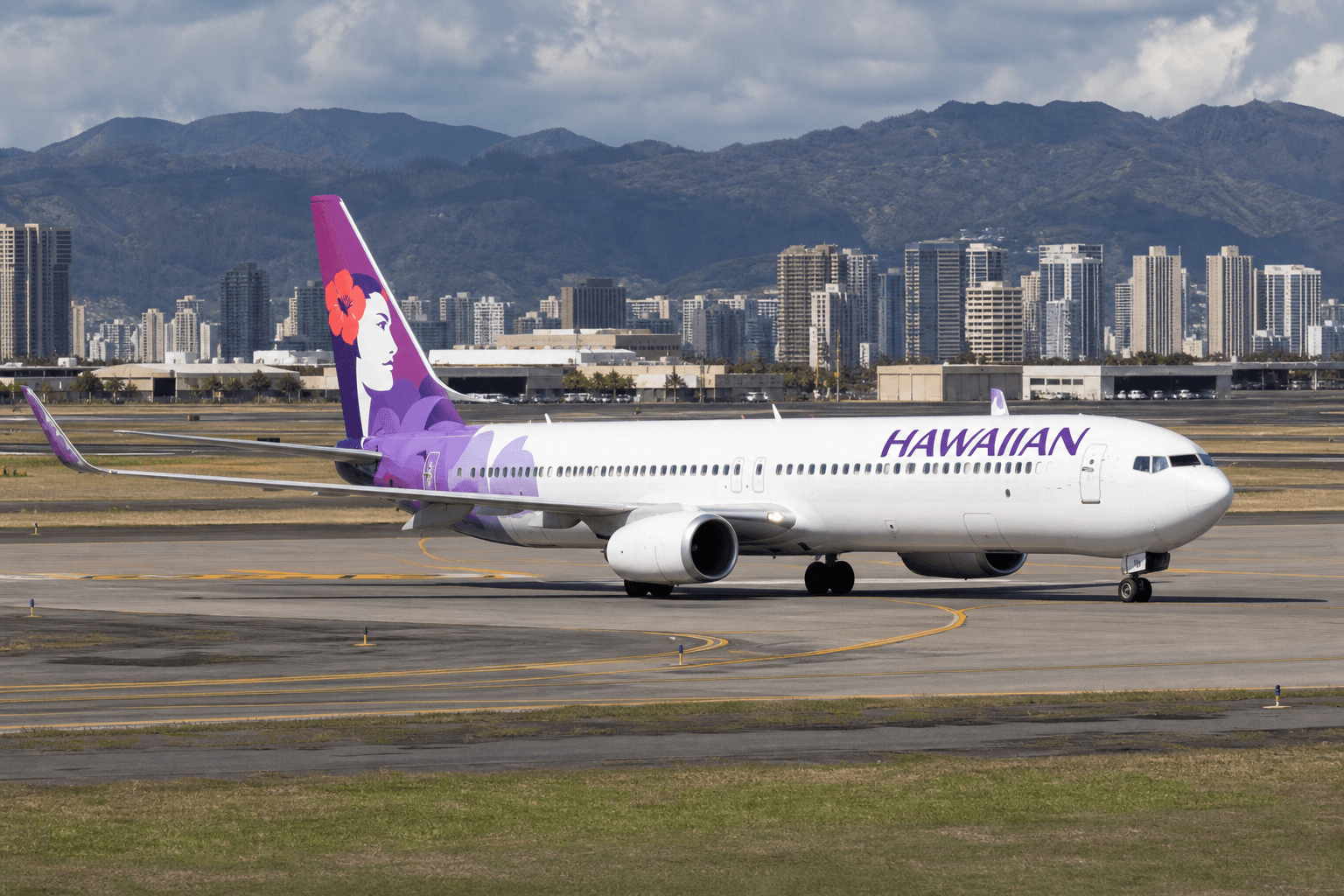
Hawaiian to Replace Aging B717 Fleet with B737-800s for Interisland Service Starting 2028
Who’s excited for a special Wednesday post? Actually, all of you who don’t care about Hawaiʻi should be. I was going to just do this on my regular Thursday, but I figured some of you would kill me if I had another entire week dedicated to the islands. So, enjoy today, and then there will be a non-Hawaiʻi post as usual tomorrow. Hawaiian officially announced yesterday that it will replace its B717 fleet with the B737-800 as first reported by The Air Current , and as we discussed on The Air Show podcast . I had the chance to sit with Hawaiian CEO Diana Birkett Rakow and Head of Hawaiʻi Operations Jim Landers on Tuesday to learn more about the plan. Hawaiian has been in a bind. The B717 fleet has aged noticeably over the last couple of years, requiring more downtime and maintenance work. Temporarily expanding that fleet was considered a non-starter, and so the interisland operation has suffered. There have been operational issues, and the only solution was to pull down the schedule to give the existing fleet more of a breather. The problem has become so acute, especially in the middle of the day, that Hawaiian is putting a temporary solution into place. Starting this October, Alaska — not Hawaiian — will fly three daily roundtrips between Honolulu and Kahului (Maui) on a B737 that will rotate back into the mainland fleet. Since this is Alaska-branded, there will be no pog juice or any Hawaiian-style service. This is simply a band-aid until they can bring the real solution into place. That will start in 2028 when the first B737-800 painted in the Hawaiian livery and with Hawaiian-branded service will enter the fleet. The full timeline for the retirement of the B717 has not been determined, but this will not be drawn out. They just don’t have all the answers yet. Rendering via Hawaiian For example, we don’t yet know how many of these airplanes will enter the Hawaiian fleet. They need to figure out exactly how many flights at what time of day they need to operate with these higher-capacity aircraft, so they will back into the exact number later. That’s easy to do when you have a whole fleet of -800s at Alaska today that gives flexibility, but I was assured that this will continue to be a high-frequency operation the same way it is today. And when asked if all interisland routes that operate today would continue to be flown with these bigger airplanes, Diana responded, “I don’t see us pulling out of any of those markets” What will these look like on the inside? If you’ve been on an Alaska -800 today, it will be pretty similar. Those airplanes just had a full refresh, so the configuration will remain the same with 16 First Class, 30 Premium Class (extra legroom), and 115 in coach for a total of 161 onboard. While none of that will change, the color schemes onboard will, including the bulkheads and seat covers. This will look like a Hawaiian-branded airplane. This means the interisland experience will be better in several ways. Most notably, these airplanes will have an extra inch of pitch in coach, a full extra legroom section, and double the number of First Class seats onboard compared to the 128-seat B717. The reality is that with 33 more seats on the airplane, they don’t need to try to squeeze more capacity into the aircraft, so they can make it a little more comfortable. The bigger First Class cabin and new Premium class also means improvement for elites who will have more upgrade opportunity, but it also means more seats are available in general. Diana said, “a lot of guests really do purchase First Class.” First Class is also helpful for paid connectors in First Class, especially those from Japan and Australia who have to funnel via Honolulu before going to another island. Diana and Jim highlighted a lot more about the improved onboard experience including power outlets and Starlink onboard, but who really cares when your longest flight is less than 45 minutes? I suppose it’s still a nice bonus, especially for the local business traveler. But ultimately, this is just something they’re going to milk since it’s already on the fleet at Alaska today. The Decision I was most curious about how they arrived at the -800 as the right airplane, and Jim gave some really helpful context since he was at Hawaiian before the merger. He explained that while “there isn’t another perfect 128-seat tank being built,” it was a previous generation narrowbody which seemed to be the best fit. Pre-merger Hawaiian was circling its efforts on a second-hand fleet of either A319ceo or A320ceo aircraft since it would give more commonality with the Airbus fleet. Now that Hawaiian is part of Alaska, the decision tipped in favor of a B737 fleet instead, but it’s for the same basic reason… engines. New generation Pratt & Whitney GTF or GE LEAP engines just don’t work well for short, frequent hops. I did ask about the Embraer 195 E1 which uses engines from that generation, but the combination of already having the -800s in the fleet and wanting more capacity made the -800 a no-brainer, especially in the middle of the day when they don’t have enough capacity now They would rather have bigger planes with enough capacity during the peak and then fly with more empty seats in off-peak. I did ask if this meant the A321neo was not long for the fleet, Diana said that wasn’t the case. As she explained it, “we are maximally using every airplane we have at our disposal right now, we want all those airplanes.” What to do with the A321neos is something for much further down the line. The Added Bonus These airplanes will be based in Honolulu and will be flown only within the islands… usually. There is an added bonus of having this fleet in the same configuration it is in now, and that is the ability to sub the airplanes on to mainland routes if needed. This isn’t going to be something that’s scheduled, but what if a plane breaks in Honolulu? In my view, they don’t need to have significant spare capacity for the mainland fleet, because they can press a -800 into service if needed and maintain the schedule. They have yet to figure out how training and maintenance and all that will be handled, and that’s going to make some Honolulu-based employees a little anxious. But Diana did point out that Alaska just opened a new global training center in Renton outside Seattle. I would be surprised if that’s not where primary training happens which would obviously be a change from how training is done on the B717 fleet. Maintenance functions will, of course, be significant in Honolulu, but they don’t know what the plan is for heavy checks yet. Or at least, they aren’t ready to talk about it. While this will make some people anxious, Diana did say, “we intend to keep a strong headquarters [in Honolulu] with training and front line resources.” The Cargo Angle Also announced yesterday was that Alaska Air Cargo will expand from five to nine aircraft , and at least some of those airplanes will be branded Hawaiian Air Cargo and will be based in Honolulu to fly between the islands. The exact split isn’t yet ready to be announced, but they will start flying in the first half of 2027. Rendering via Hawaiian Hawaiian hasn’t had a dedicated cargo fleet in nearly a decade. Back then, it leveraged the ATRs that were flying to Molokai and Lānaiʻi to bring in some cargo-only aircraft to fly between the bigger stations. Jim was there for that, and I actually met with him in 2018 to learn more about the operation. But the pandemic brought big issues. With reduced jet flying, the outsourced passenger ATRs had to be grounded to avoid busting the pilot contract. In the end, Hawaiian decided the operation just wasn’t worth it, so it shut the whole thing down. Now, Jim is bullish once again. He
The Daily Touch & Go
The day's best aviation news in your inbox. Free, no spam.