

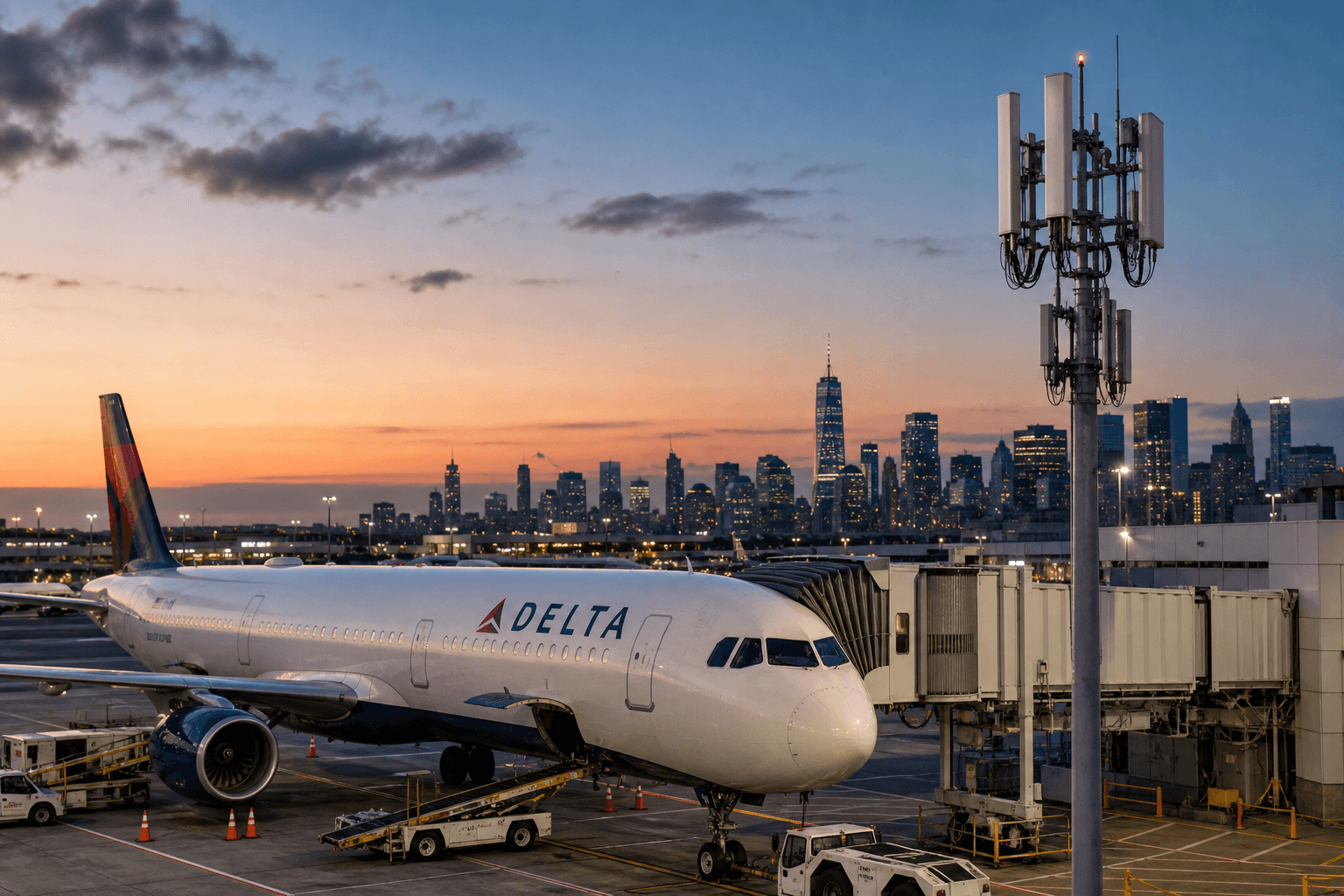
Illustration: The Touch & Go
FAA to Mandate 5G-Compatible Altimeter Upgrades with Cellular Industry Rebate Support
The FAA plans a new rule mandating US aircraft to update radio altimeters to prevent 5G interference, with telecom firms expected to share upgrade costs.
The gist
FAA will mandate altimeter updates to counter 5G interference, with cellular providers helping cover expenses for aircraft operators.
The Federal Aviation Administration (FAA) is preparing to issue a new regulation that will require all radio altimeters on US-registered aircraft to be updated to prevent safety issues caused by interference from 5G wireless transmissions. This step comes amid ongoing concerns that current altimeter systems could be disrupted by signals from the newly deployed 5G cellular networks operating near aviation frequency bands.
While the mandate will impose costs on aircraft operators needing to retrofit or replace their altimeters, an industry-backed mechanism is being developed to provide rebates to ease this financial burden. The FAA has indicated that cellular companies, whose deployment of 5G services correlates with the need for these updates, will be responsible for contributing to the funding of these rebates.
Radio altimeters are critical for safe aircraft operations, providing precise altitude measurements above ground level, particularly during low-visibility approaches and landings. With 5G networks expanding across the United States using frequencies adjacent to those used by radio altimeters, the potential for electromagnetic interference raised safety alarms and prompted regulatory action.
This forthcoming FAA rule builds on extensive technical evaluations and stakeholder consultations aimed at mitigating the risk without hindering the nationwide rollout of advanced wireless infrastructure. Aircraft operators will have a defined timeline to comply, and the rebate program is expected to be administered in coordination with the cellular industry to balance safety and economic impacts.
The approach signals a cooperative effort between aviation and telecommunications sectors to resolve spectrum-sharing challenges that have implications for both air safety and connectivity. As 5G continues to proliferate globally, the FAA's leadership in adopting these mitigation measures could set a precedent for other regulatory bodies balancing innovation with operational safety.
Looking forward, fleet managers and OEMs will need to plan for equipment upgrades while monitoring the implementation of the rebate program closely. The progress of this mandate will be critical for maintaining secure integration of emerging wireless technologies with legacy aviation systems.
Read more
All Aviation Safety →
New cockpit systems aim to prevent 'impossible turn' accidents in general aviation
In the high-stakes cockpit environment, the margin between safety and disaster is measured in seconds and feet.

FAA restricts select US aircraft operations in Canada over 5G interference concerns
The FAA estimates its newly issued airworthiness directives will affect 1,000 US-registered aircraft. Some US transport aircraft will face operating restrictions in Canada starting on 1 July. That is according to the US Federal Aviation Administration, which on 30 June published several airworthiness directives (ADs) in response to concern that 5G cellular signals near Canadian…

Flight Instructor Candidates Learn Crucial Laws of Learning to Enhance Training Safety
Flight instructor candidates are typically taught a few fundamentals of education theory, including the laws of learning: readiness, exercise, effect, primacy, intensity, and recency.

S7 Airlines Boeing 737-800 overruns Mirny runway days after first officer landing ban
S7 Airlines' Boeing 737-800 overran the runway at Mirny just days after the carrier restricted first officers from landing aircraft.
The Daily Touch & Go
The day's best aviation news in your inbox. Free, no spam.