

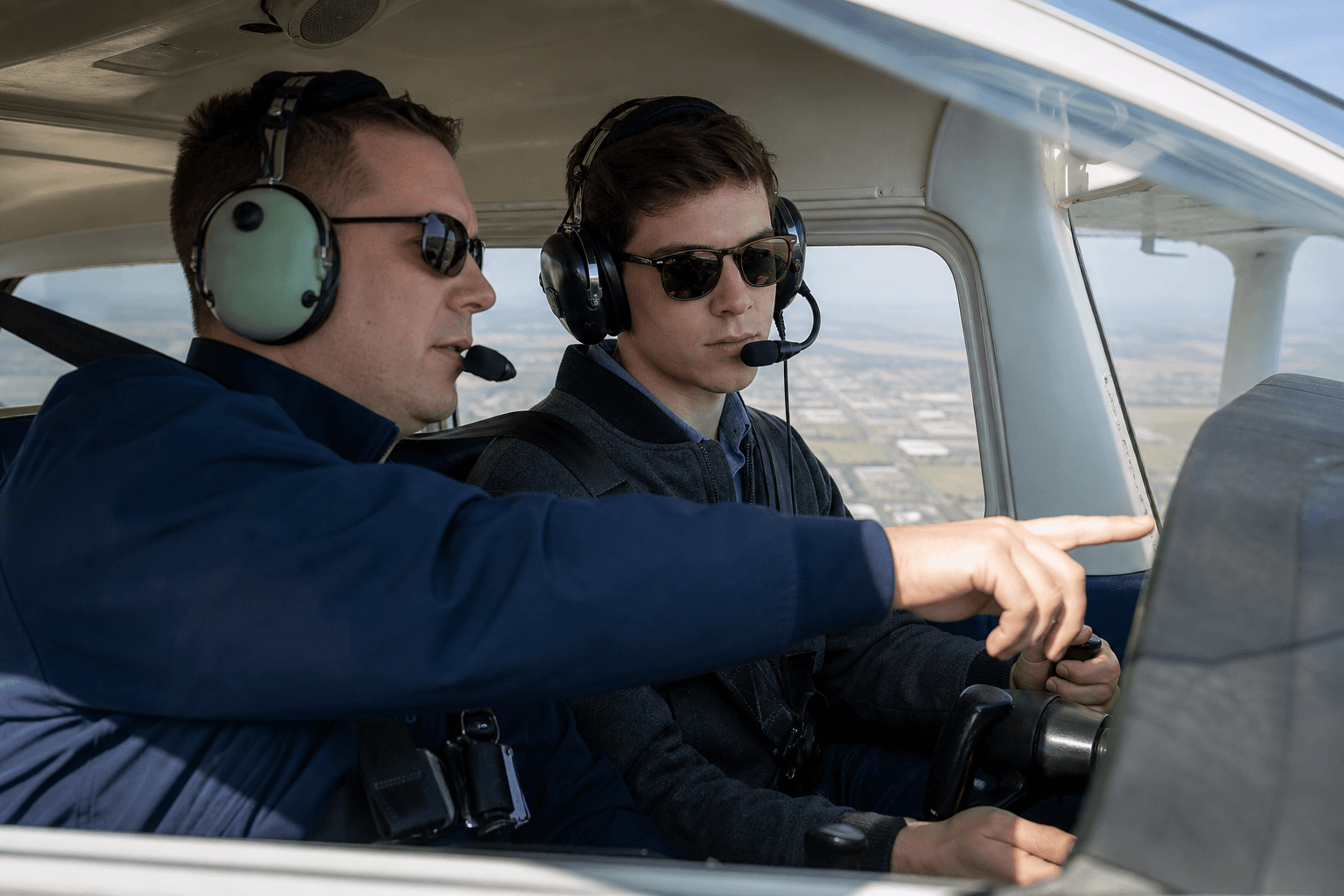
Illustration: The Touch & Go
Flight Instructor Candidates Learn Crucial Laws of Learning to Enhance Training Safety
Flight instructors in training are introduced to foundational education theories like readiness, exercise, effect, primacy, intensity, and recency to improve teaching effectiveness and flight safety.
The gist
New flight instructors master key learning principles to boost training quality and aviation safety.
Prospective flight instructors receive training beyond just flying skills; they are taught essential education theories that underpin effective instruction. Central to their preparation are the well-established laws of learning, which include readiness, exercise, effect, primacy, intensity, and recency. These principles help instructors understand how students absorb, retain, and apply flight training material.
The law of readiness emphasizes that learners must be mentally and physically prepared to acquire new knowledge, which is critical in complex and high-stakes environments like aviation. Exercise relates to the repetition necessary for mastering maneuvers, while effect highlights the role of positive or negative outcomes in reinforcing learning. Primacy focuses on the importance of initial learning impressions, and intensity involves engaging learners with vivid or meaningful experiences to strengthen memory.
Recency, the last of the laws, asserts that the most recent learning experiences are recalled best, guiding instructors to structure lessons that conclude with significant takeaways. By embedding these principles into their teaching methods, flight instructor candidates can foster more efficient and safer flight instruction.
Understanding these educational foundations is vital because flight training combines cognitive, psychomotor, and affective skills that directly impact operational safety. Effective application of the laws of learning ensures students not only grasp maneuvers but also retain safety protocols and decision-making processes critical for safe flying.
As aviation safety standards evolve, integrating these proven pedagogy concepts into flight instructor curricula supports the development of highly competent pilots. Monitoring how these laws influence training outcomes may help flight schools refine programs to enhance overall flight safety worldwide.
Read more
All Aviation Safety →
S7 Airlines Boeing 737-800 overruns Mirny runway days after first officer landing ban
S7 Airlines' Boeing 737-800 overran the runway at Mirny just days after the carrier restricted first officers from landing aircraft.

China Grounds Light Sport Aircraft After Fatal CITIC Tower Collision
The pilot was killed and 13 people were injured after a light sport aircraft hit CITIC Tower in Beijing's central business district.

Malaysia Airlines MH370 search extended to 2027, over 12 years after disappearance
Malaysia extends the MH370 search until 2027, giving Ocean Infinity another year to solve aviation's biggest mystery and bring closure to families.

Malaysia extends deep-sea search for MH370 wreckage with $70 million Ocean Infinity contract
Deep-sea hunt specialist Ocean Infinity to be paid $70 million if it locates crash site of missing 777-200ER. Malaysia's government is extending the duration of a deep-sea search for the wreckage of a missing Boeing 777-200ER, lost in the Indian Ocean more than 12 years ago. The Malaysia Airlines aircraft, operating flight MH370, disappeared en…
The Daily Touch & Go
The day's best aviation news in your inbox. Free, no spam.