


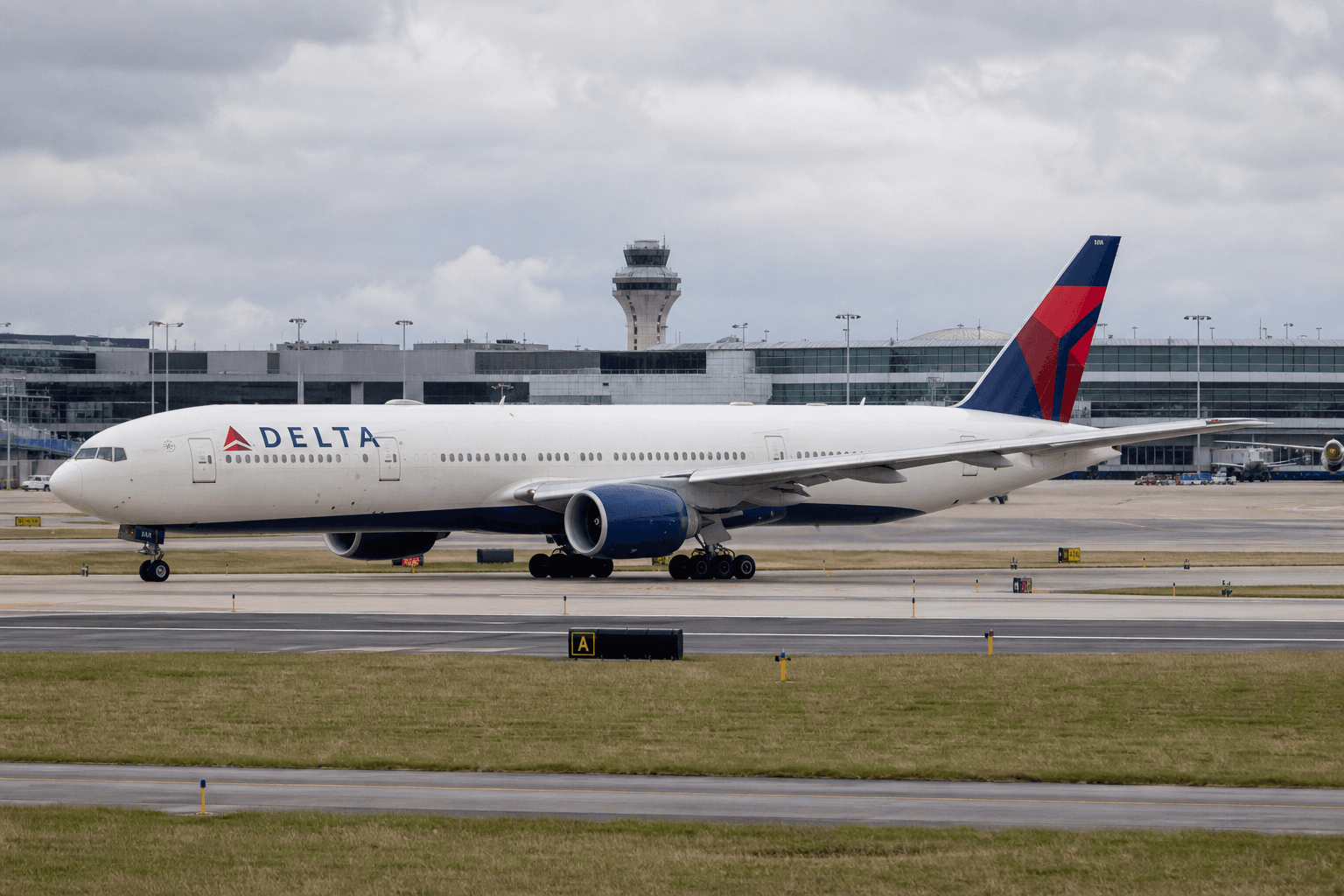
Image: Johnnysast at English Wikipedia · Public domain · via Wikimedia Commons
Court Blocks DOT's Move to End Delta-Aeromexico Joint Venture over Inconsistent Standards
Eleventh Circuit Court vacates the Department of Transportation order dissolving the antitrust-immunized joint venture between Delta Air Lines and Aeromexico, citing inconsistent rationale and double standards.
The gist
A federal court overturned DOT’s breakup of Delta-Aeromexico JV due to inconsistent regulatory reasoning, allowing the partnership to continue.
Continuing coverage
All Delta Air Lines →- Delta Air Lines Holds Steady on Elite Status Thresholds but Cuts Complimentary Upgrade Access in 2026
- Delta CEO Sees 50% Profit Boost from AI-Powered Pricing and Operations
- US Appeals Court Reinstates Delta-Aeromexico Joint Venture after DOT Block
- Delta CEO Aims for Elite Global Status, But Operational Issues Undermine Claims
- Seven Passengers Sue Delta After Low-Speed Collision with Japan Airlines 787 at Seattle
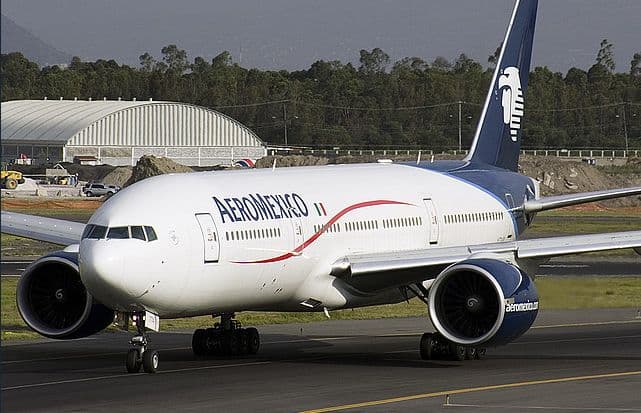
The Eleventh Circuit Court of Appeals has reversed the U.S. Department of Transportation’s order aimed at breaking up the joint venture partnership between Delta Air Lines and Aeromexico. The court vacated the DOT’s decision, allowing the two carriers to maintain their antitrust-immunized joint venture, which enables coordination of schedules, pricing, capacity, and revenue sharing. While the court did not rule on the merits of competition or consumer benefits, it emphasized that the DOT failed to sufficiently justify its inconsistent approach in withdrawing approval for the partnership.
Originally authorized in 2016, the DOT granted the Delta-Aeromexico joint venture with conditions including the surrender of 24 slot pairs at Mexico City's main airport and four at New York JFK. This approval had a five-year term which was extended through the COVID-19 pandemic to accommodate the agency’s ongoing review. Over time, DOT’s assessment evolved, focusing on altered competitive dynamics, particularly concerning Mexico City.
DOT’s subsequent review identified deteriorating market conditions in Mexico. It pointed to Mexican authorities’ withdrawal of slots affecting U.S. airlines and an opaque slot allocation process at Mexico City’s primary airport. Additionally, cargo operations were shifted to a new airport, complicating access for U.S. carriers. DOT argued that Delta and Aeromexico had consolidated dominant market shares, controlling nearly 60% of passengers and 73% of cargo traffic between Mexico City and the United States.
However, the court found a critical inconsistency in DOT’s market definition. When initially approving the joint venture, DOT considered competition across approximately 1,687 city pairs between the U.S. and Mexico. Conversely, the withdrawal of approval emphasized Mexico City specifically, which accounts for only about 21% of flights. This shift in market focus, the court noted, was not adequately explained, violating administrative law standards.
A significant point in the court’s decision revolved around the DOT’s assertion that fully implemented Open Skies agreements are required for approving antitrust immunity. While applying this standard to Mexico, DOT simultaneously allowed other notable joint ventures like American Airlines-Japan Airlines and United Airlines-ANA despite Tokyo Haneda Airport having restricted slot availability and limited cargo freedoms. This contradictory application undermined DOT’s rationale, highlighting a lack of consistent criteria governing what constitutes adequate Open Skies compliance.
Delta's preferential access to Tokyo Haneda slots among U.S. carriers underscores this double standard. The same agency that granted such privileges in Japan sought to restrict competition in the U.S.-Mexico market where conditions are less liberalized. Traditionally, Open Skies agreements have underpinned U.S. policy on international joint ventures, yet DOT’s handling of these cases exposed an unclear threshold for 'open enough' markets, calling into question its policy coherence.
The jurisdiction for granting antitrust immunity over international airline joint ventures traces back to the Civil Aeronautics Board era, when such exemptions were used to facilitate coordinated airline operations despite anti-competitive concerns. The joint venture model emerged prominently in the 1990s with carriers like Northwest and KLM, where legal ownership limits were circumvented by treating partners as a single enterprise for marketing and scheduling purposes. Delta holds an 18.7% stake in Aeromexico, exemplifying the depth of their partnership.
While DOT outright blocked other partnerships, such as Allegiant's proposed joint venture with Viva Aerobus—partly due to views on Mexican protectionism and lack of direct overlapping service routes—the Delta-Aeromexico case shows the agency’s uneven enforcement. The Contradiction lies in that a deal potentially increasing competition was rejected, while a dominant joint venture was allowed to persist without a clear, principled basis for differing treatment.
The court ruling leaves the door open for the DOT to reassess Mexican slot allocation and Open Skies compliance issues rigorously, but requires a clearer and more consistent legal and economic argument. The decision underscores the necessity for the DOT to apply uniform standards across international markets and to clarify its policy thresholds for joint venture approvals and the role of Open Skies agreements in those decisions.
Frequently asked questions
- Why did the court overturn the DOT's order against the Delta-Aeromexico joint venture?
- The court found that the DOT changed its rationale and market definitions inconsistently when trying to end the joint venture, failing to provide adequate administrative justification.
- What inconsistencies did the DOT show in its treatment of international joint ventures?
- DOT allowed joint ventures in markets like Japan with restricted slot access and cargo limits despite claiming full Open Skies compliance was necessary to approve immunity, unlike the stricter stance on Mexico.
- What impact does this ruling have on the Delta and Aeromexico partnership?
- The ruling permits the continued operation of their antitrust-immunized joint venture, enabling coordinated schedules, pricing, capacity, and shared revenue.
Read more
All Airlines →
Delta Air Lines Holds Steady on Elite Status Thresholds but Cuts Complimentary Upgrade Access in 2026
The upgrade landscape for Delta Air Lines elite members in 2026 is defined by a paradox: while key loyalty perks are improving on paper, actually securing a seat in First Class through complimentary upgrades has never been more difficult. With Medallion Qualifying Dollar (MQD) thresholds holding steady at 5,000 for Silver, 10,000 for Gold, 15,000 for Platinum, and 28,000 for Diamond, Delta is offering stability in how status is earned.

Delta CEO Sees 50% Profit Boost from AI-Powered Pricing and Operations
Delta CEO Ed Bastian says artificial intelligence could increase profits 50%. The airline's plans point toward fewer office jobs, automated decisions and different fares for individual passengers.
Delta CEO Aims for Elite Global Status, But Operational Issues Undermine Claims
Ed Bastian wants Delta mentioned with Singapore Airlines and the best Asian and Middle Eastern carriers. Delta has a brand, but product consistency and service still fall short and once-vaunted reliabiltiy has faltered.
Global airlines report diverse operational updates on August 19, 2026
Top airline news stories for August 19, 2026 are affecting these airlines (click the link for the full details): Bamboo Airways SereneAir National Airlines Aeromexico ANA Japan Airlines Sky Alps Europe TUI Airlines (Netherlands) Air Arabia (UAE) Korean Air
The Daily Touch & Go
The day's best aviation news in your inbox. Free, no spam.