

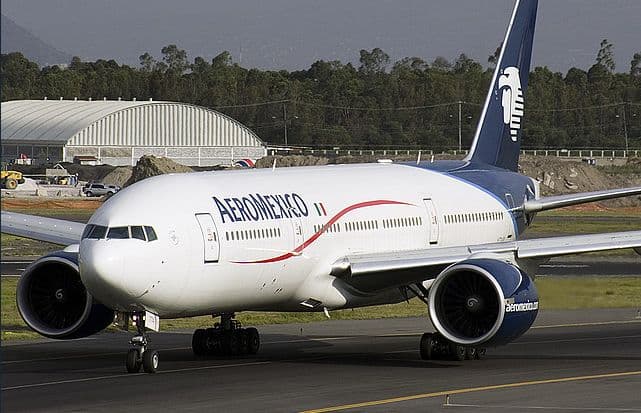
Image: Johnnysast at English Wikipedia · Public domain · via Wikimedia Commons
US Appeals Court Reinstates Delta-Aeromexico Joint Venture after DOT Block
The US Court of Appeals overturned the Trump-era decision banning the Delta Air Lines and Aeromexico partnership, citing arbitrary government action and unequal standards.
The gist
A federal appeals court reversed the Trump administration’s block on Delta and Aeromexico's joint venture, restoring a decade-long cooperation.
Continuing coverage
All Delta Air Lines →- Delta CEO Sees 50% Profit Boost from AI-Powered Pricing and Operations
- Delta CEO Aims for Elite Global Status, But Operational Issues Undermine Claims
- Seven Passengers Sue Delta After Low-Speed Collision with Japan Airlines 787 at Seattle
- LATAM A320 aborts takeoff at São Paulo as American and Delta jets cross runway amid fog
- Delta Orders 16 High-Cabin Airbus A330-900neos With 56 Delta One Suites Each
On August 20, 2026, the US Court of Appeals issued a decisive ruling overturning the Department of Transportation's (DOT) 2025 order that effectively dismantled the joint venture between Delta Air Lines and Aeromexico. The court determined that the DOT's action was arbitrary and capricious, reinstating the cooperative travel program between the two carriers. This decision marks a significant win for Delta and Aeromexico, who had challenged the government's attempt to sever their decade-old alliance. The partnership, crucial to cross-border travel between the United States and Mexico, had been under threat after the Trump administration raised competition concerns related to the collaboration.
The Delta-Aeromexico joint venture, originally approved and granted antitrust immunity by the DOT in 2016, allows the airlines to coordinate schedules, pricing, and revenue sharing on routes connecting the US and Mexico. This legal protection facilitates integrated operations as if the two carriers were a single airline for transborder flights. The DOT's 2025 block was justified on grounds that Mexico had allegedly violated bilateral Open Skies agreements by restricting cargo flights to Mexico City’s Benito Juárez International Airport (MEX). This moratorium on cargo operations, following a rerouting mandate to Angeles International Airport (NLU), was deemed anti-competitive by US regulators and used to justify dismantling the joint venture.
However, the 11th Circuit Court of Appeals challenged the DOT’s rationale, highlighting inconsistencies in how the agency applied its competition analysis. Historically, the DOT evaluates airline alliances by scrutinizing the full country-to-country market, but in this case, it focused narrowly on operations centered around MEX airport. The appeals court found this approach flawed, noting the DOT failed to justify the significantly more restrictive market analysis compared to other similar alliances, such as United Airlines’ partnership with All Nippon Airways (ANA) in Japan.
The DOT had claimed that Delta and Aeromexico controlled 60% of the market share at MEX, suggesting a monopoly fostering collusion. Yet flights through MEX only represent 21% of total US-Mexico air traffic, meaning the agency disregarded 79% of relevant market data. The court criticized this selective use of statistics, confirming that the DOT’s case rested on cherry-picked numbers that distorted the competitive landscape. Legal experts point to this as evidence that the DOT's decision was politically motivated rather than based on sound economic reasoning.
Further undermining the DOT’s position was the agency’s simultaneous public criticism of former President Joe Biden and former Transportation Secretary Pete Buttigieg for their management of the bilateral agreement. The court noted that this inflammatory rhetoric did not substitute for a rational, data-driven justification for blocking the alliance. This political context, coupled with the inconsistent treatment compared to the United-ANA joint venture, strengthened the court’s finding that the DOT acted without proper cause.
The comparison with the United-ANA partnership was particularly telling. Tokyo’s Haneda Airport (HND), like Mexico City’s MEX, suffers from strict slot controls and operational restrictions, yet the DOT approved that alliance without issue. The appeals court found the DOT had not adequately explained why similar airport limitations produced vastly different regulatory outcomes. This lack of logical consistency was a central basis for overturning the block on the Delta-Aeromexico joint venture.
The reinstatement of the alliance is significant for the US-Mexico air travel ecosystem. Since its inception, the joint venture has served over 50 million passengers, operating approximately 30,000 cross-border flights annually across more than 20 routes. It generates roughly $3.5 billion in yearly revenue, underscoring its economic importance. Airlines, airport operators, and travelers stand to benefit from the restored stability and coordination that the partnership enables.
This ruling allows Delta and Aeromexico to resume coordinated scheduling, pricing, and revenue-sharing arrangements without interference. It brings certainty back to cross-border aviation markets, which are vital corridors for commerce and tourism between the two nations. The court’s decision also sets a precedent limiting politically-driven regulatory actions that fail to apply objective competitive analyses consistent with past practice.
With the joint venture restored, Delta and Aeromexico can focus on sustaining and potentially expanding their collaboration. This should improve connectivity and service quality on key routes connecting major US hubs with Mexico City and other Mexican airports. The decision highlights the critical role of judicial oversight in ensuring fair and balanced enforcement of aviation competition policies.
Frequently asked questions
- Why did the US Department of Transportation originally block the Delta and Aeromexico joint venture?
- The DOT blocked the joint venture in 2025 citing a violation of the bilateral Open Skies agreement due to Mexico's moratorium on cargo flights at Mexico City's airport, which the DOT viewed as anti-competitive against US carriers.
- What did the court find wrong with the DOT's decision to block the partnership?
- The court found the DOT acted arbitrarily by focusing only on limited market data at Mexico City airport, ignoring the broader US-Mexico air traffic, and applying inconsistent standards compared to similar alliances like United and ANA.
- What is the significance of the court ruling for the Delta-Aeromexico partnership?
- The ruling restores the decade-old joint venture, allowing the airlines to resume coordinated operations across 20+ routes, benefitting over 50 million passengers and supporting $3.5 billion in annual revenue from cross-border flights.
Read more
All Airlines →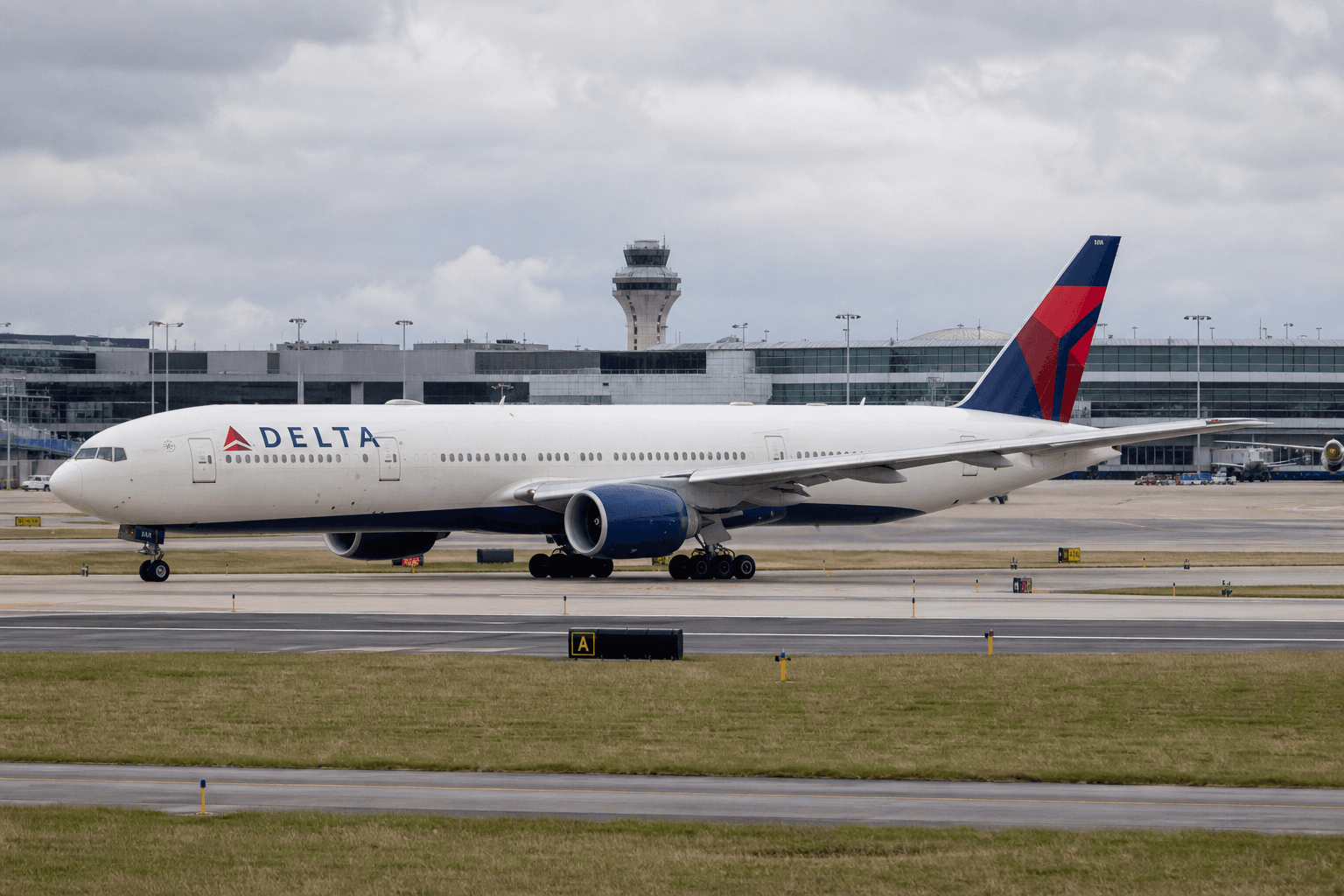
Delta CEO Aims for Elite Global Status, But Operational Issues Undermine Claims
Ed Bastian wants Delta mentioned with Singapore Airlines and the best Asian and Middle Eastern carriers. Delta has a brand, but product consistency and service still fall short and once-vaunted reliabiltiy has faltered.
Global airlines report diverse operational updates on August 19, 2026
Top airline news stories for August 19, 2026 are affecting these airlines (click the link for the full details): Bamboo Airways SereneAir National Airlines Aeromexico ANA Japan Airlines Sky Alps Europe TUI Airlines (Netherlands) Air Arabia (UAE) Korean Air
Delta Orders 16 High-Cabin Airbus A330-900neos With 56 Delta One Suites Each
Delta Air Lines' newest batch of Airbus A330-900neos will be fitted with 56 Delta One Suites, almost double the number fitted to the aircraft the carrier flies today. 16 examples of the 'high J' configuration were ordered in January and will complement Delta's existing fleet of 39 A330neos and more than 40 previous-generation A330s.
Airbus A350-1000 Outsizes Boeing 787-10 with Greater Length, Capacity, Range
The Airbus A350-1000 is the bigger, longer-range rival to the largest Boeing Dreamliner, the 787-10. While both are modern, fuel-efficient widebody aircraft with advanced composite airframes, the A350-1000 is a larger machine designed for high-demand, ultra-long-haul routes. When it comes to widebody jets, size matters, and the European airliner has the American plane beaten across the board on this front.
The Daily Touch & Go
The day's best aviation news in your inbox. Free, no spam.