

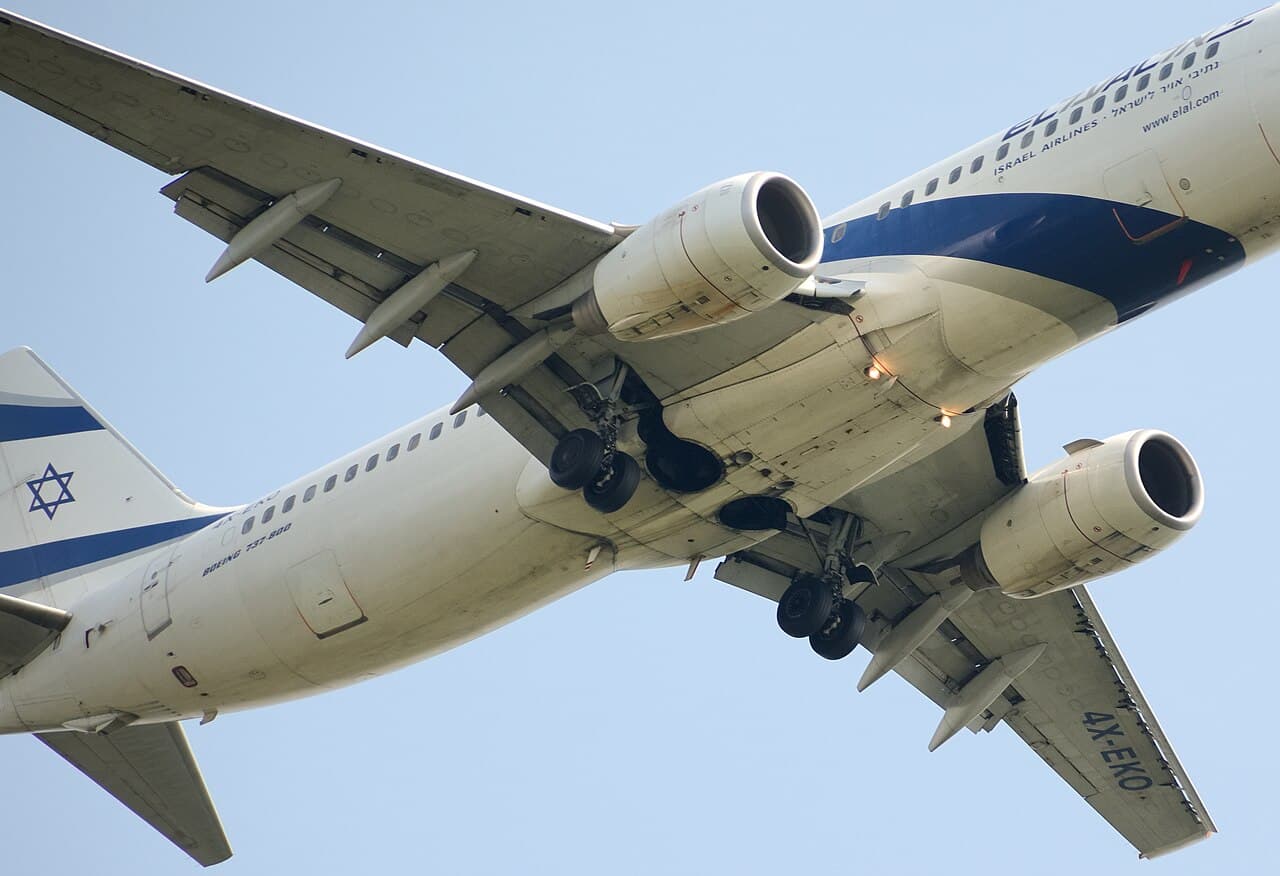
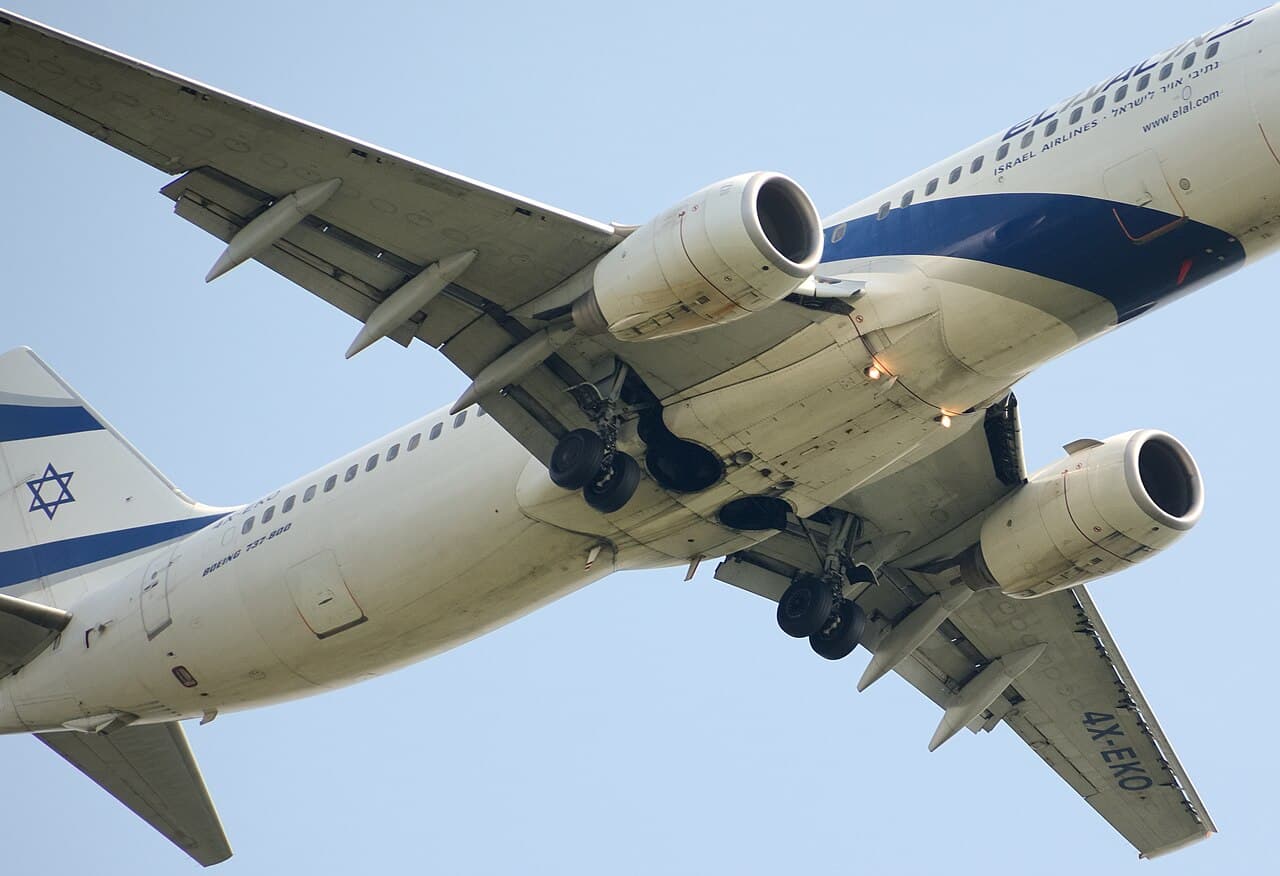
Image: Peter Haas · CC BY-SA 3.0 · via Wikimedia Commons
Seven Passengers Sue Delta After Low-Speed Collision with Japan Airlines 787 at Seattle
Seven family members seek injury claims following a 2.3 mph collision between a Japan Airlines 787 and a stationary Delta 737 at Seattle-Tacoma airport with no immediate injuries reported.
The gist
Seven family members have sued Delta alleging injuries from a minor airport collision involving a Japan Airlines 787 and a Delta 737 at Seattle-Tacoma.
Continuing coverage
All Delta Air Lines →- LATAM A320 aborts takeoff at São Paulo as American and Delta jets cross runway amid fog
- Delta Orders 16 High-Cabin Airbus A330-900neos With 56 Delta One Suites Each
- American Airlines Struggles to Match Delta and United in Profitability Despite Market Size
- Delta Air Lines Ends Narita Hub Following 2008 Northwest Merger, Shifting Asia Strategy
- Delta Confirms Seattle-Singapore A350 Flights Marking Asia Expansion
In February 2025, a slow-speed collision at Seattle-Tacoma International Airport involved a Japan Airlines Boeing 787-9 and a stationary Delta Air Lines Boeing 737-800. Despite the impact occurring at roughly 2.3 mph, none of the 335 passengers and crew aboard both aircraft were reported injured at the time. However, seven members of a single family who were on the Delta flight have since initiated legal claims alleging injuries resulting from the incident.
The collision happened on February 5, 2025, as Delta Flight 1921 was parked near the airport's deicing area preparing to depart for Puerto Vallarta. The Boeing 737-800 was stationary with its parking brake engaged when Japan Airlines Flight 68, arriving from Tokyo Narita, taxied behind it at about two knots. The right wingtip of the Japan Airlines 787 struck the vertical tail of the Delta 737, causing significant damage to the Delta aircraft's rear and minor damage to the JAL plane's wingtip.
The NTSB investigation identified that the Japan Airlines flight crew failed to maintain a safe clearance distance while taxiing, which led to the contact. The Delta crew was constrained by congestion and deicing operations ahead, limiting their ability to reposition the aircraft to avoid an impact. The damage was evident post-collision, but there were no immediate injury reports from either airline, according to Delta’s statements and the NTSB findings.
Despite the initial safety assessments, seven members of one family aboard the Delta flight have filed injury claims alleging physical harm from the collision. Lead plaintiff Renardo Robertson alleges that the impact caused the delta jet to move and twist, forcing him to hit a nearby console and injure his lower back with symptoms radiating into one leg. He claims to have undergone significant and invasive medical treatment following the incident. His wife, daughter, son-in-law, two granddaughters, and brother-in-law have joined in related legal actions.
This litigation highlights a discrepancy between the immediate injury reports and the later claims, which is not uncommon in aviation incidents where symptoms might emerge or worsen over time. The plaintiffs must substantiate their injuries and causation in court, which will require detailed medical evidence and testimony. The fact that the collision occurred at very low speed and no immediate injuries were logged will be key factors in evaluating these claims.
Notably, even though the Japan Airlines aircraft caused the physical collision, legal responsibility for passenger injuries can attach to Delta under the Montreal Convention. This international treaty holds the carrier transporting passengers liable for qualifying injuries caused by an aircraft accident—even if a third party’s actions contributed to the accident. As such, both Delta and Japan Airlines may face involvement in the resulting lawsuits.
The Japan Airlines flight crew’s failure to maintain clearance was the operational cause, but passengers' claims rightly target Delta because they were its paying customers. This legal nuance underscores complexities in airline liability, especially on the ramp and taxiway areas of airports, which are highly congested operations zones. The NTSB’s findings clarify operational factors but do not resolve passenger claims, which hinge on medical evidence and legal standards.
The case is striking given the low-speed nature of the collision and clean initial safety reports, underscoring how even minor airport incidents can produce protracted legal consequences. It also reflects the challenge passengers and airlines face when latent injuries are claimed after an otherwise minor ground collision.
The outcome of these claims will be guided by the ability of the plaintiffs to prove causation and injury severity linked to the incident. The litigation could also prompt airlines and airports to revisit taxi procedures and proximity protocols in congested areas like deicing pads to minimize similar collisions in the future.
Frequently asked questions
- What caused the collision between the Japan Airlines 787 and Delta 737 at Seattle-Tacoma?
- The NTSB investigation found that the Japan Airlines flight crew failed to maintain adequate clearance while taxiing behind the stationary Delta 737, leading to the wingtip striking the Delta's vertical stabilizer.
- Why is Delta facing injury claims despite not causing the collision?
- Under the Montreal Convention, the carrier transporting passengers can be liable for injuries caused by aircraft accidents even if another party caused the collision, making Delta responsible for passenger claims.
- Were there any reported injuries immediately after the collision?
- No injuries were reported by the National Transportation Safety Board or the airlines for any of the occupants aboard the two aircraft at the time of the collision, despite visible aircraft damage.
Read more
All Aviation Safety →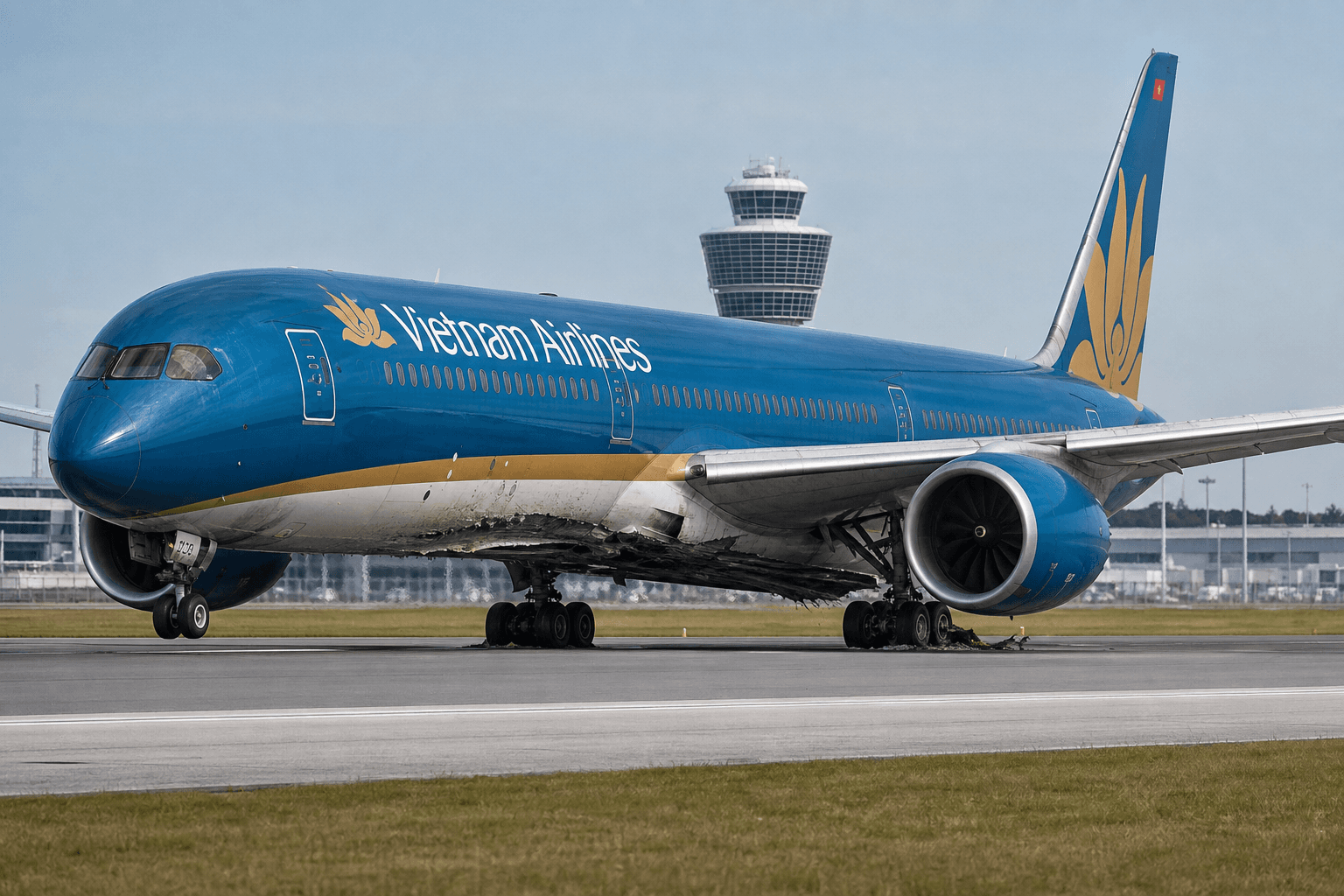
Vietnam Airlines Boeing 787-9 Skids 120 Meters Past Munich Runway End During Takeoff
An aviation catastrophe appears to have been only narrowly averted at Munich International Airport (MUC) on Saturday after a Vietnam Airlines Boeing 787 Dreamliner with as many as 274 passengers on board plowed 120 meters past the end of the runway as it attempted to take off, with the wheels smashing into the runway lights as the plane eventually became airborne. Aircraft Details Registration VN-A867 Aircraft Type Boeing 787-9 Dreamliner Engines General Electric GEnx-1B Operator Vietnam Airlines Route Munich (MUC) to Hanoi (HAN) Flight Number VN34 .pyok-callout { display: flex; border-radius: 0; background: #f7f9fc; margin: 24px 0; font-family: -apple-system, BlinkMacSystemFont, "Helvetica Neue", Arial, sans-serif; } .pyok-callout-inner { padding: 20px 24px; width: 100%; } .pyok-callout-head { margin-bottom: 12px; } .pyok-callout-tag { font-size: 20px; font-weight: 900; letter-spacing: 0.04em; text-transform: uppercase; color: #120E43; } .pyok-aircraft-list { margin: 0; padding: 0; } .pyok-aircraft-row { display: flex; justify-content: space-between; align-items: baseline; gap: 16px; padding: 10px 0; border-top: 1px solid #e1e7ef; } .pyok-aircraft-row:first-child { border-top: none; padding-top: 0; } .pyok-aircraft-row dt { font-size: 13px; font-weight: 700; text-transform: uppercase; letter-spacing: 0.04em; color: #8a93a3; margin: 0; flex-shrink: 0; } .pyok-aircraft-row dd { font-size: 16px; font-weight: 700; color: #1a1a1a; margin: 0; text-align: right; } @media (max-width: 420px) { .pyok-aircraft-row { flex-direction: column; align-items: flex-start; gap: 4px; } .pyok-aircraft-row dd { text-align: left; } } Vietnam Airlines flight VN-34 from Munich to Hanoi, operated by a 10-year-old Boeing 787-9 Dreamliner, departed at around 1:57 pm on August 15, for what should have been a routine ten-hour flight to Vietnam. The aircraft departed from Munich’s Northern Runway, officially known as 26L, a 4,000-meter-long concrete runway, which, by global standards, is considered long. This is important as the pilots appeared to have major issues in getting the aircraft airborne. Video footage captured by plane spotters at the airport showed the aircraft speeding along the runway. At the point that you would expect the aircraft to take off, it carried on accelerating along the runway. Vietnam Airlines Boeing 787-9 Dreamliner reportedly overruns the runway during take-off from Munich. The aircraft is currently on approach to the airport after holding. Video: MunichAviation pic.twitter.com/qqbWSV2jrN — Breaking Aviation News & Videos (@aviationbrk) August 15, 2026 The aircraft carried on like this for the entire length of the runway, reportedly plowing 120 meters past the end of the runway, kicking up dirt and dust, before it eventually became airborne, with the plane still so low that the tires scraped the runway approach lights, which mark the runway threshold. The pilots already knew that something was very amiss and told air traffic control that they had to make a return to Munich Airport. Due to the amount of fuel loaded on the aircraft for the long-haul flight to Vietnam, however, the aircraft had to enter a holding pattern for 90 minutes to dump some of the excess fuel and bring the plane down to a safer landing weight. The pilots didn’t, however, land the aircraft immediately after dumping the excess fuel. First, they carried out two low approaches across Runway 26R – presumably so that the air traffic control tower could observe what damage had been caused to the underside of the plane. On the third approach, the plane landed with smoke and debris seen coming from the landing gear, because the tires had been ripped to shreds. The plane came to a stop on the runway and became disabled there. Confirmed tail strike damage on VN-A867 The whole tail strike module is gone. There's a clear puncture through the lower fuselage, with torn composite and heavy scrape marks running aft. This was not light contact… they must have been pulling hard to get it airborne. This jet… pic.twitter.com/WNBqFvzMzf — Fahad Naim (@Fahadnaimb) August 15, 2026 Tail strike on VN-A867 + possible ELECTRIC BRAKE ACTUATOR ISSUES On Both MAIN GEAR. Vietnam Airlines 787-9 out of Munich today… very late rotation, almost full runway used, confirmed tail strike, then returned with multiple tires shredded. Electric Brake Actuator (EBA)… pic.twitter.com/d2t2mD52T5 — Fahad Naim (@Fahadnaimb) August 15, 2026 Munich’s Northern Runway remains closed, and airport authorities have warned of continued delays as a result of this incident. Thankfully, no one was hurt, but leaked photos showing the underside of the aircraft show just how serious the situation was. It appears that the pilots were so desperate to get the aircraft in the air that when it did finally take off, the tail struck the ground with such force that it created a gash in the underside of the fuselage. The cause of the accident has yet to be established, although one theory is that the pilots may have entered the incorrect takeoff calculations into the flight deck computer. A mechanical issue cannot, however, be ruled out at this stage. The aircraft is likely to remain grounded for some time as it will require specialist maintenance to fix the fuselage damage caused by the tailstrike.
Vietnam Airlines Boeing 787 overruns runway and suffers tail strike during Munich takeoff
A Vietnam Airlines Boeing 787 had an accident today while taking off on a long haul flight from Germany to Vietnam. Fortunately no one appears to have been injured, but I can't even begin to wrap my head around how something like this could happen… Vietnam Airlines 787 struggles to take off on very long runway This incident happened today (Saturday, August 15, 2026), and involves Vietnam Airlines flight VN34, scheduled to fly from Munich (MUC) to Hanoi (HAN). The flight was operated by a 10-year-old Boeing 787-9 with the registration code VN-A867 . At 1:57PM local time, the plane started its takeoff roll on runway 26L, which is 4,000 meters (13,123 feet) long. This is about as long as commercial runways get, so it's way longer than what even a fully loaded Dreamliner would need. However, something went seriously wrong with this takeoff. The plane accelerated down the runway… and kept accelerating, and accelerating, and accelerating. Eventually the plane seemingly overran the end of the runway, causing damage to runway lights. In the video you can see that huge clouds of dust rose around the aircraft, as the tail struck the ground. Fortunately the plane did manage to become airborne, though the crew immediately declared an emergency. The plane climbed up to 10,000 feet, and at that point the crew reported that they had an indicator that they had an issue with tire pressure. The plane circled around the area for around 90 minutes (either to burn or dump fuel), at which point the aircraft performed two low approaches over the runway, so damage could be assessed. Then the plane landed on runway 26R on the third approach, and it became disabled on the runway, closing the runway for an extended period of time. That landing was at 3:57PM, two hours after the plane first took off. The path for Vietnam Airlines flight VN34 Below is the takeoff video. Vietnam Airlines Boeing 787-9 Dreamliner reportedly overruns the runway during take-off from Munich. The aircraft is currently on approach to the airport after holding. Video: MunichAviation pic.twitter.com/qqbWSV2jrN — Breaking Aviation News & Videos (@aviationbrk) August 15, 2026 Then below is the landing video. Vietnam B787-9 appears to have shredded its tires on emergency return landing to Munich https://t.co/4ZvkFG1nXC pic.twitter.com/2Gz0ZiTLs8 — Breaking Aviation News & Videos (@aviationbrk) August 15, 2026 Below are pictures showing the tire damage and tail strike after the plane returned to Munich. Tail strike on VN-A867 + possible ELECTRIC BRAKE ACTUATOR ISSUES On Both MAIN GEAR. Vietnam Airlines 787-9 out of Munich today… very late rotation, almost full runway used, confirmed tail strike, then returned with multiple tires shredded. Electric Brake Actuator (EBA)… pic.twitter.com/d2t2mD52T5 — Fahad Naim (@Fahadnaimb) August 15, 2026 Confirmed tail strike damage on VN-A867 The whole tail strike module is gone. There's a clear puncture through the lower fuselage, with torn composite and heavy scrape marks running aft. This was not light contact… they must have been pulling hard to get it airborne. This jet… pic.twitter.com/WNBqFvzMzf — Fahad Naim (@Fahadnaimb) August 15, 2026 I think it's safe to assume that this plane will be on the ground for quite some time, and isn't going anywhere any time soon… What could possibly explain this messed up takeoff? Looking at the video of the takeoff, there's nothing that stands out to me as being particularly unusual. It looks like the plane is accelerating decently, the flaps are in use, etc. But the plane just keeps going and going. I tried to pull up the flight data through Flightradar24, which typically shows you the altitude and speed for a plane, but oddly there's a roughly five minute gap around the takeoff time. I'm not sure how we're supposed to interpret that. Flightradar24 data on this Vietnam Airlines flight Either way, it's hard to comprehend what happened here. If the pilots felt something was off during the takeoff roll, they'd logically abort the takeoff. And a 13,000+ foot runway is particularly long, so they should've had a major buffer here. Typically when we see incidents like this, it's because the takeoff performance for the plane wasn't calculated correctly (that's not to say that's the cause here, but I'm just saying that's the most common explanation for this kind of an incident). Did the crew not have the right "numbers" for this flight when determining takeoff performance? That mistake can happen sometimes, but typically pilots would catch the error, because something looks off. I mean, this was a long haul 787 flight, so pilots roughly know what kind of takeoff performance they should be expecting. Was there some technical or other glitch that prevented the plane from taking of when it was supposed to, or what? We'll have to wait for a full investigation, but everything about this incident is very strange. Bottom line A Vietnam Airlines Boeing 787 had a seriously messed up takeoff from Munich, as the plane overran the runway on takeoff, causing it to damage runway lights, strike its tail, and cause huge clouds of dust to rise. When the plane came back to land, it also had serious issues with its wheels, and the full damage of the tail strike was discovered. Particularly given how long Munich Airport's runway is, there's nothing about this that looks good… I'm curious to see what an investigation reveals. On the plus side, thank goodness no one was hurt, because it seems like this could've also had a much worse ending. What do you make of this Vietnam Airlines runway overrun in Munich?
Engine debris caused cabin decompression on Ryanair 737-800, NTSB reveals
A passenger was partially sucked through an open window before being pulled back inside the cabin.
Researchers Reveal Rapid 60-Second Hardware Hack on Boeing 737 Avionics Systems
Researchers from UC San Diego and Oberlin College on Thursday presented a proof-of-concept hardware attack that could interfere with communications between critical avionics systems on Boeing 737 Next Generation and MAX aircraft. The device can be installed during roughly 60 seconds of physical access on the ground, according to the research presented at the USENIX Security Symposium. The team demonstrated the attack on a testbed built from authentic 737 components and software rather than an operating aircraft. Device Targets Maintenance Connection The researchers identified an unused maintenance connector inside the 737 Electronics and Equipment bay. The bay sits below the aircraft’s nose and can be accessed from the ground. Their paper estimates an attacker could open the access hatch in 15 seconds, install the device in about 30 seconds and close the hatch in another 15 seconds. The implant targets ARINC 429 data buses between the flight management computer and the multipurpose control display unit. Researchers demonstrated that the device could alter flight-plan information and values used for weight, balance and takeoff calculations while suppressing indications of some changes on the pilot’s display. "This is something the aviation industry will want to plan to defend against," UC San Diego professor Stefan Savage told WIRED. "I would not sleep on this one." The researchers said the attack would require advance planning, technical knowledge and physical access to the aircraft. Their paper says the findings apply to 737 NG and MAX models, which account for more than 95% of the active 737 fleet. Boeing Reviewed Findings The research team first disclosed the vulnerability to Boeing in 2020 and later demonstrated the attack in a Boeing laboratory. Boeing told WIRED that it reviewed the relevant component designs, installations and interfaces after receiving the researchers’ findings. The company said existing protections in the aircraft and its operating environment substantially reduce the feasibility and risk of a real-world attack. "Our technical experts are confident that the layers of protection in place on the airplane, including within the system design and the operating environment, provide sufficient mitigation to significantly limit the feasibility and risk of real-world attacks," Boeing told WIRED . Pilots could override changes to the autopilot by taking manual control, the researchers noted, and some correct information would remain available through other cockpit displays. The team proposed several possible defenses. Those include removing or permanently blocking the unused connector, adding software capable of detecting the attack, increasing electrical isolation between systems and eventually adding authentication to avionics data communications.
The Daily Touch & Go
The day's best aviation news in your inbox. Free, no spam.