

Illustration: The Touch & Go
North Carolina EMS uses Pivotal BlackFly eVTOL for rapid first response missions
Hyde County EMS paramedics tested Pivotal's single-seat BlackFly eVTOL to reach emergency scenes 20 minutes faster than ambulances, marking a pioneering use in real-world EMS operations.
The gist
Hyde County EMS flight-tested the Pivotal BlackFly eVTOL to speed up emergency response by 20 minutes, offering a new EMS tool for rapid patient stabilizing care.
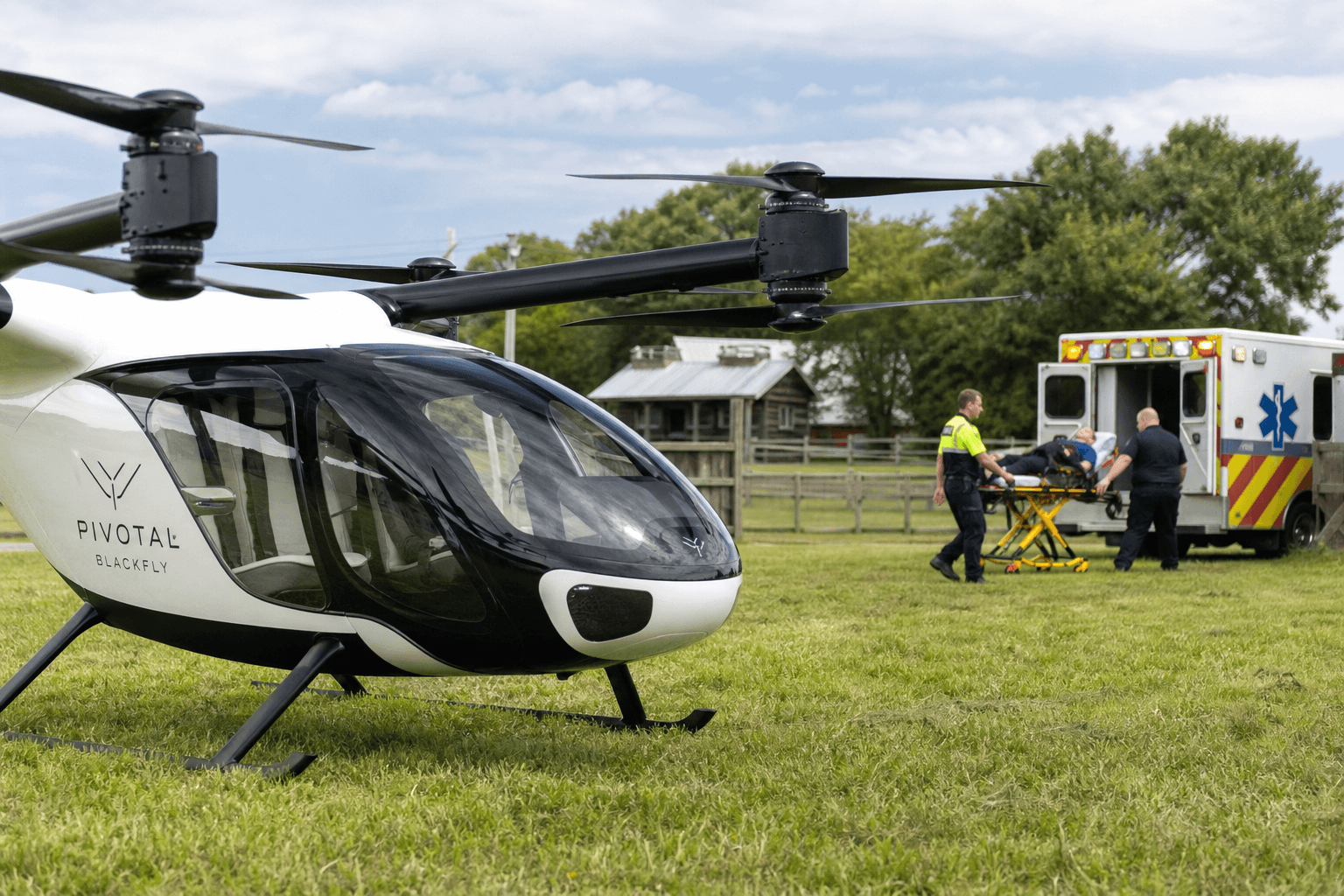
A first responder in Hyde County, North Carolina, is pioneering a new approach to emergency medical services (EMS) by using an electric vertical takeoff and landing (eVTOL) aircraft to reach patients faster. Paramedic Quinn Reece recently responded to 911 calls about 20 minutes ahead of ambulance crews by piloting Pivotal's BlackFly, a prototype single-seat eVTOL ultralight designed primarily for recreational use. This novel deployment is the first of its kind in the United States, integrating eVTOL aircraft into active emergency response under public aircraft operations (PAO).
The Pivotal BlackFly is a Part 103 ultralight eVTOL aircraft with a distinctive tilt-wing design that enables vertical lift followed by efficient fixed-wing forward flight. California-based Pivotal developed the BlackFly and its planned successor, the Helix, for easy operation. The aircraft features a fly-by-wire control system with joystick and digital displays, allowing novice pilots to achieve proficiency within days or weeks. Hyde County EMS personnel underwent more than 300 training and proficiency flights to qualify paramedics as pilots capable of managing both flight and emergency care.
Hyde County EMS Chief Brook Cox, inspired by difficulties arranging helicopter transport in other parts of North Carolina, sought to reduce response times in her jurisdiction—which covers one of the state's largest and most geographically complex areas. The county's limited helicopter availability prompted Cox to champion the BlackFly program, aiming to supplement traditional ambulance and helicopter services with rapid eVTOL response that could start advanced life support (ALS) well before patient transport arrives.
The initial operational deployment of the BlackFly included two emergency missions where Reece flew directly to precise GPS coordinates near patients, carrying essential medical equipment such as cardiac monitors and airway supplies. On one occasion, the aircraft landed in a caller's yard, demonstrating its versatility in using various surfaces for landing. Its quieter operations and lower rotor downwash compared with helicopters offer additional operational benefits for urban or residential environments.
The program's months-long preparation involved intense coordination with multiple stakeholders, including the FAA and local flight authorities. Hyde County had to establish safety management systems, go/no-go flight criteria, maintenance protocols, and procedures for evaluating deployment suitability. Pivotal partnered with Code Blue Resources and Akute Networks to develop operational frameworks and recruit pilot trainees. Despite initial skepticism, FAA officials eventually endorsed the program's flight operations under stringent regulatory oversight.
The BlackFly's 20-mile range and roughly 20-minute flight endurance constrained mission scope, but Pivotal considers this an acceptable trade-off for the current proof-of-concept phase emphasizing safety. The aircraft's design and pilot training aimed to simulate real EMS call scenarios, review flight data post-sortie through cloud connectivity, and identify optimal deployment locations within the county. Hyde County's experience has yielded a replicable operational playbook potentially adaptable to more populous or terrain-challenged counties.
Though Pivotal and Hyde County EMS continue refining the program, they acknowledge that traditional helicopters will remain essential for transporting patients. The eVTOL service's role is primarily to stabilize patients on-scene and shorten critical time to advanced care. Plans include elevating the BlackFly's certification from ultralight Part 103 standards to Part 91, which would permit heavier payloads and longer missions. Such certification progress remains subject to FAA demonstration of equivalent safety to existing aircraft.
The BlackFly initiative reflects an important step in expanding the utility of urban and rural air mobility technology beyond recreation into vital public safety roles. Hyde County's pioneering use-case integrates EMS skills with piloting and establishes regulatory and operational structures for eVTOL emergency aviation. The program's success depends on close collaboration between manufacturers, emergency services, regulatory bodies, and aviation support partners to ensure both safety and mission effectiveness.
Frequently asked questions
- How does the Pivotal BlackFly eVTOL improve EMS response times in Hyde County?
- The BlackFly allows paramedics to fly directly to emergency scenes, arriving about 20 minutes faster than ambulances, enabling earlier patient stabilization and life support.
- What training did Hyde County EMS paramedics complete to operate the BlackFly?
- Paramedics completed over 300 training and proficiency flights to master simple joystick and fly-by-wire controls, simulating real EMS calls and learning flight and landing procedures.
- What limitations affect the operational use of the BlackFly eVTOL in EMS missions?
- Its range is about 20 miles with a 20-minute endurance, and FAA-imposed safety energy reserves limit its ability to fly through adverse weather; it is not intended for patient transport but rapid on-scene care.
Read more
All Aviation Safety →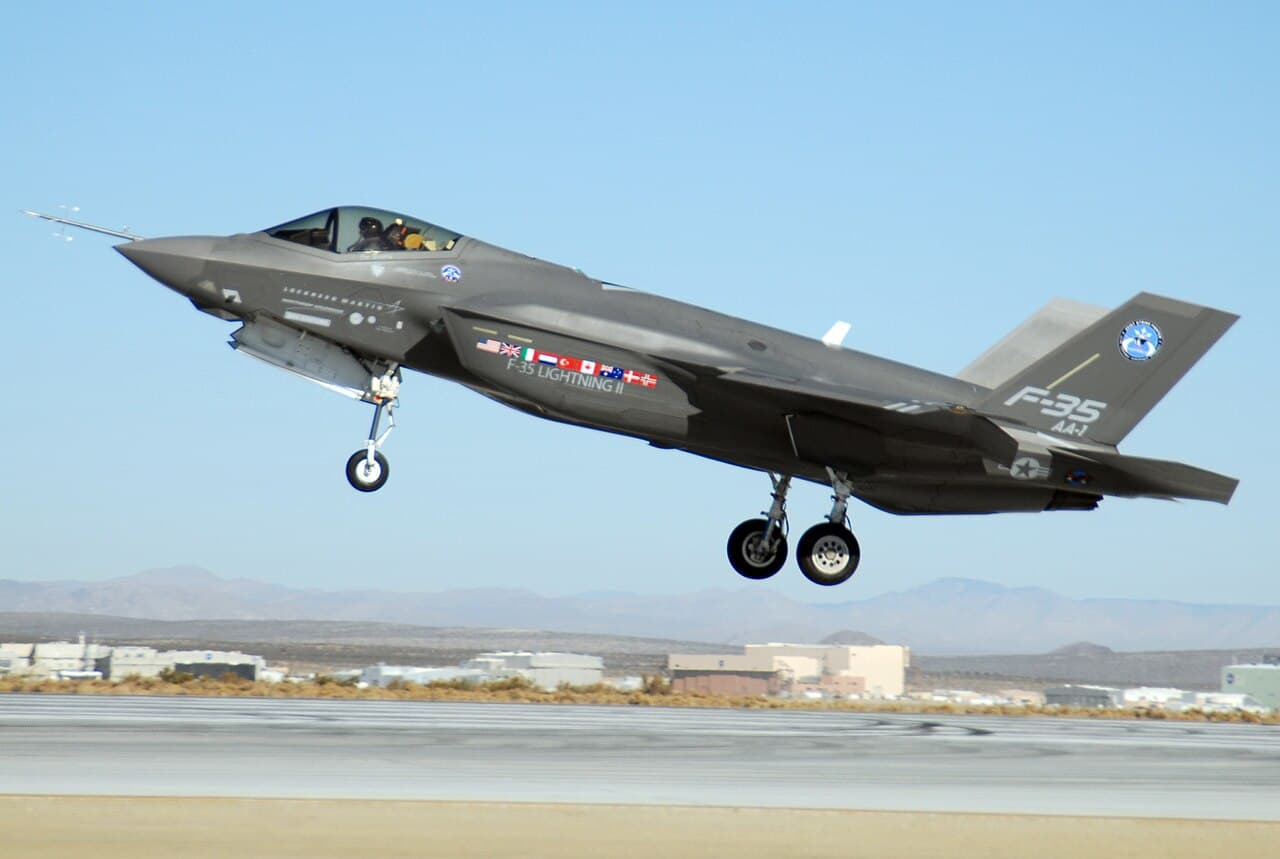
Multiple unknown drones breach restricted airspace at Australian F-35 base
The incident is the latest in a string of drone incursions into secure facilities around the world. The air base housing some of Australia’s most sensitive military aircraft was overflown by multiple drones of unknown origin over the course of three days. RAAF Williamtown in New South Wales is home to the bulk of Australia’s inventory of Lockheed Martin F-35A stealth fighters, as well as the country’s Boeing E-7 Wedgetail airborne early warning and control jets. The facility is collocated with the Newcastle commercial airport. Multiple airspace breaches were logged at Williamtown between 11 and 13 July, according to reporting from The Daily Telegraph . Australia’s minister for defence industry, Pat Conroy, acknowledged the incident in a 10 August interview with broadcaster ABC Newcastle . Conroy describes the incursions as “UAS activity over the airport”. “This is sadly something we’re seeing more often, people operating drones near airports, both civilian and military airports,” he adds. Conroy declines to address specific questions about the incident, such as the number and type of drones involved or the impact on either military or civil operations. The Telegraph report claims the Australian Defence Force does not know who was operating the UAS or what the reason was for the incursion. Military personnel at Williamtown apparently resorted to closing the window blinds at base facilities and calling the New South Wales (NSW) police for assistance. An investigation into the matter by the NSW police is now complete, according to Conroy. The defence industry minister adds that Canberra enacted regulatory changes last year to allow Australian military personnel to “seize, disable or destroy drones” and that the government is investing A$7 million ($4.9 million) in new counter-UAS equipment. Actually stopping marauding quadcopters can prove difficult in practice, particularly in civil airspace. While a range of kinetic, directed-energy and electronic warfare measures can be deployed in combat zones, such systems can also pose a risk to commercial aviation, potentially requiring protracted and disruptive ground stops. In February, the civil regulators at the US Federal Aviation Administration (FAA) ordered a hasty closure of the airspace around El Paso, Texas, which included halting flight operations at El Paso International airport. It was later reported that the FAA ordered the ground stop after the Pentagon and US Customs and Border Protection (CBP) deployed a counter-drone laser weapon to the area around El Paso, which sits on the US-Mexico border. The laser’s deployment was a response to drone activity in the area linked to Mexican drug cartels, according to the Trump administration. CBP fired the directed-energy system at what later turned out to be an innocuous party balloon, according to reporting from The New York Times, without coordinating with the FAA. Drone incursions are a growing issue at secure facilities around the world, both military and civilian. Earlier this month, a drone carrying an explosive device impacted a cargo aircraft at Leipzig-Halle airport in Germany but failed to detonate. A second UAS was discovered on the ground carrying a detonator and explosive device. A police bomb disposal unit was able to disarm the device.
Trump Secretly Boarded Different Aircraft After NATO Summit Amid Iran Threat
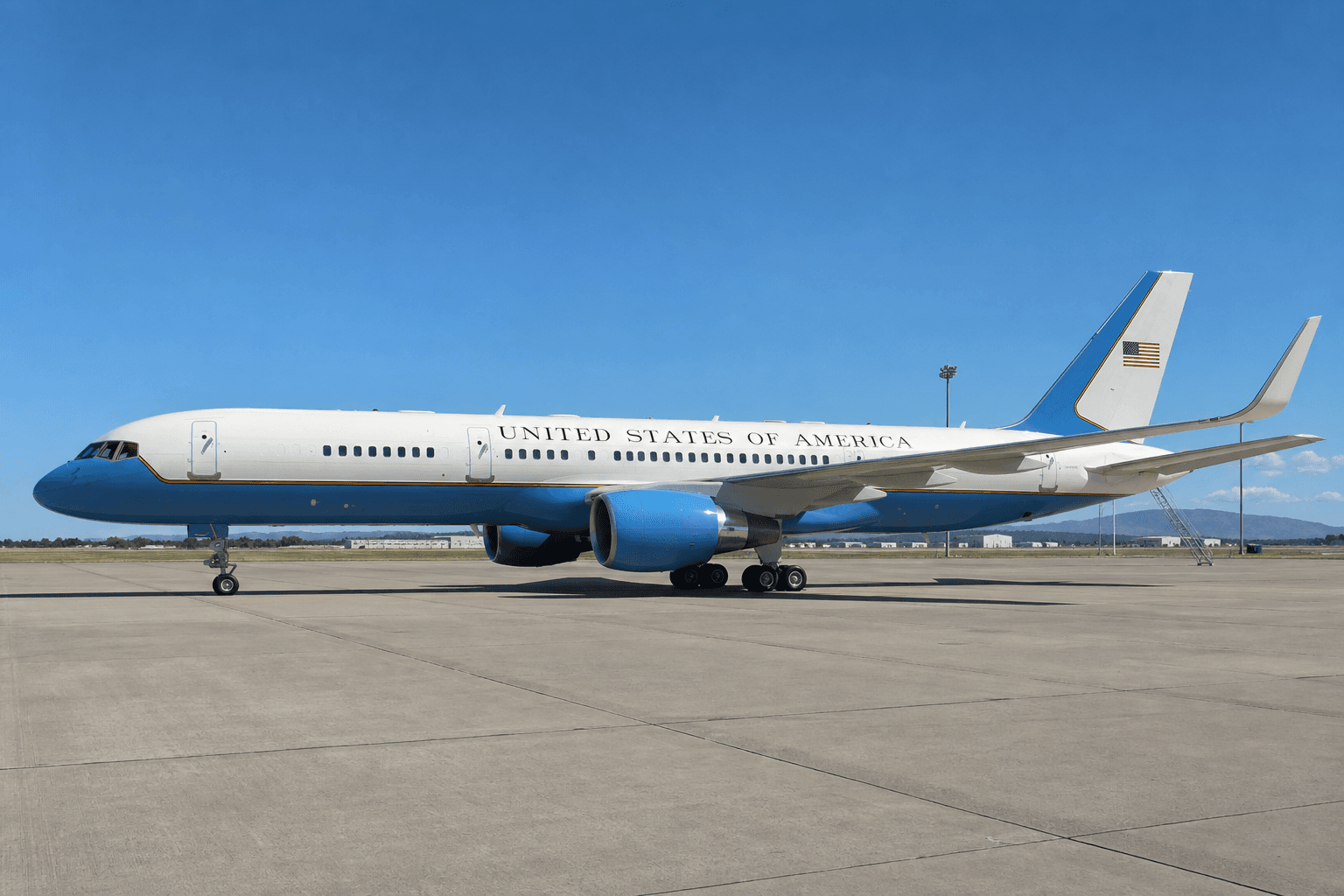
President Donald Trump secretly exited Air Force One and boarded a different military aircraft before beginning his journey back from a NATO summit in Turkey in July, according to a Washington Post report. Citing sources familiar with the matter, the newspaper said the switch-up was prompted by a threat on the president's life from Iran. The apparent last-minute decision to use the older, robin's egg blue-and-white Air Force One instead of a jet gifted to Trump by Qatar last year sparked intense speculation about the president's safety while in Turkey and possible limitations on the Qatari aircraft's air defense capabilities. The Post is the first outlet to assert that Trump used neither jet and instead boarded a Boeing C-32, a military variant of the 757 that mainly carries the vice president, first lady, and secretary of state. The president's security detail allegedly devised a complex ruse to make it appear as though Trump actually was on the older Air Force One. Trump boarded the airplane in full view of news cameras but was secretly shuttled to the C-32 using an airport catering truck. Reporters and even some White House staff were unaware of the switch and were led to believe they were on the same aircraft as the president. Trump flew on the C-32 to Royal Air Force Mildenhall in the U.K., where he visited with U.S. troops. Photographers captured Trump exiting Air Force One at the base, suggesting he reboarded the aircraft at some point after landing to maintain the deception. The president flew the rest of the way to Washington, D.C., using the new Air Force One. The Trump administration did not confirm or entirely deny the Post's story. "As the president has said recently, there are many enemies of America who have their sights on him, and we use every tool at our disposal to address those threats," White House communications director Steven Cheung told the Associated Press . Neither the Secret Service nor the Air Force have commented on the report. The Qatari jet, now known as the VC-25B Bridge, entered service as the new Air Force One in early July. The aircraft is intended to serve as a stopgap for Boeing's VC-25B, the next official incarnation of Air Force One, which is set for delivery in 2028, the final full year of Trump's second term. Trump has made no secret of his disappointment with Boeing for repeated delays in the VC-25B program. Upon reentering office in 2025, he began lobbying for a new aircraft to replace the 35-year-old VC-25A, which he considers badly outdated. The gift of a Boeing 747-8 from the Qatari government solved this problem for the White House, even while raising ethics and national security concerns on Capitol Hill. The VC-25A, which has served every president since George H.W. Bush, was on track for retirement, but it unexpectedly appeared in Ankara during the NATO summit July 7-8. Trump said at the time that he would use it on the trip back for "old time's sake." The new Air Force One was sent ahead to Mildenhall so the troops there could get a good look at it, he said. Subsequent reports from the Post and The New York Times suggested that Trump opted not to use the VC-25B Bridge because it may lack some of the defensive capabilities found on the VC-25A. The U.S. was carrying out strikes on Iran at the time of the summit, raising the risk of retaliation from Tehran. Turkey and Iran share a border, and Iran has shown it can strike targets farther away than Ankara with its missiles. The new report from the Post could suggest that the threat from Iran was especially credible or urgent, requiring another layer of subterfuge to get the president out of Turkey. Later in July, Trump said the VC-25B Bridge will be taken out of service to be "maxed out." He did not elaborate on what that would entail. The VC-25A will be used for the president's international flights in the meantime.
Airport service vehicle collides with taxiing Hawker Beechcraft 400A at Milan Linate
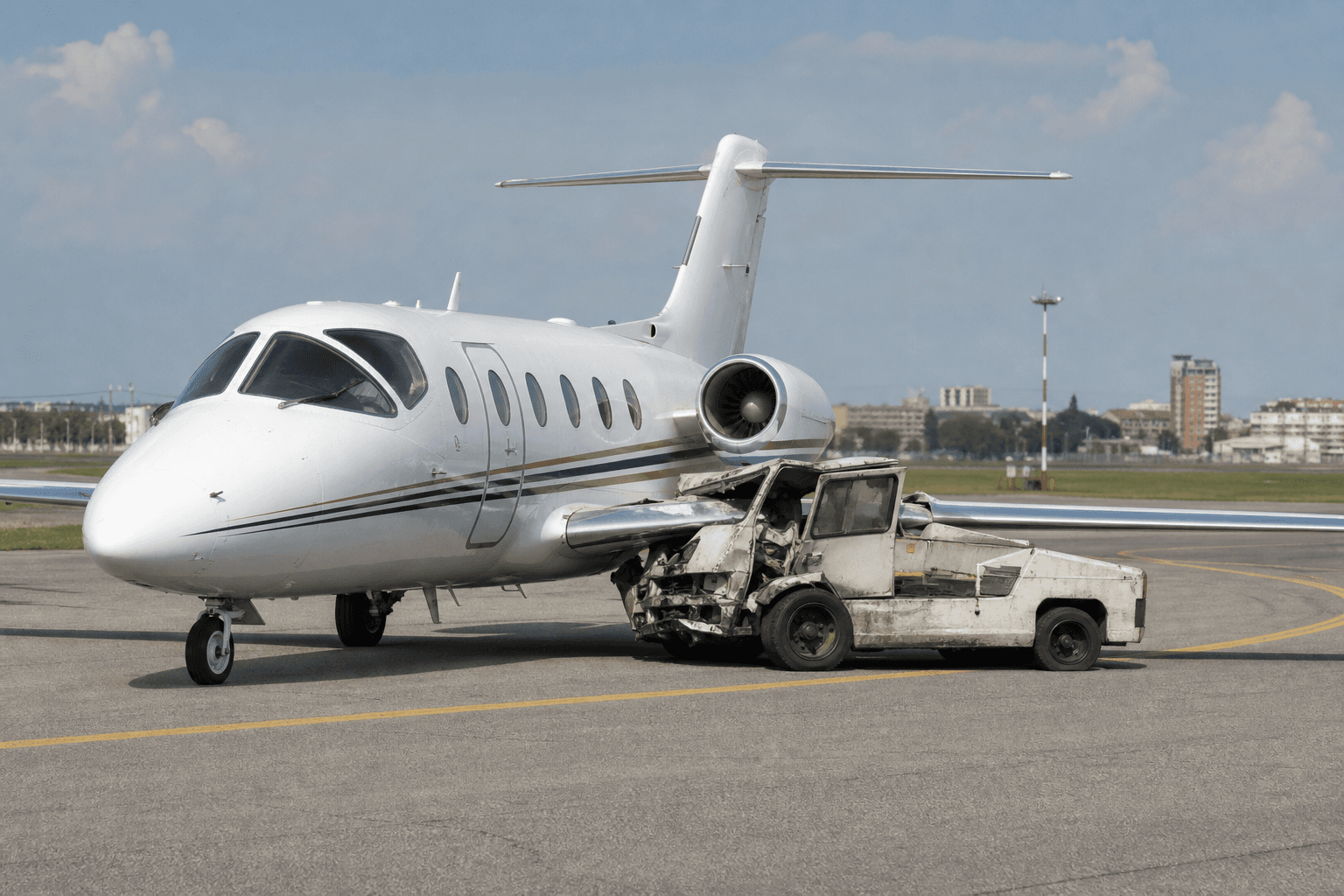
An airport service vehicle slammed into a private jet that was taxiing towards the runway at Milan Linate (LIN) in Italy with the driver seemingly unaware of the approaching aircraft. On August 10, 2026, a Hawker Beechcraft 400A was captured on video navigating along the taxiway when the Panda type vehicle crossed the tarmac and struck the front of the jet. The driver of the vehicle appears to see the Hawker Beechcraft 400A at the last moment and makes a last-ditch attempt to swerve out of the aircraft's path. The force of the impact turns the private jet to the right-hand side of the taxi as both the aircraft and the vehicle come to a halt. Earlier today a ground handling vehicle crossed an active taxiway and collided with a private jet at Milan Airport Luckily no casualties reported @AirNavRadar pic.twitter.com/muzZhwxcIQ — Flight Emergency (@FlightEmergency) August 10, 2026 The aircraft, registered I-AERB, is owned and operated by Slam Lavori Aere, according to Flightradar24 . Photos taken after the incident show the car severely damaged by the aircraft's nose. The right-hand side door and window appear crumpled by the impact. The driver can be seen exiting the video shortly after the collision, and there have been no reports of serious injuries suffered by anyone in the crash. According to Corriere Della Sera , operations at the airport were paused for 40 minutes, and an ITA Airways flight was diverted to Bergamo (BGY), and a KLM flight to Milan Malpensa Airport (MXP). De la aclamada serie "Una mala tarde la tiene cuarquiera" En el capítulo de hoy, "Hefe, yo iba buscando sitio para aparcar, me llamaron y…" pic.twitter.com/dunOcTOfao — Virutas de Goma (@VirutasF1) August 10, 2026 Also known as Slam Air, the Italian aircraft and helicopter rental company was founded in 1974. Slam Air is listed as an Adler Group company. RELATED Two pilots killed in S-64 Skycrane crash while fighting Utah wildfire
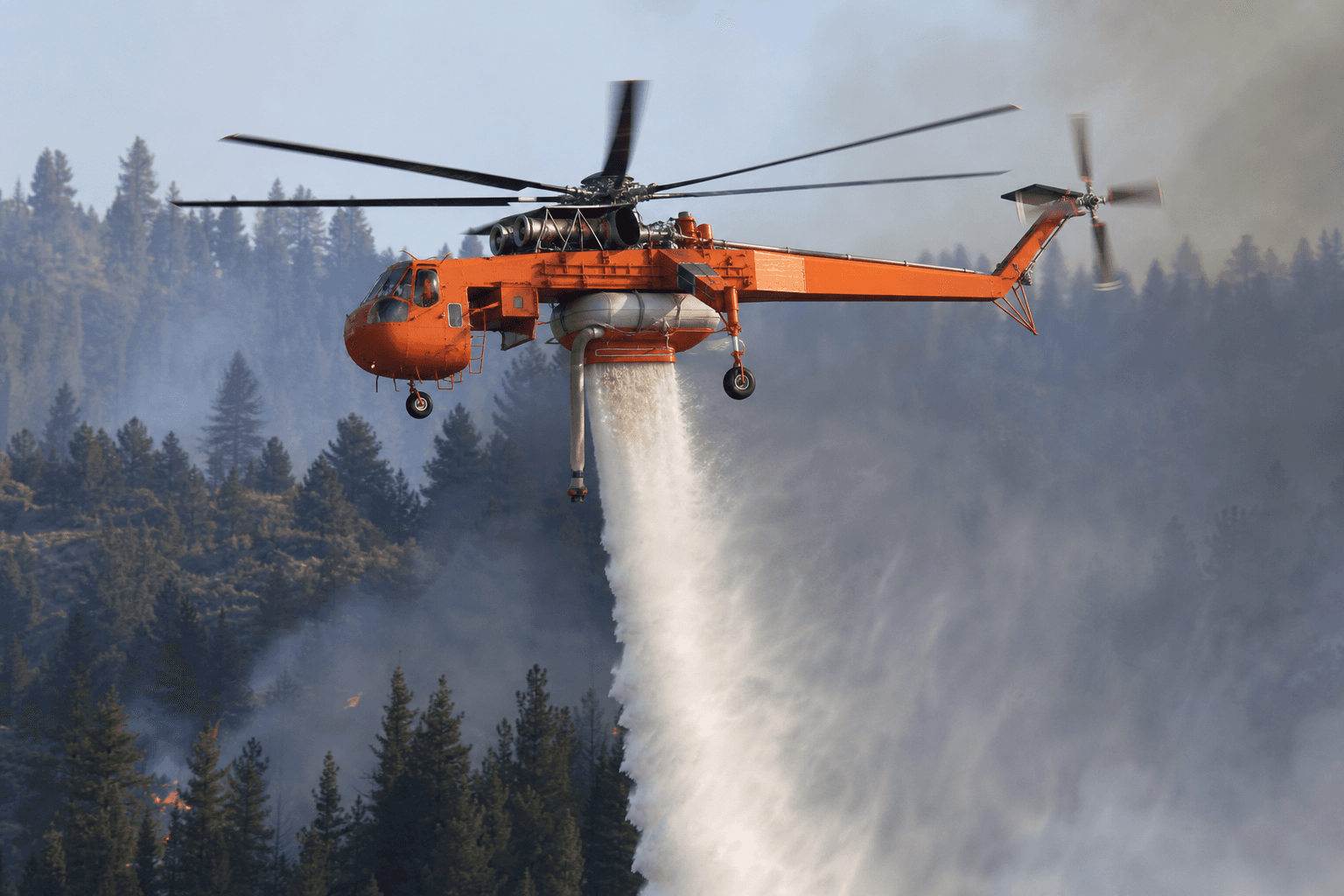
Two Pilots Die in Sikorsky S-64 Skycrane Crash Fighting Utah Wildfire
Two pilots were fatally injured Friday when a Sikorsky S-64 Skycrane was involved in an accident during firefighting operations on the Widemouth 2 Fire in central Utah. The accident occurred around 10:40 a.m. near Richfield while the helicopter was conducting water drops, according to wildfire officials. The FAA said two people were in the aircraft. Fire Delayed Access to Accident Site The helicopter was operated by Helicopter Transport Services under an exclusive-use U.S. Forest Service contract. The accident resulted in a fire near the wreckage, and personnel attempting to reach the site encountered steep terrain and active fire conditions. Responders withdrew Friday after conditions prevented continued access. Personnel reached the site on Saturday and confirmed both occupants had been killed. "It was not an easy choice to move those responders," Sevier County Sheriff Nathan Curtis told KUTV. "If we had not done that, we would have lost more lives." The pilots' remains were recovered Saturday and transported to the Utah Office of the Medical Examiner. Pilot Identified Porterville, California, officials on Monday identified one of the pilots as Miles Elliott , a helicopter and airplane pilot who had served on the Porterville Airport Committee and participated in youth aviation programs. The second pilot had not been publicly identified as of Monday afternoon. The FAA and NTSB are investigating the accident. Investigators arrived in Utah by Saturday evening, although active wildfire conditions initially prevented access to the wreckage. The circumstances of the accident remain under investigation.
The Daily Touch & Go
The day's best aviation news in your inbox. Free, no spam.