

Illustration: The Touch & Go
Trump Secretly Boarded Different Aircraft After NATO Summit Amid Iran Threat
President Trump switched to a Boeing C-32 military jet for part of his return from Turkey's NATO summit, a move signaling heightened security against an Iranian threat.
The gist
Trump used a Boeing C-32 instead of Air Force One to leave Turkey due to a credible threat from Iran, employing a complex ruse for security.
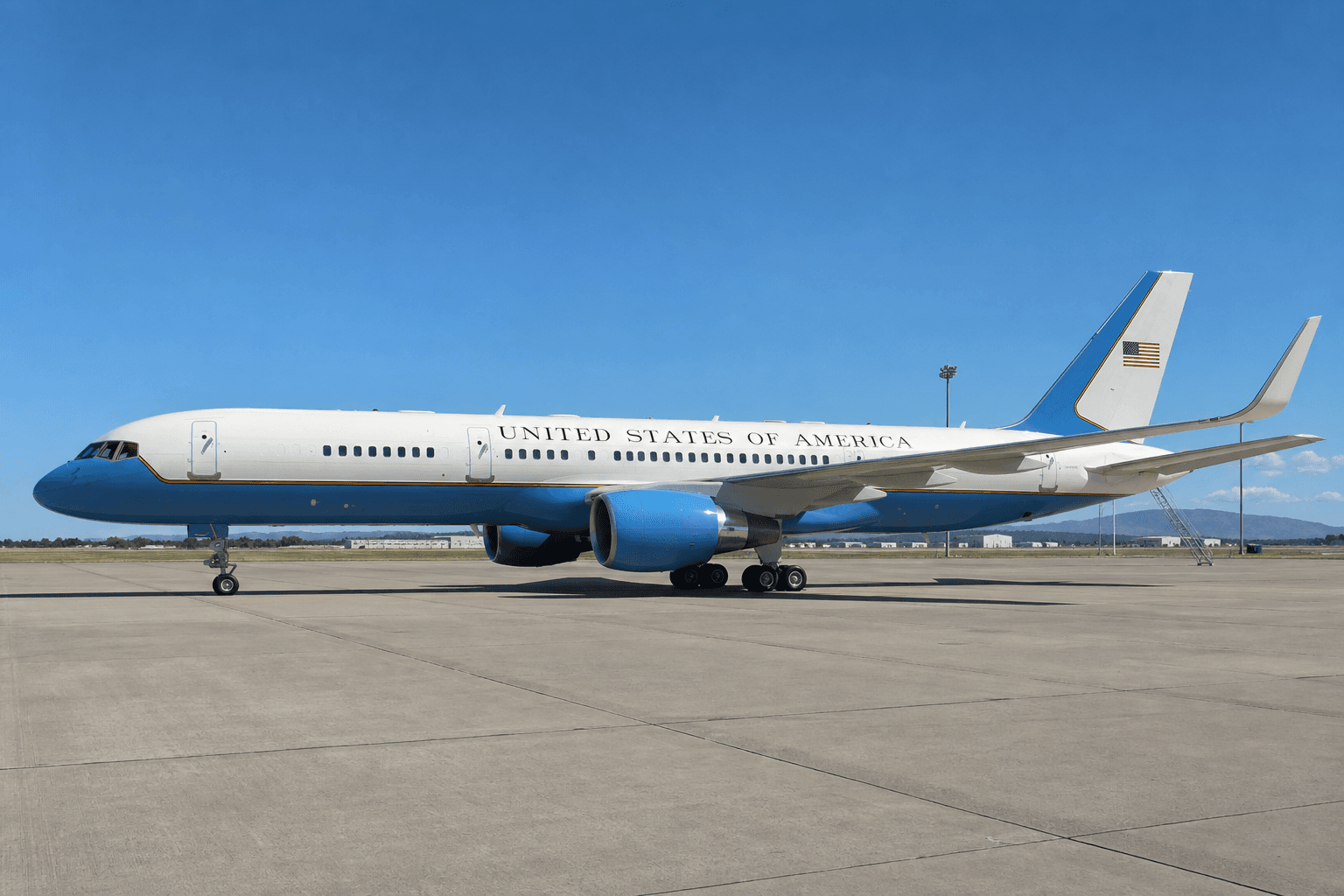
In a rare security maneuver, President Donald Trump secretly boarded a Boeing C-32 military aircraft instead of the customary Air Force One during his departure from a NATO summit in Turkey last July. The decision came amid credible threats to the president’s safety from Iran, according to sources familiar with the situation. This unexpected switch avoided the use of the newer Air Force One variant gifted by Qatar, raising questions about the defensive capabilities of the updated airplane in hostile environments.
The confidential operation involved a carefully orchestrated deception designed to mislead the attending press and even some White House officials. Initially, Trump appeared on camera boarding the older Air Force One, a familiar robin’s egg blue-and-white aircraft that has served multiple presidents over decades. Simultaneously, he was clandestinely transferred to the Boeing C-32 via an airport catering truck, a ruse executed to create the illusion he was on the older plane when, in fact, he was not.
The Boeing C-32, primarily used for the vice president, first lady, and secretary of state, carried President Trump to Royal Air Force Mildenhall in the United Kingdom. There, photos showed Trump exiting the older Air Force One aircraft at the base, further perpetuating the illusion that he had traveled on the traditional presidential jet. The narrative was completed when the president used the newer Air Force One, known as the VC-25B Bridge, for the final leg back to Washington, D.C.
This extraordinary measure was reportedly triggered by a credible threat from Iran amidst escalating tensions following U.S. airstrikes on Iranian targets. Given Turkey's proximity and shared border with Iran, and Iran's demonstrated missile range capabilities, the threat to the president while on Turkish soil was taken seriously by his security detail. Concerns about the defensive and countermeasure capabilities of the newly acquired VC-25B Bridge may have influenced the decision to avoid using it in Turkish airspace at that time.
The new VC-25B Bridge, gifted to the U.S. by Qatar in early July, was intended as a stopgap replacement for the aging VC-25A Air Force One Boeing 747s. Despite the gift addressing prior concerns over delayed developments of Boeing's next-generation VC-25B aircraft, President Trump had expressed disappointment with Boeing’s persistent setbacks. The VC-25A, a long-standing symbol of presidential air transport since the administration of George H.W. Bush, unexpectedly appeared in Ankara during the NATO summit and was initially intended for the president’s return trip out of Turkey.
President Trump's decision to forego the new VC-25B on the return flight and rely on both the older VC-25A and the C-32 underscores ongoing concerns about the evolving threat environment and the adequacy of new aircraft's defensive systems. The administration has not fully confirmed the details of the aircraft switch but emphasized the use of every available tool to counter threats against the president.
White House communications director Steven Cheung acknowledged the broad array of enemy threats facing the president and the comprehensive countermeasures employed. However, no official statements have been made by the Secret Service or the U.S. Air Force regarding this specific operation. The incident sheds light on the complexities of presidential flight security amid geopolitical tensions.
Following this episode, President Trump indicated plans to take the VC-25B Bridge out of service temporarily for modifications, referring to the need to have it maximized, without elaborating on specifics. Until further upgrades are completed, the VC-25A will continue serving as the primary presidential transport for international travel.
Frequently asked questions
- Why did President Trump switch aircraft after the NATO summit in Turkey?
- The switch was made due to a credible threat from Iran against President Trump, prompting his security team to use a less conspicuous military aircraft for enhanced safety.
- What aircraft did President Trump use instead of Air Force One on his return from Turkey?
- He secretly boarded a Boeing C-32, a military variant of the 757 usually reserved for the vice president and other officials, rather than the standard Air Force One jets.
- Why was the newer Air Force One variant not used during the Turkey departure?
- Concerns about the newer VC-25B Bridge's air defense capabilities during heightened tensions with Iran likely influenced the decision not to use it at that time.
Read more
All Aviation Safety →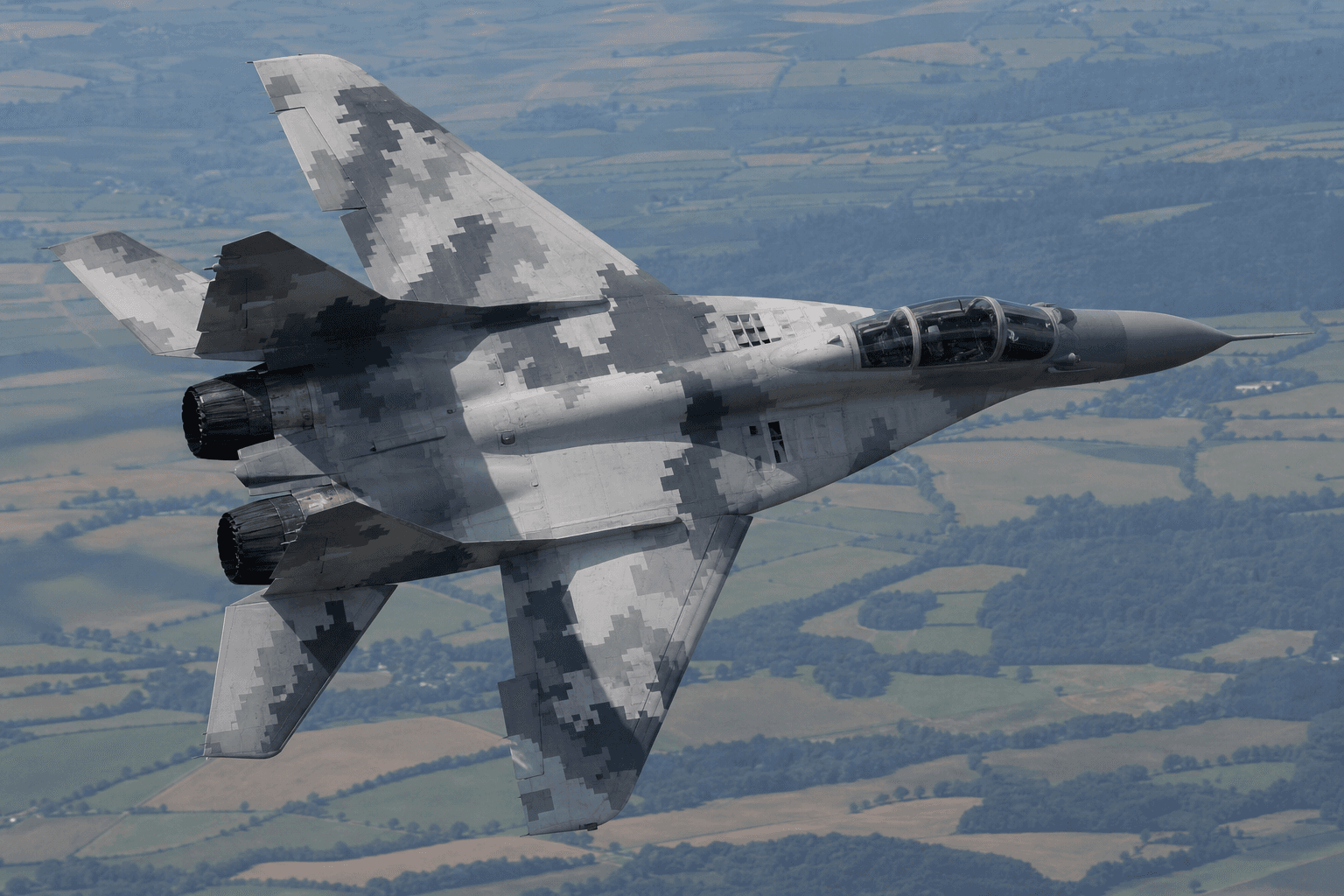
Ukrainian MiG-29 destroyed after catching fire during missile launch over Odesa
A Ukrainian Air Force MiG-29 was destroyed on the evening of August 10, 2026, after the fighter caught fire while launching an air-to-air missile over Odesa Oblast, southern Ukraine. In a statement published on its Telegram channel , the Ukrainian Air Force said the pilot had been flying a mission to destroy Russian aerial targets over the region when the aircraft was lost. According to preliminary data, a "non-standard situation" occurred during the launch of an air-to-air missile, causing the aircraft to catch fire and the pilot to lose control. The pilot attempted to save the aircraft before ejecting, the service said. He was recovered and evacuated to a medical facility. The causes of the incident are being established. Ukrainian MiG-29s use Soviet-designed R-73 infrared-guided and R-27R radar-guided air-to-air missiles, although the Ukrainian Air Force did not identify the weapon involved in the accident. The crash is the fourth Ukrainian combat aircraft loss reported in under two months. On June 16, 2026, a Su-24M frontline bomber crashed in Khmelnytskyi Oblast, killing both crew members. Another MiG-29 was lost over Poltava Oblast on June 27, 2026 , with the pilot ejecting safely. On July 29, 2026, an F-16 went down after an in-flight emergency during an intercept mission, its pilot also ejecting. Ukraine has not disclosed the current size of its MiG-29 fleet. The Soviet-era airframes have been sustained since 2023 by aircraft and spares transferred from Poland and Slovakia, and adapted over the course of the war to carry Western munitions, including the US-made AGM-88 HARM anti-radiation missile . The type remains central to Ukrainian air defense, flying repeated intercept sorties against Russian cruise missiles and one-way attack drones targeting cities including Odesa. Ukraine's Air Force confirmed the loss of a MiG-29 fighter during a combat mission against enemy aerial targets over Odesa Oblast on August 10. Preliminary information indicates an abnormal situation occurred during an air-launched missile firing, after which the aircraft caught… pic.twitter.com/UG78RAq9QL — NOELREPORTS (@NOELreports) August 10, 2026 Poland talks over 14 additional MiG-29s resume Poland, which delivered 14 MiG-29s to Ukraine from April 2023 in the first transfer of combat aircraft by any NATO country, retains 14 more at Mińsk Mazowiecki, upgraded between 2011 and 2014 and in better condition than the ex-Czech and ex-German airframes it sent first. Warsaw has negotiated their handover since December 2025 in exchange for Ukrainian drone technology. Defense Minister Władysław Kosiniak-Kamysz declared the arrangement dead on June 29, 2026, saying Kyiv had accepted it and then failed to deliver. Talks have since resumed, and Deputy Defense Minister Magdalena Sobkowiak-Czarnecka said on July 31, 2026, that Ukraine had submitted a specific list of systems it could provide, with a decision due within weeks. Bulgaria has separately asked to buy the jets. No immediate relief for Ukraine's fighter fleet Ukrainian Air Force F-16 fighters fly over an undisclosed location. (Credit: Ukraine Ministry of Defense) The Ukrainian Air Force has previously said it would need 120 to 130 F-16s to reach parity with Russian aviation, a figure far above the number of Western fighters delivered so far. Ukrainian F-16s, which have accounted for more than 1,000 aerial targets since entering combat in August 2024, and Mirage 2000-5s remain committed primarily to the same air defense mission the MiG-29 was flying when it was lost. Long-term reinforcement plans are taking shape, but they offer no immediate relief to the aging aircraft now carrying much of Ukraine's air defense burden. Saab signed a contract with the Swedish Defence Materiel Administration on June 30, 2026 , for 16 Gripen E fighters destined for Ukraine, worth approximately SEK 24.6 billion ($2.5 billion), with deliveries scheduled for 2029 and 2030. Sweden has separately committed to donate 16 used Gripen C/D aircraft, with transfers expected to begin in early 2027. Paris and Kyiv followed on July 13, 2026, signing a bilateral defense roadmap covering an initial batch of 16 Dassault Rafale fighters for delivery in 2028 and 2029, alongside SAMP/T NG batteries, radars and production licenses for AASM, SCALP-EG and Aster munitions. Both orders are opening tranches of much larger letters of intent, for up to 150 Gripen E signed in October 2025 and up to 100 Rafale signed in November 2025 .
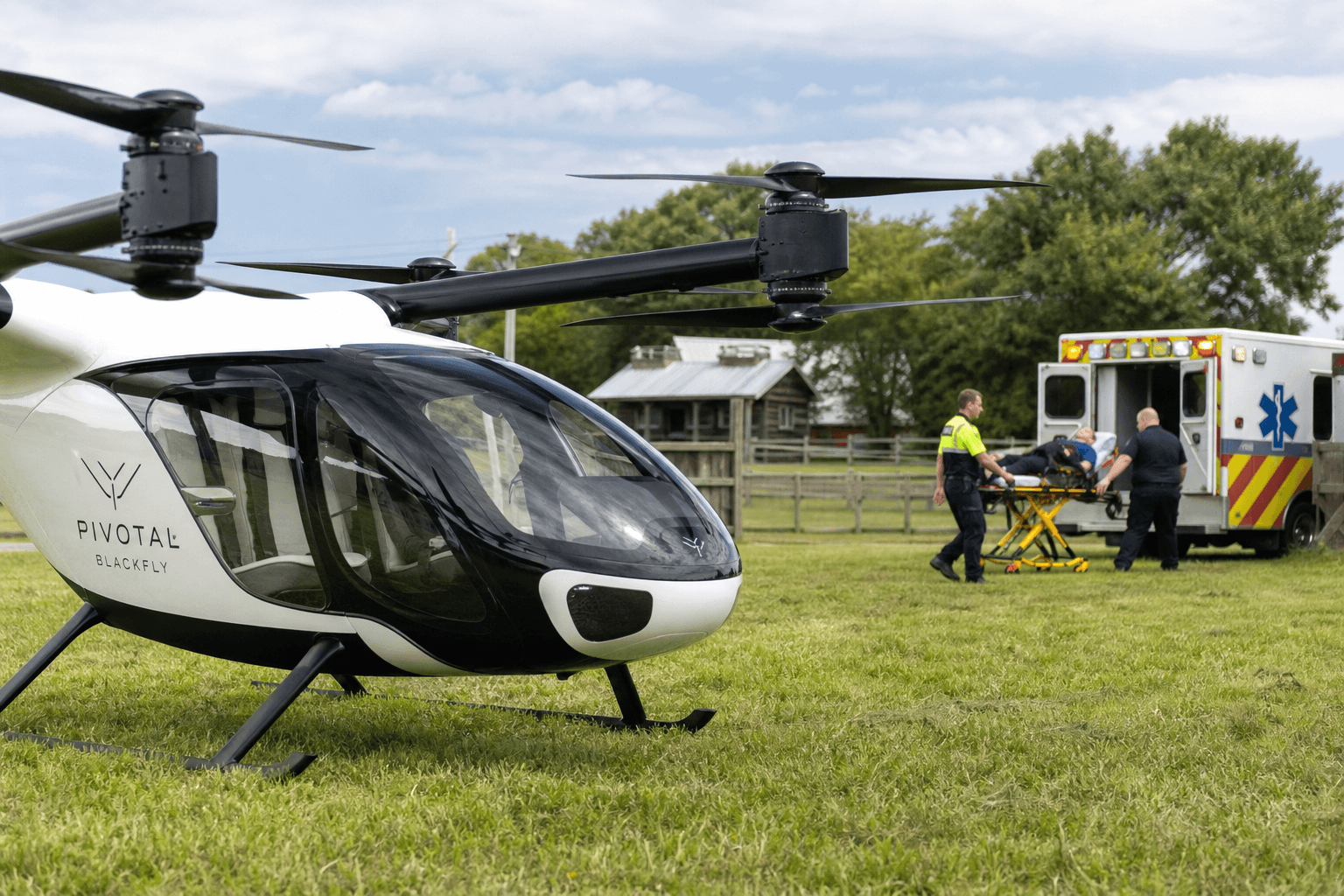
North Carolina EMS uses Pivotal BlackFly eVTOL for rapid first response missions
Quinn Reece, a paramedic with Hyde County Emergency Medical Services (EMS) in North Carolina, is not your average first responder. Recently, Reece responded to a 911 call about 20 minutes faster than an ambulance. The seemingly impossible feat was enabled by a unique aircraft that lifts off vertically like a helicopter but tilts forward to fly on fixed wings. Pivotal's BlackFly , a prototype of the company's planned Helix, is a Part 103 eVTOL (electric vertical takeoff and landing) ultralight that several private owners and the U.S. Air Force have already flown . The BlackFly and Helix are single-seat models marketed primarily for recreational use. But the California-based manufacturer may have found another application—"saving lives," CEO Ken Karklin told FLYING . "We've been very focused on finding the best utility for this craft," Karklin said. "And one mission that consistently rose to the top was that of taking advantage of the simplified flight controls—cross-training paramedics, technicians, emergency physicians, EMS chiefs." The BlackFly's pilot controls—comrpising a joystick, digital displays, and fly-by-wire system—are designed to be simple enough that a new pilot could master them within weeks or days. Pivotal said Hyde County paramedics completed more than 300 training and proficiency flights before Reece used the BlackFly to respond to real emergency calls under public aircraft operations (PAO). The partners believe Hyde County is first in the nation to deploy eVTOL aircraft for real-world EMS. Officials dispatched the BlackFly for two calls, allowing Reece to begin advanced life support (ALS) while she and the caller waited for an ambulance. Pivotal said it believes helicopters will remain indispensable for patient transport. But eVTOL aircraft could keep patients stable while they await one. Karklin said the partners took a "very conservative approach" and deferred a "long list of potential 911 dispatches" to ambulances, opting for safety over scale. But he added that the initial deployment gives Pivotal a "playbook" to "clone" or "stress-test" the operation in other North Carolina towns that have different terrain or higher call volumes. Months of Preparation Brook Cox, chief of Hyde County EMS, grew up in the Chapel Hill area of western North Carolina, which has a robust hospital system. Cox said that shortly after becoming chief, she requested a helicopter that took hours to arrive and was unable to land once it did. Pivotal described Hyde County as "one of North Carolina's largest and most geographically challenging EMS response areas." "I thought to myself, why is it that the eastern part of North Carolina can't get the same options that we did [in Chapel Hill]?" she said. The experience prompted Cox to explore more "creative ways" of improving response times. Deploying eVTOL aircraft was "one of the projects that I chose to fight on first," she said. Pivotal and Hyde County EMS announced their partnership in March, and the partners quickly got to work. Even among eVTOLs, the BlackFly is unique. While many models incorporate tilting rotors, the entire BlackFly airframe tilts when transitioning from vertical to forward flight. Karklin said the training that Pivotal provides in California "falls considerably short" of what an EMS pilot would need. That required Hyde County paramedics to complete hundreds of preparational flights during "near daily operation." The trainees familiarized themselves with the aircraft's range and endurance (about 20 miles or 20 minutes) as well as its limitations in wind and rain. They learned how to judge ideal landing spots from the air and catalogued potential sites. The eVTOL paramedics even studied old 911 calls, using them to reproduce real flights and landing areas. Personnel had to get into the mindset of being aviators in the air and first responders after landing. EMS helicopter pilots typically do not also provide care at the scene. "Patient care comes after you land," Karklin said. Hyde County EMS paramedic Quinn Reece gives a thumbs-up from the seat of a Pivotal BlackFly. [Credit: Pivotal] The Pivotal chief said the BlackFly is "cloud connected," which allowed personnel to examine flight data after each sortie. Across months of training, teams studied different BlackFly placements to find an optimal dispatch location that would get the most out of the aircraft. Cox credited the program's partners, Code Blue Resources and Akute Networks, with helping it "run like a well-oiled machine." Code Blue recruited pilots while Akute served as aviation program manager, developing an operational framework and flight rules. Akute provided services under direct contract with Hyde County on a fractional basis, a model Karklin said could easily be replicated elsewhere. Getting county leaders and the FAA on board was another obstacle. Hyde County had to establish a safety management system, go and no-go criteria, maintenance routines, and an understanding of when versus when not to deploy aircraft. The county Sheriff's office delegated those responsibilities to Cox, who brought stakeholders together for dinners to build a sense of community. "It was a little bit of educating and then reeducating of what the job roles were, responsibilities," she said. Karklin said the process entailed a "lot of back and forth" with the FAA, which had "more than a few issues" with permitting the Hyde County Sheriff's Office proposed PAO. It also required negotiation with officials at the local Flight Standards District Office (FSDO), whom he said "went from skeptics to complete fans." Karklin said rural, non-cooperative air traffic managers in the region "were not that excited about this, and they let the FSDO know." "You've got to win some hearts and souls," he said. "That took some real time, and it didn't necessarily start out in the most collaborative way." New Kind of First Response Karklin said Pivotal and Hyde County began with four pilots in training, but Reece flew both operational missions. "In the end, we are hopeful we provided a tool that our EMS first responders can take advantage of to get better outcomes," he said. Reece piloted the BlackFly directly to GPS coordinates near each scene. She was the sole EMS provider aboard the aircraft and carried with her a cardiac monitor, airway supplies, and primary response bag. One of the two missions saw Reece land directly in the caller's yard. The BlackFly is designed to land on grass, asphalt, and "other suitable surfaces" according to Pivotal, including water when the aircraft is equipped with floats. It is also quieter and produces less downwash than a helicopter, per the company. On one occasion, Reece used her aerial vantage point to guide an ambulance to a caller's address after it got lost. Cox said the EMS department relies on a computer-aided dispatch system that produced inaccurate pings. "She guided and even advised the telecommunicators of the right location, because it was not pinging where it was supposed to be pinging," Cox said. Cox said the time that it took to negotiate with the FAA and FSDO "ate into the proof of concept," which was planned to include more real-world flights. But she said the BlackFly "gave us that extra edge" to bring the department's response time closer to the national average. What's Next? From a crawl-walk-run perspective, Karklin said Pivotal is "maybe out of the crawl phase…we're almost ready to graduate to walking, but not yet." For example, he said the FAA required it to demonstrate an equivalent level of safety to other aircraft. To comply, the company assigned half of the BlackFly's energy margin to reserves, which limited its range and ability to fight through wind. Karklin added that there is a "silver lining" to the exercise—Pivotal has not yet validated a supported engineering configuration for the EMS BlackFly. He said the company plans to certify the model under Part 91, which would permit more weight and enable th
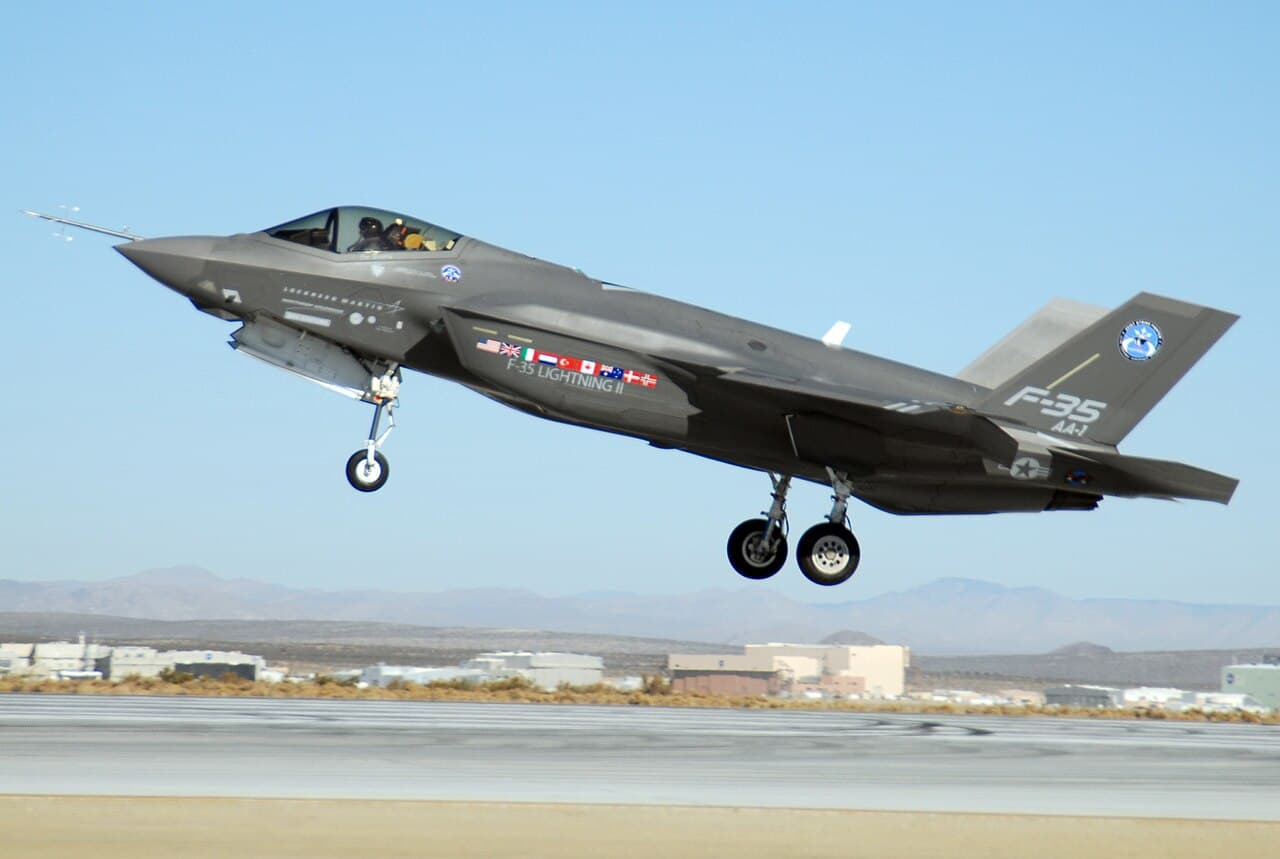
Multiple unknown drones breach restricted airspace at Australian F-35 base
The incident is the latest in a string of drone incursions into secure facilities around the world. The air base housing some of Australia’s most sensitive military aircraft was overflown by multiple drones of unknown origin over the course of three days. RAAF Williamtown in New South Wales is home to the bulk of Australia’s inventory of Lockheed Martin F-35A stealth fighters, as well as the country’s Boeing E-7 Wedgetail airborne early warning and control jets. The facility is collocated with the Newcastle commercial airport. Multiple airspace breaches were logged at Williamtown between 11 and 13 July, according to reporting from The Daily Telegraph . Australia’s minister for defence industry, Pat Conroy, acknowledged the incident in a 10 August interview with broadcaster ABC Newcastle . Conroy describes the incursions as “UAS activity over the airport”. “This is sadly something we’re seeing more often, people operating drones near airports, both civilian and military airports,” he adds. Conroy declines to address specific questions about the incident, such as the number and type of drones involved or the impact on either military or civil operations. The Telegraph report claims the Australian Defence Force does not know who was operating the UAS or what the reason was for the incursion. Military personnel at Williamtown apparently resorted to closing the window blinds at base facilities and calling the New South Wales (NSW) police for assistance. An investigation into the matter by the NSW police is now complete, according to Conroy. The defence industry minister adds that Canberra enacted regulatory changes last year to allow Australian military personnel to “seize, disable or destroy drones” and that the government is investing A$7 million ($4.9 million) in new counter-UAS equipment. Actually stopping marauding quadcopters can prove difficult in practice, particularly in civil airspace. While a range of kinetic, directed-energy and electronic warfare measures can be deployed in combat zones, such systems can also pose a risk to commercial aviation, potentially requiring protracted and disruptive ground stops. In February, the civil regulators at the US Federal Aviation Administration (FAA) ordered a hasty closure of the airspace around El Paso, Texas, which included halting flight operations at El Paso International airport. It was later reported that the FAA ordered the ground stop after the Pentagon and US Customs and Border Protection (CBP) deployed a counter-drone laser weapon to the area around El Paso, which sits on the US-Mexico border. The laser’s deployment was a response to drone activity in the area linked to Mexican drug cartels, according to the Trump administration. CBP fired the directed-energy system at what later turned out to be an innocuous party balloon, according to reporting from The New York Times, without coordinating with the FAA. Drone incursions are a growing issue at secure facilities around the world, both military and civilian. Earlier this month, a drone carrying an explosive device impacted a cargo aircraft at Leipzig-Halle airport in Germany but failed to detonate. A second UAS was discovered on the ground carrying a detonator and explosive device. A police bomb disposal unit was able to disarm the device.
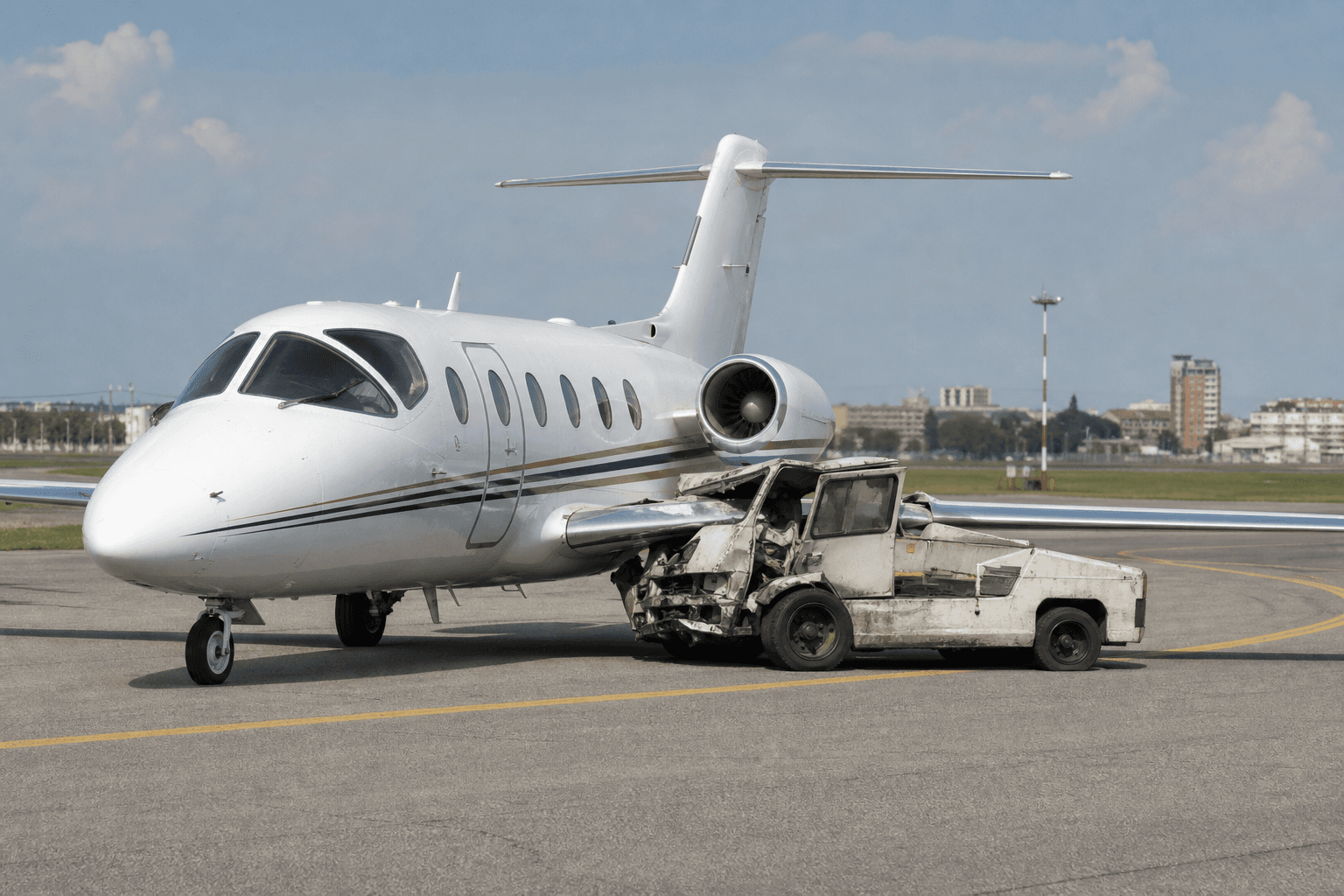
Airport service vehicle collides with taxiing Hawker Beechcraft 400A at Milan Linate
An airport service vehicle slammed into a private jet that was taxiing towards the runway at Milan Linate (LIN) in Italy with the driver seemingly unaware of the approaching aircraft. On August 10, 2026, a Hawker Beechcraft 400A was captured on video navigating along the taxiway when the Panda type vehicle crossed the tarmac and struck the front of the jet. The driver of the vehicle appears to see the Hawker Beechcraft 400A at the last moment and makes a last-ditch attempt to swerve out of the aircraft's path. The force of the impact turns the private jet to the right-hand side of the taxi as both the aircraft and the vehicle come to a halt. Earlier today a ground handling vehicle crossed an active taxiway and collided with a private jet at Milan Airport Luckily no casualties reported @AirNavRadar pic.twitter.com/muzZhwxcIQ — Flight Emergency (@FlightEmergency) August 10, 2026 The aircraft, registered I-AERB, is owned and operated by Slam Lavori Aere, according to Flightradar24 . Photos taken after the incident show the car severely damaged by the aircraft's nose. The right-hand side door and window appear crumpled by the impact. The driver can be seen exiting the video shortly after the collision, and there have been no reports of serious injuries suffered by anyone in the crash. According to Corriere Della Sera , operations at the airport were paused for 40 minutes, and an ITA Airways flight was diverted to Bergamo (BGY), and a KLM flight to Milan Malpensa Airport (MXP). De la aclamada serie "Una mala tarde la tiene cuarquiera" En el capítulo de hoy, "Hefe, yo iba buscando sitio para aparcar, me llamaron y…" pic.twitter.com/dunOcTOfao — Virutas de Goma (@VirutasF1) August 10, 2026 Also known as Slam Air, the Italian aircraft and helicopter rental company was founded in 1974. Slam Air is listed as an Adler Group company. RELATED Two pilots killed in S-64 Skycrane crash while fighting Utah wildfire
The Daily Touch & Go
The day's best aviation news in your inbox. Free, no spam.